






It’s essential for legislators to know patient costs of each bill if they are to represent their constituents and defend healthcare freedoms. Michigan DOGE should see to it by upgrading Lansing’s bill analysis process.
Healthcare prices are insane, and the industry is on track to consume one-fifth of the US economy. Still, Michigan continues to propose bills that would increase patient costs.
Count the costs
Every year, our state lawmakers vote on 100+ health-related bills. Patient cost is not always obvious, yet the MHF Report Card factors it into every bill vote score.
However, someone needs to ask the tough question about patient costs before legislators vote. How else can they knowledgeably represent us?
In Lansing, the responsibility logically belongs the House Fiscal Agency (HFA). Created in 1986, HFA operates under the Michigan Legislative Council, whose leadership includes members of Michigan DOGE.
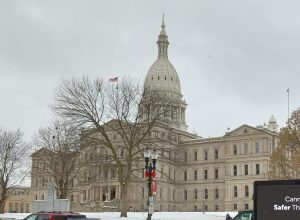
The HFA routinely offers financial impact information in the final segment of its analysis. However, their analysis currently covers only state and local government financial impacts. (Here, for example.)
That needs to change.
It’s great that legislators know a bill’s cost to taxpayers. However, it’s just as important to know a bill’s costs for patients.
Expand HFA bill analysis
To get serious about reducing Michigan’s budget and healthcare costs, Michigan DOGE should add three items to the House Fiscal Agency’s standard bill analysis.
- Financial impact on patients.
- Financial impact on clinicians. (These pass on to patients.)
- Who benefits? A state agency, member of industry, or other; and how much?
I’m not saying it can happen overnight. Analysts may have to begin with simply stating whether a proposed bill would increase or decrease healthcare costs.
However, it’s important for cost estimates to be as specific as possible.
For instance, Michigan has many data collection requirements.
Suppose a new patient assessment is proposed. It is estimated to take two minutes, and would be required for each patient once every twelve hours.
For a nurse with average wages of $36 per hour (ZipRecruiter), the patient’s direct cost per shift is $1.08. Daily, that comes to $2.16; weekly: $4.32; and yearly $224.64 per patient bed.
Additional equipment may be needed, with associated costs.
If the increased work puts the nurse into overtime, the cost is typically time and half, or $54/hour, and the annual cost per patient would be $336.96.
Additional costs include IT time adding this assessment form to the electronic health record system, at an average of $33/hour. All told, estimate 40 hours of work for at total of $1320 in one-time costs. Maintenance costs are unknown.
Also significant is the cost in clinician time taken from other patient care. This cost is intangible but it directly affects quality of care, patient satisfaction, and professional morale.
Multiply all these costs by tens of thousands of Michigan patients each day, and you’ll have a better idea of the bill’s true costs.
Factor in doctor’s office visits and nursing home care for broader mandates.
Multiply this impact by dozens of similar mandates to estimate the annual patient cost from Michigan legislation.
With time, HFA can gather an essential library of information to calculate costs accurately and efficiently. It would be an incalculable service to reduce patient and state healthcare costs, and result in more secure healthcare freedoms.