- FTC alleges anesthesia group celebrated price hikes

- Average tuition for 12 best dental schools in the US
- New York medical society demands physician privileges be protected in Maimonides merger
- 4 hospital, health system layoffs in March
- Texas to lead ibogaine research after pharma proposals fall short
- Advocate plans largest drone delivery network and 2 more supply chain updates
- AI scribes linked to time savings at 5 health systems
- New Hampshire ASC 1st in US to earn new accreditation
- Amgen drug under FDA review in wake of 8 deaths
- Hennepin Healthcare warns of closure without legislative funding
- Hennepin Healthcare warns of closure without legislative funding
- Visa renewal delays sideline physicians at US hospitals
- BayCare residency program size doubles on Match Day gains
- Ohio GI practice acquired
- Health systems rethink innovation
- 8 revenue cycle headlines to know from March
- 8 revenue cycle headlines to know from March
- Court upholds injunction on West Virginia 340B law
- Cyberattack hits Texas hospital
- Cleveland Clinic pilots EHR-integrated AI for inpatient nursing
- Prisma Health plans ASC in Tennessee
- Bill takes aim at ASC, HOPD payment gap
- Ensemble, Cohere building first RCM-native LLM
- Honey Almond Cream Cheese, Sold at Einstein Bros. Bagels, Recalled Due To Undeclared Nuts
- Trump Supports Surgeon General Pick Despite Senate Concerns
- Tennessee orthopedic practice closes abruptly
- 4 health systems back in the black in 2025
- ‘Our stockholders are the members of our community’: Inside Carilion Clinic’s mission-driven margin strategy
- Supreme Court Blocks Colorado Limits on Therapy for LGBTQ Minors
- Antidepressant Might Help Long COVID Fatigue, Study Says
- Home-Delivered Groceries Boost Heart Health In Food Deserts, Study Says
- Nicotine E-Cigarettes Help Smokers Quit, Review Concludes
- Kinesio Taping’s Benefits in Doubt, Major Evidence Review Finds
- High Sodium Intake May Trigger New Heart Failure
- Study Shows BMI Often Gets Your Weight Category Wrong
- Clinicians are burnt out. Peer support can help
- Novo's Wegovy nets cardio nod from UK cost gatekeeper, adding 1M+ eligible patients
- Trump’s One Big Beautiful Bill Act Darkens Outlook for Government-Backed Clinics

- Readers Sound Off on Wage Garnishment, Work Requirements, and More

- CVS Health opens pharmacy-only locations as it rightsizes store footprint
- How Rural Health Systems Are Advancing Cardiac Imaging
- How Rural Health Systems Are Advancing Cardiac Imaging
- Beyond Reimbursement: Why Market Access is MedTech’s Strategic North Star

- Beyond Reimbursement: Why Market Access is MedTech’s Strategic North Star
- Evotec hires exec with AI experience to lead rebooted commercial team
- The Human Side of AI Medical Devices: Why Safety Depends on Design, Not Just Algorithms

- The Human Side of AI Medical Devices: Why Safety Depends on Design, Not Just Algorithms
- Whoop raises $575M series G, Abbott comes on board amid hiring spree
- True ROI of health tech, according to finance leaders
- ‘There isn't as much meat left to cut’: Biopharma layoffs maintain slowdown in Q1
- Where 6 specialty DSOs stand in 2026
- 16 new ASCs in March
- Intermountain joins national trauma, grief network
- Practice closures, new dental schools, DLRs & more: 6 dental updates in New York
- Workforce, patient care, private equity & more: 5 statistics scaring dentists
- American Society of Addiction Medicine updates youth treatment standards
- The shifting oral surgery landscape
- Moody’s upgrades UK King’s Daughters’ credit rating
- Private equity in dentistry has gotten smarter
- 7 DSO leadership changes to know
- University Hospitals swings from loss to 2.6% margin in 2025
- Mark Cuban backs bill to break up vertically integrated insurers
- Lawmakers introduce child suicide prevention bill
- Dental lab group receives private equity investment
- Dental Care Alliance appoints chief revenue officer
- UnitedHealthcare launches Avery, a generative AI companion for members
- 14 behavioral health executive moves to know
- The top-ranked US dental schools in 2026
- Missouri agencies warn of rising nitazene threat
- Only 44% of SUD treatment facilities accept older patients on Medicare: HHS report
- 7 state behavioral health policy updates
- Republicans eye further healthcare cuts: Report
- Uninsured patients drive nearly 40% of healthcare collections: Cedar survey
- FDA flags serious liver injury cases, 8 deaths with ‘reasonable’ link to Amgen's Tavneos
- Novo Nordisk cuts 400 roles at troubled Bloomington site
- Former U.S. Surgeon General Challenges Trump Nominee
- Iterum initiates wind-down after failure to offload antibiotic with sluggish sales
- Listen to the Latest ‘KFF Health News Minute’
- Over 10.2 Million Grill Brushes Recalled Over Metal Bristle Risk
- Sex Enhancement Chocolates Recalled Over Hidden Drug Ingredients
- Short Bursts of Exercise Linked To Lower Risk of Major Diseases
- HHS urges hospitals to align patient menus with updated dietary guidance
- Hartford HealthCare, K Health launch PatientGPT, new AI tool to help patients find health information
- Ensemble partners with Cohere to build first RCM-native large language model
- API supplier BASF raises prices up to 20% in response to rising energy, raw material costs
- Biogen, eyeing swift commercial tailwind, ponies up $5.6B for Apellis and its 2 approved meds
- Cold Weather More Deadly For The Heart Than Heat, Study Finds
- Teens' Sleep Patterns Affect Their Diet, Exercise, Study Says
- 'Watch and Wait' Approach Safe For Women With Precancerous Breast Condition, Trial Finds
- Dental Care Can Help Cirrhosis Patients Avoid Liver Cancer, Hospitalization
- Folks With Clogged Arteries Benefit From Aggressively Lower Cholesterol Goal
- Intermittent Fasting Might Help Manage Female Hormone Imbalance, Trial Shows
- States Pay Deloitte, Others Millions To Comply With Trump Law To Cut Medicaid Rolls
- Trump’s Hunt for Undocumented Medicaid Enrollees Yields Few Violators

- States pay Deloitte, others millions to comply with Trump law to cut Medicaid rolls
- Employer telehealth company eMed raises $200M at $2B valuation
- Insulet hires Stryker vet, reinstating commercial chief role as C-suite overhaul continues
- Texas behavioral health provider launches 6th Austin-area clinic
- New Jersey expands authority for advanced practice nurses
- FDA extends review of Orca Bio’s novel cell therapy for blood cancers
- Nonprofit Electronic Frontier Foundation sues CMS over AI prior authorization demonstration
- CDRH Guidance: Patient Preference Information (PPI) in Medical Device Decision Making
- CDRH Guidance: Patient Preference Information (PPI) in Medical Device Decision Making
- BSCI’s LAAC CHAMPION-AF study for WATCHMAN FLX meets primary and secondary safety and efficacy endpoints
- BSCI’s LAAC CHAMPION-AF study for WATCHMAN FLX meets primary and secondary safety and efficacy endpoints
- Apple Store to ID Regulated Medical Device Apps
- Apple Store to ID Regulated Medical Device Apps
- CMS: This year's open enrollment brought fewer signups, higher premiums
- Medical Schools No Longer Required To Teach Health Inequities
- Lilly presses for UK deal that would see higher drug prices in exchange for resumed investments: FT
- United plots Tyvaso FDA filing after ph. 3 win elicits talk of 'new IPF standard' and blockbuster sales
- Fluoride Quietly Removed From Birmingham Water Years Ago, Officials Face Backlash
- FDA Weighs Expanding What Can Go Into Supplements
- 9 Now Sickened in Outbreak Tied To Raw Milk and Cheese
- BMS, Novartis, Gilead, Iovance dinged over biologics promos in rare spate of CBER untitled letters
- Nearly half of US hospital markets entirely controlled by 1 or 2 health systems: KFF
- Mental health provider platform Headway acquires team behind AI company Tezi
- Idorsia eyes pediatric insomnia use with midstage trial win for sleep med Quviviq
- Electronic Paperwork Increasing Burnout Risk Among Young Doctors
- Kratom Cases Surging In U.S.
- What Makes Play Fun For Children? Seven Factors Stand Out, Study Says
- Night Shifts Are Tough On People With Type 2 Diabetes, Study Says
- Women's Bone Loss Tied To Heart Health, Study Finds
- Want To Lose Weight? Eat A Boring, Repetitive Diet, Researchers Suggest
- Samsung Biologics union gathers votes to strike as tension over wage, governance mounts
- Takeda begins US layoffs as part of massive $1.3B restructuring
- Biogen looks to shake up SMA status quo with FDA nod for high-dose version of Spinraza
- She Owed Her Insurer a Nickel, So It Canceled Her Coverage

- Inside the High-Stakes Corporate Fight Over Feeding Preterm Babies

- Study Links High Antioxidant Intake To Changes in Offspring Development
- The Healthcare Burnout Backlash (pt 1): Burnout Reaches Well Beyond Clinicians
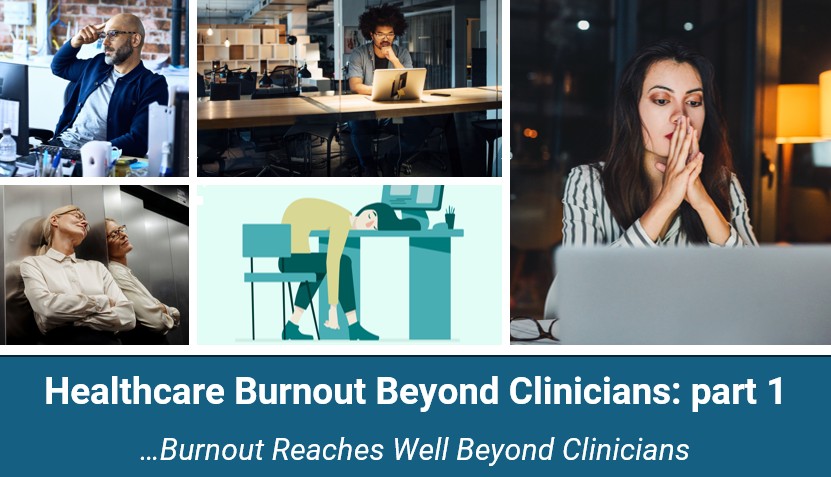
- The Healthcare Burnout Backlash (pt 1): Burnout Reaches Well Beyond Clinicians
- Even Mild Oxygen Loss in Preemies' First Hours Poses Lifelong Brain Risks: Study
- How the Trump Administration Uses Migrant Kids To Find and Detain Family Members
- Oral GLP-1s, COVID preventatives: 3 more drugs in the pipeline, Optum says payers should watch
- Providence trims 2025 operating loss to $132M, notches second consecutive quarter of gains
- $3M Verdict Links Social Media to Anxiety and Depression
- The White House Delays CDC Pick
- New COVID 'Cicada' Variant Is Spreading — What Experts Want You To Know
- Advocate Health to launch ‘nation’s largest’ hospital drone delivery program in Zipline partnership
- Op-ed: Empathy meets efficiency—how the responsible use of AI can transform Medicare
- Family Caregivers Provide $1 Trillion In Annual Labor, AARP Says
- ‘Health Doesn’t Need to Be Ludacris’: Bayer signs rapper-actor to multivitamin campaign
- Rocket plots measured trajectory for new gene therapy Kresladi after clearance to launch from FDA
- Healthy Lab Results May Mask Future Risks for Kids with Obesity
- At-Home Chemotherapy Is Safe, Feasible, Pilot Study Indicates
- What You Do While Sitting Could Predict Dementia Risk
- New Cholesterol Guidelines: What Patients and Caregivers Need to Know
- Want A Bootlicking Yes Man? Ask An AI Chatbot For Advice, Study Warns
- Give and Take: Federal Rural Health Funding Could Trigger Service Cuts



One of the joys of being in this space since 2018 is watching more and more voices grow public awareness of health policy.
https://joehoft.com/a-brief-history-of-health-insurance-regulation-death/
A Brief History of Health Insurance: Regulation = Death
Joe Hoft /Guest post by Rolf Lindgren | December 1, 2025
In the U.S. Constitution ratified in 1788, there is no federal power to regulate insurance. The states regulated insurance. This was a great system because if the laws in one state were bad, you could move to another state. It prevented a cartel of massive insurance corporations from taking over the entire nation. Insurance lobbyists had to go to each state separately to try to rig the system, which was impractical.
So in 1869, the national insurance lobby brought a case to the US Supreme Court. This case, called Paul vs. Virginia (1869) was remarkable for three reasons:
1) The insurance companies WANTED to be regulated by the federal government.
And the Supreme Court decided…
2) Corporations are NOT people.
3) Insurance is NOT commerce!
The insurance lobby lost the case. It was a unanimous decision authored by fabled pro-capitalism Justice Stephen J. Field.
So America continued to enjoy insurance freedom for another 75 years as it turned out, during which time the American economy grew to the largest in the world, by far.
But the bad news is that in 1944, Paul vs. Virginia was overturned.
The Supreme Court suddenly decided that insurance was commerce and soon the President, US Congress, and national insurance lobby thought it was a good idea to federally regulate insurance.
One area ripe for regulation was employee-paid health insurance. Since wage freezes were enacted during WWII, employers offered free health insurance to compensate. The federal government quickly moved in to regulate this practice. So began the cycle of fixing one insurance regulation with new regulations.
Here is a quick summary of major post-WWII health insurance regulations, all of which would have been unconstitutional under Paul vs. Virginia:
The Hill-Burton Act of 1946 – Regulated the addition of hospital construction costs into health insurance costs
The Revenue Act of 1954 – Excluded health benefits from taxable income, thereby ingraining the employee-paid healthcare system
Military Medicare Act of 1956 – Medicare for military family members only
Medicare and Medicaid 1965 – Medicare for everyone, plus Medicaid for low-income people
Employee Retirement Income Security Act (ERISA) of 1974 – Massive regulation of all facets of health insurance
Mental Health Parity Act of 1996 – Requires quasi-scientific mental healthcare to be treated the same as medicine based upon hard science.
And we all know about Obamacare 2010 – Obamacare also would have been unconstitutional under Paul vs. Virginia. In a remarkable fact, not long after the Supreme Court upheld Obamacare in 2012, the six largest health insurance companies merged into only three!
Another remarkable fact is that Obamacare was labeled a “a government takeover of insurance.” But had the Republicans held Congress at the time, the insurance lobbyists were prepared to have it called “a corporate takeover of insurance” for almost the exact same law! Either way, it’s both socialism (redistribution of wealth) and fascism (partnership of big government and big business).
The three most heavily regulated industries in the US are healthcare, education, and nuclear reactors. All of them have unsustainable cost explosions.
Today, we face a health insurance and healthcare crisis, accompanied by a vast array of laws and regulations. We don’t have cost transparency. This didn’t exist prior to 1944. In those days, you could call your family doctor over for a visit and pay out of pocket. The improvements we do have since 1944 derive from advances in science & technology, not from regulations. Today, health insurance isn’t affordable, and pretty soon, healthcare costs may swallow up most of our Gross National Product.
Frightening Final Thought
Imagine for a moment if a serious world war began. Suppose this war involved the United States, China, Russia, India and/or Europe. Suppose our government needed every resource available for the military to fight the war. What would happen to all the people getting government healthcare benefits? Chances are, they would be left on their own until the world war was over, and millions of people would die.
Our healthcare system must be fixed now. Restore Paul vs. Virgina!

How do we restore Paul V Virginia? Another lawsuit?
@pattie such a good question. The best I've got is that people controlling their own money are more free than those who don't.
What we have with federal insurance law is one knotty mess, I just wish I knew the correct thread to pull to undo it!
@pattie Justia records Paul v. Virginia's opinions and final decision. Fascinating stuff! I'm posting just the syllabus here.
Trigger any ideas?
https://supreme.justia.com/cases/federal/us/75/168/
U.S. Supreme Court
Paul v. Virginia, 75 U.S. 7 Wall. 168 168 (1869)Syllabus
1. A state statute which enacts that no insurance company not incorporated under the laws of the State passing the statute shall carry on its business within the State without previously obtaining a license for that purpose, and that it shall not receive such license until it has deposited with the Treasurer of the State bonds of a specified character to an amount varying from thirty to fifty thousand dollars, according to the extent of the capital employed, is not in conflict with that clause of the Constitution of the United States which declares that "the citizens of each State shall be entitled to all the privileges and immunities of citizens in the several States," nor with the clause which declares that Congress shall have power "to regulate commerce with foreign nations and among the several States."
2. Corporations are not citizens within the meaning of the first of these clauses. They are creatures of local law, and have not even an absolute right of recognition in other States, but depend for that and for the enforcement of their contracts upon the assent of those States, which may be given accordingly on such terms as they please.
3. The privileges and immunities secured to citizens of each State in the several States by this clause are those privileges and immunities which are common to the citizens in the latter States under their constitution and laws by virtue of their being citizens. Special privileges enjoyed by citizens in their own States are not secured by it in other States.
4. The issuing of a policy of insurance is not a transaction of commerce within the meaning of the latter of the two clauses, even though the parties be domiciled in different States, but is a simple contract of indemnity against loss.
The case was thus:
An act of the legislature of Virginia, passed on the 3d of February, 1866, provided that no insurance company not incorporated under the laws of the State should carry on its business within the State without previously obtaining a license for that purpose, and that it should not receive such license until it had deposited with the treasurer of the State bonds of a specified character, to an amount varying from thirty to fifty thousand dollars, according to the extent of the capital employed. The bonds to be deposited were to consist of six percent bonds of the State, or other bonds of public corporations guaranteed by the State, or bonds of individuals, residents of the State, executed for money lent or debts contracted after the passage of the act, bearing not less than six percent per annum interest.
A subsequent act passed during the same month declared that no person should, "without a license authorized by law, act as agent for any foreign insurance company" under a penalty of not less than $50 nor exceeding $500 for each offence; and that every person offering to issue, or making any contract or policy of insurance for any company created or incorporated elsewhere than in the State should be regarded as an agent of a foreign insurance company.
In May, 1866, Samuel Paul, a resident of the State of Virginia, was appointed the agent of several insurance companies, incorporated in the State of New York, to carry on the general business of insurance against fire, and, in pursuance of the law of Virginia, he filed with the auditor of public accounts of the State his authority from the companies to act as their agent. He then applied to the proper officer of the district for a license to act as such agent within the State, offering at the time to comply with all the requirements of the statute respecting foreign insurance companies, including a tender of the license tax, excepting the provisions requiring a deposit of bonds with the treasurer of the State, and the production to the officer of the treasurer's receipt. With these provisions neither he nor the companies represented by him complied, and, on that ground alone, the license was refused. Notwithstanding this refusal, he undertook to act in the State as agent for the New York companies without any license, and offered to issue policies of insurance in their behalf, and in one instance did issue a policy in their name to a citizen of Virginia. For this violation of the statute, he was indicted, and convicted in the Circuit Court of the City of Petersburg, and was sentenced to pay a fine of fifty dollars. On error to the Supreme Court of Appeals of the State, this judgment was affirmed, and the case was brought to this Court under the 25th section of the Judiciary Act, the ground of the writ of error being that the judgment below was against a right set up under that clause of the Constitution of the United States [Footnote 1] which provides that "the citizens of each State shall be entitled to all the privileges and immunities of citizens in the several States," and that clause [Footnote 2] giving to Congress power "to regulate commerce with foreign nations, and among the several States."
The corporators of the several insurance companies were at the time, and still are, citizens of New York, or of some one of the States of the Union other than Virginia. And the business of insurance was then, and still is, a lawful business in Virginia, and might then, and still may, be carried on by all resident citizens of the State, and by insurance companies incorporated by the State, without a deposit of bonds, or a deposit of any kind with any officer of the commonwealth.
Get MHF Insights
News and tips for your healthcare freedom.
We never spam you. One-step unsubscribe.
Sponsors
Friends of MHF





Kirsten DeVries
Tom & Karen Nunheimer
Steve Ahonen
Ron & Faith Bosserman
Marlin & Kathy Klumpp
Sign Up for MHF Insights to keep up on the latest in Michigan Health Policy