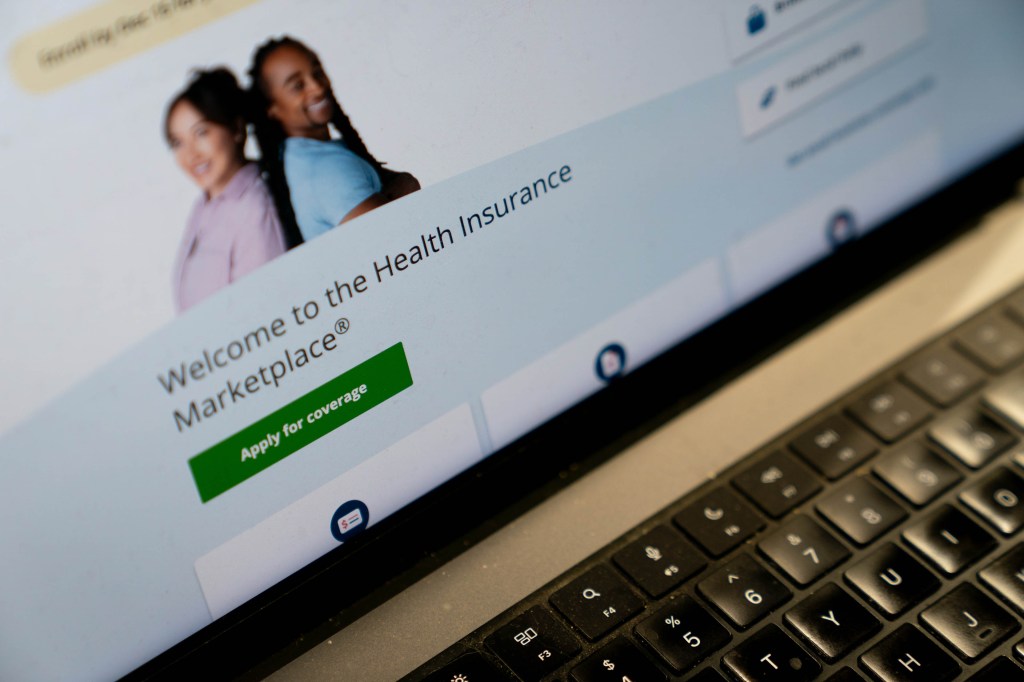
- Trump Team Claims Successes Against ACA Fraud While Pushing for More Controls
- Give and Take: Federal Rural Health Funding Could Trigger Service Cuts

- Where are you with EUDAMED?

- Where are you with EUDAMED?
- HL7 Launches Real‑Time Medical Device Interoperability Accelerator

- HL7 Launches Real‑Time Medical Device Interoperability Accelerator
- Two GA Tech ATDC Startups — Nephrodite and OrthoPreserve — Secure FDA Breakthrough Device Designation
- Two GA Tech ATDC Startups — Nephrodite and OrthoPreserve — Secure FDA Breakthrough Device Designation
- Artificial Intelligence: ROI, not Clinical Autonomy, Leads Operational Workflows
- Artificial Intelligence: ROI, not Clinical Autonomy, Leads Operational Workflows
- Medtronic and Merit Medical Systems distribution agreement for new, ViaVerte basivertebral nerve ablation system
- Medtronic and Merit Medical Systems distribution agreement for new, ViaVerte basivertebral nerve ablation system
- Breakthrough Device Designation for Noah Labs Vox Heart Failure Detection Device
- Breakthrough Device Designation for Noah Labs Vox Heart Failure Detection Device
- No more ‘old school’: How Duke Health is reimagining workforce development
- Why private practice dentistry needs a better model
- Chief nurses: Hospital finances improve with nursing investments
- Mississippi health system goes ‘all in’ on Epic with $115M investment
- CareQuest Innovation Partners, Kno2 collab on medical-dental data integration
- Ascension Wisconsin CEO to step down
- The hospitals, health systems cutting jobs in 2026
- Nonprofit highlights rural opioid care strategies
- The 7 things on the table in the Mount Sinai-Anthem negotiations
- Wearables data predicts patient engagement: Mayo Clinic study
- Advocate plans largest US hospital drone delivery network
- Vitana Pediatric & Orthodontic Partners adds Florida practice
- Indiana system opens $21.7M outpatient center
- Trump administration targets medical school admissions: 4 notes
- EyeSouth Partners continues 2026 expansion with Louisiana practice
- RSV lingers in parts of US even as flu and COVID-19 recede
- A huge month for CMS policy
- What the Health? From KFF Health News: A Headless CDC
- GI is exploding with new tech—but how do patients feel about it?
- Maryland physician to pay $500K+ to settle false claims allegations
- Rhode Island oral surgeon launches Congressional campaign
- Premier Anesthesia, City of Hope Phoenix ink partnership
- 20 behavioral health leaders challenge industry assumptions
- What simulation training revealed about GI skills gaps
- Judge dismisses physician’s wrongful termination suit against staffing firm
- 3 California behavioral health centers to close amid funding shifts
- North Carolina practice to close after 40+ years
- St. Tammany opens outpatient cardiology center
- Indiana bars autism therapy provider from Medicaid billing: Wall Street Journal
- 6 dental practice openings to know
- UnitedHealth shareholder sues over proposal to include details on integration in annual proxy
- APRNs, PAs account for most antipsychotic prescriptions for Medicare Part D: Study
- Infosys to acquire Optimum Healthcare IT in $465M deal
- Oklahoma House passes bill expanding scope of dental assistants
- Dr. Nellie Kim-Weroha joins American Association of Orthodontists’ Board of Trustees
- California behavioral health agency to close 2 centers
- 52 DSOs to know: 2026
- DOJ alleges NewYork-Presbyterian forces payers into anticompetitive 'all-or-nothing' contracts
- FDA Warns Biotech Firm Over Cancer Drug Anktiva Claims
- Bees and Hummingbirds May Be Consuming Small Amounts of Alcohol
- Two States Sue Cord Blood Company Over Misleading Claims
- New WHO Guidance Aims To Speed Tuberculosis Testing
- As questions swirl around ATTR competition, Alnylam plots path to market leadership for Amvuttra
- Trump admin delays nomination for new CDC director past deadline
- Outspoken ACIP member steps down amid vaccine panel uncertainty: reports
- Egg-based drugmaker Neion Bio emerges from stealth to cook up multi-product biosimilar collab
- Genentech walks the walk in lupus as sponsor of annual awareness and fundraising event
- Study Reveals How Many Americans Consider Using a Gun
- Massive Study Finds Stress and Grief Don’t Cause Cancer
- Ultra-Processed Foods Harm Fertility In Both Men And Women, Studies Reveal
- Small Daily Habits Can Add Up To Better Heart Health
- Ritalin Might Protect ADHD Kids' Long-Term Mental Health, Study Finds
- Can You Drink Enough Fluids To Prevent Kidney Stones? Maybe Not, New Study Says
- Clasp, loan-linked hiring tool for employers, clinches $20M to expand amid federal loan caps
- Taking a GLP-1? Doctors Say Not To Forget About Movement and Mental Health

- OpenEvidence rolls out AI medical coding feature
- CDC’s Acting Chief Promises a Return to Stability in a Tumultuous Moment
- California peer-run behavioral health center to close amid funding shift
- Remarks at the Financial Stability Oversight Council Meeting
- ‘Integration only works if data lives in the same system’: How 5 systems are operationalizing behavioral health
- Inside UHS’ playbook for responsible behavioral health growth
- Epic4 Specialty Partners adds Illinois practice
- The unsolved problems still plaguing dentistry
- American Dental Association adds mental health, GLP-1 prompts to patient forms
- RWJF: Between 5M and 10M people could lose Medicaid coverage in 2028 under work requirements
- Gen Z nurses prioritize schedule flexibility, need more manager interactions to avoid turnover
- How pharma marketers can capitalize on HCPs’ AI, social media and streaming habits
- Federal Officials Investigate States That Require Abortion Coverage
- Corcept's lead drug bounces back from FDA snub with different approval as Lifyorli in ovarian cancer
- Ionis slashes Tryngolza's price tag by 93% ahead of anticipated label expansion
- FDA approves Denali's Hunter syndrome drug, handing rare disease community a win
- Baby Walkers Sold on Amazon Recalled Over Fall Risk
- Want To Protect Your Brain? Science Says Exercise
- HelloFresh Pizza Recall Issued in 10 States Over Metal Risk
- Clinical Trials Have Too Much Data…That’s the Problem.

- Clinical Trials Have Too Much Data…That’s the Problem.
- CMS reveals new Medicaid model that supports coordination for children with complex needs
- Novartis sued by breast cancer patient over branded drug websites’ data-sharing practices
- Takeda targets $1.3B in cost savings in further restructuring
- Biogen pays $20M upfront to tap into Alteogen's subQ delivery tech
- 'Universal Donor' Blood Supplies Dangerously Low, Study Warns
- Why Stepping Outside May Help You Eat Better
- U.S. Medicine, Science Facing An Online Misinformation Siege, Poll Concludes
- Childhood Obesity Undercuts The American Dream For Some, Study Says
- Inclusive High Schools Benefit All Students, Not Just LGBTQ Teens
- Parental Loss Due to Drugs, Violence Raises Child Death Risk by 2,000%
- As Boehringer touts US launches, board chairman worries EU is 'falling further behind'
- The evolving state of exome and genome sequencing
- An Arm and a Leg: Steep Health Care Costs Steer Americans to Tough Decisions
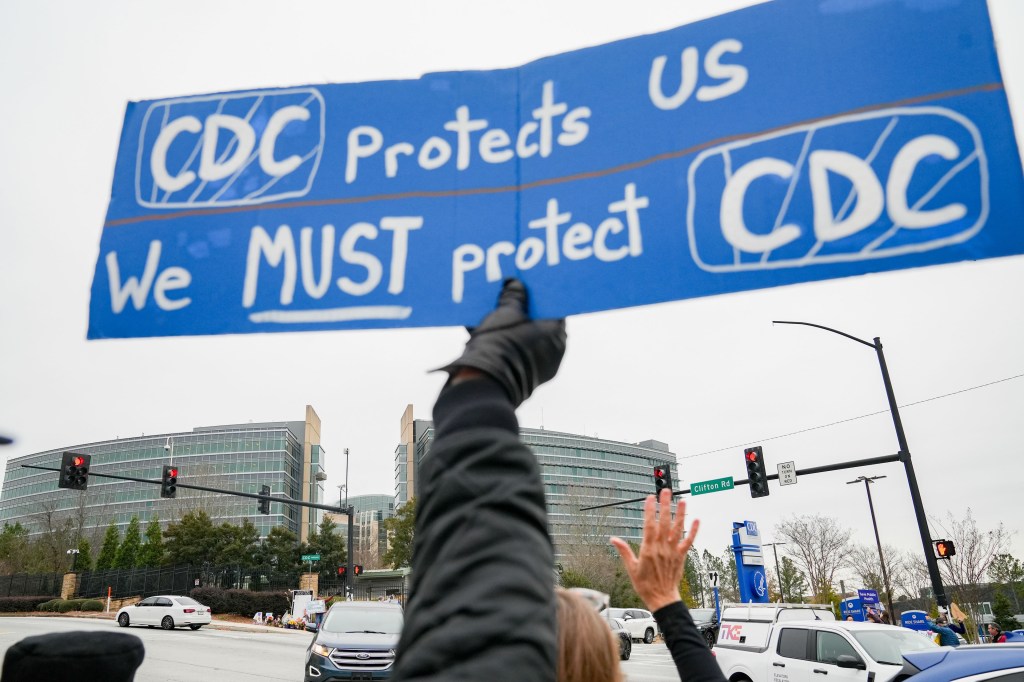
- Demoralized CDC Workforce Reels From Year of Firings, Funding Cuts, and a Shooting
- Qualified Health locks in $125M in fresh funding to scale enterprise AI at health systems
- Misery Loves [Investment] Company?: Remarks at the 2026 Investment Company Institute Investment Management Conference
- Study: Nearly 1 in 5 pediatric hospital deaths involve sepsis
- As expansions come online, CDMO Hovione aims to meet industry's 'dual supply and sourcing' zeal: exec
- Opening Remarks at the Digital Asset Summit 2026
- CVS Caremark, FTC reach settlement in insulin pricing case
- UCB unveils plan to build $2B biologics plant near its US headquarters in Atlanta
- PeaceHealth sued over plans to tap out-of-state staffer ApolloMD for Oregon EDs
- New Lyme Disease Vaccine Shows Strong Results in Trial
- TrumpRx Adds Diabetes, COPD Drugs at Steep Discounts
- Highmark reports $175M net loss for 2025 as financial headwinds batter health plan
- Listen to the Latest ‘KFF Health News Minute’
- Abivax hires commercial chief from Takeda to infuse Entyvio expertise into IBD launch prep
- ImmunityBio hit with FDA warning letter over Anktiva promotions in TV ad, podcast episode
- Alcohol Prep Pads Recalled Over Bacteria Risk, Cardinal Health Says
- Fewer patients traveled for abortions in 2025 as telehealth care increased, report finds
- Cologuard campaign reunites ‘Full House’ stars to give ‘The Talk’ about colon cancer screening
- Lilly to remove certain insulin products from European markets by 2027
- Karyopharm, looking to jump-start Xpovio, reports mixed results in myelofibrosis
- Study Warns Fluoride Bans May Raise Tooth Decay in Children
- WuXi Bio's record number of new projects in 2025 leaned heavily on US clients
- “Me engañaron”: agentes encadenan a un padre que había ido al ICE a reunirse con sus hijos

- Gilead inks Manta pact to dive deeper into cancer patient support
- Cheap Children's Clothing Tainted With Lead, Study Says
- Insulin Prices Fell For Medicare Patients Under Biden-Era Caps, Study Finds
- New Fathers Face Mental Health Challenges, Study Finds
- Your Choice Of Booze Influences Your Risk Of Death, Study Says
- AI Gets a 'D' When Judging Scientific, Medical Claims
- New Online Tool Helps Parkinson's Patients Weigh Brain Implant Decision
- AI chatbot use for health information up 16% from 2024: Rock Health survey
- ‘They Tricked Me’: A Father Was Chained After He Went to ICE To Reunite With His Kids
- Wilmington PharmaTech commits $50M to US API expansion
- Strides recalls nearly 90K bottles of children's ibuprofen after contamination complaints
- Trump administration unveils national policy framework for AI as it moves to override state laws
- Breast Cancer Locator System Submitted for De Novo 510(k) by Cairn Surgical
- Breast Cancer Locator System Submitted for De Novo 510(k) by Cairn Surgical
- 17 spine surgery firsts in Q1

- 17 spine surgery firsts in Q1
- Cencora acquiring EyeSouth Partners' retina business for $1.1B
- A look at how Optum Rx is using AI to address pharmacy fraud, waste and abuse
- Nursing Homes Accused of False Diagnoses To Hide Drug Use
- FDA Approves Higher-Dose Wegovy To Help People Lose More Weight
- Teens Often Pressured To Send Sexual Photos by Someone They Know, Study Finds
- Nearly 90,000 Bottles of Children’s Ibuprofen Recalled Nationwide
- Rural Residents Have Highest Cancer Death Rates, Researchers Say
- Your Bank Account Might Show How Well Your Brain Will Age, Researchers Say


Long form article posted by The Atlantic, a mouthpiece of the political left owned, operated, and subsidized by billionaire Marxist Laurene Powell Jobs. This article's humble tone is a departure for the political left, which appears to be attempting a comeback after supporting naked totalitarianism during the COVID pandemic:
https://www.theatlantic.com/ideas/archive/2025/07/public-health-politicization/683409/
How Public Health Discredited Itself
By John Tierney - July 7, 2025Not so long ago, public health ranked high in the scientific pantheon. Its heroes—the conquerors of cholera, smallpox, yellow fever, and polio—were celebrated in history textbooks. When the coronavirus pandemic began more than five years ago, public-health leaders were revered by journalists and the public. Americans’ bipartisan trust in scientists led millions of people to obey the unprecedented guidance in the spring of 2020 to remain in their homes.
But then, after the death of George Floyd, the rules suddenly changed—for some people. Isolating at home was no longer mandatory for those joining “protests against systemic racism,” according to an open letter signed by more than 1,200 academics, doctors, and public-health officials and released in early June. The signers acknowledged that leaders of their professions had previously condemned a street protest against lockdown policies—and they reaffirmed their opposition to such protests and other public gatherings. But the Black Lives Matter protests were different: “We support them as vital to the national public health.”
So it was now vital for thousands to march together in the streets, but you still couldn’t take your child to a playground or gather with family in a cemetery to bury your grandmother? Or march in protest of anything except racism? This made no sense, especially to conservatives, whose skepticism kept growing as COVID restrictions proliferated in blue states. By the time the pandemic ended, a survey had found that more than half of Republicans had little or no confidence that “science has had a mostly positive effect on society.” To them, the public-health establishment’s guidance on such topics as childhood vaccines and fluoridated water now seemed less about the science than the politics.
Although many skeptics have overreacted, rejecting sound science in favor of quack theories, they’ve gotten one thing right: A noble profession has been corrupted by politics. This became obvious during the pandemic, but the politicization of the discipline has been going on for half a century. The modern field has redefined the very meaning of public health, and in the process, it has made so many mistakes that it has itself become a hazard to Americans’ health.
The pioneers of public health focused on threats that were genuinely public: epidemics that spread through the water and the air. Halting the spread of cholera and smallpox required collective action, and the government had clear scientific justification to provide clean water, build sewer systems, and sponsor vaccination campaigns. In addressing diseases caused by unhealthy personal behavior, leaders mostly urged public education, not governmental coercion. The surgeon general’s landmark 1964 report on smoking cataloged the evidence of its harm but avoided policy prescriptions. In a congressional hearing that year, the president of the American Cancer Society rejected the notion of banning smoking: “We believe in the freedom of the individual in the matter of cigarette smoking.”
But the distinction between public and personal health began disappearing in the 1960s. Public health was undone, in part, by its success. As they conquered one scourge after another, practitioners began looking for new missions and expanding the definition of epidemic. Over the ensuing decades, the Centers for Disease Control and Prevention, founded in the 1940s to stop the spread of malaria, enlarged its portfolio to address epidemics of tobacco use, firearm fatalities, domestic violence, and racism. The American Public Health Association began campaigning to regulate products it deemed unhealthy, and went on to support income redistribution, nationalized health care, increases to the minimum wage, green energy, and transgender rights.
The field’s transformation was summarized in the title of a book published in 2000 by the economists James T. Bennett and Thomas J. DiLorenzo: From Pathology to Politics. “To a very large extent,” the authors concluded, “the public health movement has increasingly become a collection of liberal ideologies cloaked in the language and garb of health science.” Public health was redefined not merely as the absence of disease but as the presence of social justice, the pursuit of which became a major part of the curriculum in public-health schools. Unhealthy personal choices were recast as public hazards requiring new government interventions.
To combat heart disease and obesity, senators and advocacy groups pressed for federal dietary guidelines in 1980 telling Americans to eat less fat and more carbohydrates. Eminent nutrition researchers objected, arguing that hypotheses linking the diseases to dietary fat were too tenuous to justify the move. These researchers would eventually be vindicated by rigorous studies that failed to demonstrate the purported benefits of low-fat diets—and that revealed harms from carbohydrate-rich diets.
But such scientists were no match for their political opponents. Politicians and journalists portrayed them as outliers and tools of the food industry, because it had funded some of their research. The federal government went on recommending a low-fat diet and issued the now-infamous food pyramid promoting carbs. As the American food industry and public followed that advice, substituting carbs for fats, rates of obesity and diabetes soared.
Undeterred by that fiasco, the federal government issued more guidelines in 2005, telling Americans to adopt a low-salt diet and consume no more than 2,300 milligrams of sodium daily. It set an even lower limit for middle-age and older people—1,500 milligrams—which meant cutting out more than half of the sodium in a typical diet. Once again, some scientists said that there was no evidence to justify this experiment on the public. They were dismissed as outliers and industry shills, but their concerns, too, were subsequently taken up by other scientists: Large studies found that low-salt diets were actually associated with higher rates of heart disease, stroke, and death than diets with moderate amounts of sodium. The government eventually removed the draconian limit for older adults. But it has continued recommending the 2,300-milligram limit for the general population, which critics say is still unwarranted—and quite possibly harmful—because there’s little evidence that a low-salt diet would benefit people who do not have high blood pressure.
With the transformation of the profession, smoking was no longer defensible on the grounds of individual freedom. Bans on smoking in outdoor spaces, private workplaces, and restaurants were justified with overhyped claims about the deadly perils of secondhand smoke. (Later, when a rigorous study found no link between secondhand smoke and lung cancer, the bans were retroactively justified as a way to “change societal behavior” by “denormalizing” smoking.) Prohibitionists in the U.S. sought not merely a “smoke-free society” but also a “tobacco-free society,” which meant eliminating any form of nicotine, even the safer alternatives to cigarettes being encouraged by authorities in other countries. In Britain, the Royal College of Physicians noted that “nicotine itself is not especially hazardous” and warned that it would be “unjust, irrational and immoral” not to offer alternatives to cigarettes that could save the lives of millions of smokers. In 2015, England’s public-health agency published a study that found nicotine vaping to be an effective tool for quitting that eliminated around 95 percent of the harms of smoking.
In the U.S., the smoking rate among adults and youths declined sharply after nicotine vaping started growing rapidly in 2010, but you wouldn’t have guessed it from the reaction of officials at the CDC and the FDA. They launched a campaign against vaping, imposing strict new regulations and seizing on weak evidence to issue warnings of potential dangers. In 2014, the director of the CDC, Tom Frieden (who had risen to national prominence as New York City’s health commissioner by crusading against fat, salt, and smoking), warned that vaping could “do more harm than good” by luring young people to smoke cigarettes. But smoking rates among youths and adults have continued declining—and other potential dangers have been soundly debunked too.
As usual, the few scientists challenging the narrative have been mostly ignored (and denounced) by their colleagues and the media. Polls in recent years show that three-quarters of Americans wrongly believe that vaping is equally as or more dangerous than smoking—and some of them are smokers who have been dissuaded from using a singularly effective tool for quitting.
The most egregious errors, of course, came during the coronavirus pandemic. Before the first outbreaks began, the CDC had drawn up a pandemic plan incorporating the old-school public-health principles of Donald Henderson, the epidemiologist who had directed the worldwide campaign that eradicated smallpox in the 1960s and ’70s. In 2006, he and his colleagues at the University of Pittsburgh analyzed possible responses to an influenza pandemic, including bans on public gatherings, lengthy closures of schools, travel restrictions, and the universal wearing of surgical masks. The researchers did not recommend any of those responses, pointing to evidence that they would be ineffective, and warned that “if particular measures are applied for many weeks or months, the long-term or cumulative second- and third-order effects could be devastating socially and economically.” The article urged public-health officials to not put too much faith in computer models. It stressed the need for leaders to “provide reassurance” and reduce the public’s anxiety by maintaining “the normal social functioning of the community.”
In its pre-2020 pandemic-planning scenarios, the CDC didn’t recommend business closures or mask wearing by healthy individuals, even if a virus were as deadly as the 1918 flu. But once China claimed that its lockdown had stopped the virus, the CDC plan was abruptly abandoned. Instead of reassuring the public, leaders presented doomsday scenarios (based on wildly unrealistic computer projections) that terrified everyone, especially young people, who were actually at a much lower risk of death than the rest of the population. Instead of following the pre-pandemic advice of its own scientists, the CDC copied China’s lockdown.
Why did the public-health establishment want to believe, much less emulate, China’s authoritarian rulers? The sudden enthusiasm for lockdowns has sometimes been blamed on the profession’s partisan bias: If Donald Trump opposed lockdowns, Democrats assumed, they must be a good idea, and the economic damage wouldn’t seem quite so catastrophic if it prevented him from being reelected that year. The idea that the pandemic might discredit Trump even prompted Jane Fonda to describe COVID as “God’s gift to the Left.”
But there was more to it than just election-year politics. The pandemic was also God’s gift to the ambitious social engineers who had come to dominate public-health discourse. For decades, abetted by journalists eager for scare stories, these scientists and activists had been gaining prestige, power, and funding by declaring new menaces that could be conquered only by following their expert guidance, and they had become adept at silencing researchers who questioned their version of “the science.”
Early in the pandemic, a few prominent researchers echoed Henderson’s warning that the unprecedented restrictions on liberty were not justified by the scientific literature and could cause much more harm than the virus. But these researchers—including Harvard’s Martin Kulldorff and Stanford’s John Ioannidis, Jay Bhattacharya, and Scott Atlas—were promptly vilified by colleagues, smeared in the press, and censored on social-media platforms. Other researchers became afraid to openly challenge the establishment, so the officials promoting lockdowns became the public face of scientific authority.
And then the mask came off. The dispensation for the Black Lives Matter protests was so nakedly ideological that COVID policies became an intensely partisan issue. Red states began reopening while blue states remained shut, mandated masks, and kept schools closed long after they had reopened in the rest of America and in Europe. For some, wearing a mask became a political statement—the Democratic version of a MAGA hat. Blue-state governors and the Biden administration adopted some of the world’s most aggressive policies, such as the CDC’s recommendation (which was partially rescinded only last month) that everyone over the age of six months be vaccinated against COVID. In much of Europe, health agencies never recommended the vaccine for healthy children under 5, required those young children to wear masks, or mandated vaccines for people with natural immunity. In 2022 and 2023, many European agencies stopped recommending booster shots for most healthy people under 60, but the CDC still recommends the shots for everyone over 18—and still advises parents to consider vaccinating infants and children.
American public-health officials eventually acknowledged having made a few mistakes, such as not reopening schools sooner, but they’ve mostly ignored the evidence that their response to the coronavirus pandemic was the worst debacle in the history of their profession, and arguably the costliest federal-policy blunder ever made in peacetime. Just as Donald Henderson had warned, lockdowns and other restrictions caused devastating economic and social damage while proving largely futile as a means of controlling the virus.
Many studies comparing mortality rates across the United States and Europe have concluded that lockdowns and other restrictions made little or no difference in reducing COVID mortality. Clinical trials of masks failed to show they were effective, and the rates of COVID infections and deaths in states with mask mandates were virtually identical to the rates in no-mandate states throughout the pandemic. Sweden, initially pilloried for refusing to lock down and for advising its citizens not to wear masks, ended the pandemic with one of the lowest rates in Europe of cumulative excess mortality.
The public’s lingering anger over COVID restrictions helped reelect Trump, who has brought two COVID heretics into the administration: Bhattacharya, the new director of the National Institutes of Health, and Marty Makary of Johns Hopkins, the new FDA commissioner. During their confirmation hearings, they vowed to make sweeping reforms and lamented Americans’ loss of faith in public-health institutions. During the pandemic, both had warned that the mandates for COVID vaccines were excessive and would make Americans leery of all vaccines. Sure enough, a Gallup poll found that the percentage of Americans who say vaccinating their children is “extremely important” fell from nearly 60 percent before the pandemic to just 40 percent last year.
To regain the public’s trust, both researchers promised senators that they would restore scientific rigor and debate at their agencies, but they clearly have their work cut out for them. Their agencies not only still have plenty of ambitious progressives in the ranks but also are now overseen by a particularly avid social engineer, Robert F. Kennedy Jr., the secretary of Health and Human Services and leader of the “Make America healthy again” movement. He wants to restrict seed oils, ultra-processed foods, pesticides, and other products that he considers unhealthy. Critics are already warning that the scientific rationales for these moves are so weak that his public-health campaign, like previous ones, could make Americans less healthy.
But RFK Jr. seems determined to continue in his predecessors’ footsteps, and he has even discovered yet another epidemic. “Anti-Semitism—like racism—is a spiritual and moral malady that sickens societies and kills people with lethalities comparable to history’s most deadly plagues,” he declared, in announcing a task force to combat it. Yes, anti-Semitism is deadly, and you can call it a plague, but that doesn’t mean scientists have the expertise to conquer it.
The public-health profession can go on pretending it knows how to cure every social ill, but it will never earn back the public’s respect unless it returns to its original principles. It needs to choose evidence over ideology—and humility over hubris.
Get MHF Insights
News and tips for your healthcare freedom.
We never spam you. One-step unsubscribe.
Sponsors
Friends of MHF



Kirsten DeVries
Tom & Karen Nunheimer
Steve Ahonen
Ron & Faith Bosserman
Marlin & Kathy Klumpp
Sign Up for MHF Insights to keep up on the latest in Michigan Health Policy