- Trump Team Claims Successes Against ACA Fraud While Pushing for More Controls

- Give and Take: Federal Rural Health Funding Could Trigger Service Cuts

- Where are you with EUDAMED?

- Where are you with EUDAMED?
- HL7 Launches Real‑Time Medical Device Interoperability Accelerator

- HL7 Launches Real‑Time Medical Device Interoperability Accelerator
- Two GA Tech ATDC Startups — Nephrodite and OrthoPreserve — Secure FDA Breakthrough Device Designation
- Two GA Tech ATDC Startups — Nephrodite and OrthoPreserve — Secure FDA Breakthrough Device Designation
- Artificial Intelligence: ROI, not Clinical Autonomy, Leads Operational Workflows
- Artificial Intelligence: ROI, not Clinical Autonomy, Leads Operational Workflows
- Medtronic and Merit Medical Systems distribution agreement for new, ViaVerte basivertebral nerve ablation system
- Medtronic and Merit Medical Systems distribution agreement for new, ViaVerte basivertebral nerve ablation system
- Breakthrough Device Designation for Noah Labs Vox Heart Failure Detection Device
- Breakthrough Device Designation for Noah Labs Vox Heart Failure Detection Device
- No more ‘old school’: How Duke Health is reimagining workforce development
- Why private practice dentistry needs a better model
- Chief nurses: Hospital finances improve with nursing investments
- Mississippi health system goes ‘all in’ on Epic with $115M investment
- CareQuest Innovation Partners, Kno2 collab on medical-dental data integration
- Ascension Wisconsin CEO to step down
- The hospitals, health systems cutting jobs in 2026
- Nonprofit highlights rural opioid care strategies
- The 7 things on the table in the Mount Sinai-Anthem negotiations
- Wearables data predicts patient engagement: Mayo Clinic study
- Advocate plans largest US hospital drone delivery network
- Vitana Pediatric & Orthodontic Partners adds Florida practice
- Indiana system opens $21.7M outpatient center
- Trump administration targets medical school admissions: 4 notes
- EyeSouth Partners continues 2026 expansion with Louisiana practice
- RSV lingers in parts of US even as flu and COVID-19 recede
- A huge month for CMS policy
- What the Health? From KFF Health News: A Headless CDC
- GI is exploding with new tech—but how do patients feel about it?
- Maryland physician to pay $500K+ to settle false claims allegations
- Rhode Island oral surgeon launches Congressional campaign
- Premier Anesthesia, City of Hope Phoenix ink partnership
- 20 behavioral health leaders challenge industry assumptions
- What simulation training revealed about GI skills gaps
- Judge dismisses physician’s wrongful termination suit against staffing firm
- 3 California behavioral health centers to close amid funding shifts
- North Carolina practice to close after 40+ years
- St. Tammany opens outpatient cardiology center
- Indiana bars autism therapy provider from Medicaid billing: Wall Street Journal
- 6 dental practice openings to know
- UnitedHealth shareholder sues over proposal to include details on integration in annual proxy
- APRNs, PAs account for most antipsychotic prescriptions for Medicare Part D: Study
- Infosys to acquire Optimum Healthcare IT in $465M deal
- Oklahoma House passes bill expanding scope of dental assistants
- Dr. Nellie Kim-Weroha joins American Association of Orthodontists’ Board of Trustees
- California behavioral health agency to close 2 centers
- 52 DSOs to know: 2026
- DOJ alleges NewYork-Presbyterian forces payers into anticompetitive 'all-or-nothing' contracts
- FDA Warns Biotech Firm Over Cancer Drug Anktiva Claims
- Bees and Hummingbirds May Be Consuming Small Amounts of Alcohol
- Two States Sue Cord Blood Company Over Misleading Claims
- New WHO Guidance Aims To Speed Tuberculosis Testing
- As questions swirl around ATTR competition, Alnylam plots path to market leadership for Amvuttra
- Trump admin delays nomination for new CDC director past deadline
- Outspoken ACIP member steps down amid vaccine panel uncertainty: reports
- Egg-based drugmaker Neion Bio emerges from stealth to cook up multi-product biosimilar collab
- Genentech walks the walk in lupus as sponsor of annual awareness and fundraising event
- Study Reveals How Many Americans Consider Using a Gun
- Massive Study Finds Stress and Grief Don’t Cause Cancer
- Ultra-Processed Foods Harm Fertility In Both Men And Women, Studies Reveal
- Small Daily Habits Can Add Up To Better Heart Health
- Ritalin Might Protect ADHD Kids' Long-Term Mental Health, Study Finds
- Can You Drink Enough Fluids To Prevent Kidney Stones? Maybe Not, New Study Says
- Clasp, loan-linked hiring tool for employers, clinches $20M to expand amid federal loan caps
- Taking a GLP-1? Doctors Say Not To Forget About Movement and Mental Health

- OpenEvidence rolls out AI medical coding feature
- CDC’s Acting Chief Promises a Return to Stability in a Tumultuous Moment
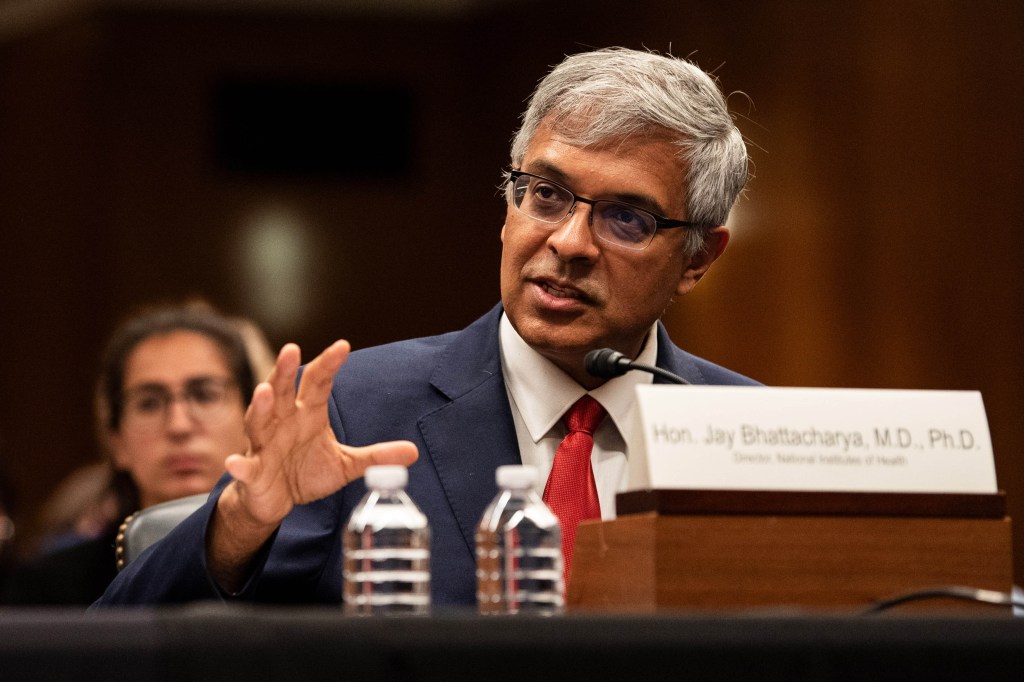
- California peer-run behavioral health center to close amid funding shift
- Remarks at the Financial Stability Oversight Council Meeting
- ‘Integration only works if data lives in the same system’: How 5 systems are operationalizing behavioral health
- Inside UHS’ playbook for responsible behavioral health growth
- Epic4 Specialty Partners adds Illinois practice
- The unsolved problems still plaguing dentistry
- American Dental Association adds mental health, GLP-1 prompts to patient forms
- RWJF: Between 5M and 10M people could lose Medicaid coverage in 2028 under work requirements
- Gen Z nurses prioritize schedule flexibility, need more manager interactions to avoid turnover
- How pharma marketers can capitalize on HCPs’ AI, social media and streaming habits
- Federal Officials Investigate States That Require Abortion Coverage
- Corcept's lead drug bounces back from FDA snub with different approval as Lifyorli in ovarian cancer
- Ionis slashes Tryngolza's price tag by 93% ahead of anticipated label expansion
- FDA approves Denali's Hunter syndrome drug, handing rare disease community a win
- Baby Walkers Sold on Amazon Recalled Over Fall Risk
- Want To Protect Your Brain? Science Says Exercise
- HelloFresh Pizza Recall Issued in 10 States Over Metal Risk
- Clinical Trials Have Too Much Data…That’s the Problem.

- Clinical Trials Have Too Much Data…That’s the Problem.
- CMS reveals new Medicaid model that supports coordination for children with complex needs
- Novartis sued by breast cancer patient over branded drug websites’ data-sharing practices
- Takeda targets $1.3B in cost savings in further restructuring
- Biogen pays $20M upfront to tap into Alteogen's subQ delivery tech
- 'Universal Donor' Blood Supplies Dangerously Low, Study Warns
- Why Stepping Outside May Help You Eat Better
- U.S. Medicine, Science Facing An Online Misinformation Siege, Poll Concludes
- Childhood Obesity Undercuts The American Dream For Some, Study Says
- Inclusive High Schools Benefit All Students, Not Just LGBTQ Teens
- Parental Loss Due to Drugs, Violence Raises Child Death Risk by 2,000%
- As Boehringer touts US launches, board chairman worries EU is 'falling further behind'
- The evolving state of exome and genome sequencing
- An Arm and a Leg: Steep Health Care Costs Steer Americans to Tough Decisions

- Demoralized CDC Workforce Reels From Year of Firings, Funding Cuts, and a Shooting

- Qualified Health locks in $125M in fresh funding to scale enterprise AI at health systems
- Misery Loves [Investment] Company?: Remarks at the 2026 Investment Company Institute Investment Management Conference
- Study: Nearly 1 in 5 pediatric hospital deaths involve sepsis
- As expansions come online, CDMO Hovione aims to meet industry's 'dual supply and sourcing' zeal: exec
- Opening Remarks at the Digital Asset Summit 2026
- CVS Caremark, FTC reach settlement in insulin pricing case
- UCB unveils plan to build $2B biologics plant near its US headquarters in Atlanta
- PeaceHealth sued over plans to tap out-of-state staffer ApolloMD for Oregon EDs
- New Lyme Disease Vaccine Shows Strong Results in Trial
- TrumpRx Adds Diabetes, COPD Drugs at Steep Discounts
- Highmark reports $175M net loss for 2025 as financial headwinds batter health plan
- Listen to the Latest ‘KFF Health News Minute’
- Abivax hires commercial chief from Takeda to infuse Entyvio expertise into IBD launch prep
- ImmunityBio hit with FDA warning letter over Anktiva promotions in TV ad, podcast episode
- Alcohol Prep Pads Recalled Over Bacteria Risk, Cardinal Health Says
- Fewer patients traveled for abortions in 2025 as telehealth care increased, report finds
- Cologuard campaign reunites ‘Full House’ stars to give ‘The Talk’ about colon cancer screening
- Lilly to remove certain insulin products from European markets by 2027
- Karyopharm, looking to jump-start Xpovio, reports mixed results in myelofibrosis
- Study Warns Fluoride Bans May Raise Tooth Decay in Children
- WuXi Bio's record number of new projects in 2025 leaned heavily on US clients
- “Me engañaron”: agentes encadenan a un padre que había ido al ICE a reunirse con sus hijos

- Gilead inks Manta pact to dive deeper into cancer patient support
- Cheap Children's Clothing Tainted With Lead, Study Says
- Insulin Prices Fell For Medicare Patients Under Biden-Era Caps, Study Finds
- New Fathers Face Mental Health Challenges, Study Finds
- Your Choice Of Booze Influences Your Risk Of Death, Study Says
- AI Gets a 'D' When Judging Scientific, Medical Claims
- New Online Tool Helps Parkinson's Patients Weigh Brain Implant Decision
- AI chatbot use for health information up 16% from 2024: Rock Health survey
- ‘They Tricked Me’: A Father Was Chained After He Went to ICE To Reunite With His Kids
- Wilmington PharmaTech commits $50M to US API expansion
- Strides recalls nearly 90K bottles of children's ibuprofen after contamination complaints
- Trump administration unveils national policy framework for AI as it moves to override state laws
- Breast Cancer Locator System Submitted for De Novo 510(k) by Cairn Surgical
- Breast Cancer Locator System Submitted for De Novo 510(k) by Cairn Surgical
- 17 spine surgery firsts in Q1

- 17 spine surgery firsts in Q1
- Cencora acquiring EyeSouth Partners' retina business for $1.1B
- A look at how Optum Rx is using AI to address pharmacy fraud, waste and abuse
- Nursing Homes Accused of False Diagnoses To Hide Drug Use
- FDA Approves Higher-Dose Wegovy To Help People Lose More Weight
- Teens Often Pressured To Send Sexual Photos by Someone They Know, Study Finds
- Nearly 90,000 Bottles of Children’s Ibuprofen Recalled Nationwide
- Rural Residents Have Highest Cancer Death Rates, Researchers Say
- Your Bank Account Might Show How Well Your Brain Will Age, Researchers Say


The recent SCOTUS decision in United States v. Skrmetti, the case upholding Tennessee’s ban on adolescent transgender treatments, has Jonathan Turley examining the decline in America's expert class:
https://jonathanturley.org/2025/06/26/the-icarian-gene-the-rise-and-fall-of-the-expert-class/
The Icarian Gene: The Rise and Fall of the Expert ClassBy Jonathan Turley - June 26, 2025
The warning was stark. At issue was a privileged class that has long dictated policy despite countervailing public opinion. At issue, the luminary warned, is nothing short of democracy itself. No, it was not the continued rallies of Sen. Bernie Sanders (I., VT) to “fight oligarchy.” It was Justice Clarence Thomas rallying his colleagues to fight technocracy, or government by experts. He warned against allowing “elite sentiment” to “distort and stifle democratic debate.” Yet, the story is even more profound of an elite class which succumbed to the Icarian gene and fell to Earth due to hubris and excess.
In his concurrence in United States v. Skrmetti, a case upholding Tennessee’s ban on adolescent transgender treatments, Thomas called for his colleagues to stand against an “expert class” that has dictated both policy and legal conclusions in the United States.
The reference to “experts” is often used to insulate an opinion as self-evidently true on a given question when they speak as a group. It distinguishes the informed from the casual; the certifiably authoritative from the merely interested. Yet, what constitutes an “expert” can be little more than an advanced degree, and the “overwhelming opinion of experts” can be little more than groupthink.
Thomas warned his colleagues that “[t]here are particularly good reasons to question the expert class here, as recent revelations suggest that leading voices in this area have relied on questionable evidence, and have allowed ideology to influence their medical guidance.”
Indeed, those “good reasons” have become increasingly obvious to those outside of the Beltway. The public saw experts line up during the pandemic to support mandatory uses of surgical masks, shutting down schools, and requiring the ruinous six-foot rule of separation. Many of these rules were later found lacking in scientific support. At the same time, dissenting experts, including the signatories of the Great Barrington Declaration, were blacklisted, censored, or fired for challenging these views.
We have seen the same orthodoxy on issues ranging from gender dysphoria to COVID measures.
In his concurrence, Thomas lashed out at the virtual mantra in court papers and the media of an “overwhelming medical consensus” in favor of transitioning children. This is often cited as the conclusive judgment of experts as opposed to citizens who overwhelmingly oppose treatments for children, including castration or surgical removal of genitalia. Thomas insisted that “so-called experts have no license to countermand the ‘wisdom, fairness, or logic of legislative choices.’”
For decades, citizens largely identified the government with bringing modern approaches to programs eliminating long-standing social ills from poverty to illiteracy to inequality. Roughly 100 years ago, the New Deal of Franklin Delano Roosevelt transformed the government’s role in American life. A generation of experts brought new ideas of electrification, education, and economics to the country.
This veneration was furthered by Kennedy’s assemblage of “the best and the brightest” and Johnson’s “Great Society” reformers.
The courts later followed with greater and greater deference afforded to these experts, including the establishment of the “Chevron doctrine” insulating agency decisions from substantial judicial review. The Supreme Court ruled that courts were poorly equipped to second-guess the expertise of agency experts.
The Reagan Revolution challenged those assumptions. Reagan famously told voters that “the nine most terrifying words in the English language are: I’m from the Government, and I’m here to help.”
Over the years, the mystique took on a more menacing aspect for many in the country as they watched academic and scientific groups become more advocates than experts. There seemed to be a shift from making for a better life to making us better people through progressive social agendas.
The result has been a dramatic change in trust for higher education and, by extension, the supremacy of the expert class. According to Gallup, only a third of Americans today have great confidence in higher education and roughly the same number have little or no confidence. That is a drop of over twenty percent in the last ten years.
Other polling shows drops in the trust for state and local public health officials as well as the U.S. Centers for Disease Control and Prevention (CDC).
The decline of the expert class can be traced to the changes in higher education over the last couple of decades. As I discuss in my book The Indispensable Right, an orthodoxy has taken hold of most universities with a purging of conservative, libertarian, and dissenting faculty. Within these ideological echo chambers, appointments, publications, and grants often seem to turn on conclusions that favor political agendas.
Over the years, dissenting faculty members have been forced out of scientific and academic organizations for challenging preferred conclusions on subjects ranging from transgender transitions to COVID-19 protections to climate change. Some were barred from speaking at universities or blacklisted for their opposing views.
As shown during COVID, many of the exiled experts were ultimately proven correct in challenging the efficacy of surgical masks or the need to shut down our schools and businesses. Scientists moved like a herd of lemmings on the origin of the virus, crushing those who suggested that the most likely explanation is a lab leak (a position that federal agencies would later embrace).
Scientists have worked with the government in suppressing dissenting views. At the end of last year, The Wall Street. Journal released a report on how the Biden administration suppressed dissenting views supporting the lab leak theory, as dissenting scientists were blacklisted and targeted.
When experts within the Biden Administration found that the lab theory was the most likely explanation for COVID-19, they were told not to share their data publicly and were warned about being “off the reservation.”
British pediatrician Hilary Cass published a review for NHS England that cast doubt on gender-identity treatments for children and young people. The research reportedly led to an aggressive campaign by the World Professional Association for Transgender Health (WPATH) to suppress the results.
The gravitational pull of social agendas has overwhelmed not just scientific judgment but common sense. For example, there has been a push to treat gender as a socially constructed myth.
A University of Pittsburgh anthropology professor declared that you cannot tell the gender of an individual from their bones – a widely ridiculed assertion.
The editor-in-chief of Scientific American Laura Helmuth made her own contribution to gender ideology by tweeting out a statement with a 2017 article in Audubon Notebook stating “White-throated sparrows have four chromosomally distinct sexes that pair up in fascinating ways. P.S. Nature is amazing[.] P.P.S. Sex is not binary.”
Various experts cried fowl and noted that her point was ideologically driven and scientifically absurd. (Helmuth later resigned after posting a profanity-laden attack on social media calling Trump voters “fascists” and bigots).
In many cases, dissenting views on social or political issues are treated as disqualifying for any research.
At Cornell, professors signed a letter denouncing “informed commentary” critical of violent protests as racist.
In 2020, Harald Uhlig, the senior editor of the prestigious Journal of Political Economy and the Bruce Allen and Barbara Ritzenthaler Professor in Economics at the University of Chicago, criticized Black Lives Matter and the movement to defund the police. The response was a campaign to remove Uhlig from the Journal. Writers like economist Paul Krugman insisted that he was now “yet another privileged white man” attacking the”less fortunate.”
The University of Pittsburgh Medical Center removed Associate Professor of Medicine Norman Wang from his position as Program Director of the Electrophysiology Fellowship after he wrote an article in a peer-reviewed journal questioning the use of affirmative action in medical schools admissions. (Later, the Supreme Court would declare such use of race as unconstitutional race discrimination).
Another controversy arose in 2024 just before the Supreme Court considered access to mifepristone, one of two drugs used for abortions by mail. District Judge Matthew Kacsmaryk relied on two studies that showed harm from the use of the pill.
The Sage journal Health Services Research and Managerial Epidemiology was widely criticized by abortion advocates for publishing the studies. One month before the oral argument, the studies were conveniently retracted and a review published that found the conclusions “invalidated in whole or in part.”
Justices and judges will often take favorable studies as gospel in supporting their legal conclusions. In her dissent in the University of North Carolina affirmative action case, Justice Ketanji Brown Jackson triggered a controversy in citing a 2020 study from a friend-of-the-court brief by the Association of American Medical Colleges. Jackson claimed that race-based admissions “saves lives” because having a Black physician more than doubles the likelihood of the survival of high-risk Black babies. The claim of the brief and the flawed methodology of the study was shredded by critics.
The fact is that it is easy to produce near uniformity of experts since most universities now run from the left to the far left. The combination of biased hiring practices has left most departments with few or no conservative faculty members. As a result, the media can report that liberal positions are supported overwhelmingly by “experts.”
For example, it is now common for the media to report signed letters or petitions of law professors denouncing conservative positions or rulings. It rarely mentions that most law schools have only a couple of conservative faculty members. It is like getting a pro-papal petition from the College of Cardinals. Nevertheless, the coverage leaves the impression that opposing views on transgenderism, gun rights, or other subjects are absurd and rejected by virtually all “experts.”
Both the courts and the public, however, appear to be losing their awe for the expert class. The Supreme Court recently tossed the Chevron Doctrine and called for courts to resume their prior scrutiny of agency decisions.
None of this means that courts or the public should disregard science or experts. Indeed, many experts still follow core principles of unbiased inquiry and discourse. However, good science requires open inquiry and a diversity of viewpoints. Citizens are rejecting science by plebiscite, the self-authenticating petitions where academics purported to speak for an expert class.
The expert class lost the public when they replaced objectivity with orthodoxy. No matter how many experts claim that gender is a social myth, the public is not likely to dispense with reality. The rise and fall of the expert class is a story of the costs of arrogance and excess. Higher education has created a privileged class of social warriors who abandoned core principles of neutrality and objectivity in research. It is an Icarian generation of scholars who flew too close to the sun and fell to Earth in the eyes of the public.
Jonathan Turley is the Shapiro Professor of Public Interest Law at George Washington University where he teaches a course on the Supreme Court. He is the best-selling author of “The Indispensable Right: Free Speech in an Age of Rage” and the forthcoming Rage and the Republic: The Unfinished Story of the American Revolution (Simon & Schuster 2026).
Get MHF Insights
News and tips for your healthcare freedom.
We never spam you. One-step unsubscribe.
Sponsors
Friends of MHF




Kirsten DeVries
Tom & Karen Nunheimer
Steve Ahonen
Ron & Faith Bosserman
Marlin & Kathy Klumpp
Sign Up for MHF Insights to keep up on the latest in Michigan Health Policy