- Mayo Clinic receives $75M gift for logistics hub project

- Mayo Clinic receives $75M gift for logistics hub project
- Memorial Health CSO: Healthcare strategy requires saying ‘no’
- EP ablation in the ASC: Opportunity meets operational reality
- Give and Take: Federal Rural Health Funding Could Trigger Service Cuts

- Trump Team Claims Successes Against ACA Fraud While Pushing for More Controls
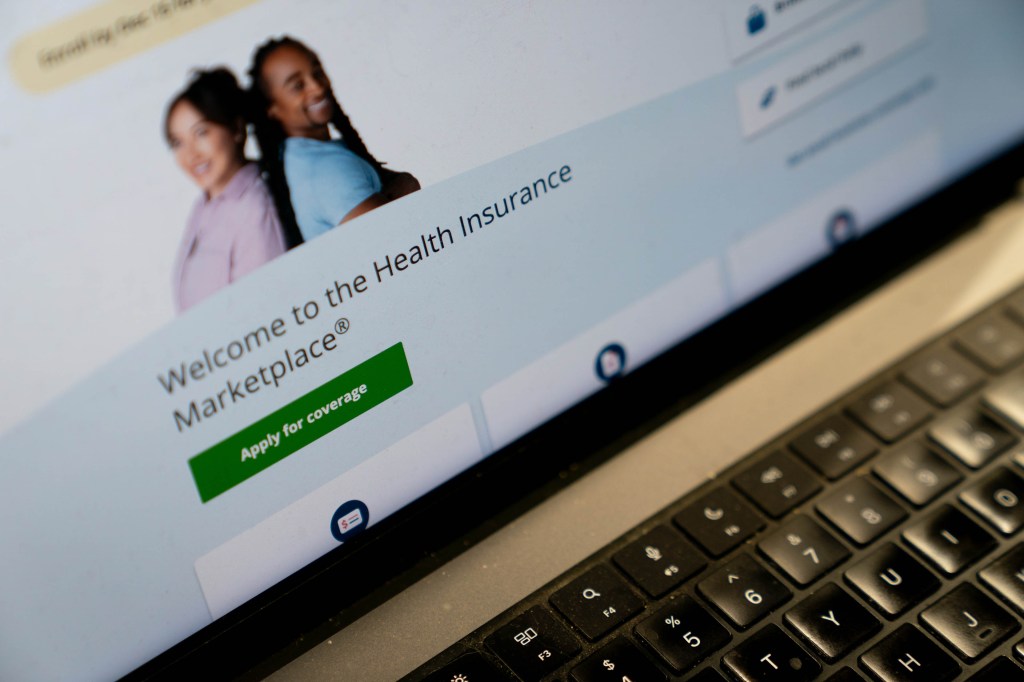
- Fierce Pharma Asia—Takeda’s $1.3B reorg; India’s GLP-1 floodgates; Gilead’s $2.2B buy of a China NewCo
- Where are you with EUDAMED?

- Where are you with EUDAMED?
- HL7 Launches Real‑Time Medical Device Interoperability Accelerator
- HL7 Launches Real‑Time Medical Device Interoperability Accelerator
- Two GA Tech ATDC Startups — Nephrodite and OrthoPreserve — Secure FDA Breakthrough Device Designation
- Two GA Tech ATDC Startups — Nephrodite and OrthoPreserve — Secure FDA Breakthrough Device Designation
- Artificial Intelligence: ROI, not Clinical Autonomy, Leads Operational Workflows
- Artificial Intelligence: ROI, not Clinical Autonomy, Leads Operational Workflows
- Medtronic and Merit Medical Systems distribution agreement for new, ViaVerte basivertebral nerve ablation system
- Medtronic and Merit Medical Systems distribution agreement for new, ViaVerte basivertebral nerve ablation system
- Breakthrough Device Designation for Noah Labs Vox Heart Failure Detection Device
- Breakthrough Device Designation for Noah Labs Vox Heart Failure Detection Device
- No more ‘old school’: How Duke Health is reimagining workforce development
- Why private practice dentistry needs a better model
- Chief nurses: Hospital finances improve with nursing investments
- Mississippi health system goes ‘all in’ on Epic with $115M investment
- CareQuest Innovation Partners, Kno2 collab on medical-dental data integration
- Ascension Wisconsin CEO to step down
- The hospitals, health systems cutting jobs in 2026
- The hospitals, health systems cutting jobs in 2026
- Nonprofit highlights rural opioid care strategies
- The 7 things on the table in the Mount Sinai-Anthem negotiations
- The 7 things on the table in the Mount Sinai-Anthem negotiations
- Wearables data predicts patient engagement: Mayo Clinic study
- Advocate plans largest US hospital drone delivery network
- Vitana Pediatric & Orthodontic Partners adds Florida practice
- Indiana system opens $21.7M outpatient center
- EyeSouth Partners continues 2026 expansion with Louisiana practice
- Providence narrows operating loss to $486M in 2025
- A huge month for CMS policy
- What the Health? From KFF Health News: A Headless CDC
- GI is exploding with new tech—but how do patients feel about it?
- Maryland physician to pay $500K+ to settle false claims allegations
- Rhode Island oral surgeon launches Congressional campaign
- Premier Anesthesia, City of Hope Phoenix ink partnership
- 20 behavioral health leaders challenge industry assumptions
- What simulation training revealed about GI skills gaps
- Judge dismisses physician’s wrongful termination suit against staffing firm
- Recordati confirms it's weighing CVC Capital buyout offer of $12.6B
- 3 California behavioral health centers to close amid funding shifts
- North Carolina practice to close after 40+ years
- Indiana bars autism therapy provider from Medicaid billing: Wall Street Journal
- 6 dental practice openings to know
- UnitedHealth shareholder sues over proposal to include details on integration in annual proxy
- APRNs, PAs account for most antipsychotic prescriptions for Medicare Part D: Study
- SCAN taps biopharma, CMS vet Aman Bhandari as its first chief AI officer
- Infosys to acquire Optimum Healthcare IT in $465M deal
- Oklahoma House passes bill expanding scope of dental assistants
- Dr. Nellie Kim-Weroha joins American Association of Orthodontists’ Board of Trustees
- California behavioral health agency to close 2 centers
- St. Luke’s CFO joins RCM company’s advisory board
- 52 DSOs to know: 2026
- 10 hospitals, health systems looking for CFOs
- DOJ alleges NewYork-Presbyterian forces payers into anticompetitive 'all-or-nothing' contracts
- 10 health system rating downgrades
- FDA Warns Biotech Firm Over Cancer Drug Anktiva Claims
- Bees and Hummingbirds May Be Consuming Small Amounts of Alcohol
- Two States Sue Cord Blood Company Over Misleading Claims
- North Star’s restructuring moves forward
- Illinois hospital pauses patient care amid payroll challenges
- What the Best-Performing Revenue Cycles Have in Common
- New WHO Guidance Aims To Speed Tuberculosis Testing
- As questions swirl around ATTR competition, Alnylam plots path to market leadership for Amvuttra
- Trump admin delays nomination for new CDC director past deadline
- Outspoken ACIP member steps down amid vaccine panel uncertainty: reports
- Egg-based drugmaker Neion Bio emerges from stealth to cook up multi-product biosimilar collab
- Genentech walks the walk in lupus as sponsor of annual awareness and fundraising event
- Study Reveals How Many Americans Consider Using a Gun
- Massive Study Finds Stress and Grief Don’t Cause Cancer
- Ultra-Processed Foods Harm Fertility In Both Men And Women, Studies Reveal
- Small Daily Habits Can Add Up To Better Heart Health
- Ritalin Might Protect ADHD Kids' Long-Term Mental Health, Study Finds
- Can You Drink Enough Fluids To Prevent Kidney Stones? Maybe Not, New Study Says
- Clasp, loan-linked hiring tool for employers, clinches $20M to expand amid federal loan caps
- Taking a GLP-1? Doctors Say Not To Forget About Movement and Mental Health

- OpenEvidence rolls out AI medical coding feature
- CDC’s Acting Chief Promises a Return to Stability in a Tumultuous Moment
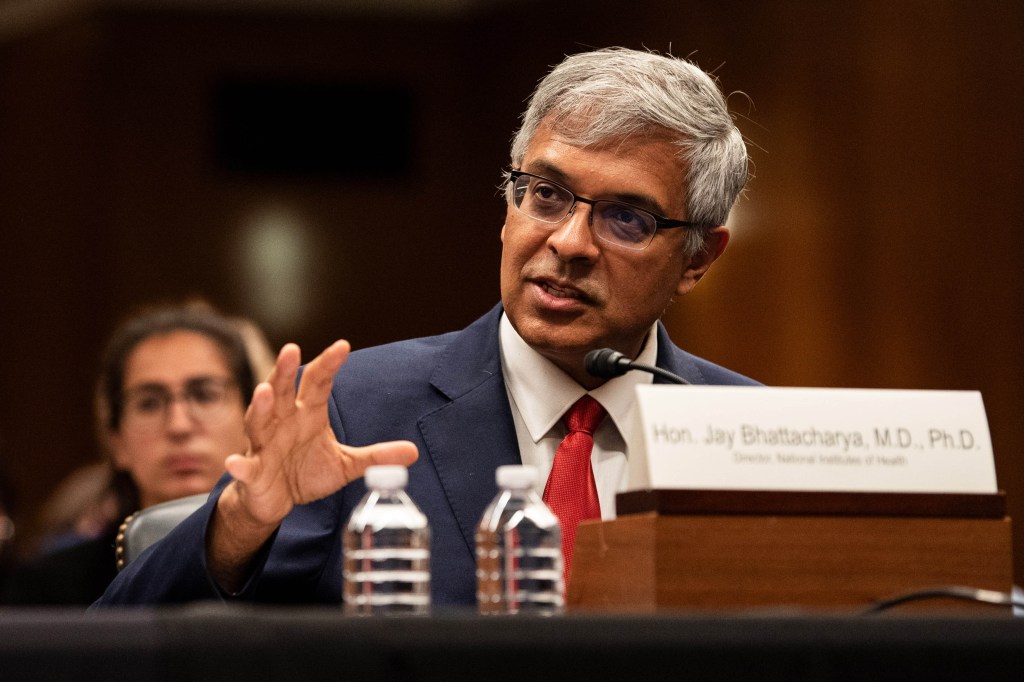
- California peer-run behavioral health center to close amid funding shift
- Remarks at the Financial Stability Oversight Council Meeting
- ‘Integration only works if data lives in the same system’: How 5 systems are operationalizing behavioral health
- Inside UHS’ playbook for responsible behavioral health growth
- Epic4 Specialty Partners adds Illinois practice
- The unsolved problems still plaguing dentistry
- American Dental Association adds mental health, GLP-1 prompts to patient forms
- RWJF: Between 5M and 10M people could lose Medicaid coverage in 2028 under work requirements
- Pulse check on Lilly's GLP-1 fortunes
- Gen Z nurses prioritize schedule flexibility, need more manager interactions to avoid turnover
- How pharma marketers can capitalize on HCPs’ AI, social media and streaming habits
- Federal Officials Investigate States That Require Abortion Coverage
- Corcept's lead drug bounces back from FDA snub with different approval as Lifyorli in ovarian cancer
- Ionis slashes Tryngolza's price tag by 93% ahead of anticipated label expansion
- FDA approves Denali's Hunter syndrome drug, handing rare disease community a win
- Baby Walkers Sold on Amazon Recalled Over Fall Risk
- Want To Protect Your Brain? Science Says Exercise
- HelloFresh Pizza Recall Issued in 10 States Over Metal Risk
- Clinical Trials Have Too Much Data…That’s the Problem.

- Clinical Trials Have Too Much Data…That’s the Problem.
- CMS reveals new Medicaid model that supports coordination for children with complex needs
- Novartis sued by breast cancer patient over branded drug websites’ data-sharing practices
- Takeda targets $1.3B in cost savings in further restructuring
- Biogen pays $20M upfront to tap into Alteogen's subQ delivery tech
- 'Universal Donor' Blood Supplies Dangerously Low, Study Warns
- Why Stepping Outside May Help You Eat Better
- U.S. Medicine, Science Facing An Online Misinformation Siege, Poll Concludes
- Childhood Obesity Undercuts The American Dream For Some, Study Says
- Inclusive High Schools Benefit All Students, Not Just LGBTQ Teens
- Parental Loss Due to Drugs, Violence Raises Child Death Risk by 2,000%
- As Boehringer touts US launches, board chairman worries EU is 'falling further behind'
- The evolving state of exome and genome sequencing
- An Arm and a Leg: Steep Health Care Costs Steer Americans to Tough Decisions
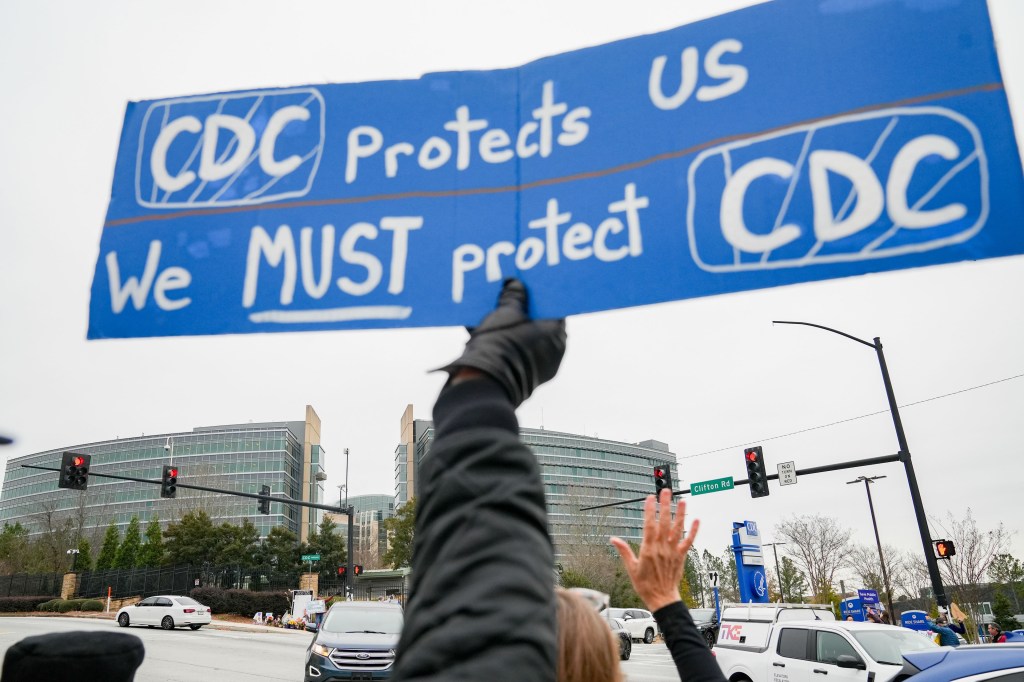
- Demoralized CDC Workforce Reels From Year of Firings, Funding Cuts, and a Shooting
- Qualified Health locks in $125M in fresh funding to scale enterprise AI at health systems
- Misery Loves [Investment] Company?: Remarks at the 2026 Investment Company Institute Investment Management Conference
- Study: Nearly 1 in 5 pediatric hospital deaths involve sepsis
- As expansions come online, CDMO Hovione aims to meet industry's 'dual supply and sourcing' zeal: exec
- Opening Remarks at the Digital Asset Summit 2026
- CVS Caremark, FTC reach settlement in insulin pricing case
- UCB unveils plan to build $2B biologics plant near its US headquarters in Atlanta
- PeaceHealth sued over plans to tap out-of-state staffer ApolloMD for Oregon EDs
- New Lyme Disease Vaccine Shows Strong Results in Trial
- TrumpRx Adds Diabetes, COPD Drugs at Steep Discounts
- Highmark reports $175M net loss for 2025 as financial headwinds batter health plan
- Listen to the Latest ‘KFF Health News Minute’
- Abivax hires commercial chief from Takeda to infuse Entyvio expertise into IBD launch prep
- ImmunityBio hit with FDA warning letter over Anktiva promotions in TV ad, podcast episode
- Alcohol Prep Pads Recalled Over Bacteria Risk, Cardinal Health Says
- Fewer patients traveled for abortions in 2025 as telehealth care increased, report finds
- Cologuard campaign reunites ‘Full House’ stars to give ‘The Talk’ about colon cancer screening
- Lilly to remove certain insulin products from European markets by 2027
- Karyopharm, looking to jump-start Xpovio, reports mixed results in myelofibrosis
- Study Warns Fluoride Bans May Raise Tooth Decay in Children
- “Me engañaron”: agentes encadenan a un padre que había ido al ICE a reunirse con sus hijos

- Cheap Children's Clothing Tainted With Lead, Study Says
- Insulin Prices Fell For Medicare Patients Under Biden-Era Caps, Study Finds
- New Fathers Face Mental Health Challenges, Study Finds
- Your Choice Of Booze Influences Your Risk Of Death, Study Says
- AI Gets a 'D' When Judging Scientific, Medical Claims
- New Online Tool Helps Parkinson's Patients Weigh Brain Implant Decision
- AI chatbot use for health information up 16% from 2024: Rock Health survey
- ‘They Tricked Me’: A Father Was Chained After He Went to ICE To Reunite With His Kids
- Wilmington PharmaTech commits $50M to US API expansion
- Trump administration unveils national policy framework for AI as it moves to override state laws
- Breast Cancer Locator System Submitted for De Novo 510(k) by Cairn Surgical


An 11-judge panel of the U.S. Ninth Circuit Court Of Appeals just held, in Health Freedom Fund v. Carvalho, that public health authorities face almost no constitutional limits in their authority to compel compliance with any order claiming to further public health. This ruling will probably go to the U.S. Supreme Court for review:
https://cdn.ca9.uscourts.gov/datastore/opinions/2025/07/30/22-55908.pdf
Upholding a Vaccine Mandate, the 9th Circuit Embraces an Alarmingly Broad Definition of 'Public Health'
The appeals court held that the government may require COVID-19 shots based purely on the benefits to recipients.
By Jacob Sullum | August 4, 2025Defending COVID-19 policies against legal challenges, government officials relied heavily on Jacobson v. Massachusetts, a 1905 case in which the U.S. Supreme Court upheld a smallpox vaccine mandate imposed by the Cambridge Board of Health. But the breadth of the license granted by that decision is a matter of dispute, even as applied to superficially similar COVID-19 vaccination requirements. Critics of those mandates argued that COVID-19 shots, unlike smallpox vaccination, do not prevent transmission of the disease, which means that requiring them amounts to paternalistic intervention rather than protection of the general public.
Last week in Health Freedom Fund v. Carvalho, the U.S. Court of Appeals for the 9th Circuit dismissed that distinction as constitutionally irrelevant. Rejecting a challenge to a COVID-19 vaccine mandate that the Los Angeles Unified School District (LAUSD) imposed on its employees in 2021, the majority held that the district "could have reasonably concluded that COVID-19 vaccines would protect the health and safety of its employees and students." The implications of the 9th Circuit's decision for the right to bodily integrity are alarmingly broad, since the court's logic would seem to bless all manner of medical mandates that the government views as beneficial to the patient, regardless of any purported effect on third parties.
The plaintiffs in the 9th Circuit case, including LAUSD employees who were fired because they refused to comply with the vaccine requirement, argued that Jacobson did not authorize that policy. Their case features dueling interpretations of Jacobson that in turn reflect different understandings of "public health." Is that rationale for government action limited to external threats such as those posed by disease carriers and air pollution, or does it extend to self-regarding decisions such as lifestyle choices and consent to medical treatment? The 9th Circuit's ruling implicitly embraces the latter view, which invites far-ranging, open-ended interference with individual freedom.
The 120-year-old Supreme Court case at the center of this controversy involved Henning Jacobson, a minister of the Swedish Evangelical Lutheran Church in Cambridge, who refused to comply with the city's vaccination mandate, citing a bad smallpox vaccine reaction he had experienced as a child. He also refused to pay the resulting $5 fine, arguing that the Massachusetts law violated the 14th Amendment's guarantees of due process, equal protection, and "privileges or immunities."
In Jacobson, the Supreme Court weighed "the inherent right of every freeman to care for his own body and health in such way as to him seems best" against the government's interest in "preventing the spread of smallpox." The majority repeatedly referred to the latter danger and noted "the common belief," supported by "high medical authority," that vaccination was effective at addressing it.
"There are manifold restraints to which every person is necessarily subject for the common good," Justice John Marshall Harlan said in the majority opinion. "Real liberty for all could not exist under the operation of a principle which recognizes the right of each individual person to use his own, whether in respect of his person or his property, regardless of the injury that may be done to others."
But the Court also said a state's public health authority has limits. "An acknowledged power of a local community to protect itself against an epidemic threatening the safety of all might be exercised in particular circumstances and in reference to particular persons in such an arbitrary, unreasonable manner, or might go so far beyond what was reasonably required for the safety of the public, as to authorize or compel the courts to interfere for the protection of such persons," Harlan wrote. "If a statute purporting to have been enacted to protect the public health, the public morals, or the public safety, has no real or substantial relation to those objects, or is, beyond all question, a plain, palpable invasion of rights secured by the fundamental law, it is the duty of the courts to so adjudge, and thereby give effect to the Constitution."
The plaintiffs in Health Freedom Fund v. Carvalho argued that the LAUSD's vaccine mandate presented such a situation because the policy had no "substantial relation" to the goal that the Supreme Court thought justified Cambridge's requirement. While smallpox vaccination was effective at curtailing the spread of disease, they said, COVID-19 vaccines do not prevent infection or transmission, although they may reduce symptom severity in people who take them. The LAUSD disputed that characterization to some extent, arguing that COVID-19 vaccination does make transmission less likely, or at least that it was reasonable to think so when the mandate was adopted. But this much is clear: Initial expectations, based on clinical trials, that the vaccines would be highly effective at retarding the spread of COVID-19 were contradicted by real-world experience, especially with emerging variants of the virus.
That realization was reflected in messaging from the Centers for Disease Control and Prevention (CDC). As of July 2021, the CDC was saying "fully vaccinated people are less likely to become infected" and "less likely to get and spread" COVID-19. By August 2024, the CDC was no longer touting those purported benefits, instead saying that COVID-19 vaccines "are effective at protecting people from getting seriously ill, being hospitalized, and dying."
That shift, the plaintiffs who sued the LAUSD argued, showed that COVID-19 shots are "designed to reduce symptoms in the infected vaccine recipient rather than to prevent transmission and infection," meaning they should be viewed as a "medical treatment" rather than a "traditional" vaccine. Dale Fischer, a judge on the U.S. District Court for the Central District of California, did not think that difference mattered.
"Jacobson does not require that a vaccine have the specific purpose of preventing disease," Fischer wrote in September 2022, when he issued a judgment in the LAUSD's favor. He also rejected the plaintiffs' claim that the vaccine mandate impinged on a fundamental right to bodily autonomy, making it subject to "strict scrutiny" as an alleged violation of substantive due process.
Under Jacobson, Fischer said, the proper test was whether the LAUSD had a "rational basis" for its policy. That highly deferential test asks only whether there is a "rational connection" between a policy and a legitimate government purpose. As Fischer noted, quoting the Supreme Court, judges "hardly ever" strike down a policy under that standard. In this case, Fischer thought it was easily met. Even if COVID-19 shots do no more than protect recipients from serious illness and death, he concluded, "these features of the vaccine further the purpose of protecting LAUSD students and employees from COVID-19," so "the Court finds the Policy survives rational basis review."
A 9th Circuit panel took a different view of the matter. "Jacobson held that mandatory vaccinations were rationally related to 'preventing the spread' of smallpox," the two-judge majority said when it revived the lawsuit in June 2024. "Jacobson, however, did not involve a claim in which the compelled vaccine was 'designed to reduce symptoms in the infected vaccine recipient rather than to prevent transmission and infection.' The district court thus erred in holding that Jacobson extends beyond its public health rationale—government's power to mandate prophylactic measures aimed at preventing the recipient from spreading disease to others—to also govern 'forced medical treatment' for the recipient's benefit."
The LAUSD successfully sought review by an 11-judge 9th Circuit panel, which last week agreed with Fischer that Jacobson defeated the plaintiffs' constitutional claim. "Jacobson holds that the constitutionality of a vaccine mandate, like the Policy here, turns on what reasonable legislative and executive decisionmakers could have rationally concluded about whether a vaccine protects the public's health and safety, not whether a vaccine actually provides immunity to or prevents transmission of a disease," Judge Mark Bennett wrote in the majority opinion. "Whether a vaccine protects the public's health and safety is committed to policymakers, not a court or a jury. Further, alleged scientific uncertainty over a vaccine's efficacy is irrelevant under Jacobson."
That decision "simply does not allow debate in the courts over whether a mandated vaccine prevents the spread of disease," Bennett said. "Jacobson makes clear that it is up to the political branches, within the parameters of rational basis review, to decide whether a vaccine effectively protects public health and safety."
The LAUSD's vaccine mandate "easily survives such review because (even assuming the truth of Plaintiffs' allegations) it was more than reasonable for the LAUSD to conclude that COVID-19 vaccines would protect the health and safety of its employees and students," Bennett wrote. "The [complaint] concedes that COVID-19 vaccines 'lessen the severity of symptoms for individuals who receive them.' From this, the LAUSD could have reasonably determined that the vaccines would protect the health of its employees."
Like Fischer, in other words, the 9th Circuit concluded that it does not legally matter whether COVID-19 vaccination prevents transmission of the disease. Even if the plaintiffs are right that it does not, the majority said, the expected benefits to vaccine recipients would be enough to justify the policy.
That was too much for dissenting Judge Kenneth Lee. "The majority's opinion comes perilously close to giving the government carte blanche to require a vaccine or even medical treatment against people's will so long as it asserts—even if incorrectly—that it would promote 'public health and safety,'" Lee wrote in an opinion joined by Judge Daniel Collins. "But the many mistakes and missteps by our government and the scientific establishment over the past five years counsel caution: Their errors underscore the importance of carefully evaluating the sort of sweeping claims of public-health authority asserted by the [LAUSD] here."
Lee and Collins agreed with the plaintiffs that Jacobson applies "only if a vaccine prevents transmission and contraction of a disease." The plaintiffs "have plausibly claimed—at least at the pleading stage where we must accept the truth of the allegations—that the COVID-19 vaccine mitigates serious symptoms but does not 'prevent transmission or contraction of COVID-19,'" Lee wrote. "And if that is true, then Jacobson's rational basis review does not apply, and we must examine the vaccine mandate under a more stringent standard. Ultimately, the plaintiffs may be wrong about the COVID-19 vaccine, but they should be given a chance to challenge the government's assertions about it."
The majority "suggests that Jacobson's reference to 'public health and public safety' is so capacious that merely 'lessen[ing] the severity of symptoms' is enough to justify a vaccine mandate," Lee said. "But nothing in Jacobson hints that just mitigating symptoms alone can count as 'public health and public safety.' The entire thrust of Jacobson is that 'public health and public safety' means protecting the mass public from the spread of smallpox. Aside from the repeated references to 'preventing the spread' of smallpox, the opinion makes many allusions to the dangers of widespread transmission of the disease among the public."
Lee noted the troubling implications of the "public health" rationale endorsed by the majority. "If we accept the majority's holding that a state can impose a vaccine mandate just to 'lessen the severity of symptoms' of sick persons—without considering whether it lessens transmission and contraction of this disease—then we are opening the door for compulsory medical treatment against people's wishes…..As a practical matter, I fear we are giving the government a blank check to foist health treatment mandates on the people—despite its checkered track record—when we should be imposing a check against the government's incursion into our liberties."
Although the 9th Circuit judges disagreed about when Jacobson applies, they all assumed that "rational basis" is the appropriate test when it does. Yet Jacobson predates the tiers of judicial review that courts today apply in constitutional cases, and the New Civil Liberties Alliance (NCLA) argues that the 1905 decision actually applied a more demanding standard.
"Jacobson explicitly required the government to demonstrate a 'substantial relation' between its articulated goal and the law in question," the NCLA says in a brief supporting the plaintiffs in the 9th Circuit case. "That is a far more exacting standard than rational basis, which requires only that the government posit some interest and a rational connection between the challenged law and the alleged interest. Put otherwise, a 'substantial relation' is a higher bar than a 'rational connection.'"
The NCLA brief adds that "rational basis does not entail any assessment of the individual's liberty rights." Yet in Jacobson, the Supreme Court "took into account the significant liberty interests at stake, explaining that it was balancing Jacobson's liberty interest in declining the unwanted vaccine against the State's interest in preventing smallpox from spreading. It was only because 'the spread of smallpox' 'imperiled an entire population' that the State's interest in 'stamp[ing] out the disease of smallpox' outweighed Rev. Jacobson's liberty interests."
Subsequent Supreme Court decisions have made it clear that "Americans possess a constitutionally protected liberty interest in consenting to treatment and refusing unwanted medication," the NCLA notes. "Government employers cannot simply require (on pain of termination) their employees to take any medication, regardless of consent, medical necessity, or various other circumstances, merely because [the government] asserts that the treatment may be beneficial to the employee."
The LAUSD argued that Jacobson "permits mandatory vaccination for reasons other than inhibiting transmission to third parties, such as for the benefit of the recipient or ensuring the hospitals are not overwhelmed," the NCLA notes. But "if ensuring the medical system is not overburdened (and with no showing of an emergency on that front) constituted a valid reason to mandate health measures, the government could mandate alcohol abstention, staying within a certain weight range, and exercising regularly." That approach, the brief says, "would eviscerate all limits on governmental powers to intrude on medical and bodily autonomy."
The 9th Circuit's reasoning, in short, endorses a sweeping view of what it means to protect "public health and safety." That understanding obliterates the distinction between public and private, justifying forcible intervention whenever the government thinks it will protect recalcitrant individuals from disease or injury.

Get MHF Insights
News and tips for your healthcare freedom.
We never spam you. One-step unsubscribe.
Sponsors
Friends of MHF




Kirsten DeVries
Tom & Karen Nunheimer
Steve Ahonen
Ron & Faith Bosserman
Marlin & Kathy Klumpp
Sign Up for MHF Insights to keep up on the latest in Michigan Health Policy