- Where are you with EUDAMED?

- Where are you with EUDAMED?
- HL7 Launches Real‑Time Medical Device Interoperability Accelerator

- HL7 Launches Real‑Time Medical Device Interoperability Accelerator
- Two GA Tech ATDC Startups — Nephrodite and OrthoPreserve — Secure FDA Breakthrough Device Designation
- Two GA Tech ATDC Startups — Nephrodite and OrthoPreserve — Secure FDA Breakthrough Device Designation
- Artificial Intelligence: ROI, not Clinical Autonomy, Leads Operational Workflows
- Artificial Intelligence: ROI, not Clinical Autonomy, Leads Operational Workflows
- Medtronic and Merit Medical Systems distribution agreement for new, ViaVerte basivertebral nerve ablation system
- Medtronic and Merit Medical Systems distribution agreement for new, ViaVerte basivertebral nerve ablation system
- Breakthrough Device Designation for Noah Labs Vox Heart Failure Detection Device
- Breakthrough Device Designation for Noah Labs Vox Heart Failure Detection Device
- No more ‘old school’: How Duke Health is reimagining workforce development
- Why private practice dentistry needs a better model
- Chief nurses: Hospital finances improve with nursing investments
- Mississippi health system goes ‘all in’ on Epic with $115M investment
- CareQuest Innovation Partners, Kno2 collab on medical-dental data integration
- Ascension Wisconsin CEO to step down
- The hospitals, health systems cutting jobs in 2026
- The hospitals, health systems cutting jobs in 2026
- Nonprofit highlights rural opioid care strategies
- The 7 things on the table in the Mount Sinai-Anthem negotiations
- The 7 things on the table in the Mount Sinai-Anthem negotiations
- Wearables data predicts patient engagement: Mayo Clinic study
- Advocate plans largest US hospital drone delivery network
- Vitana Pediatric & Orthodontic Partners adds Florida practice
- Indiana system opens $21.7M outpatient center
- Trump administration targets medical school admissions: 4 notes
- EyeSouth Partners continues 2026 expansion with Louisiana practice
- RSV lingers in parts of US even as flu and COVID-19 recede
- Providence narrows operating loss to $486M in 2025
- A huge month for CMS policy
- What the Health? From KFF Health News: A Headless CDC
- GI is exploding with new tech—but how do patients feel about it?
- Maryland physician to pay $500K+ to settle false claims allegations
- Rhode Island oral surgeon launches Congressional campaign
- Premier Anesthesia, City of Hope Phoenix ink partnership
- 20 behavioral health leaders challenge industry assumptions
- What simulation training revealed about GI skills gaps
- Judge dismisses physician’s wrongful termination suit against staffing firm
- 3 California behavioral health centers to close amid funding shifts
- North Carolina practice to close after 40+ years
- St. Tammany opens outpatient cardiology center
- Indiana bars autism therapy provider from Medicaid billing: Wall Street Journal
- 6 dental practice openings to know
- UnitedHealth shareholder sues over proposal to include details on integration in annual proxy
- APRNs, PAs account for most antipsychotic prescriptions for Medicare Part D: Study
- Infosys to acquire Optimum Healthcare IT in $465M deal
- Oklahoma House passes bill expanding scope of dental assistants
- Dr. Nellie Kim-Weroha joins American Association of Orthodontists’ Board of Trustees
- California behavioral health agency to close 2 centers
- St. Luke’s CFO joins RCM company’s advisory board
- 52 DSOs to know: 2026
- 10 hospitals, health systems looking for CFOs
- DOJ alleges NewYork-Presbyterian forces payers into anticompetitive 'all-or-nothing' contracts
- 10 health system rating downgrades
- FDA Warns Biotech Firm Over Cancer Drug Anktiva Claims
- Bees and Hummingbirds May Be Consuming Small Amounts of Alcohol
- Two States Sue Cord Blood Company Over Misleading Claims
- North Star’s restructuring moves forward
- Illinois hospital pauses patient care amid payroll challenges
- What the Best-Performing Revenue Cycles Have in Common
- New WHO Guidance Aims To Speed Tuberculosis Testing
- As questions swirl around ATTR competition, Alnylam plots path to market leadership for Amvuttra
- Trump admin delays nomination for new CDC director past deadline
- Outspoken ACIP member steps down amid vaccine panel uncertainty: reports
- Egg-based drugmaker Neion Bio emerges from stealth to cook up multi-product biosimilar collab
- Genentech walks the walk in lupus as sponsor of annual awareness and fundraising event
- Study Reveals How Many Americans Consider Using a Gun
- Massive Study Finds Stress and Grief Don’t Cause Cancer
- Ultra-Processed Foods Harm Fertility In Both Men And Women, Studies Reveal
- Small Daily Habits Can Add Up To Better Heart Health
- Ritalin Might Protect ADHD Kids' Long-Term Mental Health, Study Finds
- Can You Drink Enough Fluids To Prevent Kidney Stones? Maybe Not, New Study Says
- Clasp, loan-linked hiring tool for employers, clinches $20M to expand amid federal loan caps
- Taking a GLP-1? Doctors Say Not To Forget About Movement and Mental Health
- OpenEvidence rolls out AI medical coding feature
- CDC’s Acting Chief Promises a Return to Stability in a Tumultuous Moment
- California peer-run behavioral health center to close amid funding shift
- Remarks at the Financial Stability Oversight Council Meeting
- ‘Integration only works if data lives in the same system’: How 5 systems are operationalizing behavioral health
- Medicaid work rules and enrollment losses: 6 notes
- Inside UHS’ playbook for responsible behavioral health growth
- Epic4 Specialty Partners adds Illinois practice
- The unsolved problems still plaguing dentistry
- American Dental Association adds mental health, GLP-1 prompts to patient forms
- RWJF: Between 5M and 10M people could lose Medicaid coverage in 2028 under work requirements
- Gen Z nurses prioritize schedule flexibility, need more manager interactions to avoid turnover
- How pharma marketers can capitalize on HCPs’ AI, social media and streaming habits
- Federal Officials Investigate States That Require Abortion Coverage
- Corcept's lead drug bounces back from FDA snub with different approval as Lifyorli in ovarian cancer
- Ionis slashes Tryngolza's price tag by 93% ahead of anticipated label expansion
- FDA approves Denali's Hunter syndrome drug, handing rare disease community a win
- Baby Walkers Sold on Amazon Recalled Over Fall Risk
- Want To Protect Your Brain? Science Says Exercise
- HelloFresh Pizza Recall Issued in 10 States Over Metal Risk
- Clinical Trials Have Too Much Data…That’s the Problem.

- Clinical Trials Have Too Much Data…That’s the Problem.
- CMS reveals new Medicaid model that supports coordination for children with complex needs
- Novartis sued by breast cancer patient over branded drug websites’ data-sharing practices
- Takeda targets $1.3B in cost savings in further restructuring
- Biogen pays $20M upfront to tap into Alteogen's subQ delivery tech
- 'Universal Donor' Blood Supplies Dangerously Low, Study Warns
- Why Stepping Outside May Help You Eat Better
- U.S. Medicine, Science Facing An Online Misinformation Siege, Poll Concludes
- Childhood Obesity Undercuts The American Dream For Some, Study Says
- Inclusive High Schools Benefit All Students, Not Just LGBTQ Teens
- Parental Loss Due to Drugs, Violence Raises Child Death Risk by 2,000%
- As Boehringer touts US launches, board chairman worries EU is 'falling further behind'
- The evolving state of exome and genome sequencing
- An Arm and a Leg: Steep Health Care Costs Steer Americans to Tough Decisions
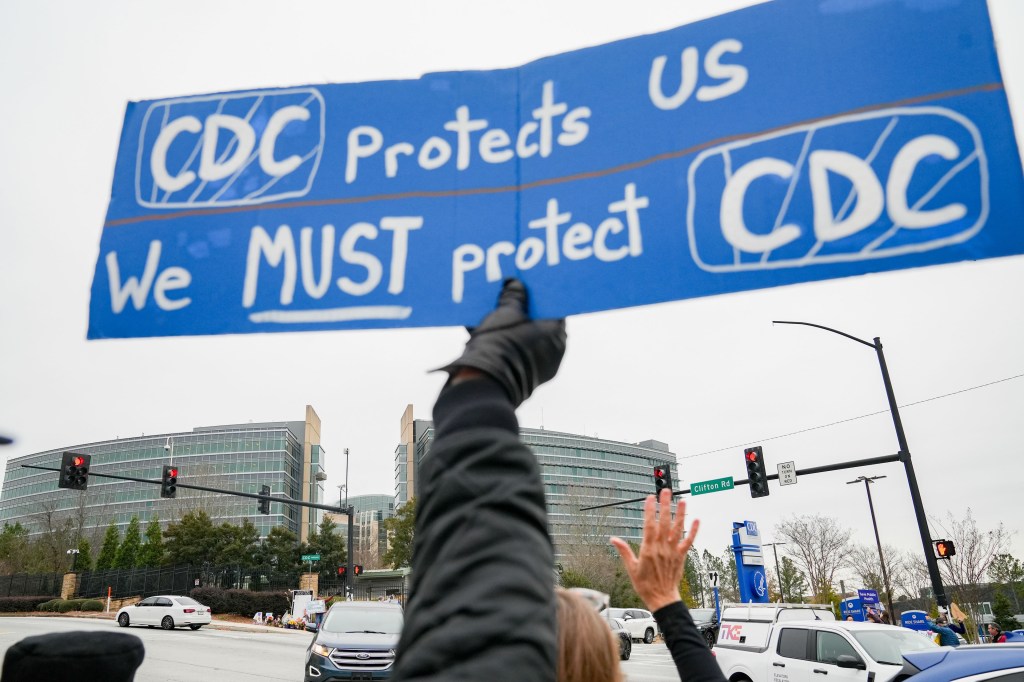
- Demoralized CDC Workforce Reels From Year of Firings, Funding Cuts, and a Shooting
- Qualified Health locks in $125M in fresh funding to scale enterprise AI at health systems
- Misery Loves [Investment] Company?: Remarks at the 2026 Investment Company Institute Investment Management Conference
- Study: Nearly 1 in 5 pediatric hospital deaths involve sepsis
- As expansions come online, CDMO Hovione aims to meet industry's 'dual supply and sourcing' zeal: exec
- Opening Remarks at the Digital Asset Summit 2026
- CVS Caremark, FTC reach settlement in insulin pricing case
- UCB unveils plan to build $2B biologics plant near its US headquarters in Atlanta
- PeaceHealth sued over plans to tap out-of-state staffer ApolloMD for Oregon EDs
- New Lyme Disease Vaccine Shows Strong Results in Trial
- TrumpRx Adds Diabetes, COPD Drugs at Steep Discounts
- Highmark reports $175M net loss for 2025 as financial headwinds batter health plan
- Listen to the Latest ‘KFF Health News Minute’
- Abivax hires commercial chief from Takeda to infuse Entyvio expertise into IBD launch prep
- ImmunityBio hit with FDA warning letter over Anktiva promotions in TV ad, podcast episode
- Alcohol Prep Pads Recalled Over Bacteria Risk, Cardinal Health Says
- Fewer patients traveled for abortions in 2025 as telehealth care increased, report finds
- Cologuard campaign reunites ‘Full House’ stars to give ‘The Talk’ about colon cancer screening
- Lilly to remove certain insulin products from European markets by 2027
- Karyopharm, looking to jump-start Xpovio, reports mixed results in myelofibrosis
- Study Warns Fluoride Bans May Raise Tooth Decay in Children
- WuXi Bio's record number of new projects in 2025 leaned heavily on US clients
- “Me engañaron”: agentes encadenan a un padre que había ido al ICE a reunirse con sus hijos

- Gilead inks Manta pact to dive deeper into cancer patient support
- Cheap Children's Clothing Tainted With Lead, Study Says
- Insulin Prices Fell For Medicare Patients Under Biden-Era Caps, Study Finds
- New Fathers Face Mental Health Challenges, Study Finds
- Your Choice Of Booze Influences Your Risk Of Death, Study Says
- AI Gets a 'D' When Judging Scientific, Medical Claims
- New Online Tool Helps Parkinson's Patients Weigh Brain Implant Decision
- AI chatbot use for health information up 16% from 2024: Rock Health survey
- ‘They Tricked Me’: A Father Was Chained After He Went to ICE To Reunite With His Kids
- Wilmington PharmaTech commits $50M to US API expansion
- Strides recalls nearly 90K bottles of children's ibuprofen after contamination complaints
- Trump administration unveils national policy framework for AI as it moves to override state laws
- Breast Cancer Locator System Submitted for De Novo 510(k) by Cairn Surgical
- Breast Cancer Locator System Submitted for De Novo 510(k) by Cairn Surgical
- 17 spine surgery firsts in Q1

- 17 spine surgery firsts in Q1


Michigan Public Acts 36 and 37 of 2024 require all Michigan schools - public and private - adopt a cardiac emergency response plan that includes the use of school personnel to respond to a sudden cardiac arrest, or another similar life-threatening emergency, on the school’s campus during school hours or during a school-sponsored event. This would include their athletic departments and organized athletic programs.
The bills had an escape clause in any case where the legislature fails to appropriate sufficient funds to administer and comply with the new requirements. The escape clause is in effect and most schools have not adopted cardiac emergency response plans:
Michigan wants schools ready for cardiac emergencies, fails to provide funds
By Eli Newman - February 16, 2026
- Michigan has a law meant to better prepare schools to handle cardiac emergencies but no designated state funding
- Only a quarter of schools are said to have earned a state ‘HeartSafe’ designation
- Advocates say a $6 million investment could close the gap
Emily Orta was a seemingly healthy 14-year-old soccer player in Adrian when her life changed in seconds. In the middle of a shooting drill, her heart stopped. She wasn’t breathing.
“It was a complete shock,” Orta, now 26, told Bridge Michigan. She’d later discover she was living with a rare heart defect from birth — anomalous left coronary artery from the pulmonary artery, or ALCAPA.
“We had no idea that there was any issues.”
Orta said she “wouldn’t be here today” if it weren’t for the quick work of her coaches, who started emergency CPR on the field to keep her heart pumping. Another person entered a nearby building to grab an automated external defibrillator — an AED. The portable device delivers an electric shock to restore normal heart rhythm and kept the young teen stable before she was transferred to a hospital.
“I was at the right place at the right time,” Orta said. “And everybody that was around me and had their hands on me that day, they were also in the right place at the right time.”
But for many Michigan students, those resources may be more out of reach. A 2024 state law required schools to adopt a cardiac emergency response plan for the current school year — if the Legislature appropriates “sufficient funds.”
No dedicated money was included in the current state education budget’s $321 million school safety fund. A Senate proposal to include $25 million for “visitor management programs, low-level behavior software, panic alerts, and AED devices” was removed by the House and was not included in the final budget.
The law does not specify what is considered sufficient funding, according to an analysis of the 2024 legislation, or who makes that determination.
For the state’s estimated 5,000 public and nonpublic schools, decisions to implement emergency plans depend on local capacity and available resources, according to Ken Coleman, a spokesperson for the Michigan Department of Education.
Without government funding, enforcement of the law stalls.
“There was not a specific state appropriation to support implementation. The statute provides that, in the absence of designated funding, districts are not required to implement the plan,” Coleman said in an email.
Most Michigan schools have yet to earn the state’s “HeartSafe” title, a designation that indicates, among other things, that the school has a written cardiac emergency response plan, adequate numbers of staff are trained and equipped to intervene if there is a cardiac emergency and that the schools conduct at least one cardiac emergency response drill every year.
Advocates for heart health say more money is needed to support training and the purchasing of equipment, especially in under-resourced school districts and rural communities where ambulances take longer to respond.
“There’s still a long ways to go,” said Gwen Fosse, program coordinator for Project ADAM in Michigan. The initiative, housed at the University of Michigan C.S. Mott Children’s Hospital Congenital Heart Center, works with schools to prepare staff and students for sudden cardiac emergencies.
“But that said, we know a lot of schools are doing the right thing even without the funding, or they’re finding alternate ways of funding.”
While occurrences are rare, recent studies estimate there are 15,000 to 23,000 pediatric cases of out-of-hospital cardiac arrest in the US every year, about 15 per 1,000 pediatric emergency medical service responses.
Michigan reported 8,632 non-traumatic, out-of-hospital cardiac arrests for both children and adults in 2024, according to a report by the Cardiac Arrest Registry to Enhance Survival (CARES).
Each second CPR and AEDs are delayed can be fatal.
Michigan’s survival rate for cardiac arrest that year was 9% when emergency medical services responded, but those odds of survival tripled when the patient had a shockable heart rhythm and people who could help the patient observed that they were in distress.
CARES reports CPR was first performed by a bystander in 40% of the state’s cardiac arrest cases when EMS responded. In 12.8% of cases, people used AEDs in public places like schools, convention centers and airports.
“The importance of having trained personnel in schools as well as AEDs in schools is critical in achieving much higher survival rates,” said Dr. Premchand Anne, the director of pediatric cardiology at Henry Ford St. John Children’s Hospital in Detroit.
‘Competing priorities’
During the NFL Draft in Detroit in 2024, Gov. Gretchen Whitmer signed a bill package to ensure schools develop cardiac emergency response plans with training and access to AEDs, touting the legislation as “commonsense.”
She was joined by Buffalo Bills safety Damar Hamlin, who has advocated for student athlete health since the NFL player collapsed mid-game from cardiac arrest after making a tackle.
The plan was set to take effect in the 2025-26 school year. But some districts have seen adoption lag.
Representatives for the American Heart Association say the emergency response requirements are tied to state funding, and dollars were not secured during last year’s budget process.
“They stripped out a ton of the things that schools could use,” said Amanda Klein, government relations director for the American Heart Association in Michigan.
A House Fiscal Agency analysis of the enacted bill concluded “in the event of insufficient appropriations, no requirements for cardiac emergency plans would apply.”
The Michigan High School Athletic Association notes that head coaches of high school teams are mandated to have CPR and AED certification as part of the legislation.
Money for AED devices — which can cost between $1,400 to $3,500 — staff training, plan implementation with local emergency response agencies and school drills was left out due to “competing priorities,” Klein said.
Klein is “disappointed” that Whitmer’s historic $88 billion budget plan does not specify funds for cardiac emergency response plans, but said she’s continuing to lobby state lawmakers that the funding is worth it. She said the AHA has determined a one-time, $6 million allocation would allow schools to purchase AEDs and implement training.
“The next phase really is about moving from the policy just to the real-world preparedness,” Klein said. “The way to do that is with proper and adequate funding to set our schools up for success.”
Heart-healthy schools
The Michigan Department of Health and Human Services reports 965 public and nonpublic schools in the state currently hold active MI HEARTSafe School Award status.
The designation recognizes many of the requirements outlined in the 2024 state law by requiring facilities maintain a written cardiac emergency response plan and a team ready to carry out its directives.
MDHHS said 202 schools received the designation for the first time in the 2024-2025 school year. Applications for the current school year are due in May.
Project ADAM stewards the program and notes a steady increase in applications. Fosse said 20% of the US population is at school on any given day. Encouraging screening forms for student athletes before they play in sports, training staff on emergency response and making AEDs clearly available within three minutes of any location at school can make “the whole community safer.”
There were seven cardiac emergency incidents on Michigan school grounds reported to Project ADAM last year, with intervention helping to save lives in six cases.
While only about one in five schools have received a MI HEARTSafe School designation, Fosse said most schools in the state have at least one AED on campus, though it may not be close enough to save someone having a cardiac arrest.
Requirements for cardiac emergency drills can be more relevant today, she said, than some other common school safety drills.
“The last time somebody died in a school in a fire in Michigan was 1927,” Fosse told Bridge. “The last time somebody died of a cardiac arrest at a school was a couple months ago.”
Knowledge gaps
Only about half of parents report being aware that their teen’s school has an AED on site, according to new findings from the University of Michigan Health C.S. Mott Children’s Hospital National Poll on Children’s Health
“The whole ball game in a sudden cardiac arrest is you need to act promptly,” said Sarah Clark, co-director of the Mott Poll. “When we have that much lack of awareness, people aren’t going to be in a position to act.”
The Mott Poll found that while nearly half of parents have heard of students experiencing sudden cardiac arrest, only 1 in 7 say their own child had ever had a heart evaluation.
There is strong support for CPR/AED education among parents across the country, according to the Mott Poll, while about 1 in 5 parents say their teen has CPR training, and just 1 in 15 say their teen has been trained to use an AED.
In Michigan, schools are required to teach middle and high schools students CPR and AED use through their health curriculum.
A shared responsibility
The American Heart Association estimates about 1,000 people have a cardiac arrest outside a hospital setting every day in the US. The state saw 97.5 out-of-hospital incidences per 100,000 people in 2024, according to the Cardiac Arrest Registry to Enhance Survival.
About 20% of sudden cardiac arrest deaths in youth occurred during “periods of exertion” like sports, according to Dr. Swati Sehgal, medical director of pediatric heart failure, cardiomyopathy, and heart transplant for the Children’s Hospital of Michigan in Detroit.
Two underlying heart conditions are cited as the most frequent culprit.
“Most common are arrhythmia issues – a problem with the electrical impulses in the heart – or cardiomyopathy, such as hypertrophic cardiomyopathy in which there is increase in the heart wall muscle thickness,” Sehgal said in an email.
Doctors say symptoms such as severe chest pain, abnormally fast heart beat, unexplained fainting or passing out during physical exercise should be evaluated by a health care professional. Recreational use of stimulants and performance-enhancing drugs, and high doses of caffeine can also exacerbate heart issues.
“A thorough history including family history and physical exam can raise suspicion for these conditions; however, an (electrocardiogram) and in some cases an echocardiogram will be required to make appropriate diagnosis,” Sehgal said.
Universal EKG screening is not recommended by the American College of Cardiology and U.S. Preventative Services Task Force, with physician groups citing the rarity of sudden arrest in children, high cost-burden and other systemic constraints.
Still, some countries with universal health care systems like Italy and Japan regularly test the hearts of their youth, and some states are requiring student athletes to get an EKG screening before play.
Regardless of preventive screening measures, physicians like Dr. Mohammad-Ali Jazayeri, a medical director at the Cardiac Device Clinic at Trinity Health in Ann Arbor, say having the right tools and training for a cardiac emergency is vital.
Society can do a “better job” of educating people to act, he said, when the alternative is “certain death.”
“There’s an individual responsibility, but then there’s also the group,” said Jazayeri. “Each minute that somebody goes on with cardiac arrest without life-saving treatment, their likelihood of death goes up by about 7 to 10%.”

@10x25mm This is frustrating because the policy makes sense, but without funding it’s basically optional. The data is clear, survival jumps fast when CPR and an AED are used early, and delays cost lives. A one time $6 million investment across roughly 5,000 schools is not huge compared to the broader education budget, especially when AEDs run $1,400 to $3,500 and training saves real lives. If schools are legally expected to be prepared, the state should back that expectation with dedicated funds so implementation is consistent, not dependent on local resources.
HFA says the funding to cancel the escape clause would have to be annual, not a one time investment. That is in accordance with my reading of the Acts:
https://www.legislature.mi.gov/documents/2023-2024/billanalysis/House/pdf/2023-HLA-5527-FFF66969.pdf
HFA seems to think the hardware costs imposed by the Acts are not significant (and mostly in place already), but the training and certification costs are significant. "Sufficient funds" are not defined in the Acts, raising budgetary red flags.
The $ 6 million number comes from Amanda Klein, government relations director for the American Heart Association in Michigan. It is not clear how well she is dialed into school training costs and budgeting.
Get MHF Insights
News and tips for your healthcare freedom.
We never spam you. One-step unsubscribe.
Sponsors
Friends of MHF




Kirsten DeVries
Tom & Karen Nunheimer
Steve Ahonen
Ron & Faith Bosserman
Marlin & Kathy Klumpp
Sign Up for MHF Insights to keep up on the latest in Michigan Health Policy