- Where are you with EUDAMED?

- Where are you with EUDAMED?
- HL7 Launches Real‑Time Medical Device Interoperability Accelerator

- HL7 Launches Real‑Time Medical Device Interoperability Accelerator
- Two GA Tech ATDC Startups — Nephrodite and OrthoPreserve — Secure FDA Breakthrough Device Designation
- Two GA Tech ATDC Startups — Nephrodite and OrthoPreserve — Secure FDA Breakthrough Device Designation
- Artificial Intelligence: ROI, not Clinical Autonomy, Leads Operational Workflows
- Artificial Intelligence: ROI, not Clinical Autonomy, Leads Operational Workflows
- Medtronic and Merit Medical Systems distribution agreement for new, ViaVerte basivertebral nerve ablation system
- Medtronic and Merit Medical Systems distribution agreement for new, ViaVerte basivertebral nerve ablation system
- Breakthrough Device Designation for Noah Labs Vox Heart Failure Detection Device
- Breakthrough Device Designation for Noah Labs Vox Heart Failure Detection Device
- No more ‘old school’: How Duke Health is reimagining workforce development
- Why private practice dentistry needs a better model
- Chief nurses: Hospital finances improve with nursing investments
- Mississippi health system goes ‘all in’ on Epic with $115M investment
- CareQuest Innovation Partners, Kno2 collab on medical-dental data integration
- Ascension Wisconsin CEO to step down
- The hospitals, health systems cutting jobs in 2026
- The hospitals, health systems cutting jobs in 2026
- Nonprofit highlights rural opioid care strategies
- The 7 things on the table in the Mount Sinai-Anthem negotiations
- The 7 things on the table in the Mount Sinai-Anthem negotiations
- Wearables data predicts patient engagement: Mayo Clinic study
- Advocate plans largest US hospital drone delivery network
- Vitana Pediatric & Orthodontic Partners adds Florida practice
- Indiana system opens $21.7M outpatient center
- Trump administration targets medical school admissions: 4 notes
- EyeSouth Partners continues 2026 expansion with Louisiana practice
- RSV lingers in parts of US even as flu and COVID-19 recede
- Providence narrows operating loss to $486M in 2025
- A huge month for CMS policy
- What the Health? From KFF Health News: A Headless CDC
- GI is exploding with new tech—but how do patients feel about it?
- Maryland physician to pay $500K+ to settle false claims allegations
- Rhode Island oral surgeon launches Congressional campaign
- Premier Anesthesia, City of Hope Phoenix ink partnership
- 20 behavioral health leaders challenge industry assumptions
- What simulation training revealed about GI skills gaps
- Judge dismisses physician’s wrongful termination suit against staffing firm
- 3 California behavioral health centers to close amid funding shifts
- North Carolina practice to close after 40+ years
- St. Tammany opens outpatient cardiology center
- Indiana bars autism therapy provider from Medicaid billing: Wall Street Journal
- 6 dental practice openings to know
- UnitedHealth shareholder sues over proposal to include details on integration in annual proxy
- APRNs, PAs account for most antipsychotic prescriptions for Medicare Part D: Study
- Infosys to acquire Optimum Healthcare IT in $465M deal
- Oklahoma House passes bill expanding scope of dental assistants
- Dr. Nellie Kim-Weroha joins American Association of Orthodontists’ Board of Trustees
- California behavioral health agency to close 2 centers
- St. Luke’s CFO joins RCM company’s advisory board
- 52 DSOs to know: 2026
- 10 hospitals, health systems looking for CFOs
- DOJ alleges NewYork-Presbyterian forces payers into anticompetitive 'all-or-nothing' contracts
- 10 health system rating downgrades
- FDA Warns Biotech Firm Over Cancer Drug Anktiva Claims
- Bees and Hummingbirds May Be Consuming Small Amounts of Alcohol
- Two States Sue Cord Blood Company Over Misleading Claims
- North Star’s restructuring moves forward
- Illinois hospital pauses patient care amid payroll challenges
- What the Best-Performing Revenue Cycles Have in Common
- New WHO Guidance Aims To Speed Tuberculosis Testing
- As questions swirl around ATTR competition, Alnylam plots path to market leadership for Amvuttra
- Trump admin delays nomination for new CDC director past deadline
- Outspoken ACIP member steps down amid vaccine panel uncertainty: reports
- Egg-based drugmaker Neion Bio emerges from stealth to cook up multi-product biosimilar collab
- Genentech walks the walk in lupus as sponsor of annual awareness and fundraising event
- Study Reveals How Many Americans Consider Using a Gun
- Massive Study Finds Stress and Grief Don’t Cause Cancer
- Ultra-Processed Foods Harm Fertility In Both Men And Women, Studies Reveal
- Small Daily Habits Can Add Up To Better Heart Health
- Ritalin Might Protect ADHD Kids' Long-Term Mental Health, Study Finds
- Can You Drink Enough Fluids To Prevent Kidney Stones? Maybe Not, New Study Says
- Clasp, loan-linked hiring tool for employers, clinches $20M to expand amid federal loan caps
- Taking a GLP-1? Doctors Say Not To Forget About Movement and Mental Health

- OpenEvidence rolls out AI medical coding feature
- CDC’s Acting Chief Promises a Return to Stability in a Tumultuous Moment

- California peer-run behavioral health center to close amid funding shift
- Remarks at the Financial Stability Oversight Council Meeting
- ‘Integration only works if data lives in the same system’: How 5 systems are operationalizing behavioral health
- Medicaid work rules and enrollment losses: 6 notes
- Inside UHS’ playbook for responsible behavioral health growth
- Epic4 Specialty Partners adds Illinois practice
- The unsolved problems still plaguing dentistry
- American Dental Association adds mental health, GLP-1 prompts to patient forms
- RWJF: Between 5M and 10M people could lose Medicaid coverage in 2028 under work requirements
- Gen Z nurses prioritize schedule flexibility, need more manager interactions to avoid turnover
- How pharma marketers can capitalize on HCPs’ AI, social media and streaming habits
- Federal Officials Investigate States That Require Abortion Coverage
- Corcept's lead drug bounces back from FDA snub with different approval as Lifyorli in ovarian cancer
- Ionis slashes Tryngolza's price tag by 93% ahead of anticipated label expansion
- FDA approves Denali's Hunter syndrome drug, handing rare disease community a win
- Baby Walkers Sold on Amazon Recalled Over Fall Risk
- Want To Protect Your Brain? Science Says Exercise
- HelloFresh Pizza Recall Issued in 10 States Over Metal Risk
- Clinical Trials Have Too Much Data…That’s the Problem.

- Clinical Trials Have Too Much Data…That’s the Problem.
- CMS reveals new Medicaid model that supports coordination for children with complex needs
- Novartis sued by breast cancer patient over branded drug websites’ data-sharing practices
- Takeda targets $1.3B in cost savings in further restructuring
- Biogen pays $20M upfront to tap into Alteogen's subQ delivery tech
- 'Universal Donor' Blood Supplies Dangerously Low, Study Warns
- Why Stepping Outside May Help You Eat Better
- U.S. Medicine, Science Facing An Online Misinformation Siege, Poll Concludes
- Childhood Obesity Undercuts The American Dream For Some, Study Says
- Inclusive High Schools Benefit All Students, Not Just LGBTQ Teens
- Parental Loss Due to Drugs, Violence Raises Child Death Risk by 2,000%
- As Boehringer touts US launches, board chairman worries EU is 'falling further behind'
- The evolving state of exome and genome sequencing
- An Arm and a Leg: Steep Health Care Costs Steer Americans to Tough Decisions
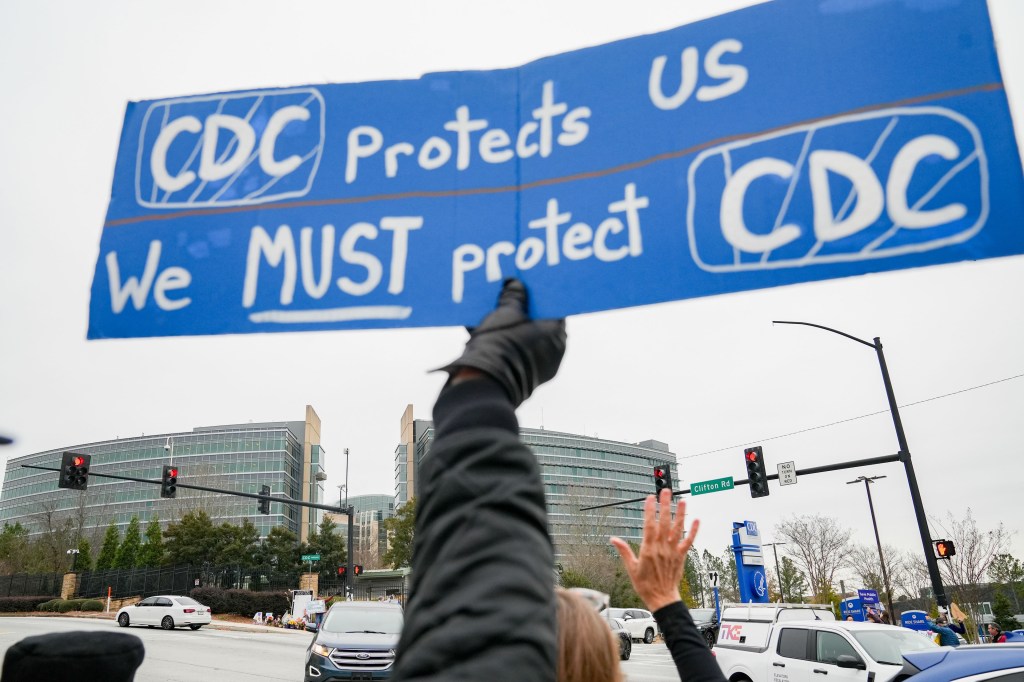
- Demoralized CDC Workforce Reels From Year of Firings, Funding Cuts, and a Shooting
- Qualified Health locks in $125M in fresh funding to scale enterprise AI at health systems
- Misery Loves [Investment] Company?: Remarks at the 2026 Investment Company Institute Investment Management Conference
- Study: Nearly 1 in 5 pediatric hospital deaths involve sepsis
- As expansions come online, CDMO Hovione aims to meet industry's 'dual supply and sourcing' zeal: exec
- Opening Remarks at the Digital Asset Summit 2026
- CVS Caremark, FTC reach settlement in insulin pricing case
- UCB unveils plan to build $2B biologics plant near its US headquarters in Atlanta
- PeaceHealth sued over plans to tap out-of-state staffer ApolloMD for Oregon EDs
- New Lyme Disease Vaccine Shows Strong Results in Trial
- TrumpRx Adds Diabetes, COPD Drugs at Steep Discounts
- Highmark reports $175M net loss for 2025 as financial headwinds batter health plan
- Listen to the Latest ‘KFF Health News Minute’
- Abivax hires commercial chief from Takeda to infuse Entyvio expertise into IBD launch prep
- ImmunityBio hit with FDA warning letter over Anktiva promotions in TV ad, podcast episode
- Alcohol Prep Pads Recalled Over Bacteria Risk, Cardinal Health Says
- Fewer patients traveled for abortions in 2025 as telehealth care increased, report finds
- Cologuard campaign reunites ‘Full House’ stars to give ‘The Talk’ about colon cancer screening
- Lilly to remove certain insulin products from European markets by 2027
- Karyopharm, looking to jump-start Xpovio, reports mixed results in myelofibrosis
- Study Warns Fluoride Bans May Raise Tooth Decay in Children
- WuXi Bio's record number of new projects in 2025 leaned heavily on US clients
- “Me engañaron”: agentes encadenan a un padre que había ido al ICE a reunirse con sus hijos

- Gilead inks Manta pact to dive deeper into cancer patient support
- Cheap Children's Clothing Tainted With Lead, Study Says
- Insulin Prices Fell For Medicare Patients Under Biden-Era Caps, Study Finds
- New Fathers Face Mental Health Challenges, Study Finds
- Your Choice Of Booze Influences Your Risk Of Death, Study Says
- AI Gets a 'D' When Judging Scientific, Medical Claims
- New Online Tool Helps Parkinson's Patients Weigh Brain Implant Decision
- AI chatbot use for health information up 16% from 2024: Rock Health survey
- ‘They Tricked Me’: A Father Was Chained After He Went to ICE To Reunite With His Kids
- Wilmington PharmaTech commits $50M to US API expansion
- Strides recalls nearly 90K bottles of children's ibuprofen after contamination complaints
- Trump administration unveils national policy framework for AI as it moves to override state laws
- Breast Cancer Locator System Submitted for De Novo 510(k) by Cairn Surgical
- Breast Cancer Locator System Submitted for De Novo 510(k) by Cairn Surgical
- 17 spine surgery firsts in Q1

- 17 spine surgery firsts in Q1


NPR reports that a March 12th study in the American Journal of Obstetrics and Gynecology calls into question the maternal mortality numbers generated by the CDC's National Vital Statistics System (NVSS). The discrepancy claimed is huge: the AJOG study finds only one-third of the NVSS reported maternal deaths are actually related to pregnancy and maternity. The AJOG study found that 147 death certificates of women over age 85 in 2013 claimed maternal mortality!
BridgeMI claims maternal mortality numbers three times those of the NVSS numbers in an article posted the same day: Report: 3 in 10 deaths of new moms in Michigan linked to substance use.
It is clear that bogus maternal mortality numbers are being used by the public health community to warp health care policy across America. This doesn't help mothers at risk, only bureaucrats seeking funding for proposed programs:
How bad is maternal mortality in the U.S.? A new study says it's been overestimated
By Selena Simmons-Duffin - March 13, 2024The CDC's National Center for Health Statistics' most recent report put the U.S. maternal mortality rate at a whopping 32.9 deaths per 100,000 births. That number garnered a great deal of attention, including being covered by NPR and other news outlets.
A new study suggests the national U.S. maternal mortality rate is actually much lower than that: 10.4 deaths per 100,000 births.
The widely reported issue of racial disparities in U.S. maternal mortality persists, even with the lower overall rate. Black pregnant patients are still three times more likely to die than white patients, according to data in the study published in the American Journal of Obstetrics and Gynecology on Wednesday.
"We have to prevent these deaths," says K.S. Joseph, a physician and epidemiologist in the OB-GYN department of the University of British Columbia. Joseph is the lead author of the peer-reviewed paper. "Even if we say that the rate is 10 per 100,000 and not 30 per 100,000, it does not mean that we have to stop trying."
The fact that the rate of maternal mortality in the U.S. seems to have been significantly inflated may be disconcerting. Experts NPR spoke with about the data explain that measuring maternal deaths is complex, and that CDC was not intentionally misleading the public. They also emphasize that most maternal deaths are preventable.
The trouble with the data started about 20 years ago, when the national death certificate was updated to include a pregnancy checkbox that the person certifying someone's death could tick. This checkbox created problems, which CDC analysts have acknowledged in their own papers, and changes were made in 2018 to CDC's methods for calculating maternal deaths. But Joseph and other researchers suspected the data was still not reliable.
"We felt that the pregnancy checkbox was misclassifying a lot of such deaths and adding them to maternal deaths," he explains.
In the new paper, Joseph and colleagues redid the CDC's National Center for Health Statistics analysis of data from 1999-2002 and 2018-2021, skipping over years when the data was in flux. Then they disregarded the deaths with only the pregnancy checkbox ticked. "We would only consider deaths to be a maternal death if there was a pregnancy-related cause mentioned by the physician who was certifying the death," he explains. "There are several lines in the certificate where a pregnancy-related cause can be mentioned, and if any of those lines mentioned a pregnancy-related cause, we would call it that."
That approach yielded a rate of 10.4 per 100,000. It also showed that the rate did not change much between 1999 and 2021. That rate is much closer to those reported in other wealthy countries, although Joseph warns that every country uses a different process and so international comparisons are unreliable.
"I think it's a very important study – I was happy to see it," says Steven L. Clark, an OB-GYN at Baylor College of Medicine who was not involved in the research. "It confirms statistically what most of us who actually deal with critically ill pregnant women on a regular basis thought for years. We are bombarded with these statistics saying how horrible maternal care is in the United States, and yet we just don't see it."
Clark does not blame the CDC for putting the maternal mortality rate so high. "They can only analyze the data that they're provided with, and that data starts at the individual hospitals and individual places in the United States," Clark says. "CDC gets these numbers, and I think they probably do a great job – I don't think there's any conspiracy here to hide anything from the public."
Joseph agrees. "The point I would like to make is that, yes, the [National Vital Statistics System] is overestimating rates and that's because of the pregnancy checkbox," Joseph says. "But this issue of assessing the actual maternal mortality rate is not a simple issue."
Deciding what time frame to consider, which conditions to include, and more, makes the task challenging. Joseph's study does not count suicides in the post-partum period, for instance.
The CDC's National Center for Health Statistics declined NPR's request to comment on the new study. A spokesperson also noted that there is no scheduled release date for a maternal mortality report for 2022.
Dr. Veronica Gillispie-Bell is an OB-GYN and the medical director of Louisiana's maternal mortality review committee. She also was not involved in the study. She says the findings do not surprise her – her committee finds checkbox errors all the time. "When we're validating the cases, it's very common that a 70 year old man – somebody checked the pregnancy checkbox and it will appear that that was a pregnancy-associated death when it was more of a clerical error."
She says in committees like hers in states all over the country – supported and funded by CDC – experts are looking closely at each of these maternal deaths and validating them. "We don't just look at the numbers," she says. "We review cases to determine, first of all, was this death pregnancy-related or not? Was this death preventable? And if so, what could we have done to prevent the death?"
She worries this new study will encourage some to dismiss the issue. "Anybody that was doubting is going to be like, 'I knew it wasn't that bad of a problem.'" She thinks the study should instead be a "call to action" to support state review committees like hers that validate the data and investigate each death.
Dr. Louise King, an OB-GYN and bioethicist at Harvard Medical School, agrees. "It's really important to dig down into this," she says. "Maternal deaths may be related to poor health coming into pregnancy, but that's still on us."
King notes that maternal mortality rates are still too high in the U.S., and the disproportionate effect on Black patients "is just plain scary," she says.
Joseph agrees that the racial disparities in the data make clear that there's a long way to go before the problem of maternal mortality is addressed. He adds, "this study does not mean that you can take your eye off the ball."
The BridgeMI report of March 12th with its yet more extravagant maternal mortality claims:
Report: 3 in 10 deaths of new moms in Michigan linked to substance use
By Robin Erb - March 12, 2024
- New maternal mortality data reveals an increase in maternal deaths
- About 3 in 10 deaths of pregnant or new moms — 128 of 442 deaths — were linked to substance abuse disorder
- In all, 3,000 residents died of overdoses in Michigan in 2022
Drug abuse in Michigan kills thousands each year, but a new report sheds light on oft-forgotten victims: pregnant and new mothers and their children.
In a five-year period ending in 2020, 442 people died while pregnant, giving birth or one year afterward. Of those, about 3 in 10 were linked to substance abuse disorder.
That is more than maternal deaths due to homicide, suicide and car crashes combined, according to a new report by the Michigan Department of Health and Human Services.
Experts say the data highlights the severity of the drug crisis that killed 3,000 Michigan residents in 2022.
Many with addictions try to quit when they become pregnant, but the stress of motherhood can take a toll, said Dawn Shanafelt, director of the health department’s maternal and infant health division, told Bridge Michigan.
“Many individuals will do their best to be as healthy as possible so that they have a positive pregnancy outcome,” she said.
“Once a baby's born — and this is for all people across the board, whether someone's in recovery or not — that's an extremely stressful time.”
Overall, maternal death rates have fluctuated since 2011, but have climbed in recent years. By 2020, the rate of maternal death had risen to 102.7 deaths for every 100,000 live births from 60.4 deaths per 100,000 live births in 2011.
The new report also calls for a “comprehensive state-wide education initiative” to address domestic violence.
Between 3% and 9% of women are abused during pregnancy, with certain factors — young age, single relationship status, race and poverty — playing a large part, according to a growing body of evidence.
Abuse has been associated with poor pregnancy weight gain, infection, anemia, stillbirth, pelvic fracture, fetal injury, preterm births and low birth weight among newborns.
“There's not a lot of control over pregnancy. Babies grow. They come when they want to come. It's not a situation that can be controlled, and that often can pose a challenge,” Shanafelt said.
The report also noted a continuation of disparities by race, age, and education level. For years, mothers who identify as Black or American Indian/Alaskan Native have been twice as likely or more to die from pregnancy-related causes than white women.
In the five years ending in 2020, Black women were 2.2 times more likely to die from pregnancy-related causes in Michigan compared to white women — a rate of 36.5 deaths per 100,000 live births compared to 16.3 deaths, respectively, according to the new report.
Also this week, the state released a related, 33-page report of recommendations aimed at improving health outcomes for all mothers, with special attention paid to Black communities and other vulnerable populations.
Among the recommendations is an increased awareness among providers, public health staff and patients of danger signs in maternal health, with special attention to chronic conditions and intimate partner violence.
Another big lie about maternal deaths attributes the outsized number of African-American maternal deaths to racism, rather than to genetic differences common in West Africa which could be treated if the medical community had not been captured and paralyzed by woke ideology:
https://www.city-journal.org/article/dangerous-quackery
Dangerous Quackery
Medical activists allege that racism explains the higher incidences of preeclampsia among black women.
By Ian Kingsbury - March 28 2024Radical activists are so determined to enshrine the idea that race is a social construct with no biological relevance that they are willing to endanger patient care to make their case. If they get their way, the next battleground for the assault on science and common sense could be obstetrics.
Historically, black race has been considered a risk factor for preeclampsia (marked by persistent high blood pressure), a dangerous and sometimes life-threatening pregnancy complication. Black women exhibit a higher incidence of preeclampsia, and the discrepancy is not fully explained by potential confounding factors such as obesity and hypertension. According to newly published commentary in The New England Journal of Medicine, the culprit is racism—the apparent causative agent of every health disparity these days.
The idea that racism is to blame for higher preeclampsia risk relies on the idea that race is a social construct. On this premise, biological factors cannot explain the higher rates of black-female preeclampsia; thus, social forces must be at work. This argument makes sense only if one accepts the plainly fictional assertion that race doesn’t convey any biologically useful information. Race certainly does have socially constructed aspects, but it also contains genetic data.
When it comes to preeclampsia specifically, about 55 percent of risk is estimated to be genetic. Recent research shows that West African ancestry is linked to risk variants in a gene called alipoprotein L1 (APOL1) that dramatically increase the likelihood of developing preeclampsia or kidney disease. Variants in APOL1 are widely theorized to have persisted in African-descended populations because they confer resistance to the parasite that causes African Sleeping Sickness, a dangerous disease endemic in sub-Saharan Africa. The evidence in favor of a biological basis for differences in preeclampsia by race is clear.
The newly published commentary in favor of the racism hypothesis, however, cites a 2021 study in the Journal of the American Medical Association, which observes that native-born American black women have a higher incidence of preeclampsia than foreign-born black women. Moreover, among foreign-born black women, those who have lived in the United States for ten years or more have a higher incidence of preeclampsia than those who have lived in the United States for less than ten years. The researchers opine that the differences reflect “prolonged exposure to systemic racism, neighborhood poverty, and residential segregation throughout their life course that negatively affects their health.” Among white and Hispanic women, nativity and length of residency are not associated with differences in risk of preeclampsia.
In reality, the outcomes are almost certainly explained by a combination of the two forces that woke activists reflexively reject when it comes to explaining health disparities: genetics and behavior. One half to two thirds of African American ancestry can be traced to West Africa, the region which was most heavily exploited by the American slave trade. However, recent African migration to the United States is more geographically diverse and features a comparatively lower proportion of the West African population with the highest risk of preeclampsia, hence the greater incidence among native-born blacks. Moreover, obesity rates are low in sub-Saharan Africa but high in the United States. This pattern almost certainly contributes to the phenomenon that preeclampsia is rarer in foreign-born individuals with African ancestry than native individuals with African ancestry. It also plausibly explains the higher incidence of preeclampsia among African immigrants who have lived in the United States for ten years or more. A 2022 study notes that in the United States, “weight gain tends to increase significantly after 10 years of migration” and that the effect is particularly acute among African women, 65 percent of whom experience an “unhealthy BMI change” after migration.
Ultimately, the findings say more about the acceptance of post hoc rationalization and contempt for the United States in contemporary medical literature than the supposed effects of racism. Consider: another study also published in JAMA in 2021 asserts that “exclusionary state-level immigration policies” contribute to a higher incidence of preterm birth among black immigrant women. These women are supposedly vulnerable to these effects because “Most Black immigrants come from Caribbean or African countries where they are the racial majority, and thus they may be facing this racialization for the first time.” On the other hand, there are “no significant associations for Latina women across nativity status. One hypothesis for this finding is that most of the anti-immigrant rhetoric has focused over time on Latinos, with periodic anti-Muslim and anti-Chinese rhetoric, resulting in high levels of exposure to xenophobia and discrimination that may not vary significantly across states.”
Apparently, when it comes to preeclampsia, the impact of racism is most acute in native-born black women. When it comes to preterm birth, however, the effects of “systemic” racism suddenly and magically flip, and it is foreign-born black women who feel the effects most acutely.
Such quackery in obstetrics is emblematic of changes in medicine more broadly. Nephrology is removing race indicators from kidney algorithms, even though doing so makes them less accurate. Meantime, journals including JAMA recently announced new guidance proclaiming that “Population descriptors such as race, ethnicity, and geographic origin should no longer be used as proxies for genetic ancestry groups in genomic science.”
Someday, scientific advancement might allow doctors to collect extensive genetic information on each patient easily and efficiently, negating the need to consider race. Until that happens, the unscientific purging of race from medical practice threatens patients everywhere.
Ian Kingsbury is the director of research for Do No Harm and senior fellow at the Educational Freedom Institute.
Get MHF Insights
News and tips for your healthcare freedom.
We never spam you. One-step unsubscribe.
Sponsors
Friends of MHF




Kirsten DeVries
Tom & Karen Nunheimer
Steve Ahonen
Ron & Faith Bosserman
Marlin & Kathy Klumpp
Sign Up for MHF Insights to keep up on the latest in Michigan Health Policy