- No more ‘old school’: How Duke Health is reimagining workforce development

- Why private practice dentistry needs a better model
- Chief nurses: Hospital finances improve with nursing investments
- Mississippi health system goes ‘all in’ on Epic with $115M investment
- CareQuest Innovation Partners, Kno2 collab on medical-dental data integration
- Ascension Wisconsin CEO to step down
- The hospitals, health systems cutting jobs in 2026
- The hospitals, health systems cutting jobs in 2026
- Nonprofit highlights rural opioid care strategies
- The 7 things on the table in the Mount Sinai-Anthem negotiations
- The 7 things on the table in the Mount Sinai-Anthem negotiations
- Wearables data predicts patient engagement: Mayo Clinic study
- Advocate plans largest US hospital drone delivery network
- Vitana Pediatric & Orthodontic Partners adds Florida practice
- Indiana system opens $21.7M outpatient center
- Trump administration targets medical school admissions: 4 notes
- EyeSouth Partners continues 2026 expansion with Louisiana practice
- RSV lingers in parts of US even as flu and COVID-19 recede
- Providence narrows operating loss to $486M in 2025
- A huge month for CMS policy
- What the Health? From KFF Health News: A Headless CDC
- GI is exploding with new tech—but how do patients feel about it?
- Maryland physician to pay $500K+ to settle false claims allegations
- Rhode Island oral surgeon launches Congressional campaign
- Premier Anesthesia, City of Hope Phoenix ink partnership
- 20 behavioral health leaders challenge industry assumptions
- What simulation training revealed about GI skills gaps
- Judge dismisses physician’s wrongful termination suit against staffing firm
- 3 California behavioral health centers to close amid funding shifts
- North Carolina practice to close after 40+ years
- St. Tammany opens outpatient cardiology center
- Indiana bars autism therapy provider from Medicaid billing: Wall Street Journal
- 6 dental practice openings to know
- UnitedHealth shareholder sues over proposal to include details on integration in annual proxy
- APRNs, PAs account for most antipsychotic prescriptions for Medicare Part D: Study
- Infosys to acquire Optimum Healthcare IT in $465M deal
- Oklahoma House passes bill expanding scope of dental assistants
- Dr. Nellie Kim-Weroha joins American Association of Orthodontists’ Board of Trustees
- California behavioral health agency to close 2 centers
- St. Luke’s CFO joins RCM company’s advisory board
- 52 DSOs to know: 2026
- 10 hospitals, health systems looking for CFOs
- DOJ alleges NewYork-Presbyterian forces payers into anticompetitive 'all-or-nothing' contracts
- 10 health system rating downgrades
- FDA Warns Biotech Firm Over Cancer Drug Anktiva Claims
- Bees and Hummingbirds May Be Consuming Small Amounts of Alcohol
- Two States Sue Cord Blood Company Over Misleading Claims
- North Star’s restructuring moves forward
- Illinois hospital pauses patient care amid payroll challenges
- What the Best-Performing Revenue Cycles Have in Common
- New WHO Guidance Aims To Speed Tuberculosis Testing
- As questions swirl around ATTR competition, Alnylam plots path to market leadership for Amvuttra
- Trump admin delays nomination for new CDC director past deadline
- Outspoken ACIP member steps down amid vaccine panel uncertainty: reports
- Egg-based drugmaker Neion Bio emerges from stealth to cook up multi-product biosimilar collab
- Genentech walks the walk in lupus as sponsor of annual awareness and fundraising event
- Study Reveals How Many Americans Consider Using a Gun
- Massive Study Finds Stress and Grief Don’t Cause Cancer
- Ultra-Processed Foods Harm Fertility In Both Men And Women, Studies Reveal
- Small Daily Habits Can Add Up To Better Heart Health
- Ritalin Might Protect ADHD Kids' Long-Term Mental Health, Study Finds
- Can You Drink Enough Fluids To Prevent Kidney Stones? Maybe Not, New Study Says
- Clasp, loan-linked hiring tool for employers, clinches $20M to expand amid federal loan caps
- Taking a GLP-1? Doctors Say Not To Forget About Movement and Mental Health

- OpenEvidence rolls out AI medical coding feature
- CDC’s Acting Chief Promises a Return to Stability in a Tumultuous Moment
- California peer-run behavioral health center to close amid funding shift
- Remarks at the Financial Stability Oversight Council Meeting
- ‘Integration only works if data lives in the same system’: How 5 systems are operationalizing behavioral health
- Medicaid work rules and enrollment losses: 6 notes
- Inside UHS’ playbook for responsible behavioral health growth
- Epic4 Specialty Partners adds Illinois practice
- The unsolved problems still plaguing dentistry
- American Dental Association adds mental health, GLP-1 prompts to patient forms
- RWJF: Between 5M and 10M people could lose Medicaid coverage in 2028 under work requirements
- How pharma marketers can capitalize on HCPs’ AI, social media and streaming habits
- Federal Officials Investigate States That Require Abortion Coverage
- Corcept's lead drug bounces back from FDA snub with different approval as Lifyorli in ovarian cancer
- Ionis slashes Tryngolza's price tag by 93% ahead of anticipated label expansion
- FDA approves Denali's Hunter syndrome drug, handing rare disease community a win
- Baby Walkers Sold on Amazon Recalled Over Fall Risk
- Want To Protect Your Brain? Science Says Exercise
- HelloFresh Pizza Recall Issued in 10 States Over Metal Risk
- Clinical Trials Have Too Much Data…That’s the Problem.

- Clinical Trials Have Too Much Data…That’s the Problem.
- CMS reveals new Medicaid model that supports coordination for children with complex needs
- Novartis sued by breast cancer patient over branded drug websites’ data-sharing practices
- Takeda targets $1.3B in cost savings in further restructuring
- Biogen pays $20M upfront to tap into Alteogen's subQ delivery tech
- 'Universal Donor' Blood Supplies Dangerously Low, Study Warns
- Why Stepping Outside May Help You Eat Better
- U.S. Medicine, Science Facing An Online Misinformation Siege, Poll Concludes
- Childhood Obesity Undercuts The American Dream For Some, Study Says
- Inclusive High Schools Benefit All Students, Not Just LGBTQ Teens
- Parental Loss Due to Drugs, Violence Raises Child Death Risk by 2,000%
- As Boehringer touts US launches, board chairman worries EU is 'falling further behind'
- The evolving state of exome and genome sequencing
- An Arm and a Leg: Steep Health Care Costs Steer Americans to Tough Decisions

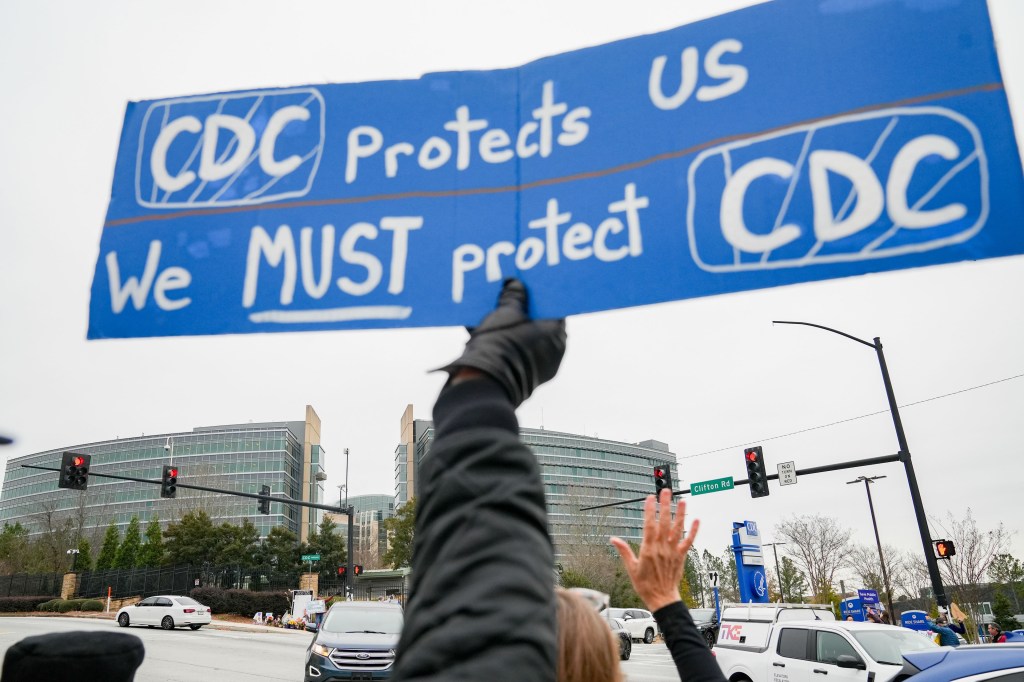
- Demoralized CDC Workforce Reels From Year of Firings, Funding Cuts, and a Shooting
- Qualified Health locks in $125M in fresh funding to scale enterprise AI at health systems
- Misery Loves [Investment] Company?: Remarks at the 2026 Investment Company Institute Investment Management Conference
- Study: Nearly 1 in 5 pediatric hospital deaths involve sepsis
- As expansions come online, CDMO Hovione aims to meet industry's 'dual supply and sourcing' zeal: exec
- Opening Remarks at the Digital Asset Summit 2026
- CVS Caremark, FTC reach settlement in insulin pricing case
- UCB unveils plan to build $2B biologics plant near its US headquarters in Atlanta
- PeaceHealth sued over plans to tap out-of-state staffer ApolloMD for Oregon EDs
- New Lyme Disease Vaccine Shows Strong Results in Trial
- TrumpRx Adds Diabetes, COPD Drugs at Steep Discounts
- Highmark reports $175M net loss for 2025 as financial headwinds batter health plan
- Listen to the Latest ‘KFF Health News Minute’

- Abivax hires commercial chief from Takeda to infuse Entyvio expertise into IBD launch prep
- ImmunityBio hit with FDA warning letter over Anktiva promotions in TV ad, podcast episode
- Alcohol Prep Pads Recalled Over Bacteria Risk, Cardinal Health Says
- Fewer patients traveled for abortions in 2025 as telehealth care increased, report finds
- Cologuard campaign reunites ‘Full House’ stars to give ‘The Talk’ about colon cancer screening
- Lilly to remove certain insulin products from European markets by 2027
- Karyopharm, looking to jump-start Xpovio, reports mixed results in myelofibrosis
- Study Warns Fluoride Bans May Raise Tooth Decay in Children
- WuXi Bio's record number of new projects in 2025 leaned heavily on US clients
- “Me engañaron”: agentes encadenan a un padre que había ido al ICE a reunirse con sus hijos

- Gilead inks Manta pact to dive deeper into cancer patient support
- Cheap Children's Clothing Tainted With Lead, Study Says
- Insulin Prices Fell For Medicare Patients Under Biden-Era Caps, Study Finds
- New Fathers Face Mental Health Challenges, Study Finds
- Your Choice Of Booze Influences Your Risk Of Death, Study Says
- AI Gets a 'D' When Judging Scientific, Medical Claims
- New Online Tool Helps Parkinson's Patients Weigh Brain Implant Decision
- AI chatbot use for health information up 16% from 2024: Rock Health survey
- ‘They Tricked Me’: A Father Was Chained After He Went to ICE To Reunite With His Kids
- Wilmington PharmaTech commits $50M to US API expansion
- Strides recalls nearly 90K bottles of children's ibuprofen after contamination complaints
- Trump administration unveils national policy framework for AI as it moves to override state laws
- Breast Cancer Locator System Submitted for De Novo 510(k) by Cairn Surgical
- Breast Cancer Locator System Submitted for De Novo 510(k) by Cairn Surgical
- 17 spine surgery firsts in Q1

- 17 spine surgery firsts in Q1
- Cencora acquiring EyeSouth Partners' retina business for $1.1B
- Aunque tengas seguro dental, la factura puede ser muy alta

- A look at how Optum Rx is using AI to address pharmacy fraud, waste and abuse
- Nursing Homes Accused of False Diagnoses To Hide Drug Use
- FDA Approves Higher-Dose Wegovy To Help People Lose More Weight
- Teens Often Pressured To Send Sexual Photos by Someone They Know, Study Finds
- Match Day 2026: Growth in emergency medicine, psychiatry
- Nearly 90,000 Bottles of Children’s Ibuprofen Recalled Nationwide
- FTC launches multi-bureau Healthcare Task Force to spot 'new priority areas for enforcement'
- Algunos adultos de mediana edad deciden posponer la atención médica hasta tener Medicare

- Rural Residents Have Highest Cancer Death Rates, Researchers Say
- Your Bank Account Might Show How Well Your Brain Will Age, Researchers Say
- Insurance Lapses Play Havoc With Diabetes Management, Study Shows


Brownstein Hyatt Farber Schreck (Wikipedia)
Their summary of the proposed federal budget is the best I found on a quick internet search. Please feel free to add others, especially more recent information.
I'll follow with an article on the importance of health policy in this election.
Biden Reveals Health Care Priorities in FY 2025 Budget
BROWNSTEIN CLIENT ALERT, MARCH 11, 2024
<clip>
A more detailed breakdown of the Department of Health and Human Services’ (HHS) budget request can be found here. The FY 2025 budget contains numerous health initiatives and priorities including:
- Reduces Drug and Other Health Care Costs for All Americans.
- Expands the IRA’s inflation rebates and $2,000 out-of-pocket prescription drug cost cap beyond Medicare and into the commercial market.
- Extends the $35 cost-sharing cap for a month’s supply of covered insulin products to the commercial market.
- Limits Medicare Part D cost-sharing for high-value generic drugs to no more than $2 for Medicare beneficiaries.
- Increases the pace of drug price negotiations by bringing more drugs into negotiation sooner after they launch.
- Authorizes HHS to negotiate supplemental drug rebates on behalf of interested states to pool purchasing power.
- Makes permanent the expanded Affordable Care Act (ACA) premium tax credits that were extended in the IRA.
- Provides Medicaid-like coverage to individuals in states that have not adopted Medicaid expansion, paired with financial incentives to ensure states maintain their existing expansions.
- Allows banning “facility fees” for telehealth and certain outpatient services in commercial insurance.
- Funds the continued implementation of the No Surprises Act.
- Honors America’s Commitment to Seniors and Americans in Need.
- Extends solvency of the Medicare Hospital Insurance (HI) trust fund indefinitely by ensuring high-income individuals pay their fair share.
- Proposes limiting the portion of Medicaid and CHIP managed care dollars spent on administration and incentivizing more investment in health care services by establishing a medical loss ratio.
- $150 billion over 10 years to improve and expand Medicaid home and community-based services (HCBS).
- Shifts funding for nursing home surveys from discretionary to mandatory beginning in 2026 and increases funding to cover 100% of statutorily mandated surveys.
- Proposes requiring greater transparency of nursing facility ownership and increasing the inspection of facilities with serious safety deficiencies.
- Invests in the Health and Well-Being of Families and the Next Generation.
- $390 million, a 36% increase above the 2023 enacted level, for the Title X Family Planning program to increase the number of patients served to 3.6 million.
- Transforms Behavioral Health Care.
- $1 billion to advance health information technology adoption and engagement in interoperability for certain behavioral health providers.
- Increases funding for the Children’s Mental Health Initiative by $50 million.
- Expands access to behavioral health services through investments in Certified Community Behavioral Health Clinics and Community Mental Health Centers.
- Doubles funding for the Mental Health Crisis Partnership Program.
- Invests in strengthening the behavioral health workforce, including integration into primary care settings.
- Proposes to extend incentive payment programs for Medicare providers in areas with clinician shortages to a broader set of clinicians, including behavioral health clinicians.
- Expands coverage of mental health benefits and strengthens the network of behavioral health providers in commercial insurance.
- Increases funding for the State Opioid Response grant program.
- Invests in a new technical assistance center to strengthen health providers’ understanding and treatment of substance use and women’s mental health.
- Invests in Medical Innovation, Scientific Breakthroughs and the Treatments of Tomorrow.
- $2 billion increase across the National Cancer Institute, Food and Drug Administration (FDA), Centers for Disease Control and Prevention (CDC) and cancer projects at the Advanced Research Projects Agency for Health (ARPA-H).
- Additional mandatory funds for the Indian Health Service (IHS) beginning in 2026.
- Proposes creating a nationwide network of centers of excellence and innovation in women’s health.
- Doubles existing funding for the Office of Research on Women’s Health at the National Institutes of Health (NIH).
- Advances Health Equity.
- $376 million, an increase of $82 million above the 2023 enacted level, to support the ongoing implementation of the White House Blueprint for Addressing the Maternal Health Crisis.
- Expands Medicaid maternal health support services during the pregnancy and postpartum period by incentivizing states to reimburse a broad range of providers, including doulas, community health workers, peer support initiatives and nurse home visiting programs.
- $8 billion in discretionary resources in 2025, a 12% increase over the 2021 enacted level, for clinical services, preventative health, facilities construction, contract support costs and tribal leases at IHS.
- Proposes all IHS resources as mandatory beginning in 2026.
- Reauthorizes and increases funding for the Special Diabetes Program for Indians.
- Invests in direct primary care and mental health care services, expanded infrastructure and assistance for rural hospitals to remain open and provide high-quality services.
- Protects and Strengthens Public Health and Health Infrastructure.
- $2.5 billion in discretionary and mandatory funds over 10 years at CDC to support an evidence-based community violence initiative to address the causes of violence in communities and help reduce health inequities that characterize violence.
- $60 million for gun violence research across CDC and NIH.
- $9.8 billion in discretionary and mandatory funding for the Prevention and Public Health Fund, an increase of $499 million over the 2023 enacted level.
- $20 billion in mandatory funding for HHS public health agencies in support of the administration’s biodefense priorities as outlined in the 2022 National Biodefense Strategy and Implementation Plan for Countering Biological Threats, Enhancing Pandemic Preparedness, and Achieving Global Health Security.
- $75 million in the Administration for Strategic Preparedness and Response (ASPR) to manufacture more essential medicines, medical countermeasures and critical inputs in the United States.
- $12 million to strengthen FDA’s capacity to identify and address potential disruptions and shortage threats.
- Expands end-to-end supply chain visibility to priority FDA-designated essential medicines and devices to prepare for and mitigate potential shortages.
- Creates a new office to coordinate agency-wide activities on supply chain resilience and shortage mitigation efforts for drugs, biologics, medical devices and critical foods.
- Proposes a national program to significantly expand screening, testing, treatment, prevention and monitoring of hepatitis C infections in the United States.
- Proposes a new mandatory program to guarantee PrEP at no cost for all uninsured and underinsured individuals.
- Proposes a new Vaccines for Adults program to provide uninsured adults with access to routine and outbreak vaccines at no cost.
- Invests in protecting the health care system from cyber threats and includes funding for ASPR to coordinate cybersecurity efforts.
- $800 million to help high-need, low-resourced hospitals cover the upfront costs associated with implementing essential cybersecurity practices.
- $500 million for an incentive program to encourage all hospitals to invest in advanced cybersecurity practices.
- $141 million to continue strengthening HHS’s ability to protect and defend HHS systems and information, including $11 million to expand and enhance HHS’ capacity to protect the privacy and security of health information.
- Invests in HHS’ role in promoting the use of artificial intelligence (AI) in health care and public health while protecting against its risks.
As mentioned above, the president’s budget request starts the congressional budget and appropriations process. The budget presented by the Biden administration provides an aspirational roadmap to what the president would like to be implemented and how much Congress integrates these ideas into their own remains to be seen.
Followers of the MHF Forum and Michigan health policy will recognize many of these funds already leveraging policy in our state.

Joe Grogan has penned an avowedly partisan recapitulation of the ways Medicare funding has been looted to finance non medical programs in recent years:
The Honest Truth About Health Policy
As a frail President Biden walks onto the debate stage this week with the considerable challenge of defending a disastrous record on foreign policy, inflation, and border policies, he is certain to try to use healthcare as an area to score points against President Trump. The campaign is already airing ads on the subject. The media largely ignored or misrepresented Trump’s record on healthcare but there is one area that probably can’t be ignored any longer: Biden’s Medicare policies are hitting seniors hard.As he works to boost support from seniors, Biden has attempted to paint Trump as a threat to Medicare, but the truth is that Biden and the Democrats raided Medicare for green energy subsidies and America’s seniors are paying the price. In 2022, Democrats rammed through the Inflation Reduction Act (IRA) with major changes to Medicare’s prescription drug reimbursement—previously an area of bipartisanship—without a single Republican vote.
President Trump by contrast quietly pursued bipartisan changes, engaging with Senators Grassley and Wyden, Majority Leader McConnell and Speaker Pelosi for negotiations on a bipartisan drug pricing bill to help seniors manage drug costs and preserve the program, but that construct was tossed aside when Democrats took both legislative chambers and the White House and had the chance to implement drug price controls.
Much has been written about how Biden’s drug price setting scheme has led numerous developers to cancel research programs, and more cancellations are around the corner. But what has not gotten enough attention is that in a real feat of policy incompetence, cost savings for seniors are still years away, but seniors are already paying more for drug coverage. Plans requested an average premium increase of 21.5% for 2024 and requests will likely be elevated for 2025 as well. While Democrats included a cap on one factor used to determine beneficiary premiums, the cap does not extend to the premium as a whole. This, coupled with poorly designed changes to Medicare Part D’s structure triggered astronomical premium increases.
Part D instability will grow in 2025 and 2026 as the program’s price fixing provisions kick in and the rebates that keep premiums down disappear. Premiums will need to go up or benefit generosity will need to go down. Some plans may simply stop offering coverage in certain areas next year.
Why would Democrats destabilize the program and impose higher costs on seniors? A generous explanation might be that they didn’t think that this many drug development programs would get cancelled and they didn’t understand that the changes they were making to Part D’s structure would be catastrophic. But a more ideological explanation, and I think a more accurate one, is that Democrats just got greedy, which is ironic since this is their standard attack line against drug companies.
When President Trump proposed restructuring Part D to help seniors, all of the savings in drugs costs accrued to seniors and stayed in the Medicare program. But Democrats needed to loot Part D to pay for the green energy subsidies of the IRA.
Put another way, Biden cut benefits from people with a median income of $36,000 per year to subsidize cars purchased by individuals who earn five times as much. This $240 billion raid on Medicare would be shocking if they hadn’t done it before; Democrats cut $450 billion to $716 billion from Medicare to fund the Affordable Care Act.
When Republicans had both legislative houses and the White House under President Trump, we cut taxes. When Democrats had both houses under Obama and Biden, they raided Medicare to create new programs.
So, when Biden says Medicare won’t be cut on his watch, people should know he already did. Under Donald Trump; benefits were made more generous, particularly for Medicare Advantage enrollees, who Trump allowed to better manage their chronic conditions with enhanced benefits, such as home modifications to address disability. Ironically, the Biden Administration has spent the last three years squeezing Medicare Advantage and costing seniors more money. All the while, they have demonized for-profit companies in health care as they waged war against them.
For the first time in history Thursday night’s debate will feature two candidates who have both held the office defending their records, attacking the other’s. Biden’s team is hoping healthcare might provide a rare window to go on offense, but their actions while in office betray them. And by any objective measure, Trump’s record protecting Medicare is far better than the Biden record of looting it.
During the ACA/Obamacare debates, "Healthcare is 1/6 of the economy" became common knowledge.
Yes. They are connected.
In this timely debate prep, NBC refreshes our frame of reference.
Health care just as important as economy. What experts want Biden and Trump to address.
About half of U.S. adults say it is difficult to pay for their medical care.When President Joe Biden and former President Donald Trump face off Thursday during the first general election debate, health policy experts say tackling the exorbitant cost of health care is as much a top issue for voters as the U.S. economy.
Health care costs in the United States continue to rise — and Americans increasingly say they are unable to afford the care they need.
There is no issue in health care even remotely close to voter frustration over the high prices patients have to pay for medical care, said Drew Altman, president and CEO of KFF, a nonprofit group that researches health policy issues.
“People tend to think about health care as separate from the economy,” he said. “But when you talk to voters, it’s not separate at all in their heads. Health care is a dimension of their pocketbook economic concerns.”
National health care spending is projected to have increased 7.5% in 2023 to almost $4.8 trillion, faster than the projected growth of the overall economy, according to the Centers for Medicare and Medicaid Services.
The estimated health care spending per person — the average amount spent on health care services for each individual — reached $14,423 in 2023, up from $13,493 in 2022 and $13,012 in 2021.
The rising cost is hitting Americans’ wallets. About half of U.S. adults say it is difficult to afford their health care costs, according to a recent poll from KFF. About 1 in 4 say they — or a family member — had problems paying for health care in the past year.
That often means people will have to skip or delay the care that they need, said Dr. Adam Gaffney, a critical care physician at the Cambridge Health Alliance, who was not involved in the polling. A family member may try to provide financial aid, he added, but attempts to help another can sometimes aggravate problems for the entire family — most notably with medical debt.
"For American households, health care costs are one of the most important economic issues," he said. “What we spend on health care is going to be one of the biggest line items for a lot of families, particularly families with children or with elderly people with chronic diseases.”
No sweeping reform
Although Trump has revived threats to dismantle the Affordable Care Act, also known as Obamacare, major health care reform is unlikely to be a central issue during the debate, Altman said.
Biden is likely to tout the Inflation Reduction Act, which he signed into law in 2022.
Among the provisions is allowing Medicare, for the first time, to directly negotiate drug prices with pharmaceutical companies. Earlier this year, the government began negotiating prices on the 10 costliest prescription drugs covered by Medicare, which included heart medications and diabetes drugs. The government is expected to publish the new negotiated prices by Sept. 1.
Aside from Obamacare and abortion, Trump has provided little detail on what health care policy would look like in a potential second term. He made addressing the high cost of prescription drugs a tentpole of his previous term, including a push to allow states to import drugs from Canada and a rule that would tie prices for certain drugs to prices paid by countries overseas.
The greatest challenge for both Biden and Trump will be pitching health care cost policies that both sides of Congress can get behind, said Robin Feldman, a professor of law and director of the Center for Innovation at UC Law San Francisco.
“Notions of unity and compromise seem to be a distant memory in Congress, as they are in the nation,” she said.
”The idea of a big major sweeping reform has felt unlikely in recent years,” Gaffney said.
Breakthrough reforms remain challenging — but important.
“This distinction between health care as an issue and the economy as an issue at this point drives me crazy, because for real people, there is no distinction,” Altman said. “It’s one of their biggest economic concerns.”
Berkeley Lovelace Jr. is a health and medical reporter for NBC News. He covers the Food and Drug Administration, with a special focus on Covid vaccines, prescription drug pricing and health care. He previously covered the biotech and pharmaceutical industry with CNBC.
Get MHF Insights
News and tips for your healthcare freedom.
We never spam you. One-step unsubscribe.
Sponsors
Friends of MHF





Kirsten DeVries
Tom & Karen Nunheimer
Steve Ahonen
Ron & Faith Bosserman
Marlin & Kathy Klumpp
Sign Up for MHF Insights to keep up on the latest in Michigan Health Policy