- States Pay Deloitte, Others Millions To Comply With Trump Law To Cut Medicaid Rolls
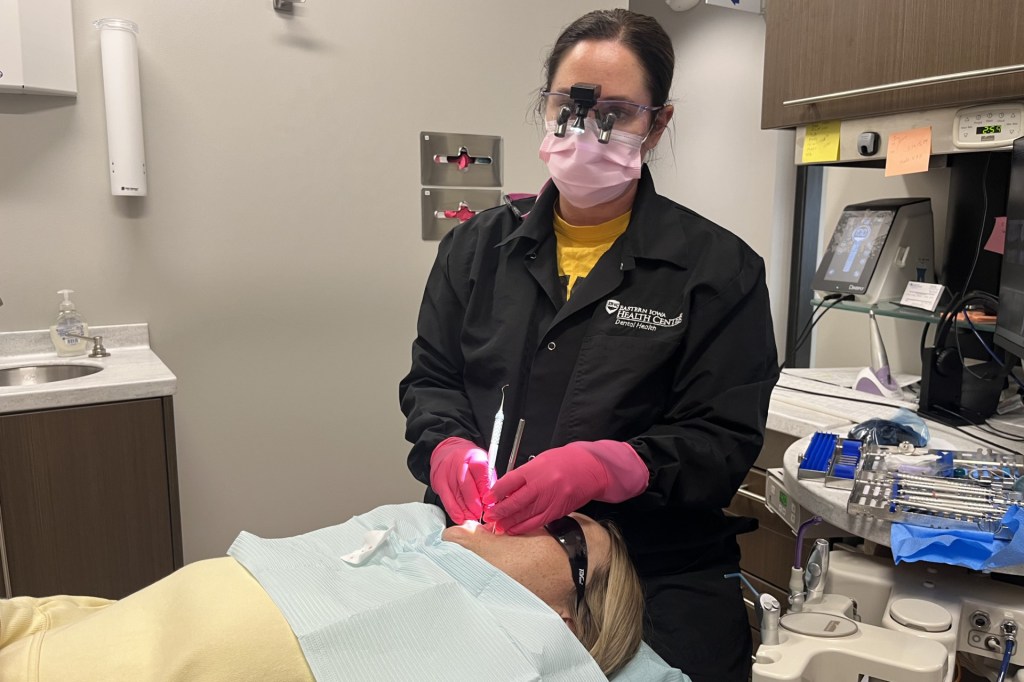
- Trump’s Hunt for Undocumented Medicaid Enrollees Yields Few Violators

- AdventHealth CEO brings a cyclist’s mind to healthcare headwind navigation

- Baptist Health Arkansas hospital to end OB services
- Baptist Health Arkansas hospital to end OB services
- Texas behavioral health provider launches 6th Austin-area clinic
- The readiness gap facing new dental graduates
- Texas AG sues dental providers for Medicaid fraud
- Health systems embrace teledermatology
- New Jersey expands authority for advanced practice nurses
- Boone Health sues Missouri Heart Center for breached contracts, data misuse
- 42 North Dental appoints senior VP of operations
- Advocate Health taps Epic’s AI Agent Factory
- Why HealthPartners won’t get ‘caught up in the race’ on AI
- The groups among whom mammography rates are falling: Study
- Why these 2 roles are key to expanding behavioral access, per SAMHSA
- Why ASCs are watching NewYork-Presbyterian’s anticompetitive lawsuit
- CVS Health to open more stores than it closes in 2026
- CMS signals tougher expectations for hospital nutrition services: 5 notes
- Sun Life appoints dental business president
- Memorial Regional, Joe DiMaggio Children’s name CFO
- Dr. Yun Saksena appointed vice dean for academic, student affairs at University of Washington
- 12 Big Tech health system partnerships
- MB2 Dental’s 3-year growth recap: 17 moves
- Kaiser Permanente’s $9.3B net income draws scrutiny: 6 things to know
- New orthopedic CEO trims $2.5M in costs — 2 targeted areas
- How 2 orthopedic groups formed strong payer partnerships
- ACA enrollment at 23.1 million in 2026
- 6 states with the most DSO activity in Q1
- Illinois hospital to expand cardiovascular care with $29M project
- Intermountain Health outpatient building acquired by real estate firms
- 2026 gastroenterology fellowship match: A breakdown
- Maryland eye practice acquired
- South Carolina system centralizes OB delivery services
- CDRH Guidance: Patient Preference Information (PPI) in Medical Device Decision Making
- CDRH Guidance: Patient Preference Information (PPI) in Medical Device Decision Making
- Unlocking Hidden Margin: How Health Systems Are Thinking About AI, Automation, and Revenue Risk
- BSCI’s LAAC CHAMPION-AF study for WATCHMAN FLX meets primary and secondary safety and efficacy endpoints
- BSCI’s LAAC CHAMPION-AF study for WATCHMAN FLX meets primary and secondary safety and efficacy endpoints
- Apple Store to ID Regulated Medical Device Apps
- Apple Store to ID Regulated Medical Device Apps
- 16 dentists making headlines
- California autism center to close 2 locations, lay off 62
- 70+ DSO affiliations in Q1: State-by-state breakdown
- Oceans Healthcare taps VP of corporate development
- PCDM acquires Ohio periodontics practice
- Pennsylvania expands law enforcement, SUD treatment collab
- Washington physician sentenced for selling recalled medical devices to patients as new
- How Orlando Health is reshaping bariatric care
- CMS: This year's open enrollment brought fewer signups, higher premiums
- White House denies plans for 20% NIH funding cut
- Medical Schools No Longer Required To Teach Health Inequities
- Connecticut behavioral health provider names president
- 10 providers seeking RCM talent
- Lilly presses for UK deal that would see higher drug prices in exchange for resumed investments: FT
- Closed Illinois hospital may receive lifeline
- United plots Tyvaso FDA filing after ph. 3 win elicits talk of 'new IPF standard' and blockbuster sales
- RCM firm names Quorum Health veteran VP of revenue cycle operations
- 7 health systems with boosted outlooks
- Fluoride Quietly Removed From Birmingham Water Years Ago, Officials Face Backlash
- FDA Weighs Expanding What Can Go Into Supplements
- 9 Now Sickened in Outbreak Tied To Raw Milk and Cheese
- BMS, Novartis, Gilead, Iovance dinged over biologics promos in rare spate of CBER untitled letters
- Nearly half of US hospital markets entirely controlled by 1 or 2 health systems: KFF
- Idorsia eyes pediatric insomnia use with midstage trial win for sleep med Quviviq
- Electronic Paperwork Increasing Burnout Risk Among Young Doctors
- Kratom Cases Surging In U.S.
- What Makes Play Fun For Children? Seven Factors Stand Out, Study Says
- Night Shifts Are Tough On People With Type 2 Diabetes, Study Says
- Women's Bone Loss Tied To Heart Health, Study Finds
- Want To Lose Weight? Eat A Boring, Repetitive Diet, Researchers Suggest
- Samsung Biologics union gathers votes to strike as tension over wage, governance mounts
- Takeda begins US layoffs as part of massive $1.3B restructuring
- Biogen looks to shake up SMA status quo with FDA nod for high-dose version of Spinraza
- She Owed Her Insurer a Nickel, So It Canceled Her Coverage

- Inside the High-Stakes Corporate Fight Over Feeding Preterm Babies
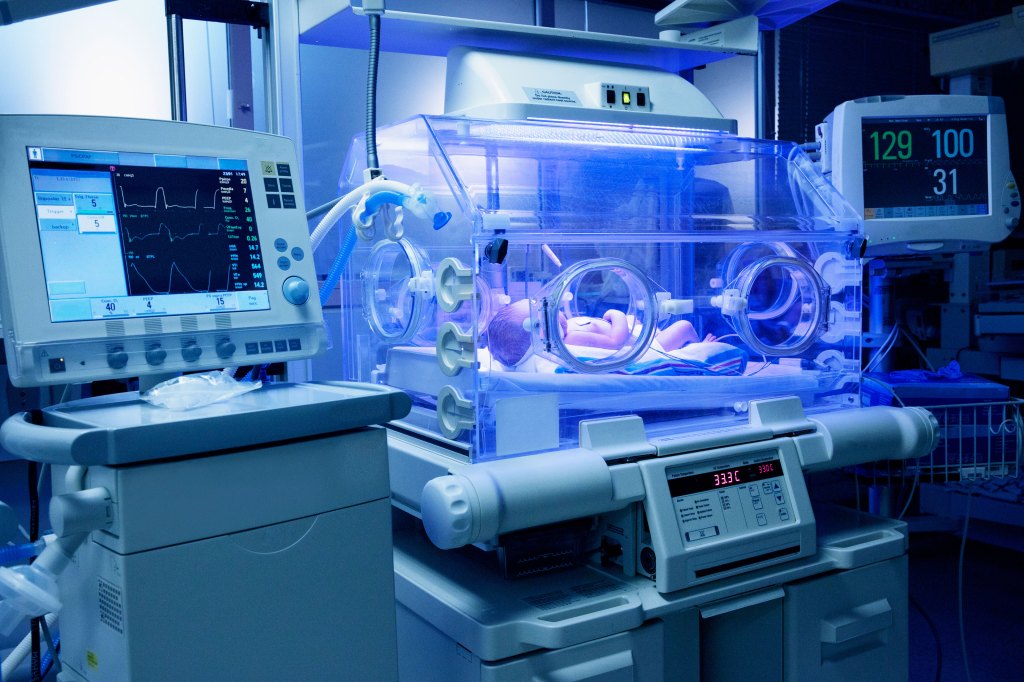
- Study Links High Antioxidant Intake To Changes in Offspring Development
- The Healthcare Burnout Backlash (pt 1): Burnout Reaches Well Beyond Clinicians

- The Healthcare Burnout Backlash (pt 1): Burnout Reaches Well Beyond Clinicians
- Even Mild Oxygen Loss in Preemies' First Hours Poses Lifelong Brain Risks: Study
- Oklahoma officials warn of new opioid
- Michigan finalizes Medicaid mental health assessment policy changes
- How the Trump Administration Uses Migrant Kids To Find and Detain Family Members
- Oral GLP-1s, COVID preventatives: 3 more drugs in the pipeline, Optum says payers should watch
- Providence trims 2025 operating loss to $132M, notches second consecutive quarter of gains
- Missouri system debuts mobile behavioral health unit
- $3M Verdict Links Social Media to Anxiety and Depression
- The White House Delays CDC Pick
- New COVID 'Cicada' Variant Is Spreading — What Experts Want You To Know
- Advocate Health to launch ‘nation’s largest’ hospital drone delivery program in Zipline partnership
- Op-ed: Empathy meets efficiency—how the responsible use of AI can transform Medicare
- Family Caregivers Provide $1 Trillion In Annual Labor, AARP Says
- ‘Health Doesn’t Need to Be Ludacris’: Bayer signs rapper-actor to multivitamin campaign
- Rocket plots measured trajectory for new gene therapy Kresladi after clearance to launch from FDA
- Healthy Lab Results May Mask Future Risks for Kids with Obesity
- At-Home Chemotherapy Is Safe, Feasible, Pilot Study Indicates
- What You Do While Sitting Could Predict Dementia Risk
- New Cholesterol Guidelines: What Patients and Caregivers Need to Know
- Want A Bootlicking Yes Man? Ask An AI Chatbot For Advice, Study Warns
- Specially Coated Implants Better For Breast Cancer Patients, Study Finds
- Trump Team Claims Successes Against ACA Fraud While Pushing for More Controls

- Give and Take: Federal Rural Health Funding Could Trigger Service Cuts

- Fierce Pharma Asia—Takeda’s $1.3B reorg; India’s GLP-1 floodgates; Gilead’s $2.2B buy of a China NewCo
- Where are you with EUDAMED?

- Where are you with EUDAMED?
- HL7 Launches Real‑Time Medical Device Interoperability Accelerator
- HL7 Launches Real‑Time Medical Device Interoperability Accelerator
- Two GA Tech ATDC Startups — Nephrodite and OrthoPreserve — Secure FDA Breakthrough Device Designation
- Two GA Tech ATDC Startups — Nephrodite and OrthoPreserve — Secure FDA Breakthrough Device Designation
- Artificial Intelligence: ROI, not Clinical Autonomy, Leads Operational Workflows
- Artificial Intelligence: ROI, not Clinical Autonomy, Leads Operational Workflows
- Medtronic and Merit Medical Systems distribution agreement for new, ViaVerte basivertebral nerve ablation system
- Medtronic and Merit Medical Systems distribution agreement for new, ViaVerte basivertebral nerve ablation system
- Breakthrough Device Designation for Noah Labs Vox Heart Failure Detection Device
- Breakthrough Device Designation for Noah Labs Vox Heart Failure Detection Device
- What the Health? From KFF Health News: A Headless CDC
- Recordati confirms it's weighing CVC Capital buyout offer of $12.6B
- Nonprofit celebrates rescue, recapitalization of Prospect Medical Holdings' Rhode Island hospitals
- UnitedHealth shareholder sues over proposal to include details on integration in annual proxy
- SCAN taps biopharma, CMS vet Aman Bhandari as its first chief AI officer
- Infosys to acquire Optimum Healthcare IT in $465M deal
- Healthcare systems can create AI care pathways with new Viz.ai tool
- DOJ alleges NewYork-Presbyterian forces payers into anticompetitive 'all-or-nothing' contracts
- FDA Warns Biotech Firm Over Cancer Drug Anktiva Claims
- Bees and Hummingbirds May Be Consuming Small Amounts of Alcohol
- Two States Sue Cord Blood Company Over Misleading Claims
- New WHO Guidance Aims To Speed Tuberculosis Testing
- As questions swirl around ATTR competition, Alnylam plots path to market leadership for Amvuttra
- Trump admin delays nomination for new CDC director past deadline
- Outspoken ACIP member steps down amid vaccine panel uncertainty: reports
- Egg-based drugmaker Neion Bio emerges from stealth to cook up multi-product biosimilar collab
- Genentech walks the walk in lupus as sponsor of annual awareness and fundraising event
- Study Reveals How Many Americans Consider Using a Gun
- Massive Study Finds Stress and Grief Don’t Cause Cancer
- Ultra-Processed Foods Harm Fertility In Both Men And Women, Studies Reveal
- Small Daily Habits Can Add Up To Better Heart Health
- Ritalin Might Protect ADHD Kids' Long-Term Mental Health, Study Finds
- Can You Drink Enough Fluids To Prevent Kidney Stones? Maybe Not, New Study Says
- Clasp, loan-linked hiring tool for employers, clinches $20M to expand amid federal loan caps
- Taking a GLP-1? Doctors Say Not To Forget About Movement and Mental Health

- OpenEvidence rolls out AI medical coding feature
- CDC’s Acting Chief Promises a Return to Stability in a Tumultuous Moment
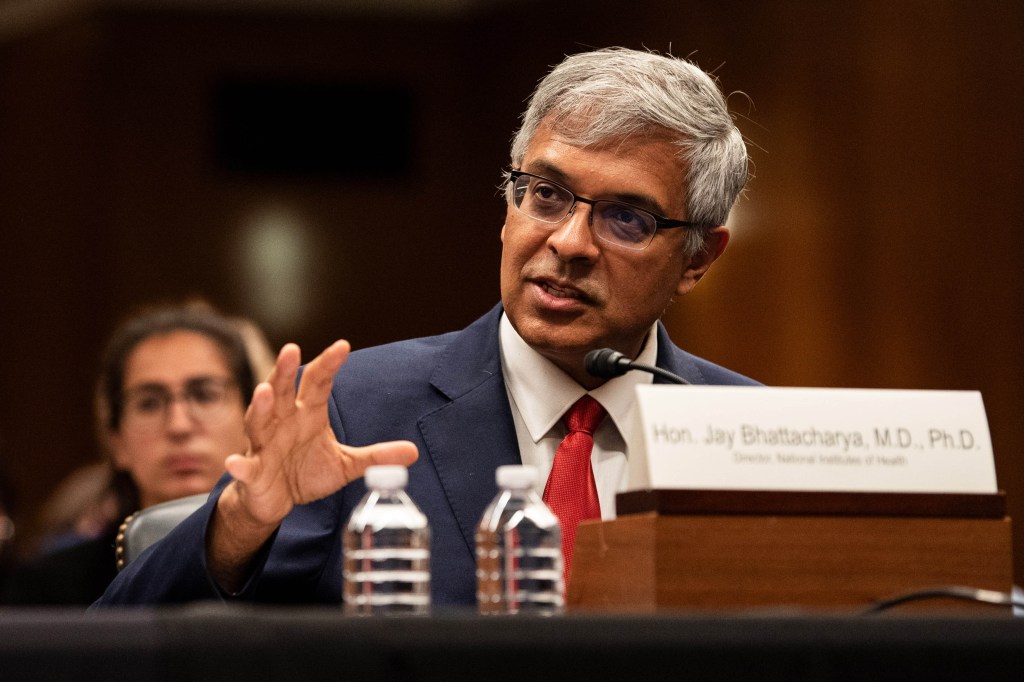
- Remarks at the Financial Stability Oversight Council Meeting
- RWJF: Between 5M and 10M people could lose Medicaid coverage in 2028 under work requirements
- New therapy animal program aims to support 100K patients, providers
- Pulse check on Lilly's GLP-1 fortunes
- Gen Z nurses prioritize schedule flexibility, need more manager interactions to avoid turnover
- How pharma marketers can capitalize on HCPs’ AI, social media and streaming habits
- Federal Officials Investigate States That Require Abortion Coverage
- Corcept's lead drug bounces back from FDA snub with different approval as Lifyorli in ovarian cancer


The Social Security and Medicare Trustees released their annual reports on Wednesday. The Trustees project that both the Social Security retirement trust fund and the Medicare Hospital Insurance (HI) trust fund are just 8 years from insolvency:
https://www.crfb.org/blogs/social-security-and-medicare-trustees-release-2025-reports
https://www.cms.gov/oact/tr/2025
https://www.ssa.gov/OACT/TR/2025/tr2025.pdf
Social Security and Medicare Trustees Release 2025 Reports
June 18, 2025The Social Security and Medicare Trustees released their annual reports, today, highlighting the precarious financial states of the programs. The Trustees project that both the Social Security retirement trust fund and the Medicare Hospital Insurance (HI) trust fund are just 8 years from insolvency, and will require timely trust fund solutions.
Full analyses of the reports will be published soon. In this short analysis, we show the Trustees project that:
* Social Security’s Old Age and Survivors Insurance (OASI) trust fund will be insolvent in 2033, or 2034 if funds are reallocated from the disability (SSDI) trust fund.
* Medicare’s Hospital Insurance (HI) trust fund will deplete its reserves by 2033.
* Over the next 75 years, Social Security faces a shortfall of 3.82 percent of taxable payroll, while the HI trust fund faces a shortfall of 0.42 percent of payroll.
* Total Medicare costs are projected to rise from 3.8 percent of GDP in 2024 to 6.7 percent by 2099, or 8.8 percent under the Chief Actuary’s alternative scenario.The looming insolvency of Social Security’s retirement program will lead to a 23 percent across-the-board benefit cut when today’s 59-year-olds reach the Full Retirement Age and when today’s youngest retirees turn 70. On a theoretically combined basis, beneficiaries will face a 19 percent benefit cut just one year later.
The Medicare Trustees project the HI trust fund will also be exhausted in 2033, leading to an 11 percent cut in HI payments. That cut, which is projected to grow for at least the following decade, could jeopardize access to health care for seniors and some workers with disabilities.
The Medicare Trustees find that Medicare Part B (physician insurance) and Part D (prescription drug benefits) will also grow, along with the HI program. They project total gross Medicare costs will grow from 3.8 percent of GDP today to 6.2 percent of GDP by 2049 and 6.7 percent by 2099 – or 8.8 percent under the alternative scenario. Most of these additional costs would be funded by general revenue and thus require additional borrowing.
Several very depressing graphics at the CRFB hyperlink, above.
More detail, but the graphics are good enough that you should go to the hyperlink:
https://www.crfb.org/papers/analysis-2025-medicare-trustees-report
Analysis of the 2025 Medicare Trustees' Report
June 18, 2025The Medicare and Social Security Trustees released their annual reports on the financial status of the trust funds. Our report on the Social Security trust funds can be found here.
The Medicare Trustees project that the Medicare Hospital Insurance (HI) trust fund will be insolvent in 2033 with a 75-year shortfall of 0.42 to 1.28 percent of payroll. Meanwhile, total gross Medicare spending will continue to grow.
This year’s report finds:
* The HI trust fund will run out of reserves in eight years, with a projected insolvency date of 2033. That’s when today’s 57-year-olds first become eligible for the program and today’s youngest retirees turn 70. Upon insolvency, spending will be cut by 11 percent, which could reduce access to health care for many seniors.
* The HI trust fund faces a significant shortfall, totaling 0.42 percent of payroll (0.18 percent of GDP) over 75 years, with annual deficits approaching 0.7 percent of payroll (0.3 percent of GDP) in the early 2040s.
* Medicare costs will continue to grow rapidly. Gross Medicare costs have risen from 2.2 percent of GDP in 2000 to a projected 3.9 percent in 2025, and are expected to increase further to 6.2 percent of GDP in 2050 and 6.7 percent of GDP in 2099.
* Medicare’s outlook has worsened since last year, with the insolvency date moved up by three years, the shortfall increased by 20 percent (0.07 percent of payroll), and total spending in 2098 is 0.5 percent of GDP higher. The deterioration is largely due to higher-than-expected expenditures for hospitals and hospice services as well as spending on physician-administered drugs.
* Medicare’s outlook might be far worse than projected. Under the alternative scenario crafted by the Chief Actuary, Medicare spending will rise to 8.8 percent of GDP in 2099 rather than 6.7 percent, and the HI 75-year shortfall would total 1.28 percent of payroll rather than 0.42 percent of payroll.
As the Trustees show, the Medicare program remains costly and is on an unsustainable path. Policymakers should adopt reforms soon to improve the financial health of the program, especially by reducing wasteful spending and lowering the overall cost of health care under the program.
The Hospital Insurance Trust Fund will be Insolvent in 2033
Medicare’s HI trust fund, also known as Medicare Part A, finances inpatient hospital care for beneficiaries. Funds come primarily from a 2.9 percent payroll tax on wage income. Currently, the trust fund has roughly $240 billion in reserves and is projected to run small surpluses through 2027. After that, the program will be required to draw down funds from the reserves to pay its costs and eventually will run out of funds in 2033.
Upon insolvency, the program would only be able to pay 89 percent of its costs, necessitating an abrupt 11 percent payment cut. That cut would grow to 14 percent by 2049, likely leading to a disruption of services for seniors and individuals with disabilities who rely on the program.
As the population ages and health care costs rise, the Trustees project current modest HI surpluses will turn into deficits, growing to 0.27 percent of payroll (0.12 percent of GDP) by 2030 and 0.68 percent of payroll (0.30 percent of GDP) by 2045. Beyond that, the annual shortfall will begin to shrink, and under current projections the annual shortfall will disappear by 2099.
HI costs, which have grown from 2.63 percent of payroll in 2000 to 3.40 percent of payroll in 2025, will rise to 4.31 percent of payroll by 2035, peak at 4.74 percent in 2080, and slowly decline to 4.52 percent in 2099. Revenue, which has also grown from 3.11 percent of payroll in 2000 to 3.45 percent in 2025, will grow slowly to 4.51 percent of payroll in 2099.
Over the full 75 years, the HI trust fund faces a 0.42 percent of payroll (0.18 percent of GDP) funding gap. Restoring solvency would require the equivalent of boosting the HI payroll tax rate by 14 percent or reducing spending by 9 percent. Under the Chief Actuary’s alternative scenario (discussed below), the gap totals 1.28 percent of payroll, which would require raising the HI payroll tax by 44 percent or reducing spending by 24 percent.
Total Medicare Costs are High and Rising
The total gross cost of Medicare – including Parts A, B, and D – has grown significantly, from 2.2 percent of GDP in 2000 to 3.9 percent in 2025. The Trustees project continued cost growth, rising to 6.2 percent of GDP in 2050 and 6.7 percent of GDP in 2099.
Medicare Part B continues to be the source of significant cost growth over the next 75 years. These costs are projected to rise from 1.9 percent of GDP in 2025, to 3.7 percent in 2050, and 4.2 percent in 2099. The cost of Part A is expected to rise at a slower rate from 1.5 percent of GDP in 2025, to 2.0 percent in 2050, and slowly decline to 1.9 percent of GDP due to slow growth in provider payments. The cost of Medicare Part D, the prescription drug program, is projected to rise from 0.5 percent of GDP in 2025 to 0.6 percent of GDP by 2099.
A significant contributor to Medicare spending growth is the Medicare Advantage (MA) program. MA offers a privately managed but government funded alternative to traditional Medicare and currently covers over half of all beneficiaries. By 2034 it will cover 58 percent of beneficiaries. As we have written before, the federal government pays significantly more for each individual enrolled in MA than it does for individuals enrolled in traditional Medicare – mainly due to a tactic known as upcoding. Total spending on MA is expected to grow from 1.8 percent of GDP in 2025 to 2.9 percent in 2034.
Lawmakers have many options to reduce Medicare spending, many of which have been discussed in our Health Savers Initiative. These include implementing site-neutral payments, reducing MA overpayments, improving the Quality Bonus Program, and implementing policies that would further reduce the cost of prescription drugs.
Medicare's Outlook has Worsened Since Last Year
The financial outlook for the Medicare program has noticeably worsened since last year’s report, both in terms of the HI trust fund and overall Medicare costs.
The projected HI insolvency date of 2033 is three years earlier than last year’s projection of 2036. And the 75-year shortfall has worsened by 0.07 percentage points from 0.35 percent of payroll in the 2024 report to 0.42 percent in this year’s report.
The earlier insolvency date is due to higher expenditures than previously estimated for 2024, higher use of hospital services, lower taxable payroll, and other changes. While these differences worsened the actuarial shortfall by 0.24 percent, they were partially offset by 0.17 percent of payroll in improvements due to lower MA reimbursement, lower expected payment rates, and other changes.
In addition to HI facing a larger deficit, the Trustees project overall Medicare costs to be higher. In 2026, they expect gross Medicare spending costs to total 4.13 percent of GDP, up from 4.06 percent in last year’s report. More significantly, they project costs in 2098 to total 6.70 percent of GDP as opposed to 6.20 percent in their previous projections.
More than the entire increase, on net, can be explained by larger spending on Medicare Part B, which covers outpatient services. That program is now projected to cost 4.18 percent of GDP in 2098, nearly 0.6 percentage points higher than previous projections of 3.61 percent. The increase is due to higher projected spending for outpatient hospital and physician-administered drugs.
Spending on Medicare Part A (hospital insurance) is projected to be higher in the early years but very similar by 2098 – about 1.89 percent of GDP. Meanwhile, spending for Medicare Part D (drug benefits) is now projected to be lower, at 0.64 percent of GDP in 2098 as opposed to 0.69 percent, due mainly to lower projected enrollment.
The Overall Outlook is Far Worse Under the Trustees' Alternative Scenario
Medicare Trustees’ official projections are based on currently scheduled payment rates. However, it is unclear whether these rates will continue over the next few decades, as provider payments are set to grow more slowly than the underlying medical costs.
Each year the Chief Actuary provides an alternative scenario in which provider payments eventually begin to grow at a rate that is more consistent with underlying medical costs.
In the Chief Actuary’s alternative scenario, gross Medicare costs would grow from 3.9 percent of GDP today to 6.7 percent of GDP in 2050 and 8.8 percent in 2099. By comparison, costs would grow to 6.7 percent of GDP by 2099 under the official projections.
Specifically, Part A costs would grow to 2.9 percent of GDP by 2099 under the alternative scenario, compared to 1.9 percent in the official projections. And Part B costs would grow to 5.3 percent of GDP in 2099 under the alternative, compared to 4.2 percent in the official projections. Part D costs do not differ between the official projections and the alternative.
Due to the higher spending on Part A, the HI funding gap would be three-times as large under the alternative scenario – 1.28 percent of payroll as opposed to 0.42 percent of payroll. Whereas under the official projections, HI spending and revenue would balance by 2099, the program would face a 2.4 percent of payroll deficit in that year under the alternative scenario.
Conclusion
The Medicare Trustees project that the HI trust fund will be insolvent in just eight years, three years sooner than previously projected. At that point, payments under the law would need to be cut by 11 percent, which could jeopardize access to care. In that same year, seniors will face a 23 percent cut to their Social Security benefits as that program also enters insolvency.
Medicare’s long-term forecast is similarly dire, with the overall cost of Medicare high and rising relative to the size of the economy. Under the Chief Actuary’s alternative scenario, the outlook is even worse.
With the national debt approaching record levels and interest costs surging, policymakers should consider meaningful changes to reduce the projected cost of the Medicare program – both for the program’s own sake and for the federal budget.
Fortunately, policymakers have numerous options available to slow Medicare spending growth by cutting waste in the program, lowering the overall cost of health care, making the program more efficient, and improving incentives for providers and beneficiaries alike.
Lawmakers should adopt changes sooner rather than later to get health care spending under control and ensure adequate revenue so that the Medicare program can continue to serve its beneficiaries over the long run without imposing massive debt on future generations.
Get MHF Insights
News and tips for your healthcare freedom.
We never spam you. One-step unsubscribe.
Sponsors
Friends of MHF





Kirsten DeVries
Tom & Karen Nunheimer
Steve Ahonen
Ron & Faith Bosserman
Marlin & Kathy Klumpp
Sign Up for MHF Insights to keep up on the latest in Michigan Health Policy