- How to Tell if Spring Symptoms Owe to Allergy, Cold or Something More Serious

- Journalists Capsulize Weight Loss News and ACA Premium Pressures

- BJC executives: Key questions shaping value-based care strategy
- Michael Dowling: Time to hold social media platforms accountable for the youth mental health crisis
- California county breaks ground on $23.7M behavioral health center
- Rhode Island hospital birthing center to remain open amid funding push
- Rhode Island hospital birthing center to remain open amid funding push
- OHSU CEO out after 3 months
- Arkansas system names CEO
- Sanford Health CIO steps into new role
- What increased hygienist autonomy means for dentistry
- COVID vaccination rates rise among healthcare workers: CDC
- More medical schools swap lectures for active learning
- 43 recent hospital, health system executive moves
- NorthBay receives $14.9M for new behavioral health center
- Buffalo Bills, Kaleida Health extend naming rights partnership
- The specialty facing a million dollar gender pay gap
- 10+ new cardiology practice openings in Q1
- 27 hospitals closing departments or ending services
- WHO updates opioid treatment, overdose guidance
- Michigan dentist charged with racketeering, Medicaid fraud
- CommonSpirit, Cigna reach agreement for Tennessee, Georgia
- Vermont Dental Society, U of Detroit to open state’s largest dental clinic
- How 5 specialties’ pay has changed over 5 years
- The anesthesia staffing strategies that are actually working
- CMS Innovation Center spent $7.9B in 1 decade: 7 notes
- How Medicaid Contractors Stand To Gain From Trump’s Policy
- Ohio hospital to pay $1.7M to resolve Stark law allegations
- HonorHealth margin dropped to -0.2% in 2025
- Idaho to restore Medicaid mental health programs after cuts
- ADA wary of impact CMS’ antifraud program could have on dentistry
- What’s new with Tenet?
- Federal agencies to revise mental health parity rule
- Inside SALT Dental Partners’ growth spurt
- Centerstone receives $750K VA suicide prevention grant
- Utah physician indicted for selling unapproved drugs
- Breaking Barriers: How Innovation Can Expand Access to Dental Care
- Lee Health breaks ground on 60K-square-foot ASC, MOB
- 15 big dental technology, AI updates to know from Q1
- Gastro Health inks deal with Virginia practice
- Montana hospital launches ASC expansion project
- Centene subsidiary to invest $6M in California behavioral health campus
- Moody’s upgrades Wellstar’s credit rating
- 5 dental mergers, acquisitions in March
- 4 DSOs making headlines
- CMS pitches payment rules for 4 care settings: 12 notes
- Public prior authorization data short on insight: KFF
- USDA Warns of Lead Risk in Frozen Dino-Shaped Chicken Nuggets
- New Heart Diet Advice Counters U.S. Guidance on Meat and Dairy
- Peeled Garlic Recalled Over Risk of Deadly Botulism
- Some CDC Lab Testing Paused Amid Internal Review
- White House floats 12.5% budget cut for HHS in FY2027, reiterates reorganization plan
- Boston Scientific receives FDA clearance for the Asurys Fluid Management System
- Boston Scientific receives FDA clearance for the Asurys Fluid Management System
- Serenity Medical Receives FDA Humanitarian Device Exemption for IIH Venous Stent
- Serenity Medical Receives FDA Humanitarian Device Exemption for IIH Venous Stent
- Blue Shield of California’s virtual-first plan continues to show lower costs, increased access for members
- Merit Medical Acquires View Point Medical, Inc., expanding the Merit Therapeutic Oncology Portfolio
- Merit Medical Acquires View Point Medical, Inc., expanding the Merit Therapeutic Oncology Portfolio
- FDA Publishes New Set of Real-World Evidence Examples

- FDA Publishes New Set of Real-World Evidence Examples
- Industry Voices—Hospitals are fueling AI innovation, should they own a piece of it?
- Nerve Stimulation Therapy May Ease Fibromyalgia Pain, Fatigue
- Psychotherapists Often Poorly Trained in Treating Muscle-Linked Disorders in Males
- Missing From Most Doctor-Patient Talks: Sleep Issues
- Plastics Chemical Linked To Nearly 2 Million Preterm Births Each Year
- Most Americans Don't Realize Brain Donation Is Needed to Study Autism
- Weekend Binge Drinking Triples Risk of Permanent Liver Damage
- Tax Time Brings Surprises for Some Who Receive ACA Subsidies

- An update on the pharma industry’s reshoring effort
- Listen: What the Vaccine Schedule Whiplash Means for Your Kids

- Biopharma R&D pipeline shrinks for 1st time in 30 years: report
- Lovelace closes New Mexico clinic 1 year post-acquisition
- Health systems on average aren’t breaking even
- UConn Health to acquire children’s psychiatric facility
- What the Health? From KFF Health News: GOP Mulls More Health Cuts
- Fierce Pharma Asia—Trump’s 100% drug tariff; Takeda layoffs; Lilly, Insilico's AI deal
- CMS locks in MA star ratings overhaul, bumps proposed special enrollment window for provider terminations
- Oregon university launches dental therapy program
- Trump slaps 100% duties on imported drugs but leaves plenty of exceptions
- OSU Wexner Medical Center reports 25% drop in safety incidents: 5 notes
- Novo Nordisk launches discounted subscription program for Wegovy through telehealth providers
- How the Harris Center navigates 70 contracts to fund a continuum of care
- GAO audit outlining CMMI's limited model scale-ups draws more Republican scrutiny
- UK signs off on US pharma deal, ensuring tariff reprieve as Britain aims to reattract investments
- BioNTech telegraphs closure of Singapore vaccine facility amid efforts to 'align capacity'
- FDA Recalls Wawa Milk Over Possible Plastic Contamination
- Wegovy Maker Launches Lower-Cost Subscription Plans
- FDA Approves New Weight Loss Pill, Foundayo, in Record Time
- Corti releases agentic model for medical coding, says it outperforms OpenAI, Anthropic
- Rising Stars: The Trade Desk's Elizabeth Keenan finds the rhythm in music and media
- Lawsuit Over Viral David Protein Bars Dropped Without Explanation
- Despite better cash flow, providers missed out on more revenue in 2025 due to increased payer denials
- Lawmakers introduce bipartisan legislation to help struggling rural hospitals stay open
- Lilly's obesity pill Foundayo gains early blockbuster forecast as analysts float 5M+ prescriptions in 2026
- Trump eyes 100% tariff rate for companies that have not struck MFN deals: Bloomberg
- Poland, Romania must pay Pfizer $2.2B in fight over contested COVID vaccine doses: Belgian court
- New Rapid Urine Test Could Revolutionize Treatment of UTIs
- New Pill Could Change Plaque Psoriasis Treatment
- Researchers Explore When Crying Helps You
- Burnout Driving Family Doctors to Quit Medicine, Study Finds
- Siblings Crucial To Middle-Aged People Grieving The Loss Of A Parent, Study Says
- Pandemic Spurred Increase In Screen Time Among Children, Teens
- Another AstraZeneca Emerald glimmers as Imfinzi, Imjudo delay liver cancer progression
- Family building platform Sunfish launches AI-powered egg freezing program with cost guarantee
- US Scientists Sequence 1,000 Genomes From Measles, a Disease Long Eliminated With Vaccines
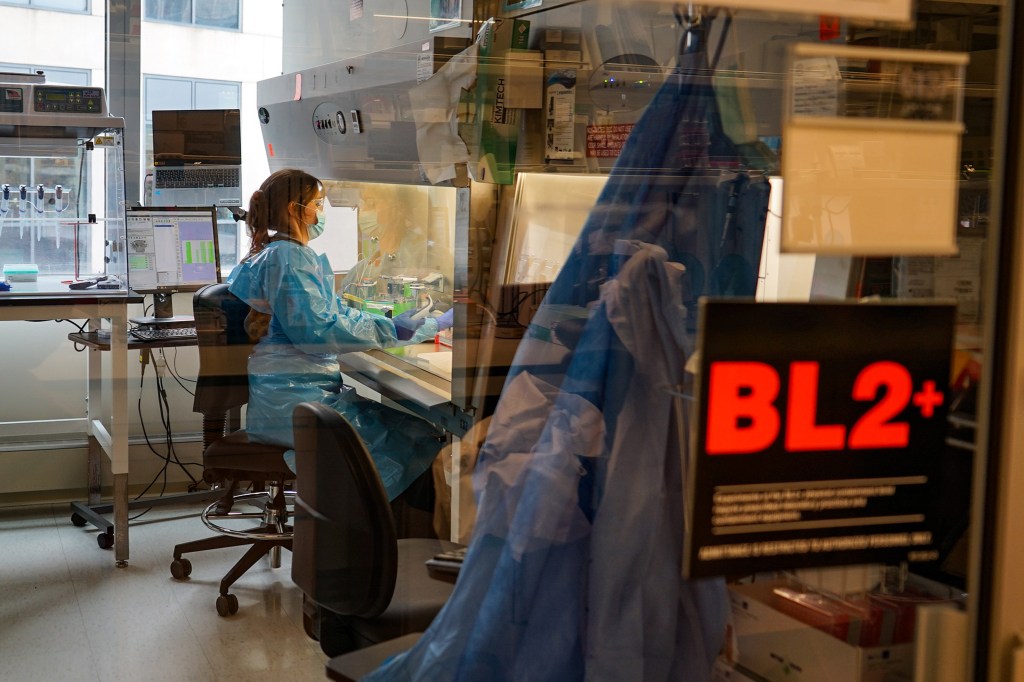
- State-Run Insurance Plans for Foster Kids Leave Some of Them Without Doctors
- German CDMO Adragos buys French sterile injectables plant from Sanofi
- Glenmark goes direct with new US Ryaltris marketing plan as it drops partner model
- Bayer rejigs marketing claims after recommendation from US advertising body
- Intuition Robotics secures Medicaid coverage for social AI robot ElliQ in Washington State
- Memorial Hermann Health System, Blue Cross Blue Shield of Texas fail to reach contract deal
- Johns Hopkins Medicine, American Telemedicine Association launch cross-state telehealth initiative
- After Man’s Death Following Insurance Denials, West Virginia Tackles Prior Authorization
- 131 hospitals sue HHS over 2023 rule on Disproportionate Share Hospital calculation
- 4 out of 10 family physicians report feelings of burnout, Weill Cornell Medicine study finds
- Hundreds of U.S. Hospitals at Risk of Shutting Down From Medicaid Cuts
- Honey Almond Cream Cheese, Sold at Einstein Bros. Bagels, Recalled Due To Undeclared Nuts
- Trump Supports Surgeon General Pick Despite Senate Concerns
- A look at AMA's Joy in Medicine program amid steady physician burnout rates
- Lilly answers Novo's GLP-1 pill with highly anticipated FDA nod for Foundayo
- Supreme Court Blocks Colorado Limits on Therapy for LGBTQ Minors
- Hospital groups call on Congress to refine long-term care hospital payments
- Study Shows BMI Often Gets Your Weight Category Wrong
- Antidepressant, Fluvoxamine, Might Help Long COVID Fatigue, Study Says
- Kinesio Taping’s Benefits in Doubt, Major Evidence Review Finds
- High Sodium Intake May Trigger New Heart Failure
- Home-Delivered Groceries Boost Heart Health In Food Deserts, Study Says
- Nicotine E-Cigarettes Help Smokers Quit, Review Concludes
- Clinicians are burnt out. Peer support can help
- Novo's Wegovy nets cardio nod from UK cost gatekeeper, adding 1M+ eligible patients
- Trump’s One Big Beautiful Bill Act Darkens Outlook for Government-Backed Clinics
- Readers Sound Off on Wage Garnishment, Work Requirements, and More

- CVS Health opens pharmacy-only locations as it rightsizes store footprint
- How Rural Health Systems Are Advancing Cardiac Imaging
- How Rural Health Systems Are Advancing Cardiac Imaging
- Beyond Reimbursement: Why Market Access is MedTech’s Strategic North Star
- Beyond Reimbursement: Why Market Access is MedTech’s Strategic North Star
- Evotec hires exec with AI experience to lead rebooted commercial team
- The Human Side of AI Medical Devices: Why Safety Depends on Design, Not Just Algorithms

- The Human Side of AI Medical Devices: Why Safety Depends on Design, Not Just Algorithms
- Whoop raises $575M series G, Abbott comes on board amid hiring spree
- ‘There isn't as much meat left to cut’: Biopharma layoffs maintain slowdown in Q1
- Bipartisan bill introduced to stabilize physicians' year-to-year pay changes
- UnitedHealthcare launches Avery, a generative AI companion for members
- FDA flags serious liver injury cases, 8 deaths with ‘reasonable’ link to Amgen's Tavneos
- Novo Nordisk cuts 400 roles at troubled Bloomington site
- Former U.S. Surgeon General Challenges Trump Nominee
- Iterum initiates wind-down after failure to offload antibiotic with sluggish sales
- Over 10.2 Million Grill Brushes Recalled Over Metal Bristle Risk


West Michigan health care providers are panicking over President Trump's $ 100,000 H-1B visa fee. Turns out they are heavily dependent upon H-1B visa holders. Cheap, nonimmigrant foreign labor allows them suppress wages across the industry
The statement “Let’s be honest, our social security payments impact everybody.” towards the end of this story is a lie. Most countries from which H-1B visa holders arrive have tax treaties with the United States, which relieve their citizens from paying U.S. income based taxes, including Social Security and Federal Insurance Contributions Act (FICA, Medicare) taxes. Those H-1B visa holders not relieved by tax treaties are eligible for Social Security and Medicare on the same basis as U.S. citizen workers. They can collect their benefits here, or back in the old country:
https://www.uscis.gov/tools/reports-and-studies/immigration-and-citizenship-data
https://www.irs.gov/pub/irs-lbi/table-3-list-of-tax-treaties.pdf
‘Chilling effect:’ West Michigan employers worried by changing visa guidelines
By Katherine Wilkison - January 31, 2026GRAND RAPIDS, Mich. (WOOD) — President Donald Trump’s administration hiked the cost of a program designed to bring highly-educated workers to the United States by tens of thousands of dollars, leading to uncertainty and chaos for the hundreds of thousands of visa holders already working in the country, including thousands in Michigan.
A Sept. 19 presidential order increased the cost of the H-1B — a temporary, nonimmigrant visa designed to bring people with “specialty occupations” to the U.S. — petition fee from an average of $2,000 to $5,000 depending on the size of an employer to a flat fee of $100,000 for most new applicants applying from outside the country.
“When the proclamation was first issued, much chaos ensued,” Grand Rapids-based immigration attorney Susan Im said. “Because of the ambiguity in the language and then the subsequent guidance that came out from the various agencies, some of it conflicting, there was so much confusion.”
Historically, H-1B visas have been awarded through a lottery system, with 65,000 new visas available per year for works of all education levels, plus an additional 20,000 visas for people with master’s or doctoral degrees. The new system set to launch Feb. 27 aims to “implement a weighted selection process that will increase the probability that H-1B visas are allocated to higher-skilled and higher-paid aliens,” U.S. Citizenship and Immigration spokesperson Matthew Tragesser said in a December 2025 statement.
In 2025, Ford Motor Company, General Motors, the University of Michigan, IT company Atos Syntel Inc. and automotive manufacturer FCA US LLC were the top recipients in Michigan, accounting for more than 2,500 new employees. A News 8 analysis of U.S. Citizenship and Immigration Services data found that 2,030 new, amended or continued H-1B visa petitions were approved for West Michigan workers in 2025.
While H-1B workers have long been seen as the lifeblood of tech companies in Silicon Valley, proponents say they also serve as a vital source of health care workers and educators in rural and underserved communities.
VISA HOLDERS IN WEST MICHIGAN: DOCTORS AND EDUCATORS
In West Michigan, nearly half of the 2,030 employees who filed for a new, amended or renewed H-1B visas in 2025 work in health care. Physical and occupational therapists make up the greatest numbers, 449 and 440 respectively.
Pine Rest Christian Mental Health Services Chief Operating Officer Bob Nykamp estimates that the metro Grand Rapids-based provider employs six to 10 H-1B visa holders at any given time. These employees largely fill subspecialty positions that he says Pine Rest would otherwise struggle to fill.
“We use the visa system to find world-class clinicians that really is the bar that we’ve set. So now they may be in another country, but they could have received all of their medical education and specialized medical education in the United States, so we are looking at the cream of the crop,” Nykamp explained. “We have identified subspecialty physicians who bring unique skill sets to West Michigan and to our patient population that we’ve needed, or our community needed.”
While noncitizens who are educated in the U.S. can apply for a change of visa status while still in the country, which would allow them to bypass the fee, if they return to their home countries, they become ineligible for that waiver.
Nykamp said he worries about how the $100,000 fee will affect the next hiring cycle.
“If there’s $100,000 fee attached to any position, whether that’s physician or nonphysician specialist, we’re going to have to take a really hard look at: can we afford that? Because we’re also trying to be economical and not have huge inflationary costs to the patients that we serve,” he explained.
While many of the region’s H-1B health care workers are based in Kent County — about 376 — many more work in more rural counties that often struggle to attract medical staff, including Barry, Berrien and Muskegon counties.
An analysis by the Michigan Health Endowment Fund found that nearly all health care roles are expected to see shortages within the next 10 years. At the same time, 65 of Michigan’s 83 counties are considered “Primary Care Health Professional Shortage Areas.”
Nykamp sees the changes to the H-1B process as a further threat to communities that struggle with a lack of access to health care, as well as those who require highly specialized care.
“It could reduce access to care,” he said. “If we don’t have certain subspecialty physicians, we might not be able to implement a new program that we want to implement. That’s a gap in care in our community. So that means patients are going to either have to travel farther or wait longer to receive that specialized care.”
Many in the education field share Nykamp’s concerns. Changes to the H-1B process are coming as many Michigan school districts are struggling to keep teachers in classrooms and fill open positions. Hundreds of districts across the country, particularly in rural areas, have turned to foreign-born teachers amid hiring shortages. The National Education Association found that public K-12 districts employed over 2,300 H-1B visa holders in 2025.
Nearly every college in West Michigan employs at least one H-1B worker, as do multiple public school districts. In 2025, at least 82 educators were employed in West Michigan under H-1B visas, primarily at the postsecondary level, though at least 20 were employed at elementary schools and six at middle schools, according to USCIS data.
At least one district that currently employs an H-1B visa holder told News 8 it would be “cautious” about future hiring due to the fees.
INTERNATIONAL COMPETITION
Many visa holders reacted to the news of Trump’s executive order and the new fee with anxiety and concern. Foreign-born students who come to the U.S. to study on F-1 student visas often hope to amend that visa into a longer-term visa, like an H-1B, after graduation. That path now seems less certain even if the $100,000 fee does not necessarily apply to them.
Colleges, international students navigate immigration policy changes
Charles Elwood works in the artificial intelligence and technology fields in Holland, where he has struggled to attract and maintain qualified workers. Recently, he lost a University of Pittsburgh-educated protégé who chose to return to his home country amid what the intern called rising anti-immigrant sentiment and visa uncertainties.“It was so disheartening to watch him go through this. Because you could tell he had the American dream. He wanted to stay here, he wanted to learn, and he wanted to do AI. He was so interested, and … to kind of watch that switch where he kind of gave up,” Elwood said. “Just to watch it all vanish … that one hit me hard. To watch somebody’s young dreams kind of just change.”
More than 85% of H-1B visa holders come from Asian countries, with the greatest numbers coming from India and China. Elwood, who is a dual Thai-U.S. citizen, said that he has seen some countries in Southeast Asia making a push to bring their American-educated citizens home to work amid visa uncertainties.
“If we lose all these people, if they come and they go to school at GVSU and they get a data science and an AI degree, and then they feel like they don’t belong and they don’t see representation and they leave, I mean, that concerns me. Five years down the road, what does that do for our region?” Elwood said about highly-trained immigrants from Asian countries.
Im, the immigration attorney, said many employers she works with agree that limiting the H-1B program will affect their ability to grow and innovate.
“I can’t emphasize enough also the number of employers that have expressed to me how this proclamation is going to stifle their growth, their innovation. And they know this because they have seen the benefits of hiring international talent in the past. And they have those folks on board right now, actively contributing,” Im said. “I feel that the downsides of this presidential proclamation and the $100,000 fee and the chilling effect is pretty devastating.”
FEDERAL SKEPTICISM
Trump’s suspicion of the H-1B program has been longstanding, stretching back to his first term, when he sought to tighten foreign worker visa requirements to “protect American workers.”
“For too long, this program has been misused as an inexpensive labor program, replacing American jobs in the process,” an October 2020 statement from the Trump White House website says.
US will suspend immigrant visa processing from 75 countries over public assistance concerns
Im disagreed with that characterization. She said she has worked with companies across the country to bring international workers to the U.S. to fill specialized positions for which they say they could not find qualified Americans. While she acknowledged that there are unscrupulous businesses looking to subvert the system, she said most employers and visa holders are well-intentioned.“Our West Michigan clients … they’re not relying on the H-1B program to fill their entire workforce. They are looking to supplement their workforce with H-1B workers where they can’t hire enough U.S. workers, enough qualified and willing U.S. workers to take that job,” she told News 8.
The Trump administration has also said that the program has been exploited by U.S. employers “who were primarily seeking to import foreign workers at lower wages than they would pay American workers.”
The federal H-1B data tracks pay both by annual salary and hourly wages. In the analysis, News 8 converted the hourly wages to an average yearly income for a direct comparison. That revealed that the median H-1B visa holder in West Michigan made over $75,900 in 2025. A 2025 state report found the median income for a Michigan worker with at least a bachelor’s degree and at least five years of experience to be $66,600 — 13% lower than among H-1B holders.
The highest paid H-1B workers in West Michigan are physicians, with the highest paid being an Advantage Health cardiologist making more than $580,000 per year. The lowest paid worker, according to the USCIS data, is a Cornerstone University assistant track and field coach making under $25,000. Of the 2,030 people who applied for a new, continued or amended H-1B visa in 2025, 67 made under $50,000 per year.
“The story we hear now is that immigrants are detractors and are takers of our economy, rather than contributors to our economy. We contribute to federal social programs,” Bing Goei, a Grand Rapids business owner and immigrant, said. “Let’s be honest, our social security payments impact everybody.”
Goei, who was born in Indonesia and moved to the U.S. at age 12, said he sees the administration’s rhetoric as dangerous — and economically unsound.
In 2021, immigrants in Kent County paid $318.8 million in federal taxes and $173.9 million in state and local taxes, according to the American Immigration Council. They also contributed more than $190 million to Social Security and $47 million to Medicare. H-1B visa holders are not eligible to receive Social Security or Medicare because they are not legal permanent residents.
Goei and his wife founded Eastern Floral, a flower shop and delivery business that operates across West Michigan. While he has since retired and passed the business to his daughter, he said he employed hundreds of people over his decades-long career.
“My story is not unusual in terms of what has been done with immigrants here in West Michigan,” Goei said. “There’s a lot of economic contributions that the immigrant population has contributed to the state of Michigan, as well as to Kent County and Ottawa County. … A significant number of immigrants are entrepreneurs and business owners.”
Everyone who spoke with News 8 said they worry what the outcome of reducing foreign-born workers in the U.S. may be and what may be lost if visa holders are forced to leave or never allowed in to begin with.
Im said she is concerned that American policymakers have lost sight of what H-1B workers and other immigrants contribute to local economies. She reflected on what some of her past clients have done since gaining permanent residence status or becoming citizens.
“(They are) successful business owners that have hired and employ dozens, sometimes hundreds, of U.S. workers. Because of their contribution, we have more jobs for U.S. workers. Because of their research, because of their brilliance, their innovations, their different perspectives, they are enriching our workforces. They are driving our innovation,” Im said.
Get MHF Insights
News and tips for your healthcare freedom.
We never spam you. One-step unsubscribe.
Sponsors
Friends of MHF





Kirsten DeVries
Tom & Karen Nunheimer
Steve Ahonen
Ron & Faith Bosserman
Marlin & Kathy Klumpp
Sign Up for MHF Insights to keep up on the latest in Michigan Health Policy