- White House eyes 20% NIH funding cut: Report

- Healthcare powers US labor market growth: 7 things to know
- 10 providers seeking RCM talent
- Closed Illinois hospital may receive lifeline
- 5 leaders honored in nursing awards
- CDC tracks new ‘cicada’ COVID variant: 5 notes
- Novant Health to build new hospital, freestanding ED
- Bayhealth opens heart institute in Delaware
- Nurses: This is our defining moment
- Transforming Culture to Elevate Care – How One Hospital Revitalized OB/GYN Services
- 7 CFO moves at HCA in 2026
- RCM firm names Quorum Health veteran VP of revenue cycle operations
- 7 health systems with boosted outlooks
- The biggest ASC deals in Q1
- 9 Now Sickened in Outbreak Tied To Raw Milk and Cheese
- New York ASC to pay $2.4M to settle data breach lawsuit
- Independent physician group receives private equity investment
- U of Illinois College of Medicine names interim cardiology chief
- Inova grows operating margin to 8% in 2025
- Want To Lose Weight? Eat A Boring, Repetitive Diet, Researchers Suggest
- Idorsia eyes pediatric insomnia use with midstage trial win for sleep med Quviviq
- Night Shifts Are Tough On People With Type 2 Diabetes, Study Says
- Electronic Paperwork Increasing Burnout Risk Among Young Doctors
- Kratom Cases Surging In U.S.
- Women's Bone Loss Tied To Heart Health, Study Finds
- What Makes Play Fun For Children? Seven Factors Stand Out, Study Says
- Samsung Biologics union gathers votes to strike as tension over wage, governance mounts
- Takeda begins US layoffs as part of massive $1.3B restructuring
- Biogen looks to shake up SMA status quo with FDA nod for high-dose version of Spinraza
- She Owed Her Insurer a Nickel, So It Canceled Her Coverage

- Inside the High-Stakes Corporate Fight Over Feeding Preterm Babies

- Maryland eye practice acquired
- Study Links High Antioxidant Intake To Changes in Offspring Development
- The Healthcare Burnout Backlash (pt 1): Burnout Reaches Well Beyond Clinicians
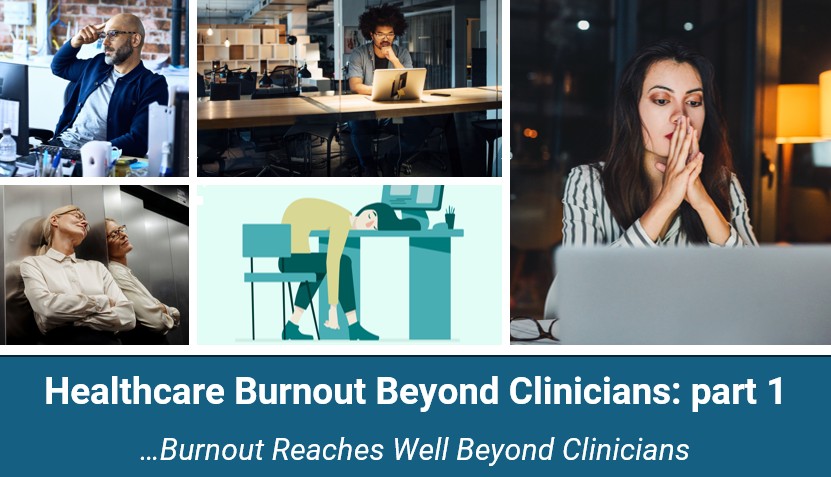
- The Healthcare Burnout Backlash (pt 1): Burnout Reaches Well Beyond Clinicians
- Even Mild Oxygen Loss in Preemies' First Hours Poses Lifelong Brain Risks: Study
- 12 oral surgery updates in 2026
- 5 ASC, MOB deals in California
- The Aspen Group’s 3-year growth recap: 40 moves
- How Confusing Financial Journeys Undermine Revenue and Trust
- Oklahoma officials warn of new opioid
- MercyOne hospital to transition labor and delivery services
- 8 Medicare Advantage numbers to know in 2026
- 17 Senate Dems push back on 2027 ACA proposal
- Providence hospital closes inpatient pediatric unit
- Michigan finalizes Medicaid mental health assessment policy changes
- 10 financial notes on USPI’s growth over the past 3 years
- 15 new orthopedic practice, center openings in Q1
- The oral surgery technological revolution
- From Anxiety to Action: How Ambulatory Leaders Are Rebuilding Margins in 2026
- How the Trump Administration Uses Migrant Kids To Find and Detain Family Members
- Heartland Dental’s 3-year growth recap: 30+ moves
- Adventist Health sees momentum from insourcing revenue cycle operations
- Oral GLP-1s, COVID preventatives: 3 more drugs in the pipeline, Optum says payers should watch
- Unlicensed dentistry cases, DSO deals, legislation & more: 10 dentistry updates in Virginia
- Providence trims 2025 operating loss to $132M, notches second consecutive quarter of gains
- Missouri system debuts mobile behavioral health unit
- Yale researchers study GLP-1’s potential for SUD
- Texas dental school receives $6.5M to expand pediatric dental, medical programs
- North Carolina autism provider to expand therapy access
- $3M Verdict Links Social Media to Anxiety and Depression
- West Virginia hospital to end OB delivery services
- 6 DSOs making headlines
- Ohio county approves behavioral health crisis center plan
- The White House Delays CDC Pick
- New COVID 'Cicada' Variant Is Spreading — What Experts Want You To Know
- Advocate Health to launch ‘nation’s largest’ hospital drone delivery program in Zipline partnership
- Op-ed: Empathy meets efficiency—how the responsible use of AI can transform Medicare
- Family Caregivers Provide $1 Trillion In Annual Labor, AARP Says
- ‘Health Doesn’t Need to Be Ludacris’: Bayer signs rapper-actor to multivitamin campaign
- Rocket plots measured trajectory for new gene therapy Kresladi after clearance to launch from FDA
- Healthy Lab Results May Mask Future Risks for Kids with Obesity
- At-Home Chemotherapy Is Safe, Feasible, Pilot Study Indicates
- What You Do While Sitting Could Predict Dementia Risk
- New Cholesterol Guidelines: What Patients and Caregivers Need to Know
- Want A Bootlicking Yes Man? Ask An AI Chatbot For Advice, Study Warns
- Specially Coated Implants Better For Breast Cancer Patients, Study Finds
- Give and Take: Federal Rural Health Funding Could Trigger Service Cuts

- Trump Team Claims Successes Against ACA Fraud While Pushing for More Controls

- Fierce Pharma Asia—Takeda’s $1.3B reorg; India’s GLP-1 floodgates; Gilead’s $2.2B buy of a China NewCo
- Where are you with EUDAMED?

- Where are you with EUDAMED?
- HL7 Launches Real‑Time Medical Device Interoperability Accelerator
- HL7 Launches Real‑Time Medical Device Interoperability Accelerator
- Two GA Tech ATDC Startups — Nephrodite and OrthoPreserve — Secure FDA Breakthrough Device Designation
- Two GA Tech ATDC Startups — Nephrodite and OrthoPreserve — Secure FDA Breakthrough Device Designation
- Artificial Intelligence: ROI, not Clinical Autonomy, Leads Operational Workflows
- Artificial Intelligence: ROI, not Clinical Autonomy, Leads Operational Workflows
- Medtronic and Merit Medical Systems distribution agreement for new, ViaVerte basivertebral nerve ablation system
- Medtronic and Merit Medical Systems distribution agreement for new, ViaVerte basivertebral nerve ablation system
- Breakthrough Device Designation for Noah Labs Vox Heart Failure Detection Device
- Breakthrough Device Designation for Noah Labs Vox Heart Failure Detection Device
- Why private practice dentistry needs a better model
- CareQuest Innovation Partners, Kno2 collab on medical-dental data integration
- Nonprofit highlights rural opioid care strategies
- Vitana Pediatric & Orthodontic Partners adds Florida practice
- What the Health? From KFF Health News: A Headless CDC
- 20 behavioral health leaders challenge industry assumptions
- Recordati confirms it's weighing CVC Capital buyout offer of $12.6B
- 3 California behavioral health centers to close amid funding shifts
- Nonprofit celebrates rescue, recapitalization of Prospect Medical Holdings' Rhode Island hospitals
- Indiana bars autism therapy provider from Medicaid billing: Wall Street Journal
- UnitedHealth shareholder sues over proposal to include details on integration in annual proxy
- SCAN taps biopharma, CMS vet Aman Bhandari as its first chief AI officer
- Infosys to acquire Optimum Healthcare IT in $465M deal
- Healthcare systems can create AI care pathways with new Viz.ai tool
- DOJ alleges NewYork-Presbyterian forces payers into anticompetitive 'all-or-nothing' contracts
- FDA Warns Biotech Firm Over Cancer Drug Anktiva Claims
- Bees and Hummingbirds May Be Consuming Small Amounts of Alcohol
- Two States Sue Cord Blood Company Over Misleading Claims
- New WHO Guidance Aims To Speed Tuberculosis Testing
- As questions swirl around ATTR competition, Alnylam plots path to market leadership for Amvuttra
- Trump admin delays nomination for new CDC director past deadline
- Outspoken ACIP member steps down amid vaccine panel uncertainty: reports
- Egg-based drugmaker Neion Bio emerges from stealth to cook up multi-product biosimilar collab
- Genentech walks the walk in lupus as sponsor of annual awareness and fundraising event
- Study Reveals How Many Americans Consider Using a Gun
- Massive Study Finds Stress and Grief Don’t Cause Cancer
- Ultra-Processed Foods Harm Fertility In Both Men And Women, Studies Reveal
- Small Daily Habits Can Add Up To Better Heart Health
- Ritalin Might Protect ADHD Kids' Long-Term Mental Health, Study Finds
- Can You Drink Enough Fluids To Prevent Kidney Stones? Maybe Not, New Study Says
- Clasp, loan-linked hiring tool for employers, clinches $20M to expand amid federal loan caps
- Taking a GLP-1? Doctors Say Not To Forget About Movement and Mental Health

- OpenEvidence rolls out AI medical coding feature
- CDC’s Acting Chief Promises a Return to Stability in a Tumultuous Moment
- Remarks at the Financial Stability Oversight Council Meeting
- RWJF: Between 5M and 10M people could lose Medicaid coverage in 2028 under work requirements
- New therapy animal program aims to support 100K patients, providers
- Pulse check on Lilly's GLP-1 fortunes
- Gen Z nurses prioritize schedule flexibility, need more manager interactions to avoid turnover
- How pharma marketers can capitalize on HCPs’ AI, social media and streaming habits
- Federal Officials Investigate States That Require Abortion Coverage
- Corcept's lead drug bounces back from FDA snub with different approval as Lifyorli in ovarian cancer
- Ionis slashes Tryngolza's price tag by 93% ahead of anticipated label expansion
- FDA approves Denali's Hunter syndrome drug, handing rare disease community a win
- Baby Walkers Sold on Amazon Recalled Over Fall Risk
- Want To Protect Your Brain? Science Says Exercise
- HelloFresh Pizza Recall Issued in 10 States Over Metal Risk
- Clinical Trials Have Too Much Data…That’s the Problem.

- Clinical Trials Have Too Much Data…That’s the Problem.
- How Privacy Becomes a Performance Advantage
- CMS reveals new Medicaid model that supports coordination for children with complex needs
- Novartis sued by breast cancer patient over branded drug websites’ data-sharing practices
- Biogen pays $20M upfront to tap into Alteogen's subQ delivery tech
- 'Universal Donor' Blood Supplies Dangerously Low, Study Warns
- Why Stepping Outside May Help You Eat Better
- U.S. Medicine, Science Facing An Online Misinformation Siege, Poll Concludes
- Childhood Obesity Undercuts The American Dream For Some, Study Says
- Inclusive High Schools Benefit All Students, Not Just LGBTQ Teens


Nobody is saying what the glitch is, but Paxlovid may not be the solution COVID Long-haulers have been looking for.
— Enrollment was halted earlier than planned after interim analysis
Enrollment into a small trial of nirmatrelvir/ritonavir (Paxlovid) for long COVID -- one that previously garnered attention for investigators not wearing masks -- has been stopped early after an interim analysis, Stanford University confirmed to MedPage Today.
Two sources familiar with the STOP-PASC study told MedPage Today that trial enrollment had been halted. One was told by a study coordinator that a preliminary review found "inconclusive evidence" for the primary outcome of the study. Another said their first appointment was canceled just a few days before it was supposed to take place, and they were later told that all future enrollment had been halted.
"I've had neurological long COVID for more than 2 years and this was the first time I had an opportunity to participate in a trial testing a potential drug therapy," the participant whose visit was canceled told MedPage Today. "I was so eager to give it a try, I spent money from my dwindling savings account to pay for [my] trips."
Stanford Medicine spokesperson Lisa Kim confirmed that "new enrollment is closing slightly earlier than original projections based on a planned interim analysis reviewed by an external monitoring committee."
"There are no safety concerns with the study and enrolled participants are encouraged to complete follow-up activities as planned," she added.
Kim did not provide further comment on what was found during the interim analysis and did not comment on the "inconclusive" results mentioned by the study coordinator to the source.
In May, MedPage Today reported that some participants were concerned that some investigators were not wearing masks during clinic visits, potentially putting the participants at risk.
According to ClinicalTrials.gov, the study design specified two-way masking, for both investigators and participants. Neither Stanford nor study sponsor Pfizer would comment on whether or not the masking issue factored into the decision to stop the study early.
Pfizer spokesperson Jerica Pitts said Pfizer "funded the study and provided clinical supplies of Paxlovid and the placebo comparator at no cost." She also confirmed that new enrollment is closed at this time, "and the investigators plan to share final results as soon as the study is completed. We look forward to reviewing these results once available and will use the insights gathered to help inform planned and future studies."
STOP-PASC is a phase II study that sought to enroll 200 participants. It is not clear how many enrolled before recruitment closed.
Participants would receive a 15-day course of either nirmatrelvir/ritonavir or placebo plus ritonavir. Stanford and Pfizer did not comment on why the placebo group also received a protease inhibitor.
The study called for five patient visits over a total of 15 weeks, with the therapy or placebo given for the first 15 days. The estimated completion date was November 2023, according to ClinicalTrials.gov. The study's primary outcome is the difference at 10 weeks between the nirmatrelvir/ritonavir and placebo arms for any of six core symptoms of post-acute sequelae SARS-CoV-2 infection, or PASC: "fatigue, brain fog, dyspnea, body aches, gastrointestinal symptoms, cardiovascular symptoms."
Stanford spokesperson Kim said the results of the STOP-PASC trial "will be shared as soon as the study is completed," and that the study should be published "sometime before the end of the year" but that there is no definite timeline.
ClinicalTrials.gov currently lists the status of the study incorrectly as "recruiting."
https://www.medpagetoday.com/special-reports/exclusives/105295
Kristina Fiore leads MedPage’s enterprise & investigative reporting team. She’s been a medical journalist for more than a decade and her work has been recognized by Barlett & Steele, AHCJ, SABEW, and others. Send story tips to k.fiore@medpagetoday.com.
This well-written narrative from Science brings out similarities between post-vax and post-infection symptoms. Too long to quote in full.
Rare link between coronavirus vaccines and Long Covid–like illness starts to gain acceptance
Studies probe unusual cases of neurologic complications, blood pressure swings, and other side effects
3 JUL 2023 | 4:30 PM | BYGRETCHEN VOGEL, JENNIFER COUZIN-FRANKEL
... Cases seem very rare—far less common than Long Covid after infection. Symptoms can include persistent headaches, severe fatigue, and abnormal heart rate and blood pressure. They appear hours, days, or weeks after vaccination and are difficult to study. But researchers and clinicians are increasingly finding some alignment with known medical conditions. One is small fiber neuropathy, a condition Oaklander studies, in which nerve damage can cause tingling or electric shock–like sensations, burning pain, and blood circulation problems. The second is a more nebulous syndrome, with symptoms sometimes triggered by small fiber neuropathy, called postural orthostatic tachycardia syndrome (POTS). It can involve muscle weakness, swings in heart rate and blood pressure, fatigue, and brain fog.
...Another team scanned for postvaccine POTS across a specific population. Researchers led by cardiologists Alan Kwan and Susan Cheng at Cedars-Sinai Medical Center analyzed a health database of almost 285,000 people in the Los Angeles area; all had received at least one COVID-19 shot. They found that within 90 days after a shot, the rate of POTS-related symptoms was about 33% higher than in the 3 months before; 2581 people were diagnosed with POTS-related symptoms after vaccination, compared with 1945 beforehand. However, the study found a bigger effect from COVID-19 itself: The rate of POTS symptoms in about 12,000 unvaccinated people after infection was 52% higher than beforehand. Although Kwan cautions against extrapolating these numbers to a wider population, he says the pattern is intriguing. “Our data show a relatively clear signal that there probably is an increase in POTS after vaccination and after infection,” he says....
Get MHF Insights
News and tips for your healthcare freedom.
We never spam you. One-step unsubscribe.
Sponsors
Friends of MHF





Kirsten DeVries
Tom & Karen Nunheimer
Steve Ahonen
Ron & Faith Bosserman
Marlin & Kathy Klumpp
Sign Up for MHF Insights to keep up on the latest in Michigan Health Policy