- 12 oral surgery updates in 2026

- 5 ASC, MOB deals in California
- Hidden OR capacity challenges: 8 perioperative leaders on what’s draining surgical time
- The Aspen Group’s 3-year growth recap: 40 moves
- Florida State University set to acquire Tallahassee hospital
- How Confusing Financial Journeys Undermine Revenue and Trust
- How Confusing Financial Journeys Undermine Revenue and Trust
- Misalignment, Not Malice: Rethinking Generational Conflict in Healthcare
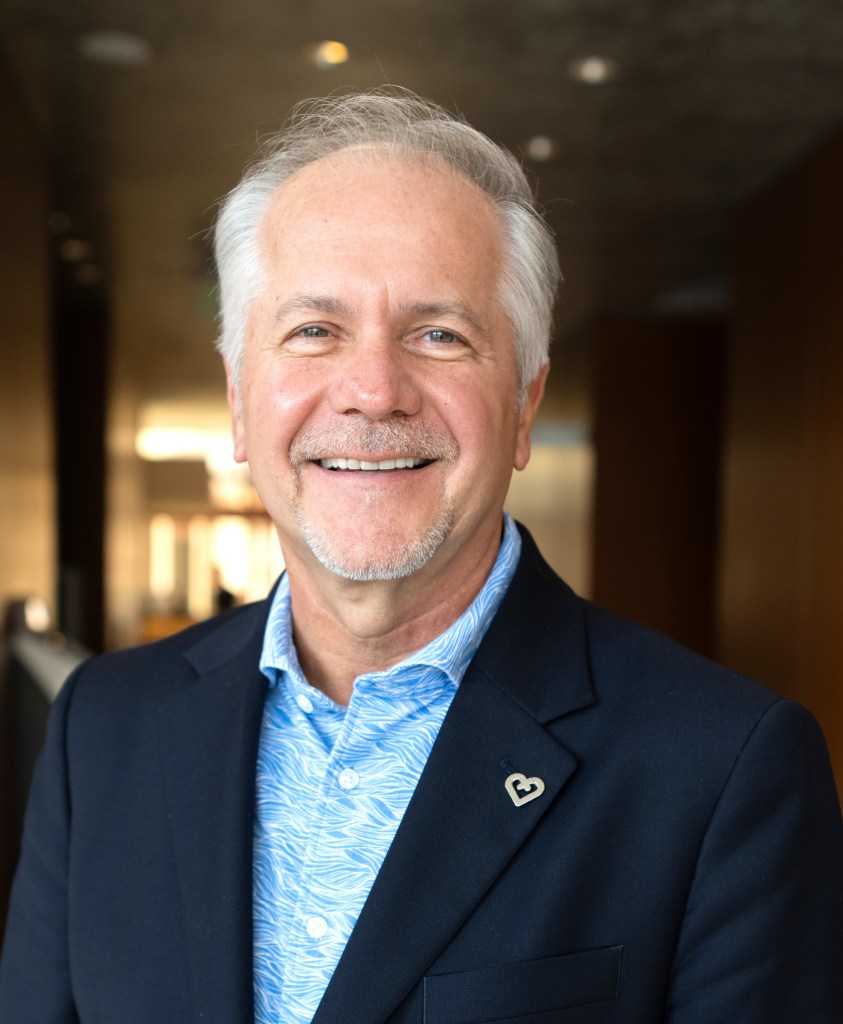
- If AI ‘adds friction, it fails’: How Mayo Clinic scales technology
- As maternity units close, AdventHealth restores OB care in rural Kansas
- Oklahoma officials warn of new opioid
- The new metrics of healthcare technology ROI: What matters to healthcare leaders
- Hoag to launch transplant center in 2027
- MercyOne hospital to transition labor and delivery services
- MercyOne hospital to transition labor and delivery services
- Southeast metros lead US population growth as national gains slow
- 8 Medicare Advantage numbers to know in 2026
- 17 Senate Dems push back on 2027 ACA proposal
- Providence hospital closes inpatient pediatric unit
- Michigan finalizes Medicaid mental health assessment policy changes
- 10 financial notes on USPI’s growth over the past 3 years
- 15 new orthopedic practice, center openings in Q1
- The oral surgery technological revolution
- From Anxiety to Action: How Ambulatory Leaders Are Rebuilding Margins in 2026
- Where GI training may fall short
- What it took to become the world’s first ASC to offer Stryker’s robotic knee tech
- Medtronic’s win in spinal cord stimulator lawsuit upheld
- How the Trump Administration Uses Migrant Kids To Find and Detain Family Members
- Heartland Dental’s 3-year growth recap: 30+ moves
- Cencora’s $10B+ physician acquisition spree: A breakdown
- Tennessee physician practice acquired
- The FTC is coming for healthcare consolidation: 10 things physicians need to know
- Adventist Health sees momentum from insourcing revenue cycle operations
- Oral GLP-1s, COVID preventatives: 3 more drugs in the pipeline, Optum says payers should watch
- Unlicensed dentistry cases, DSO deals, legislation & more: 10 dentistry updates in Virginia
- Missouri system debuts mobile behavioral health unit
- Yale researchers study GLP-1’s potential for SUD
- Texas dental school receives $6.5M to expand pediatric dental, medical programs
- North Carolina autism provider to expand therapy access
- $3M Verdict Links Social Media to Anxiety and Depression
- West Virginia hospital to end OB delivery services
- 6 DSOs making headlines
- California hospital’s finances improve, cash position remains ‘dire’
- 1 in 5 metro markets face inpatient monopoly: 7 notes
- Minnesota system faces uncertainty amid Medicare delays
- Ohio county approves behavioral health crisis center plan
- The White House Delays CDC Pick
- New COVID 'Cicada' Variant Is Spreading — What Experts Want You To Know
- Op-ed: Empathy meets efficiency—how the responsible use of AI can transform Medicare
- Family Caregivers Provide $1 Trillion In Annual Labor, AARP Says
- ‘Health Doesn’t Need to Be Ludacris’: Bayer signs rapper-actor to multivitamin campaign
- Rocket plots measured trajectory for new gene therapy Kresladi after clearance to launch from FDA
- Healthy Lab Results May Mask Future Risks for Kids with Obesity
- At-Home Chemotherapy Is Safe, Feasible, Pilot Study Indicates
- What You Do While Sitting Could Predict Dementia Risk
- New Cholesterol Guidelines: What Patients and Caregivers Need to Know
- Want A Bootlicking Yes Man? Ask An AI Chatbot For Advice, Study Warns
- Specially Coated Implants Better For Breast Cancer Patients, Study Finds
- Trump Team Claims Successes Against ACA Fraud While Pushing for More Controls
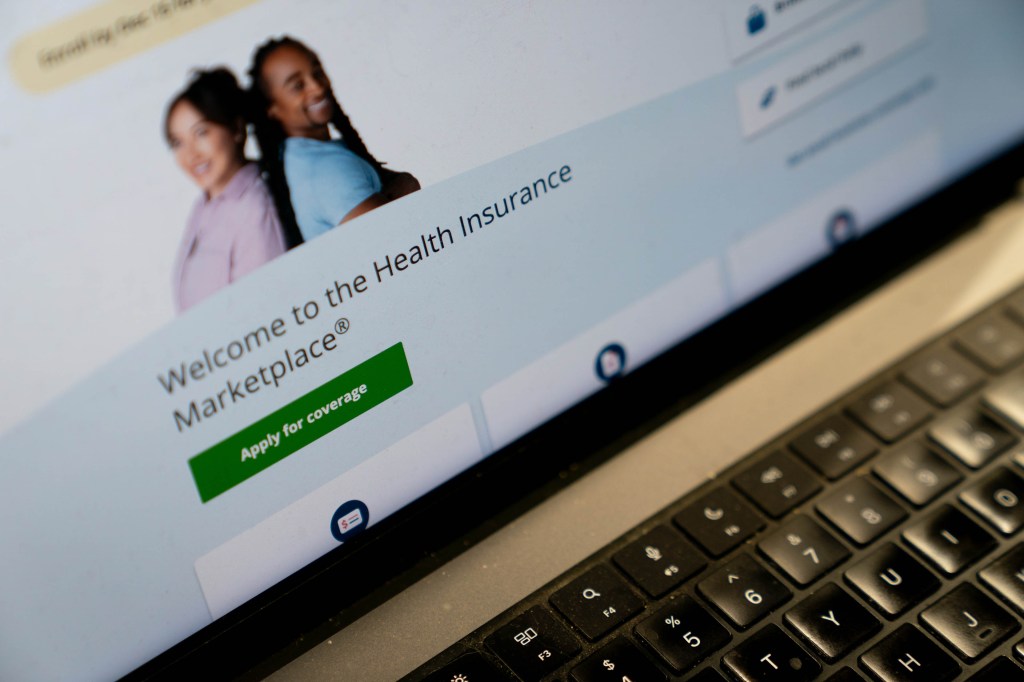
- Give and Take: Federal Rural Health Funding Could Trigger Service Cuts

- Fierce Pharma Asia—Takeda’s $1.3B reorg; India’s GLP-1 floodgates; Gilead’s $2.2B buy of a China NewCo
- Where are you with EUDAMED?

- Where are you with EUDAMED?
- HL7 Launches Real‑Time Medical Device Interoperability Accelerator
- HL7 Launches Real‑Time Medical Device Interoperability Accelerator
- Two GA Tech ATDC Startups — Nephrodite and OrthoPreserve — Secure FDA Breakthrough Device Designation
- Two GA Tech ATDC Startups — Nephrodite and OrthoPreserve — Secure FDA Breakthrough Device Designation
- Artificial Intelligence: ROI, not Clinical Autonomy, Leads Operational Workflows
- Artificial Intelligence: ROI, not Clinical Autonomy, Leads Operational Workflows
- Medtronic and Merit Medical Systems distribution agreement for new, ViaVerte basivertebral nerve ablation system
- Medtronic and Merit Medical Systems distribution agreement for new, ViaVerte basivertebral nerve ablation system
- Breakthrough Device Designation for Noah Labs Vox Heart Failure Detection Device
- Breakthrough Device Designation for Noah Labs Vox Heart Failure Detection Device
- Why private practice dentistry needs a better model
- CareQuest Innovation Partners, Kno2 collab on medical-dental data integration
- Nonprofit highlights rural opioid care strategies
- Vitana Pediatric & Orthodontic Partners adds Florida practice
- What the Health? From KFF Health News: A Headless CDC
- 20 behavioral health leaders challenge industry assumptions
- Recordati confirms it's weighing CVC Capital buyout offer of $12.6B
- 3 California behavioral health centers to close amid funding shifts
- Indiana bars autism therapy provider from Medicaid billing: Wall Street Journal
- UnitedHealth shareholder sues over proposal to include details on integration in annual proxy
- SCAN taps biopharma, CMS vet Aman Bhandari as its first chief AI officer
- Infosys to acquire Optimum Healthcare IT in $465M deal
- DOJ alleges NewYork-Presbyterian forces payers into anticompetitive 'all-or-nothing' contracts
- FDA Warns Biotech Firm Over Cancer Drug Anktiva Claims
- Bees and Hummingbirds May Be Consuming Small Amounts of Alcohol
- Two States Sue Cord Blood Company Over Misleading Claims
- New WHO Guidance Aims To Speed Tuberculosis Testing
- As questions swirl around ATTR competition, Alnylam plots path to market leadership for Amvuttra
- Trump admin delays nomination for new CDC director past deadline
- Outspoken ACIP member steps down amid vaccine panel uncertainty: reports
- Egg-based drugmaker Neion Bio emerges from stealth to cook up multi-product biosimilar collab
- Genentech walks the walk in lupus as sponsor of annual awareness and fundraising event
- Study Reveals How Many Americans Consider Using a Gun
- Massive Study Finds Stress and Grief Don’t Cause Cancer
- Ultra-Processed Foods Harm Fertility In Both Men And Women, Studies Reveal
- Small Daily Habits Can Add Up To Better Heart Health
- Ritalin Might Protect ADHD Kids' Long-Term Mental Health, Study Finds
- Can You Drink Enough Fluids To Prevent Kidney Stones? Maybe Not, New Study Says
- Clasp, loan-linked hiring tool for employers, clinches $20M to expand amid federal loan caps
- Taking a GLP-1? Doctors Say Not To Forget About Movement and Mental Health

- OpenEvidence rolls out AI medical coding feature
- CDC’s Acting Chief Promises a Return to Stability in a Tumultuous Moment
- Remarks at the Financial Stability Oversight Council Meeting
- RWJF: Between 5M and 10M people could lose Medicaid coverage in 2028 under work requirements
- New therapy animal program aims to support 100K patients, providers
- Pulse check on Lilly's GLP-1 fortunes
- Gen Z nurses prioritize schedule flexibility, need more manager interactions to avoid turnover
- How pharma marketers can capitalize on HCPs’ AI, social media and streaming habits
- Federal Officials Investigate States That Require Abortion Coverage
- Corcept's lead drug bounces back from FDA snub with different approval as Lifyorli in ovarian cancer
- Ionis slashes Tryngolza's price tag by 93% ahead of anticipated label expansion
- FDA approves Denali's Hunter syndrome drug, handing rare disease community a win
- Baby Walkers Sold on Amazon Recalled Over Fall Risk
- Want To Protect Your Brain? Science Says Exercise
- HelloFresh Pizza Recall Issued in 10 States Over Metal Risk
- Clinical Trials Have Too Much Data…That’s the Problem.

- Clinical Trials Have Too Much Data…That’s the Problem.
- CMS reveals new Medicaid model that supports coordination for children with complex needs
- Novartis sued by breast cancer patient over branded drug websites’ data-sharing practices
- Takeda targets $1.3B in cost savings in further restructuring
- Biogen pays $20M upfront to tap into Alteogen's subQ delivery tech
- 'Universal Donor' Blood Supplies Dangerously Low, Study Warns
- Why Stepping Outside May Help You Eat Better
- U.S. Medicine, Science Facing An Online Misinformation Siege, Poll Concludes
- Childhood Obesity Undercuts The American Dream For Some, Study Says
- Inclusive High Schools Benefit All Students, Not Just LGBTQ Teens
- Parental Loss Due to Drugs, Violence Raises Child Death Risk by 2,000%
- As Boehringer touts US launches, board chairman worries EU is 'falling further behind'
- The evolving state of exome and genome sequencing
- Demoralized CDC Workforce Reels From Year of Firings, Funding Cuts, and a Shooting

- An Arm and a Leg: Steep Health Care Costs Steer Americans to Tough Decisions

- Qualified Health locks in $125M in fresh funding to scale enterprise AI at health systems
- Misery Loves [Investment] Company?: Remarks at the 2026 Investment Company Institute Investment Management Conference
- Study: Nearly 1 in 5 pediatric hospital deaths involve sepsis
- As expansions come online, CDMO Hovione aims to meet industry's 'dual supply and sourcing' zeal: exec
- Opening Remarks at the Digital Asset Summit 2026
- CVS Caremark, FTC reach settlement in insulin pricing case
- UCB unveils plan to build $2B biologics plant near its US headquarters in Atlanta
- PeaceHealth sued over plans to tap out-of-state staffer ApolloMD for Oregon EDs
- New Lyme Disease Vaccine Shows Strong Results in Trial
- TrumpRx Adds Diabetes, COPD Drugs at Steep Discounts
- Highmark reports $175M net loss for 2025 as financial headwinds batter health plan
- Listen to the Latest ‘KFF Health News Minute’

- Abivax hires commercial chief from Takeda to infuse Entyvio expertise into IBD launch prep
- ImmunityBio hit with FDA warning letter over Anktiva promotions in TV ad, podcast episode
- Alcohol Prep Pads Recalled Over Bacteria Risk, Cardinal Health Says
- Fewer patients traveled for abortions in 2025 as telehealth care increased, report finds


An epitaph for Diversity, Equity, Inclusion at the University of Michigan, one of our four biggest health care systems:
https://jamesgmartin.center/2025/02/the-end-of-the-dei-era/
The End of the DEI Era
The University of Michigan is trimming fake diversity. Expect other schools to follow.
By Jonathan Butcher - February 5, 2025The University of Michigan’s recent about-face on DEI is both encouraging and instructive. Yes, even high-profile institutions with long records of supporting racial favoritism and radical ideological movements can show common sense—but sometimes it takes public humiliation in the media and losses in courtrooms to get them to budge.
After last month’s first set of executive orders from President Donald Trump, other schools would do well to drop DEI before experiencing the embarrassment that rattled Ann Arbor.
In December, UMichigan officials announced that they would no longer ask job applicants to submit “diversity, equity, and inclusion” (DEI) statements as part of their applications.
This announcement was significant because the school had a longstanding commitment to DEI, having spent some $250 million on DEI operations over the last eight years. Indeed, reporter Nicholas Confessore described Michigan’s original DEI program as part of the vanguard in the higher-education DEI revolution. Similarly, Heritage Foundation researcher Jay Greene found that the Wolverines had more DEI employees than any other university in a Power 5 athletic conference. Even today, according to just-released research, the school’s DEI payroll contains more than 1,100 names.
Other schools would do well to drop DEI before experiencing the embarrassment that rattled Ann Arbor.
Yet, in 2019, the school settled a lawsuit filed by the free-speech-advocacy organization Speech First against the school’s bias-response team (BRT). BRTs and DEI offices are linked because DEI offices often oversee or otherwise support such activities at colleges. The U.S. Department of Justice issued a statement of interest in Speech First’s claims regarding UMichigan’s BRT, describing the team as one that had “chill[ed] … protected speech.”
As the court case was underway in 2018-19, state lawmakers were adopting provisions that banned BRTs and other forms of censorship such as free-speech zones. (Such zones create the impression or reality that free speech isn’t permitted elsewhere.) Lawmakers in Arizona, North Carolina, Georgia, and other states adopted policies expanding free speech on campus. The Wisconsin State University governing board adopted a policy protecting expression on campus that included consequences for students who performed “shout downs” (mob attempts to prevent speakers from delivering remarks).
More people are willing to say, out loud, that DEI is discrimination by another name.
Then administrators at schools such as Arizona State University began ditching diversity statements (though school officials have yet to fully disband the practice). Harvard and MIT have done so, too. President Donald Trump’s first administration blocked DEI trainings in the federal workforce, and, as of this writing, he has now issued an executive order terminating DEI in the federal government and deterring it in the private sector and on campus.
Taken together, these events and others are signals of a cultural shift. More people are willing to say, out loud, that DEI is discrimination by another name. Recognizing speech codes on college campuses and racial quotas in enrollment and hiring as part of DEI’s social blueprints, more Americans understand that DEI depends on censorship. DEI advocates do not win arguments because they refuse to engage in them.
A growing segment of the postsecondary community has had enough. The Times’s Confessore said in his exposé (written some five years after UMichigan settled with Speech First) that “the most common attitude I encountered about D.E.I. during my visits to Ann Arbor was a kind of wary disdain.” Two months after Confessore’s October 2024 article, university officials would rescind their policy requiring DEI statements.
Nationally, DEI’s weak foundation—built on perpetuating racist stereotypes—continues to crumble.
Today, state lawmakers around the country are prohibiting the use of taxpayer spending on DEI offices. Florida and Texas were among the first to do so, and now policymakers across a dozen states have adopted such prohibitions. Wisconsin lawmakers have approved a proposal eliminating DEI from the university system. In November 2024, the governing board at the University of Georgia adopted a policy rejecting the use of DEI statements for admissions and university hiring. Most recently, the new governors in Indiana and West Virginia issued orders prohibiting DEI shortly after their inaugurations.
Policymakers’ heightened attention to DEI has exposed the movement as little more than a “School of Resentment,” as literary critic Harold Bloom dubbed “multicultural” movements 30 years ago. In the December announcement from UMichigan officials about their policy change, school officials may have admitted as much, noting that DEI is a threat to the pursuit of truth.
A faculty working group that reviewed the school’s DEI policies said “the statements … have been criticized for their potential to limit freedom of expression and diversity of thought on campus.” Similarly, a faculty survey found that “most responding faculty agreed that diversity statements put pressure on faculty to express specific positions on moral, political or social issues.”
Now, Michigan has joined the ranks of competitive, high-profile institutions that are moving away from DEI, at least in part.
There are still more to make the switch, though. Of U.S. News’s top 10 colleges, all but Harvard and MIT still require DEI statements. Princeton, Yale, Stanford, Cal Tech, Johns Hopkins, and Northwestern even provide sample essays or classes on how to write a DEI statement for job applications.
Still, evidence from inside and outside the academy demonstrates that DEI is on the wane.
Some of the world’s largest companies are closing DEI programs. In my research on Fortune 500 companies and DEI statements, the number holding on to such racist commitments is falling. Walmart, ranked first on the Fortune 500 list, disbanded DEI activities in November. In January 2025, McDonald’s did the same. Activist and documentarian Robby Starbuck has led pressure campaigns on social media prompting the likes of Tractor Supply, John Deere, and several other large corporations to end their DEI programs. Now, he only has to announce on X (formerly Twitter) that he has obtained copies of a business’s DEI material, and C-suite executives begin a drawback.
Where are DEI’s supporters? Even some within the DEI movement express skepticism of its alleged benefits.
One DEI advocate, a professor at the University of Massachusetts-Amherst, wrote in Forbes last summer that “the move to eliminate DEI statements and the overall scrutiny of DEI is devastating to higher education,” before allowing that “the continued practice of asking applicants to regurgitate the buzzwords of the day [through DEI statements] was doing more harm than good.”
DEI manages to create converts against itself because so-called anti-bias programs frequently target their own.
One widely covered story is that of Tabia Lee, who served as director of the Office of Equity, Social Justice, and Multicultural Education at a California community college before the school turned on her when she wanted to practice more authentic, diverse discussions than DEI allowed. Villanova professor Vincent Lloyd gave a similar testimony in Compact magazine in 2023.
Few are willing to vouch for DEI because its fundamental concepts are ambiguous, and the associated training programs accomplish little, if any, changes in attitudes and behavior.
In some form or another, corporations and schools have used diversity training for many years, dating as far back as the 1930s, according to Frank Dobbin and Alexandra Kalev.
Dobbin and Kalev’s research on DEI raises questions about its efficacy and attracts more attention today. For years, researchers have collected survey evidence demonstrating that anti-bias programs and diversity training sessions either create no measurable change among participants or generate resentment—hearkening back to Bloom’s term again—among those who are told they are inherently biased.
Hundreds of surveys have found similar results. Meanwhile, the literature describing DEI does not contain consistent definitions of what, exactly, DEI is or believes.
More troubling, in November 2024, a report published by the Network Contagion Research Institute and Rutgers University’s Social Perception Lab found that DEI training can actually create bias. Researchers wrote, “Across all groupings [of respondents], instead of reducing bias, [DEI training materials] engendered a hostile attribution bias … amplifying perceptions of prejudicial hostility where none was present, and punitive responses to the imaginary prejudice.”
Strikingly, researchers found that DEI content prompted respondents to agree with modified statements made by Adolf Hitler—a fact that will come as no surprise to those who watched antisemitism run rampant over the last year.
DEI advocates can no longer make noble claims about the movement’s goals or outcomes.
“Participants exposed to the DEI content were markedly more likely to endorse Hitler’s demonization statements,” researchers wrote. “These findings suggest that exposure to anti-oppressive narratives can increase the endorsement of the type of demonization and scapegoating characteristic of authoritarianism,” the authors said.
Despite the research, some institutions, like UMichigan, required more to effect change. This is likely because rescinding DEI is an admission of error (and, in Michigan’s case, of wasted money).
DEI advocates can no longer make noble claims about the movement’s goals or outcomes. More people are willing to speak out about this now than even five years ago—so we should be confident that UMichigan’s announcement is a sign of more to come.
One of DEI’s institutional champions is backing down. Why isn’t your flagship?
Jonathan Butcher is the Will Skillman Senior Fellow in Education at The Heritage Foundation.
Subterfuge by the anti-Semites at U of M:
University of Michigan School of Nursing DEI Program “Rebrands,” Gets Outed, Then Hides
By The Ann Arbor Independent Editorial Team - February 17, 2025First, in Oct. 2024 the New York Times ran a 9,200 word expose that revealed since 2016 the University of Michigan had spent $260 million and employed 240 staffers in pursuit of elusive institutional DEI goals. In that expose, The New York Times reported:
“A decade ago, Michigan’s leaders set in motion an ambitious new D.E.I. plan, aiming “to enact far-reaching foundational change at every level, in every unit.” Striving to touch “every individual on campus,” as the school puts it, Michigan has poured roughly a quarter of a billion dollars into D.E.I. since 2016, according to an internal presentation I obtained. A 2021 report from the conservative Heritage Foundation examining the growth of D.E.I. programs across higher education — the only such study that currently exists — found Michigan to have by far the largest D.E.I. bureaucracy of any large public university. Tens of thousands of undergraduates have completed bias training. Thousands of instructors have been trained in inclusive teaching.”
The New York Times revealed this startling fact:
“The university now has a greater proportion of Hispanic, Asian and first-generation students and a more racially diverse staff. But in a state where 14 percent of residents are Black, the school’s Black undergraduate enrollment has long hovered stubbornly at around 4 percent, before ticking up just past 5 percent this fall. (The figures are slightly higher if, as school officials strongly urged, you include students who identify as more than one race.)”
On Feb. 14, 2025, The Chronicle of Higher Education turned its focus to Michigan’s DEI 2.0 and reported that the enrollment numbers of Black students has remained virtually unchanged. Not the outcome expected from a program that has spent a quarter of a billion dollars over the past nine years.
On Feb. 17, 2025, the U.S. Dept. of Education sent a letter to every college and university in the U.S. in which institutions of higher learning were threatened with the loss of federal funding should institutions continue to “consider race in most aspects of student life.”
The letter — sent to postsecondary educational institutions, as well as state educational agencies that receive financial assistance from the federal government — included a controversial interpretation of federal law following the 2023 Supreme Court decision that gutted affirmative action.
“Federal law thus prohibits covered entities from using race in decisions pertaining to admissions, hiring, promotion, compensation, financial aid, scholarships, prizes, administrative support, discipline, housing, graduation ceremonies, and all other aspects of student, academic, and campus life,” wrote Craig Trainor, acting assistant secretary for civil rights for the Education Department.
The letter went on to attack DEI programs such as the one at the University of Michigan, “Other programs discriminate in less direct, but equally insidious, ways. DEI programs, for example, frequently preference certain racial groups and teach students that certain racial groups bear unique moral burdens that others do not. Such programs stigmatize students who belong to particular racial groups based on crude racial stereotypes.
“Consequently, they deny students the ability to participate fully in the life of a school. The Department will no longer tolerate the overt and covert racial discrimination that has become widespread in this Nation’s educational institutions. The law is clear: treating students differently on the basis of race to achieve nebulous goals such as diversity, racial balancing, social justice, or equity is illegal under controlling Supreme Court precedent.”
Legal experts expect the Dept. of Education policy to be challenged in federal courts.
The Washington Beacon, a right-leaning news site founded in 2012, on Feb. 13, 2025 published its own expose in which the news site revealed the fact the University of Michigan’s School of Nursing had “rebranded” its DEI Dept. as “Community Culture.”
Then, when a retired professor complained to the Regents in a Feb. 8, 2025 letter, the School of Nursing disappeared its “Community Culture” webpages, but did not fire its DEI staffers.
Mark Perry, a retired professor of economics at the university’s Flint campus, looked into the “rebranding” more closely.
It turns out the new “Community Culture” pages “link to the same DEI materials as the old ones, including a ‘DEI 2.0’ strategic plan that is in effect through 2028. And lo and behold, the office of ‘Community Culture’ employs all the same staff as the former diversity office,” reported the Beacon. “The title of just one official, Patricia Coleman-Burns, has changed from ‘DEI Strategic Planning Co-Lead to ‘Strategic Planning Co-Lead.’ The new office’s description also uses many of the same buzzwords associated with DEI, albeit not the acronym itself.”
Retired professor Mark Perry told the Beacon: “These changes might serve as a blueprint for other schools to follow with similar deceptive changes. Schools at Michigan like Nursing are now attempting to maintain the ‘DEI status quo’ while hiding their DEI programming and services from the regents, media, taxpayers, federal and state government, and the public.”
Meanwhile, President Trump and the U.S. Dept. of Education have said universities will be investigated as part of the crackdown on DEI. A tipline was created: DEIAtruth@opm.gov.
University of Michigan Regent Mark Bernstein, a Democrat and lawyer, told the New York Times in Oct. 2024, “D.E.I. here is absolutely well intentioned, extremely thoughtful in its conception and design, but it’s so virtuous that it’s escaped accountability in a lot of ways.”
The New York Times reported in Oct. 2024, “In June 2024, civil rights officials at the federal Department of Education found that Michigan had systematically mishandled student complaints over the 18-month period ending in February. Out of 67 complaints of harassment or discrimination based on national origin or ancestry that the officials reviewed — an overwhelming majority involving allegations of antisemitism, Michigan had investigated and made findings in just one.”
Accountability, or the lack thereof, is at the heart of the Ann Arbor Independent’s scrutiny of DEI programs and DEI staffers countywide.
Get MHF Insights
News and tips for your healthcare freedom.
We never spam you. One-step unsubscribe.
Sponsors
Friends of MHF




Kirsten DeVries
Tom & Karen Nunheimer
Steve Ahonen
Ron & Faith Bosserman
Marlin & Kathy Klumpp
Sign Up for MHF Insights to keep up on the latest in Michigan Health Policy