- Alabama cardiology group experiences cybersecurity incident

- New York physician countersued by ex-colleagues
- Opioids may ‘optional’ in select patients, minimally-invasive procedures: Study
- Acting attorney general forms National Fraud Enforcement Division
- High-dose Wegovy debuts at $399 for self-paying patients
- 13 health systems seeking revenue cycle vice presidents
- 13 health systems seeking revenue cycle vice presidents
- Pearl launches AI-powered clinical documentation platform
- Why more Americans are leaving the workforce
- 11 hospitals, health systems adding new C-suite roles in 2026
- Anesthesiologist assistant pay breakdown in 10 stats
- UNC Health, UNC-Chapel Hill debut platform for AI development
- California introduces conversion therapy bill as legal challenges loom
- Imaging delays surge as radiology workforce hits limits: Study
- Ohio system plans $40M hospital, outpatient expansion
- Indiana systems partner on cardiovascular care
- HCA’s Medical City Plano taps chief nurse
- Federal judge allows mifepristone by mail to continue, for now
- 4 hospital closures in 2026
- 4 hospital closures in 2026
- Aspen Dental to close Illinois office
- Universal Health Services nears deal with university, physician group
- Memorial Healthcare System relocates cardiac center into $15M facility
- The 5 most recent states updating CRNA laws
- Georgia system adds noninvasive cardiac imaging tools
- 18 behavioral health executive moves to know
- 10 health systems with credit rating upgrades
- HRSA to dedicate $135M to rural health workforce, nutrition services
- What’s stressing out revenue cycle leaders?
- More Drugmakers Join TrumpRx
- Graco Recalls Infant Car Seats Over Structural Issue
- Oral Cancer Awareness Month: Why Early Detection Matters
- Pfizer walks away from 'underutilized' office space in South San Francisco, transitions employees to remote roles
- Biogen settles investor lawsuit over its messaging on failed Alzheimer's drug Aduhelm
- Preschoolers' Solitary Screen Time Could Mean Behavior Problems, Language Difficulties Later On
- Digital health startups raked in $4B during Q1 with 12 megadeals driving investment: Rock Health
- The Flu Vaccine Can Lower Your Risk Of Heart Attack And Stroke — Even If You Wind Up Infected
- Combo Heat Waves/Droughts Will Affect Billions A Year By 2100, Researchers Project
- Herbal Drug Kava Poses Increasing Health Threat In U.S., CDC Warns
- Long COVID Linked to Heart Health Risks
- New Cervix-On-A-Chip May Revolutionize STI Treatment
- Amgen CEO netted $24.7M pay package in ‘25 as company’s upward trajectory continued
- Shadow AI: Dos and don’ts for healthcare orgs
- J&J's Tremfya retakes TV drug ad spending crown from AbbVie
- Cognito Therapeutics moves to drop ‘dementia’ from its comms, scientific materials
- Trump’s Personnel Agency Is Asking for Federal Workers’ Medical Records

- Urgent Care Clinics Move To Fill Abortion Care Gaps in Rural Areas

- Insmed terminates development of Brinsupri in another indication after midstage HS flop
- Invivyd launches ‘Antibodies for Any Body’ campaign with Olympic skier Lindsey Vonn
- Medicaid expansion tied to higher opioid treatment rates: 3 study notes
- Arkansas hospital to close after 3 years, transition to psych facility
- Healthcare affordability leads as Americans’ top concern: Gallup
- FDA Approves First Generic Farxiga (dapagliflozin) Tablets
- The Margin Pressure Solution: Why Automating Patient Refunds Is a Smart Place to Start
- North Carolina dental board sends updated sedation guidelines
- Moody’s upgrades Kettering Health’s credit rating
- Dental AI company closes $20M seed funding round
- Insurers have cut prior auth requirements by 11%: AHIP-BCBS
- Consumer dental spending continues to rise
- Connecticut bill would allow hygienists to treat patients at private residences: 5 notes
- Why dentists’ economic confidence is rising
- NYC Health + Hospitals opens 104-bed therapeutic housing unit
- Google to donate $30M to expand mental health crisis support
- ¿Puedo decirle a mi médico que no quiero que use la inteligencia artificial para tomar notas?

- AI adoption grows in mental healthcare amid clinical concerns
- Yale New Haven Health hospital's tele-ICU model highlighted in wrongful death lawsuit
- Jefferson Health hits Aetna with lawsuit over controversial 'downcoding' policy
- The 10 best, worst states for pediatric oral health in 2026
- ADA adds new guidelines on oral cancer detection
- Insurers have eliminated 11% of prior authorizations under reform pledge
- Massachusetts provider names regional medical director
- Sagent Behavioral Health taps CEO
- UC Davis expands pediatric care with mobile clinic
- Remarks at the Texas Stock Exchange Event: Welcome to the Boom Belt: A Return to First Principles in Public Markets
- Wawa Recalls Drinks Over Undeclared Milk Allergen
- Scientists Test New Ways To Regrow Joints Damaged by Arthritis
- Listen to the Latest ‘KFF Health News Minute’
- Personas mayores inmigrantes pierden la cobertura de Medicare a pesar de haber aportado por años

- U.S. Plans Tariffs up to 100% on Some Brand-Name Drugs
- This New Method May Make French Fries Lower in Fat
- Judge vacates HRSA's restriction on 340B hospital 'replenishment models'
- Menopause care provider Alloy Health expands weight care program
- With Gardasil demand shortfall in China, Merck and Zhifei adjust their partnership
- Americans May Be Losing Trust for AI in Health Care: Survey
- Cheap Blood Test Might Spot Cancers, Other Diseases
- Danger at Home: Cleaning Products Are Harming Kids
- Could a High-Dose Flu Shot Lower Your Alzheimer's Risk?
- Portable Scanner Spots Vision Issues in Poorer Communities
- Having a Baby? You May Need to Travel Farther Than Before
- Vertex taps Halozyme and its recently acquired Elektrofi tech in $15M drug delivery deal
- FDA seeks legislative teeth to bite back against misleading DTC drug ads
- Can I Opt Out of Having My Doctor Take Notes With AI?
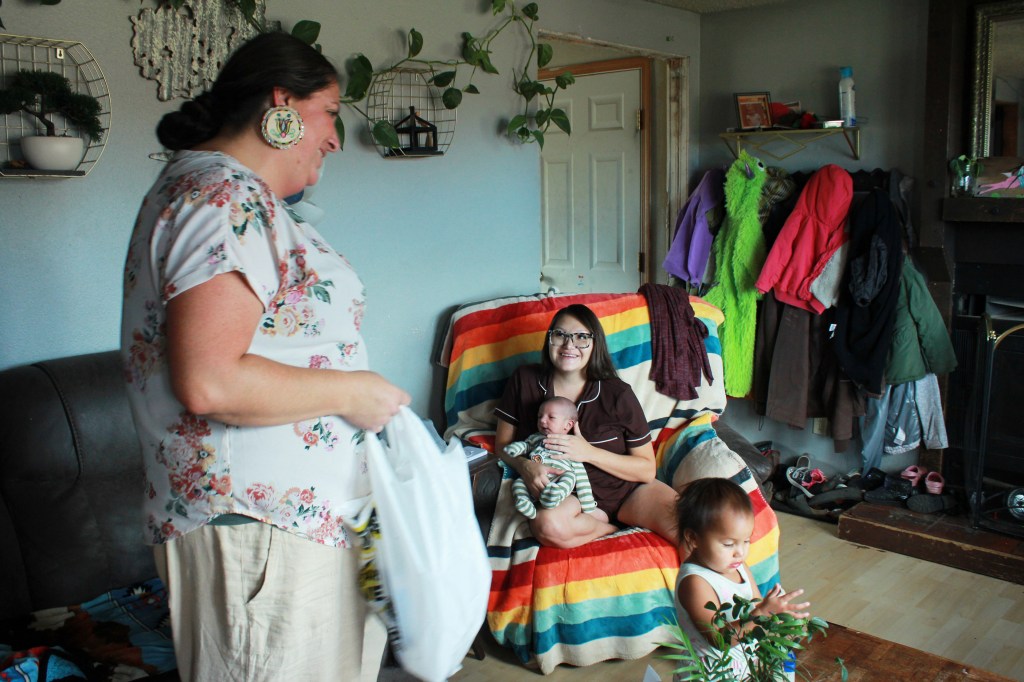
- This Northern Cheyenne Doula Was About To Start Getting Paid — Then Medicaid Cuts Hit
- Waystar builds out AI solution to uncover lost provider revenue from payer 'take-backs'
- UAMS program targets youth behavioral health, workforce pipeline
- CMS gives Medicare Advantage rates a 2.48% bump for 2027 plan year in final rule
- Ascendiun CEO Paul Markovich wants the industry to back a policy reform movement focused on affordability, tech innovation
- Counsel Health expands primary AI care model to include lifestyle, chronic conditions
- Allevion Medical Receives 510K Clearance for Vantage Spinal Decompression System
- Allevion Medical Receives 510K Clearance for Vantage Spinal Decompression System
- Patient cost sharing plays bigger role in rural hospital revenues, claims study shows
- Disputing Link, Raw Dairy Farm Recalls Raw Cheese After Outbreak
- La búsqueda de Trump de inscritos indocumentados en Medicaid arroja muy pocos infractores

- CMS unveils new Medicare pilot for hemp, CBD products
- New Plan Aims To Track Microplastics in U.S. Drinking Water, EPA Says
- Over 3 Million Eye Drops Recalled Amid Sterility Concerns
- New White House Budget Plan Would Reduce HHS Funding by Billions
- ImmunityBio responds to FDA scrutiny over Anktiva promotional claims with new protocols
- Healthcare Dealmakers—Sutter Health, Allina Health's $26B combination, UHS' $835M Talkspace purchase and more
- Ambience Healthcare launches Chart Chat, an EHR-integrated AI copilot for nurses
- Científicos de Estados Unidos secuencian 1.000 genomas del sarampión, eliminado durante años gracias a las vacunas

- Anthropic acquires stealth AI startup Coefficient Bio in $400M deal: reports
- Insulet's Omnipod takes Type 2 diabetes representation to the TV screen in 'Scrubs' revival
- Move Over, Cigarettes: Vapes Now the Leading Nicotine Danger for Kids
- DNA-Based Blood Test Could Help Guide Throat Cancer Treatment
- New Technologies Make Lung Cancer Diagnosis, Treatment Quicker and Safer
- Could Low Birth Weight Raise Odds for an Early Stroke?
- Getting a Scan? Time to Results Has Doubled Since 2014
- Autoimmune Diseases Like Lupus, Psoriasis May Raise Cancer Risk
- Neurocrine, eying ‘blockbuster in the making,’ strikes its largest-ever M&A deal with $2.9B Soleno buyout
- Amgen scores with trial of on-body injected version of Tepezza in thyroid eye disease
- Immigrant Seniors Lose Medicare Coverage Despite Paying for It
- Eli Lilly takes the court with 150th anniversary campaign to catch Final Four crowd
- VML Health urges marketers to shift from lifespan to ‘joyspan’ as patient goals evolve
- What Sea Creatures Reveal About How Fast People Age
- How to Tell if Spring Symptoms Owe to Allergy, Cold or Something More Serious
- 5 major insurers, vendor Zelis must face 'repricing' antitrust claims, judge rules
- Kaiser Permanente breaks ground on Oregon’s ‘first fully electric and sustainable’ hospital in Oregon, sets 2029 opening
- USDA Warns of Lead Risk in Frozen Dino-Shaped Chicken Nuggets
- New Heart Diet Advice Counters U.S. Guidance on Meat and Dairy
- Peeled Garlic Recalled Over Risk of Deadly Botulism
- Some CDC Lab Testing Paused Amid Internal Review
- March M&A surge triggers high expectations for 2026
- White House floats 12.5% budget cut for HHS in FY2027, reiterates reorganization plan
- The Healthcare Burnout Backlash (pt 2): Positioning AI pilots for success within EHR-integrated environments
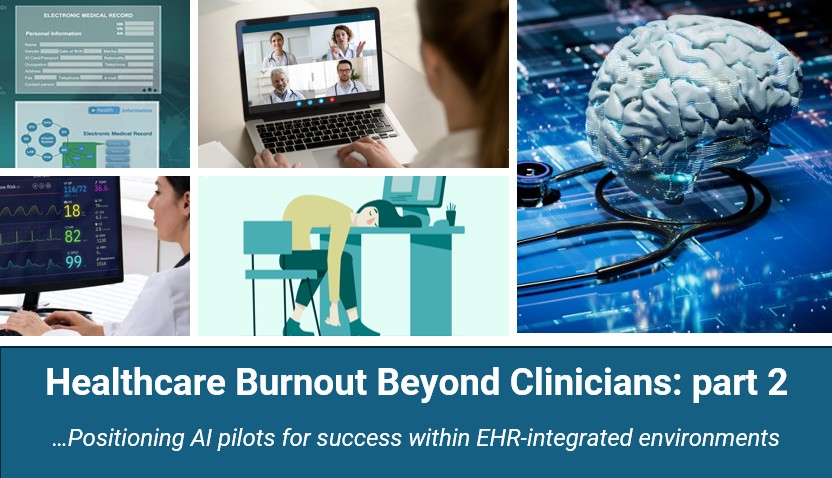
- The Healthcare Burnout Backlash (pt 2): Positioning AI pilots for success within EHR-integrated environments
- With Sanofi and Pfizer deals, Novavax bets on ‘amplification strategy’ to drive vaccines engine
- Boston Scientific receives FDA clearance for the Asurys Fluid Management System
- Boston Scientific receives FDA clearance for the Asurys Fluid Management System
- Serenity Medical Receives FDA Humanitarian Device Exemption for IIH Venous Stent
- Serenity Medical Receives FDA Humanitarian Device Exemption for IIH Venous Stent
- Blue Shield of California’s virtual-first plan continues to show lower costs, increased access for members
- Merit Medical Acquires View Point Medical, Inc., expanding the Merit Therapeutic Oncology Portfolio
- Merit Medical Acquires View Point Medical, Inc., expanding the Merit Therapeutic Oncology Portfolio
- FDA Publishes New Set of Real-World Evidence Examples

- FDA Publishes New Set of Real-World Evidence Examples
- Nerve Stimulation Therapy May Ease Fibromyalgia Pain, Fatigue
- Psychotherapists Often Poorly Trained in Treating Muscle-Linked Disorders in Males
- Missing From Most Doctor-Patient Talks: Sleep Issues
- Plastics Chemical Linked To Nearly 2 Million Preterm Births Each Year


In a tough economy, it's smart to look at unnecessary expenses.
In Michigan, licensing would be a great place to start eliminating barriers - we've been building them for years, adding even more this term. I posted Nebraska's universal recognition approach in March.
Mackinac Center summarizes licensing barriers here. Audio available in the link.
https://www.mackinac.org/blog/2024/suggestions-for-michigans-licensing-agency
Suggestions for Michigan’s licensing agency
Even small changes could make a big difference
Michigan citizens licensed through the state (there are 750,000 of them) recently got an email from the Michigan Department of Licensing and Regulatory Affairs “seeking your input to identify requirements that make the process of obtaining a license challenging.” People can take a survey asking them to suggest “any law, rule or process changes” that would make things easier.
As someone who has worked in a variety of licensed fields and done deep research in the field, I have some suggestions.
The department should regularly review the 180 occupational licenses in Michigan. These should be strictly evaluated based on how much the license actually protects public health and safety. The Mackinac Center published a study detailing a model review process for how to do this and specifically applied it to a few current licenses.
Automatically recognize licensed workers from other states. Many occupations are in an interstate-recognition compact. In other jobs, people can move into Michigan and apply to have their licenses recognized. This process should be much, much easier. The state should automatically recognize current licenses (and experience) from other states.
Stop licensing occupations the state isn’t monitoring. The fee structure for occupational licenses is out of sorts. Some fees are very low and others extremely high. Lawmakers have essentially set things up so that some occupations are heavily subsidizing others. That’s not appropriate. Licensing fees should cover the costs of inspections and oversight — if they don’t, the license is ripe for elimination.
Simplify or eliminate testing requirements and continuing education. Many of the test requirements to get a license and the continuing education to keep it are unnecessary. In fact, in many industries, it is an open joke. These mandates should be severely simplified or eliminated.
Simplify the applications and speed things up. Applying for a license and understanding what is actually required is difficult to understand. A regular person should easily be able to understand what is required. And licenses should be approved (or disapproved) quickly. State government is too slow — nobody should have to wait months or a year to be able to start working.
I’m glad the licensing agency is reaching out for thoughts. The department processes information on close to a million people per year. Even small changes in the right direction can have a large effect on a huge number of people.
The 1889 Institute offers major changes in their 2021 white paper.
Clipped for length; the sample bill is available at the link.
A Win-Win for Consumers and Professionals Alike: An Alternative to Occupational Licensing
By Byron Schlomach, PhD, Christina Sandefur, JD, and Murray Feldstein, MD
Introduction
<clip>
... government plays a legitimate role in preventing fraud and minimizing other inefficiencies. Occupational licensing is supposed to fulfill this role by providing shorthand information or signals of quality and competence, but unfortunately its negatives largely outweigh its positives. This paper proposes an alternative.[3]
The Role of Shorthand Market Information
Consumers have an interest in getting accurate shorthand information about sellers and products. At the same time, high-quality, reliable sellers in pursuit of a market advantage have an interest in minimizing the costs of conveying shorthand information that accurately reflects who is likely to produce and sell the best products and services.
The reason shorthand information is valuable is that while consumers and producers alike benefit from information, too much information can be overwhelming. Consumers simply cannot fully process large volumes of information. Some information is of higher quality than other information, and too much can cause bad or deceptive information to drown out good, which can be worse than having no information at all. Ask any good conscientious legislator about information overload, and most will admit they specialize and vote with others whom they trust to know more regarding issues on which they are not educated.
Quality sellers arguably deserve a way to convey what consumers can depend on to be accurate, shorthand information that differentiates quality sellers from others, and consumers obviously want this too. This is the one truly good thing occupational licensing is supposed to provide—accurate shorthand information regarding seller quality. As discussed below, however, that does not always happen without other costs overwhelming the positive effects of signals from licensing.
Consumers often purchase goods and services only occasionally. One reason car dealers favor restrictive rules on who can act as intermediaries in auto sales is that dealers have a decided advantage over consumers who buy a car only once every five years or so.[4] Most car shoppers have neither the time, nor the resources, nor even the inclination, to fully educate themselves to get the sort of deal a truly experienced buyer could accomplish.
Consequently, shorthand tools have been developed to aid consumers in a market context, including Kelley’s Blue Book and car magazines that specialize in monitoring and analyzing consumer choices and presenting them in a shorthand fashion that busy consumers can digest quickly. For other products and services, resources include Angie’s List, Yelp, Consumer Reports, and a host of specialized publications.
Why Licensing Has Proved Ineffective
Unfortunately, occupational licensing accomplishes its one important and beneficial market task in a costly, heavy-handed manner. It is monopolistic, blending all the bad characteristics of monopolies, with government thrown into the mix.[5] Licensing requirements theoretically offset a monopoly’s tendency toward low quality, but the stories of how licensing boards fail to discipline licensees are legion.[6] In the same way monopolistic, cartel-like institutions operate, licensing reduces supply, drives up prices, and compromises quality—great for licensees, but not for consumers. And the licensing cartel has the power of government behind it.
Enter Fraud-Protected Private Certification
Fortunately, there is a solution. Private certification keeps licensing’s benefit of market signaling but does so without its monopoly. Fraud-protected certification, which meets the transparency criteria in the model below, serves to encourage the creation of reliable sources of shorthand information for both sellers and consumers. Privately certified sellers have an incentive to defend their credential from fraud and also an incentive to maintain their credential’s credibility by enforcing high quality. Certifying organizations can compete with one another to provide better, more thorough, and more conveniently-expressed information to consumers.
The accompanying model bill does not propose wholesale replacement of traditional occupational licensing, however. In fact, it does not repeal any existing license.
Instead, the model proposes a voluntary system that complements existing licenses. Specifically, it allows for private certifying organizations to (1) register with the state, (2) privately certify individuals to practice an occupation according to the organization’s performance criteria, and (3) employ modern technology, including consumer-rating systems using smartphone applications, to protect consumers. The privately certified individual would be free to work in the state regardless of other occupational regulations. Multiple certifying organizations could occupy the same occupational “space,” competing to provide the highest-quality credential.
While private certification organizations already perform this service in some ways, this proposal would expand and strengthen their ability to do so by creating an incentive to provide a quality credential in exchange for fraud protection. Currently, the only recourse for a private organization to protect its credibility is to sue anyone who illegitimately claim certification. Our model proposes extending criminal fraud protection to certifying organizations that follow certain practices, mainly having to do with transparency to consumers.
<clip>
Conclusion
Private certification provides the benefits of shorthand information for consumers and producers just like licensing does—and better—without creating monopolistic power under the umbrella of government. With private certification as proposed here, sellers have a property interest in their certification, which is protected against fraud by the state’s trade practices act (or however a legislature might frame the statute). That means certification organizations do not have to sue in civil court to enforce their rights, a costly and uncertain proposition. Fraud protection is not granted lightly, but at the same time, both sellers and consumers are protected through its power.
The private certification model also has the benefit of not relying on future legislatures to understand and implement a vision of proper regulation the way sunrise and sunset laws do. Nor does it rely on attorneys and statutory causes of action to create a litigation-fertile environment where judges might or might not decide in favor of markets and free enterprise.
Private certification takes care of itself. When new professions arise with practitioners who want to set themselves apart, they can form associations and certify themselves (recall the size threshold in the model). They can practice alongside licensed professions without fear of government interference as long as they follow a set of specified criteria, which are focused on transparency for consumers.
Consumers are already used to looking up reviews and credentials online. Companies are increasingly ignoring college degrees and relying on certificates of course completion from private online education services. Over time, with private certification in place, licensing in many occupations would likely disappear, both for lack of need and by consensus. So there is no real need for the political battles involved with licensing repeals if private certification is put in place. And there would be no need for legislatures to mediate disputes between licensed professions in the future.
The ultimate result, compared to licensing, is that private certification will increase quality, increase opportunity, and lower prices.
And Speaking of Medicine …
Murray Feldstein, MD
Today, occupational licensure is primarily a political tool to restrict competition rather than to assure competence, including in the medical field. The origins of this system lie in the medieval guild system, resurrected and promoted by organized medicine and successfully enacted over a century ago. Since then, this system has infected one service industry after another. The politics of licensure do more to block competition than to ensure competence and safety, with professional entry controlled by the profession itself through a series of interlocked private institutions.
A certified nurse practitioner, who has a bachelor’s in nursing, an RN license, and a masters or doctorate in nursing, can do a vasectomy in Washington State. But in most states, that same individual must either fight a scope-of-practice battle in the legislature or go to medical school in order to perform a vasectomy. I am a board-certified urologist who has performed thousands of vasectomies. I am confident I could train an experienced, competent physician’s assistant or nurse practitioner to do the procedure within a few weeks, and feel comfortable letting them do it independently.
Defining or changing a scope of practice for a profession is a political power struggle. Legislators, largely laymen, depend on affected regulated professions for their information, and special interests and political considerations are often prioritized over the public interest. Anyone who has been through a scope-of-practice battle knows how vicious, time-consuming, and demeaning they can be. Privileged, incumbent professionals argue that potential competitors lack competence, though no real evidence is provided to support that claim. The case of nurse practitioners performing vasectomies is one blatant example.
In medicine, although graduates from medical schools are granted an unlimited license to practice medicine, potential competitors are restricted by broad scope-of-practice regulations. There is no statutory restriction on licensed physicians performing vasectomies, even though they may never have seen one performed. The reason most non-urologist MD’s avoid doing the procedure is not because it is illegal, but because of market conditions, their own moral compass, and nongovernmental mechanisms such as board certification, hospital credentialing, and liability concerns, which truly assure professional competence.
The proposed form of private certification outlined in this paper would likely see private entities creating certification tracks that are not unlike pilot certification, a truly competency-based system: The pilot profession does not control the student level leading to professional entry. The prerequisites and competencies required for any certificate—from day-flight only, to instrument rating, to commercial and airline pilot—are clearly specified. No politicians are making decisions about matters they know little about, and market forces largely determine the efficient distribution of piloting skills within the industry.
Under a certification system, many motivated, capable individuals unable to enter a highly restricted licensing regime could use their skills to provide themselves with greater opportunity and help those in need of their skills. In medicine, for instance, perhaps a military corpsman, an international medical graduate, or an emergency room aide who became an EMT could find a place in a healthcare industry that, quite frankly, needs them and the important, useful skills they have acquired. Under today’s laws, licensing prevents this—and we all lose, not just those who yearn to realize their dreams by helping others through medicine, but also patients who need access to medical care.
An advantage of the private certification proposal in medicine is that the system gains additional healthcare professionals, but no new mandates are imposed upon existing institutions. Licensing boards will still have to verify credentials and decide which programs they are willing to accredit. The market mechanisms that truly assure public safety remain intact.
Regardless of policies enacted in Washington, states that reform medical licensing can improve medical access, lower medical costs, streamline the adoption of 21st-century technologies, facilitate modern teaching methods, provide opportunity for self-advancement to segments of our population who have been falling behind, and empower patients by reforming medical licensing. Part of that reformation, of course, can include private certification. And if this is true for medicine, it is true for every other licensed occupation.
Many are concerned that the private certification model does not contain carve-outs for medicine or law. However, the model explicitly acknowledges government’s right to regulate substances, including prescription medicines. This alone will continue to require licensing for many medical professions, alleviating the most common objections related to public health and safety. And in the case of surgery, hospitals and private board certifications regulate who does surgery now, not licensing boards.
As for law, Great Britain, which has two levels of attorneys, barristers and solicitors, suggests a helpful alternative. Britain’s barristers, who litigate before courts and all attorneys in the U.S. face similar requirements to practice. Britain’s solicitors, who are more numerous, practice only what might be called office law, drawing up contracts, carrying out legal negotiations, and advising clients, but not litigating. Solicitors only face requirements to practice that are akin to certification. In American terms, litigators (Britain’s barristers, who argue before judges) are licensed, but attorneys in general (Britain’s solicitors, who do not litigate) are not.[7] The model bill stipulates that those privately certified but not licensed must post a sign stating they are not regulated by the state. Bar-licensed attorneys would continue to have an advantage for this reason alone. Plus, judges would still determine if an attorney is qualified to litigate in front of them, a power set in common law and one this model explicitly allows to continue.
Private certification has the potential of doing a better job of protecting consumers than occupational licensing while also generating benefits for those certified under its provisions. Consumers want the shorthand information. Producers want to give it. Government need only create the setting for this to occur.
Get MHF Insights
News and tips for your healthcare freedom.
We never spam you. One-step unsubscribe.
Sponsors
Friends of MHF



Kirsten DeVries
Tom & Karen Nunheimer
Steve Ahonen
Ron & Faith Bosserman
Marlin & Kathy Klumpp
Sign Up for MHF Insights to keep up on the latest in Michigan Health Policy