- Taking a GLP-1? Doctors Say Not To Forget About Movement and Mental Health
- Women, early-career scientists hardest hit by NIH grant terminations: Study

- CDC’s Acting Chief Promises a Return to Stability in a Tumultuous Moment
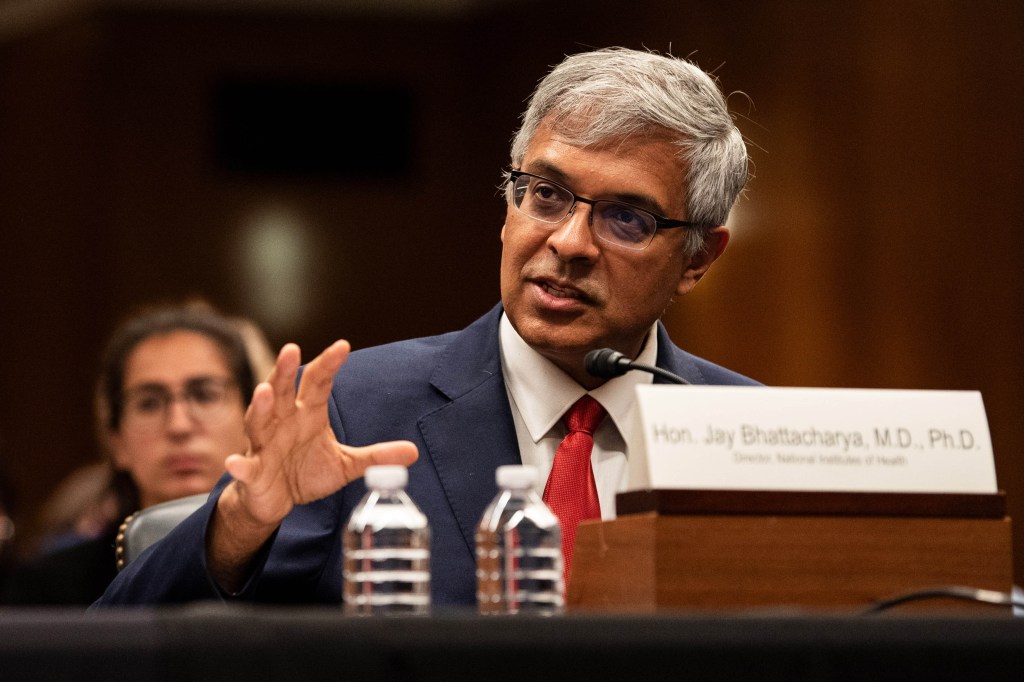
- California peer-run behavioral health center to close amid funding shift
- White House delays CDC director nomination
- Vandalia Health restructures, eliminates regional CEO roles
- ‘Integration only works if data lives in the same system’: How 5 systems are operationalizing behavioral health
- Medicaid work requirements could cut enrollment by up to 10 million per month
- Medicaid work requirements could cut enrollment by up to 10 million per month
- Inside UHS’ playbook for responsible behavioral health growth
- Adventist Health hospital names president
- Epic4 Specialty Partners adds Illinois practice
- Residents, fellows tap Mayo Clinic Platform data for insights
- NYC Health + Hospitals to end $4M Palantir contract
- Ascension drives quality, access wins with ‘digital nudges’
- Adventist Health cuts operating loss in 2025
- Adventist Health cuts operating loss in 2025
- 10 surgeons making headlines in 1 month
- Infosys to acquire Optimum Healthcare IT for $465M
- ‘Burning the candle from both ends’: New York hospital CFO on rising costs, revenue cuts
- ASCs are not hospitals — and 1 administrator says the industry is forgetting that
- The unsolved problems still plaguing dentistry
- American Dental Association adds mental health, GLP-1 prompts to patient forms
- 21 revenue cycle executive moves in 2026
- ASCA backs outpatient surgery access bill
- The outpatient explosion is here—can real estate keep up?
- North Carolina orthodontic practice opens 7th location
- The health systems with the top supply chain operations and 4 more updates
- Intuitive Surgical eyes ASCs as robotics’ next frontier
- Feds give first-ever green light to ASC estate planning ownership model
- Virginia hospital boosts workplace safety reporting 245% with 3 strategic shifts
- What’s next for Optum?
- The 47 rural emergency hospitals, by state
- Massachusetts payers, hospitals partner on care affordability, access
- Pennsylvania hospital to end inpatient, ED services in May
- ADA urges CMS to proceed with adult dental coverage expansion
- Where anesthesiology residents are headed: 2026 Match data by state
- California outpatient medical office building sold for $340M
- RWJF: Between 5M and 10M people could lose Medicaid coverage in 2028 under work requirements
- Imagen Dental Partners adds Washington practice
- Imagen Dental Partners appoints senior VP of M&A
- Arkansas man charged with making terroristic threats to dental office staff
- Smile Partners appoints DSO veteran as COO
- Financial challenges slam dental offices: 4 updates
- Dental innovation continues: 10 big updates to know
- How pharma marketers can capitalize on HCPs’ AI, social media and streaming habits
- Federal Officials Investigate States That Require Abortion Coverage
- Tennessee hospital files notice tied to vendor transition affecting 85 workers
- Corcept's lead drug bounces back from FDA snub with different approval as Lifyorli in ovarian cancer
- AI-driven RCM firm Adonis raises $40M
- Ionis slashes Tryngolza's price tag by 93% ahead of anticipated label expansion
- FDA approves Denali's Hunter syndrome drug, handing rare disease community a win
- Rush Health anticipates $5.9M in revenue from automated coding
- Baby Walkers Sold on Amazon Recalled Over Fall Risk
- Scaling patient access the right way: The Stella-Nanonets blueprint
- Want To Protect Your Brain? Science Says Exercise
- HelloFresh Pizza Recall Issued in 10 States Over Metal Risk
- Clinical Trials Have Too Much Data…That’s the Problem.

- Clinical Trials Have Too Much Data…That’s the Problem.
- CMS reveals new Medicaid model that supports coordination for children with complex needs
- Novartis sued by breast cancer patient over branded drug websites’ data-sharing practices
- Takeda targets $1.3B in cost savings in further restructuring
- Biogen pays $20M upfront to tap into Alteogen's subQ delivery tech
- 'Universal Donor' Blood Supplies Dangerously Low, Study Warns
- Why Stepping Outside May Help You Eat Better
- U.S. Medicine, Science Facing An Online Misinformation Siege, Poll Concludes
- Childhood Obesity Undercuts The American Dream For Some, Study Says
- Inclusive High Schools Benefit All Students, Not Just LGBTQ Teens
- Parental Loss Due to Drugs, Violence Raises Child Death Risk by 2,000%
- As Boehringer touts US launches, board chairman worries EU is 'falling further behind'
- The evolving state of exome and genome sequencing
- An Arm and a Leg: Steep Health Care Costs Steer Americans to Tough Decisions

- Demoralized CDC Workforce Reels From Year of Firings, Funding Cuts, and a Shooting

- CMS unveils new pediatric care model
- Qualified Health locks in $125M in fresh funding to scale enterprise AI at health systems
- Two-thirds of pediatric mental health triage scores inaccurate: Study
- Misery Loves [Investment] Company?: Remarks at the 2026 Investment Company Institute Investment Management Conference
- Idaho lawmakers push to restore mental health programs
- Study: Nearly 1 in 5 pediatric hospital deaths involve sepsis
- New York launches mental health training for first responder clinicians
- Opening Remarks at the Digital Asset Summit 2026
- CVS Caremark, FTC reach settlement in insulin pricing case
- UCB unveils plan to build $2B biologics plant near its US headquarters in Atlanta
- PeaceHealth sued over plans to tap out-of-state staffer ApolloMD for Oregon EDs
- New Lyme Disease Vaccine Shows Strong Results in Trial
- TrumpRx Adds Diabetes, COPD Drugs at Steep Discounts
- Highmark reports $175M net loss for 2025 as financial headwinds batter health plan
- Listen to the Latest ‘KFF Health News Minute’
- Abivax hires commercial chief from Takeda to infuse Entyvio expertise into IBD launch prep
- ImmunityBio hit with FDA warning letter over Anktiva promotions in TV ad, podcast episode
- Alcohol Prep Pads Recalled Over Bacteria Risk, Cardinal Health Says
- Fewer patients traveled for abortions in 2025 as telehealth care increased, report finds
- Cologuard campaign reunites ‘Full House’ stars to give ‘The Talk’ about colon cancer screening
- Lilly to remove certain insulin products from European markets by 2027
- Karyopharm, looking to jump-start Xpovio, reports mixed results in myelofibrosis
- Study Warns Fluoride Bans May Raise Tooth Decay in Children
- WuXi Bio's record number of new projects in 2025 leaned heavily on US clients
- “Me engañaron”: agentes encadenan a un padre que había ido al ICE a reunirse con sus hijos

- Gilead inks Manta pact to dive deeper into cancer patient support
- Cheap Children's Clothing Tainted With Lead, Study Says
- Insulin Prices Fell For Medicare Patients Under Biden-Era Caps, Study Finds
- New Fathers Face Mental Health Challenges, Study Finds
- Your Choice Of Booze Influences Your Risk Of Death, Study Says
- AI Gets a 'D' When Judging Scientific, Medical Claims
- New Online Tool Helps Parkinson's Patients Weigh Brain Implant Decision
- AI chatbot use for health information up 16% from 2024: Rock Health survey
- ‘They Tricked Me’: A Father Was Chained After He Went to ICE To Reunite With His Kids
- Wilmington PharmaTech commits $50M to US API expansion
- Strides recalls nearly 90K bottles of children's ibuprofen after contamination complaints
- Trump administration unveils national policy framework for AI as it moves to override state laws
- Breast Cancer Locator System Submitted for De Novo 510(k) by Cairn Surgical
- Breast Cancer Locator System Submitted for De Novo 510(k) by Cairn Surgical
- 17 spine surgery firsts in Q1

- 17 spine surgery firsts in Q1
- Cencora acquiring EyeSouth Partners' retina business for $1.1B
- Aunque tengas seguro dental, la factura puede ser muy alta
- Massive class action seeking RICO penalties against Takeda, Lilly presses forward with SCOTUS order
- A look at how Optum Rx is using AI to address pharmacy fraud, waste and abuse
- AbbVie steps up to the plate as official pharma sponsor of MLB
- Gilead CEO Daniel O'Day nets $28.4M pay package as security and travel costs top $2M
- Nursing Homes Accused of False Diagnoses To Hide Drug Use
- FDA Approves Higher-Dose Wegovy To Help People Lose More Weight
- Teens Often Pressured To Send Sexual Photos by Someone They Know, Study Finds
- CommonSpirit, Humana reach 3-year national network agreement
- Match Day 2026: Growth in emergency medicine, psychiatry
- Nearly 90,000 Bottles of Children’s Ibuprofen Recalled Nationwide
- FTC launches multi-bureau Healthcare Task Force to spot 'new priority areas for enforcement'
- Algunos adultos de mediana edad deciden posponer la atención médica hasta tener Medicare

- ¿Qué tan bajo se puede llegar? Las cambiantes guías para el control de la presión arterial
- EyePoint lawsuit accuses Ocular of 'malicious' defamation campaign in retina drug race
- Rural hospitals could apply for temporary interest-free construction, renovation loans under new bipartisan bill
- Cost Center to Command Center: How Health Systems Are Systematizing Innovation in Support Services
- Rural Residents Have Highest Cancer Death Rates, Researchers Say
- Your Bank Account Might Show How Well Your Brain Will Age, Researchers Say
- Insurance Lapses Play Havoc With Diabetes Management, Study Shows
- Psychedelics Aren't Better Than Antidepressants In Treating Depression, Review Concludes
- A Nasal Swab for Alzheimer's? Duke Team Has One in Testing
- Heat Advisories Might Not Trigger Soon Enough For Some Seniors, Study Finds
- Health Tech Weekly Rundown: Perplexity rolls out AI-powered medical records search; Doximity survey examines how docs use AI
- Don't Forget This: Study Shows Cannabis Exacts a Toll on Your Memory
- Want To Stress Less? Start With These Everyday Habits
- Large pharma companies reduced headcounts by more than 22K in 2025 as $300B patent cliff looms
- Remarks at The SEC Speaks in 2026: From Kitchen Table to Cap Table—Making Capital Formation Work for Small Businesses
- Health system AI adoption surges in 2026 with execs reporting increased ROI: survey
- Heart Benefits From GLP-1 Drugs Fade After Stopping, Study Finds
- Survey Shows More People Struggling To Afford ACA Insurance
- Up to 155,000 COVID Deaths May Not Have Been Counted, Study Finds
- FDA Drops Plan To Ban Tanning Beds for Minors Nationwide
- Mindray North America Enters Ventilator Market
- Mindray North America Enters Ventilator Market


Six health policy bills signed.
Kudos to the Detroit Free Press for linking bill numbers to issues so people can read each bill for themselves.
Are any of them good policy?
Sound off!
July 19, 2023Gov. Gretchen Whitmer signed a series of health care-related bills Tuesday, including one the governor's office said would make Michigan the first state in the country to allow individuals to sign up as organ donors on their state income tax return.Whitmer celebrated the bipartisan bills she approved as cost-saving measures for Michigan residents that will also increase access to health care. Here's a few key things you should know:
Bill would preserve Healthy Michigan Plan
Whitmer signed House Bill 4495, which removes a provision eliminating the Healthy Michigan Plan — the state's Medicaid expansion — if the program's net costs outpace net savings.
By preventing the repeal of the program based on costs, Whitmer's office said the change will help protect health care for more than 1 million residents.
Bill sponsor, state Rep. Will Snyder, D-Muskegon, said the new law will have a "huge impact" for those covered by the plan. "Eliminating the automatic trigger removes the possibility of a catastrophic loss of coverage for hundreds of thousands of Michiganders," Snyder said in a statement.
Whitmer also signed House Bill 4496, making tweaks to what the Michigan Department of Health and Human Services includes in its Medicaid expansion waiver request from the federal government that could potentially lower costs for some individuals. "This bipartisan legislation improves access to health care for lower-income families and folks in rural communities, gets more people insured, and saves taxpayers money," said bill sponsor state Rep. Graham Filler, R-St. Johns, in a statement.
Big 10:Whitmer signs bill allowing alcohol sales at college football, basketball games in Michigan
Allow pharmacists to administer vaccines
Whitmer also signed a bill continuing to allow pharmacists to administer vaccines under certain circumstances. Lawmakers first voted on the legislation the same day that the federal COVID-19 public health emergency ended. Without a change to state law, Michigan pharmacists would have lost their authority to administer vaccines without the supervision of a doctor granted during the public health emergency.
Proponents of Senate Bill 219 argued that pharmacists in many communities are the most accessible health care providers, particularly in low-income communities and communities of color. Bill sponsor state Sen. Sylvia Santana said the legislation "will provide better care across the sate."
Add organ donation option to state tax return
Michigan became the first state to allow individuals to sign up to be an organ donor on their state income tax return, according to the governor's office. Whitmer signed House Bill 4362, allowing individuals to join the donor registry on their tax forms starting in the 2023 tax year.
Bill sponsor state Rep. Felicia Brabec said her legislation will help save lives. "By offering more opportunities to join the organ donor registry, this legislation will help to ensure that anyone who wants to become an organ donor has the ability to do so, by checking a box on their state tax forms," she said in a statement. Whitmer also signed House Bill 4363 and House Bill 4364 updating other state laws to reflect the change.
Clara Hendrickson covers Michigan politics with a focus on the governor's office and the state Legislature. She has previously covered voting rights, election administration and redistricting in Michigan. She came to The Detroit Free Press by way of Report for America – an initiative of The GroundTruth Project – to fact-check Michigan issues and politics in partnership with PolitiFact during the 2020 election. She previously worked as a research analyst at the Brookings Institution and freelance journalist in Washington, D.C.

There is a longer form post by Anna Gustafson's post at Michigan Advance:
Whitmer signs legislation to protect Healthy Michigan Plan, preserve access to vaccines
New law also adds organ donation registry to income tax forms
By Anna Gustafson - July 19, 2023Gov. Gretchen Whitmer on Tuesday signed legislation addressing a wide range of health issues, including bills meant to protect access to public health insurance, allow pharmacists to independently administer vaccines, and make Michigan the first state to allow individuals to become organ donors through tax forms.
House Bills 4495 and 4496 aim to streamline and increase access to the Healthy Michigan Plan, a Medicaid program provided through the state Department of Health and Human Services (DHHS) and authorized under the federal Affordable Care Act.
Created by the Michigan Legislature in 2014, the Healthy Michigan Plan now covers about one million people in the state. Available to those who don’t meet the requirements for other Medicaid programs, Healthy Michigan is open to Michiganders ages 19 to 64 who earn an income at or below 138% of the federal poverty level – $18,754 for an individual or $36,908 for a family of four.
Sponsored by Rep. Will Snyder (D-Muskegon) and Rep. Graham Filler (R-St. Johns), the legislation passed with bipartisan support, prevents the Healthy Michigan program from being repealed based on operating costs and eliminates “unneccessary conditions and paperwork” for enrollees, according to a Wednesday news release from Whitmer. Five Republican senators joined Democrats to pass both bills by a vote of 25-12 on June 27. The House on June 13 passed HB 4495 by a vote of 80-27 and HB 4496 by a vote of 83-24.
“We know that access to quality, affordable health care improves health outcomes overall,” Whitmer said in a Wednesday press release. “This legislation will ensure Michiganders can continue to access affordable health insurance under the Healthy Michigan Plan and make it easier for them to get the care and treatment they need.”
The legislation, referred to as the “Healthier Michigan Plan,” axes the previous mandate that Healthy Michigan enrollees contribute 5% of their income for cost sharing requirements, removes a requirement that triggers the elimination of Healthy Michigan if the program’s net costs outweigh the net savings, and gets rid of the stipulation that the state health department seek certain waivers from the federal government in order to provide various services through Healthy Michigan.
“Eliminating the automatic trigger removes the possibility of a catastrophic loss of coverage for hundreds of thousands of Michiganders,” Snyder, who sponsored HB 4495, said in a press release from Whitmer’s office. “The changes may seem small, but they have a huge impact on those who rely on the Healthy Michigan Plan for insurance coverage.”
My first bill passed the House this week! HB 4495 updates language in the Healthy Michigan Plan. The bill removes outdated and obsolete language and streamlines access to affordable healthcare for the approximately 700,000 Michiganders who rely on the Healthy Michigan Plan. pic.twitter.com/ju2JLlrQWL
— Will Snyder (@SkeetownSnyder) June 16, 2023
Filler said the legislation will improve “access to health care for lower-income families and folks in rural communities, get more people insured and save taxpayers money.”
Health care organizations and advocates lauded Whitmer signing the bills into law, with the legislation receiving backing from the Michigan Association of Health Plans, the Committee to Protect Health Care, and the Michigan Health and Hospital Association.
“The bipartisan, proactive actions taken by our state lawmakers to pass the Healthier Michigan Plan will save tax dollars and drive healthier outcomes for Michigan’s most vulnerable populations who experience barriers to getting the health care they need,” Dominick Pallone, executive director of Michigan Association of Health Plans, said in a news release from Whitmer’s office.
Pallone and Dr. Farhan Bhatti, a family physician in Lansing and the Michigan state lead for the Committee to Protect Health Care, said on Wednesday that it’s important to continue offering Healthy Michigan in part because it has reduced Michigan’s uninsured rate and uncompensated care costs.
In 2013, 11.6% of Michiganders were uninsured. That number, according to the Michigan Association of Health Plans, has since dropped to 5.1% in 2022 – lower than the national average of 6.6%. The organization also reported that uncompensated care dropped from 5% of all hospital expenditures in 2013 to 2.5% in 2020.
Allowing pharmacists to administer vaccines
Whitmer also signed Senate Bill 219 into law on Tuesday, which allows pharmacists to continue to independently order and administer vaccines. Pharmacists have been able to independently provide vaccines during the COVID-19 pandemic, but they would have lost their authority to do so without the supervision of a doctor had state law not changed.
“During the pandemic, pharmacists were on the front line and we learned access to care and life-saving vaccines was critical to personal and public health,” said state Sen. Sylvia Santana (D-Detroit), who sponsored the legislation. “We must continue to improve access to healthcare and services and allowing pharmacists to continue to provide critical vaccinations will provide better care across the state.”
Under the new law, pharmacists will be able to administer vaccines to individuals who are at least three years old – provided the professionals undergo a special training program and adhere to a number of reporting requirements. The vaccines pharmacists can administer must be approved by the U.S. Food and Drug Administration (FDA).
The bill landed bipartisan support, with the Senate passing it 35-1 on June 27 and the House passing it 96-12 on the same day.
Pharmacists at the state and national level have backed the legislation, including the National Community Pharmacists Association and the Michigan Pharmacists Association.
“The pharmacy community is not asking to provide any services that it has not already proven itself capable of delivering,” Eric Roath, director of government affairs at the Michigan Pharmacists Association, said during a Michigan Senate Health Policy Committee hearing in April.
Organ donors
Michigan is now the first state in the country to allow individuals to indicate if they are willing to be an organ donor on their state income tax return, following Whitmer signing House Bills 4362, 4363 and 4364 on Tuesday.
Currently, Michiganders are asked if they want to become organ donors when they renew their driver license – which they will still be able to do.
The package, named the “Check Your Heart Act,” landed bipartisan support, with HB 4362 passing 103-5 in the House and 30-7 in the Senate, HB 4363 passing 104-4 in the House and 30-7 in the Senate, and HB 4364 passing 103-4 in the House and 30-7 in the Senate. The sponsors of House Bills 4362, 4363 and 4364 were state Reps. Felicia Brabec (D-Pittsfield Twp.), Cynthia Neeley (D-Flint) and Natalie Price (D-Berkley), respectively.
“With almost 2,500 Michiganders waiting for a lifesaving organ and another 16,000 currently undergoing dialysis, the Check Your Heart Act could help save the lives of thousands of Michigan patients,” Brabec said in a release from Whitmer’s office. “By offering more opportunities to join the organ donor registry, this legislation will help to ensure that anyone who wants to become an organ donor has the ability to do so, by checking a box on their state tax forms.”
Neeley said “these laws will save lives.
“I myself was fortunate enough to donate my kidney to my sister; however, not all people are fortunate enough to have a life-saving match,” Neeley said. “Individuals in desperate need of organ or tissue donation can wait years to secure the organ they need — that’s why it is so important to have a strong organ donor registry.”
In June, hundreds of people rallied outside the Michigan Capitol to support the legislation – which the nonprofit Gift of Life Michigan said is expected to significantly boost a slow growing organ donor registry in Michigan. The Gift of Life is the nonprofit that facilitates organ and tissue donation for the state. According to the Michigan Secretary of State’s office, 56% of Michigan residents are organ donors – compared to about two-thirds of Michiganders five years ago.
At the June rally, Debra Wyant of Norton Shores spoke about her daughter, Shayna Sturtevant, who became the state’s first hand donor in 2016. Sturtevant had died at the age of 21 from a brain abscess stemming from an ear infection. Her donated organs saved the lives of three people.
“Gift of Life asked me if Shayna would want to help somebody by donating her hands,” Wyant said at the rally. “I knew right away the answer was yes, absolutely, because I can’t imagine what life would be like without the ability to touch or hold or do basic things for yourself.”
Dorrie Dils, president and CEO of the Gift of Life Michigan, said she hopes the legislation will lead to significantly more organ donors.
“The registry has struggled some since the COVID-19 pandemic for a host of reasons,” Dils said Wednesday in a prepared statement. “We’re so hopeful residents will check the box as they file their taxes in the spring.”
People cling to the hope of saving a life, and there are indeed a very high number of people on organ waiting lists.
Promoters tell heart-warming donation stories, but they barely hint at how death is declared. Brain dead for organ donation is nothing like what you and I think of as actually dead.
I wrote about this issue last month.
https://mihealthfreedom.org/organ-donation/
Ethical conflict entered when death was redefined from the biologic shutdown we all recognize, to brain death. This was driven by the desire to transplant organs that require near-continuous bloodflow. Money is a factor, because even in the US where sale is illegal, a body is worth $5 Million in processing charges.
But because circulation, temperature regulation, and other brain and body functions continue, more people are recognizing “brain death” as a legal fiction rather than medical fact.
That doesn't even touch the bureaucratic nightmare that's already happening from "poly-agency."
The State of Michigan is a powerful salesman.
Adding the power of the state tax agency complicates a familiar aspect of healthcare freedom: the right to refuse.
... watch the language bias. The organ procurement system emphasizes the “right to donate.”
But the real right, as every survivor of COVID mandates knows, is the right to refuse.
With so much changing, it is impossible to know what the rules will be when it comes time to donate your organs. If the only ones you tell are your family, you’ll find it a lot easier to change your decision to fit new circumstances.
So if you are one of the 50% of Michigan residents who have registered for organ donation, and you’ve changed your mind, here are some tips from my experience.
Peeling the label off a driver’s license is easy. So is skipping the checkbox on the renewal form.
However, changing online records is the real kicker. Ever try to correct an error in your medical record?
Online information never really goes away....
I recommend extreme caution when considering any method of pre-approving donation of your organs.
Get MHF Insights
News and tips for your healthcare freedom.
We never spam you. One-step unsubscribe.
Sponsors
Friends of MHF




Kirsten DeVries
Tom & Karen Nunheimer
Steve Ahonen
Ron & Faith Bosserman
Marlin & Kathy Klumpp
Sign Up for MHF Insights to keep up on the latest in Michigan Health Policy