- Give and Take: Federal Rural Health Funding Could Trigger Service Cuts

- Trump Team Claims Successes Against ACA Fraud While Pushing for More Controls
- Where are you with EUDAMED?

- Where are you with EUDAMED?
- HL7 Launches Real‑Time Medical Device Interoperability Accelerator

- HL7 Launches Real‑Time Medical Device Interoperability Accelerator
- Two GA Tech ATDC Startups — Nephrodite and OrthoPreserve — Secure FDA Breakthrough Device Designation
- Two GA Tech ATDC Startups — Nephrodite and OrthoPreserve — Secure FDA Breakthrough Device Designation
- Artificial Intelligence: ROI, not Clinical Autonomy, Leads Operational Workflows
- Artificial Intelligence: ROI, not Clinical Autonomy, Leads Operational Workflows
- Medtronic and Merit Medical Systems distribution agreement for new, ViaVerte basivertebral nerve ablation system
- Medtronic and Merit Medical Systems distribution agreement for new, ViaVerte basivertebral nerve ablation system
- Breakthrough Device Designation for Noah Labs Vox Heart Failure Detection Device
- Breakthrough Device Designation for Noah Labs Vox Heart Failure Detection Device
- No more ‘old school’: How Duke Health is reimagining workforce development
- Why private practice dentistry needs a better model
- Chief nurses: Hospital finances improve with nursing investments
- Mississippi health system goes ‘all in’ on Epic with $115M investment
- CareQuest Innovation Partners, Kno2 collab on medical-dental data integration
- Ascension Wisconsin CEO to step down
- The hospitals, health systems cutting jobs in 2026
- The hospitals, health systems cutting jobs in 2026
- Nonprofit highlights rural opioid care strategies
- The 7 things on the table in the Mount Sinai-Anthem negotiations
- The 7 things on the table in the Mount Sinai-Anthem negotiations
- Wearables data predicts patient engagement: Mayo Clinic study
- Advocate plans largest US hospital drone delivery network
- Vitana Pediatric & Orthodontic Partners adds Florida practice
- Indiana system opens $21.7M outpatient center
- Trump administration targets medical school admissions: 4 notes
- EyeSouth Partners continues 2026 expansion with Louisiana practice
- RSV lingers in parts of US even as flu and COVID-19 recede
- Providence narrows operating loss to $486M in 2025
- A huge month for CMS policy
- What the Health? From KFF Health News: A Headless CDC
- GI is exploding with new tech—but how do patients feel about it?
- Maryland physician to pay $500K+ to settle false claims allegations
- Rhode Island oral surgeon launches Congressional campaign
- Premier Anesthesia, City of Hope Phoenix ink partnership
- 20 behavioral health leaders challenge industry assumptions
- What simulation training revealed about GI skills gaps
- Judge dismisses physician’s wrongful termination suit against staffing firm
- Recordati confirms it's weighing CVC Capital buyout offer of $12.6B
- 3 California behavioral health centers to close amid funding shifts
- North Carolina practice to close after 40+ years
- St. Tammany opens outpatient cardiology center
- Indiana bars autism therapy provider from Medicaid billing: Wall Street Journal
- 6 dental practice openings to know
- UnitedHealth shareholder sues over proposal to include details on integration in annual proxy
- APRNs, PAs account for most antipsychotic prescriptions for Medicare Part D: Study
- SCAN taps biopharma, CMS vet Aman Bhandari as its first chief AI officer
- Infosys to acquire Optimum Healthcare IT in $465M deal
- Oklahoma House passes bill expanding scope of dental assistants
- Dr. Nellie Kim-Weroha joins American Association of Orthodontists’ Board of Trustees
- California behavioral health agency to close 2 centers
- St. Luke’s CFO joins RCM company’s advisory board
- 52 DSOs to know: 2026
- 10 hospitals, health systems looking for CFOs
- DOJ alleges NewYork-Presbyterian forces payers into anticompetitive 'all-or-nothing' contracts
- 10 health system rating downgrades
- FDA Warns Biotech Firm Over Cancer Drug Anktiva Claims
- Bees and Hummingbirds May Be Consuming Small Amounts of Alcohol
- Two States Sue Cord Blood Company Over Misleading Claims
- North Star’s restructuring moves forward
- Illinois hospital pauses patient care amid payroll challenges
- What the Best-Performing Revenue Cycles Have in Common
- New WHO Guidance Aims To Speed Tuberculosis Testing
- As questions swirl around ATTR competition, Alnylam plots path to market leadership for Amvuttra
- Trump admin delays nomination for new CDC director past deadline
- Outspoken ACIP member steps down amid vaccine panel uncertainty: reports
- Egg-based drugmaker Neion Bio emerges from stealth to cook up multi-product biosimilar collab
- Genentech walks the walk in lupus as sponsor of annual awareness and fundraising event
- Study Reveals How Many Americans Consider Using a Gun
- Massive Study Finds Stress and Grief Don’t Cause Cancer
- Ultra-Processed Foods Harm Fertility In Both Men And Women, Studies Reveal
- Small Daily Habits Can Add Up To Better Heart Health
- Ritalin Might Protect ADHD Kids' Long-Term Mental Health, Study Finds
- Can You Drink Enough Fluids To Prevent Kidney Stones? Maybe Not, New Study Says
- Clasp, loan-linked hiring tool for employers, clinches $20M to expand amid federal loan caps
- Taking a GLP-1? Doctors Say Not To Forget About Movement and Mental Health
- OpenEvidence rolls out AI medical coding feature
- CDC’s Acting Chief Promises a Return to Stability in a Tumultuous Moment
- California peer-run behavioral health center to close amid funding shift
- Remarks at the Financial Stability Oversight Council Meeting
- ‘Integration only works if data lives in the same system’: How 5 systems are operationalizing behavioral health
- Medicaid work rules and enrollment losses: 6 notes
- Inside UHS’ playbook for responsible behavioral health growth
- Epic4 Specialty Partners adds Illinois practice
- The unsolved problems still plaguing dentistry
- American Dental Association adds mental health, GLP-1 prompts to patient forms
- RWJF: Between 5M and 10M people could lose Medicaid coverage in 2028 under work requirements
- Gen Z nurses prioritize schedule flexibility, need more manager interactions to avoid turnover
- How pharma marketers can capitalize on HCPs’ AI, social media and streaming habits
- Federal Officials Investigate States That Require Abortion Coverage
- Corcept's lead drug bounces back from FDA snub with different approval as Lifyorli in ovarian cancer
- Ionis slashes Tryngolza's price tag by 93% ahead of anticipated label expansion
- FDA approves Denali's Hunter syndrome drug, handing rare disease community a win
- Baby Walkers Sold on Amazon Recalled Over Fall Risk
- Want To Protect Your Brain? Science Says Exercise
- HelloFresh Pizza Recall Issued in 10 States Over Metal Risk
- Clinical Trials Have Too Much Data…That’s the Problem.

- Clinical Trials Have Too Much Data…That’s the Problem.
- CMS reveals new Medicaid model that supports coordination for children with complex needs
- Novartis sued by breast cancer patient over branded drug websites’ data-sharing practices
- Takeda targets $1.3B in cost savings in further restructuring
- Biogen pays $20M upfront to tap into Alteogen's subQ delivery tech
- 'Universal Donor' Blood Supplies Dangerously Low, Study Warns
- Why Stepping Outside May Help You Eat Better
- U.S. Medicine, Science Facing An Online Misinformation Siege, Poll Concludes
- Childhood Obesity Undercuts The American Dream For Some, Study Says
- Inclusive High Schools Benefit All Students, Not Just LGBTQ Teens
- Parental Loss Due to Drugs, Violence Raises Child Death Risk by 2,000%
- As Boehringer touts US launches, board chairman worries EU is 'falling further behind'
- The evolving state of exome and genome sequencing
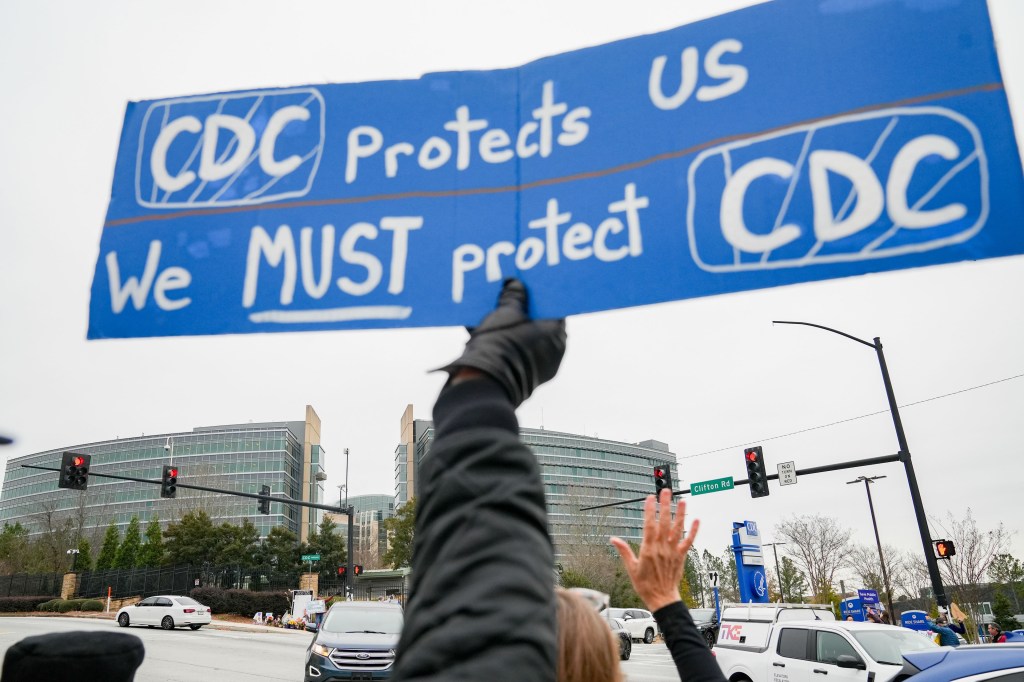
- Demoralized CDC Workforce Reels From Year of Firings, Funding Cuts, and a Shooting
- An Arm and a Leg: Steep Health Care Costs Steer Americans to Tough Decisions
- Qualified Health locks in $125M in fresh funding to scale enterprise AI at health systems
- Misery Loves [Investment] Company?: Remarks at the 2026 Investment Company Institute Investment Management Conference
- Study: Nearly 1 in 5 pediatric hospital deaths involve sepsis
- As expansions come online, CDMO Hovione aims to meet industry's 'dual supply and sourcing' zeal: exec
- Opening Remarks at the Digital Asset Summit 2026
- CVS Caremark, FTC reach settlement in insulin pricing case
- UCB unveils plan to build $2B biologics plant near its US headquarters in Atlanta
- PeaceHealth sued over plans to tap out-of-state staffer ApolloMD for Oregon EDs
- New Lyme Disease Vaccine Shows Strong Results in Trial
- TrumpRx Adds Diabetes, COPD Drugs at Steep Discounts
- Highmark reports $175M net loss for 2025 as financial headwinds batter health plan
- Listen to the Latest ‘KFF Health News Minute’
- Abivax hires commercial chief from Takeda to infuse Entyvio expertise into IBD launch prep
- ImmunityBio hit with FDA warning letter over Anktiva promotions in TV ad, podcast episode
- Alcohol Prep Pads Recalled Over Bacteria Risk, Cardinal Health Says
- Fewer patients traveled for abortions in 2025 as telehealth care increased, report finds
- Cologuard campaign reunites ‘Full House’ stars to give ‘The Talk’ about colon cancer screening
- Lilly to remove certain insulin products from European markets by 2027
- Karyopharm, looking to jump-start Xpovio, reports mixed results in myelofibrosis
- Study Warns Fluoride Bans May Raise Tooth Decay in Children
- WuXi Bio's record number of new projects in 2025 leaned heavily on US clients
- “Me engañaron”: agentes encadenan a un padre que había ido al ICE a reunirse con sus hijos

- Gilead inks Manta pact to dive deeper into cancer patient support
- Cheap Children's Clothing Tainted With Lead, Study Says
- Insulin Prices Fell For Medicare Patients Under Biden-Era Caps, Study Finds
- New Fathers Face Mental Health Challenges, Study Finds
- Your Choice Of Booze Influences Your Risk Of Death, Study Says
- AI Gets a 'D' When Judging Scientific, Medical Claims
- New Online Tool Helps Parkinson's Patients Weigh Brain Implant Decision
- AI chatbot use for health information up 16% from 2024: Rock Health survey
- ‘They Tricked Me’: A Father Was Chained After He Went to ICE To Reunite With His Kids
- Wilmington PharmaTech commits $50M to US API expansion
- Trump administration unveils national policy framework for AI as it moves to override state laws
- Breast Cancer Locator System Submitted for De Novo 510(k) by Cairn Surgical


Sports gambling has exploded since the COVID pandemic, creating addicts who simply cannot stop. Sports betting has been legal in Michigan since 2019, when Governor Whitmer signed the Lawful Sports Betting Act. Sports betting spreads quickly, with both the number of gamblers and their volume of bets increasing every year. Increased sports betting did not reduce other gambling or recreation spending, but has significantly reduced savings and thus increased personal debt. Public health agencies under the aegis of MDHHS are actively promoting gambling treatment, but are being overwhelmed:
https://brownstone.org/articles/the-rise-of-gambling-addiction-another-cost-of-covid/
https://papers.ssrn.com/sol3/papers.cfm?abstract_id=4881086
The Rise of Gambling Addiction: Another Cost of Covid
By Roger Bate | January 16, 2025Will Kansas City win a third Super Bowl in a row? Many US football fans will think so, but how many will bet on it?
Sports gambling skyrocketed during the pandemic and given the revenues for companies like FanDuel and DraftKings, it looks like it’s only accelerated since. But at what cost? Is it all fun or are some people losing their shirts and their families?
Companies like FanDuel and DraftKings offer tempting “matches” so that they will often give a gambler a 25%, 50%, or even 100% match on deposited funds. So with a 50% match, a $1,000 deposit would become $1,500. The only condition is that you bet the total amount before you can withdraw anything. And once you start betting a lot, it’s hard to stop. Experts explain how gambling rewires the brain much like certain drugs.
I’ve met a few very successful gamblers and a key lesson I learned talking to “winners” is “It’s not how often you win, but that when you win you have to win big.”
The middlemen, the bookies, and the FanDuels of the world have the odds stacked in their favor. As I looked at my own gambling, the spread (if you backed both sides to win) is often well over 9% even on big markets like NFL or NBA games, and over 30% on lesser sports such as smaller tennis or golf tournaments. At the Paris Olympics, where recent data were limited since competitors had not faced one another in months or even years, the spreads were over 60%.
Compare this to trading a stock like Apple, where the spread is less than one percent. The large spreads mean bookmakers make a lot of money as long as enough people take both sides of a bet. It’s why gambling companies give people so much money, or boost potential profits on individual bets, because they know that as long as the market is large enough their returns will be significant.
In essence, to win any money at all over time you have to beat random chance by well over 9%, and probably closer to 15%. I never did, which is why I lost thousands of dollars.
Successful professional sports gamblers bet large amounts on specific sports they know very well and only when the odds are favorable. In other words, they are patient, have a plan, and stick to it. Betting smaller amounts regularly on sports where there is a lot of randomness, or where one doesn’t have specialist knowledge, is doomed to failure.
Big Market for Suckers
The market for US online sports gambling was estimated at over $91 billion in 2023, with an annualized growth rate of over ten percent, projected to rise to $245 billion in a decade. Over half the US states ban gambling so as those restrictions likely ease, revenue may rise well above the trend.
Other nations have seen the same growth. On a per capita basis Australia has an even larger market than the US at over $4.5 billion this year. Over a fifth of the population (5.6m) will be gambling online within a few years. Canada may have an even higher number of players per capita.
Infant Market Participants Crave Market Share
Part of the reason companies are so generous with matches, profit boosts, and other gifts is that new markets often have lots of entrants which are whittled down to a handful in more mature markets. FanDuel, DraftKings, BetMGM, Pointsbet, ESPN Bet, Bet365, Fanatics, HardRock Bet, Caesars, BetRivers, BallyBet, and dozens of smaller companies or sport-specific groups are vying for market share. Most will probably not survive, and their client lists will be sold to the highest bidders. None of these companies are consistently profitable yet, so the player incentives will continue until the weaker companies are culled.
Gambling Problems: The Nasty Side of Sports Betting
Most men don’t talk about their failings, especially the stiff-upper-lip sporty types. I casually mentioned to someone I had just played golf with that I lost $100 on a bet on a tennis match while we were golfing. He said his son won $17,000 the night before on a football parlay (several linked bets). Others were amazed by this success since they usually lost. This opened up a broader discussion amongst seven men at the bar; five of whom had gambled within the previous week. These were all middle-class professionals; two ran their own businesses, one was a lawyer, another a physician, and another a banker. While their careers had had volatility most had stable jobs, and all said they bet online because they were bored, and it provided excitement. And it all started during Covid when they were unable to undertake their normal leisure activities. I’m not sure if any would have admitted to massive losses but their tone suggested all lost.
I pushed them and others for more information and got some suggestions of others to talk to who had admitted to a gambling problem. I learned about VIP programs at the big gambling companies, where an online host would be in regular touch to make offers, deposit matches, play to gets (a bit like buy one get one free), and other devices to encourage one to spend more money. One of the gamblers I spoke to had the same host as referred to in this article about a psychiatrist who lost over $400,000 gambling during the pandemic.
On condition of anonymity, he showed me his account. His wife doesn’t know how much he’s lost. He’s 61, semi-retired with an income of about $60,000, a pension he hasn’t drawn down at all, and no debt. So hardly a bankrupt.
Since 2020 he had bet over ten thousand times for a total of $8.65 million, he’d won $8.12 million, which of course meant he’d lost over $518,000. That accounts for “nearly all my additional savings, if I keep gambling I’m going to use my pension up,” he said. He went on, “There were days where I slept only a couple of hours. I bet on baseball and basketball during the day and evening and Asian tennis games, with players I’d never heard of, in the middle of the night. I bet on Eastern European soccer in the early morning, and I even bet on Australian rules football and I don’t know what that is.”
He’d been given over $48,000 in awards and promotions and another $18,857 in other inducements. No wonder he had a VIP host, DraftKings was making about $125,000 a year from him. His were the most startling losses I’ve seen, but at least three other men, all married and over 45, had lost well over $150,000 in the previous two years.
When they lost, they tried to recoup losses by increasing the size of their bets. Chasing losses, as it’s known, rarely works. All had deleted the respective gambling app they had used but then downloaded it again, deleted it, and then downloaded it again. None thought they could win, but one said it “made me feel alive and engaged with the world, but it cost me my marriage.” This gambler, Joe, 48, who runs a garage, had run up debts of over $60,000 and his wife divorced him so “she could keep the house.” None had sought out professional advice to help them quit.
It is easy to blame gambling companies for the sad outcomes of these extreme cases and perhaps companies should be prosecuted if those who have asked to be left alone are hounded to rejoin with gifts. Most companies suggest cooling-off periods and I received texts and emails to encourage me to set gambling limits and where to seek advice (1-800 Gambler in the US).
These companies are in the business of helping suckers like me part with their money. Most of us wouldn’t have started were it not for the catalyst, which was the same for all the other men I interviewed, the Covid lockdowns.
Collateral Global is a group of scientists who have been assessing the costs of Covid. They estimate that it runs to $17 trillion and most of that came from the lockdowns, not the disease. It’s an almost unimaginable amount of money and some of it is due to mental health disasters due to addiction. Yet Collateral Global can’t calculate the emotional cost of broken families and bankruptcies from all sorts of addictions run riot by enforced inactivity.
Different societies will find different partial solutions to the problem of gambling addiction. Western countries are unlikely to ban it outright given the liberal nature of the electorates, and also more cynically given the funding and lobbying pressure from gambling companies to allow the market to remain. Senator Richard Blumenthal, a Democrat from Connecticut, is pushing for restrictions but there is no significant Federal effort so far.
The Australian Government may take some action to prevent “predatory marketing” from its leading gambling company, SportsBet. Although the major Australian sports franchises and the sports betting companies that support them are effectively opposing action so far.
Hopefully, charities and mental health experts can come up with solutions to help those most addicted.
The American Prospect provides a progressive's argument against online sports betting and the social, economic, and mental health havoc which has ensued:
https://prospect.org/2026/02/04/feb-2026-magazine-sports-scourge-online-betting-fanduel-draftkings/
The Scourge of Online Sports Betting
States and leagues must face up to the damage from app-based gambling for the next generation of bettors, most of them young men.
By Gabrielle Gurley - February 4, 2026WASHINGTON – The room checks all the dive-bar boxes: cheap beer and cocktails, big-screen TVs, high-top tables, and one scuzzy restroom. The rain-splattered Liberty Bowl, with Navy battering Cincinnati, is on ESPN and turned up loud, while the rest of the muted screens feature competing teams of sharp-dressed sportscasters.
There’s nothing worth Instagramming here. The low lighting doesn’t set a mood, but it does help you read the large sports boards near the betting windows across from the bar. The multiple screens list the day’s NFL and NBA matchups, along with the spreads, the money lines, the over/unders. If this vibe isn’t working, you can head to the self-service betting kiosks next door.
Mostly solo Black and white men of all ages perch at the bar or one of the high-tops, mostly staring and swiping on their phones. One older Asian man studies what could be betting sheets, with a receipt and his phone splayed around him on his table. A Black middle-aged couple arrives, and the man and woman spread out papers and phones.
Caesars Sportsbook at Capital One Arena is an unremarkable destination in Washington, D.C.’s Chinatown. The venue opened several years ago, proclaiming the arrival of the first “state-of-the-art Vegas-style” sportsbook located in a professional U.S. sports operation. It’s one of the area revitalization projects that Ted Leonsis of Monumental Sports & Entertainment launched after he failed to move his teams, the NBA’s Wizards and NHL’s Capitals, to Virginia.
Going downtown to bet on games might seem redundant; even the Caesars Sportsbook website urges bettors to “get the app.” But a report from the Center for Gambling Studies at Rutgers University’s School of Social Work found that sports bettors who frequent “mixed venues,” in both online and physical locales, have higher rates of developing problem gambling. Yet even in this physical space, the gamblers are online, glued to the bets they’re making.
Smartphones have been the catalyst for an explosion of sports gambling, providing always-open portals to separate people from their money. Two companies, FanDuel and DraftKings, control over 70 percent of this online market, using sophisticated surveillance and marketing techniques to keep people betting, even when losing eats up money for groceries, utilities, rent, or the mortgage. A small but statistically significant number of bettors generate the profits that online sportsbooks haul in.
The Supreme Court unleashed this craze in 2018, ruling in Murphy v. National Collegiate Athletic Association that federal prohibitions against states legalizing sports betting were unconstitutional. Eight years later, 40 states and the District of Columbia have allowed some type of online gambling. The Bureau of Labor Statistics has reported that gambling was the second-highest service-sector industry for GDP growth between 2019 and 2024, behind only software publishing.
Nearly 40 percent of men and 20 percent of women gamble online daily. Two percent of these bettors gamble more than ten hours a day.
According to the American Psychiatric Association, nearly 40 percent of men and 20 percent of women gamble online daily. Two percent of those bettors gamble more than ten hours a day. Sports bettors have wagered over $600 billion since 2018. The National Council on Problem Gambling notes that about 2.5 million Americans “meet the criteria” for a severe problem; five to eight million more have mild to moderate issues.
As the country’s affordability crisis deepens, individuals and entire families can slide into cycles of addiction and debt. Bank of America warned in a November research note that gambling is creating “emerging credit risks” across the economy; an April paper from UCLA and USC found that credit scores in states that have adopted online sports betting are down, and bankruptcy rates and auto loan delinquencies are up. Eight U.S. studies found that 1 in 5 problem gamblers have tried to commit suicide, the highest rate for any addiction disorder.
Most bettors are men. They’ve gotten younger and younger as sports betting companies gamified gambling. Pokémon, the trading card and video game mega-franchise, co-opted slot machine and casino imagery in the 1990s, and technology companies latched on, eager to bring in young gamblers to replace the old heads. Public schools see problems with boys, and sports betting stokes some school officials’ fears of it becoming as ubiquitous as cellphones and as poisonous as social media.
State politicians have largely looked the other way: The attractive tax revenues from the relative handful of bettors reduce the need for broad-based taxes. Conveniently ignored are the profound contradictions between safeguarding the public welfare and the mental health and financial problems gambling can exacerbate. “It’s a system of taxation by exploitation, and it’s been an epic public-policy failure,” says Les Bernal, the national director of Stop Predatory Gambling, a national advocacy group.
Professional sports executives don’t help, wringing their collective hands about the “integrity of the game” while sportsbook ads wallpaper stadiums and arenas, promotions blast during games, and teams seek out television partnerships. These deals end up serving as a dirty-hands backdrop to the inevitable scandals involving players and coaches betting on, it seems, every moment of the game. Many league officials and state lawmakers refuse to accept that this festering integrity crisis cloaks a spreading public-health emergency. But a reckoning is coming.
IN THE UNITED STATES, SPORTS BETTING peaks in the fall, when portions of the baseball, football, hockey, and basketball seasons all dovetail. Many fans still watch sports for love of the game, but the love of money is now a major factor, making the finer points of home-team runners on base with one out in the bottom of the ninth inning of a tie game more interesting for people who usually wouldn’t care.
Online sports bettors are subject to state regulations on college and pro games. Prop bets are wagers on individual or team performances that don’t depend on the game’s outcome. As they watch live games, gamblers can also bet on nearly every aspect of the match. These micro bets aim for a slot machine–like experience, hinging on things like the next home run, pitch, or stolen base. Parlays link multiple wagers together; combining micro bets give the allure of a big win, but rarely pay out.
Bettors can tackle lesser-known or bizarre sports: water polo chessboxing, axe throwing, even pickleball, e-basketball (video game competitions), or table tennis. The last two are too much for Vermont state Rep. Thomas Stevens (D-Waterbury). “It’s frightening that this is available on a phone,” he says.
Stevens has proposed a bill that would end Vermont’s online sports betting, legalized in 2024, and the state lottery, launched in 1978. Three sportsbooks operate in Vermont: DraftKings, FanDuel, and Fanatics. State lawmakers wanted to keep gambling revenues at home, especially since residents tended to drive to casinos to bet (or even parking lots for online gambling) in Canada, New York, New Hampshire, or Massachusetts. “I was hoping to be able to limit the exposure, knowing full well that human nature is built to work around whatever enforcement mechanisms are in place,” Stevens says.
States have options on sportsbooks provider partners; Oregon has just one, DraftKings, while New Jersey allows more than a dozen to operate. Tax rates on sportsbook revenues are 50 percent or higher in Delaware, Oregon, New Hampshire, New York, Illinois, and Rhode Island, but just in the single digits in Iowa, Michigan, and Nevada.
In most states, excise tax revenues are small, comprising less than 10 percent of a state’s budget, and in many cases 5 percent or less. Sin taxes on gambling, alcohol, and marijuana are especially volatile and can often level off or plummet (as in the case of cigarettes) depending on the market or changes in social attitudes. In the sports betting sector, companies could pass their costs on to bettors in the form of higher odds. Such a shift could drive bettors into grayer areas. “If you can get better odds by betting with the bookie down the street, then maybe you’ll do that instead of participating in the legal market,” says Adam Hoffer, director of excise tax policy studies at the Tax Foundation, a Washington think tank.
But the “legal” market isn’t exactly generous to its customers either. DraftKings uses AI to learn which micro bets will entice users. Apps carpet-bomb promotions for “free” money that cannot be redeemed unless bet multiple times. “There’s been plenty of stories over the last couple of years on the people who do sign up [to bet] and are on losing streaks and get emails from DraftKings bots basically saying, ‘Here’s another $1,000!’” Stevens says. “That kind of business model that essentially poisons you if you are so addicted; it is something to me that the state should have no interest in from a public-health perspective.”
Vermont’s sports betting revenue goes into its general fund, a Responsible Gaming Special Fund, and industry regulation. In 2024, Vermont bettors did well enough that tax revenues were under projections at $6 million, still a healthy sum for a small state.
Stevens believes that young men, the targets of all this psychological warfare, think they can handle betting constantly on their phones, but they ignore the ever-present dangers. It’s the same for state officials, who dismiss the negative impact of gambling because it brings in money they wouldn’t be able to get otherwise. Can Vermont decouple itself from these revenues?
“What it really comes down to is we would rather tax, whether it’s by choice or not, with lotteries and gambling,” says Stevens. “That’s the way our culture is, and I don’t see that changing.”
THE PURITANS CONDEMNED GAMBLING. So did the Quakers. But they were outliers in the British colonies. Native American tribes had their own games, and white colonists gambled on horse racing, cockfights, and other forms of entertainment. Lotteries were serious business—they helped finance the American Revolution.
Nevada legalized gambling in 1869, backed off under political pressure in 1909, but reinstated it in 1931, in a bid to stimulate the economy during the Great Depression. Sports betting would follow in 1949, as fan interest in professional baseball and football soared. But outside of Las Vegas, gambling on sports was largely under the table.
State lawmakers elsewhere wanted to rake in the kind of dollars that Nevada did, but Congress stepped in to restrain them in 1992 with the Professional and Amateur Sports Protection Act, prohibiting sports betting from migrating into new locations. New Jersey challenged the law and prevailed when the Supreme Court ruled that Congress had overstepped and interfered with state powers under the Tenth Amendment.
At the same time, the sums that state regulators dedicate to problem gambling vary widely across the country. In Vermont, $250,000 went to the state mental health department for these programs in 2024; that expenditure doubled last year. Massachusetts devotes millions to problem gambling, but tracking spending, raising awareness about treatment options, and finding out who benefits remains a challenge. At least those funds exist: The District of Columbia zeroed out its budget allocation for similar programs through fiscal year 2028; instead, the city plans to pursue a $300,000 study.
Few parents consider that their children could be spending money and time on sports betting. But Tony Cattani has been thinking about it quite a bit. For nearly 20 of his 30 years in education, he has been the principal of Lenape High School, which serves students in Mount Laurel Township, New Jersey. Last July, he was named the 2025-2026 National High School Principal of the Year.
Cattani often hears teenagers talking about point spreads, individual players, over/unders, and prop bets during informal classroom conversations and at lunch. “Kids talk about how they were betting on this one player,” Cattani says. “He made this shot, but it was after the buzzer.” Otherwise, he would have won $50. “You hear kids talking about this at 15 to 17 years old.”
These bets should be illegal. Sports betting apps ban wagers from anyone under the age of 18. But that can be difficult to enforce since many young people can find their way around parental controls and may have bank accounts or credit cards in their names.
Cattani believes that sports betting has the potential to become as big a problem for schools as cellphones, which were banned statewide this year. Adolescents’ brains are not fully developed, so they struggle with constructive decision-making, don’t necessarily understand the consequences of their actions, and focus instead on the perceived reward, he says. “They’re just manipulating it on some account like it’s a video game.”
Get MHF Insights
News and tips for your healthcare freedom.
We never spam you. One-step unsubscribe.
Sponsors
Friends of MHF





Kirsten DeVries
Tom & Karen Nunheimer
Steve Ahonen
Ron & Faith Bosserman
Marlin & Kathy Klumpp
Sign Up for MHF Insights to keep up on the latest in Michigan Health Policy