- How to Limit The Health Risks Posed by Polluted Air

- U.S. States Warm, But Not As Expected
- Rovner Recaps Medicaid Cuts’ Impact on Hospitals and Fields Caller Questions on Affordability

- CMS proposes mandatory hospital-bundled model for joint replacements
- CMS proposes mandatory hospital-bundled model for joint replacements
- CMS proposes mandatory hospital-bundled model for joint replacements
- CMS pitches 2.4% hospital pay bump, mandatory joint replacement model: 7 things to know
- CMS pitches 2.4% hospital pay bump, mandatory joint replacement model: 7 things to know
- Mayo Clinic enhances imaging test with AI
- Christus Health to open Texas multi-specialty clinic
- CMS proposes extension of prior authorization rule to cover drugs: 6 notes
- Penn Medicine, Epic lean into EHR ‘nudges’
- AdventHealth breaks ground on $27M freestanding ER
- Henry Ford hospital strike enters 7th month: 6 notes
- Texas launches rural hospital leadership academy
- Children’s Minnesota staff email account compromised
- UHS’ CEO-to-worker pay ratio over the past 5 years
- 11 things to know about the uninsured population: KFF
- Medicaid’s consistency problem in dentistry
- Dental groups seek $600M+ in FY 2027 federal budget: 5 notes
- Missouri dental school grows student body by 33% to combat dentist shortages
- Prior authorization by the numbers: 10 stats that show the strain
- The Trump Administration Is Seeking Federal Workers’ Sensitive Medical Data. That’s Raising Alarms.

- 5 new university programs tackling behavioral health workforce gaps
- How Mount Sinai is transforming its revenue cycle
- Hospital revenue cycle teams evolve as AI ‘arms race’ heats up
- Texas Children’s gets $5M gift for behavioral health services
- Cardiology malpractice cases by the numbers
- Texas Children’s receives $5M estate gift for behavioral health
- CMS proposes 2.4% hospital pay increase, nationwide mandatory model rollout
- Which physician specialty is most likely to have a salaried paycheck?
- 20+ dental education updates to know from Q1
- Proposed CMS rule would set prior auth deadlines for drugs
- The best orthopedic ASCs in the West: US News
- 4 clinics closing after physician owner sentenced for selling recalled medical devices as new
- How Evernorth's new Delaware specialty pharmacy facility highlights a broader care coordination approach
- The hospitals, health systems cutting jobs in 2026
- VA program deploys 700+ VR ‘mental wellness’ kits
- The cost of private equity firms owning residential SUD facilities: 4 things to know
- 10 highest, lowest-paying physician specialties
- Independent GI practices shrinks as reimbursements fall 38% over a decade
- HHS, after legal setback, updates ACIP charter to put more emphasis on vaccine safety
- HHS, after legal setback, updates ACIP charter to put more emphasis on vaccine safety
- New York system to open $12M outpatient imaging center
- Costco Recalls Cookies Over Missing Nut Allergy Warning
- CDC Pauses Release of COVID Vaccine Effectiveness Study
- Pharma company withdraws FDA application amid White House autism treatment push
- UCI Health reverses layoffs of 7 quality improvement workers
- Endoscopy at scale: The reprocessing best practices separating high-performing teams

- 30 hospitals closing departments or ending services
- Demand Surge Leads to Shortages of Estrogen Patches
- What to know about the fastest-growing DSO
- 4 DSOs making headlines
- Statement Regarding Staff No-Action Letter to Bank of England
- Op-ed: Administrative fragility is costing healthcare more than we think
- Alaska city opens addiction treatment microunit program
- Title X Funding Restored, but New Rules Raise Concerns
- Function Health acquires mobile healthcare platform Getlabs to provide members with at-home lab tests
- The Healthcare Burnout Backlash (pt 3): How Workflow Redesign Is Helping Healthcare Organizations Offset Staffing Shortages
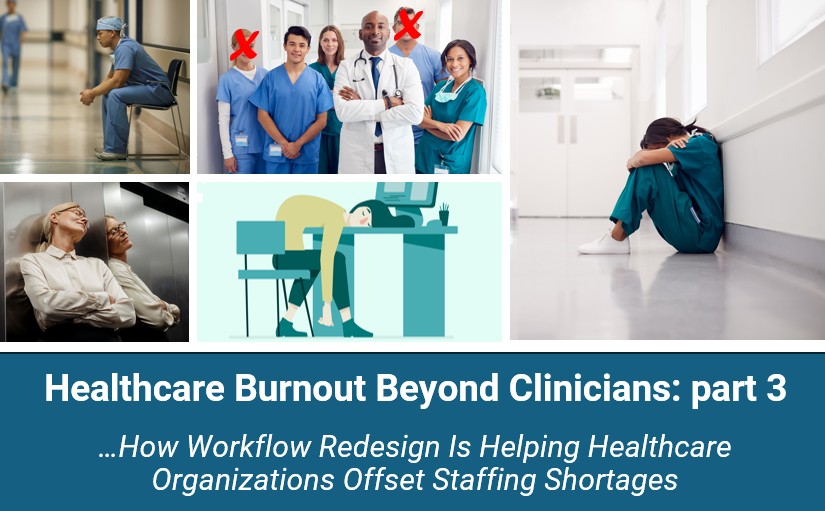
- The Healthcare Burnout Backlash (pt 3): How Workflow Redesign Is Helping Healthcare Organizations Offset Staffing Shortages
- BD Announced Application of CE Mark for the Liverty TIPS Stent Graft

- BD Announced Application of CE Mark for the Liverty TIPS Stent Graft
- Blackstone and TPG Complete Acquisition of Hologic; Names New CEO
- Blackstone and TPG Complete Acquisition of Hologic; Names New CEO
- Endospan Receives FDA Approval for the NEXUS Aortic Arch Stent Graft System
- Endospan Receives FDA Approval for the NEXUS Aortic Arch Stent Graft System
- InVera Medical Receives FDA Clearance for Non-Thermal Chronic Venous Disease Device

- InVera Medical Receives FDA Clearance for Non-Thermal Chronic Venous Disease Device
- Starting material sourcing bottlenecks increase US drug shortage risks: report
- Novartis cuts 114 more jobs at New Jersey HQ as restructuring rolls on
- Charles River flows into Boston to help AHA bridge cardiovascular health divide
- Your Brain Cares If Your Plant-Based Diet Is Unhealthy, Researchers Report
- Your Neighborhood Might Help Make You Old Before Your Time
- Heavy 'Forever Chemical' Exposure Before Birth Increases Childhood Asthma Risk, Study Finds
- High-Tech Magnets Offer New Hope for Veterans Battling Combat PTSD
- Early Diagnosis Key To ADHD Child's Academic Success, Study Finds
- Study Reveals Who Americans Think Should Pay for Elder Care
- Envision hires ConcertAI, IQVIA alum Nick Jones as its med comms president
- The top 10 pharma R&D budgets of 2025
- For Many Patients Leaving the ICU, the Struggle Has Only Just Begun

- Watch: As AI Makes More Health Coverage Decisions, the Risks to Patients Grow

- Bial launches ‘Dialogues with Parkinson’s’ campaign aimed at identifying early symptoms
- Novartis pumps up community health footprint to tackle heart disease and cancer
- Abbott survey finds ‘information overload, confusion and cost’ affecting health choices in US
- FDA accuses Amneal, BioCorRx of producing ‘false and misleading’ drug promos
- North Carolina provider launches mobile opioid treatment unit
- U of Pittsburgh debuts online infant mental health certificate
- Emerging DSO lands Ohio partnership
- Heartland Dental added 5 de novos in March
- Florida International U, medical school land $30M gift for medical center
- Stanford Health, Alameda Health System partner to support California hospital
- The states with the highest, lowest migration rate of dentists since 2019
- What the Health? From KFF Health News: Abortion Pills, the Budget, and RFK Jr.
- Specialty DSO eyes new growth levers after entering several states
- Hospital M&A roars back to life in Q1 2026; Operating performances fray in February
- Epic rolls out health alerts to flag rising rates of illness at the county level
- Fierce Pharma Asia—Takeda-Denali split-up; Merck, Zhifei's revised deal; Shionogi's made-in-US plan
- Brain Scans Reveal How Psychedelics Change Perception
- Benefits leaders report increased operational, financial costs amid 'digital health vendor sprawl': Solera survey
- Vanda initiates study of motion sickness drug Nereus in GLP-1 users
- Judge Allows Abortion Pill, Mifepristone, To Continue Being Mailed for Now
- Bangladesh Measles Outbreak Kills 100+ Kids, Emergency Shots Begin
- Regulatory burdens continue to mount for physician practices
- Medicare navigation company Chapter banks $100M series E funding round
- Hair Growth Product, Tuymec Minoxidil Hair Growth Kits, Recalled Over Child Poisoning Risk
- Garda snaps up Assertio and chemo infection treatment Rolvedon in $125M deal
- AbbVie challenges 'outdated' 340B drug discount program guidance in new lawsuit
- AbbVie challenges 'outdated' 340B drug discount program guidance in new lawsuit
- Eli Lilly launches oral GLP-1 drug across US through Lilly Direct, telehealth providers
- Humana, Noom and Welldoc team up with b.well to expand health data access as part of CMS push
- America's Sexual Health Report Card Contains Some Surprises
- Years of Excess Weight, Not One Bad Checkup, Drive Heart Disease Risk
- There Are No Good Ways To Avoid Childhood Eczema But Many Treatment Options
- More Children, Teens At Risk From E-Scooter Crashes, Study Finds
- This Treatment Can Improve Your Odds Of Surviving C. Diff Infection
- Alzheimer’s Tests May Mask Risks for Women
- RFK Jr. launching health podcast to expose ‘hypocrisy’ and ‘corruption’
- RFK Jr. launching health podcast to expose ‘hypocrisy’ and ‘corruption’
- Advocate Health improves to 4% operating margin, $4.6B bottom line across 2025
- Farm Bureau Health Plans Beat the ACA on Prices With an Age-Old Tactic: Rejecting Sick People

- States Face Another Challenge With Medicaid Work Rules: Staffing Shortages

- Avalyn plans IPO to fund phase 3 trials of inhaled versions of approved respiratory drugs
- Judge rules that HHS must face states' lawsuit over RFK Jr.'s agency overhaul, massive layoffs
- Judge rules that HHS must face states' lawsuit over RFK Jr.'s agency overhaul, massive layoffs
- Consumers' satisfaction with health plan apps improves with familiarity: JD Power
- Nurses' job satisfaction stumbles after post-pandemic gains: survey
- Amazon launches 2 new digital health partnerships for nutrition therapy, sleep care in health conditions program
- Former NFL Star Steve McMichael Diagnosed With CTE After His Death
- Steven Ubl set to depart after more than a decade as CEO of PhRMA
- Nixing prior auth, outlier hospital bills could lower health costs, Center for American Progress' policy plan says
- Shionogi nabs initial $119M award from BARDA to establish US antibiotic plant
- More Drugmakers Join TrumpRx
- Graco Recalls Infant Car Seats Over Structural Issue
- Orlando Health fleshes out Alabama footprint with another acquisition
- US adults still turn to providers for accurate health information even as AI chatbot use grows: Pew survey
- Pfizer walks away from 'underutilized' office space in South San Francisco, transitions employees to remote roles
- Biogen settles investor lawsuit over its messaging on failed Alzheimer's drug Aduhelm
- New Cervix-On-A-Chip May Revolutionize STI Treatment
- Long COVID Linked to Heart Health Risks
- The Flu Vaccine Can Lower Your Risk Of Heart Attack And Stroke — Even If You Wind Up Infected
- Herbal Drug Kava Poses Increasing Health Threat In U.S., CDC Warns
- Preschoolers' Solitary Screen Time Could Mean Behavior Problems, Language Difficulties Later On
- Combo Heat Waves/Droughts Will Affect Billions A Year By 2100, Researchers Project
- Amgen CEO netted $24.7M pay package in ‘25 as company’s upward trajectory continued
- J&J's Tremfya retakes TV drug ad spending crown from AbbVie
- Trump’s Personnel Agency Is Asking for Federal Workers’ Medical Records

- Urgent Care Clinics Move To Fill Abortion Care Gaps in Rural Areas

- FDA Approves First Generic Farxiga (dapagliflozin) Tablets
- Reliance on EHR vendors' tech roadmap slows down AI progress, senior IT leaders say
- ¿Puedo decirle a mi médico que no quiero que use la inteligencia artificial para tomar notas?



"Should Texas be allowed to administer “gender-affirming care” to minors? That’s the question at the heart of Senate Bill 14 / House Bill 1686, which seeks to ban it. Proponents of the controversial practice argue that “legislatures shouldn’t be practicing medicine.” But recent testimony from pro-affirming medical professionals before the Texas legislature suggests the need for just such oversight. Delivering false or misleading testimony about minor surgery, mental health, and the evidence backing gender medicine, opponents of the ban inadvertently proved that it is justified.
Start with the question of whether “gender-affirming” surgeries are performed on minors. Last week, physician Cody Miller Pyke assured Texas state senators that “children under the age of eighteen in this country do not have gender reassignment surgery. There isn’t a single case. . . . The rhetoric of mutilating children with scalpels is just fictitious.” Louis Apel, president of the local chapter of the American Academy of Pediatrics, and Jessica Zwiener, a Houston-based endocrinologist, testified that “surgeries are not part of the standard of care for minors.” Zwiener also insisted that “[n]o one is touching these kids’ genitals. There’s not surgery done on minors.”
These physicians are wrong...."
https://www.city-journal.org/article/making-the-case-for-the-other-side
According to Heritage Action, the number of states proposing such bills is now at 40/+.
Heartlander put out this detailed and well-sourced report back in March. Hot links do not copy well, but are available in the original article.
This coming week the Missouri Senate will again see floor debate on Senate Bill 49, legislation designed to protect children from dangerous cross-sex hormones and experimental surgeries.
Especially following the alarming whistleblower reports coming out of the Washington University Transgender Center at St. Louis Children’s Hospital, this common-sense legislation should be an easy win for Missouri families and lawmakers. Senate Democrats, however, continue to block the bill’s path forward.
While left-wing radicals continue to mischaracterize this legislation, it is first important to understand what this law would do, if enacted.
Titled the “Missouri Save Adolescents from Experimentation (SAFE) Act,” this bill would prohibit physicians or other health care providers from providing “sex transition” procedures to minors. The legislation also provides safeguards for medically verifiable disorders of sex development that require medical attention, an important distinction in this highly-charged political debate.
Children, barely of school age, are being subjected to a questionable diagnosis of gender dysphoria that promotes surgeries and prescriptions for cross-sex hormones that are dangerous, life-altering and permanent. This fad-driven form of medical treatment on children is cruel and oftentimes leads to a lifetime of misery, pain and untreated mental illness.
It is wrong to assume everyone advocating for these surgeries and treatments is “doing it for the children.” In fact, providing pharmaceuticals and surgery for children suffering from gender confusion or dysphoria has become a very profitable industry. The surgeries and cross-sex hormone drugs run into the hundreds of thousands of dollars.
This is designer science, scientifically and clinically unproven, and it is being used to target confused parents and vulnerable children for political purposes and for profit. What is certain, however, is that these children will suffer from lifelong medical dependencies that enrich pharmaceutical and medical service providers with little to show in terms of patient benefit.
In reality, after a so-called “sex reassignment” surgery, girls and boys are nearly 20 times more likely to die from suicide than the general population. Up to 98% of children who struggle with their sex as a boy or a girl come to accept their biological sex by adulthood.
The long-term effects of puberty blockers and cross-sex hormones have not been extensively studied. But it’s already clear they can lead to infertility and other irreversible harmful effects that must be dealt with as children mature.
The Missouri Senate is right to focus on protecting children’s health and safety, especially given the recent revelations of negligence, malfeasance, and coercion that have occurred at the Washington University Transgender Center at St. Louis Children’s Hospital. These so-called “transition services” that amputate or severely alter healthy body parts cause irreversible damage that impacts children for the rest of their lives.
Society does not allow minors to get tattoos, purchase cigarettes or vote in elections – we recognize that minors are not ready to make life-altering decisions. Why should children or coerced parents be permitted to allow these cross-sex hormones and surgeries unquestioningly?
Our children deserve quality care and protection from junk science. Body dysphoria, depression anxiety and the awkwardness of puberty are all real challenges that deserve compassion. But, we should not allow our children to be pushed into experimental surgeries and drugs by radical activist groups and rapacious corporations.
This is not a fringe or controversial position for Missouri legislators or citizens to take. All across the United States, state legislatures and governors are now taking a stand to prevent this horrific abuse of minors. Laws similar to Missouri’s SAFE Act have already passed in Alabama, Arkansas, Mississippi, South Dakota, Tennessee, Texas and Utah, with other states such as Georgia and Indiana sure to follow.
Currently, at least 21 states are considering legislation.
Nationwide, parents are demanding the protection of their children from the predatory behaviors of radical school counselors and agenda-driven medical personnel. Missouri policy leaders must join this fight.
The Senate must allow the “Show Me” state to take the lead, and ensure that S.B. 49 sees whatever floor debate is required and pass it on for consideration by the House. Missouri’s kids deserve nothing less.
And now South Carolina, and a roundup of the issue from the Heritage Foundation.
SC Is Protecting Its Children With “Help Not Harm” Bill. More States Should Follow
Mar 14, 2024 3 min read COMMENTARY BY Sarah Parshall Perry, Senior Legal Fellow, Meese CenterAfter passing a Senate subcommittee just days ago, the bill now heads to the full Senate Medical Affairs Committee for a vote. Lawmakers there must show the courage of their colleagues in the House because the bill is precisely the kind of legislation that America’s children need—and need immediately.
In increasing measure, vulnerable pubescent and pre-pubescent children are being proselytized into a fictional belief that they can be “born in the wrong body.” In fact, so effective have been the influences of social media, peer pressure and pro-trans narratives in this space that UCLA School of Law’s Williams Institute reports that more than 300,000 high school-aged (ages 13-17) children in the United States today identify as “transgender”—making them the largest and fastest-growing share of the overall trans-identified population in the country.
Between 2017 and 2021, the number of children in the United States taking puberty blockers or cross-sex hormones doubled. And double mastectomies performed on adolescent girls increased by nearly 400% during the same period.
These increases aren’t organic. They are a direct result of what appears to be a national social experiment targeting children who are not old enough to vote, get tattoos, buy cigarettes or enter into contracts. The federal government has been working overtime to convince the nation that these experimental procedures are “life-saving care” and that if children don’t have access to these “gender affirming” treatments, they will commit suicide.
But the support for such inflammatory rhetoric simply doesn’t exist. We’re being asked to believe that minor children possess the maturity to make life-altering medical decisions and can fully comprehend the risks of these procedures—those that include everything from incontinence to tissue death to lack of fertility, and worse.
Nothing could be further from the truth.
The increase in a new cohort of the population—de-transitioners—is proof positive of the regretfully life-altering and experimental nature of these kind of “gender affirming” medical interventions. It also demonstrates that children, as easily influenced as they are, must not be used as pawns in a political play that caters to a small but vocal and well-funded minority.
This legislation isn’t hateful or bigoted. It’s a common-sense bill that protects minors when the integrity of their bodies and mental health are on the line. It’s also representative of the widespread and bipartisan support for these kinds of bans, as the majority of Americans oppose “gender affirming care” for minors.
But the tide is turning. Several European countries that once uncritically embraced “gender-affirming care” for minors have already reconsidered or reversed course as the lack of evidence supporting the safety of these procedures and increasing evidence of long-term complications surfaces. The FDA is being sued for allegedly concealing records regarding the off-label use of puberty blockers and cross-sex hormones on minors. Medical malpractice claims against hospital systems that rushed minor children into “gender affirming” surgeries with little to no investigation of the minor’s underlying mental health co-morbidities are on the rise.
Nearly two dozen states have already enacted laws prohibiting “gender-affirming” interventions for minors in most circumstances. Now is the time for South Carolina to join them.
This piece originally appeared in MSN
Yesterday, AAPS (Association of American Physicians and Surgeons) emailed this update:
Building on two recent victories — one in Ohio to protect children from irreversible harm, after we filed a strong amicus brief against transgender procedures on minors, and the second in U.S. Court of Appeals for the 11th Circuit (read our amicus) preventing taxpayer funds from being spent on transgender surgery — AAPS is proud to join a coalition led by the American College of Pediatricians asking the Supreme court of the United States to uphold a Tennessee law blocking transgender operations, and use of related drugs, for children.
Link to Amicus in U.S. vs. Skrmetti: https://aapsonline.org/judicial/amicus-skrmetti-10-18-2024.pdf
Meanwhile, NBC News lays out the legal battleground in Texas.
Texas AG sues doctor accused of providing transgender care to 21 minors
The suit is the first by an attorney general against an individual doctor for allegedly violating a restriction on gender-affirming care for minors.Texas Attorney General Ken Paxton sued a Dallas doctor Thursday accusing her of providing transition-related care to nearly two dozen minors in violation of state law.
Paxton alleged that Dr. May Chi Lau, who specializes in adolescent medicine, provided hormone replacement therapy to 21 minors from October 2023 to August for the purpose of transitioning genders. Texas enacted a law, Senate Bill 14, last year banning hormone replacement therapy and other forms of gender-affirming care for minors.
“Texas passed a law to protect children from these dangerous unscientific medical interventions that have irreversible and damaging effects,” Paxton said in a statement Thursday. “Doctors who continue to provide these harmful ‘gender transition’ drugs and treatments will be prosecuted to the full extent of the law.”
The statement alleged that Lau used "false diagnoses and billing codes" to mask "unlawful prescriptions."
Neither Lau nor her employer, the University of Texas Southwestern Medical Center, immediately replied to requests for comment.
If Lau is found to be in violation of the law, her medical license could be revoked and she could face a financial penalty of hundreds of thousands of dollars.
Paxton’s suit is the first in the country by an attorney general against an individual doctor alleging violation of a restriction on transition-related care for minors.
Texas’ law includes a provision that allows physicians to continue to prescribe puberty blockers and hormone therapy to patients who began treatment before June 1, 2023, in order to wean them off the medications “over a period of time and in a manner that is safe and medically appropriate and that minimizes the risk of complications,” according to Paxton’s suit. Minors are required to have attended at least 12 mental health counseling or psychotherapy sessions for at least six months before they started treatment. It’s unclear whether Lau’s treatment of the minors could fall under that provision.
So far, a few attorneys general, including Paxton, have subpoenaed hospitals and practices that provide such care to minors for those patients’ records. Twenty-six states ban at least some forms of gender-affirming care for minors, according to the Movement Advancement Project, an LGBTQ think tank.
Gov. Greg Abbott signed Texas’ restriction in June 2023, and a court blocked it after families and doctors sued. In September 2023, the Texas Supreme Court allowed the law to take effect pending an appeal from the state, and this June, it vacated and reversed the previous injunction, allowing the law to stand.
The U.S. Supreme Court is expected in its current session to hear oral arguments and rule on whether to strike down a similar law in Tennessee. How the court rules on the Tennessee law is expected to affect similar laws in other states.
The statement from Paxton’s office described gender-affirming care as “experimental, and no scientific evidence supports their supposed benefits.”
Major medical organizations, such as the American Medical Association and the American Academy of Pediatrics, disagree, arguing that transition-related care is an effective and medically necessary way to treat gender dysphoria, which is distress felt by people whose gender identities differ from their genders assigned at birth.
Get MHF Insights
News and tips for your healthcare freedom.
We never spam you. One-step unsubscribe.
Sponsors
Friends of MHF





Kirsten DeVries
Tom & Karen Nunheimer
Steve Ahonen
Ron & Faith Bosserman
Marlin & Kathy Klumpp
Sign Up for MHF Insights to keep up on the latest in Michigan Health Policy