- 5 ASC, MOB deals in California

- The Aspen Group’s 3-year growth recap: 40 moves
- How Confusing Financial Journeys Undermine Revenue and Trust
- If AI ‘adds friction, it fails’: How Mayo Clinic scales technology
- As maternity units close, AdventHealth restores OB care in rural Kansas
- Oklahoma officials warn of new opioid
- The new metrics of healthcare technology ROI: What matters to healthcare leaders
- Hoag to launch transplant center in 2027
- MercyOne hospital to transition labor and delivery services
- MercyOne hospital to transition labor and delivery services
- Southeast metros lead US population growth as national gains slow
- 63 most innovative healthcare companies: Fast Company
- 8 Medicare Advantage numbers to know in 2026
- 8 Medicare Advantage numbers to know in 2026
- How a 6-hospital system installed Epic, Workday months apart
- 17 Senate Dems push back on 2027 ACA proposal
- 17 Senate Dems push back on 2027 ACA proposal
- Providence hospital closes inpatient pediatric unit
- Michigan finalizes Medicaid mental health assessment policy changes
- 10 financial notes on USPI’s growth over the past 3 years
- 15 new orthopedic practice, center openings in Q1
- The oral surgery technological revolution
- From Anxiety to Action: How Ambulatory Leaders Are Rebuilding Margins in 2026
- Where GI training may fall short
- What it took to become the world’s first ASC to offer Stryker’s robotic knee tech
- Medtronic’s win in spinal cord stimulator lawsuit upheld
- How the Trump Administration Uses Migrant Kids To Find and Detain Family Members

- Heartland Dental’s 3-year growth recap: 30+ moves
- Cencora’s $10B+ physician acquisition spree: A breakdown
- Tennessee physician practice acquired
- The FTC is coming for healthcare consolidation: 10 things physicians need to know
- Adventist Health sees momentum from insourcing revenue cycle operations
- Unlicensed dentistry cases, DSO deals, legislation & more: 10 dentistry updates in Virginia
- Missouri system debuts mobile behavioral health unit
- Yale researchers study GLP-1’s potential for SUD
- Texas dental school receives $6.5M to expand pediatric dental, medical programs
- North Carolina autism provider to expand therapy access
- $3M Verdict Links Social Media to Anxiety and Depression
- West Virginia hospital to end OB delivery services
- 6 DSOs making headlines
- California hospital’s finances improve, cash position remains ‘dire’
- 1 in 5 metro markets face inpatient monopoly: 7 notes
- Minnesota system faces uncertainty amid Medicare delays
- Ohio county approves behavioral health crisis center plan
- The White House Delays CDC Pick
- New COVID 'Cicada' Variant Is Spreading — What Experts Want You To Know
- Op-ed: Empathy meets efficiency—how the responsible use of AI can transform Medicare
- Family Caregivers Provide $1 Trillion In Annual Labor, AARP Says
- ‘Health Doesn’t Need to Be Ludacris’: Bayer signs rapper-actor to multivitamin campaign
- Rocket plots measured trajectory for new gene therapy Kresladi after clearance to launch from FDA
- Healthy Lab Results May Mask Future Risks for Kids with Obesity
- At-Home Chemotherapy Is Safe, Feasible, Pilot Study Indicates
- What You Do While Sitting Could Predict Dementia Risk
- New Cholesterol Guidelines: What Patients and Caregivers Need to Know
- Want A Bootlicking Yes Man? Ask An AI Chatbot For Advice, Study Warns
- Specially Coated Implants Better For Breast Cancer Patients, Study Finds
- Trump Team Claims Successes Against ACA Fraud While Pushing for More Controls
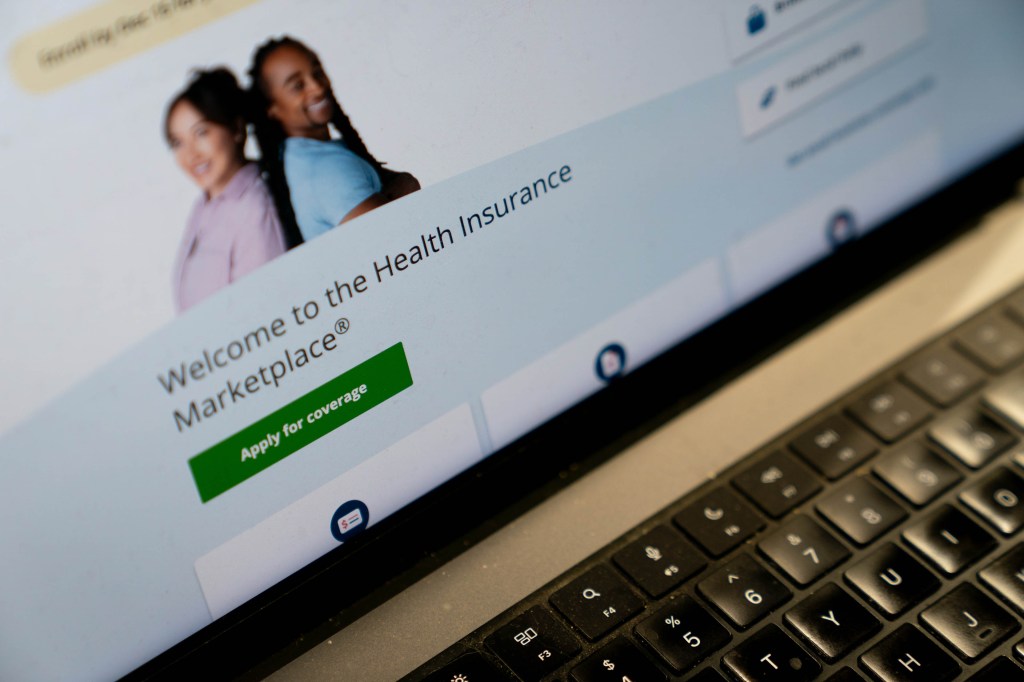
- Give and Take: Federal Rural Health Funding Could Trigger Service Cuts

- Fierce Pharma Asia—Takeda’s $1.3B reorg; India’s GLP-1 floodgates; Gilead’s $2.2B buy of a China NewCo
- Where are you with EUDAMED?

- Where are you with EUDAMED?
- HL7 Launches Real‑Time Medical Device Interoperability Accelerator
- HL7 Launches Real‑Time Medical Device Interoperability Accelerator
- Two GA Tech ATDC Startups — Nephrodite and OrthoPreserve — Secure FDA Breakthrough Device Designation
- Two GA Tech ATDC Startups — Nephrodite and OrthoPreserve — Secure FDA Breakthrough Device Designation
- Artificial Intelligence: ROI, not Clinical Autonomy, Leads Operational Workflows
- Artificial Intelligence: ROI, not Clinical Autonomy, Leads Operational Workflows
- Medtronic and Merit Medical Systems distribution agreement for new, ViaVerte basivertebral nerve ablation system
- Medtronic and Merit Medical Systems distribution agreement for new, ViaVerte basivertebral nerve ablation system
- Breakthrough Device Designation for Noah Labs Vox Heart Failure Detection Device
- Breakthrough Device Designation for Noah Labs Vox Heart Failure Detection Device
- Why private practice dentistry needs a better model
- CareQuest Innovation Partners, Kno2 collab on medical-dental data integration
- Nonprofit highlights rural opioid care strategies
- Vitana Pediatric & Orthodontic Partners adds Florida practice
- What the Health? From KFF Health News: A Headless CDC
- Rhode Island oral surgeon launches Congressional campaign
- 20 behavioral health leaders challenge industry assumptions
- Recordati confirms it's weighing CVC Capital buyout offer of $12.6B
- 3 California behavioral health centers to close amid funding shifts
- Indiana bars autism therapy provider from Medicaid billing: Wall Street Journal
- UnitedHealth shareholder sues over proposal to include details on integration in annual proxy
- SCAN taps biopharma, CMS vet Aman Bhandari as its first chief AI officer
- Infosys to acquire Optimum Healthcare IT in $465M deal
- DOJ alleges NewYork-Presbyterian forces payers into anticompetitive 'all-or-nothing' contracts
- FDA Warns Biotech Firm Over Cancer Drug Anktiva Claims
- Bees and Hummingbirds May Be Consuming Small Amounts of Alcohol
- Two States Sue Cord Blood Company Over Misleading Claims
- New WHO Guidance Aims To Speed Tuberculosis Testing
- As questions swirl around ATTR competition, Alnylam plots path to market leadership for Amvuttra
- Trump admin delays nomination for new CDC director past deadline
- Outspoken ACIP member steps down amid vaccine panel uncertainty: reports
- Egg-based drugmaker Neion Bio emerges from stealth to cook up multi-product biosimilar collab
- Genentech walks the walk in lupus as sponsor of annual awareness and fundraising event
- Study Reveals How Many Americans Consider Using a Gun
- Massive Study Finds Stress and Grief Don’t Cause Cancer
- Ultra-Processed Foods Harm Fertility In Both Men And Women, Studies Reveal
- Small Daily Habits Can Add Up To Better Heart Health
- Ritalin Might Protect ADHD Kids' Long-Term Mental Health, Study Finds
- Can You Drink Enough Fluids To Prevent Kidney Stones? Maybe Not, New Study Says
- Clasp, loan-linked hiring tool for employers, clinches $20M to expand amid federal loan caps
- Taking a GLP-1? Doctors Say Not To Forget About Movement and Mental Health

- OpenEvidence rolls out AI medical coding feature
- CDC’s Acting Chief Promises a Return to Stability in a Tumultuous Moment
- Remarks at the Financial Stability Oversight Council Meeting
- RWJF: Between 5M and 10M people could lose Medicaid coverage in 2028 under work requirements
- New therapy animal program aims to support 100K patients, providers
- Pulse check on Lilly's GLP-1 fortunes
- Gen Z nurses prioritize schedule flexibility, need more manager interactions to avoid turnover
- How pharma marketers can capitalize on HCPs’ AI, social media and streaming habits
- Federal Officials Investigate States That Require Abortion Coverage
- Corcept's lead drug bounces back from FDA snub with different approval as Lifyorli in ovarian cancer
- Ionis slashes Tryngolza's price tag by 93% ahead of anticipated label expansion
- FDA approves Denali's Hunter syndrome drug, handing rare disease community a win
- Baby Walkers Sold on Amazon Recalled Over Fall Risk
- Want To Protect Your Brain? Science Says Exercise
- HelloFresh Pizza Recall Issued in 10 States Over Metal Risk
- Clinical Trials Have Too Much Data…That’s the Problem.

- Clinical Trials Have Too Much Data…That’s the Problem.
- CMS reveals new Medicaid model that supports coordination for children with complex needs
- Novartis sued by breast cancer patient over branded drug websites’ data-sharing practices
- Takeda targets $1.3B in cost savings in further restructuring
- Biogen pays $20M upfront to tap into Alteogen's subQ delivery tech
- 'Universal Donor' Blood Supplies Dangerously Low, Study Warns
- Why Stepping Outside May Help You Eat Better
- U.S. Medicine, Science Facing An Online Misinformation Siege, Poll Concludes
- Childhood Obesity Undercuts The American Dream For Some, Study Says
- Inclusive High Schools Benefit All Students, Not Just LGBTQ Teens
- Parental Loss Due to Drugs, Violence Raises Child Death Risk by 2,000%
- As Boehringer touts US launches, board chairman worries EU is 'falling further behind'
- The evolving state of exome and genome sequencing
- Demoralized CDC Workforce Reels From Year of Firings, Funding Cuts, and a Shooting

- An Arm and a Leg: Steep Health Care Costs Steer Americans to Tough Decisions

- Qualified Health locks in $125M in fresh funding to scale enterprise AI at health systems
- Misery Loves [Investment] Company?: Remarks at the 2026 Investment Company Institute Investment Management Conference
- Study: Nearly 1 in 5 pediatric hospital deaths involve sepsis
- As expansions come online, CDMO Hovione aims to meet industry's 'dual supply and sourcing' zeal: exec
- Opening Remarks at the Digital Asset Summit 2026
- CVS Caremark, FTC reach settlement in insulin pricing case
- UCB unveils plan to build $2B biologics plant near its US headquarters in Atlanta
- PeaceHealth sued over plans to tap out-of-state staffer ApolloMD for Oregon EDs
- New Lyme Disease Vaccine Shows Strong Results in Trial
- TrumpRx Adds Diabetes, COPD Drugs at Steep Discounts
- Highmark reports $175M net loss for 2025 as financial headwinds batter health plan
- Listen to the Latest ‘KFF Health News Minute’

- Abivax hires commercial chief from Takeda to infuse Entyvio expertise into IBD launch prep
- ImmunityBio hit with FDA warning letter over Anktiva promotions in TV ad, podcast episode
- Alcohol Prep Pads Recalled Over Bacteria Risk, Cardinal Health Says
- Fewer patients traveled for abortions in 2025 as telehealth care increased, report finds
- Cologuard campaign reunites ‘Full House’ stars to give ‘The Talk’ about colon cancer screening


Obamacare dramatically changed the financing and control of health care, and thus the remuneration of physicians. Doctors are now deeply engaged in politics to increase their remuneration and dictate medical policies which affect their practices. This article holds COVID-19 responsible for the new level of physician political activism, but that is not true. It is all about the Benjamins and the BMWs::
https://www.politico.com/news/2024/09/21/doctors-harris-support-public-health-00179165
Doctors ‘fight like hell’ against a second Trump admin: ‘Elections do matter for your health’
Some see the politicking as a moral obligation, but others see a threat to the doctor-patient relationship.
By Daniel Payne - September 21, 2024Doctors are giving nearly twice as much to Democrats as Republicans this cycle, teaming with Kamala Harris’ campaign and broadcasting the hazards they see in a second Trump administration on social media.
Some of their colleagues worry all the politicking will further erode trust in public health, but the Harris supporters say they see it as a moral obligation.
“Elections do matter for your health,” Dr. Suhas Gondi, an internal medicine resident at Brigham and Women’s Hospital in Boston who’s involved with the organizing, told POLITICO. “It’s hard for me to not be engaged in politics.”
Doctors’ strong support for Harris is the culmination of a political shift that started with the battles over patients’ rights and HMOs in the early 2000s and gained speed with Donald Trump’s 2016 run — which drove educated professionals into the Democratic Party.
Until then, physicians, as individuals and the organizations representing them, gave more to GOP candidates in every election cycle since the 1990s, save 2008.
Doctors skeptical of their colleagues’ public display of partisanship say they’re worried about how it’s playing in the exam room and what it means for their profession as another aspect of American life succumbs to polarization. They see conservative patients losing faith in their doctors — and a threat to public health, exemplified in everything from missed vaccinations to forgone cancer screenings.
They’re making the case that it would be better for their colleagues to keep their views closer to their white coats. “What matters in the clinic is that I build a rapport with the patient, learn their problem and preferences and find a therapy that fits with their preferences,” Dr. John Mandrola, a Kentucky cardiologist wrote on his Substack site last month. “You can’t do that if they don’t trust you. Or if they view you as a biased partisan.”
The day before, Mandrola’s post on X calling on doctors “to stay apolitical in the public sphere” had prompted a backlash from physicians who disagreed.
They said the stakes of the election are too high to worry about how their advocacy plays with the MAGA faithful. Pushing for science-based policies and freedom to practice medicine as they see fit is more important, many doctors said, than trying to be apolitical.
Harris is urging her physician supporters on, encouraging doctors to take advantage of their role as trusted messengers. Nearly 1,600 people signed up for a recent call for Health Care Providers for Harris, hosted by her campaign, which raised more than $100,000.
The skeptics note that the trust Harris is banking on isn’t what it used to be. A survey published in July found trust in doctors and hospitals dropped from more than 70 percent at the pandemic’s outset to just above 40 percent — with declines in every sociodemographic group.
Nonetheless, doctors who have long felt compelled to advocate on progressive policy issues appreciate the new allies.
“American medicine has changed profoundly,” said Dr. Ed Weisbart, national board secretary of Physicians for a National Health Program, which advocates for a single-payer health care system. He said doctors are “starting to realize that their advocacy for their patients doesn’t end within the exam room but actually has to go into broader political work.”
Democrats see an opening to keep that trend going: appealing to doctors’ sense of responsibility for their patients.
“You put that love for your patient into action by advocating for them day-in and day-out,” California Democratic Rep. Raul Ruiz, a doctor himself, said on the call with Health Care Providers for Harris. “That is the type of dedication and effort that Kamala Harris will have for the American people and the type of energy that we need — to go fight like hell to make her the next president.”
Shifting left
Covid-19 was a turning point for many doctors.
The Trump administration’s response, which many saw as focused more on politics than public health, prompted more of them to speak out.
As the 2020 election approached, a glut of campaign contributions to Democrats followed, the most individual contributions from doctors in history, according to OpenSecrets, a group that tracks money in politics.
Doctors donated nearly $129 million to Democrats and $62 million to Republicans (compared with $46 million and $33 million in the 2016 cycle, respectively).
Two years later, the Supreme Court overturned Roe v. Wade, ending federal protections for abortion. That has allowed states across the country to limit what reproductive health professionals are allowed to do for patients, causing some to move.
It was another driver of political activism, doctors said.
“We need to ensure that Democrats are elected up and down the ballot,” Dr. Anna Igler, an obstetrician-gynecologist in Wisconsin, said on the Health Care Providers for Harris call. “Our message should be clear: Reproductive rights and access are all on the line. The stakes in this election could not be higher.”
The battle over gender-affirming care, in which many Republican-led states have restricted treatments despite the recommendations of major medical associations, has had a similar galvanizing effect.
Republicans still have plenty of physician supporters, of course, including opponents of abortion and gender-affirming care. And several GOP doctors serve in the House and Senate.
Rep. Greg Murphy (R-N.C.), a urologist and co-chair of the GOP Doctors Caucus in the House, said fellow physicians “must be careful not to undermine the integrity of our profession by infusing politics into the sacrosanct doctor-patient relationship.”
And the Trump campaign fired back at doctors who’ve signed on with the Harris campaign.
“The only candidate who ‘serves as a threat to public health’ is Kamala Harris,” Karoline Leavitt, the Trump campaign’s national press secretary said in an email asking about the charge Harris-supporting doctors are making.
Leavitt cited Harris’ support for abortion rights and “economic policies that have increased healthcare costs for struggling American families” as examples of the threat she poses.
‘You’re either with us or you’re not’
There’s ample evidence that doctors, as with other highly educated professionals, have shifted toward the Democrats. A Pew Research Center report in April found that 61 percent of voters with a postgraduate degree now favor Democrats.
Most doctors POLITICO spoke with agreed that they shouldn’t espouse their political views inside exam rooms. But some believe they have a responsibility to publicly oppose restrictions on their ability to practice as well as policies they think harm patients.
“Trust is something that creates an enormous responsibility but also lends some political power and power that I’m pleased we’re trying to start using,” said Gondi, the internal medicine resident in Boston.
Some doctors disagree because they think engaging in politics poses a high risk of alienating patients and eroding trust in medical expertise — without much upside.
“It’s better for patients if doctors keep their political views to themselves,” Dr. Mary Braun Bates, an internist in New Hampshire who sees mostly older patients, said.
Even her views on health policies such as abortion legislation, for example, are “irrelevant for whether or not I can treat heart failure.”
Bates has seen the effects of patients’ political sensitivities firsthand.
After mentioning she had spoken to the governor of New Hampshire, who had visited her clinic, a patient said: “That’s not my governor.”
“That was the last time that patient saw me,” Bates said.
Other patients have become angry with her when she suggested, particularly after Trump won the presidency in 2016, that patients engage less with the news to lower their rising blood pressure.
Other doctors see a middle ground. Dr. Adam Cifu, an internist in Chicago, said he thinks it’s reasonable that physicians speak out when they have specialized knowledge, or on matters directly related to their practices.
But he acknowledged the risk even those comments can bring to the doctor-patient relationship, which he considers his “greatest responsibility.” And he suggested it could have implications for trust in the health system broadly.
“I think that physicians take for granted, a little bit, the respect that we’re still held in,” Cifu said. “That’s on shakier and shakier ground. And with how polarized the country is, almost anything you say can be held against you by half the people you see.”
Cifu acknowledged that many of his colleagues have a different calculus — one that’s playing out inside the groups that represent them.
The American Medical Association, once the conservative voice of the country club physician and still the nation’s leading doctors’ group, called this year for peace in Palestine and Israel. Its members also voted to call for drug use to be decriminalized, and to end the death penalty.
In a statement, a spokesperson for the group said that “physicians — like any group of Americans — span the ideological spectrum,” adding that the AMA works with both parties to achieve bipartisan solutions to problems facing doctors and patients.
The votes on Palestine and Israel, drug use and the death penalty came after months of planning by a growing, diverse group of mostly young doctors coordinating across AMA factions to make the organization more progressive.
“This is where our AMA is going,” said Dr. Luis Seija, advocacy committee chair of the group’s Minority Affairs Section. “We are committed to doing what’s right. You’re either with us or you’re not.”

A Michigan physician and UM grad has history in this lobby, displaying full leftist credentials advocating for Obamacare, COVID vaccines, and so-called "healthcare equity."
These docs aren't kidding about Michigan races, either.
Michigan Advance breaks this story.
Healthcare providers launch $550,000 ad buy targeting Republican state representatives
The Committee to Protect Health Care, a national collective of doctors, healthcare professionals and health advocates announced a $550,000 ad campaign in Michigan on Tuesday, while targeting 12 seats in the Michigan House of Representatives.
Alongside the ad campaign the committee will mobilize health care communicators across the state for press availability, local organizing, forums and events in support of Democratic candidates for state House.
Of its 12 targeted districts the committee has vowed to put the bulk of its resources into unseating State Reps. Mark Tisdel (R-Rochester Hills), Donni Steele (R-Orion Twp.), Tom Kuhn (R-Troy) and Kathy Schmaltz (R-Jackson).
Additionally the committee released its list of endorsements selecting candidates based on their support for a prescription drug affordability board and other approaches to reduce the cost prescription drugs, support for efforts to address anti-competitive practices in health care and reduce costs for patients, support for a Paid Family and Medical Leave policy and efforts to ensure decisions on reproductive health care remain between patients and their medical providers.
The committee endorsed 57 Democrats in House races across the state including 39 of the 56 Democratic members currently serving.
“Michigan’s leaders have taken huge steps in the past two years to make health care more accessible and affordable, but too many Michiganders are still struggling to afford their prescription drugs and hospital bills,” Dr. Farhan Bhatti, family physician in Lansing and the Michigan State Lead for Committee to Protect Health Care said in a statement.
“Too many are unable to take paid time off work to care for themselves or their families. These endorsed candidates will help ensure more Michiganders can access the prescription drugs, time off, and other health care they need to live and thrive, and will ensure our reproductive health and freedom remain protected,” Bhatti said.
Kyle Davidson covers state government alongside health care, business and the environment. A graduate of Michigan State University, Kyle studied journalism and political science. He previously covered community events, breaking news, state policy and the environment for outlets including the Lansing State Journal, the Detroit Free Press and Capital News Service.
Michigan Advance is part of States Newsroom, the nation’s largest state-focused nonprofit news organization.
Get MHF Insights
News and tips for your healthcare freedom.
We never spam you. One-step unsubscribe.
Sponsors
Friends of MHF




Kirsten DeVries
Tom & Karen Nunheimer
Steve Ahonen
Ron & Faith Bosserman
Marlin & Kathy Klumpp
Sign Up for MHF Insights to keep up on the latest in Michigan Health Policy