






Michigan healthcare freedom community forum

The Washtenaw County Health Project is a health care guidance operation which "listens, offers guidance, and does everything we can to help." They don't actually provide health care, rather they guide people to and through health care:
Many clients we help are eligible for different programs, and it can be overwhelming. We’ll listen to your unique situation, answer questions, and help identify the best option. We can help you apply for and enroll in the best healthcare plan for you.
We are also amazing problem solvers and can advocate for you with the Michigan Department of Health and Human Services (MDHHS) and the Marketplace, as well as with hospital billing or doctor’s offices.
We have in-person assistance available in English, Spanish, French, and Arabic, and translation services are available in most other languages.
Some unspecified provision of the OBBBA has apparently reduced their funding:
Washtenaw County health care aid program could close after Trump administration cuts
By Sam Jane | January 25, 2026
After cuts under President Donald Trump’s administration to Medicaid and Medicare, the Washtenaw County Health Project faces a potential shutdown unless it secures $2 million to $4 million within the next six months.WASHTENAW COUNTY, MI - The Washtenaw County Health Project helps about 8,000 uninsured residents obtain health insurance and access medical care each year.
But after cuts under President Donald Trump’s administration to Medicaid and Medicare, the project faces a potential shutdown unless it secures $2 to $4 million within the next six months.
“At this point, I don’t know where (the money) will come from,” Executive Director Jeremy Lapedis said.
In 2024, the nonprofit organization reported that more than one of three county residents struggled to have enough money to meet basic needs like health care, food and housing.
But Trump’s “One Big Beautiful Bill,” signed into law in July, reduces federal spending on health care and food assistance by more than $1 trillion over a decade and impacts Medicaid and Medicare, two of the largest health care providers for low-income and elderly Americans. This has left the Washtenaw County program’s future at risk.
Lapedis said more than 15,000 county residents will potentially become uninsured within the coming months, and the Health Project does not have the means to support any more coverage.
The organization currently faces a financial deficit of $1.2 million. It will need the additional $2-4 million annually to continue the program.
Currently, the project receives funding from four major sources. Washtenaw County provides $850,000 annually from its general funding, which includes taxpayer money. The county contributed an additional one-time payment of $450,000 this year. Trinity Health and Michigan Medicine also partner with the organization, along with one anonymous donor who provides a few hundred thousand dollars out-of-pocket annually to cover residents’ medical expenses.
A Washtenaw County Health Department spokesperson said while the department works closely with the Health Project, they don’t provide the organization with any funding.
The nonprofit helps county and Southeast Michigan low-income residents establish a health care plan. Of the residents the project serves, around 3,500 are on the Washtenaw Health Plan, which provides doctor and clinical visits, outpatient labs and x-rays and emergency room visits. That coverage is available to low-income people living in Washtenaw County who are not eligible for any other health insurance and whose income level is 217% below the poverty line, $33,961 and $11,935 per additional person.
Lapedis approached county officials after Trump’s cuts to discuss a path forward, requesting additional county funding while also exploring other sources of financial support.
“We’re going to need some sort of large source of funding that is likely either county funding, or state funding,” Lapedis said.
Katie Scott, chair of the County Commission, is confident Lapedis and the county can find a path to viability.
“One of my priorities on the board of commissioners, and as chair, is to make sure people continue to have healthcare access,” said Scott, a Democrat representing District 9.
Scott told MLive that while the county won’t be able to make up for all the project’s financial shortfalls, she’s hopeful the board will prioritize its future. The commissioners are set to meet at a retreat in February, when they will discuss financial prioritizations and the Health Project’s fate.
The commissioner said a new tax has not yet been discussed. She said she is hopeful state and federal funding could be directed to the organization, though she is unsure whether that support will materialize. Washtenaw County residents have consistently paid taxes for various public services in the past.
“I know people have millage fatigue,” Scott said. “But I also think about what’s happened in this county when millages are put up about services, it seems like people put these values into action... I think people understand that millages for services are a necessary thing.”
She expects the board of commissioners to have a clearer plan of action within the next three months.
“I am hoping that we’re going to come out of that retreat and we’re going to have this renewed commitment to the Washtenaw Health Project,” Scott said.

<cough>navigators<cough>
Obamacare Navigators are glorified salesmen -sorry, salespersons. OBBBA appropriately eliminated funding for them.

The Washtenaw County Health Project does not provide direct medical care. It helps people understand options, apply for coverage, and navigate systems like MDHHS, the Marketplace, hospitals, and billing offices. The program serves about 8,000 uninsured residents each year and offers assistance in several languages to guide them through complex enrollment and access issues.
Funding cuts tied to recent federal spending changes have put the program at risk, leaving it with a deficit and needing several million dollars to continue operating. Local leaders are now looking for county, state, or other funding sources to keep it alive, since thousands of residents could lose help accessing insurance and care if it closes.
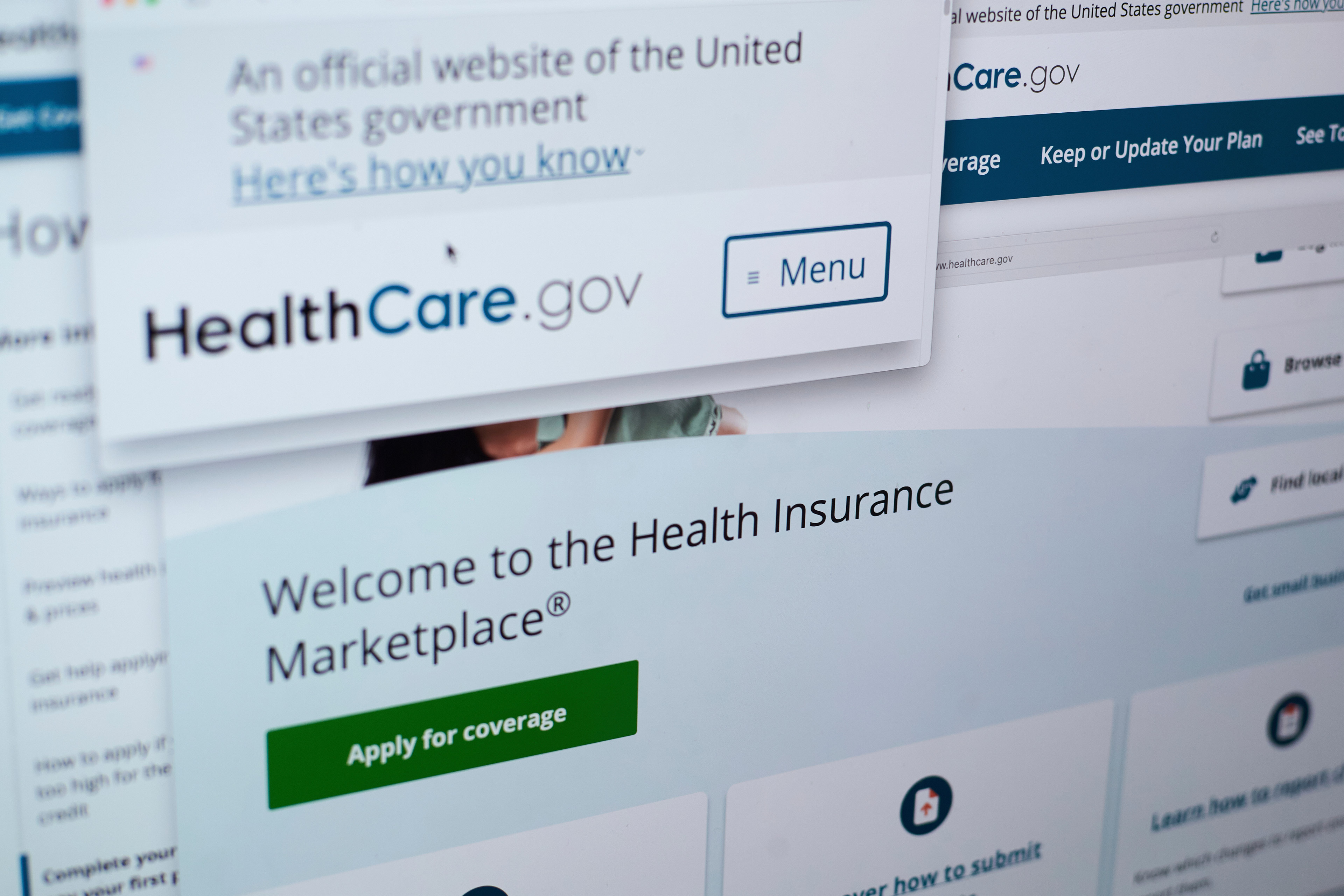
One of the major issues which divides people over PPACA is the the existence of 12 million phantom ObamaCare enrollees: subsidized insurance recipients who never use their insurance. This appears to be a medical fraud benefiting the insurance companies providing ObamaCare policies and has been ascribed to unscrupulous insurance agents, but the role of "health care navigators" also deserves scrutiny.
These two scammers just got sentenced yesterday to 20 years each in the crowbar hotel and ordered to pay $ 180 million in restitution for a $ 233 million phantom enrollee scam. "Insurance Brokerage" should be read as "insurance company". "Marketing Company" can be "insurance navigators" targeting low income people desperate for health care.
These medical frauds add up to unaffordable health care for the American populace at large:
President of Insurance Brokerage Firm and CEO of Marketing Company Convicted in $233M Affordable Care Act Enrollment Fraud Scheme
DoJ Office of Public Affairs Press Release, November 17, 2025
For Immediate ReleaseA federal jury in West Palm Beach, Florida, convicted a President of an insurance brokerage firm and a CEO of a marketing company today for their roles in a years-long scheme to submit fraudulent enrollments to fully subsidized Affordable Care Act (ACA) insurance plans in order to obtain millions of dollars in commission payments from insurance companies.
According to court documents and evidence presented at trial, Cory Lloyd, 46, of Stuart, Florida, and Steven Strong, 42, of Mansfield, Texas, engaged in an extensive fraud scheme that sought over $233 million in fraudulent ACA plan subsidies for which the federal government paid at least $180 million. ACA plans offer tax credits to eligible enrollees. These tax credits, or “subsidies,” are paid by the federal government directly to insurance companies in the form of a payment toward the applicable monthly premium. Evidence presented at trial showed that Lloyd and Strong conspired to enroll consumers in ACA plans that were fully subsidized by the federal government by submitting false and fraudulent applications for individuals whose income did not meet the minimum requirements to be eligible for the subsidies. Lloyd received commission and other payments from an insurance company in exchange for enrolling consumers in the ACA plans. In turn, Lloyd paid commissions to Strong in exchange for consumer referrals.
“The defendants exploited a health care safety net designed for working families to carry out a $233 million scheme to defraud taxpayers,” said Acting Assistant Attorney General Matthew R. Galeotti of the Justice Department’s Criminal Division. “The defendants’ scheme targeted vulnerable people, including those suffering financial hardship, drug addictions and mental health disorders, to line their own pockets. Today’s guilty verdicts demonstrate that the Criminal Division seeks to protect all of our citizens and will continue to hold accountable criminals who steal taxpayer dollars and endanger the health and safety of our communities.”
“Health care fraud is nothing new to South Florida as many scammers see this as a way to earn easy, though illegal, money,” said Special Agent in Charge Brett Skiles of the FBI Miami Field Office. “What is disturbing about this investigation is that the subjects deliberately targeted the most vulnerable — low-income citizens experiencing homelessness, unemployment and even mental health and substance abuse issues. All to line their own pockets with ill-gotten gains. The investigators who unraveled this scam are to be commended for their diligence and commitment. The FBI and our partners will continue to pursue those individuals who defraud our health care system at the expense of taxpayers.”
“The ACA marketplace is not a playground for fraudsters,” said Deputy Inspector General for Investigations Christian J. Schrank of the U.S. Department of Health and Human Services, Office of Inspector General (HHS-OIG). “This $230 million dollar subsidies scheme was built on deception, targeting vulnerable individuals and manipulating the system for personal gain. HHS-OIG will continue to relentlessly pursue those who exploit enrollees and undermine public trust, using every tool at our disposal to prevent health care fraud.”
“This was not just a financial crime — it was a moral failure,” said Special Agent in Charge Ronald A. Loecker of the IRS Criminal Investigation (IRS-CI) Florida Field Office. “Cory Lloyd and Steven Strong deliberately targeted the homeless and mentally ill to enrich themselves, which is unconscionable. IRS-CI will continue to work with our law enforcement partners to ensure that those who exploit others and defraud the government face justice.”
As proven at trial, Lloyd and Strong targeted vulnerable, low-income individuals experiencing homelessness, unemployment, and mental health and substance abuse disorders, and, through “street marketers” working on their behalf, sometimes offered bribes to induce those individuals to enroll in subsidized ACA plans. Marketers working for Strong’s company coached consumers on how to respond to application questions to maximize the subsidy amount and provided addresses and social security numbers that did not match the consumers purportedly applying. As a result of being enrolled in subsidized ACA plans for which they did not qualify, some of these consumers experienced serious disruptions in their medical care and often lost their prior insurance coverage under Medicaid or other programs.
The evidence at trial further showed that Lloyd and Strong engaged in the scheme to maximize the commission payments they received from insurers, resulting in their companies’ receiving millions of dollars in commissions. Lloyd and Strong used misleading sales scripts and other deceptive sales techniques to convince consumers to state that they would attempt to earn the minimum income necessary to qualify for a subsidized ACA plan, even when the consumer initially stated to insurance agents that they had no income. Lloyd and Strong also conspired to bypass the federal government’s attempts to verify income and other information and deliberately submitted applications to Medicaid for various individuals in a way that guaranteed their denial so that they could sign up these same consumers for a fully subsidized ACA plan outside of the open enrollment period and therefore maximize their commissions year-round. Finally, evidence presented at trial showed that the defendants financed the purchase of luxury homes and vehicles with fraud proceeds from this scheme.
Lloyd and Strong were both convicted of one count of conspiracy to commit wire fraud, three counts of wire fraud, and one count of conspiracy to defraud the United States. Steven Strong was also convicted of two counts of money laundering. Each defendant faces a maximum penalty of 20 years in prison for their conviction of conspiracy to commit wire fraud, 20 years in prison for each substantive count of wire fraud, and five years in prison for conspiracy to defraud the United States. Steven Strong faces a maximum of 10 years in prison for each count of money laundering. Sentencings are set for Feb. 4, 2026. A federal district court judge will determine any sentence after considering the U.S. Sentencing Guidelines and other statutory factors.
FBI, HHS-OIG, and IRS-CI are investigating the case.
Assistant Chief Jamie de Boer and Trial Attorney D. Keith Clouser of the Criminal Division’s Fraud Section are prosecuting the case.
The Fraud Section leads the Criminal Division’s efforts to combat health care fraud through the Health Care Fraud Strike Force Program. Since March 2007, this program, comprised of 15 strike forces operating in 25 federal districts, has charged more than 5,000 defendants who collectively have billed federal health care programs and private insurers more than $24 billion. In addition, the Centers for Medicare & Medicaid Services, working in conjunction with the Office of the Inspector General for the Department of Health and Human Services, are taking steps to hold providers accountable for their involvement in health care fraud schemes. More information can be found at www.justice.gov/criminal-fraud/health-care-fraud-unit.
Get MHF Insights
News and tips for your healthcare freedom.
We never spam you. One-step unsubscribe.
Sponsors
J & DE Family Charitable Fund

Friends
of MHF

Kelly Grotendiek
Philip Harbach
Dale Johnson
Drs. Jeffrey and Joni Jones
Vickie Kahle
Tammy Kipen
Marlin & Kathy Klumpp
Melanie Kurdys
Ruth Nobel
Patrick Peterson
Stephanie Poortenga
Jeanne Smit
Ben and Hope Staal
John Tuinstra
Jacki VanHuis
Sandy Walker
Sign Up for MHF Insights to keep up on the latest in Michigan Health Policy