- Where are you with EUDAMED?

- Where are you with EUDAMED?
- HL7 Launches Real‑Time Medical Device Interoperability Accelerator

- HL7 Launches Real‑Time Medical Device Interoperability Accelerator
- Two GA Tech ATDC Startups — Nephrodite and OrthoPreserve — Secure FDA Breakthrough Device Designation
- Two GA Tech ATDC Startups — Nephrodite and OrthoPreserve — Secure FDA Breakthrough Device Designation
- Artificial Intelligence: ROI, not Clinical Autonomy, Leads Operational Workflows
- Artificial Intelligence: ROI, not Clinical Autonomy, Leads Operational Workflows
- Medtronic and Merit Medical Systems distribution agreement for new, ViaVerte basivertebral nerve ablation system
- Medtronic and Merit Medical Systems distribution agreement for new, ViaVerte basivertebral nerve ablation system
- Breakthrough Device Designation for Noah Labs Vox Heart Failure Detection Device
- Breakthrough Device Designation for Noah Labs Vox Heart Failure Detection Device
- No more ‘old school’: How Duke Health is reimagining workforce development
- Why private practice dentistry needs a better model
- Chief nurses: Hospital finances improve with nursing investments
- Mississippi health system goes ‘all in’ on Epic with $115M investment
- CareQuest Innovation Partners, Kno2 collab on medical-dental data integration
- Ascension Wisconsin CEO to step down
- The hospitals, health systems cutting jobs in 2026
- The hospitals, health systems cutting jobs in 2026
- Nonprofit highlights rural opioid care strategies
- The 7 things on the table in the Mount Sinai-Anthem negotiations
- The 7 things on the table in the Mount Sinai-Anthem negotiations
- Wearables data predicts patient engagement: Mayo Clinic study
- Advocate plans largest US hospital drone delivery network
- Vitana Pediatric & Orthodontic Partners adds Florida practice
- Indiana system opens $21.7M outpatient center
- Trump administration targets medical school admissions: 4 notes
- EyeSouth Partners continues 2026 expansion with Louisiana practice
- RSV lingers in parts of US even as flu and COVID-19 recede
- Providence narrows operating loss to $486M in 2025
- A huge month for CMS policy
- What the Health? From KFF Health News: A Headless CDC
- GI is exploding with new tech—but how do patients feel about it?
- Maryland physician to pay $500K+ to settle false claims allegations
- Rhode Island oral surgeon launches Congressional campaign
- Premier Anesthesia, City of Hope Phoenix ink partnership
- 20 behavioral health leaders challenge industry assumptions
- What simulation training revealed about GI skills gaps
- Judge dismisses physician’s wrongful termination suit against staffing firm
- 3 California behavioral health centers to close amid funding shifts
- North Carolina practice to close after 40+ years
- St. Tammany opens outpatient cardiology center
- Indiana bars autism therapy provider from Medicaid billing: Wall Street Journal
- 6 dental practice openings to know
- UnitedHealth shareholder sues over proposal to include details on integration in annual proxy
- APRNs, PAs account for most antipsychotic prescriptions for Medicare Part D: Study
- Infosys to acquire Optimum Healthcare IT in $465M deal
- Oklahoma House passes bill expanding scope of dental assistants
- Dr. Nellie Kim-Weroha joins American Association of Orthodontists’ Board of Trustees
- California behavioral health agency to close 2 centers
- St. Luke’s CFO joins RCM company’s advisory board
- 52 DSOs to know: 2026
- 10 hospitals, health systems looking for CFOs
- DOJ alleges NewYork-Presbyterian forces payers into anticompetitive 'all-or-nothing' contracts
- 10 health system rating downgrades
- FDA Warns Biotech Firm Over Cancer Drug Anktiva Claims
- Bees and Hummingbirds May Be Consuming Small Amounts of Alcohol
- Two States Sue Cord Blood Company Over Misleading Claims
- North Star’s restructuring moves forward
- Illinois hospital pauses patient care amid payroll challenges
- What the Best-Performing Revenue Cycles Have in Common
- New WHO Guidance Aims To Speed Tuberculosis Testing
- As questions swirl around ATTR competition, Alnylam plots path to market leadership for Amvuttra
- Trump admin delays nomination for new CDC director past deadline
- Outspoken ACIP member steps down amid vaccine panel uncertainty: reports
- Egg-based drugmaker Neion Bio emerges from stealth to cook up multi-product biosimilar collab
- Genentech walks the walk in lupus as sponsor of annual awareness and fundraising event
- Study Reveals How Many Americans Consider Using a Gun
- Massive Study Finds Stress and Grief Don’t Cause Cancer
- Ultra-Processed Foods Harm Fertility In Both Men And Women, Studies Reveal
- Small Daily Habits Can Add Up To Better Heart Health
- Ritalin Might Protect ADHD Kids' Long-Term Mental Health, Study Finds
- Can You Drink Enough Fluids To Prevent Kidney Stones? Maybe Not, New Study Says
- Clasp, loan-linked hiring tool for employers, clinches $20M to expand amid federal loan caps
- Taking a GLP-1? Doctors Say Not To Forget About Movement and Mental Health

- OpenEvidence rolls out AI medical coding feature
- CDC’s Acting Chief Promises a Return to Stability in a Tumultuous Moment
- California peer-run behavioral health center to close amid funding shift
- Remarks at the Financial Stability Oversight Council Meeting
- ‘Integration only works if data lives in the same system’: How 5 systems are operationalizing behavioral health
- Medicaid work rules and enrollment losses: 6 notes
- Inside UHS’ playbook for responsible behavioral health growth
- Epic4 Specialty Partners adds Illinois practice
- The unsolved problems still plaguing dentistry
- American Dental Association adds mental health, GLP-1 prompts to patient forms
- RWJF: Between 5M and 10M people could lose Medicaid coverage in 2028 under work requirements
- Gen Z nurses prioritize schedule flexibility, need more manager interactions to avoid turnover
- How pharma marketers can capitalize on HCPs’ AI, social media and streaming habits
- Federal Officials Investigate States That Require Abortion Coverage
- Corcept's lead drug bounces back from FDA snub with different approval as Lifyorli in ovarian cancer
- Ionis slashes Tryngolza's price tag by 93% ahead of anticipated label expansion
- FDA approves Denali's Hunter syndrome drug, handing rare disease community a win
- Baby Walkers Sold on Amazon Recalled Over Fall Risk
- Want To Protect Your Brain? Science Says Exercise
- HelloFresh Pizza Recall Issued in 10 States Over Metal Risk
- Clinical Trials Have Too Much Data…That’s the Problem.

- Clinical Trials Have Too Much Data…That’s the Problem.
- CMS reveals new Medicaid model that supports coordination for children with complex needs
- Novartis sued by breast cancer patient over branded drug websites’ data-sharing practices
- Takeda targets $1.3B in cost savings in further restructuring
- Biogen pays $20M upfront to tap into Alteogen's subQ delivery tech
- 'Universal Donor' Blood Supplies Dangerously Low, Study Warns
- Why Stepping Outside May Help You Eat Better
- U.S. Medicine, Science Facing An Online Misinformation Siege, Poll Concludes
- Childhood Obesity Undercuts The American Dream For Some, Study Says
- Inclusive High Schools Benefit All Students, Not Just LGBTQ Teens
- Parental Loss Due to Drugs, Violence Raises Child Death Risk by 2,000%
- As Boehringer touts US launches, board chairman worries EU is 'falling further behind'
- The evolving state of exome and genome sequencing
- An Arm and a Leg: Steep Health Care Costs Steer Americans to Tough Decisions
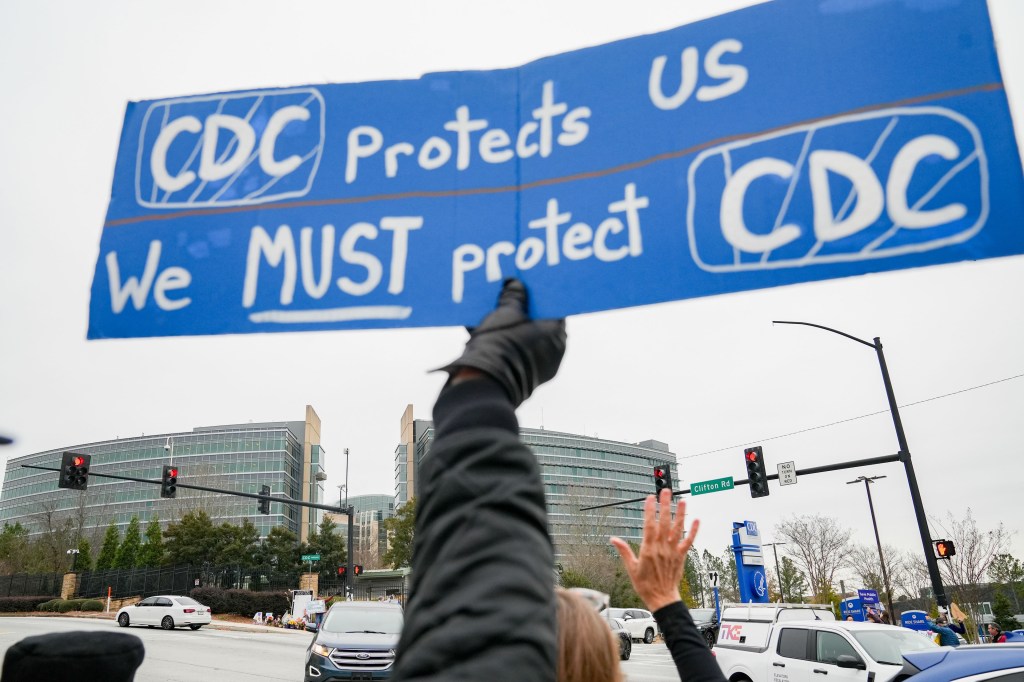
- Demoralized CDC Workforce Reels From Year of Firings, Funding Cuts, and a Shooting
- Qualified Health locks in $125M in fresh funding to scale enterprise AI at health systems
- Misery Loves [Investment] Company?: Remarks at the 2026 Investment Company Institute Investment Management Conference
- Study: Nearly 1 in 5 pediatric hospital deaths involve sepsis
- As expansions come online, CDMO Hovione aims to meet industry's 'dual supply and sourcing' zeal: exec
- Opening Remarks at the Digital Asset Summit 2026
- CVS Caremark, FTC reach settlement in insulin pricing case
- UCB unveils plan to build $2B biologics plant near its US headquarters in Atlanta
- PeaceHealth sued over plans to tap out-of-state staffer ApolloMD for Oregon EDs
- New Lyme Disease Vaccine Shows Strong Results in Trial
- TrumpRx Adds Diabetes, COPD Drugs at Steep Discounts
- Highmark reports $175M net loss for 2025 as financial headwinds batter health plan
- Listen to the Latest ‘KFF Health News Minute’

- Abivax hires commercial chief from Takeda to infuse Entyvio expertise into IBD launch prep
- ImmunityBio hit with FDA warning letter over Anktiva promotions in TV ad, podcast episode
- Alcohol Prep Pads Recalled Over Bacteria Risk, Cardinal Health Says
- Fewer patients traveled for abortions in 2025 as telehealth care increased, report finds
- Cologuard campaign reunites ‘Full House’ stars to give ‘The Talk’ about colon cancer screening
- Lilly to remove certain insulin products from European markets by 2027
- Karyopharm, looking to jump-start Xpovio, reports mixed results in myelofibrosis
- Study Warns Fluoride Bans May Raise Tooth Decay in Children
- WuXi Bio's record number of new projects in 2025 leaned heavily on US clients
- “Me engañaron”: agentes encadenan a un padre que había ido al ICE a reunirse con sus hijos

- Gilead inks Manta pact to dive deeper into cancer patient support
- Cheap Children's Clothing Tainted With Lead, Study Says
- Insulin Prices Fell For Medicare Patients Under Biden-Era Caps, Study Finds
- New Fathers Face Mental Health Challenges, Study Finds
- Your Choice Of Booze Influences Your Risk Of Death, Study Says
- AI Gets a 'D' When Judging Scientific, Medical Claims
- New Online Tool Helps Parkinson's Patients Weigh Brain Implant Decision
- AI chatbot use for health information up 16% from 2024: Rock Health survey
- ‘They Tricked Me’: A Father Was Chained After He Went to ICE To Reunite With His Kids
- Wilmington PharmaTech commits $50M to US API expansion
- Strides recalls nearly 90K bottles of children's ibuprofen after contamination complaints
- Trump administration unveils national policy framework for AI as it moves to override state laws
- Breast Cancer Locator System Submitted for De Novo 510(k) by Cairn Surgical
- Breast Cancer Locator System Submitted for De Novo 510(k) by Cairn Surgical
- 17 spine surgery firsts in Q1

- 17 spine surgery firsts in Q1


There have been leadership changes announced at several U.S. Department of Health and Human Services (HHS) agencies:
https://thehill.com/policy/healthcare/5744237-kennedy-reshapes-hhs-leadership/
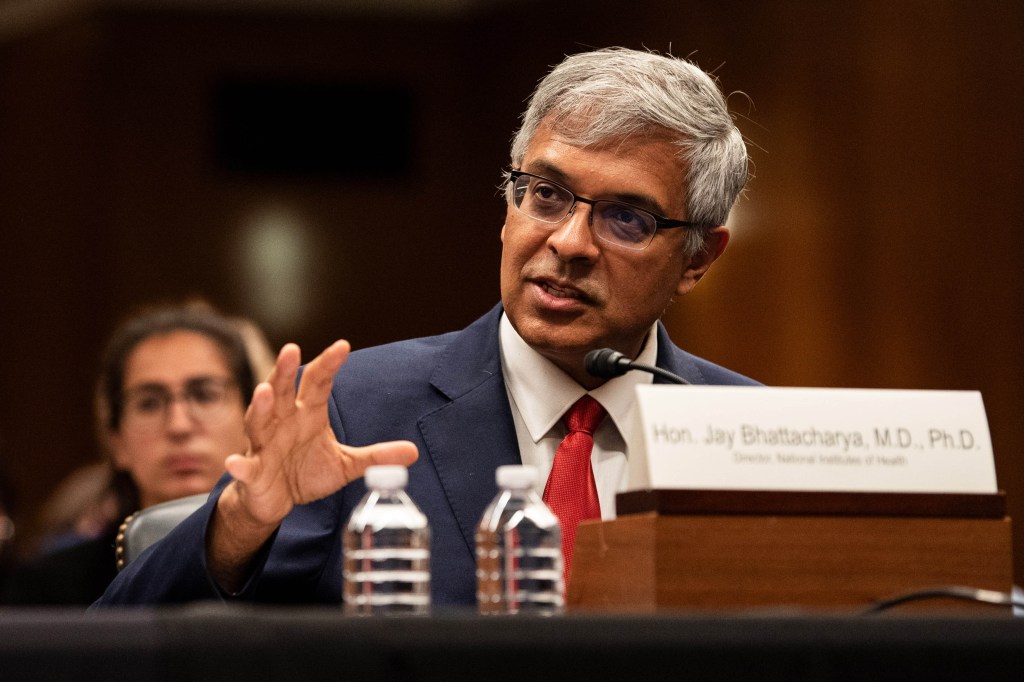
NIH director Bhattacharya to temporarily serve as CDC director
By Sophie Brams - February 18, 2026Director of the National Institutes of Health Jay Bhattacharya will serve as interim director of the Centers for Disease Control and Prevention (CDC) following the reported exit of Jim O’Neill, a Trump administration official confirmed Wednesday.
It was reported last week that O’Neill, who also served as deputy secretary of the Department of Health and Human Services (HHS), would be leaving his post as part of a broader staff restructuring within the department.
O’Neill is expected to be nominated by President Trump to lead the National Science Foundation, according to The New York Times, which first reported the news of Bhattacharya’s new role.
The shake-up at HHS comes as the Trump administration is sharpening its message on health care ahead of the midterms, hoping Secretary Robert F Kennedy Jr.’s efforts to reshape federal health policy over the past year will resonate with voters and help deliver Republican wins come November.
Other leadership shifts include Centers for Medicare and Medicaid Services (CMS) Deputy Administrator Chris Klomp taking on the role of chief counselor at HHS, and John Brooks transitioning from CMS deputy administrator and chief policy and regulatory officer to CMS senior counselor.
At the Food and Drug Administration (FDA), Deputy Commissioners Kyle Diamantas and Grace Graham were also given new posts as senior counselors.
“In just over a year, we have driven historic progress on President Trump’s health care priorities and delivered real, measurable change,” Kennedy said in a Feb. 12 statement announcing the changes.
“We are restoring accountability, challenging entrenched interests, and putting the health of the American people first. I am proud to elevate battle-tested, principled leaders onto my immediate team—individuals with the courage and experience to help us move faster and go further as we work to Make America Healthy Again,” he added.
The CDC itself has seen abrupt leadership changes over the past year, including the ouster of Director Susan Monarez last August, who was fired less than a month into the job after she refused pressure from the White House to resign.
Bhattacharya, a Stanford University professor, is now poised to take the helm at a time when the agency has come under scrutiny for its shifts to vaccination policies and recommendations.
He said during a Senate hearing last week that he had not seen any studies supporting a potential connection between any vaccine and autism, disputing a theory often peddled by Kennedy.
Bhattacharya is slated to serve as interim director until the U.S. Senate confirms a permanent successor.
After falsely savaging Dr. Jay Bhattacharya during the pandemic, the health care Deep State is now terrified of him:
https://thehill.com/policy/healthcare/5748218-bhattacharya-cdc-nih-leadership-concern/
Bhattacharya’s growing power in Trump’s HHS worries health experts
By Joseph Choi - February 22, 2026Public health experts and former federal staffers are uneasy over National Institutes of Health (NIH) Director Jay Bhattacharya’s rising influence over U.S. health policy as he temporarily takes on the added role of leading the Centers for Disease Control and Prevention (CDC).
The Trump administration announced the leadership shake-up this week, with former interim CDC Director Jim O’Neill being moved out of the Department of Health and Human Services (HHS).
“Candidly, this is someone who very clearly has an ax to grind with science and the scientific community in general,” Kayla Hancock, director of Protect our Care’s Public Health Watch project, said of Bhattacharya.
“We’ve seen with his record already at NIH and his history of Covid denialism before he even took this office that this is just not the kind of person that we need at the helm of our key public health and medical research institutions.”
Bhattacharya, confirmed as NIH director in March of last year, was a Stanford University professor of medicine before joining the Trump administration. He was also one of the lead authors of “Great Barrington Declaration,” a 2020 open letter calling for COVID-19 lockdowns to be rolled back.
In an email to CDC staff on Friday, Bhattacharya laid out what he said was a plan to restore trust in public health. During the pandemic, he wrote, it was “undeniable that some of the Federal government’s decisions, communications, and processes contributed to confusion, frustration, and a loss of that trust.”
“I also recognize the unique challenges faced by each of you over the past year due to abrupt changes in leadership, the tragic act of violence last summer, and overall uncertainty felt by all of you,” wrote Bhattacharya, referring to the fatal shooting at the CDC’s headquarters last year. “One of my goals is to ensure that you all get the recognition you deserve for your efforts.”
He listed three principles the agency would follow under his rule: updating guidance “transparently” as new data emerges, ensuring every investigation it conducts reflects the “responsibility to the communities we serve” and strengthening internal review processes to enhance “accountability and openness.”
The position of CDC director has been haphazardly filled over the past year. President Trump’s first pick, former Florida Rep. David Weldon (R), failed to gain support in the Senate, leading to longtime federal scientist Susan Monarez, the interim director, receiving the nomination to fill the role permanently.
Monarez was ultimately confirmed by the Senate along party lines, but only weeks later the administration pushed her out, with her claiming it was due to her refusal to give blanket approval of recommendations from the CDC’s Advisory Committee on Immunization Practices, which Health and Human Services Secretary Robert F. Kennedy Jr. had restaffed with ideological allies.
O’Neill, a deputy HHS secretary, was then made the interim director, making Bhattacharya the third acting CDC director in seven months.
Former CDC physician Elizabeth Soda, who resigned late last year, said the American public is suffering because of the lack of stable leadership within the agency.
She noted how Congress had largely maintained funding for the agency, rejecting calls by the administration to deeply cut appropriations, indicating the legislative branch recognizes the importance of a strong CDC.
“How can you even do the work that they’re being given the money to do, right? That’s a big challenge, and without having clear leadership, who can really devote the time and energy and expertise to face these challenges head on?” Soda said.
Former federal staffers and public health voices who spoke with The Hill said the NIH and CDC agencies are too large and distinct from one another to have one individual leading both at the same time.
“I don’t think Jay Bhattacharya can be trusted to lead either. But I think the size of both of these organizations and the missions are different, and I think it takes a specific type of person, a single person, to do each of these jobs,” said James Alwine, coordinating committee member of the nonprofit volunteer network Defend Public Health and professor emeritus of cancer biology at the University of Pennsylvania School of Medicine.
The NIH’s primary objective is to support U.S. research infrastructure, while the CDC is largely tasked with surveilling and addressing disease threats.
Alwine began his career at the NIH. He opined that Bhattacharya’s motivations to lead these agencies did not align with their missions of promoting and protecting public health.
“I think some of the things he’s doing certainly look to me like he’s getting back at those who came down on him because they criticized him so much about the Great Barrington Resolution,” Alwine said.
When reached for comment, HHS spokesperson Emily Hilliard said of Bhattacharya, “The Director has empowered the NIH leadership team to ensure the agency’s priorities continue moving forward until the President nominates and the Senate confirms a permanent CDC director.”
“CDC Principal Deputy Director Ralph Abraham and other members of the CDC leadership team will work closely with Dr. Bhattacharya during this acting period to continue protecting and serving the American people,” Hilliard added. “The Director is solely focused on ensuring a seamless transition for both agencies while maintaining continuity of leadership and advancing their core public health missions.”
Monarez, the only confirmed CDC director in Trump’s second term, was an outlier when it came to health nominees. She did not come from the “Make America Healthy Again” (MAHA) antiestablishment world that many of Kennedy’s picks came from, having been a government scientist for decades.
Her refusal to bend completely to the MAHA agenda seemingly played a significant part in her termination.
With Bhattacharya’s temporary dual role, public health influence has become further consolidated among ardent Kennedy allies. Whether Trump and Kennedy can find a MAHA ally who can also win Senate confirmation as CDC director remains to be seen.
Soda, the former CDC staffer, was hopeful that compromises could be made for the sake of stable leadership at the agency.
“The optimist in me can hope,” Soda said. “We have to come to some middle ground understanding with one another, where we may not fully agree completely. But wouldn’t it be great if we could try to start moving towards the middle.”
“In some ways, MAHA’s beliefs, I think, are just so contrary to what CDC represents,” Soda added. “It would be difficult, I think, to find someone who’s a true sort of believer in those principles to also then come and successfully lead the agency that is, you know, the agency that is driven by scientific evidence and data.”
😎 Coming to a theater near you: Jay Bhattacharya, the movie!
https://www.politico.com/news/2026/02/22/the-next-hollywood-hero-jay-bhattacharya-00791313
RFK Jr.’s billionaire running mate is making a comedy about the pandemic
Nicole Shanahan has recruited a top screenwriter and enlisted Covid contrarian Jay Bhattacharya.
By Kelly Hooper - February 22, 2026Covid contrarians tight with Robert F. Kennedy Jr. are pitching Hollywood on an unlikely leading man: National Institutes of Health Director Jay Bhattacharya.
Nicole Shanahan, Kennedy’s running mate in the 2024 presidential campaign, is searching for investors to fund a movie that pokes fun at the pandemic response with a star based on Bhattacharya, who rose to prominence with his anti-lockdown manifesto and relentless tweets opposing social distancing.
The script for the satirical comedy, “The Rash,” is by renowned author Walter Kirn, who wrote the novel “Up in the Air” that became an Oscar-nominated movie starring George Clooney. The new Kirn screenplay stars a “no-nonsense” public health professor at a Stanford-like California university — mirroring Bhattacharya — who speaks out against mass hysteria amid a mysterious outbreak of a contagious skin condition.
The story of the pandemic is one “of great heroes who stood up and said no” to “dangerous scientific experiments mixed with misleading propaganda, mass psychosis, and outright lies,” says the Brownstone Institute in a recent appeal sent to potential funders of the film.
The think tank that once counted Bhattacharya as a senior scholar added that “investors are terrified of the topic and Hollywood elites don’t even want it made.”
The push to make the film is among numerous examples, since President Donald Trump returned to office, in which the president or his allies have sought approbation from America’s culture-making institutions. They’ve had some success. Trump allies renamed the Kennedy Center in Washington to honor him in December and Amazon released a film last month about first lady Melania Trump.
Since 2020, a number of figures in Trump’s orbit have been involved in the creation and promotion of films criticizing public officials’ response to the pandemic or pushing fringe theories about it or vaccines.
Jeffrey Tucker, Brownstone’s founder and president, didn’t respond to requests for comment. In October 2020, he convened a group of scientists, including Bhattacharya, who wrote the Great Barrington Declaration opposing Covid lockdowns. It set off a vigorous debate about the pandemic response and prompted Bhattacharya’s predecessor at NIH, Francis Collins, to call him a “fringe epidemiologist.”
Bhattacharya, whom Kennedy also named acting director of the Centers for Disease Control and Prevention on Wednesday, is on board with the movie, an NIH spokesperson told POLITICO.
“Dr. Bhattacharya has spoken positively about the work Walter Kirn is doing, noting that the project reflects a strong commitment to free speech and open inquiry, and he welcomes thoughtful creative efforts that engage with these issues,” the spokesperson said.
Bhattacharya declined to comment. He’s spent at least 10 hours speaking to Kirn, who shares his views on the handling of the pandemic, for the film.
Shanahan is an executive producer of “The Rash” along with her partner, Jacob Strumwasser, according to Brownstone. Neither Shanahan nor Strumwasser could be reached for comment. Shanahan, a lawyer and entrepreneur, is reportedly a billionaire following her divorce three years ago from Google founder Sergey Brin. While married to Brin, she founded a philanthropy that focuses on extending women’s fertility.
Funding for “The Rash” nonetheless remains an obstacle. The estimated production budget is close to $6 million, according to a slide deck on Brownstone’s website.
Brownstone “is well-positioned to be a fiscal sponsor of this effort,” and the project “already has a top production company lined up along with some notable talent to make a first-rate film,” the website says.
In September, Kirn released a short teaser trailer for “The Rash” on social platform X, saying the film is in the financing phase and interested investors should contact him.
Kirn did not respond to a request for comment.
He said in the X post that he wrote the film for Shanahan and 0nset Creative, an independent production company founded by Alex Lee Moyer, a filmmaker whose credits include a 2022 documentary on far-right conspiracy theorist Alex Jones. In September, as a guest on Shanahan’s podcast, Moyer described the Jones documentary as a film about Covid, the “runway to Jan. 6” and “how off the rails the world went during that moment.”
Three pages of the script for “The Rash” are previewed on Brownstone’s website. In one scene, the governor of California and a character named Dr. Roman Fox orchestrate a celebrity singalong amid the outbreak. A “succession of celebs sing lines from the song ‘Aquarius’ by the Fifth Dimension,” the script reads.
“Some sing beautifully, some not,” the screenplay says. “Behind them are their yards and homes. One sings naked with his crotch blurred out, his body gleaming with oil.”
The song, a No. 1 hit in 1969 based on numbers from the musical Hair, previews a time when Jupiter aligns with Mars and “peace will guide the planets and love will steer the stars.”
The scene appears to poke fun at a celebrity singalong of the John Lennon song “Imagine” during the early days of the Covid pandemic, spearheaded by actress Gal Gadot. At the time, the viral video was widely criticized as elitist and out of touch.
0nset Creative was “established in response to a landscape where media has become decentralized and old models are buckling under the weight of the times,” its website says. The studio is working on a handful of other projects in addition to “The Rash,” including “the first in depth documentary about Silicon Valley and its denizens” and another documentary on unidentified flying objects.
During the September podcast interview with Moyer, Shanahan said she and her partner, Strumwasser, had the “stupid idea” for a satire film inspired by the Covid pandemic and decided to run with it.
“We were like, ‘Wouldn’t it be great if we could just laugh about how ridiculous this all was and how awful it all was?’ But also laugh at it because that means that it’s in the past,” she said.
Moyer said Shanahan approached 0nset Creative with the idea.
“I got to thinking, ‘Well, who’s the best person who can work on this? Who can write a script that’s worthy of this topic?’ And I thought of my good friend, Walter Kirn,” said Moyer.
Shanahan and Strumwasser gave Kirn creative liberty to tell the story in the way he wanted, and he came back with the script for “The Rash,” Moyer added.
Moyer said “The Rash” reminds her of conspiracy thrillers from the ‘60s and ‘70s like “Dr. Strangelove” and “Network,” as well as “some of the lighter influences from films in the ‘90s” like “Wag the Dog” and “Thank You for Smoking.”
“We need to be able to have a sense of humor about our collective trauma,” Moyer told Shanahan.
0nset Creative did not respond to a request for comment, and Moyer could not be reached.
A second scene in the script features a conversation between Fox and “Dr. Neal Chandra,” the character based on Bhattacharya. Fox declares “I’m the science” during the scene — an apparent reference to a 2021 interview in which Anthony Fauci, who led the U.S. pandemic response, said his critics were “really criticizing science because I represent science.” Fox encourages Chandra to sign a document supporting that statement. Chandra refuses.
In a description of the film’s cinematography, the slide deck on Brownstone’s website says the movie will “toggle between composed shots that reflect Dr. Chandra’s rational perspective and looser, handheld coverage that captures the surrounding chaos: influencers melting down on livestreams, press conferences spinning off-script, executives high on their own power.”
“The world bends while Chandra stands still,” the description reads.
Get MHF Insights
News and tips for your healthcare freedom.
We never spam you. One-step unsubscribe.
Sponsors
Friends of MHF




Kirsten DeVries
Tom & Karen Nunheimer
Steve Ahonen
Ron & Faith Bosserman
Marlin & Kathy Klumpp
Sign Up for MHF Insights to keep up on the latest in Michigan Health Policy