- No more ‘old school’: How Duke Health is reimagining workforce development

- Why private practice dentistry needs a better model
- Chief nurses: Hospital finances improve with nursing investments
- Mississippi health system goes ‘all in’ on Epic with $115M investment
- CareQuest Innovation Partners, Kno2 collab on medical-dental data integration
- Ascension Wisconsin CEO to step down
- The hospitals, health systems cutting jobs in 2026
- The hospitals, health systems cutting jobs in 2026
- Nonprofit highlights rural opioid care strategies
- The 7 things on the table in the Mount Sinai-Anthem negotiations
- The 7 things on the table in the Mount Sinai-Anthem negotiations
- Wearables data predicts patient engagement: Mayo Clinic study
- Advocate plans largest US hospital drone delivery network
- Vitana Pediatric & Orthodontic Partners adds Florida practice
- Indiana system opens $21.7M outpatient center
- Trump administration targets medical school admissions: 4 notes
- EyeSouth Partners continues 2026 expansion with Louisiana practice
- RSV lingers in parts of US even as flu and COVID-19 recede
- Providence narrows operating loss to $486M in 2025
- A huge month for CMS policy
- What the Health? From KFF Health News: A Headless CDC
- GI is exploding with new tech—but how do patients feel about it?
- Maryland physician to pay $500K+ to settle false claims allegations
- Rhode Island oral surgeon launches Congressional campaign
- Premier Anesthesia, City of Hope Phoenix ink partnership
- 20 behavioral health leaders challenge industry assumptions
- What simulation training revealed about GI skills gaps
- Judge dismisses physician’s wrongful termination suit against staffing firm
- 3 California behavioral health centers to close amid funding shifts
- North Carolina practice to close after 40+ years
- St. Tammany opens outpatient cardiology center
- Indiana bars autism therapy provider from Medicaid billing: Wall Street Journal
- 6 dental practice openings to know
- UnitedHealth shareholder sues over proposal to include details on integration in annual proxy
- APRNs, PAs account for most antipsychotic prescriptions for Medicare Part D: Study
- Infosys to acquire Optimum Healthcare IT in $465M deal
- Oklahoma House passes bill expanding scope of dental assistants
- Dr. Nellie Kim-Weroha joins American Association of Orthodontists’ Board of Trustees
- California behavioral health agency to close 2 centers
- St. Luke’s CFO joins RCM company’s advisory board
- 52 DSOs to know: 2026
- 10 hospitals, health systems looking for CFOs
- DOJ alleges NewYork-Presbyterian forces payers into anticompetitive 'all-or-nothing' contracts
- 10 health system rating downgrades
- FDA Warns Biotech Firm Over Cancer Drug Anktiva Claims
- Bees and Hummingbirds May Be Consuming Small Amounts of Alcohol
- Two States Sue Cord Blood Company Over Misleading Claims
- North Star’s restructuring moves forward
- Illinois hospital pauses patient care amid payroll challenges
- What the Best-Performing Revenue Cycles Have in Common
- New WHO Guidance Aims To Speed Tuberculosis Testing
- As questions swirl around ATTR competition, Alnylam plots path to market leadership for Amvuttra
- Trump admin delays nomination for new CDC director past deadline
- Outspoken ACIP member steps down amid vaccine panel uncertainty: reports
- Egg-based drugmaker Neion Bio emerges from stealth to cook up multi-product biosimilar collab
- Genentech walks the walk in lupus as sponsor of annual awareness and fundraising event
- Study Reveals How Many Americans Consider Using a Gun
- Massive Study Finds Stress and Grief Don’t Cause Cancer
- Ultra-Processed Foods Harm Fertility In Both Men And Women, Studies Reveal
- Small Daily Habits Can Add Up To Better Heart Health
- Ritalin Might Protect ADHD Kids' Long-Term Mental Health, Study Finds
- Can You Drink Enough Fluids To Prevent Kidney Stones? Maybe Not, New Study Says
- Clasp, loan-linked hiring tool for employers, clinches $20M to expand amid federal loan caps
- Taking a GLP-1? Doctors Say Not To Forget About Movement and Mental Health

- OpenEvidence rolls out AI medical coding feature
- CDC’s Acting Chief Promises a Return to Stability in a Tumultuous Moment
- California peer-run behavioral health center to close amid funding shift
- Remarks at the Financial Stability Oversight Council Meeting
- ‘Integration only works if data lives in the same system’: How 5 systems are operationalizing behavioral health
- Medicaid work rules and enrollment losses: 6 notes
- Inside UHS’ playbook for responsible behavioral health growth
- Epic4 Specialty Partners adds Illinois practice
- The unsolved problems still plaguing dentistry
- American Dental Association adds mental health, GLP-1 prompts to patient forms
- RWJF: Between 5M and 10M people could lose Medicaid coverage in 2028 under work requirements
- How pharma marketers can capitalize on HCPs’ AI, social media and streaming habits
- Federal Officials Investigate States That Require Abortion Coverage
- Corcept's lead drug bounces back from FDA snub with different approval as Lifyorli in ovarian cancer
- Ionis slashes Tryngolza's price tag by 93% ahead of anticipated label expansion
- FDA approves Denali's Hunter syndrome drug, handing rare disease community a win
- Baby Walkers Sold on Amazon Recalled Over Fall Risk
- Want To Protect Your Brain? Science Says Exercise
- HelloFresh Pizza Recall Issued in 10 States Over Metal Risk
- Clinical Trials Have Too Much Data…That’s the Problem.

- Clinical Trials Have Too Much Data…That’s the Problem.
- CMS reveals new Medicaid model that supports coordination for children with complex needs
- Novartis sued by breast cancer patient over branded drug websites’ data-sharing practices
- Takeda targets $1.3B in cost savings in further restructuring
- Biogen pays $20M upfront to tap into Alteogen's subQ delivery tech
- 'Universal Donor' Blood Supplies Dangerously Low, Study Warns
- Why Stepping Outside May Help You Eat Better
- U.S. Medicine, Science Facing An Online Misinformation Siege, Poll Concludes
- Childhood Obesity Undercuts The American Dream For Some, Study Says
- Inclusive High Schools Benefit All Students, Not Just LGBTQ Teens
- Parental Loss Due to Drugs, Violence Raises Child Death Risk by 2,000%
- As Boehringer touts US launches, board chairman worries EU is 'falling further behind'
- The evolving state of exome and genome sequencing
- An Arm and a Leg: Steep Health Care Costs Steer Americans to Tough Decisions
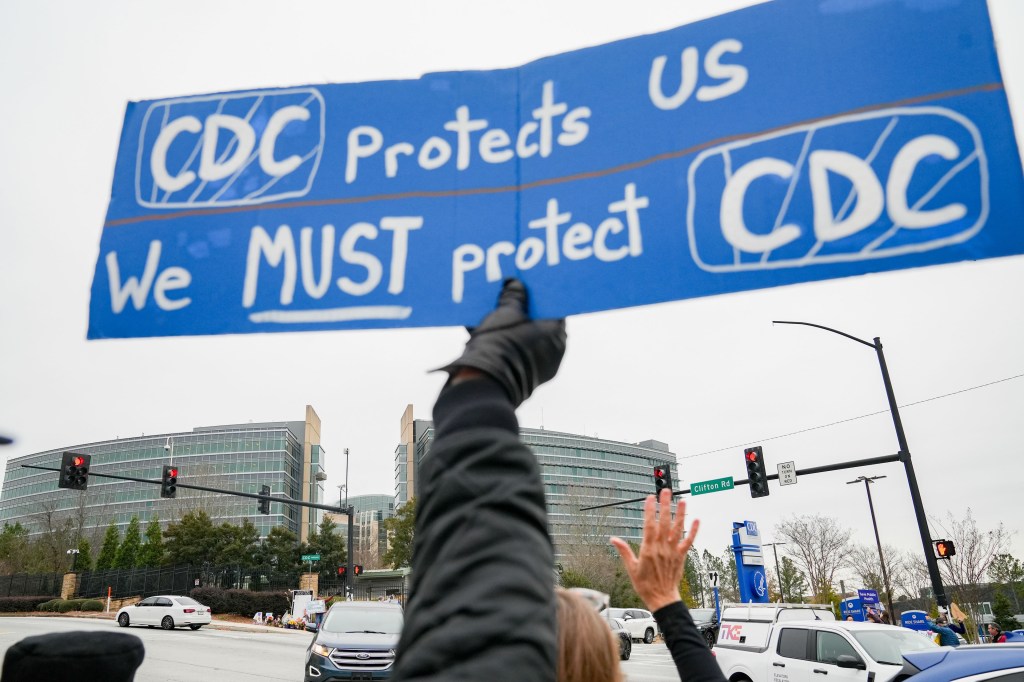
- Demoralized CDC Workforce Reels From Year of Firings, Funding Cuts, and a Shooting
- Qualified Health locks in $125M in fresh funding to scale enterprise AI at health systems
- Misery Loves [Investment] Company?: Remarks at the 2026 Investment Company Institute Investment Management Conference
- Study: Nearly 1 in 5 pediatric hospital deaths involve sepsis
- As expansions come online, CDMO Hovione aims to meet industry's 'dual supply and sourcing' zeal: exec
- Opening Remarks at the Digital Asset Summit 2026
- CVS Caremark, FTC reach settlement in insulin pricing case
- UCB unveils plan to build $2B biologics plant near its US headquarters in Atlanta
- PeaceHealth sued over plans to tap out-of-state staffer ApolloMD for Oregon EDs
- New Lyme Disease Vaccine Shows Strong Results in Trial
- TrumpRx Adds Diabetes, COPD Drugs at Steep Discounts
- Highmark reports $175M net loss for 2025 as financial headwinds batter health plan
- Listen to the Latest ‘KFF Health News Minute’
- Abivax hires commercial chief from Takeda to infuse Entyvio expertise into IBD launch prep
- ImmunityBio hit with FDA warning letter over Anktiva promotions in TV ad, podcast episode
- Alcohol Prep Pads Recalled Over Bacteria Risk, Cardinal Health Says
- Fewer patients traveled for abortions in 2025 as telehealth care increased, report finds
- Cologuard campaign reunites ‘Full House’ stars to give ‘The Talk’ about colon cancer screening
- Lilly to remove certain insulin products from European markets by 2027
- Karyopharm, looking to jump-start Xpovio, reports mixed results in myelofibrosis
- Study Warns Fluoride Bans May Raise Tooth Decay in Children
- WuXi Bio's record number of new projects in 2025 leaned heavily on US clients
- “Me engañaron”: agentes encadenan a un padre que había ido al ICE a reunirse con sus hijos

- Gilead inks Manta pact to dive deeper into cancer patient support
- Cheap Children's Clothing Tainted With Lead, Study Says
- Insulin Prices Fell For Medicare Patients Under Biden-Era Caps, Study Finds
- New Fathers Face Mental Health Challenges, Study Finds
- Your Choice Of Booze Influences Your Risk Of Death, Study Says
- AI Gets a 'D' When Judging Scientific, Medical Claims
- New Online Tool Helps Parkinson's Patients Weigh Brain Implant Decision
- AI chatbot use for health information up 16% from 2024: Rock Health survey
- ‘They Tricked Me’: A Father Was Chained After He Went to ICE To Reunite With His Kids
- Wilmington PharmaTech commits $50M to US API expansion
- Strides recalls nearly 90K bottles of children's ibuprofen after contamination complaints
- Trump administration unveils national policy framework for AI as it moves to override state laws
- Breast Cancer Locator System Submitted for De Novo 510(k) by Cairn Surgical
- Breast Cancer Locator System Submitted for De Novo 510(k) by Cairn Surgical
- 17 spine surgery firsts in Q1

- 17 spine surgery firsts in Q1
- Cencora acquiring EyeSouth Partners' retina business for $1.1B
- Aunque tengas seguro dental, la factura puede ser muy alta
- A look at how Optum Rx is using AI to address pharmacy fraud, waste and abuse
- Nursing Homes Accused of False Diagnoses To Hide Drug Use
- FDA Approves Higher-Dose Wegovy To Help People Lose More Weight
- Teens Often Pressured To Send Sexual Photos by Someone They Know, Study Finds
- Match Day 2026: Growth in emergency medicine, psychiatry
- Nearly 90,000 Bottles of Children’s Ibuprofen Recalled Nationwide
- FTC launches multi-bureau Healthcare Task Force to spot 'new priority areas for enforcement'
- Algunos adultos de mediana edad deciden posponer la atención médica hasta tener Medicare

- Rural Residents Have Highest Cancer Death Rates, Researchers Say
- Your Bank Account Might Show How Well Your Brain Will Age, Researchers Say
- Insurance Lapses Play Havoc With Diabetes Management, Study Shows


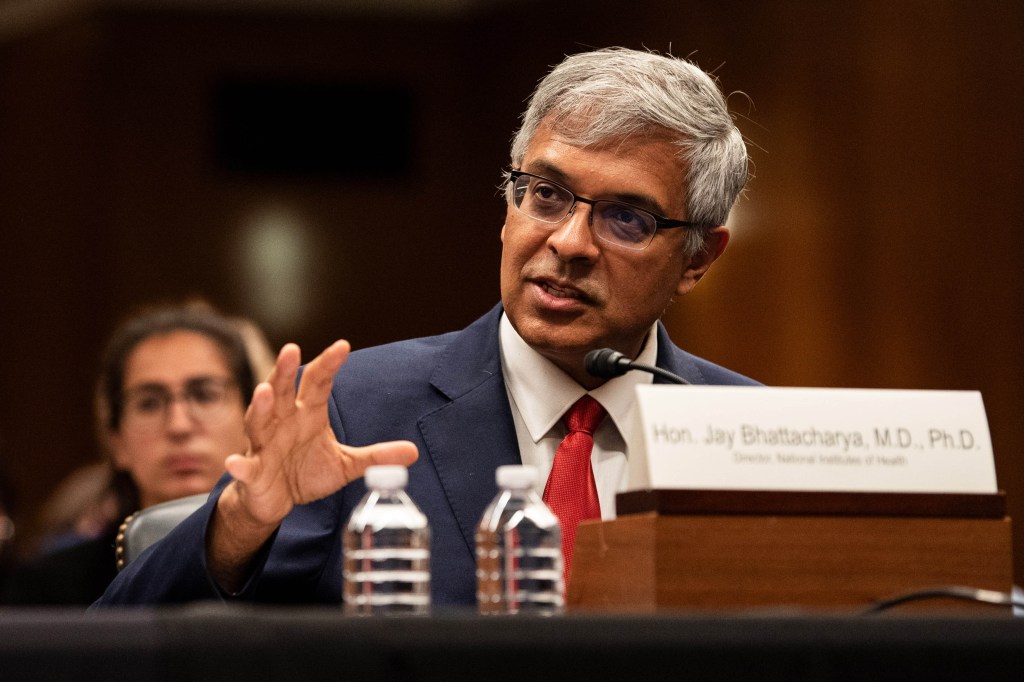
Jay Bhattacharya, a professor of health policy at the Stanford University School of Medicine, was grilled by the Senate Health, Education, Labor and Pensions (HELP) Committee which is considering his nomination to direct the National Institutes of Health. Opposition from Democrats was expected, but hostility to Dr. Bhattacharya from Republican Chairman Willliam M. Cassidy of Louisiana was not expected. Dr. Cassidy is a gastroenterologist whose leading source of political funding since becoming a Senator is "Health Care Professionals":
Jay Bhattacharya Outlines Vision For New NIH Amid Agency Disruptions
NIH Director Nominee Jayanta Bhattacharya Testifies In Senate Hearing
By Emily Kopp - March 5, 2025
Daily Caller News FoundationPresident Donald Trump’s nominee to lead the National Institutes of Health testified before a Senate committee Wednesday about using taxpayer funding for useful medical research and improving transparency at the National Institutes of Health — but faced bipartisan questions opposed to disruptive change.
Jay Bhattacharya, professor of health policy at Stanford University School of Medicine, testified before the Senate Health, Education, Labor and Pensions Committee and outlined his vision for the future of the institutes. The vision called for less waste and fraud, a renewed focus on practical applications for human health and more tolerance for disagreement in order to reestablish trust lost during the COVID-19 pandemic.
“I love the NIH. But post-pandemic, American biomedical sciences are at a crossroads,” he said.
Bhattacharya stressed five priorities: Focusing on chronic disease; tackling the reproducibility crisis in science; establishing a culture of free speech and diversity of viewpoints; recommitting to innovative breakthroughs over incremental progress by powerful incumbent scientists; and introducing regulation of risky research that poses the risk of a pandemic.
Bhattacharya first rose to prominence with the Great Barrington Declaration in October 2020, a statement that broke with NIH in calling for “focused protection” against COVID-19 that would allow low-risk individuals to live their lives normally while safeguarding high-risk populations. Former NIH Director Francis Collins privately called for aggressively combatting this stance. Bhattacharya has challenged the U.S. government for its efforts in collaboration with social media companies to throttle alternative points of view during the COVID-19 pandemic.
The hearing was not trouble-free for Bhattacharya, who faced terse questions not only from Democrats but also from Republican Chair Bill Cassidy of Louisiana.
Cassidy was a critic of Bhattacharya’s would-be boss Robert F. Kennedy Jr.’s prior statements on the measles, mumps, and rubella vaccine. His stance on Kennedy’s nomination remained in doubt right up until the committee vote, though he eventually broke in favor of his confirmation.
Cassidy directed pointed questions to Bhattacharya about the MMR vaccine. Cassidy expressed concerns that confidence in the vaccine could be set back by continuing to study it and expressed opposition to applying “precious limited taxpayer dollars” to the matter.
Bhattacharya said that he was convinced that there was no link between autism and the MMR vaccine while emphasizing the need for “good data.”
“As far as research on autism and vaccines, I don’t generally believe there is a link based on my reading of the literature, but what I have seen is that there is tremendous distrust in medicine and science coming out of the pandemic, and we do have, as you know Senator, a sharp rise in autism rates in this country,” Bhattacharya said. “I don’t know, and I don’t think any scientist knows the cause of it. So I would support … a broad scientific agenda based on data to get an answer to that.”
“But this has been fairly well, in fact it has been exhaustively studied, and there’s limited resources,” Cassidy retorted. “And if we keep ploughing over ground that has been ploughed over, knowing you can never prove a negative, and since we don’t know the cause [of autism] we still have a problem. We’ve got a responsibility with limited resources.”
The gentlemen did not appear to reach an agreement.
But Cassidy also expressed optimism about Bhattacharya’s ability to reinvigorate NIH research.
“There is concern that the current system incentives established scientists who study already proven concepts rather than younger scientists who have unproven ideas that have potential to be major medical breakthroughs,” said Cassidy.
Bhattacharya also faced heated questions from Democrats and Republicans alike about the recent disruptions at to the institutes, including a new cap on the proportion of funding universities and labs can skim off the top of NIH grants at 15%; the firing of NIH probationary employees; and a pause to NIH study sections, which was partially lifted last week.
Collins expressed strong opposition to the cap on so-called “indirects.”
“I think it’s important that we all acknowledge that a one-sized fits all approach does not make sense. That’s why NIH negotiates with the individual grant recipients on what the indirects should be,” Collins said. “To impose this arbitrary cap makes no sense at all. It’s also important to emphasize that this is illegal. Since 2017 we have had language in the [Departments of Labor, Health and Human Services, and Education, and Related Agencies Appropriations Act] that specifically prohibits the indirect cost formula from being changed.”
A U.S. district judge extended a temporary restraining order on the cap in response to lawsuits filed by attorneys general and universities on Feb. 21.
Bhattacharya said he would follow the law but also suggested that universities’ use of indirect funds, which are not publicly reported, should be subject to public scrutiny.
“If confirmed I absolutely commit to following the law,” he said. “This is one of those issues that, to me, is an indicator of distrust of universities and the scientific process, so I want to address those as well.”
Bhattacharya emphasized that he supports the work of NIH scientists and the mission of improving Americans’ health. But Bhattacharya repeatedly stressed his view that this mission has been adrift in recent years.
Bhattacharya and Republican senators cited the apparent lack of progress on Alzheimer’s disease as an example. A fraudulent 2006 Alzheimer’s research paper that served as a touchstone for the predominant “amyloid cascade” hypothesis of the disease was retracted in 2024 after being cited hundreds of times.
Over the last twenty years, despite a surge in NIH funding, Alzheimer’s deaths have doubled, according to the Alzheimer’s Association.
Bhattacharya said he plans to introduce regulations of gain-of-function research that generates novel pandemic-capable viruses — something virologists and NIH leadership has resisted for years.
Bhattacharya called the stigmatization of public discussion of NIH-supported coronavirus research conducted in collaboration with the Wuhan Institute of Virology — aided by Collins and longtime Director of the National Institute for Allergy and Infectious Disease Anthony Fauci via a March 2020 paper in Nature Medicine — a “low point in the history of science.”
“The net effect of this was a tremendous loss in confidence by the American people in NIH and in our public health officials. You and I have talked about the vital need to restore some of that credibility. Talk to us about how you see going about doing that,” said Republican Sen. Josh Hawley of Missouri.
“That episode is a low point in the history of science,” Bhattacharya said. “The top officials at the NIH abused their positions to hide their support for research that may have caused the pandemic. And I am committed to making sure that all of the activities of the NIH, not just backwards but going forward, are transparent and open to the American people and to Congress.”
Dr. Jay Bhattacharya was castigated during COVID for his principled positions expressed in The Great Barrington Declaration, but ultimately was vindicated. Most of the scientific community capitulated to the FDA liars for fear of losing their federal government funding and ruthlessly attacked Dr. Bhattacharya under the instructions of Dr. Fauci. One of Dr. Bhattacharya's most vociferous critics was Dr. David Gorski, a professor of surgery at Wayne State University who practices at the Karmanos Cancer Institute. Gorski never apologized, nor corrected, his false attacks upon Dr. Bhattacharya.
Paul Thacker of RealClearInvestigations has posted a long form backgrounder on Dr. Bhattacharya's trials and tribulations:
The COVID-Era Smearing – and Resurrection – of Trump NIH Appointee Dr. Jay Bhattacharya
By Paul D. Thacker, RealClearInvestigations
March 04, 2025Jay Bhattacharya was in pretty terrible shape five years ago. He was losing sleep and weight, not because of the COVID-19 virus but in response to the efforts of his colleagues at Stanford University and the larger medical community to shut down his research, which questioned much of the government’s response to the pandemic.
Some of his Stanford colleagues leaked false and damaging information to reporters. The university’s head of medicine ordered him to stop speaking to the press. Top leaders at the National Institutes of Health, Anthony Fauci and Francis Collins, dialed up the attacks, dismissing him and his colleagues as what Collins termed “fringe epidemiologists” while their acolytes threw mud from a slew of publications, including the Washington Post, The Nation, and the prestigious medical journal BMJ.
In the years since, many of Bhattacharya’s scientific concerns about the efficacy of lockdowns and mask mandates have been corroborated. Fauci, meanwhile, accepted a pardon from President Biden, protecting him from COVID-related offenses dating back to 2014, the year he started funding research at a Wuhan, China, lab that U.S. intelligence agencies now believe probably started the pandemic. And this week, Bhattacharya looks set to achieve surprising vindication as the Senate holds a hearing on his nomination to head the NIH, in a Department of Health and Human Services run by science nonconformist Robert F. Kennedy Jr.
Bhattacharya’s path from health policy scholar to NIH director nominee is pockmarked with craters from missiles launched to destroy his scientific credibility by NIH leaders and their minions in academia. Even as he seeks to advance medical research, Bhattacharya’s personal experience will likely inform his pledge to clean up the NIH and clear the agency of some career civil servants who silenced dissenting scientific voices during the pandemic and created national policies that were not always supported by the public.
“Free speech is fundamental for science to function properly,” he notes simply.
Bhattacharya first caught the attention of the nation’s scientific bureaucracy in April 2020 when he reported that the COVID virus was not as dangerous but more widespread than many of his colleagues and government officials were maintaining. This suggested a policy focusing on the most vulnerable populations with fewer restrictions on younger, healthier Americans. The study was discussed at the highest levels of the government and was passed around by Fauci and others in the White House, according to emails made public by a Freedom of Information Act request.
“For anyone with an open mind, the study’s results implied that the lockdown-focused strategy of March 2020 had failed to suppress the spread of the disease,” Bhattacharya wrote in a 2023 essay. But the paper’s other obvious conclusion put Bhattacharya in the crosshairs of Stanford faculty: It suggested that fear-mongering about the fatality rate of the virus was irresponsible.
Bhattacharya’s contrary conclusions generated complaints that the research was unsound, and Stanford put together an ad hoc group to investigate. It directed him to change the study protocols, which would have shut down the research. “They also demanded to review and approve any manuscripts we would write,” Bhattacharya said. But he eventually ignored them and kept publishing.
In April 2020, a series of damaging articles by Buzzfeed reporter Stephanie M. Lee carried allegations that Bhattacharya and his colleagues failed to disclose funding for their study, even though they had actually already disclosed it to Stanford. Buzzfeed is the now-defunct news site that first published the now much-maligned Steele dossier.
Bhattacharya was confused by the articles when they appeared. He later concluded from the intimate details that Stanford faculty were leaking the information to the reporter to harm him, including a false allegation that a “whistleblower” had come forward.
Responding to the Buzzfeed flurry of reports, Stanford announced a fact-finding investigation of Bhattacharya’s research, which he began calling an “inquisition.” The administration later informed him there was no “whistleblower” as Buzzfeed had falsely reported, and they sent a confidential report that found him and his colleagues at no fault.
“I got a letter which basically says we did nothing wrong. But also a condition that I’m not allowed to release the letter,” Bhattacharya explained in a 2023 interview. “This was a low period in my life. I was getting death threats, racist attacks, because the press was attacking me.”
Bhattacharya also suspects that some of the attacks at the time were being generated by Stanford’s major funders in the federal government – the NIH’s Francis Collins and Anthony Fauci. Collins and Fauci orchestrated a campaign against Bhattacharya in earnest in October 2020. Collins resigned from his NIH position last Friday and did not respond to questions sent to him through the NIH communications office nor sent to his NIH contact. Fauci did not respond to questions sent to him through his attorney.
That month, Bhattacharya and professors Martin Kulldorff, then at Harvard, and Sunetra Gupta of Oxford released the “Great Barrington Declaration,” which called for rejecting harmful COVID lockdowns in favor of “focused protection” for society’s most vulnerable, such as the elderly. With the declaration building support, Collins, four days later, on Oct. 8, 2020, sent Fauci an email with the subject line “Great Barrington Declaration.”
“This proposal from the three fringe epidemiologists who met with the [Health] Secretary seems to be getting a lot of attention – and even a co-signature from Nobel Prize winner Mike Leavitt at Stanford,” Collins wrote. “There needs to be a quick and devastating published take down of its premises. I don’t see anything like that on line yet – is it underway?”
Some hours later, Fauci forwarded Collins a “refutation” of the Great Barrington Declaration written for The Nation by his friend and advocate Gregg Gonsalves, an AIDS activist who is now a professor at Yale. Fauci rose to prominence in the 1980s as an HIV/AIDS researcher. “Indeed, and well said,” replied Collins. The Gonsalves essay referenced no actual science but denigrated Bhattacharya, Gupta, and Kulldorff for ignoring what he called “progressive principles of justice and equality” in favor of “survival of the fittest.”
Fauci has praised Gonsalves several times over the years and, in his recent memoir, singles out Gonsalves and a handful of other activists “for their unflinching support over the past few years.”
Four days after Fauci forwarded Collins the Gonsalves essay in The Nation, Collins dismissed the Declaration in public comments as “fringe” politics. “This is not mainstream science,” Collins argued in a public statement. Gonsalves contacted Collins later that same day, emailing him another essay he had written, again vilifying the Great Barrington Declaration, this time in the Washington Post.
“Saw your comments on the ludicrous Great Barrington Declaration and wanted to thank you for speaking out and doing it ‘undiplomatically,’” Gonsalves emailed Collins. “After we saw what you had said about ‘fringe’ epidemiology, we wondered why we were so nice in our op-ed.”
Collins then forwarded Gonsalves’ email to Fauci, who responded with a smiley face emoji.
Several months later, Gonsalves was among those who hosted a surprise birthday greeting for Fauci. “We did it!” tweeted HIV activist Peter Staley. “A small gang of Tony Fauci’s HIV/AIDS comrades managed to surprise him yesterday with an 80th birthday Zoom.” A screenshot of the Zoom shows Gregg Gonsalves beaming into his camera.
Fauci and Collins’ effort to create a “quick and devastating” takedown of the Great Barrington Declaration remained secret until the emails between them and Gonsalves became public in late December 2021. In response, Gonsalves dashed off a Christmas note to Collins and Fauci thanking them for their service and alerting them to their now-public emails “that some on the right have been circulating as ‘proof’ of a conspiracy against the Great Barrington Declaration.”
“It’s interesting that an effort to call out genuinely dangerous recommendations from the GBD is called a conspiracy,” Collins emailed back to Gonsalves. “Truth itself seems to have become a conspiracy in many minds.”
“It’s been a privilege to have you as our leader at the NIH!” Gonsalves replied.
Gonsalves remained a dogged Fauci supporter throughout the pandemic, even attacking former Centers for Disease Control and Prevention Director Robert Redfield when he went public in 2023 that he believed Fauci’s funding for gain-of-function virus research in the Wuhan lab may have led to the pandemic. “Robert Redfield, Trump’s CDC Director, has been trashing former NIAID director, Anthony Fauci,” Gonsalves tweeted in March 2023. “Anyone who knows Bob Redfield knows what an unsavory character he is.”
Working in concert with Gonsalves, two other academics were especially active in criticizing Bhattacharya’s COVID work: David Gorski, a Professor of Medicine at Wayne State University, and Gavin Yamey, Director of the Center for Policy Impact in Global Health at Duke University.
“They specifically targeted the scientific community to undermine Jay,” said a Trump transition team member, who is not allowed to speak to the press while shuffling Bhattacharya around the Senate. “There’s a market for hot pieces to attack Bhattacharya, and these academics coordinate on social media, repeating and amplifying the same narrative to dirty him up.”
Gorski is a self-described “misinformation debunker” and runs a website called Science Based Medicine. It doesn’t always get its facts straight. After the European Medicines Agency concluded in April 2021, for example, that unusual blood clots should be listed as a very rare side effect for AstraZeneca’s COVID-19 vaccine, Gorski decried the decision on his X account claiming, “Reported blood clots appear to be no higher than background and very likely unrelated to the vaccine.” The UK government eventually stopped offering AstraZeneca’s jab, and the company finally admitted that its COVID vaccine causes harm in what The Telegraph reported could result in millions of dollars in legal claims.
“Gorski is damaging to science,” said Bhattacharya. “He creates an environment where researchers can’t speak their mind if they cross the biopharmaceutical industry.” Bhattacharya described Yamey and Gorski as part of a network that carried out Collins’ devastating takedown. “I’ll never publish in a big mainstream journal,” he said a couple of years ago in an interview.
“Those of us in academic medicine, all we have is our reputation,” former CDC Director Robert Redfield told RealClearInvestigations. “These attacks, it impacts you substantially. You can’t function. You don’t get invited to talks, and groups won’t have anything to do with you."
In late 2021, Gorski partnered with Yamey on a piece for the BMJ falsely charging that Bhattacharya and other Great Barrington Declaration signers were supported by billionaires “aligned with industry.” Bhattacharya and the other signatories met at a conference hosted by the American Institute for Economic Research (AIER), which, Yamey and Gorski argued, “has also received funding from the Charles Koch Foundation, which was founded and is chaired by the right-wing billionaire industrialist known for promoting climate change denial and opposing regulations on business.”
While Gorski and Yamey provided no evidence that Koch money funded the GBD signatories, the BMJ still published their piece. Association with a nonprofit that has distant links to Koch money was apparently enough to carry the whiff of dark money corruption, a charge that still circulates on social media to this day.
“The BMJ article is full of errors that ought to have never found their way into any publication,” wrote Martin Kulldorff in The Spectator. “While the AIER has received only a single $68K (£50,000) Koch donation a few years ago, many universities have received multiple, much larger Koch donations, including million dollar gifts to Duke, Harvard, Johns Hopkins and Stanford.”
Contacted by RealClearInvestigations, Gorski did not respond when asked why he had not corrected his allegations against Bhattacharya.
It was later revealed that Bhattacharya’s attackers had even more conflicts. In March 2022, the United States Agency for International Development (USAID) released a trove of documents revealing Yamey’s ties to EcoHealth Alliance, a Fauci-funded organization run by Peter Daszak, which subcontracted with the Wuhan Institute of Virology in China. USAID scientist Dennis Carroll ran a pandemic preparedness program called PREDICT and worked with several researchers, including Daszak and Yamey, documents show, to redirect federal funds from the PREDICT program to set up a nonprofit called the Global Virome Project.
After directing federal funds to create the Global Virome Project, Carroll retired from federal service and became head of the organization, along with Daszak as a board member.
“It would appear that Dennis Carroll violated federal law that prohibits the use of official resources for private gain or for that of persons or organizations with which he is associated personally,” Craig Holman of Public Citizen said when shown emails from the document trove.
In March 2023, CBS News broke a story that EcoHealth Alliance may have double-billed the federal government for research in Wuhan, and the USAID Inspector General launched a criminal probe of the group’s finances. Some days before Trump was sworn into office, HHS excluded EcoHealth Alliance and Peter Daszak from working with the agency in response to congressional investigations that uncovered wrongdoing, including using taxpayer money to fund gain-of-function virus research at the Wuhan Institute of Virology.
“But the defamatory damage was already done,” Bhattacharya wrote in Newsweek, calling out Yamey and Gorski for their BMJ errors, “and many scientists stayed silent as schools closed and children were harmed, even though they knew better. They did not want to be similarly smeared.”
“Yamey is a narrative enforcer for the pandemic preparedness industry that likely funded the research that caused the pandemic,” Bhattacharya said.
And the smears continue. Referencing the false “dark money” charges by Yamey and Gorski, Lucky Tran, director of communications for Columbia University Irving Medical Center, posted a denunciation of Bhattacharya on the social media platform Bluesky after Trump nominated him. “Bhattacharya has spread disinformation on COVID, fought against lifesaving measures including vaccines, masks, and social distancing, and is backed by dark money groups pushing corporate interests.”
RealClearInvestigations contacted Columbia’s vice president of communications, Vanita Gowda, to ask if Lucky Tran’s post was Columbia’s official position on Trump’s NIH choice. Gowda was also asked whether the university could provide any evidence that Bhattacharya was funded by “dark money.” Gowda did not respond to multiple requests to explain these charges.
USAID’s criminal investigation began with subpoenas sent to several concerned parties. Duke University’s Yamey did not respond to repeated inquires on whether he had received a subpoeana. .
“I am honored and humbled by President @realDonaldTrump’s nomination of me to be the next @NIH director,” Bhattacharya posted on X. “We will reform American scientific institutions so that they are worthy of trust again and will deploy the fruits of excellent science to make America healthy again!”
Redfield said that Collins, Fauci, and other critics should apologize to Bhattacharya for the years of harassment and actions that were both wrong and unprofessional. “If you survive these attacks, and you have a resurrection, you do very well,” Redfield said. “You now have a reputation for substance and standing up for what you believe is true. Not everyone has that. I’m pretty confident he’ll do well, move forward, and do the right thing.”
Editor's note: In 2023, Dr. Bhattacharya was named the first recipient of the Samizdat Prize, an annual award sponsored by the RealClear Media Fund to recognize standout foes of censorship.
Phil Kerpen says Dr. Jay Bhattacharya's background is uniquely suited to the challenges that NIH faces.
Dr. Jay Will Restore Credibility and Integrity to the NIH
By Phil Kerpen - March 05, 2025The Nationals Institutes for Health, once the crown jewel of the American medical research system, fell into well-earned disrepute in the COVID era.
Disgraced former director Francis Collins frankly confessed: "If you're a public health person and you're trying to make a decision... you attach infinite value to stopping the disease... You attach a zero value to whether this actually totally disrupts people's lives, ruins the economy, and has many kids kept out of school in a way that they never quite recovered."
Consider that the NIH hitting rock bottom.
Dr. Jay Bhattacharya, Trump's nominee to take the helm at NIH, has his confirmation hearing today before the Senate HELP Committee. I expect him to shine.
There is poetic justice in this selection, because Dr. Jay (as he is affectionately known by his friends and supporters) was targeted by Collins for his role in co-authoring the Great Barrington Declaration, which rejected the Collins "zero value" approach in favor of a traditional public health paradigm of protecting the vulnerable to the extent possible while minimizing overreactions and keeping society well-functioning.
Early on, Dr. Jay also brought critical data to the pandemic debate by conducting serological surveys designed to improve estimates of morbidity and mortality and dispel undue fears based on miscalibrated computer models. On one of the most important aspects of lockdown - the school closures Dr. Collins cheered while Dr. Jay opposed - we are still grappling with the devastating consequences of society following Collins.
But despite the fact that prolonged lockdowns and school closures were horribly damaging - and were never part of pandemic plans -- Dr. Jay was smeared by Collins as a "fringe epidemiologist," against whom Collins directed what he described as a "devastating takedown" via a cabal of "mainstream" experts, the media, and after Biden was elected, an official censorship regime.
Dr. Jay co-authored a key amicus brief with my organization that helped defeat Biden's vaccine mandates at the Supreme Court and he has been a plaintiff in First Amendment litigation against the Biden censorship regime. He testified as an expert witness against forced child-masking, a practice that never had any strong evidentiary basis but nonetheless disrupted years of schooling even after closures eased.
Most remarkably, despite being the target of endless personal smears and attacks, Dr. Jay stayed calm and focused on data and evidence, almost never responding in-kind to the ad hominem attacks furiously lobbed at him. He understands that science is a process of accumulating and integrating evidence, openly and from a wide array of sources, not of centralized authorities issuing proclamations and dictates.
Dr. Jay's background is also uniquely suited to the challenges that NIH faces. He is one of the only scholars to be published in both top medical and economics journals, and his expertise in health economics assures that the Collins "infinite value" blunder will not only be avoided but that due consideration to trade-offs will be woven into the fabric of the agency's reforms. He has impeccable teaching credentials and is clearly a gifted public communicator.
Dr. Jay is a reliable, steady hand that will restore credibility and transparency to NIH outputs, speed up grant review timelines, support diverse scientific views and speech, and tackle our country's chronic disease epidemic.
One of the greatest risks to the health of Americans and all people is the risk of more lockdowns to combat viruses or climate change. A smart, principled, data-driven leader like Dr. Jay at NIH is perhaps our best protection from that happening.
In better times Dr. Jay would be confirmed unanimously; I hope that even in our divided country he will receive well-deserved bipartisan support.
Phil Kerpen is the president of American Commitment and the Committee to Unleash Prosperity.
Dr. Jayanta Bhattacharya is now the confirmed Director of the National Institutes of Health (NIH). Four years ago, he was on Twitter's COVID blacklist and widely denounced by the lying American public health care establishment:
https://thehill.com/policy/healthcare/5213872-jay-bhattacharya-senate-confirmed-nih/
Senate confirms Trump’s nominee to run NIH
By Nathaniel Weixel - March 25 2025Dr. Jay Bhattacharya, President Trump’s choice to be director of the National Institutes of Health, appears before the Senate Health, Education, Labor, and Pensions Committee for his confirmation hearing, at Capitol Hill in Washington, March 5, 2025.
The Senate on Tuesday confirmed health researcher Jay Bhattacharya as the next leader of the National Institutes of Health (NIH).
Bhattacharya was confirmed on a party- line vote, 53 to 47.
Bhattacharya became a celebrity among many Americans during the COVID-19 pandemic for criticizing masking orders, school closures and other measures meant to mitigate the spread of the virus.
Bhattacharya was one of the primary authors of the Great Barrington Declaration, a document signed by thousands of public health experts in late 2020 that pushed the argument of “herd immunity;” allowing the virus to spread among lower-risk, younger people to build up immunity while having “focused protection” on older, high-risk people.
Federal officials like former NIH Director Francis Collins, top COVID adviser Anthony Fauci and many others criticized the letter as dangerous and unethical.
The Stanford economist and physician said he became a pariah among the scientific establishment for his views and has indicated he will run the NIH in a way that embraces scientific dissent — even in cases where numerous studies have shown the science is settled, like a debunked link between the measles shot and autism.
“Dissent is the very essence of science. I will foster a culture where NIH leadership will actively encourage different perspectives and create an environment where scientists — including early career scientists — can express disagreement respectfully,” Bhattacharya said during his confirmation hearing earlier this month.
He will take the reins of the largest funder of biomedical research in the world. The NIH funds almost $48 billion in scientific research through roughly 50,000 grants to more than 300,000 researchers across 2,500 universities, hospitals and other institutions.
But the agency is reeling from actions by the Trump administration, including recent mass firings of agency staff, grant restrictions and other funding freezes and cuts. The White House is effectively waging a war on private universities, slashing their grants by $4 billion and defunding work on racial inequities and transgender care.
Bhattacharya during his hearing said he understands science and public health have become politicized, and many in the public no longer trust health officials or experts.
The NIH should support science that is “replicable, reproducible, and generalizable,” Bhattacharya said. “Unfortunately, much of modern biomedical science fails this basic test.”
He also committed to following Health and Human Services Secretary Robert F. Kennedy Jr.’s goal to dial back work on infectious diseases and focus on chronic illness instead.
“If confirmed, I will carry out President Trump and Secretary Kennedy’s agenda of Making America Healthy Again and committing the NIH to address the dire chronic health needs of the country with gold-standard science and innovation,” Bhattacharya said.

@10x25mm he's got his work cut out for him.
Daily Signal reports that NIH just popped up as a recalcitrant DEI grant funder.
Note U of M's share of the money pot (bold by me).
This Gov’t Agency Is Still Spending $1,000,000,000 on DEI Despite Trump’s Order to Cut It Out
While other agencies have moved to eliminate the “illegal and immoral programs” targeted in Trump’s day-one executive order, NIH is still funding over $1.3 billion in active grants that include DEI components—from race-based hiring schemes to “anti-racist” training initiatives and diversity-first faculty pipelines. At least $441 million of those grants explicitly cite DEI in their project descriptions, according to NIH data compiled by watchdog group Do No Harm.
“The NIH spends billions and billions of dollars, and those are taxpayer dollars,” Dr. Kurt Miceli, the group’s medical director, told the Daily Caller News Foundation. “So we really need to be sensitive to what those dollars are being used for, and we need to be good stewards of those dollars.”
Among the still-active grants is a $28 million 2022 award to Mount Sinai—the largest hospital network in New York City—which pledges to embed “an anti-racist mindset” and “justice, equity, diversity, [and] inclusion,” or JEDI, into every layer of its medical research infrastructure until it expires in 2028. A $10 million grant to the University of Michigan from 2023 similarly promises to “expand the diversity of voices” in research and train “diverse types” of clinicians across the state until 2027.
Another $40 million artificial intelligence initiative from 2024 under the National Heart, Lung and Blood Institute is tasked with applying AI to biomedical data in order to address “sex-related disparities in research,” part of a broader NIH effort to increase women’s representation in machine learning and genomics. The program is scheduled to continue until 2029.
Many of the programs remain fully funded more than two months into Trump’s second term—despite the executive order eliminating similar initiatives at agencies like the U.S. Agency for International Development.
“There are some of these longstanding grants that maybe didn’t have anything to do with DEI originally,” Miceli said. “Unfortunately, DEI concepts were added at the time.”
Adding DEI language to existing grants—even those that weren’t originally ideological—is possible in part because of how NIH funding is structured. Many of the agency’s research programs operate on multi-year grant cycles, usually five years in length, with funds distributed incrementally in 12-month budget periods, according to NIH policy documents. Under this structure, researchers can revise or supplement their grants during annual renewals—a window that, under former President Joe Biden, often became an opportunity to layer in DEI language without changing the scientific core of the project.
Once approved, those grants became legally binding contracts between the federal government and the recipient institution. Terminating them requires formal justification, NIH policy documents say, such as a violation of grant terms or voluntary relinquishment by the recipient—a process both uncommon and administratively burdensome.
Not all of the active programs were designed as ideological projects from the outset. Some were originally focused on traditional scientific aims—like the role of genomics in Alzheimer’s, studies on cancer detection and prevention, or antibacterial research—but incorporated DEI language, often during renewal phases, to align with the previous administration’s priorities. That blending of science with political signaling has created a gray zone, Miceli said, where ideology can become embedded without being the stated goal.
“Maybe it’s recognized that that’s not really what the grant is for,” he told the Daily Caller News Foundation. “And maybe as that’s realized by folks receiving the monies, they can subtract that political ideology from the core basis of the grant.”
Unlike NIH, other agencies haven’t been so slow to act. Secretary of State Marco Rubio announced earlier this month that 83% of USAID’s programs were canceled following a six-week review, terminating some 5,200 contracts that “spent tens of billions of dollars in ways that did not serve (and in some cases even harmed) the core interests of the United States.”
While many of those cancellations targeted overseas disinformation campaigns, ideological nonprofits, and gender identity programs, the distinction between those initiatives and domestic scientific grants remains a point of debate. Some may argue DEI language doesn’t fundamentally alter the underlying science, while Miceli contends it distorts institutional priorities and shifts funding toward identity-based criteria rather than merit.
The Department of Health and Human Services, NIH’s parent agency, has also begun enforcing the administration’s broader push to eliminate left-wing ideology from federal programs—freezing certain gender-related research grants and launching department-wide compliance guidelines. But NIH, which operates semi-autonomously with its own grant infrastructure and institutional leadership, hasn’t announced any equivalent action. There is no sign of a portfolio-wide audit, revised funding criteria, or updated peer review standards—despite NIH being the largest grant-granting body in the federal government. Its DEI-heavy portfolio remains mostly intact, even as other agencies have begun purging theirs.
NIH’s continued support for these programs could place the agency in violation of federal law.
“Federal law prohibits covered agencies from using race and decisions pertaining to admissions, hiring, promotion, compensation and such,” Miceli explained.
Miceli was referring to statutes like Title VI and Title VII, which prohibit race or sex-based discrimination in federally funded hiring, admissions, and promotion decisions. Yet multiple NIH-backed programs continually prioritize “diverse” candidates or recruit faculty specifically “committed to DEI.” The University of Michigan grant, for example, funds its chief diversity officer to build a faculty pipeline explicitly tied to those ideological goals.
“And certainly, when you see programs focused on using this idea of diversity to perpetuate DEI ideology, I think it unfortunately makes its roots even deeper and is even more harmful, perhaps, than the dollars assigned to it in longevity,” he said.
Despite the inaction so far, Miceli believes reforms are still possible.
“I think we’ll see a lot of positive change in terms of how we evaluate future grants,” he said. “And I’m certainly encouraged by Dr. [Jay] Bhattacharya [Trump’s nominee for NIH director, still awaiting Senate confirmation] being there and really taking this on and making sure we’re promoting science at the NIH.”
But without a formal audit or clear compliance roadmap, many of the programs born in the last administration remain untouched—and continue to channel taxpayer dollars into ideological hiring schemes and research initiatives that have long been at odds with federal anti-discrimination law, but were tolerated under the banner of social equity.
Neither the White House nor the NIH immediately responded to the Daily Caller News Foundation’s requests for comment.
Have you ever thought the healthcare shortage could be partially solved if government bureaucrats got real jobs?
According to the Washington Times, you're not the only one. NIH is doing something remarkably close to it, and karma doesn't get much more obvious.
Wife of Dr. Anthony Fauci reassigned from NIH to Indian health service’s regional posts
Christine Grady, the wife of Dr. Anthony Fauci, was among several top officials who were notified they were being reassigned from the National Institutes of Health to regional offices of the Indian Health Service.
Dr. Fauci, former President Biden’s chief medical adviser, was a key figure during the COVID-19 pandemic who pushed for nationwide school closures, mask mandates, vaccine mandates, social distancing policies and other COVID-19 policies that became the center of political fights.
Ms. Grady served as chief of the Clinical Center’s Department of Bioethics in Bethesda, and like many of her colleagues, were given until Wednesday to decide whether to accept their new assignment, which is responsible for providing federal health services to American Indians and Alaska Natives, or quit their jobs, The New York Times reported.
The turn of events within Dr. Fauci’s world is a somersault from where things once stood.Dr. Jay Bhattacharya, who now leads the NIH as its director, was once condemned in an October 2020 email to Dr. Fauci by Dr. Francis Collins, then NIH director, as a “fringe epidemiologist” for co-authoring a public declaration questioning the efficacy of COVID lockdowns.
Dr. Collins suggested to Dr. Fauci a “quick and devastating published takedown” of Dr. Bhattacharya’s declaration. By summer 2024, Dr. Collins had privately apologized to Dr. Bhattacharya, according to the Free Press.
NIH officials who were given the same reassignment were Dr. Jeanne Marrazzo, head of the National Institute of Allergy and Infectious Diseases, and Dr. Clifford Lane, a close Fauci ally who oversaw clinical research.
The Trump administration laid off thousands of Health and Human Services Department employees on Tuesday. The mass layoffs included senior officials and scientists who dealt with regulating food and drugs, staving off disease, and researching new treatments and cures.
Dr. Bhattacharya emailed his staff Tuesday that the layoffs would “have a profound impact on key N.I.H. administrative functions, including communications, legislative affairs, procurement and human resources.” He lauded “scientists and staff whose work has contributed to lifesaving breakthroughs in biology and medicine.”
Daily Signal op-ed reveals even greater NIH data fraud. To resolve it, he goes all the way to dissolution. I don't think he's wrong.
https://www.dailysignal.com/2025/04/03/exposing-nih-funded-research-why-blowing-whistle-corruption/?
Commentary
Exposing NIH-Funded Research: Why I’m Blowing the Whistle on Corruption
But after years inside the machine, I have come to a sobering conclusion: The NIH is fundamentally broken and morally corrupted. Corruption, waste, and fraud are not occasional lapses but systemic failures. The agency must be gutted and reformed if we are to salvage scientific integrity.
One of the most damning indictments against the NIH is the reproducibility crisis. Science is supposed to be built on verifiable, repeatable results, yet the vast majority of research funded by the NIH fails this basic test.
A widely cited survey in the journal Nature found that a staggering 70% of scientists surveyed reported failing to reproduce published research. Worse still, in a landmark study by Dr. Glenn Begley, only 11% of oncology studies that were reviewed could be replicated—meaning that 89% of these supposedly groundbreaking cancer studies were essentially worthless.
While these statistics are of studies in general and not just of those funded by the NIH, this shows that many in the scientific community, including many of those funded by the NIH, are working with potentially unreliable data.
This crisis is not just a theoretical concern; it has real-world consequences. False leads misdirect entire fields, wasting billions of taxpayer dollars and delaying real medical breakthroughs. And yet, despite these revelations, the NIH continues to funnel money into the same broken system without demanding accountability or reform.
The problem extends beyond faulty studies—it is exacerbated by the complicity of major academic journals. If a study aligns with a prevailing political narrative, it often gets published regardless of scientific rigor.
Nowhere was this clearer than in the handling of COVID-19’s origins. Prestigious journals like Science and Nature Medicine published papers that promoted the politically convenient theory that the virus originated from a wet market, despite glaring holes in the data. Subsequent email leaks revealed that former NIH Director Francis Collins and Anthony Fauci actively pushed this misleading narrative.
This was not an accident. These journals, reliant on grants and government ties, have abandoned scientific objectivity. They do not face consequences for publishing fraudulent research. When a study is eventually debunked, at most, a quiet retraction is issued—long after the damage has been done. Even today, these journals refuse to retract the faulty COVID-19 origin studies, underscoring their unwillingness to prioritize truth over ideology.
Beyond the issue of fraudulent studies, the NIH’s grant distribution system is a financial disaster. I saw firsthand how NIH grants—often exceeding a million dollars each—are handed out to principal investigators who have no training in financial or personnel management.
These researchers, brilliant in their fields but clueless in budgeting, routinely squander taxpayer money. Lab managers (often research assistants with no financial expertise) oversee massive budgets with little to no oversight. The result? Expensive lab equipment gathering dust, unnecessary purchases of antibodies and reagents, and a total lack of accountability.
What’s worse, principal investigators often manipulate the system to justify continued funding. One of the most common fraudulent tactics is using old data—research conducted before receiving the grant—to fabricate progress. Since there is virtually no oversight from the NIH on how grant money is actually spent, this deceit is easy to execute and nearly impossible to detect. It is a free-for-all with taxpayer money, and there is no mechanism in place to hold bad actors accountable.
Even when fraud is exposed, punishment is nonexistent. Universities and researchers caught red-handed in scientific misconduct face no real repercussions. Journals simply issue retractions, and the guilty parties move on to prestigious positions elsewhere.
Consider the scandal at Duke University, where researchers were caught in 2018 engaging in massive scientific fraud, allegedly submitting falsified research data to keep and win multimillion-dollar research grants from the NIH and the Environmental Protection Agency. While Duke paid the federal government $112.5 million to settle the case, instead of severe consequences, those involved simply moved on. One of the key figures even landed in a leadership role at the Massachusetts Institute of Technology.
Another example is the fraudulent Alzheimer’s research that misled the entire field for years. Dr. Jay Bhattacharya, President Donald Trump’s nominee for NIH director, recently highlighted during his confirmation hearing how a series of falsified studies led to a cascade of misleading research that set back Alzheimer’s treatment by decades. Hundreds of studies, all built on a foundation of lies, consumed untold amounts of funding and diverted resources away from legitimate research. Yet, those responsible faced little more than a tarnished reputation.
So, what’s the solution?
The NIH, as it stands today, is beyond reform. It is not simply suffering from mismanagement; it is an institution riddled with systemic corruption. The solution is drastic but necessary: The NIH must be gutted.
Funding should be stripped from ineffective programs, and a new oversight mechanism must be established to ensure transparency and accountability. Grants should no longer be handed out to researchers with no financial acumen. Journals that publish fraudulent research should face consequences beyond a mere retraction.
Most importantly, the scientific community must reclaim its integrity. If research cannot be replicated, it should not be funded. If fraud is uncovered, there must be real consequences. The American people deserve better than a corrupt, self-serving bureaucracy that prioritizes its own survival over genuine scientific advancement.
I once believed in the NIH. I sure did. I still believe in the power of research to change lives.
But after seeing the corruption, waste, and deceit firsthand, I can no longer stay silent. The NIH is not the solution to our scientific woes—it is the problem. Until it is torn down and rebuilt with accountability and merit at its core, science will continue to fail the very people it claims to serve.
Isaiah Hankel, Ph.D., is a three-time bestselling author and the CEO of Overqualified.com.
Get MHF Insights
News and tips for your healthcare freedom.
We never spam you. One-step unsubscribe.
Sponsors
Friends of MHF




Kirsten DeVries
Tom & Karen Nunheimer
Steve Ahonen
Ron & Faith Bosserman
Marlin & Kathy Klumpp
Sign Up for MHF Insights to keep up on the latest in Michigan Health Policy