











Michigan healthcare freedom community forum

How is it we are only hearing about this scam now? Michigan uses the Federal marketplace, so this applies to us:
ACA health insurance plans are being switched without enrollees' OK
By Julie Appleby - April 1, 2024Some consumers covered by Affordable Care Act insurance plans are being switched from one plan to another without their express permission, potentially leaving them unable to see their doctors or fill prescriptions. Some face large IRS bills for back taxes.
Unauthorized enrollment or plan-switching is emerging as a serious challenge for the ACA, also known as Obamacare. Brokers say the ease with which rogue agents can get into policyholder accounts in the 32 states served by the federal marketplace plays a major role in the problem, according to an investigation by KFF Health News.
Indeed, armed with only a person's name, date of birth, and state, a licensed agent can access a policyholder's coverage through the federal exchange or its direct enrollment platforms. It's harder to do through state ACA markets, because they often require additional information.
"It's rampant. It's horrible," says Ronnell Nolan, president of Health Agents for America, a nonprofit trade association representing independent insurance brokers.
The growing outcry from agents who have had their clients switched by rivals — which can steer monthly commissions to the new agent — casts a shadow on what otherwise has been a record year for ACA enrollment. More than 21 million people signed up for 2024 coverage.
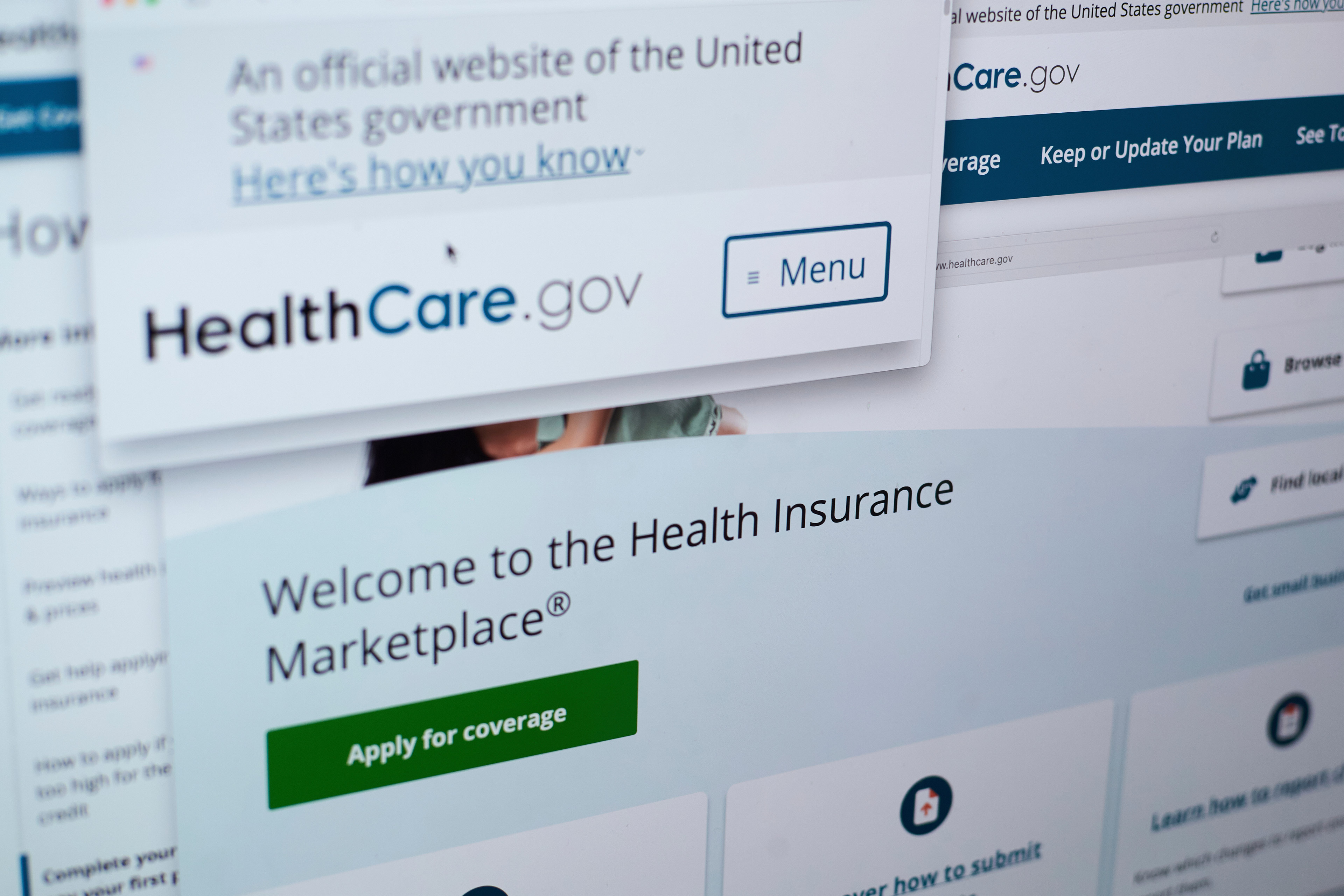
Federal regulators are aware of the increase in unauthorized switching for HealthCare.gov customers and say they have taken steps to combat it. It's unclear, though, if these efforts will be enough.
On Feb. 26, the Centers for Medicare & Medicaid Services sent a "plan switch update" to industry representatives acknowledging "a large number of 2024 cases" and outlining some of its technical efforts to resolve problems when complaints are lodged.
"CMS is committed to protecting consumers in the marketplace," writes Jeff Wu, deputy director for policy for CMS' Center for Consumer Information & Insurance Oversight, in a statement to KFF Health News.
His office refused to provide details on how many complaints it has seen or the number of agents it has sanctioned but his statement said when action is taken, CMS reports it to state insurance departments, whose authority includes revoking licenses.
Wu did not answer specific questions about whether two-factor authentication or other safeguards would be added to the federal website, though he wrote that CMS is "actively considering further regulatory and technological solutions to some of these problems."
In June, new rules kicked in that require brokers to get policyholders' written or recorded verbal consent before making changes, although brokers say they are rarely asked for those documents.
Finding out the hard way
Some unwitting enrollees, like Michael Debriae, a restaurant server who lives in Charlotte, North Carolina, not only end up in plans they didn't choose but also bear a tax burden.
That happens when enrollees are signed up for coverage that includes premium tax credits paid by the government to insurers, even though the enrollee is ineligible, either because their income was misstated by the broker making the switch, or they had job-based insurance, like Debriae.
Unbeknownst to him, an agent in Florida with whom he had never spoken enrolled him in an ACA plan in March 2023. It was two months after he canceled his Obamacare coverage because he was able to get health insurance through his job. In June, he discovered he had a new ACA policy when his longtime pharmacy said it could not fill a 90-day prescription, which it had done with no problem in the past.
"That's when I realized something horribly wrong had happened," says Debriae.
Debriae got contact information for the Florida broker, but when he called, the office said the agent no longer worked there. He filed a complaint with the federal marketplace and canceled the plan. But he still owed the IRS part of the $2,445 in premium tax credits paid to the insurer from March until July on his behalf.
To be sure, some switches could be legitimate, when enrollees choose a different broker or plan. And agents do have a vested interest in raising the issue. They lose out on commissions when their clients are switched by other agents. But brokers whose clients have been switched through unauthorized transactions say the real losers are consumers.
"People literally losing their plans is fraud, absolute fraud, not a squabble between agents," says Leslie Shields, an insurance broker in Fort Worth, Texas.
Patients' new plans might not include their doctors or might come with higher deductibles than their former coverage. Because the agent on the policy is generally switched, too, enrollees don't know whom to call for help.
"You have surgeries that can't happen, providers that can't be seen, or have been changed," says Shields. "It's happened in the past, but now it's literally the worst I've seen."
Ease of access to policyholders' accounts on the federal marketplace is a double-edged sword, agents say: It aids enrollment, but also makes it easier to switch plans without consent.
"Those bad eggs now have access to all this private information about an individual," including household income, Social Security numbers, and dependents, says Joshua Brooker, a broker who follows the issue closely as chair of a marketplace committee for the National Association of Benefits and Insurance Professionals, a trade group.
Complaints gained momentum during the most recent open enrollment period, agents say. One worker in a government office that helps oversee operations of the federal exchange told KFF Health News of personally handling more than 1,200 complaints about unauthorized switches or enrollments in the past three months, averaging about 20 a day. About 30 co-workers are working on similar complaints. It can take multiple days to resolve the most urgent cases, and two to four weeks for those deemed less urgent, the worker said.
Florida, Georgia, and Texas appear to be plan-switching hotbeds, agents say . Florida and Texas officials referred questions to federal regulators. Bryce Rawson, press secretary for the Georgia Department of Insurance, says the state saw no switching complaints last year and has about 30 so far in 2024, a small number but one it is taking seriously: "It's still an active and ongoing investigation."
By contrast, states that run their own marketplaces — there are 18 and the District of Columbia that do — have been more successful in thwarting such efforts because they require more information before a policy can be accessed, Brooker says.
In Colorado, for example, customers create accounts on the state's online market and can choose which brokers have access. Pennsylvania has a similar setup. California sends a one-time password to the consumer, who then gives it to the agent before any changes can be made.
Adding such safeguards to HealthCare.gov could slow the enrollment process. Federal regulators are "trying to thread a needle between making sure people can get access to coverage and also providing enough of a barrier to capture anyone who is coming in and acting nefariously," says Brooker.
How does it happen?
Many people have no idea how they were targeted, agents say.
Jonathan Kanfer, a West Palm Beach, Florida, agent, suspects names and lists of potential clients are being circulated to agents willing to bend the rules. He says his agency has lost 700 clients to switching.
Brokers can get a monthly commission of roughly $20 to $25 per enrollee.
"Two weeks ago, someone telemarketed me, gave me a number to call to get leads for Obamacare," Kanfer says. The person told him: "You don't even have to speak with the people."
Online or social media advertising is a way some outfits troll for prospects, who then end up on lists sold to brokers or are contacted directly by agents. Such lists are not illegal. The problem is the ads are often vague, and consumers responding may not realize the ads are about health insurance or might result in their policies being changed. Such ads promise free "subsidies" worth up to $6,400, often implying the money can help with groceries, rent, or gas. Some do mention "zero-dollar" health insurance.
Yet agents say the ads are misleading because the "subsidies" are actually the premium tax credits many people who enroll in ACA plans are eligible for, based on their income.
"They're portraying it like it's money going into your pocket," says Lauren Jenkins, who runs an insurance brokerage in Coweta, Oklahoma, and has seen about 50 switching cases in recent months. But the money goes to insurers to offset the price of the new plan — which the consumer may not have wanted.
Ambetter Health — a division of Centene that offers ACA plans in more than two dozen states — sent email alerts to brokers in September and November. One noted a jump in complaints "stemming from misleading advertisements." Another warned of "termination actions" against bad actors and directed agents not to collect consumer information or consent via "online forms or social media ads."
In response to the switching, Ambetter also instituted a "lock" on policies starting at midnight on Dec. 31, meaning the agent on the policy by that deadline would remain on it for all of 2024, according to an email the insurer sent to brokers.
Results are mixed.
Adam Bercowicz, a licensed independent broker in Fort Lauderdale, Florida, said he and his staff worked New Year's Eve, monitoring their client lists and watching as some were switched before their eyes.
"If I saw one of my clients was stolen from me at, let's say, 11:57 p.m., I put myself back on," said Bercowicz, who estimates he's had 300 to 400 policies overtaken by other agents not connected to his staff in recent months. "And by 11:58 — a minute later — they were already switched back."

Is it only private agents who can be guilty of this behavior, or are state actors subject to the same standards?
Similar stories emerged during the Obamacare roll-out in 2013-2014. Families enrolled all members in a "Marketplace" plan, only to discover, when a child was not allowed to see the same physician as the rest of the family, that they had been enrolled in Medicaid instead.
This is a feature, not a bug, and it goes beyond the ACA. Insurance agents have been "scalping" Medicare patients for years.
The common thread here is CMS, with Big Insurance holding the reins. It's a mistake to assume it's not happening in "secure" state exchanges.
I'd take this phenomenon as another reason to avoid government-run healthcare. Instead, we should demand transparency and legal accountability from insurance companies - that is, a return to contracts instead of "plans."
Get MHF Insights
News and tips for your healthcare freedom.
We never spam you. One-step unsubscribe.
Sponsors

J & DE Family Charitable Fund

Friends
of MHF

Kelly Grotendiek
Philip Harbach
Dale Johnson
Drs. Jeffrey and Joni Jones
Vickie Kahle
Tammy Kipen
Marlin & Kathy Klumpp
Melanie Kurdys
Ruth Nobel
Patrick Peterson
Stephanie Poortenga
Jeanne Smit
Ben and Hope Staal
John Tuinstra
Jacki VanHuis
Sandy Walker
Sign Up for MHF Insights to keep up on the latest in Michigan Health Policy