










Michigan healthcare freedom community forum

One of the more craven frauds in health care is the widespread declaration of nonprofit status by hospitals and other health care institutions. They have no shareholders, but administrators and officers earn top tier salaries with excellent benefits which compare to the private sector. Nonprofit health care institutions are at least as aggressive in expanding their financials as for profit hospitals.
Does the public benefit by allowing these institutions to escape taxation?
https://www.goodmanhealthblog.org/should-nonprofit-hospitals-do-more-to-earn-their-tax-exemption/
Should Nonprofit Hospitals Do More to Earn Their Tax Exemption?
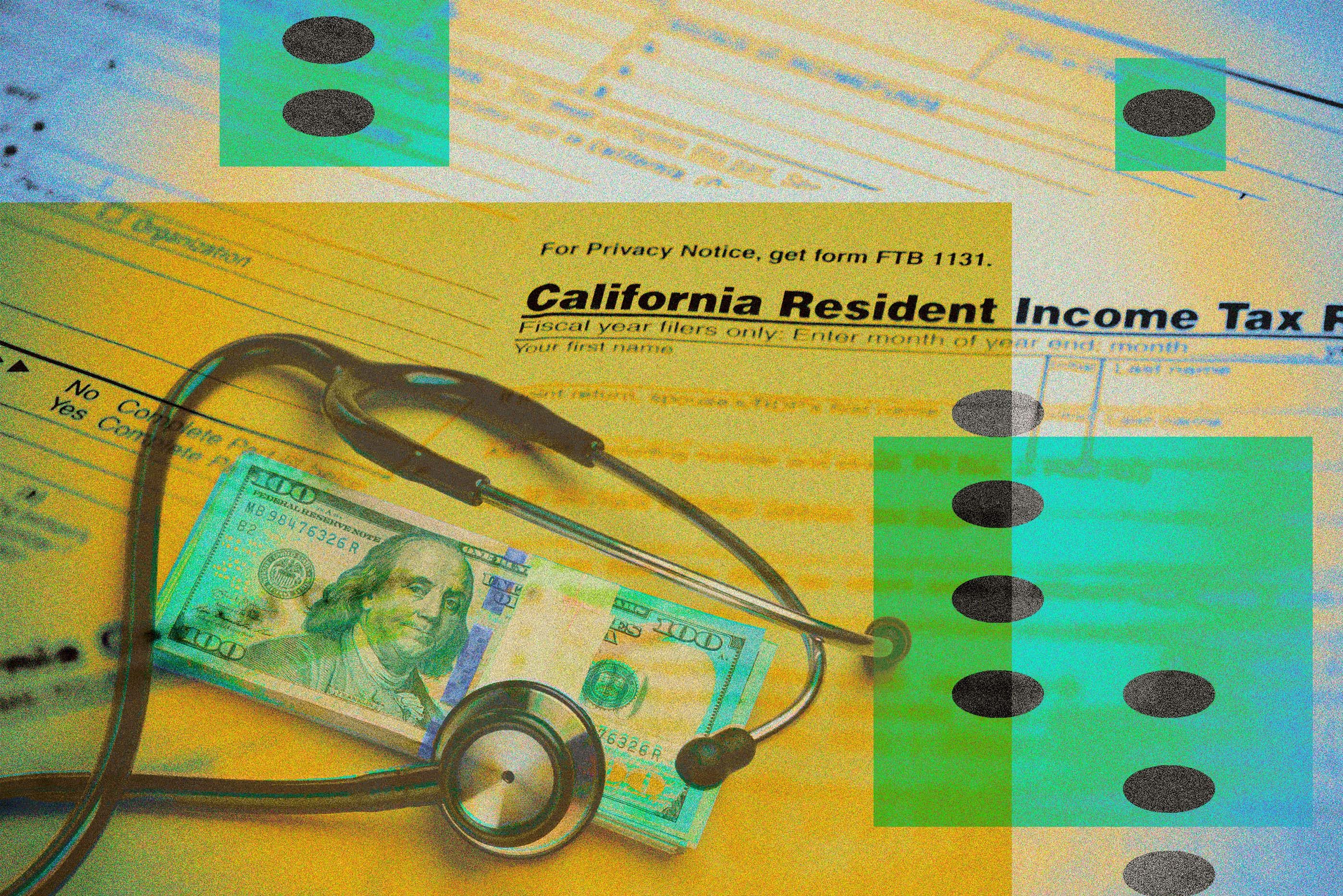
By Devon Herrick - October 9, 2025There are nearly 3,000 nonprofit hospitals in the United States. Keep in mind, nonprofit status is a tax election. It does not mean a hospital is not trying to earn a profit. Rather, it means a hospital is trying to either: a) break even by spending its profits on a charitable mission, or b) plowing profits back into expansion. Hospitals tend to do the latter, rather than the former. The following is from a study in JAMA:
A total of 2927 US nonprofit hospitals received a $37.4 billion total tax benefit in 2021 from federal income tax ($11.5 billion; 31%), sales tax ($9.1 billion; 24%), property tax ($7.8 billion; 21%), state income tax ($3.7 billion; 10%), charitable contributions ($3.2 billion; 8%), bond financing ($2.1 billion; 6%), and federal unemployment tax ($200 million; <1%). Tax benefit varied substantially across states, from $25 098 (Delaware) to $159 464 (Massachusetts) per hospital bed and from $19 (Alabama) to $275 (Massachusetts) per capita. Tax benefit was highly concentrated, with 7% (n = 212) of hospitals accounting for half of the total amount.
Nonprofit hospitals earn their tax-exempt status by providing community benefits. Previous studies have shown that the vast majority of nonprofit hospitals (more than 85%) perform less charity care than the value of their tax exemption, often less than their for-profit counterparts. Why would a nonprofit with a charitable mission perform less charity care than a for-profit hospital? Researchers have found that people sometimes behave like a good deed (e.g. being a nonhospital) offsets a bad one (like performing less charity care than they should). Community benefits vary considerably across hospitals and across states. Research has also found that some hospitals are very generous with providing community benefits, while others are stingy. One-in-five nonprofit hospitals provides only about 4% of net expenses in community benefits, while one-third generates more than 10%.
As mentioned above, hospitals provide community benefits in return for their tax exemption. The key to whether this is beneficial has to do with how you define community benefits. In return for about $37.4 billion in tax benefits (2021) hospitals claim to provide a total of about $94 billion in community benefits (2022). This sounds like a bargain for taxpayers, but perhaps it is not. Of the $94 billion, only $21 billion was charity care. Other community benefits were education & research ($33 billion) and treating Medicaid patients (claiming a $41 billion benefit because Medicaid pays less than Medicare and private insurance). Nonprofit hospitals also experienced $26 billion in bad debts. Some hospitals claim bad debts written off benefit the community. When I worked in a nonprofit hospital, the accountants routinely wrote off bad debts to charity care until the lawyers told us to stop.
The notion of generous tax exemptions in return for community benefits raises an important question: What type of community benefits should hospitals produce? Most people would probably say treating the poor and providing care to indigent patients who cannot afford care on their own is an important mission. Perhaps hospitals could help the community by operating a series of community clinics where patients could seek care without an appointment and at affordable prices. I would also argue price transparency not only for those who lack coverage but also those with health coverage wishing to compare prices is charitable. In addition, why not provide affordable care options for those paying cash? Wouldn’t a community benefit also be a hospital not price gouging their community, including not gouging the local employer community? Many of these are common sense. It makes me wonder why they are incorporated into regulations. Instead, what functions as community benefits are some contrived faux benefits and charity care that equals no more than 4% to 5% of net revenue in many states. Furthermore, hospitals have consolidated to the point where most major cities exist within a hospital cartel that is not competitive.
I also wrote about charity care here.
Also see: “Estimation of Tax Benefit of US Nonprofit Hospitals,” JAMA, September 26, 2024.
“The Significance of Definitions in Determining the Level of Community Benefits for Nonprofit Hospitals,” The Milbank Quarterly, July 2025.
Analysis of the feckless nonprofit tax exemptions and other polite health care provider scams by Devorah Goldman at City Journal:
https://www.city-journal.org/article/nonprofit-tax-exempt-hospitals-medical-care
Nonprofit Hospitals in the Crosshairs
Democrats and Republicans could join forces to rein in some health systems’ abuse of their tax-exempt status.
Devorah Goldman - October 16 2025Last month, the U.S. House Ways and Means Committee held an oversight hearing with the colorful title “Virtue Signaling vs. Vital Services: Where Tax-Exempt Hospitals are Spending Your Tax Dollars.” The witnesses included Stanley Goldfarb of Do No Harm, who noted that billions of dollars in tax subsidies are spent on “DEI pledges, training mandates, and equity bureaucracies” at charity hospitals or academic medical centers across the country.
Nonprofit health systems have traditionally been celebrated on the left and criticized on the right. To the former, they held out the promise of free or low-cost care for the needy, while supporting a range of Democratic causes through legislative advocacy. Many conservatives, meantime, saw tax-exempt medical institutions as bloated, expensive, impersonal, government-subsidized threats to the small doctor’s office and the tailored care that comes with it.
Today, however, the concerns are bipartisan. Even avowed socialists like Vermont Senator Bernie Sanders and New York mayoral candidate Zohran Mamdani are criticizing nonprofit hospitals for reaping huge tax-free profits while ignoring their pledges to provide low-cost medical care.
As Mamdani pointed out in Jacobin, the CEO of NYU Langone took home roughly $23 million in 2023. The nonprofit hospital nets many millions in profit on its billions in revenue, and it charges more than twice as much as other nearby hospitals for routine procedures like C-sections. Mamdani’s article criticized NYU Langone for abandoning its stated mission of caring for the poor and failing to justify its cost to taxpayers.
Many conservatives agree. Peter Pitts, the president and co-founder of the Center for Medicine in the Public Interest and a former associate commissioner of the FDA, recently published a report examining ways in which nonprofit hospitals drive unsustainable health-care costs. Pitts notes that the savings from their across-the-board exemptions from federal, state, and local taxes far exceed the costs of the charity care they provide.
In New York alone, the “fair share deficit” for nonprofit hospitals—the amount by which their tax savings outstrip their charity expenditures—exceeded $1 billion in 2018. In 2023, NYU Langone netted well over $1.3 billion in profits before factoring in tax savings. New York Presbyterian Hospital netted nearly $500 million. The list goes on.
These hospitals receive hundreds of millions in tax-deductible charitable donations each year. Donors gave $435 million to Memorial Sloan Kettering Cancer Center, NYU Langone, and Montefiore Medical Center in 2020.
Even with all this largesse, nonprofit hospitals frequently invest in advertising to attract privately insured patients. NYU Langone spent over $34 million on advertising in 2019. Nonprofit hospitals point to increased costs to justify high prices for services, but their publicly available tax returns reveal soaring profit margins and CEO pay. Many nonprofit hospitals also invest in real estate holdings beyond traditional hospital facilities as a means of generating additional income.
Nonprofit hospitals also frequently pursue aggressive debt collection, including wage garnishments and lawsuits against patients, noted Pitts. And they often refuse to comply with federal requirements to inform patients about the prices of their services in advance.
Republicans on Capitol Hill have begun focusing on these issues. In addition to the hearing noted above, in August 2025 the House Ways and Means Committee publicized a Health Affairs study that found a large number of nonprofit urban hospitals “are exploiting a Medicare definition that allows them to be considered both ‘urban’ and ‘rural’ simultaneously, letting them draw down generous benefits and reimbursement models specifically intended for rural communities.”
“Hundreds of sophisticated urban hospitals have gamed Medicare’s wage index to get the financial benefits of being urban facilities, while, at the same time, posing as ‘rural’ to receive the significant benefits Congress intended for truly rural hospitals,” says the report.
Reining in nonprofit hospitals’ abuse of their status presents a genuine opportunity for Democrats and Republicans to join forces. To be sure, they have different reasons for doing so—progressives, to facilitate more government spending; conservatives, to ease the burden on taxpayers. But both are in broad agreement that nonprofit hospitals should not be permitted to abuse their tax-exempt status to enrich their executives, engage in real-estate speculation, and extort people seeking affordable care—all while raking in millions in donations.

All excellent questions!
I'd love to see all nonprofit hospitals' tax-exemption made subject to local referendum. Every 1-3 years should be adequate to distract the C-suite from chasing federal and insurance funds, at least long enough to campaign for local support.
Get MHF Insights
News and tips for your healthcare freedom.
We never spam you. One-step unsubscribe.
Sponsors

J & DE Family Charitable Fund

Friends
of MHF

Kelly Grotendiek
Philip Harbach
Dale Johnson
Drs. Jeffrey and Joni Jones
Vickie Kahle
Tammy Kipen
Marlin & Kathy Klumpp
Melanie Kurdys
Ruth Nobel
Patrick Peterson
Stephanie Poortenga
Jeanne Smit
Ben and Hope Staal
John Tuinstra
Jacki VanHuis
Sandy Walker
Sign Up for MHF Insights to keep up on the latest in Michigan Health Policy