- The dental workforce trends that will dominate 2026

- Federal Medicaid cuts threaten dental care access: See the potential impact by state
- Children’s Mercy raises $150M for mental healthcare
- California awards $291M to expand behavioral health housing, services
- Think bigger – Turning AI from Trends to Long-Term Transformation
- UnityPoint Health hospital names market chief nursing officer
- OhioHealth builds well-being programs to reshape caregiver culture
- Washington hospital staff vote ‘no confidence’ in management company
- U of Mississippi Medical Center restores phone lines after cyberattack
- 13 health system IT leadership moves
- How health systems are repositioning informatics
- Mississippi hospital names COO
- Ex-Amazon Health leader joins Spotify founder’s health tech startup
- Know the True Value of Your Lab When an Offer Is on the Table
- U of California offers 32% wage hike in union talks
- UF Health taps new outpatient senior VP
- UAMS names new director of cardiovascular medicine division
- CMS’ add-on billing code boosts specialist pay: Study
- Lawmakers introduce bill to reverse Medicaid cuts, expand Medicare benefits
- Florida medical center to expand with ASC
- New Jersey woman charged with practicing unlicensed dentistry
- CMS extends hospital-at-home waivers for 5 years: What ASCs need to know
- 100+ organizations call on CMS to revise 2027 MA rates
- The retention breakthrough anesthesia needs
- Oklahoma advances interstate compact bill
- Brown University Health names new chief of cardiac surgery
- UNC Health Appalachian offers psychiatric physician training program
- Former PepperPointe Partnerships COO joins DPO
- The Smilist expands into Virginia
- Physician-led orthopedic ASC opens in Florida
- Colorado Medicaid ABA audit finds $77.8M in improper payments
- Georgia opens 30-bed forensic mental health unit to ease jail backlog
- Pennsylvania county cuts ribbon on $19.8M mental health diversion center
- Outpatient cardiology’s CMS whiplash
- 12 new ASCs in February
- UHS to roll out behavioral health revenue cycle AI tools in 2026
- UHS to roll out behavioral health revenue cycle AI tools in 2026
- 15 dentists making headlines
- CMS to suspend enrollment into Elevance’s Medicare Advantage plans
- Report: Most states investing in value-based care with Rural Health Transformation Program
- U.S. Tops 1,100 Measles Cases This Year as Outbreaks Grow
- FDA To Offer Cash Bonuses for Faster Drug Reviews
- 10 providers seeking RCM talent
- PDS Health added de novos across 3 states in February
- Novant posts 4.8% operating margin in 2025
- 'One2PrEP': Gilead's 1st Yeztugo DTC ad reimagines hit song to highlight biannual dosing
- Cleveland Clinic posts $913M operating income, 5% margin — 7 things to know
- Former Optum CEO Heather Cianfrocco to depart UnitedHealth Group
- New Drug, Acoziborole, Could Boost Efforts to Wipe Out Sleeping Sickness
- Chocolate Male Supplement Recalled Over Hidden Erectile Dysfunction Drug
- Clinician Engagement: The Operating Lever Behind Margin and Throughput
- Your Anesthesia Subsidy: Key Questions Every Hospital C-Suite Must Answer
- Amid unfolding Middle East war, pharma giants keep close eye on employee safety, supply chains
- CMS set to suspend enrollment in Elevance Health's Medicare Advantage plans
- Kennedy adds 2 new members to CDC’s vaccine panel ahead of delayed meeting
- Kennedy adds 2 new members to CDC’s vaccine panel ahead of delayed meeting
- Urban Traffic Noise Disrupts Sleep, Affects Heart Health After One Night
- Hormone Therapy Might Be Unnecessary For Some Prostate Cancer Patients
- Benzodiazepine Use Down In U.S., But OD Risk Remains, Study Says
- GLP-1 Drugs Might Ease Chronic Migraine, Study Says
- Blood Test Reveals Alcohol-Related Liver Disease
- Telemedicine Visits Cost Five Times Less Than In-Clinic Care
- Families Defend Disability Services Amid Medicaid Cuts

- Medicaid Is Paying for More Dental Care. GOP Cuts Threaten To Reverse the Trend.

- Bavarian Nordic CEO to follow board chair out the door after failed private equity takeover
- Ascendis gains more altitude with FDA approval for dwarfism drug Yuviwel
- CDMO Quotient extends Ipsen supply pact for rare disease drug Sohonos
- Quest Diagnostics launches Google-powered AI chatbot to help patients understand lab results
- Tennr takes aim at phone call bottlenecks as it builds out automation for patient referral process
- DoseSpot, Arrive Health merge to combine prescribing tools with pharmacy, medical benefit data
- Why Digital Tool are Needed to Cope with Increasing Pressures in MedTech Innovation

- Why Digital Tool are Needed to Cope with Increasing Pressures in MedTech Innovation
- Electronics Pollution Pose Added Threat to Endangered Dolphins, Porpoises
- Flea And Tick Pills May Pose Environmental Risks, Study Finds
- ICE, ALS, Addiction Medicine, and Robotic Ultrasounds: Journalists Sound Off on All That and More

- 11 behavioral health executive moves to know
- 3 behavioral healthcare M&A deals in 2026
- Anthem Blue Cross of California pushes E/M downcoding policy to April
- Iowa dentist surrenders license
- Temple University gets approval for $3.19M rural dental clinic
- A Canadian Hospital Scoops Up Nurses Who No Longer Feel Safe in Trump’s America
- Statement on the Adoption of Final Rules Under the Holding Foreign Insiders Accountable Act
- Statement on Final Rules for the Holding Foreign Insiders Accountable Act
- State Medicaid budgets to weather $664B reduction through 2034 due to OBBBA: RAND
- Clover Health CEO said company sees opportunity in complex MA environment
- How pharma marketers are capturing the power of podcasts to connect with consumers
- Cigna's Evernorth quietly acquires hospital pharmacy CarepathRx
- Walgreens debuts virtual weight management clinic with access to GLP-1 meds
- New Obamacare Rules Could Raise Deductibles to $31K For Families
- Study Suggests One Common Amino Acid May Affect How Long Men Live
- Merck to wind down Gardasil production at N.C. plant, lay off 150-plus
- Walmart Great Value Cottage Cheese Recalled Over Pasteurization Issue
- Chris Bosh Says He’s 'Lucky To Be Alive' After Sudden Health Scare
- Patrick Kennedy: Collab with MAHA is essential to address mental health crisis
- Lilly debuts Nvidia supercomputer with fanfare and focus on escaping traditional pharma lifecycle
- Alignment CEO John Kao offers measured response to proposed 2027 MA rates
- Sanofi, Genentech, Kedrion back star-studded bleeding disorder awareness campaign
- Op-ed: Our patients deserve better safety reporting. AI could be the answer
- After CHMP nod, Moderna CEO applauds EU's 'rigorous scientific review'
- UCB's fast-growing Bimzelx leaps across blockbuster sales threshold as HS momentum builds
- How the Brain Learns to Have Seizures During Sleep
- Blood Test Can Predict Short-Term Survival Among Seniors
- Why Turning 19 Spikes Medicaid Loss for Millions
- Crash Course Might Speed Brain Stimulation Treatment For Depression, Study Suggests
- Wildfire Smoke Linked To Increase In Violent Assaults
- More Parents Are Refusing A Life-Saving Shot For Their Newborns, Study Finds
- He Needs an Expensive Drug. A Copay Card Helped — Until It Didn’t.

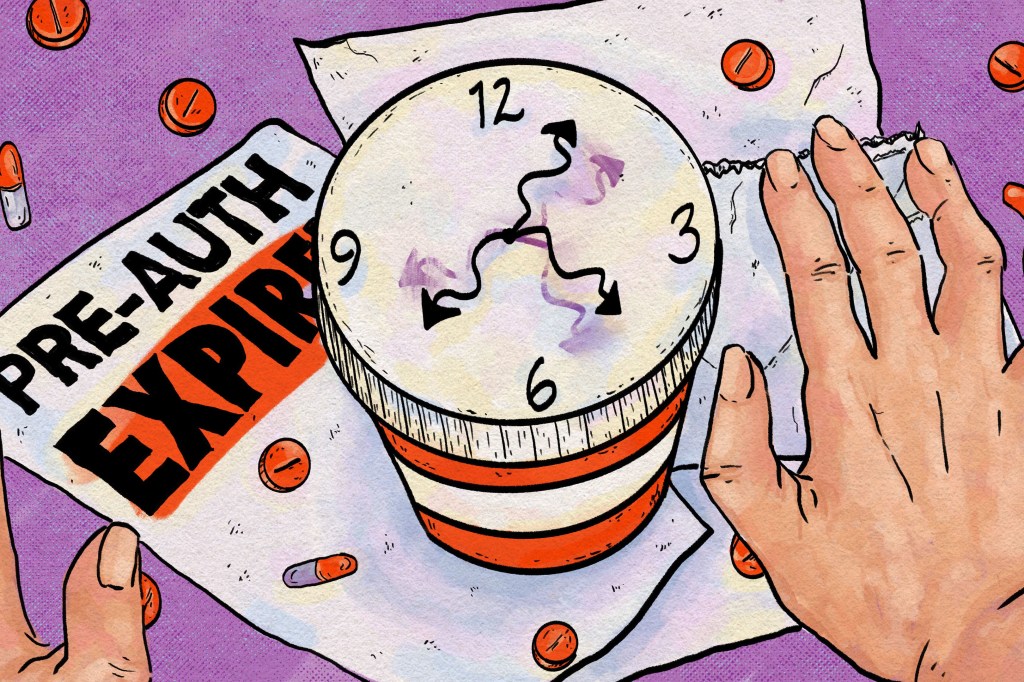
- To Avoid Care Disruptions, Know When the Clock Runs Out on Your Prior Authorization
- As SCOTUS takes on 'skinny label' review, top US lawyer sides with generics maker
- Lake Nona Impact Forum: There can't be longevity without tech
- Fierce Pharma Asia—China deal growth; Daiichi's new CMO; Astellas-Vir bispecific tie-up
- Autoimmune CAR-T: Navigating the FDA’s new regulatory playbook
- FDA Approval for BIOTRONIK Solia CSP S Pacing Lead For LBBAP

- FDA Approval for BIOTRONIK Solia CSP S Pacing Lead For LBBAP
- Catalyst OrthoScience gets FDA 510(k) Clearance of Archer® Patient-Specific Instrumentation for Shoulder Arthroplasty
- Catalyst OrthoScience gets FDA 510(k) Clearance of Archer® Patient-Specific Instrumentation for Shoulder Arthroplasty
- Smith+Nephew signs distribution agreement with SI-BONE
- Smith+Nephew signs distribution agreement with SI-BONE
- Quantum Surgical Acquires NeuWave Medical, Inc.
- Quantum Surgical Acquires NeuWave Medical, Inc.
- How Pharma is Expanding its Global Footprint to Advance Clinical Research
- Partnering to Advance Drug Delivery Innovation
- What the Health? From KFF Health News: What About the State of Health?
- Teladoc Health reports slower growth, offers cautious 2026 outlook as it shifts telehealth model
- CFO Mark Kaye to take the helm at Carelon in leadership shake-up at Elevance Health
- Insurance groups say proposed flat Medicare Advantage rates fail to meet the moment
- Health Gorilla urges court to toss lawsuit filed by Epic, health systems
- Stryker launches Synchfix™ EVT, expanding options for flexible syndesmotic fixation
- Stryker launches Synchfix™ EVT, expanding options for flexible syndesmotic fixation
- Democrat-Led States Sue Trump Administration Over Cuts to Childhood Vaccine Schedule
- CDC Vaccine Advisory Panel To Revisit COVID Shot Safety Next Month
- Frozen Blueberry Recall Issued Across Four States for Listeria
- Boehringer's Hernexeos secures speedy first-line expansion in FDA's 2nd national priority nod
- 'Like talking to a brick wall': Senate hearing takes aim at FDA's rare disease review process
- After delay, CDC vaccine panel sets new dates to discuss long COVID and mRNA shot safety
- Decision Criteria for Technology Commercialization of Medical Devices in 2026
- Decision Criteria for Technology Commercialization of Medical Devices in 2026
- Cientos de enfermeros estadounidenses dejan atrás el Estados Unidos de Trump y eligen trabajar en Canadá

- Continuous Cardiac Monitoring: Redefining the “End” of a Clinical Study?
- Continuous Cardiac Monitoring: Redefining the “End” of a Clinical Study?
- Could Drone-Delivered Defibrillators Save Lives?
- Inflammation Linked To Brain Damage, Memory Problems Among Football Players
- Early Birds, Active Folks Less Likely To Develop ALS
- Disasters Can Affect Mental Health A Decade Later, Review Finds
- AI Chatbots Can Contribute To Worsening Mental Illness, Study Finds
- Newborns Exposed to More ‘Forever Chemicals’ Than Once Thought
- Study Highlights Unique Parenting Struggles of Younger Patients With Heart Disease
- Altman-backed startup Verifiable rolls out AI agent to automate credentialing
- ‘You Aren’t Trapped’: Hundreds of US Nurses Choose Canada Over Trump’s America
- ‘Kind of Morbid’: Health Premiums Threaten Their Nest Egg. A Terminal Diagnosis May Spare It.



Bridge Michigan magazine has posted a good situation report on the sorry state of Michigan health care which includes some eye watering statistics and numbers:
Michigan health care woes: Insurers leaving, rates rising, subsidies in limbo
By Eli Newman - October 24, 2025* Some major insurers are said to be leaving the state’s Affordable Care Act exchange
* About 530,000 state residents who get their health insurance on the individual market are facing a 16.8% rate hike
* Some analysts estimate 64,000 people in Michigan will go uninsured next yearWith less than two weeks until open enrollment starts, thousands of Michigan residents face a triple challenge.
Not only are premiums going up, but thousands of people who get their health insurance through the Affordable Care Act marketplace may be forced to switch plans because their providers are either fleeing the state’s ACA exchange or scaling back coverage. In addition, it’s uncertain whether enhanced premium subsidies for ACA plans will continue.
About 200,000 individuals may be unable to renew with their current insurer, Joe Sullivan, director of the Office of Innovation and Research at the Michigan Department of Insurance and Financial Services (DIFS), told state lawmakers this week.
Some providers have had to “reevaluate their position” in the state, Sullivan said, amid a federal overhaul of coverage in the Trump era and the ongoing debate over health care subsidies, which are a central issue in the government shutdown.
Members of Congress have been wrangling over a temporary spending plan, and whether it will include an extension of an “enhanced” ACA premium tax credit benefiting millions of Americans.
“The volatility caused by the inaction on enhanced premium tax credits and marketplace reforms have led to a variety of types of withdrawals, including issuers declining to offer certain plan types or remain in certain areas of the state, some withdrawals from just the marketplace or withdrawals from the individual market as a whole,” Sullivan told the Michigan Senate Health Policy Committee on Wednesday.
Hints of Michigan’s changing health care landscape are already appearing on the horizon:
* HAP CareSource notified the state in September it would discontinue its individual marketplace plans for nearly 19,000 enrollees.
* Michigan Medicine is dissolving its UM Health Plan, formerly known as the Physicians Health Plan (PHP), affecting 64,000 enrollees in the Lansing area, citing “significant financial losses over the past few years.”Several health insurance brokers — including Cornerstone, MRW Solutions Group and Agility Insurance Services have warned their Michigan customers of other carriers pulling out. Those said to be scaling back in Michigan include Ambetter Health, from Meridian Health Plan, and Molina Healthcare, which has about 36,000 individuals on the exchange. Neither company immediately responded to Bridge Michigan’s request for comment.
Proposed rate hikes
Whether covered by ACA or an employer, Michigan residents can expect to pay more for health insurance in 2026, according to the rate requests insurers submitted over the summer to the Michigan Department of Insurance and Financial Services.
The state is expected to post approved rates once open enrollment starts on Nov. 1, but projections show nationwide, the average ACA plan will rise by 30%.
Michigan’s health insurance providers requested an average rate hike of 16.8% for the insurance policies sold to individuals, including plans they offer on the ACA marketplace. Those policies cover 530,000 people in Michigan.
In all, 121 of 251 individual plans have a proposed rate hike of 15% or more. One hundred seventy-eight plans, including those provided by Blue Cross Blue Shield of Michigan and Priority Health, will be listed on the ACA health care marketplace.
Small group plans, which cover some 412,000 people working at companies with 50 or fewer employees, are set to see an average rate hike of 11.1%.
Large business plans, which are usually exempt from state insurance mandates, are expecting their largest rate increases in 15 years — 6.5% on average — according to the global consulting firm Mercer.
Sullivan said 90% of state residents who get their plans on the ACA individual market also take advantage of enhanced premium tax credits, saving an average of more than $380 a month.
Those subsidies were temporarily expanded during the COVID-19 emergency and extended in subsequent legislation under the Biden administration, but are slated to expire at the end of the year.
“An estimated 40,000 Michigan families currently enrolled in coverage through HealthCare.gov will no longer receive any premium tax credits,” Sullivan said.
Without an extension, Sullivan said rates are expected to rise for every resident who enrolls in health care coverage.
A ‘double whammy’
Rachel Richards, the fiscal policy director for the Michigan League for Public Policy, told lawmakers in a hearing of the Senate Health Policy Committee this week that households will see a “double whammy” in rate hikes next year — the forecasted rise in costs and the loss of the enhanced premium tax credits.
“A 60-year-old Michigan couple that’s making roughly $82,000 a year would see their annual premiums increase from just shy of $7,000 a year to more than $20,000 a year,” Richards said.
Changes in HR 1, or the One Big Beautiful Bill Act, will also eliminate automatic reenrollment, which Richards says was used by more than half of marketplace users this year.
The resulting changes will result in 108,000 fewer Michiganders being covered on the marketplace next year, according to an analysis from the Urban Institute. The DC-based think tank estimates 64,000 people in the state will go uninsured in 2026.
Michigan’s health insurer lobbyists have joined the chorus of those voicing concerns about the upcoming rate hikes.
“If these tax credits are allowed to expire, the impact will be immediate and severe,” Christine Shearer, deputy director of legislation and advocacy for the Michigan Association of Health Plans, told the committee.
“The potential loss of federal tax credits, combined with rising medical inflation and escalating prescription drug costs could result in some of the steepest premium increases seen in nearly two decades.”
The health plan association is advocating for policy solutions to address the forthcoming changes.
The group says a Basic Health Program, which would provide insurance coverage for individuals just above the Medicaid income threshold could help, along with small business assistance funding, state employee insurance reform and expanding access to association health plans to allow smaller businesses to purchase plans in the large group market.
Bridge Michigan posted a follow up article yesterday specifically addressing the eye watering Michigan health care insurance premium increases.
Unstated in this article: Each and every one of these reasons for skyrocketing premiums were directly caused by the Patient Protection and Affordable Care Act (PPACA), and the follow on Inflation Reduction Act. None will go away until both acts are repealed:
Five reasons health insurance rates are rising so much in Michigan
By Eli Newman - November 5, 2025* Michigan’s insurers have raised individual marketplace rates more than 20% on average for 2026
* Many factors contribute to the rise — market consolidation, expiring government subsidies, drug prices, inflation and hospital costs
* Marketplace and Medicare plans must be selected by Dec. 18 for coverage to begin in JanuaryMichael Steinberg is “petrified” about finding coverage on the individual Affordable Care Act marketplace, where Michigan’s insurers have raised rates more than 20% on average for 2026.
The 62-year-old criminal defense attorney lives in West Bloomfield and needs insurance to cover medication for diabetes and high blood pressure and related doctor visits.
“For me to have an individual health care plan, it’s like over $1,300 a month,” Steinberg told Bridge Michigan, explaining that he has a $4,000 annual deductible for pharmaceuticals and a $7,500 deductible for medical expenses. “It’s egregious.”
Ahead of open enrollment, which started Saturday, Steinberg, along with several Michigan residents, expressed outrage over the planned health insurance rate hikes, drafting letters to the state to voice their concerns.
One woman from Grand Rapids said she’s resorted to donating plasma for money to keep up with payments, all while holding down a full-time job as a state employee. Several people stated their monthly premiums have surpassed what they pay on their home mortgages.
The comments represent the frustrations of a system millions contend with each year.
Michigan residents will need to sign on to new HealthCare.gov plans during open enrollment before Dec. 18 if they want their insurance to take effect at the start of the new year. Others face higher costs for employer-provided and Medicare plans.
Policy analysts and health care stakeholders offer a variety of reasons for the trend — from increasing costs for drugs and hospital care to acts of Congress:
Providers leaving the state
The number of Michigan health insurance providers offering plans that individuals can purchase has dropped steeply.
The state had 41 health insurers offering individual plans in 2011, according to the Government Accountability Office. That number fell to 12 by 2022.
That year, Michigan’s top three health insurers — Blue Cross Blue Shield, Priority Health and Meridian — held 88% of the individual group market share, according to the congressional budgeting office. Large insurers control an even bigger share of employer-provided plans.
While state insurance regulators say the state has historically had a “robust market,” providers are continuing to drop coverage.
“For plan year 2026, Michigan will have 10 issuers in the individual market in 2026, down from 12 in 2025,” Chelsea Lewis, spokesperson for the Michigan Department of Insurance and Financial Services, told Bridge Michigan in an email. “On the Marketplace, Healthcare.gov, Michigan will have 7 issuers, down from 10 in 2025.”
Among the large insurers to remove plans from the ACA exchange next year is Health Alliance Plan (HAP). The company’s president, Margaret Anderson, cited capacity issues among other reasons.
“We would not have the financial resources to keep all of our other lines of business afloat had we decided to stay in the marketplace,” Anderson told Bridge, projecting “significant losses” for next year based on “uncertainties and the increasing cost of marketplace claims, both on a pharmacy and a medical perspective.”
HAP has about 490,000 members today, offering individual plans off-exchange along with commercial and Medicare Advantage coverage.
Congressional analysts say reducing the number of available plans causes premiums to rise, which in turn, “may result in decreased consumer access to affordable health insurance.”
“Although some studies find that concentration can result in reduced costs for issuers … and lower prices paid by issuers to providers for medical care, these savings may not be passed on to consumers as lower premiums,” GAO health care director John Dicken wrote in a 2024 analysis of national private health insurances.
Expiring tax credits
One of the biggest reasons premiums are going up is that insurers are preparing for the end of an enhanced premium tax credit program for health insurance plans bought through HealthCare.gov.
The future of these tax credits lies at the heart of the government shutdown, as lawmakers debate extending the subsidies further. Democrats want assurances that the credits will be extended into the new year and that Medicaid cuts previously approved by President Donald Trump will be reversed. Republicans want to end the shutdown first, holding off on any health care policy negotiation until after a funding bill is approved.
“Congress’s failure to extend the enhanced advanced premium tax credits also contributed to higher rates, as fewer young and/or healthy people are expected to sign up for insurance, which adversely impacts the risk pool,” Lewis said.
Policy analysts estimate 484,000 state residents use the health care subsidy and its expiration may drive people to drop coverage.
“Without the renewal, families will see their monthly premiums skyrocket by more than $400 a month, with some people facing much higher increases,” Monique Stanton, president and CEO of the Michigan League for Public Policy, said during a news conference Tuesday supporting the tax credits.
Stanton said without coverage, patients are more likely to seek medical care at emergency departments, which would raise costs for the overall health care system.
Rising inflation
“Maintaining a facility or purchasing or leasing a space has often gone up in price,” Phillip Bergquist, CEO of the Michigan Primary Care Association, which represents a network of community health clinics across the state, said at the news conference.
The last five years have seen a steep increase in the price of supplies and facility maintenance, Bergquist said, and the “wage competition” for licensed providers and other workers is also on the rise.
“The biggest cost in providing health care is the people who provide the care,” he said.
Bergquist estimates over 22,000 community health center patients will lose coverage statewide as a result of the increase in insurance rates, representing an $18 million reimbursement loss for the clinics providing care.
Hospital costs
Physicians like Dr. Todd Otten of Dimondale partially blame the “out of control” costs on high administrative costs, reflecting an industry where the growth of health care managers has significantly outpaced jobs for doctors.
“There’s a complete disconnect with where the money is going and the outcomes,” Otten said at Tuesday’s public policy news conference.
Insurance executives have blamed ballooning hospital costs for driving premiums up.
According to the Michigan Health Purchasers Coalition, a nonprofit organization to lower costs to employer-sponsored health care plans, 47 cents on the dollar of commercial health plan premiums is spent on hospital services in Michigan.
Bret Jackson, who manages the coalition, is president and CEO of a group of employers and labor union health care advocates known as the Economic Alliance of Michigan. He blames hospital consolidation as the “number one reason” for rising prices.
“This happens everywhere around the country,” Jackson said. “Big, corporate health systems take over and buy more hospitals and buy more doctors and buy more clinics … the prices just inevitably go up because they now have more market power, and they can now demand and get people to pay higher prices for services.”
Michigan’s hospital leaders acknowledge the reality of mergers and acquisitions in the state, but argue that some smaller communities benefit.
“The cost of electronic medical record infrastructure is extraordinary today. The cost of medical liability insurance coverage, the cost of physician practice subsidization,” Brian Peters, CEO of the Michigan Health & Hospital Association, told Bridge. “You’re better able to bear that underlying cost if you’re part of a larger system that has more capital resources.
Peters, who says he’s been lobbying the state’s congressional delegates to extend the enhanced premium tax credits subsidy, worries that “uncompensated care” will force hospitals to lose money.
He said the rise of premiums can be owed to a couple factors outside of congressional gridlock, including the “explosive growth” in drug costs and health care supplies, made worse by federal tariff policy.
Drug prices
Many point to increased post-COVID medical check-ups, increased use of innovative gene therapies and GLP-1 weight loss drugs and pharmaceutical prices outpacing inflation as contributing factors to rising costs.
“As we’re evolving these new therapies and these new advancements, we’re seeing these cost pressures coming in,” HAP’s Anderson said. “Part of insurance is pricing for the risk.”
Dr. Mark Fendrick, who directs the Center for Value-Based Insurance Design at the University of Michigan, said shifting pharmaceutical prices are impacting decisions during Medicare open enrollment, which ends Dec. 7.
“People who have long loved traditional Medicare are moving to Medicare Advantage because they don’t like the fact that their premiums for their drug coverage have gone up,” he said.
Despite consumer sentiment being overly focused on premium price, Fendrick says the monthly expenditure only represents a component of the full financial picture consumers must consider when selecting a plan from Medicare, the individual market or any other private insurer.
“Americans don’t care about health care costs. They care about what it costs them,” Fendrick said. “Premiums are only part of the story.”
Fendrick advises consumers to shop around their plans to check out deductibles and copayments, rather than defaulting on renewing their current coverage, saying they should closely analyze their out-of-pocket exposure before making a decision.
Get MHF Insights
News and tips for your healthcare freedom.
We never spam you. One-step unsubscribe.
Sponsors
Friends of MHF





Kirsten DeVries
Tom & Karen Nunheimer
Steve Ahonen
Ron & Faith Bosserman
Marlin & Kathy Klumpp
Sign Up for MHF Insights to keep up on the latest in Michigan Health Policy