- PDS Health opens practices in California, Virginia

- OHSU opens $650M cancer pavilion
- Lakeland Regional Health plans 2 freestanding EDs
- Supreme Court backs challenge to Colorado conversion therapy ban
- Virginia behavioral health hospital names president
- After Man’s Death Following Insurance Denials, West Virginia Tackles Prior Authorization
- FTC: Evidence too strong to toss USAP antitrust case
- Average tuition for 12 best dental schools in the US
- Lifepoint Health to acquire 8 ScionHealth hospitals
- The Hospitals Winning on LOS Have Better Technology – and They Know How to Use It.
- New York medical society demands physician privileges be protected in Maimonides merger
- 4 hospital, health system layoffs in March
- Texas to lead ibogaine research after pharma proposals fall short
- Advocate plans largest drone delivery network and 2 more supply chain updates
- AI scribes linked to time savings at 5 health systems
- New Hampshire ASC 1st in US to earn new accreditation
- Amgen drug under FDA review in wake of 8 deaths
- Hennepin Healthcare warns of closure without legislative funding
- Hennepin Healthcare warns of closure without legislative funding
- Visa renewal delays sideline physicians at US hospitals
- BayCare residency program size doubles on Match Day gains
- Ohio GI practice acquired
- Health systems rethink innovation
- 8 revenue cycle headlines to know from March
- Prisma Health plans ASC in Tennessee
- Bill takes aim at ASC, HOPD payment gap
- Ensemble, Cohere building first RCM-native LLM
- Honey Almond Cream Cheese, Sold at Einstein Bros. Bagels, Recalled Due To Undeclared Nuts
- Trump Supports Surgeon General Pick Despite Senate Concerns
- Tennessee orthopedic practice closes abruptly
- 4 health systems back in the black in 2025
- ‘Our stockholders are the members of our community’: Inside Carilion Clinic’s mission-driven margin strategy
- Lilly answers Novo's GLP-1 pill with highly anticipated FDA nod for Foundayo
- Supreme Court Blocks Colorado Limits on Therapy for LGBTQ Minors
- Antidepressant Might Help Long COVID Fatigue, Study Says
- Home-Delivered Groceries Boost Heart Health In Food Deserts, Study Says
- Nicotine E-Cigarettes Help Smokers Quit, Review Concludes
- Kinesio Taping’s Benefits in Doubt, Major Evidence Review Finds
- High Sodium Intake May Trigger New Heart Failure
- Study Shows BMI Often Gets Your Weight Category Wrong
- Clinicians are burnt out. Peer support can help
- Novo's Wegovy nets cardio nod from UK cost gatekeeper, adding 1M+ eligible patients
- Trump’s One Big Beautiful Bill Act Darkens Outlook for Government-Backed Clinics

- Readers Sound Off on Wage Garnishment, Work Requirements, and More

- CVS Health opens pharmacy-only locations as it rightsizes store footprint
- How Rural Health Systems Are Advancing Cardiac Imaging
- How Rural Health Systems Are Advancing Cardiac Imaging
- Beyond Reimbursement: Why Market Access is MedTech’s Strategic North Star

- Beyond Reimbursement: Why Market Access is MedTech’s Strategic North Star
- Evotec hires exec with AI experience to lead rebooted commercial team
- The Human Side of AI Medical Devices: Why Safety Depends on Design, Not Just Algorithms

- The Human Side of AI Medical Devices: Why Safety Depends on Design, Not Just Algorithms
- Whoop raises $575M series G, Abbott comes on board amid hiring spree
- True ROI of health tech, according to finance leaders
- ‘There isn't as much meat left to cut’: Biopharma layoffs maintain slowdown in Q1
- Where 6 specialty DSOs stand in 2026
- 16 new ASCs in March
- Intermountain joins national trauma, grief network
- Practice closures, new dental schools, DLRs & more: 6 dental updates in New York
- Workforce, patient care, private equity & more: 5 statistics scaring dentists
- American Society of Addiction Medicine updates youth treatment standards
- The shifting oral surgery landscape
- Moody’s upgrades UK King’s Daughters’ credit rating
- Private equity in dentistry has gotten smarter
- 7 DSO leadership changes to know
- University Hospitals swings from loss to 2.6% margin in 2025
- Mark Cuban backs bill to break up vertically integrated insurers
- Lawmakers introduce child suicide prevention bill
- Bipartisan bill introduced to stabilize physicians' year-to-year pay changes
- Dental lab group receives private equity investment
- Dental Care Alliance appoints chief revenue officer
- UnitedHealthcare launches Avery, a generative AI companion for members
- 14 behavioral health executive moves to know
- Missouri agencies warn of rising nitazene threat
- Only 44% of SUD treatment facilities accept older patients on Medicare: HHS report
- 7 state behavioral health policy updates
- Republicans eye further healthcare cuts: Report
- Uninsured patients drive nearly 40% of healthcare collections: Cedar survey
- FDA flags serious liver injury cases, 8 deaths with ‘reasonable’ link to Amgen's Tavneos
- Novo Nordisk cuts 400 roles at troubled Bloomington site
- Former U.S. Surgeon General Challenges Trump Nominee
- Iterum initiates wind-down after failure to offload antibiotic with sluggish sales
- Listen to the Latest ‘KFF Health News Minute’

- Over 10.2 Million Grill Brushes Recalled Over Metal Bristle Risk
- Sex Enhancement Chocolates Recalled Over Hidden Drug Ingredients
- Short Bursts of Exercise Linked To Lower Risk of Major Diseases
- HHS urges hospitals to align patient menus with updated dietary guidance
- Hartford HealthCare, K Health launch PatientGPT, new AI tool to help patients find health information
- Ensemble partners with Cohere to build first RCM-native large language model
- API supplier BASF raises prices up to 20% in response to rising energy, raw material costs
- Biogen, eyeing swift commercial tailwind, ponies up $5.6B for Apellis and its 2 approved meds
- Cold Weather More Deadly For The Heart Than Heat, Study Finds
- Teens' Sleep Patterns Affect Their Diet, Exercise, Study Says
- 'Watch and Wait' Approach Safe For Women With Precancerous Breast Condition, Trial Finds
- Dental Care Can Help Cirrhosis Patients Avoid Liver Cancer, Hospitalization
- Folks With Clogged Arteries Benefit From Aggressively Lower Cholesterol Goal
- Intermittent Fasting Might Help Manage Female Hormone Imbalance, Trial Shows
- States Pay Deloitte, Others Millions To Comply With Trump Law To Cut Medicaid Rolls
- Trump’s Hunt for Undocumented Medicaid Enrollees Yields Few Violators

- States pay Deloitte, others millions to comply with Trump law to cut Medicaid rolls
- Employer telehealth company eMed raises $200M at $2B valuation
- Insulet hires Stryker vet, reinstating commercial chief role as C-suite overhaul continues
- FDA extends review of Orca Bio’s novel cell therapy for blood cancers
- Nonprofit Electronic Frontier Foundation sues CMS over AI prior authorization demonstration
- CDRH Guidance: Patient Preference Information (PPI) in Medical Device Decision Making
- CDRH Guidance: Patient Preference Information (PPI) in Medical Device Decision Making
- BSCI’s LAAC CHAMPION-AF study for WATCHMAN FLX meets primary and secondary safety and efficacy endpoints
- BSCI’s LAAC CHAMPION-AF study for WATCHMAN FLX meets primary and secondary safety and efficacy endpoints
- Apple Store to ID Regulated Medical Device Apps
- Apple Store to ID Regulated Medical Device Apps
- CMS: This year's open enrollment brought fewer signups, higher premiums
- Medical Schools No Longer Required To Teach Health Inequities
- Lilly presses for UK deal that would see higher drug prices in exchange for resumed investments: FT
- United plots Tyvaso FDA filing after ph. 3 win elicits talk of 'new IPF standard' and blockbuster sales
- Fluoride Quietly Removed From Birmingham Water Years Ago, Officials Face Backlash
- FDA Weighs Expanding What Can Go Into Supplements
- 9 Now Sickened in Outbreak Tied To Raw Milk and Cheese
- BMS, Novartis, Gilead, Iovance dinged over biologics promos in rare spate of CBER untitled letters
- Nearly half of US hospital markets entirely controlled by 1 or 2 health systems: KFF
- Mental health provider platform Headway acquires team behind AI company Tezi
- Idorsia eyes pediatric insomnia use with midstage trial win for sleep med Quviviq
- Electronic Paperwork Increasing Burnout Risk Among Young Doctors
- Kratom Cases Surging In U.S.
- What Makes Play Fun For Children? Seven Factors Stand Out, Study Says
- Night Shifts Are Tough On People With Type 2 Diabetes, Study Says
- Women's Bone Loss Tied To Heart Health, Study Finds
- Want To Lose Weight? Eat A Boring, Repetitive Diet, Researchers Suggest
- Samsung Biologics union gathers votes to strike as tension over wage, governance mounts
- Takeda begins US layoffs as part of massive $1.3B restructuring
- Biogen looks to shake up SMA status quo with FDA nod for high-dose version of Spinraza
- She Owed Her Insurer a Nickel, So It Canceled Her Coverage

- Inside the High-Stakes Corporate Fight Over Feeding Preterm Babies
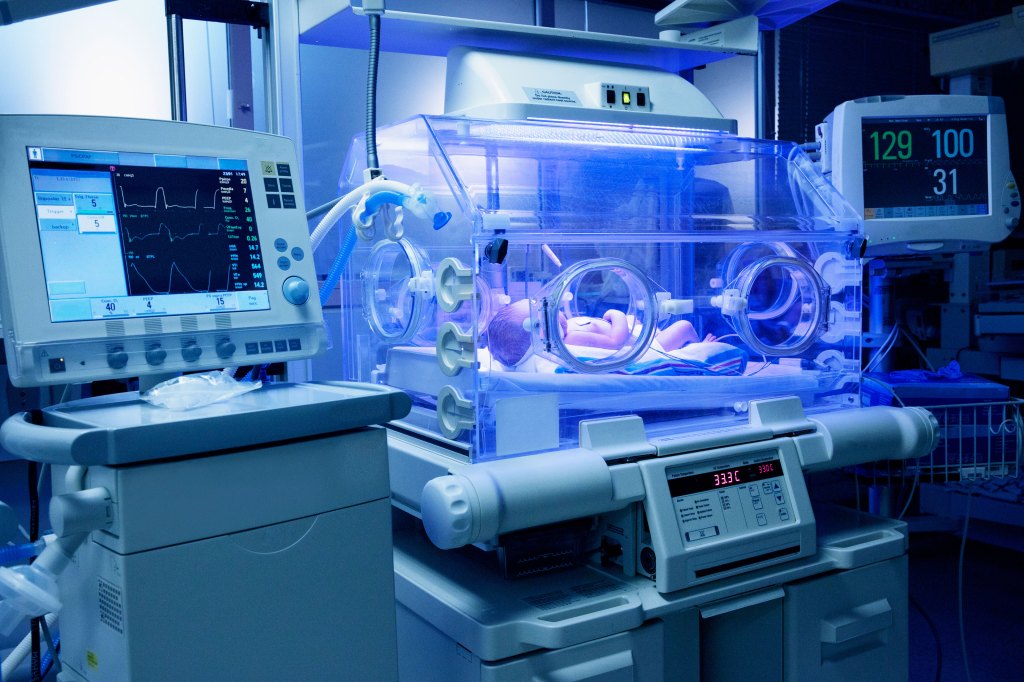
- Study Links High Antioxidant Intake To Changes in Offspring Development
- The Healthcare Burnout Backlash (pt 1): Burnout Reaches Well Beyond Clinicians

- The Healthcare Burnout Backlash (pt 1): Burnout Reaches Well Beyond Clinicians
- Even Mild Oxygen Loss in Preemies' First Hours Poses Lifelong Brain Risks: Study
- How the Trump Administration Uses Migrant Kids To Find and Detain Family Members

- Oral GLP-1s, COVID preventatives: 3 more drugs in the pipeline, Optum says payers should watch
- Providence trims 2025 operating loss to $132M, notches second consecutive quarter of gains
- $3M Verdict Links Social Media to Anxiety and Depression
- The White House Delays CDC Pick
- New COVID 'Cicada' Variant Is Spreading — What Experts Want You To Know
- Advocate Health to launch ‘nation’s largest’ hospital drone delivery program in Zipline partnership
- Op-ed: Empathy meets efficiency—how the responsible use of AI can transform Medicare
- Family Caregivers Provide $1 Trillion In Annual Labor, AARP Says
- ‘Health Doesn’t Need to Be Ludacris’: Bayer signs rapper-actor to multivitamin campaign
- Rocket plots measured trajectory for new gene therapy Kresladi after clearance to launch from FDA
- Healthy Lab Results May Mask Future Risks for Kids with Obesity
- At-Home Chemotherapy Is Safe, Feasible, Pilot Study Indicates
- What You Do While Sitting Could Predict Dementia Risk


A discouraging article posted on Business Insider yesterday about investors 'extracting value' from hospitals, many of them ostensibly nonprofit:
Plunder, Sell, RepeatHow wealthy investors keep bankrupting needy hospitals.
By Bethany McLean - March 17, 2025When Steward Health Care — once America's largest private for-profit hospital system — declared bankruptcy last year, it seemed to mark the end of a long and catastrophic decline. Over the previous decade, eight of Steward's hospitals had been shuttered, some of them in communities with few other medical providers. The loss of critical care was devastating. "It's a public health hazard," a patient advocate told reporters when Steward closed its medical center in Phoenix.
As I reported before the collapse, Steward's demise was precipitated by a deal it had cut with a company called Medical Properties Trust. The hospital chain agreed to sell its facilities to MPT — and then to lease them back at exorbitant rates. The sales left Steward saddled with some $350 million in annual rent for its own hospitals, forcing it to close facilities and cut corners on care. Upon its bankruptcy, Steward still owed MPT a stunning $6.6 billion.
Meanwhile, as patients and providers suffered, the deals enriched top officers at Steward, who are now the focus of a federal corruption investigation. And they enabled the company to pay dividends of $800 million to its owner, the private equity firm Cerberus, even while its hospitals were being starved of the resources needed to treat patients.
Critics blasted Steward's deal with MPT as a thinly disguised form of corporate looting, and lamented the consequences. "This has just been an ongoing multiyear degradation of our healthcare system," said Jamie Eldridge, a Massachusetts state senator whose district lost a hospital in the financial debacle. Sen. Edward Markey, meanwhile, released a 26-page report on Steward's collapse, blasting private equity for treating hospitals as no different from a chain of fast-food restaurants. "Where people saw vital pillars of communities in their hospitals," the report found, "Steward, Cerberus, and MPT saw only dollar signs."
Today, as Steward sells off its remaining 31 hospitals, underserved communities are hoping the new owners will focus less on extracting profits from the facilities and more on elevating the quality of care. But even under new ownership, it doesn't look as though much will change. For starters, MPT will still be collecting rent on at least 15 of the hospitals, most of which are already losing money. And 12 of the facilities have ended up in the hands of operators with track records of running hospitals into the ground — often through deals with none other than MPT. All of which means that, barring a financial miracle, it's likely the hospitals will soon be bankrupt again. "I do not think these hospitals can maintain any reasonable level of operation for more than nine to 12 months without permanent financial support," says Justin Simon, the managing director of the hedge fund Jaspar Capital, who has studied the industry for years.
Even more disturbing, the fate of Steward's facilities reveals a deeper flaw in America's healthcare infrastructure. Many distressed hospitals, it appears, are now locked in a self-perpetuating cycle of looting: Facilities that have already been plundered can only be sold to others who will continue the plundering. "The only people who will buy them are people who are using them as an asset to be bought and sold and stripped," says Rosemary Batt, a professor in the Industrial and Labor Relations School at Cornell University. Steward's hospitals are in such dire financial straits, in fact, that MPT is supplying the new owners with nearly $100 million in loans, along with temporary rent relief, to purchase the facilities that MPT itself helped decimate — and that MPT will continue to collect rent on. As America's dying hospitals struggle to survive, the treatment being prescribed is often more of what's killing them.
Eight of Steward's hospitals — more than a fourth of those it was still operating — have ended up in the hands of a company called American Healthcare Systems. AHS and a related company, Healthcare Systems of America, are run by Michael Sarian, whose career echoes the approach to hospital management employed by Steward — including deals with MPT.
Before founding AHS, Sarian served for eight years as president of another hospital company, Prime Healthcare Services. Prime touts itself as being in the business of shoring up distressed community hospitals — "saving hospitals, saving jobs, saving lives," as it declared on its website. But the Justice Department has accused the system of a different motivation: inflating its profit through fraud. In 2018, Prime and its CEO agreed to pay $65 million to settle allegations that it had knowingly submitted false claims to Medicare, including for care that patients didn't need. Like Steward, the company has a history of extracting money from its hospitals: In 2007, Prime's financial statements disclosed that a family trust run by its founder received a distribution of over $35 million — almost all of it from MPT. And as with Steward, critics say the profits have come at the expense of patients. Last October, the National Nurses United, America's largest organization of registered nurses, blasted the company for closing maternity wards across the country. "Prime's focus on boosting profits," the group said, had resulted in "drastic cuts" to care, "particularly impacting some of the most vulnerable communities."
In a statement to Business Insider, Prime defended the quality of its care and said it settled the Medicare charges "with no findings of fault" and completed a government-mandated "corporate integrity agreement." It also said it had allocated more than $1.4 billion to buy back its real estate from MPT, which it said would result in "even greater stability and security for its community hospitals and the vulnerable populations they are honored to serve." But Prime has also issued $1.5 billion in new debt, meaning its hospitals are still taking on obligations that they'll have to repay.
The pattern of plundering continued at American Healthcare Systems, which Sarian created in 2021 after purchasing a bankrupt hospital in North Carolina. Lawsuits from vendors began to pile up almost immediately, along with reports from employees of short staffing. Regulators slapped AHS hospitals with notices of "immediate jeopardy" — meaning its services were so shoddy that they could result in serious harm to patients. Before long, the company closed one of its hospitals and shuttered one of its emergency rooms. When AHS sought a waiver on a state loan it had used to buy the hospital in North Carolina, regulators learned that the company had transferred some $11 million out of the facility.
AHS also siphoned money out of Vista Medical Center East, another hospital it operates. Vista, which serves a low-income community in Illinois, recently furloughed 8.6% of its workforce because of financial difficulties. At the same time, care at the facility has suffered: On January 23, a patient with hypothermia died after being found on the hospital's roof wearing only a hospital gown. Meanwhile, according to bankruptcy filings, Vista — which has applied for government support — has extracted millions of dollars from the hospital. "Money should not be given to private equity entities at the taxpayer's expense," a local coroner said after the patient's death, "especially to a company with such a poor track record." Some of the money AHS took from Vista has gone to support another of its hospitals — one of which owes rent to MPT. (Neither MPT nor AHS responded to requests for comment.)
Yet none of this — the lawsuits from vendors, the substandard care, the sketchy deals — has prevented AHS from being permitted to take over eight of Steward's hospitals. Even though the company's dubious track record was well-documented, the bankruptcy court and government regulators have allowed the sale to go forward. "AHS has a history of terrible hospital operations, including accusations of looting," says Simon, the hedge fund director. Given the players involved, he warns, the cycle of collapse is almost certain to repeat itself.
Other companies that bought parts of Steward also have ties to MPT. Two of Steward's hospitals in West Texas are being purchased by Quorum, the majority of which is owned by a private equity firm that is a big investor in MPT's securities. In the past, Quorum has actually been on the other end of the hospital merry-go-round: It sold distressed facilities to both AHS and Steward, as well as to a private equity firm that sold off the underlying property to MPT. Now, according to Moody's, Quorum's debt is in "limited default," which means it has missed or delayed a payment. It's unclear how Quorum will be able to pay its debt while funding any operating losses and capital expenditures needed at the two hospitals it's buying from Steward — along with the rent on the facilities it will owe to MPT. "This sale demonstrates the failure of the current legal and regulatory system in protecting US healthcare infrastructure and access to quality care for patients," wrote the Private Equity Stakeholder Project, a watchdog group that tracks investment deals in healthcare.
The deals underscore a vicious cycle: The only winners are the investors who extract money from dying hospitals — and MPT, which continues to collect rent.
Two of Steward's hospitals in Ohio have been sold to Insight Health, another company with a checkered track record. In a civil racketeering lawsuit, the insurance giant Allstate accused a hospital owned by the company of billing for patients who weren't really injured, and for procedures that were never performed. Insight denied the claims, and a settlement is pending. Although Insight purports to run some hospitals as nonprofits, filings show it has extracted exorbitant management fees — more than 12% of the revenue in one case. (In a statement to BI, Insight said the fees "include executive services, software, legal, revenue cycle management, nursing, and clinical personnel and were provided at fair market value.") Initially, the company tried to take over Steward's hospitals in Massachusetts, only to be rebuffed by state regulators. Now, according to a form filed as part of the purchase in Ohio, Insight has received a loan from MPT using assets of the two hospitals it's acquiring from Steward as collateral. That means MPT will not only continue to collect rent on the facilities, albeit reduced for a time, but it will be owed a slice of the business if the hospitals go bankrupt.
Indeed, the Insight deal underscores what has become a vicious cycle: A hospital sells its real estate to MPT, pockets the proceeds, slashes care, and spirals into financial distress. At that point, the property is so troubled that MPT has to pay a buyer, sometimes one with few scruples, to take over the hospital and continue paying rent — which will, in turn, drive the new buyer out of business as well. The only winners are the investors who figure out ways to extract money from dying hospitals — and MPT, which gets to continue collecting rent. "This is the dirty end game of private equity failures," says Simon, the hedge fund director. "When the deal goes poorly, there's only one way to get your money out, which is selling the real estate. And once you separate the ownership of the real estate from the operating hospital, there's no way for the bankruptcy court to give the hospital back to the community. They can't."
As a result, underserved communities continue to lose access to vital healthcare. Regulators like the Securities and Exchange Commission might be looking into MPT's deals on behalf of investors. But for all the political fury sparked by Steward's bankruptcy, no one appears to be ensuring that the new owners will provide for the needs of the communities their hospitals are meant to serve. "Politicians keep railing against Steward and asking how this was allowed to happen," says Richard Mortell, a real estate investor who has studied the industry. "Meanwhile, they are turning a blind eye to the scam repeating itself."
Without additional oversight, patient advocates warn, the looting of America's hospitals will continue unabated. "It speaks to the failures of our regulatory system," says Mary Bugbee, who oversees healthcare research at the Private Equity Stakeholder Project. "The system is not designed to ensure the hospitals are going to have the most reputable buyers — or even buyers who will keep hospitals open. It's possible the SEC is stepping in to protect investors and uphold the rules for public markets. But who is going to hold these entities accountable to patients? I don't see that happening right now."
Get MHF Insights
News and tips for your healthcare freedom.
We never spam you. One-step unsubscribe.
Sponsors
Friends of MHF





Kirsten DeVries
Tom & Karen Nunheimer
Steve Ahonen
Ron & Faith Bosserman
Marlin & Kathy Klumpp
Sign Up for MHF Insights to keep up on the latest in Michigan Health Policy