- An Arm and a Leg: Steep Health Care Costs Steer Americans to Tough Decisions

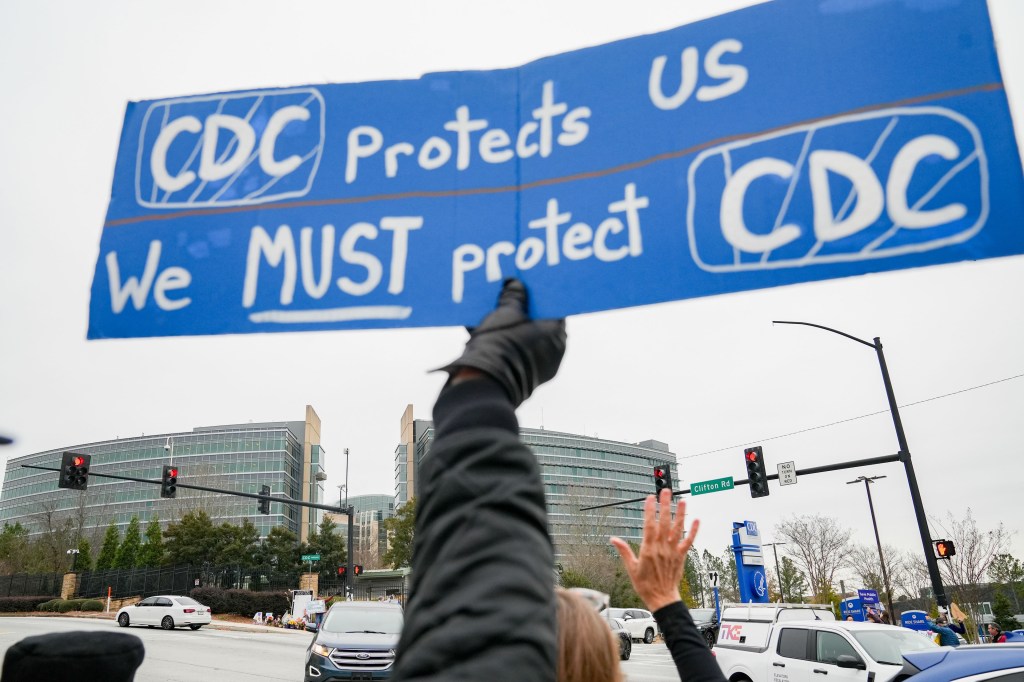
- Demoralized CDC Workforce Reels From Year of Firings, Funding Cuts, and a Shooting
- CMS unveils new pediatric care model

- CMS unveils new whole-person pediatric care model
- Consumers increasingly turn to AI chatbots for health information: Report
- Dr. Jeffrey J. Moses receives ADA Humanitarian Award
- Rural New Mexico hospital deploys AI scribe
- Ex-Weill Cornell Medicine staffer inappropriately accesses patient records
- Inside dentistry’s growing field
- 136 hospitals with 5+ Magnet designations
- UF Health taps new vice president of RCM business support
- 57% of health systems rank AI as top tech priority: Report
- Children’s Mercy names chief application officer
- Aspirus hospital nurses OK labor contract
- Trinity Health, Health Gorilla sued over alleged data breach
- Highmark Health posts $674M operating loss in 2025
- California to save $300M with cuts to adult dental Medicaid benefits
- Alabama physician sentenced for $2.7M fraud scheme
- How the richest people in dentistry compare to 5 healthcare billionaires
- The Medicare Advantage paradox: Who benefits most?
- Michigan county erases $6M in medical debt for 6,300 residents
- Kootenai Health, MultiCare to break ground on medical campus, ASC
- GI consolidation is changing: A 5-deal breakdown
- Two-thirds of pediatric mental health triage scores inaccurate: Study
- Specialty Care At An Inflection Point: How AI And Automation Are Reshaping Ambulatory Practices
- 10 physician practice closures in Q1
- 26 profitable health systems in 2025
- Conifer inks RCM outsourcing deal with Healthcare Systems of America
- Idaho lawmakers push to restore mental health programs
- Academic medical models are under financial strain: 5 things to know
- 3 anesthesia reimbursement controversies to know
- Florida physician pleads guilty to making false statements in $3.1M DME fraud scheme
- The new formula for ASC case-mixing
- 5 things looking up for GIs
- The 3 physicians on Forbes’ 2026 billionaires list
- New York launches mental health training for first responder clinicians
- 5 new psych residency programs to know
- BayCare boosts operating margin to 11.8% in 2025
- Opening Remarks at the Digital Asset Summit 2026
- CVS Caremark, FTC reach settlement in insulin pricing case
- 4 Medicaid, Medicare updates for dentists to know
- 5 Heartland Dental updates in 30 days
- New York health network to close dental clinic over financial, workforce challenges
- Orthodontic AI company earns FDA approval for 3D imaging
- 10 providers seeking RCM talent
- Bill would ban private equity-owned hospitals, nursing homes
- UCB unveils plan to build $2B biologics plant near its US headquarters in Atlanta
- New Hampshire endodontist retires after 35 years of services
- SSM Health back in the black in 2025
- PeaceHealth sued over plans to tap out-of-state staffer ApolloMD for Oregon EDs
- New Lyme Disease Vaccine Shows Strong Results in Trial
- TrumpRx Adds Diabetes, COPD Drugs at Steep Discounts
- Highmark reports $175M net loss for 2025 as financial headwinds batter health plan
- Listen to the Latest ‘KFF Health News Minute’
- Abivax hires commercial chief from Takeda to infuse Entyvio expertise into IBD launch prep
- ImmunityBio hit with FDA warning letter over Anktiva promotions in TV ad, podcast episode
- Alcohol Prep Pads Recalled Over Bacteria Risk, Cardinal Health Says
- Fewer patients traveled for abortions in 2025 as telehealth care increased, report finds
- Cologuard campaign reunites ‘Full House’ stars to give ‘The Talk’ about colon cancer screening
- Lilly to remove certain insulin products from European markets by 2027
- Karyopharm, looking to jump-start Xpovio, reports mixed results in myelofibrosis
- Study Warns Fluoride Bans May Raise Tooth Decay in Children
- WuXi Bio's record number of new projects in 2025 leaned heavily on US clients
- “Me engañaron”: agentes encadenan a un padre que había ido al ICE a reunirse con sus hijos

- Gilead inks Manta pact to dive deeper into cancer patient support
- Cheap Children's Clothing Tainted With Lead, Study Says
- Insulin Prices Fell For Medicare Patients Under Biden-Era Caps, Study Finds
- New Fathers Face Mental Health Challenges, Study Finds
- Your Choice Of Booze Influences Your Risk Of Death, Study Says
- AI Gets a 'D' When Judging Scientific, Medical Claims
- New Online Tool Helps Parkinson's Patients Weigh Brain Implant Decision
- AI chatbot use for health information up 16% from 2024: Rock Health survey
- ‘They Tricked Me’: A Father Was Chained After He Went to ICE To Reunite With His Kids
- Wilmington PharmaTech commits $50M to US API expansion
- Strides recalls nearly 90K bottles of children's ibuprofen after contamination complaints
- Trump administration unveils national policy framework for AI as it moves to override state laws
- ‘We don’t think of it as just a service line’: How 5 health systems integrate behavioral health into core finances
- The ‘dark cloud’ hanging over DSOs
- Texas allocates $5M for forensic psychiatry training
- Breast Cancer Locator System Submitted for De Novo 510(k) by Cairn Surgical
- Breast Cancer Locator System Submitted for De Novo 510(k) by Cairn Surgical
- 6 donations shaping behavioral healthcare growth
- 17 spine surgery firsts in Q1

- 17 spine surgery firsts in Q1
- Medicaid cuts threaten hospital psychiatric units: Report
- Cencora acquiring EyeSouth Partners' retina business for $1.1B
- Aunque tengas seguro dental, la factura puede ser muy alta

- Massive class action seeking RICO penalties against Takeda, Lilly presses forward with SCOTUS order
- A look at how Optum Rx is using AI to address pharmacy fraud, waste and abuse
- California to invest $1.18B in behavioral health: 10 largest projects
- AbbVie steps up to the plate as official pharma sponsor of MLB
- Gilead CEO Dan O’Day nets $28.4M pay package as security and travel costs top $2M
- Nursing Homes Accused of False Diagnoses To Hide Drug Use
- FDA Approves Higher-Dose Wegovy To Help People Lose More Weight
- Teens Often Pressured To Send Sexual Photos by Someone They Know, Study Finds
- CommonSpirit, Humana reach 3-year national network agreement
- Match Day 2026: Growth in emergency medicine, psychiatry
- Nearly 90,000 Bottles of Children’s Ibuprofen Recalled Nationwide
- FTC launches multi-bureau Healthcare Task Force to spot 'new priority areas for enforcement'
- Algunos adultos de mediana edad deciden posponer la atención médica hasta tener Medicare

- ¿Qué tan bajo se puede llegar? Las cambiantes guías para el control de la presión arterial

- Insmed sets up Arikayce for a significant label expansion on new ph. 3 data
- EyePoint lawsuit accuses Ocular of 'malicious' defamation campaign in retina drug race
- FDA mandates label updates to common Parkinson's meds based on seizure risk finding
- Rural hospitals could apply for temporary interest-free construction, renovation loans under new bipartisan bill
- Cost Center to Command Center: How Health Systems Are Systematizing Innovation in Support Services
- Rural Residents Have Highest Cancer Death Rates, Researchers Say
- Your Bank Account Might Show How Well Your Brain Will Age, Researchers Say
- Insurance Lapses Play Havoc With Diabetes Management, Study Shows
- Psychedelics Aren't Better Than Antidepressants In Treating Depression, Review Concludes
- A Nasal Swab for Alzheimer's? Duke Team Has One in Testing
- Heat Advisories Might Not Trigger Soon Enough For Some Seniors, Study Finds
- Dizal's Zegfrovy clinches landmark phase 3 win in NSCLC subtype, setting up challenge to J&J's Rybrevant
- Novartis joins Lilly, AZ in China expansion with $480M commitment to boost manufacturing, R&D
- Even With Dental Insurance, You Still Could Face a Large Bill
- Rising Health Costs Push Some Middle-Aged Adults To Skip the Doc Until Medicare
- FDA solicits feedback on controversial national priority voucher review pathway
- Health Tech Weekly Rundown: Perplexity rolls out AI-powered medical records search; Doximity survey examines how docs use AI
- Don't Forget This: Study Shows Cannabis Exacts a Toll on Your Memory
- Want To Stress Less? Start With These Everyday Habits
- CMS final rule aims to axe the fax machine, phase out paper mailing
- Large pharma companies reduced head counts by more than 22K in 2025 as $300B patent cliff looms
- Remarks at The SEC Speaks in 2026: From Kitchen Table to Cap Table—Making Capital Formation Work for Small Businesses
- Health system AI adoption surges in 2026 with execs reporting increased ROI: survey
- Heart Benefits From GLP-1 Drugs Fade After Stopping, Study Finds
- Survey Shows More People Struggling To Afford ACA Insurance
- Up to 155,000 COVID Deaths May Not Have Been Counted, Study Finds
- FDA Drops Plan To Ban Tanning Beds for Minors Nationwide
- Mindray North America Enters Ventilator Market
- Mindray North America Enters Ventilator Market
- LivaNova Receives FDA Premarket Approval for to treat Moderate to Severe Obstructive Sleep Apnea
- LivaNova Receives FDA Premarket Approval for to treat Moderate to Severe Obstructive Sleep Apnea
- Perfuze Receives FDA 510(k) Clearance for Millipede88 Aspiration Catheter
- Perfuze Receives FDA 510(k) Clearance for Millipede88 Aspiration Catheter
- EPA proposes new rule on Ethylene Oxide Emissions: Could Loosen Limits on Medical Device Sterilization
- EPA proposes new rule on Ethylene Oxide Emissions: Could Loosen Limits on Medical Device Sterilization
- Hospital ads can increase ED visits, Medicare spending, new Penn study finds
- Sanofi backs 2 more documentary films about rare blood disorders
- Some Patients With ADHD and Addiction History Missing Out
- Social Media Poses Risks to Children's Mental Health, Review Concludes
- Does Closing Your Eyes Help You Hear Better?
- 'Early Bird' Exercisers Get The Most Health Benefits, Study Finds
- High Blood Pressure Deaths Quadruple Among Young Women, Study Finds
- Meningitis Vaccine Doesn't Protect Gay, Bisexual Men From Gonorrhea, Clinical Trial Concludes
- Gut Microbiome May Take Years to Recover From Antibiotic Use
- Prepared Remarks Before SEC Speaks
- The Art and Science of Materiality
- Capital, Choice, and the Pursuit of Happiness: Remarks at The SEC Speaks in 2026
- The Math Behind Eczema Flare-Ups May Finally Add Up
- PrescriberPoint's solution to the modern prescribing journey


Before civilization became unglued in Minnesota, the massive increase in PPACA insurance policy premiums was the fixation in Washington. Those premiums haven't come down or disappeared as a political issue. Joel White of the Council for Affordable Health Coverage (CAHC) has an explanation:
High ACA Premiums Aren’t an Accident, It’s a Business Model for Insurers
By Joel White - January 27, 2026Health care costs are crushing Americans, and Washington keeps pretending it’s a mystery. It isn’t. Obamacare didn’t just fail to give Americans access to care they could afford; it redesigned the system to guarantee insurance companies huge profits. And year after year, Democrats have doubled down on that design, protecting insurers while families pay more for less care.
Affordability is the number one problem in American health care. It’s a problem that crosses party lines. Last week, President Trump introduced The Great Healthcare Plan, designed to lower costs and increase access to care. Health care costs are so out of control that the typical American family will spend 40 percent of their income just on health insurance premiums by 2032. That is not sustainable for any American.
Since the Affordable Care Act (ACA) was enacted, premiums in the individual market have surged by 168 percent, far outpacing employer-sponsored plans, which rose 70 percent, and inflation, at about 40 percent. This year alone, the average ACA family premium is projected to exceed $27,000. Deductibles have nearly doubled as well, meaning families are paying more every month and still pay thousands of dollars in out-of-pocket costs before their coverage even kicks in. In 2026, the deductible for the most popular plan is more than $5,000.
Democrats often respond to this crisis with a familiar solution: more spending. But subsidies haven’t fixed the problem; they’ve made it worse.
Under the ACA, subsidies go to insurance companies and can only be used toward the most expensive plans on the market. As premiums rise, subsidies follow dollar for dollar. Insurers set the prices, and taxpayers guarantee the revenue. Today, 93 percent of ACA enrollees receive subsidies, and taxpayer subsidies per enrollee have increased 56 percent since 2014. According to the Joint Economic Committee, only about one-third of those subsidy dollars directly benefit consumers.
The rest flows straight into insurance company balance sheets.
This is not an accident; it’s an incentive structure. Expanding subsidies and enrolling more people doesn’t pressure insurers to compete or lower prices; it rewards them for charging more. Every premium hike is matched with more taxpayer money. Democrats celebrate higher enrollment numbers while ignoring the reality that the system financially depends on rising costs.
At the same time, the ACA’s anti-market structure has fueled widespread consolidation. One or two insurance companies control the market in most states, pushing out smaller insurers that can’t survive in a system that rewards scale, political influence, and administrative complexity over efficiency and consumer choice.
As competition disappears, so does access to care. Eighty-three percent of enrollees are in narrow-network plans, which limit the hospitals and physicians they can access. Obamacare networks typically include fewer than half of all care providers in an area. This is especially concerning for patients with serious or complex conditions. Families routinely face restricted formularies, denied claims, and endless prior-authorization hurdles. According to the Kaiser Family Foundation, 58 percent of insured Americans experienced a problem with their insurer in the past year, and 73 million claims were denied.
Meanwhile, to avoid Obamacare’s cap on insurance profits, insurance companies have been busy buying hospitals, physician groups, and pharmacies, and paying them more to earn higher profits on services. UnitedHealth Group now generates roughly 42 percent of its revenue, or $136 billion, from internal transactions between its insurance arm and the providers and pharmacy benefit managers it owns. That isn’t care coordination; it’s a monopoly designed to extract profit at every step.
And the profits are staggering. In a recent year, the largest insurers earned more than $71 billion. Insurance CEOs collected nearly $150 million in compensation – all while premiums and out-of-pocket costs kept rising for consumers. The ACA has become a massive transfer of taxpayer dollars to private insurance companies, propped up by policies that Democrats refuse to question.
This is the uncomfortable truth: Democrats claim to stand with patients, but their health care policies protect insurers. They defend a system that rewards size, spending, and consolidation, then act surprised when costs spiral out of control. Every subsidy expansion, every enrollment push, every refusal to introduce real competition locks Americans deeper into a system that treats patients like piggybanks.
There is another path. Congress needs to restore competition by breaking up the insurance and health system monopolies. We need full transparency on prices and quality. If insurers, hospitals, and other service providers refuse to provide prices up front, patients shouldn’t be charged. Consumers should be able to choose any plan that works for them and bring the subsidy with them. If the plan they pick costs less than the subsidy, the difference should be deposited in a Health Savings Account. Insurers would compete for consumers, versus patients being at the mercy of big conglomerates through realigned incentives that ensure health plans and providers only succeed when patients do.
Until that happens, ACA premiums will keep increasing, subsidies will forever increase, insurers will keep cashing in, and working families will keep paying the price for a health care system designed to put profits over patients.
Get MHF Insights
News and tips for your healthcare freedom.
We never spam you. One-step unsubscribe.
Sponsors
Friends of MHF





Kirsten DeVries
Tom & Karen Nunheimer
Steve Ahonen
Ron & Faith Bosserman
Marlin & Kathy Klumpp
Sign Up for MHF Insights to keep up on the latest in Michigan Health Policy