- Trump’s One Big Beautiful Bill Act Darkens Outlook for Government-Backed Clinics
- Readers Sound Off on NIH Staff Cuts, Work Requirements, and More

- How Rural Health Systems Are Advancing Cardiac Imaging

- How Rural Health Systems Are Advancing Cardiac Imaging
- Beyond Reimbursement: Why Market Access is MedTech’s Strategic North Star

- Beyond Reimbursement: Why Market Access is MedTech’s Strategic North Star
- Evotec hires exec with AI experience to lead rebooted commercial team
- The Human Side of AI Medical Devices: Why Safety Depends on Design, Not Just Algorithms

- The Human Side of AI Medical Devices: Why Safety Depends on Design, Not Just Algorithms
- What’s draining surgical time?
- True ROI of health tech, according to finance leaders
- True ROI of health tech, according to finance leaders
- 131 hospitals sue HHS over DSH cuts: 5 notes
- HCA Tennessee hospital names CEO
- Kaiser workers in Northwest ratify labor deal
- Where 6 specialty DSOs stand in 2026
- MAHA movement slows
- Oracle cuts thousands of jobs: Report
- Intermountain joins national trauma, grief network
- 16 new ASCs in March
- Intermountain joins national trauma, grief network
- Practice closures, new dental schools, DLRs & more: 6 dental updates in New York
- A $1B campus, leadership handoff and unchanged mission: Grady’s next chapter
- MD, PharmD degrees deliver highest returns: Study
- Workforce, patient care, private equity & more: 5 statistics scaring dentists
- American Society of Addiction Medicine updates youth treatment standards
- The shifting oral surgery landscape
- Moody’s upgrades UK King’s Daughters’ credit rating
- 5 anesthesia partnerships to know from Q1
- New Jersey eliminates practice restrictions for most APNs
- Private equity in dentistry has gotten smarter
- Sutter ASC to pay $3.2M to settle alleged drug security lapses
- 7 DSO leadership changes to know
- University Hospitals swings from loss to 2.6% margin in 2025
- Mark Cuban backs bill to break up vertically integrated insurers
- The inadequacy of the physician fee schedule: 10 notes
- Inside the anesthesia crisis limiting ASC growth
- Lawmakers introduce child suicide prevention bill
- Dental lab group receives private equity investment
- Dental Care Alliance appoints chief revenue officer
- UnitedHealthcare launches Avery, a generative AI companion for members
- 14 behavioral health executive moves to know
- What comes next for price transparency rules?
- The top-ranked US dental schools in 2026
- Missouri agencies warn of rising nitazene threat
- PDS Health’s 3-year growth recap: 30+ moves
- Tennessee delays vote on CON
- Only 44% of SUD treatment facilities accept older patients on Medicare: HHS report
- Orthopedics’ quiet profit drains in ASCs
- The payer battles coming to outpatient surgery
- 7 state behavioral health policy updates
- Republicans eye further healthcare cuts: Report
- Memorial Sloan Kettering posts $48M operating loss in 2025
- FDA flags serious liver injury cases, 8 deaths with ‘reasonable’ link to Amgen's Tavneos
- Uninsured patients drive nearly 40% of healthcare collections: Cedar survey
- Novo Nordisk cuts 400 roles at troubled Bloomington site
- Blackstone weighs $500M IPO for RCM firm AGS Health: Bloomberg
- Health systems shrink the payer-provider gap
- Former U.S. Surgeon General Challenges Trump Nominee
- Iterum initiates wind-down after failure to offload antibiotic with sluggish sales
- Listen to the Latest ‘KFF Health News Minute’

- Over 10.2 Million Grill Brushes Recalled Over Metal Bristle Risk
- Sex Enhancement Chocolates Recalled Over Hidden Drug Ingredients
- Short Bursts of Exercise Linked To Lower Risk of Major Diseases
- HHS urges hospitals to align patient menus with updated dietary guidance
- Hartford HealthCare, K Health launch PatientGPT, new AI tool to help patients find health information
- Ensemble partners with Cohere to build first RCM-native large language model
- API supplier BASF raises prices up to 20% in response to rising energy, raw material costs
- Biogen, eyeing swift commercial tailwind, ponies up $5.6B for Apellis and its 2 approved meds
- Cold Weather More Deadly For The Heart Than Heat, Study Finds
- Teens' Sleep Patterns Affect Their Diet, Exercise, Study Says
- 'Watch and Wait' Approach Safe For Women With Precancerous Breast Condition, Trial Finds
- Dental Care Can Help Cirrhosis Patients Avoid Liver Cancer, Hospitalization
- Folks With Clogged Arteries Benefit From Aggressively Lower Cholesterol Goal
- Intermittent Fasting Might Help Manage Female Hormone Imbalance, Trial Shows
- States Pay Deloitte, Others Millions To Comply With Trump Law To Cut Medicaid Rolls
- Trump’s Hunt for Undocumented Medicaid Enrollees Yields Few Violators

- States pay Deloitte, others millions to comply with Trump law to cut Medicaid rolls
- Employer telehealth company eMed raises $200M at $2B valuation
- Insulet hires Stryker vet, reinstating commercial chief role as C-suite overhaul continues
- Baptist Health Arkansas hospital to end OB services
- Texas behavioral health provider launches 6th Austin-area clinic
- New Jersey expands authority for advanced practice nurses
- Why these 2 roles are key to expanding behavioral access, per SAMHSA
- Kaiser Permanente’s $9.3B net income draws scrutiny: 6 things to know
- Nonprofit Electronic Frontier Foundation sues CMS over AI prior authorization demonstration
- CDRH Guidance: Patient Preference Information (PPI) in Medical Device Decision Making
- CDRH Guidance: Patient Preference Information (PPI) in Medical Device Decision Making
- BSCI’s LAAC CHAMPION-AF study for WATCHMAN FLX meets primary and secondary safety and efficacy endpoints
- BSCI’s LAAC CHAMPION-AF study for WATCHMAN FLX meets primary and secondary safety and efficacy endpoints
- Apple Store to ID Regulated Medical Device Apps
- Apple Store to ID Regulated Medical Device Apps
- CMS: This year's open enrollment brought fewer signups, higher premiums
- Medical Schools No Longer Required To Teach Health Inequities
- Lilly presses for UK deal that would see higher drug prices in exchange for resumed investments: FT
- United plots Tyvaso FDA filing after ph. 3 win elicits talk of 'new IPF standard' and blockbuster sales
- Fluoride Quietly Removed From Birmingham Water Years Ago, Officials Face Backlash
- FDA Weighs Expanding What Can Go Into Supplements
- 9 Now Sickened in Outbreak Tied To Raw Milk and Cheese
- BMS, Novartis, Gilead, Iovance dinged over biologics promos in rare spate of CBER untitled letters
- Nearly half of US hospital markets entirely controlled by 1 or 2 health systems: KFF
- Mental health provider platform Headway acquires team behind AI company Tezi
- Idorsia eyes pediatric insomnia use with midstage trial win for sleep med Quviviq
- Electronic Paperwork Increasing Burnout Risk Among Young Doctors
- Kratom Cases Surging In U.S.
- What Makes Play Fun For Children? Seven Factors Stand Out, Study Says
- Night Shifts Are Tough On People With Type 2 Diabetes, Study Says
- Women's Bone Loss Tied To Heart Health, Study Finds
- Want To Lose Weight? Eat A Boring, Repetitive Diet, Researchers Suggest
- Samsung Biologics union gathers votes to strike as tension over wage, governance mounts
- Takeda begins US layoffs as part of massive $1.3B restructuring
- Biogen looks to shake up SMA status quo with FDA nod for high-dose version of Spinraza
- She Owed Her Insurer a Nickel, So It Canceled Her Coverage
- Inside the High-Stakes Corporate Fight Over Feeding Preterm Babies
- Study Links High Antioxidant Intake To Changes in Offspring Development
- The Healthcare Burnout Backlash (pt 1): Burnout Reaches Well Beyond Clinicians
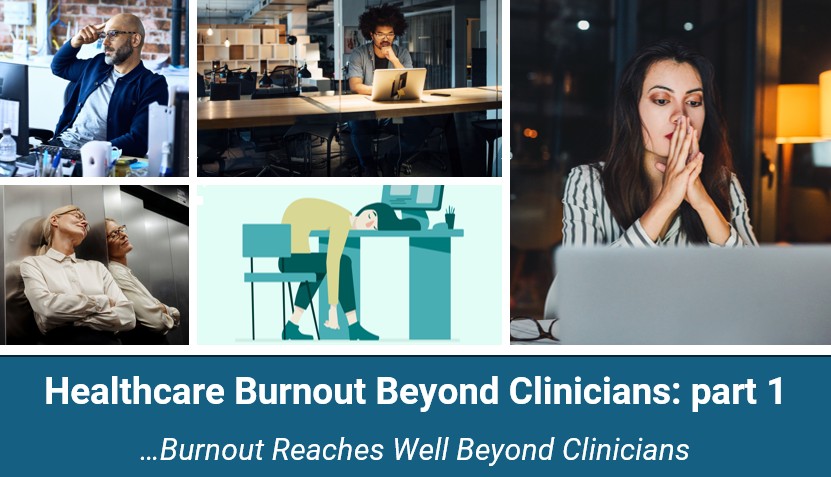
- The Healthcare Burnout Backlash (pt 1): Burnout Reaches Well Beyond Clinicians
- Even Mild Oxygen Loss in Preemies' First Hours Poses Lifelong Brain Risks: Study
- How the Trump Administration Uses Migrant Kids To Find and Detain Family Members
- Oral GLP-1s, COVID preventatives: 3 more drugs in the pipeline, Optum says payers should watch
- Providence trims 2025 operating loss to $132M, notches second consecutive quarter of gains
- $3M Verdict Links Social Media to Anxiety and Depression
- The White House Delays CDC Pick
- New COVID 'Cicada' Variant Is Spreading — What Experts Want You To Know
- Advocate Health to launch ‘nation’s largest’ hospital drone delivery program in Zipline partnership
- Op-ed: Empathy meets efficiency—how the responsible use of AI can transform Medicare
- Family Caregivers Provide $1 Trillion In Annual Labor, AARP Says
- ‘Health Doesn’t Need to Be Ludacris’: Bayer signs rapper-actor to multivitamin campaign
- Rocket plots measured trajectory for new gene therapy Kresladi after clearance to launch from FDA
- Healthy Lab Results May Mask Future Risks for Kids with Obesity
- At-Home Chemotherapy Is Safe, Feasible, Pilot Study Indicates
- What You Do While Sitting Could Predict Dementia Risk
- New Cholesterol Guidelines: What Patients and Caregivers Need to Know
- Want A Bootlicking Yes Man? Ask An AI Chatbot For Advice, Study Warns
- Specially Coated Implants Better For Breast Cancer Patients, Study Finds
- Give and Take: Federal Rural Health Funding Could Trigger Service Cuts

- Trump Team Claims Successes Against ACA Fraud While Pushing for More Controls
- Fierce Pharma Asia—Takeda’s $1.3B reorg; India’s GLP-1 floodgates; Gilead’s $2.2B buy of a China NewCo
- Where are you with EUDAMED?

- Where are you with EUDAMED?
- HL7 Launches Real‑Time Medical Device Interoperability Accelerator
- HL7 Launches Real‑Time Medical Device Interoperability Accelerator
- Two GA Tech ATDC Startups — Nephrodite and OrthoPreserve — Secure FDA Breakthrough Device Designation
- Two GA Tech ATDC Startups — Nephrodite and OrthoPreserve — Secure FDA Breakthrough Device Designation
- Recordati confirms it's weighing CVC Capital buyout offer of $12.6B
- Nonprofit celebrates rescue, recapitalization of Prospect Medical Holdings' Rhode Island hospitals
- UnitedHealth shareholder sues over proposal to include details on integration in annual proxy
- SCAN taps biopharma, CMS vet Aman Bhandari as its first chief AI officer
- Infosys to acquire Optimum Healthcare IT in $465M deal
- Healthcare systems can create AI care pathways with new Viz.ai tool


Walgreens Boots Alliance Inc. has been supporting their stores with pharmacy profits as they lose a lot of money on their other retail lines. This bodes ill for controlling prescription drug costs in America, and will further challenge inner city residents seeking to fill their prescriptions:
Walgreens plans to close 1,200 stores as it looks for a turnaround
Walgreens’ stock has been hammered this year as consumer shopping patterns have changed, but the company’s latest earnings are getting better reception
By Emily Bary - October 15, 2024Walgreens Boots Alliance Inc. plans to shutter about 1,200 stores over the next three years in a bid to improve earnings.
The retail and pharmacy chain has struggled in recent years as shopping preferences have changed and consumers have moved to buy more products online. Walgreens previously embarked on a cost-cutting plan largely targeting the retail pharmacy business.
Walgreens announced the three-year plan for store closures alongside its earnings Tuesday morning, with the company noting that about 500 of the closures are expected in fiscal year 2025, which just began.
The company expects the move will prove immediately accretive to adjusted earnings per share and free cash flow.
After a deeply disappointing report three months back that brought a guidance cut and ushered in a 22% one-day stock decline, Walgreens’ latest results are getting a better reception on Wall Street. Shares are up 5% in premarket action Tuesday as Walgreens cleared the consensus view on both revenue and earnings.
The results “reflected our disciplined execution on cost management, working capital initiatives and capex reduction,” Chief Executive Tim Wentworth said in a release.
Walgreens’ revenue rose 6% to $37.5 billion, while analysts were looking for $35.8 billion.
The company’s U.S. retail pharmacy business saw a 6.5% sales gain in the quarter as well as an 8.3% rise in comparable sales. Pharmacy sales were up 9.6%, or 11.7% on a comparable-sales basis, reflecting “higher brand inflation and mix impact,” according to Walgreens’ earnings release.
Retail sales fell 3.5%, while comparable retail sales were down 1.7%, “reflecting a challenging retail environment and continued channel shift,” Walgreens said.
The company posted a fiscal fourth-quarter net loss of $3.0 billion, or $3.48 a share, compared with $180 million, or 21 cents a share, in the year-earlier period. The sizable loss included multiple non-cash charges.
On an adjusted basis, Walgreens earned 39 cents a share, while analysts tracked by FactSet were modeling 36 cents a share.
For fiscal 2025, Walgreens models $1.40 to $1.80 in adjusted earnings per share, while the FactSet consensus was for $1.72. The company expects its U.S. healthcare business and international business to grow, while the U.S. retail pharmacy business is anticipated to decline. The company is also looking for $147 billion to $151 billion in fiscal 2025, sales, while analysts were modeling $147.6 billion.
“Fiscal 2025 will be an important rebasing year as we advance our strategy to drive value creation,” Wentworth said. “This turnaround will take time, but we are confident it will yield significant financial and consumer benefits over the long term.”
Walgreens shares are down 66% so far this year.
NPR reporter Alina Selyukh has posted a backgrounder on the troubles at CVS and Walgreen's:
https://www.npr.org/2024/10/16/nx-s1-5154129/cvs-and-walgreens-closing-stores-why
CVS and Walgreens are ailing. Here’s why
By Alina Selyukh - October 16, 2024Not too long after Tim Wentworth became CEO of Walgreens, he revealed a stunning figure: Roughly a quarter of the pharmacy chain’s stores do not make money.
On Tuesday, he said 1,200 of those stores will close over three years. That’s two weeks after rival CVS announced layoffs of 2,900 corporate staff. Both chains are on a multibillion-dollar cost-saving spree — closing hundreds of locations, cutting thousands of jobs and, really, reconsidering their role in Americans’ lives.
The slow simmer of mistakes and misfortunes has come to a boil for the biggest U.S. drugstore chains. They’ve accumulated too many stores at a time of changing shopper habits. They’re saddled with numerous government fines and a particularly ailing relationship with health insurers.
The problem of stores
CVS and Walgreens have some notable differences. Walgreens, which also owns the British drugstore Boots, is more singularly focused on its pharmacy business. CVS has expanded further into health care through mergers with insurer Aetna and Caremark, a pharmacy benefit manager that helps insurers negotiate prescription drug coverage and costs. Yet the two companies have made similar missteps.
The simplest part of the problem is scale. CVS and Walgreens grew massive nationwide footprints of more than 9,000 and 8,000 stores, respectively. They gobbled up mom-and-pop shops and signed long-term leases for prime locations on street corners.
Now, shoppers regularly complain about chronically understaffed stores, with products locked up to prevent theft. The shelves of snacks, makeup, greeting cards and cleaning products were meant to boost profits. But sales have sagged for years — a result of a losing battle with Amazon, Walmart, Costco, grocery and dollar stores.
CVS and Walgreens “probably do have too many stores because they overexpanded, but the bigger problem is that the stores that they have are not very good,” said Neil Saunders, retail analyst at the firm GlobalData.
The chains have failed to add new incentives for shoppers, beyond photo booths and returns drop-off centers, says Anshuman Jaiswal, a longtime consultant to retailers and pharmacies. And neither chain has built a meaningful online presence designed to give customers what they need.
“If you go to CVS.com or Walgreens.com, if you are placing an order for cough syrup, why don't I sell chicken broth as a product recommendation immediately?” Jaiswal says. “It's about reimagining the business model.”
The problem of prescriptions
Given the retail struggles, pharmacies could perhaps simply ditch the convenience store and focus on selling medicine — except CVS and Walgreens say it’s harder and harder to make a profit from this part of their business.
Years ago, a big shift in the power balance between pharmacies and health insurers revealed the limits of drugstores’ leverage.
“Historically, there was a view that there was a lot of customer loyalty to their specific retail pharmacy … and that patients, or consumers, would be all up in arms if they were forced to move their prescriptions,” says Brian Tanquilut, health care services analyst at the investment bank Jefferies.
Walgreens tested this theory about a decade ago when it got into a public fight with Express Scripts, a pharmacy benefit manager that worked with major health insurers.
Walgreens and Express Scripts played a game of chicken over how much Walgreens should earn from prescriptions — and Walgreens lost. For a time, it got kicked out of insurance networks used by millions of people, who simply went elsewhere to get their medicine at the lower in-network prices.
“What that did was to prove that patient loyalty is not to the retail pharmacy, but it actually is whatever my insurance is willing to pay,” Tanquilut says. “And that opened the door for the payers to keep pushing pricing down on retail pharmacy chains.”
Hoping reinvention is the cure
These days, CVS and Walgreens are facing tough competition from pharmacies that don’t depend as much on profits from prescriptions because they’re part of retail giants, including Walmart and Costco. The drugstore chains also have spent millions of dollars on government fines over allegations of unsafe staffing levels, overbilling government insurance programs and contributing to the opioid epidemic.
Over the years, CVS and Walgreens attempted to reframe themselves as health care hubs, expanding primary-care clinics. But these operations cost time and money.
On Tuesday, Walgreens CEO Wentworth said his chain is “reorienting to its legacy strength as a retail pharmacy-led company.” CVS is reportedly weighing a breakup to undo its mergers with Aetna and Caremark.
Both companies are also proposing new structures for how they want to be paid for filling prescriptions, hoping this is the big shot in the arm they need.
"I'm very confident that over a two- to three-year period we will have reset the framework for reimbursement discussions," Wentworth told investors on Tuesday. “We are in the early stages of a turnaround that will take time.”
Get MHF Insights
News and tips for your healthcare freedom.
We never spam you. One-step unsubscribe.
Sponsors
Friends of MHF




Kirsten DeVries
Tom & Karen Nunheimer
Steve Ahonen
Ron & Faith Bosserman
Marlin & Kathy Klumpp
Sign Up for MHF Insights to keep up on the latest in Michigan Health Policy