



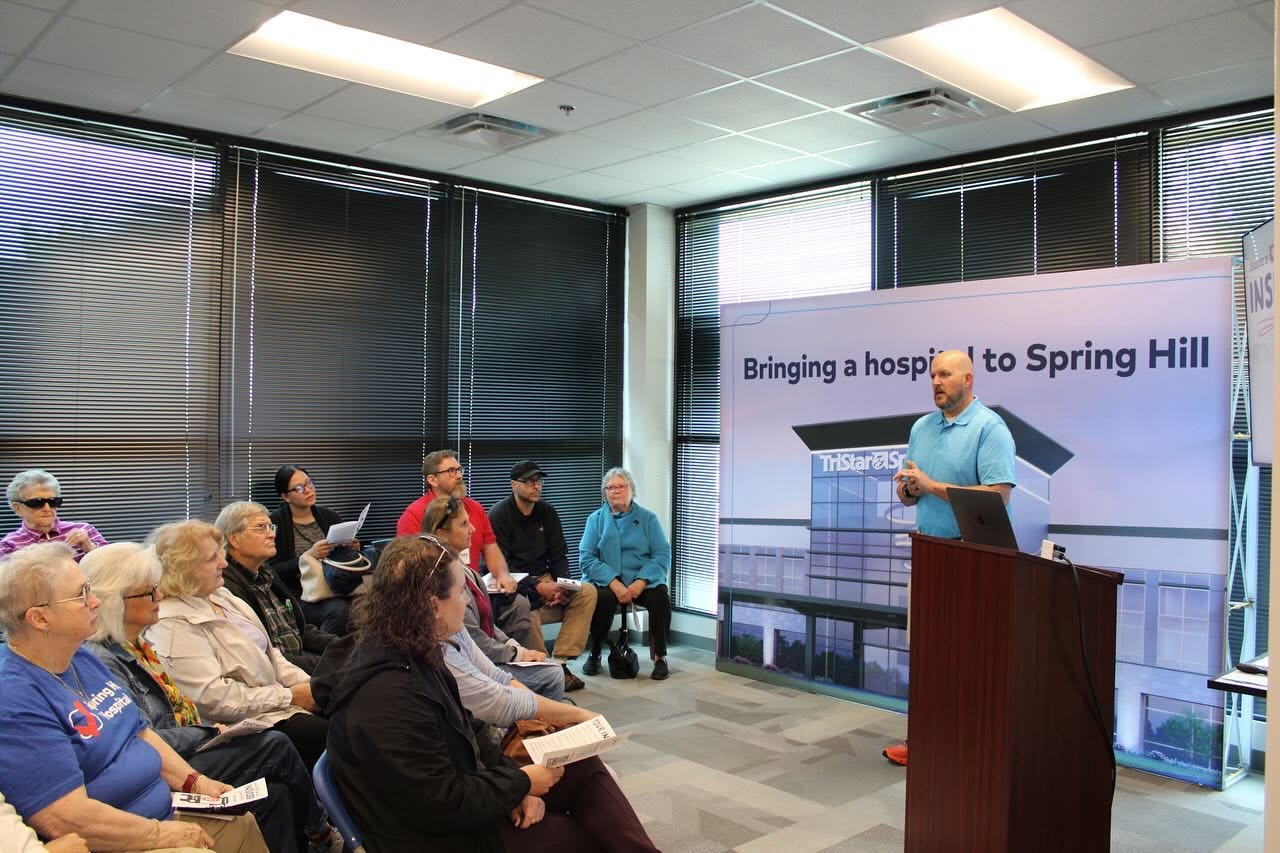


Michigan healthcare freedom community forum

These days, promises made by higher education are often broken by high prices and underwhelming career options. MedPage takes the tough questions to nursing programs in this special report.
— Promise of a flexible nursing degree is sometimes too good to be true
For-profit nursing schools often market their programs to people working in low-level jobs, people looking to improve their life circumstances. Most promise a flexible, expedited education and a supportive environment, in which anyone who works hard can succeed.
But too often the schools fail to deliver on those promises. When that happens, students stand to lose tens of thousands of dollars in federal loans, the chance to sit for their nursing licensure exam, and a career many say they felt called to since childhood.
This is the first story in our series on for-profit nursing programs. As part of our investigation, MedPage Today spoke with more than a dozen current and former nursing students, as well as academics, nursing professors, and regulators.
For-profit nursing schools can seem like the answer to a prayer for people who always figured a career as a nurse was out of reach. When working adults who set aside other career goals hear of an accelerated nursing program with evening and weekend classes, they think the stars have aligned for them, Rusty Webb, JD, a personal injury lawyer based in West Virginia, told MedPage Today. "They say, 'I have a babysitter. I can still work. I can [learn] online... and I can do that for 18 months ... or 24 months ... But I can't do it for 4 years."
These students are often older, low-income, working adults. Most are women, many are single mothers and a good number are immigrants, said Webb, who has represented former nursing students in lawsuits against for-profit schools.
Too often, the promise is too good to be true, Webb and others familiar with the schools told MedPage Today. Instead of a license and a career, these students find themselves tens of thousands of dollars in debt, with nothing to show for the hundreds of hours they've wasted.
'Butts in Seats'
Driven by the fundamentals of supply and demand, for-profit universities have expanded their footprint into nursing schools over the last two decades.
While many for-profit schools are high-performing legitimate programs, the rush to graduate new nurses has drawn more than a few bad actors into the field, experts say. And the problem is only compounded by intense political pressure from state lawmakers, who have, in some cases, effectively stripped nursing boards of their authority to decide which schools are permitted to open and which underperforming schools must close.
Educational providers -- limited liability companies (LLCs), other business entities, even individual owners -- have been known to use nursing schools as "profit centers."
"The goal was to just get butts in seats, no matter what," said Colleen Auer, JD, a litigator who has brought lawsuits against for-profit private institutions in Arizona. "It's a perfect recipe for money, money, money, big dollars."
Importantly, for-profit programs target those students who are eligible for federal aid -- Title IV loans, Pell Grants, and the Department of Defense Transition Assistance Program, Auer told MedPage Today. This means "guaranteed dollars" for the institution, she added.
What's more, their admission criteria are "all over the map," Auer said. Some require a minimum of 60% on the HESI (Health Education Systems, Inc.) entrance exam, others require 80%, and passing the threshold -- whatever it is -- does not in any way prepare students for the rigors of the actual program.
"So, it fails ... from the start, by admitting students that are not qualified for the program, and then leaving them without the support and the services and the educational infrastructure needed to succeed," said Auer.
The For-Profit Explosion
From 2007 to 2016, the number of for-profit nursing schools grew five-fold, from 60 to 301, and from 1.7% of all nurse programs to 14.2%. In addition, the number of graduates of these programs increased 14-fold, according to a 2019 study published in the Journal of Nursing Regulation (JNR).
There are currently 326 such programs, according to data that Career Education Colleges and Universities shared with MedPage Today. Joanne Spetz, PhD, director of the Philip R. Lee Institute for Health Policy Studies at University of California San Francisco, credits their growth to a rise in demand for nurses coupled with relatively slow growth of public programs.
The lack of seats in public sector schools and the simultaneous expansion of for-profit nursing schools worries her, she said, given for-profit schools' poorer outcomes -- particularly the larger schools.
"[F]irst-time board exam pass rates and on-time completion rates are not very good compared to other schools," Spetz said, referring to pass rates on the National Council Licensure Examination (NCLEX-RN). The NCLEX is the test that determines whether a nursing school graduate is safe to practice, and passage is required to obtain a license as a registered nurse in both the U.S. and Canada.
NCLEX pass rates are also a key performance measure for nursing schools. Many states require that programs maintain a pass rate of 80% or 85% or above, and falling below that threshold can trigger an investigation by a state's board of nursing.
But first-time pass rates at for-profit schools lag behind those of public and private not-for-profit programs, according to that same 2019 JNR article. Across nearly 14,000 nursing programs from 2011 to 2015, NCLEX scores were roughly 20 percentage points lower on average for graduates of for-profit schools, compared with those at public nursing schools, across all degree types: BSN, ADN, and LPN. Moreover, for-profit schools continued to have lower first-time pass rates, even after adjusting for school-level characteristics, program-level characteristics, and county-level characteristics, such as percentage of poverty in a county.
While the NCLEX is a "rigorous" exam, it's intended to set a minimum standard, said Patricia "Polly" Pittman, PhD, professor of health policy and management at the Milken Institute School of Public Health at George Washington University and author of the 2019 JNR article on growth in the sector.
"It's just one measure. One proxy for quality," Pittman said. "There's no way you can really know how a nurse is going to perform in a healthcare setting."
Unlike paramedics and nursing assistants, nursing students have only a written test. They aren't given a skills test. So regulators say they need to be able to have confidence that nursing programs are delivering the skills and the training students need to practice safely in the field.
Revolving Door: Nurses Leaving, Seniors Coming
In 2021, amid the backdrop of the COVID-19 pandemic, 100,000 registered nurses left the field, according to a 2022 study in Health Affairs. And one in five of the nation's 4.5 million licensed nurses intend to leave the profession by 2027, according to a survey published by JNR this past April.
Meanwhile, every day more older adults are aging into Medicare. Approximately 71.1 million seniors are projected to be enrolled by 2027, an increase from 62.5 million in 2021, according to the Centers for Medicare & Medicaid Services. These older adults typically have more comorbid conditions and require more care.
Despite this need, U.S. nursing schools turned away 91,938 "qualified applications" from baccalaureate and graduate programs in 2021, according to the American Association of Colleges of Nursing (AACN), citing "an insufficient number of faculty, clinical sites, classroom space, clinical preceptors, and budget constraints." Experienced nurses can earn at least 50% more at the bedside than in the classroom, Spetz said, so filling faculty positions continues to be a challenge.
"It's not easy to get into a good nursing program," said Andrea Chassen, BSN, a retired nurse educator based in Brandon, Florida who has worked in both for-profit and public nursing programs.
Chassen said she left both for-profit programs she worked at after one semester.
Most state schools, public schools, and community colleges have years-long wait lists, but for-profit schools enroll new students every semester, Chassen and multiple other sources told MedPage Today.
The Role They Play
Proponents argue that for-profit programs play a critical role in the nursing education space. For instance, West Coast University's for-profit nursing school has graduated about one-third of the state's nurses from its three campuses in Southern California, according to Scott Casanover, JD, the university's general counsel and vice president of government affairs. "We feel like we're serving an otherwise disenfranchised part of the population in California that ... can't get into the state schools," he said. And unlike state schools, three-quarters of the university's students claim minority status.
West Coast's "NCLEX passage rate ... has averaged over 90% for the last seven, eight years," he added. (First-time NCLEX pass rates for West Coast University were 87.1% for 2020-2021 and 80.58% for 2021-2022, according to the California Board of Registered Nurses, which predominantly relies on first-time NCLEX pass rates to measure performance.)
"Whether you're a proprietary school, for-profit, nonprofit or public school, state university or state college, the potential to do great things or to do bad things is there," said Rick Garcia, PhD, RN, who has worked on state nursing boards and done consulting work for nursing programs, including for-profit ones.
"There are a lot of moving parts in that equation of doing good," he added. Student and faculty retention, the stability of the faculty, and the experience of the faculty within nursing education all play a role in a program's success or failure and matter more than the label a program is given due to its tax status, said Garcia.
In her research, Pittman found that some individual for-profit programs performed as well as the top public and nonprofit programs, and also had lower tuition than some nonprofits. The difference appeared to be national programmatic accreditation from a nursing accreditor.
Nursing programs in most states must either have accreditation at the institution level or at the programmatic level from national accreditors specific to nursing in order to continue operations. National nursing accreditors, of which there are three, are private nonprofit businesses. Their mission is to ensure the quality of the nursing programs. For-profit programs accredited at this level were linked to a 24% higher first-time NCLEX pass rate than nonaccredited for-profit programs, Pittman found.
Safeguarding Students and the Public
In nearly every state and the District of Columbia, a program must have approval from its board of nursing before it can enroll students, according to a 2018 JNR article by Nancy Spector, PhD, RN, and colleagues. The requirements for initial approval of a program by the board of nursing vary by state, but may include assurances that the program has a qualified director and faculty, an appropriate curriculum, sufficient facilities, a budget to match the size of the student body, and a sufficient number of available clinical learning experiences.
Even after initial approval, most boards of nursing keep tracking program quality and grant continuing approval, which again, typically requires accreditation by a U.S. Department of Education-recognized institutional accreditor, at a minimum, or national nursing accreditation.
National programmatic accreditation involves an in-depth "self study" of the program's mission, vision, and outcomes, and is currently mandated by 22 states and the District of Columbia, according to the National Council of State Boards of Nursing (NCSBN). But even that is no guarantee of a program's success. Pittman's concern is that accreditors compete for business and want to accredit as many schools as they can, so "there could be a race to the bottom in terms of standards," she said.
Most important of all, nursing boards are only authorized to do what they do -- including denying approval to or closing substandard nursing programs -- by statute. If the legislature doesn't like what they're doing, that authorization can be taken away.
Of course, all the standard-setting and regulating can't put in the initiative of a moral, educational foundation if home and community standards leave it out.
https://www.medpagetoday.com/special-reports/exclusives/105300
Get MHF Insights
News and tips for your healthcare freedom.
We never spam you. One-step unsubscribe.
Sponsors

J & DE Family Charitable Fund
Friends
of MHF

Kelly Grotendiek
Philip Harbach
Dale Johnson
Drs. Jeffrey and Joni Jones
Vickie Kahle
Tammy Kipen
Marlin & Kathy Klumpp
Melanie Kurdys
Ruth Nobel
Patrick Peterson
Stephanie Poortenga
Jeanne Smit
Ben and Hope Staal
John Tuinstra
Jacki VanHuis
Sandy Walker
Sign Up for MHF Insights to keep up on the latest in Michigan Health Policy