- 12 oral surgery updates in 2026

- 5 ASC, MOB deals in California
- Hidden OR capacity challenges: 8 perioperative leaders on what’s draining surgical time
- The Aspen Group’s 3-year growth recap: 40 moves
- Florida State University set to acquire Tallahassee hospital
- How Confusing Financial Journeys Undermine Revenue and Trust
- How Confusing Financial Journeys Undermine Revenue and Trust
- Misalignment, Not Malice: Rethinking Generational Conflict in Healthcare
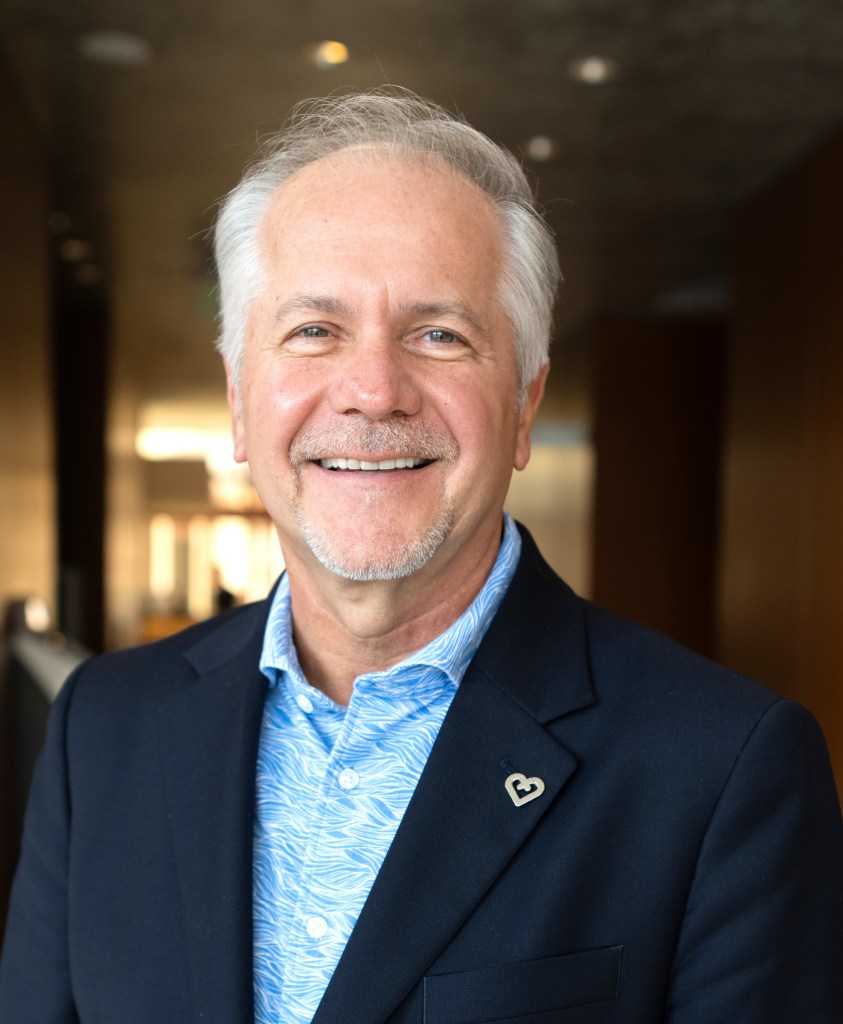
- If AI ‘adds friction, it fails’: How Mayo Clinic scales technology
- As maternity units close, AdventHealth restores OB care in rural Kansas
- Oklahoma officials warn of new opioid
- The new metrics of healthcare technology ROI: What matters to healthcare leaders
- Hoag to launch transplant center in 2027
- MercyOne hospital to transition labor and delivery services
- MercyOne hospital to transition labor and delivery services
- Southeast metros lead US population growth as national gains slow
- 8 Medicare Advantage numbers to know in 2026
- 17 Senate Dems push back on 2027 ACA proposal
- Providence hospital closes inpatient pediatric unit
- Michigan finalizes Medicaid mental health assessment policy changes
- 10 financial notes on USPI’s growth over the past 3 years
- 15 new orthopedic practice, center openings in Q1
- The oral surgery technological revolution
- From Anxiety to Action: How Ambulatory Leaders Are Rebuilding Margins in 2026
- Where GI training may fall short
- What it took to become the world’s first ASC to offer Stryker’s robotic knee tech
- Medtronic’s win in spinal cord stimulator lawsuit upheld
- How the Trump Administration Uses Migrant Kids To Find and Detain Family Members
- Heartland Dental’s 3-year growth recap: 30+ moves
- Cencora’s $10B+ physician acquisition spree: A breakdown
- Tennessee physician practice acquired
- The FTC is coming for healthcare consolidation: 10 things physicians need to know
- Adventist Health sees momentum from insourcing revenue cycle operations
- Oral GLP-1s, COVID preventatives: 3 more drugs in the pipeline, Optum says payers should watch
- Unlicensed dentistry cases, DSO deals, legislation & more: 10 dentistry updates in Virginia
- Missouri system debuts mobile behavioral health unit
- Yale researchers study GLP-1’s potential for SUD
- Texas dental school receives $6.5M to expand pediatric dental, medical programs
- North Carolina autism provider to expand therapy access
- $3M Verdict Links Social Media to Anxiety and Depression
- West Virginia hospital to end OB delivery services
- 6 DSOs making headlines
- California hospital’s finances improve, cash position remains ‘dire’
- 1 in 5 metro markets face inpatient monopoly: 7 notes
- Minnesota system faces uncertainty amid Medicare delays
- Ohio county approves behavioral health crisis center plan
- The White House Delays CDC Pick
- New COVID 'Cicada' Variant Is Spreading — What Experts Want You To Know
- Op-ed: Empathy meets efficiency—how the responsible use of AI can transform Medicare
- Family Caregivers Provide $1 Trillion In Annual Labor, AARP Says
- ‘Health Doesn’t Need to Be Ludacris’: Bayer signs rapper-actor to multivitamin campaign
- Rocket plots measured trajectory for new gene therapy Kresladi after clearance to launch from FDA
- Healthy Lab Results May Mask Future Risks for Kids with Obesity
- At-Home Chemotherapy Is Safe, Feasible, Pilot Study Indicates
- What You Do While Sitting Could Predict Dementia Risk
- New Cholesterol Guidelines: What Patients and Caregivers Need to Know
- Want A Bootlicking Yes Man? Ask An AI Chatbot For Advice, Study Warns
- Specially Coated Implants Better For Breast Cancer Patients, Study Finds
- Trump Team Claims Successes Against ACA Fraud While Pushing for More Controls

- Give and Take: Federal Rural Health Funding Could Trigger Service Cuts

- Fierce Pharma Asia—Takeda’s $1.3B reorg; India’s GLP-1 floodgates; Gilead’s $2.2B buy of a China NewCo
- Where are you with EUDAMED?

- Where are you with EUDAMED?
- HL7 Launches Real‑Time Medical Device Interoperability Accelerator
- HL7 Launches Real‑Time Medical Device Interoperability Accelerator
- Two GA Tech ATDC Startups — Nephrodite and OrthoPreserve — Secure FDA Breakthrough Device Designation
- Two GA Tech ATDC Startups — Nephrodite and OrthoPreserve — Secure FDA Breakthrough Device Designation
- Artificial Intelligence: ROI, not Clinical Autonomy, Leads Operational Workflows
- Artificial Intelligence: ROI, not Clinical Autonomy, Leads Operational Workflows
- Medtronic and Merit Medical Systems distribution agreement for new, ViaVerte basivertebral nerve ablation system
- Medtronic and Merit Medical Systems distribution agreement for new, ViaVerte basivertebral nerve ablation system
- Breakthrough Device Designation for Noah Labs Vox Heart Failure Detection Device
- Breakthrough Device Designation for Noah Labs Vox Heart Failure Detection Device
- Why private practice dentistry needs a better model
- CareQuest Innovation Partners, Kno2 collab on medical-dental data integration
- Nonprofit highlights rural opioid care strategies
- Vitana Pediatric & Orthodontic Partners adds Florida practice
- What the Health? From KFF Health News: A Headless CDC
- 20 behavioral health leaders challenge industry assumptions
- Recordati confirms it's weighing CVC Capital buyout offer of $12.6B
- 3 California behavioral health centers to close amid funding shifts
- Indiana bars autism therapy provider from Medicaid billing: Wall Street Journal
- UnitedHealth shareholder sues over proposal to include details on integration in annual proxy
- SCAN taps biopharma, CMS vet Aman Bhandari as its first chief AI officer
- Infosys to acquire Optimum Healthcare IT in $465M deal
- DOJ alleges NewYork-Presbyterian forces payers into anticompetitive 'all-or-nothing' contracts
- FDA Warns Biotech Firm Over Cancer Drug Anktiva Claims
- Bees and Hummingbirds May Be Consuming Small Amounts of Alcohol
- Two States Sue Cord Blood Company Over Misleading Claims
- New WHO Guidance Aims To Speed Tuberculosis Testing
- As questions swirl around ATTR competition, Alnylam plots path to market leadership for Amvuttra
- Trump admin delays nomination for new CDC director past deadline
- Outspoken ACIP member steps down amid vaccine panel uncertainty: reports
- Egg-based drugmaker Neion Bio emerges from stealth to cook up multi-product biosimilar collab
- Genentech walks the walk in lupus as sponsor of annual awareness and fundraising event
- Study Reveals How Many Americans Consider Using a Gun
- Massive Study Finds Stress and Grief Don’t Cause Cancer
- Ultra-Processed Foods Harm Fertility In Both Men And Women, Studies Reveal
- Small Daily Habits Can Add Up To Better Heart Health
- Ritalin Might Protect ADHD Kids' Long-Term Mental Health, Study Finds
- Can You Drink Enough Fluids To Prevent Kidney Stones? Maybe Not, New Study Says
- Clasp, loan-linked hiring tool for employers, clinches $20M to expand amid federal loan caps
- Taking a GLP-1? Doctors Say Not To Forget About Movement and Mental Health

- OpenEvidence rolls out AI medical coding feature
- CDC’s Acting Chief Promises a Return to Stability in a Tumultuous Moment
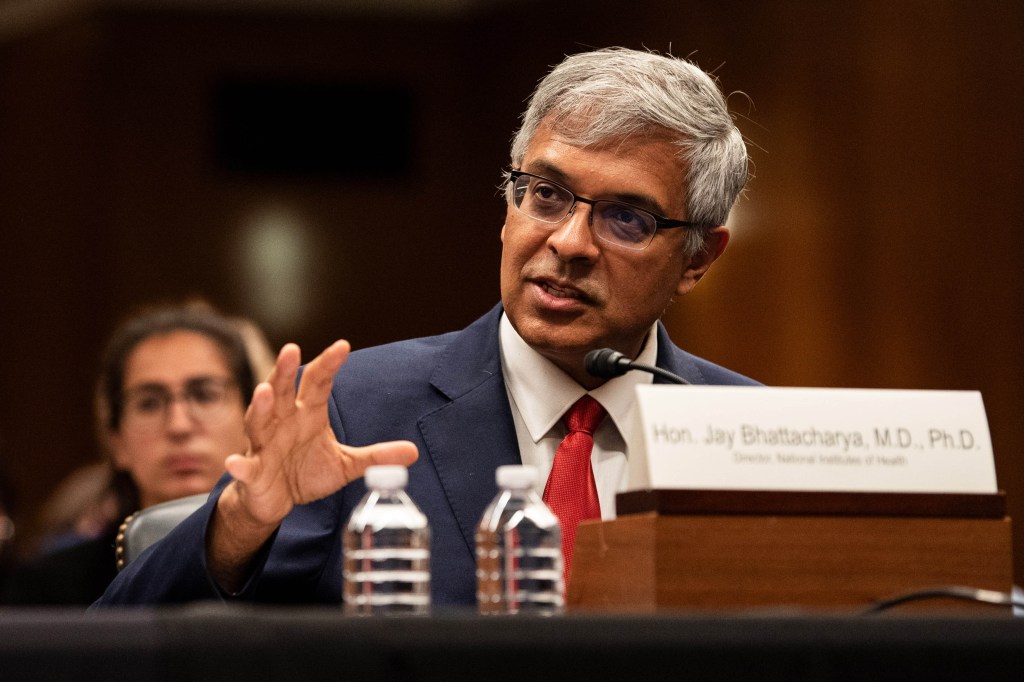
- Remarks at the Financial Stability Oversight Council Meeting
- RWJF: Between 5M and 10M people could lose Medicaid coverage in 2028 under work requirements
- New therapy animal program aims to support 100K patients, providers
- Pulse check on Lilly's GLP-1 fortunes
- Gen Z nurses prioritize schedule flexibility, need more manager interactions to avoid turnover
- How pharma marketers can capitalize on HCPs’ AI, social media and streaming habits
- Federal Officials Investigate States That Require Abortion Coverage
- Corcept's lead drug bounces back from FDA snub with different approval as Lifyorli in ovarian cancer
- Ionis slashes Tryngolza's price tag by 93% ahead of anticipated label expansion
- FDA approves Denali's Hunter syndrome drug, handing rare disease community a win
- Baby Walkers Sold on Amazon Recalled Over Fall Risk
- Want To Protect Your Brain? Science Says Exercise
- HelloFresh Pizza Recall Issued in 10 States Over Metal Risk
- Clinical Trials Have Too Much Data…That’s the Problem.

- Clinical Trials Have Too Much Data…That’s the Problem.
- CMS reveals new Medicaid model that supports coordination for children with complex needs
- Novartis sued by breast cancer patient over branded drug websites’ data-sharing practices
- Takeda targets $1.3B in cost savings in further restructuring
- Biogen pays $20M upfront to tap into Alteogen's subQ delivery tech
- 'Universal Donor' Blood Supplies Dangerously Low, Study Warns
- Why Stepping Outside May Help You Eat Better
- U.S. Medicine, Science Facing An Online Misinformation Siege, Poll Concludes
- Childhood Obesity Undercuts The American Dream For Some, Study Says
- Inclusive High Schools Benefit All Students, Not Just LGBTQ Teens
- Parental Loss Due to Drugs, Violence Raises Child Death Risk by 2,000%
- As Boehringer touts US launches, board chairman worries EU is 'falling further behind'
- The evolving state of exome and genome sequencing
- Demoralized CDC Workforce Reels From Year of Firings, Funding Cuts, and a Shooting

- An Arm and a Leg: Steep Health Care Costs Steer Americans to Tough Decisions

- Qualified Health locks in $125M in fresh funding to scale enterprise AI at health systems
- Misery Loves [Investment] Company?: Remarks at the 2026 Investment Company Institute Investment Management Conference
- Study: Nearly 1 in 5 pediatric hospital deaths involve sepsis
- As expansions come online, CDMO Hovione aims to meet industry's 'dual supply and sourcing' zeal: exec
- Opening Remarks at the Digital Asset Summit 2026
- CVS Caremark, FTC reach settlement in insulin pricing case
- UCB unveils plan to build $2B biologics plant near its US headquarters in Atlanta
- PeaceHealth sued over plans to tap out-of-state staffer ApolloMD for Oregon EDs
- New Lyme Disease Vaccine Shows Strong Results in Trial
- TrumpRx Adds Diabetes, COPD Drugs at Steep Discounts
- Highmark reports $175M net loss for 2025 as financial headwinds batter health plan
- Listen to the Latest ‘KFF Health News Minute’

- Abivax hires commercial chief from Takeda to infuse Entyvio expertise into IBD launch prep
- ImmunityBio hit with FDA warning letter over Anktiva promotions in TV ad, podcast episode
- Alcohol Prep Pads Recalled Over Bacteria Risk, Cardinal Health Says
- Fewer patients traveled for abortions in 2025 as telehealth care increased, report finds


Ever wonder why autism rates are skyrocketing? Here is one surprising reason.
Somali clans have become very sophisticated in looting the American welfare state. Minnesota autism claims to Medicaid have skyrocketed in recent years—from $ 3 million in 2018 to $ 54 million in 2019, $ 77 million in 2020, $ 183 million 2021, $ 279 million in 2022, $ 399 million in 2023, and $ 400 million in 2024. $ 1.4 billion !!!, a 46,400 percent increase over 6 years !!!
The proceeds of this scam are being transferred to Al-Shabaab in Somalia via xawala, unofficial money transfer networks. Al-Shabaab, a designated terrorist organization since 2009, uses the funds to buy arms from Iran via Yemen. They use those arms in their war against the Somali government and the African Union.
This fraud also massively inflates American autism statistics:
https://www.city-journal.org/article/minnesota-welfare-fraud-somalia-al-shabaab
https://www.danielgreenfield.org/2025/08/a-billion-dollar-somali-autism-fraud-in.html
https://www.justice.gov/usao-mn/pr/defendants-charged-first-wave-housing-stabilization-fraud-cases
“The Largest Funder of Al-Shabaab Is the Minnesota Taxpayer”
How some of the state's welfare funds ended up in the hands of a terror group
By Ryan Thorpe and Christopher F. Rufo - November 19 2025Minnesota is drowning in fraud. Billions in taxpayer dollars have been stolen during the administration of Governor Tim Walz alone. Democratic state officials, overseeing one of the most generous welfare regimes in the country, are asleep at the switch. And the media, duty-bound by progressive pieties, refuse to connect the dots.
In many cases, the fraud has allegedly been perpetrated by members of Minnesota’s sizeable Somali community. Federal counterterrorism sources confirm that millions of dollars in stolen funds have been sent back to Somalia, where they ultimately landed in the hands of the terror group Al-Shabaab. As one confidential source put it: “The largest funder of Al-Shabaab is the Minnesota taxpayer.”
Our investigation shows what happens when a tribal mindset meets a bleeding-heart bureaucracy, when imported clan loyalties collide with a political class too timid to offend, and when accusations of racism are cynically deployed to shield criminal behavior. The predictable result is graft, with taxpayers left to foot the bill.
If you were to design a welfare program to facilitate fraud, it would probably look a lot like Minnesota’s Medicaid Housing Stabilization Services program. The HSS program, the first of its kind in the country, was launched with a noble goal: to help seniors, addicts, the disabled, and the mentally ill secure housing. It was designed with “low barriers to entry” and “minimal requirements for reimbursement.” Nonetheless, before the program went live in 2020, officials pegged its annual estimated price tag at $2.6 million.
Costs quickly spiraled out of control. In 2021, the program paid out more than $21 million in claims. In the following years, annual costs shot up to $42 million, then $74 million, then $104 million. During the first six months of 2025, payouts totaled $61 million.
On August 1, Minnesota’s Department of Human Services moved to scrap the HSS program, noting that payment to 77 housing-stabilization providers had been terminated this year due to “credible allegations of fraud.” Joe Thompson, then the Acting U.S. Attorney for the District of Minnesota, went even further, stating that the “vast majority” of the HSS program was fraudulent.
On September 18, Thompson announced criminal indictments for HSS fraud against Moktar Hassan Aden, Mustafa Dayib Ali, Khalid Ahmed Dayib, Abdifitah Mohamud Mohamed, Christopher Adesoji Falade, Emmanuel Oluwademilade Falade, Asad Ahmed Adow, and Anwar Ahmed Adow—six of whom, according a U.S. Attorney’s Office spokesperson, are members of Minnesota’s Somali community. Thompson made clear that this is just the first round of charges for HSS fraud that his office will be prosecuting.
“Most of these cases, unlike a lot of Medicare fraud and Medicaid fraud cases nationally, aren’t just overbilling,” Thompson said at a press conference announcing the indictments. “These are often just purely fictitious companies solely created to defraud the system, and that’s unique in the extent to which we have that here in Minnesota.”
Thompson said many firms enrolled in the program “operated out of dilapidated storefronts or rundown office buildings.” The perpetrators often targeted people recently released from rehab, signing them up for Medicaid services they had no intention of providing. He noted many owners of companies engaged in HSS fraud had “other companies through which they billed other Medicaid programs, such as the EIDBI autism program, the . . . Adult Rehabilitative Mental Health Services program, the . . . Integrated Community Support program, the Community Access for Disability Inclusion . . . program, PCA services, and other Medicaid-waivered services.”
“What we see are schemes stacked upon schemes, draining resources meant for those in need. It feels never ending,” Thompson said. “I have spent my career as a fraud prosecutor and the depth of the fraud in Minnesota takes my breath away.”
On September 18, the same day that the HSS fraud charges were announced, the U.S. Attorney’s Office reported that a man named Abdullahe Nur Jesow had become the 56th defendant to plead guilty in the $250 million Feeding Our Future fraud scheme.
Founded in 2016, Feeding Our Future was a small Minnesota nonprofit that sponsored daycares and after-school programs to enroll in the Federal Child Nutrition Program. The organizations that Feeding Our Future sponsored were primarily owned and operated by members of Minnesota’s Somali community, according to two former state officials with connections to law enforcement.
In 2019, Feeding Our Future received $3.4 million in federal funding disbursed by the state. In the months after the Covid-19 pandemic began, however, the nonprofit rapidly increased its number of sponsored sites. Using fake meal counts, doctored attendance records, and fabricated invoices, the perpetrators of the fraud ring claimed to be serving thousands of meals a day, seven days a week, to underprivileged children. In 2021, Feeding Our Future received nearly $200 million in funding.
In reality, the money was being used to fund lavish lifestyles, purchase luxury vehicles, and buy real estate in the United States, Turkey, and Kenya. In 2020, Minnesota officials raised concerns about the nonprofit’s rapid expansion. In response, the group filed a lawsuit alleging racial discrimination related to outstanding site applications, noting that Feeding Our Future “caters to . . . foreign nationals.”
“That’s the standard operating playbook for that cohort: when in doubt, claim racism, claim bias,” says David Gaither, a former Minnesota state senator and a nonprofit leader. “Even if the facts don’t point to that, it allows for many folks in the middle, or on the center-Left, to stay silent.”
Gaither believes the mainstream media, alongside Minnesota’s Democratic establishment, have long turned a blind eye to fraud within the Somali community. This, in turn, allowed the problem to metastasize. “The media does not want to put a light on this,” Gaither said. “And if you’re a politician, it’s a significant disadvantage for you to alienate the Somali community. If you don’t win the Somali community, you can’t win Minneapolis. And if you don’t win Minneapolis, you can’t win the state. End of story.”
The fraudsters have leveraged their growing political influence to cultivate close ties with Minnesota’s elected officials. Several individuals involved in the Feeding Our Future scheme donated to, or appeared publicly with, Ilhan Omar, the Somali-born congresswoman from Minneapolis. Omar’s deputy district director, Ali Isse, advocated on behalf of Feeding Our Future. Omar Fateh, a former state senator who recently ran for Minneapolis mayor, lobbied Governor Tim Walz in support of the program. And one of the accused, Abdi Nur Salah, served as a senior aide to Minneapolis mayor Jacob Frey.
Just days later, on September 24, U.S. Attorney Joseph Thompson announced his office’s first indictment in yet another fraud case. This time, the scheme involved federally funded autism services for children.
The accused is a woman named Asha Farhan Hassan, a member of Minnesota’s Somali community, who has also been charged in the Feeding Our Future scam. She’s alleged to have played a role in a $14 million fraud scheme perpetrated against Minnesota’s Early Intensive Developmental and Behavioral Intervention program.
Hassan and her co-conspirators “approached parents in the Somali community” and recruited their children into autism therapy services. It didn’t matter, prosecutors suggested, if a child did not have an autism diagnosis: Hassan would facilitate a fraudulent one.
In a press release announcing the indictment, the U.S. Attorney’s Office made clear that the alleged autism fraud scheme extended to a wide network of people. “To drive up enrollment, Hassan and her partners paid monthly cash kickback payments to the parents of children who enrolled,” the release reads. “These kickback payments ranged from approximately $300 to $1500 per month, per child. The amount of these payments was contingent on the services DHS authorized a child to receive—the higher the authorization amount, the higher the kickback. Often, parents threatened to leave . . . and take their children to other autism centers if they did not get paid higher kickbacks.”
Much like with the HSS program, autism claims to Medicaid in Minnesota have skyrocketed in recent years—from $3 million in 2018 to $54 million in 2019, $77 million in 2020, $183 million 2021, $279 million in 2022, and $399 million in 2023. Meantime, the number of autism providers in the state spiked from 41 to 328 over the same period, with many in the Somali community establishing their own autism treatment centers, citing the need for “culturally appropriate programming.” By the time the fraud scheme was exposed, one in 16 Somali four-year-olds in the state had reportedly been diagnosed with autism—a rate more than triple the state average.
“This is not an isolated scheme,” Thompson, the U.S. attorney, said in a press release. “From Feeding Our Future to Housing Stabilization Services and now Autism Services, these massive fraud schemes form a web that has stolen billions of dollars in taxpayer money. Each case we bring exposes another strand of this network.”
What Thompson arguably hinted at, but left unsaid, should be obvious: this “network” of “fraud schemes,” which “form a web” that has stolen “billions of dollars in taxpayer money,” involved many members of Minnesota’s Somali community. The Feeding Our Future, HSS, and autism-services cases are far from the only examples. At least 28 fraud scandals have surfaced since Walz was elected governor in 2019. Most of the large-scale fraud rings, according to two former FBI officials who spoke with City Journal, have been perpetrated by members of the Somali community.
Kayesh Magan, a Somali-American who had worked as a fraud investigator at the Minnesota Attorney General’s Office and declined an interview request, identified the problem last year: “We must grapple with something that is uncomfortable and true: Nearly all of the defendants in the cases I’ve listed are from my community. The Somali community.”
Perhaps the most surprising aspect of the Somalia fraud story is the scale, with total costs running into the billions of taxpayer dollars. That raises the question: What happened to all that money?
The Somali fraud rings have sent huge sums in remittances, or money transfers, from Minnesota to Somalia. According to reports, an estimated 40 percent of households in Somalia get remittances from abroad. In 2023 alone, the Somali diaspora sent back $1.7 billion—more than the Somali government’s budget for that year.
Our investigation reveals, for the first time, that some of this money has been directed to an even more troubling destination: the al-Qaida-linked Islamic terror group Al-Shabaab. According to multiple law-enforcement sources, Minnesota’s Somali community has sent untold millions through a network of “hawalas,” informal clan-based money-traders, that have wound up in the coffers of Al-Shabaab.
According to Glenn Kerns, a retired Seattle Police Department detective who spent 14 years on a federal Joint Terrorism Task Force (JTTF), the Somalis ran a sophisticated money network, spanning from Seattle to Minneapolis, and were routing significant amounts of cash on commercial flights from the Seattle airport to the hawala networks in Somalia. One of these networks, Kerns discovered, sent $20 million abroad in a single year. “The amount of money was staggering,” Kerns said.
Kerns’s investigation eventually expanded to Minnesota, where he realized the same thing was happening. “I worked on it for five years,” Kerns said. “We had sources going into the hawalas to send money. I went down to [Minnesota] and pulled all of their records and, well shit, all these Somalis sending out money are on DHS benefits. How does that make sense? We had good sources tell us: this is welfare fraud.”
Kerns then investigated the hawalas in Somalia that were receiving the money transfers. He determined, primarily through human sources, that significant funds were being sent from America to Al-Shabaab networks in Somalia. Whether the money was intended for Al-Shabaab or not, Kerns said, they were taking a cut.
A second former official, who worked on the Minneapolis JTTF, confirms the story’s general structure. This former official, who requested to remain anonymous, worked on two terrorism cases that intersected with Minnesota’s Somali community and has studied the flow of funds from Minnesota to Somalia.
“Every scrap of economic activity, in the Twin Cities, in America, throughout Western Europe, anywhere Somalis are concentrated, every cent that is sent back to Somalia benefits Al-Shabaab in some way,” the former official said. “For every dollar that is transferred from the Twin Cities back to Somalia, Al-Shabaab is . . . taking a cut of it.”
A third source, who spoke on condition of anonymity, described the close links between the Somali-American community in Minnesota and Islamic terror groups abroad. Ten years ago, the source was recruited as an “independent contractor” for a three-letter agency investigation into the “Minnesota men” who had joined, or attempted to join, ISIS. That year, a Homeland Security task force report found that Minnesota led the nation in the number of Americans who had joined, or attempted to join, ISIS. Of the 58 Americans who had done so, nearly half came from Minnesota.
Scott Johnson, who has covered these and related stories for years, attended several of those men’s trials, reporting on them for City Journal. He noted that the Minnesota men “gave the outward appearance of American assimilation”—including being “sophisticated users of social-welfare benefits.”
The relationship is ongoing. “This is a third-rail conversation, but the largest funder of Al-Shabaab is the Minnesota taxpayer,” the third source said. “There is an issue here that is real, and if there is ever an event that is traceable back to these funds, or to people from this area, then this situation will take on a whole new set of optics.”
Welfare fraud is likely to become a major issue in Minnesota’s 2026 elections. Governor Tim Walz, now seeking a third term, has presided over a litany of scandals and faces Republican Kristin Robbins, who has made fraud prevention central to her campaign.
Gaither, the former state senator, said “political blowback is brewing” in the state and that, as more information emerges from ongoing investigations, “it’s a real rough place to be if you’re the current administration.” He added that if you talk to law-enforcement officials and others close to the probes, “they will tell you off the record that we aren’t even close to being halfway there” in understanding the true scale of the fraud.
The first step to solving a problem is acknowledging it. By extension, that means recognizing the problem’s true source. So far, Minnesota’s governing class and its media establishment have failed to take that basic step. Minnesotans will have to confront the uncomfortable but unavoidable reality: members of the Somali community have played a central role in the massive fraud now engulfing the North Star State.
Ryan Thorpe is an investigative reporter at the Manhattan Institute. Christopher F. Rufo is a senior fellow at the Manhattan Institute, a contributing editor of City Journal, and the author of America’s Cultural Revolution.
Get MHF Insights
News and tips for your healthcare freedom.
We never spam you. One-step unsubscribe.
Sponsors
Friends of MHF





Kirsten DeVries
Tom & Karen Nunheimer
Steve Ahonen
Ron & Faith Bosserman
Marlin & Kathy Klumpp
Sign Up for MHF Insights to keep up on the latest in Michigan Health Policy