










Michigan healthcare freedom community forum

The Centers for Medicare & Medicaid Services (CMS) announced a $259.5 million deferral of quarterly federal Medicaid funding in Minnesota to prevent payment of questionable claims while further investigations are completed. CMS will also suspend nationally Medicare enrollment for certain Durable Medical Equipment, Prosthetics, Orthotics, and Supplies (DMEPOS) suppliers. DMEPOS has been a demonstrated hot bed of Medicare and Medicaid fraud:
Trump Administration Prioritizes Affordability by Announcing Major Crackdown on Health Care Fraud
CMS Press Release - February 25, 2026Initiative Seeks Input on Strengthening Program Integrity to CRUSH Fraud
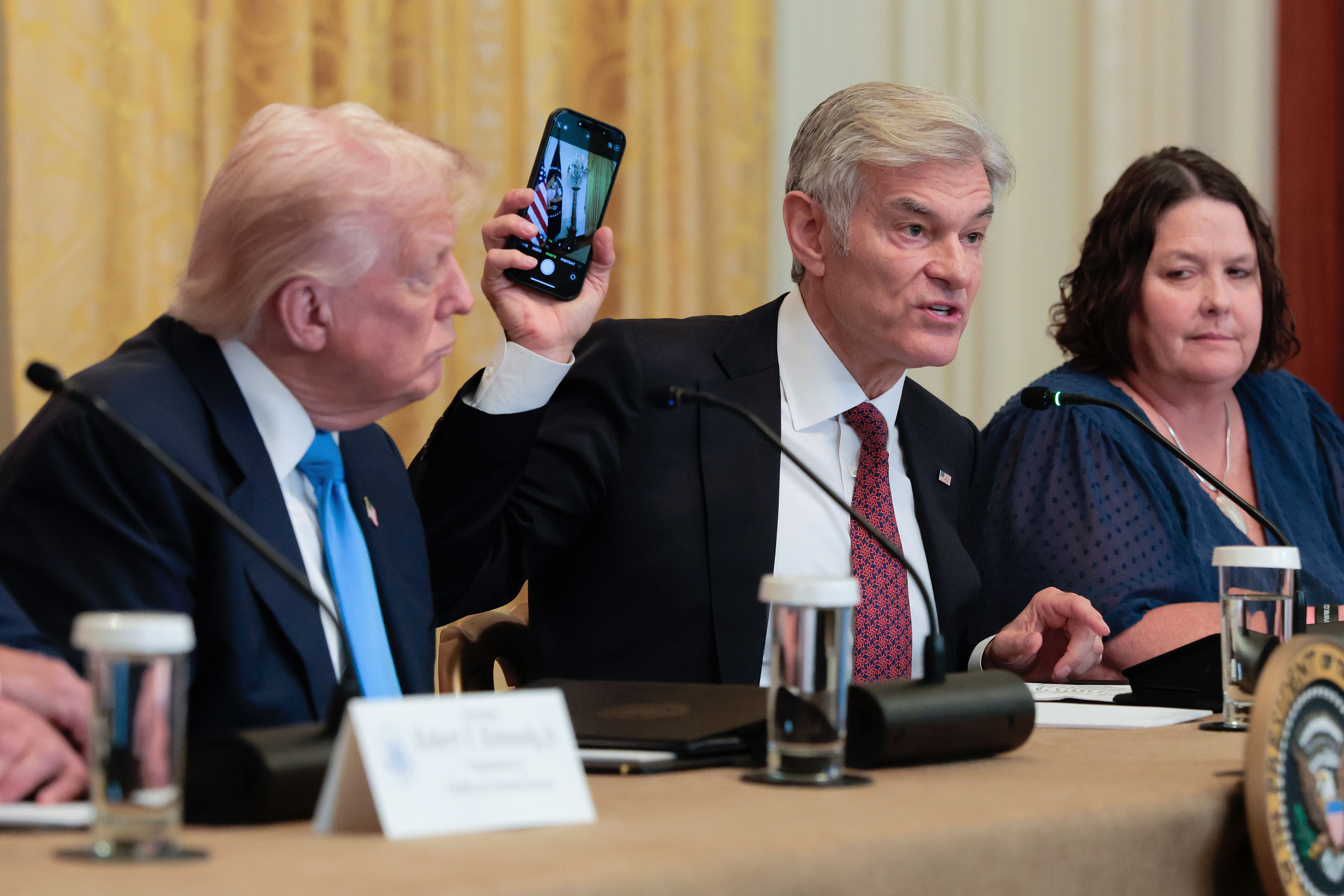
Today at the White House, Vice President J.D. Vance, Secretary of Health and Human Services (HHS) Robert F. Kennedy, Jr., and Administrator of the Centers for Medicare & Medicaid Services (CMS) Dr. Mehmet Oz announced new steps to crack down on fraud in Medicare and Medicaid to protect patients and taxpayers and improve affordability. The actions include deferring $259.5 million of quarterly federal Medicaid funding in Minnesota to prevent payment of questionable claims while further investigation is completed; a nationwide moratorium on Medicare enrollment for certain Durable Medical Equipment, Prosthetics, Orthotics, and Supplies (DMEPOS) suppliers; and a nationwide call to action for Americans to support fraud prevention, including stakeholder input on how CMS can continue to expand and strengthen its efforts. Together, these steps reflect a coordinated, data-driven strategy to prevent fraud before it occurs, hold bad actors accountable, and protect taxpayer dollars.
“For decades, Medicare fraud has drained billions from American taxpayers—that ends now,” said Secretary Kennedy. “We are replacing the old ‘pay and chase’ model with a real-time ‘detect and deploy’ strategy, using advanced AI tools to identify fraud instantly and stop improper payments before they go out the door.”
“CMS is done trying to catch fraudsters with their hands in the cookie jar—instead, we’re padlocking the jar and letting them starve,” said Administrator Oz. “This proactive approach will help us crush fraud, protect taxpayer dollars, and make sure the vulnerable Americans who depend on our programs get the care they need.”
Minnesota: $259.5 Million Federal Medicaid Funding Deferred
Medicaid is funded jointly by states and the federal government. CMS is required to ensure Medicaid funds are spent lawfully and that states maintain effective systems to detect, prevent, and recover improper payments. When those obligations are not met, CMS has the authority and responsibility to withhold, defer, or disallow federal funds. In January 2026, CMS notified Minnesota of its intent to withhold federal funds until it was satisfied with the state’s corrective action plan to address its program integrity shortcomings. CMS also notified Minnesota of its intent to conduct a review focused on program integrity to ensure federal funds were not going toward questionable claims.
CMS’ review of Minnesota’s Medicaid spending for the fourth quarter in FY 2025 resulted in a deferral of $259,505,491 in federal matching funds. This includes state expenditures of $243.8 million for unsupported or potentially fraudulent Medicaid claims and $15.4 million related to claims involving individuals lacking a satisfactory immigration status. The agency utilized both traditional financial management approaches and new program integrity oversight strategies to identify unusually high spending and rapid growth in certain service areas, including:
- Personal care services;
- Home and community-based services; and
- Other practitioner services.
CMS is deferring those federal funds to protect taxpayer dollars while ensuring the state has the opportunity to respond and provide information and documentation during the ongoing review. Should Minnesota fail to clean up its significant program integrity vulnerabilities or demonstrate that the expenditures are allowable, CMS may defer more than $1 billion in federal funds over the next year. CMS also continues to intensely oversee Minnesota’s efforts to carry out its corrective action plan to address the underlying causes of fraud, waste, and abuse within the state.
Nationwide DMEPOS Enrollment Moratorium/Medicare Program Integrity Initiatives
CMS is taking decisive steps to prevent fraudulent Medicare billing by durable medical equipment, prosthetics, orthotics, and supplies (DMEPOS) companies. A six-month moratorium on new Medicare enrollment for certain DMEPOS suppliers builds on CMS’ stopping more than $1.5 billion in suspected fraudulent billing in this area last year. The DMEPOS supplier enrollment moratorium will allow CMS to explore additional safeguards to further mitigate longstanding instances of fraud, waste, and abuse perpetrated by certain DMEPOS companies. It applies to all applications for initial enrollment and changes in majority ownership for medical supply companies.
CMS also plans to publish information on providers/suppliers whose participation in the Medicare program has been revoked, including their National Provider Identifier and the reason for the revocation. This additional transparency will allow patients and payers, including private insurers, to understand which providers have been subject to such administrative enforcement action by the government.
Reduction of fraud, waste, and abuse drives down costs for Medicare beneficiaries. For example, CMS’ recent actions to address abusive pricing practices for skin substitutes helped lower premiums by $11 per month for Medicare beneficiaries by reducing overall Medicare Part B program spending. When CMS adjusts payment rates to better align with market prices and clinical value, it decreases unnecessary or inflated payments for high-cost products. Because Medicare Part B premiums are set to cover a portion of projected program costs, lowering spending on expensive items like certain skin substitutes directly reduces total expenditures. As a result, these savings contribute to slower premium growth and help keep out-of-pocket costs more affordable for beneficiaries while maintaining access to medically necessary treatments.
CRUSH Initiative – Request for Stakeholder Input
CMS is looking to stakeholders to provide input, based on their experience and knowledge, on additional ways the agency can tackle fraud prevention to help inform the development of a possible future rule under CMS’ Comprehensive Regulations to Uncover Suspicious Healthcare (CRUSH) initiative. The CRUSH request for information (RFI) seeks input from a broad range of stakeholders – including states, providers, suppliers, payers, technology companies, patient advocates, beneficiaries, and others – on ways to strengthen CMS’ ability to prevent, detect, and respond to fraud, waste, and abuse, and program inefficiencies in Medicare, Medicaid, the Children’s Health Insurance Program (CHIP), and the Health Insurance Marketplace. Stakeholders can provide input on both existing authorities, as well as ideas for new regulatory approaches.
The actions announced today build on CMS’ broad strategy to combat fraud, waste, and abuse through data-driven prevention and real-time enforcement. In 2025, CMS made significant progress in its fight to crush fraud, including:
- Suspending $5.7 billion in suspected fraudulent Medicare payments by leveraging advanced analytics, cross-agency coordination, and law enforcement partnerships;
- Preventing $1.5 billion in suspected fraudulent DMEPOS billing;
- Denying 122,658 Medicare claims for unnecessary items and services because they failed to satisfy Medicare’s preliminary approval checks that confirm medical necessity and other coverage requirements;
- Revoking the ability of 5,586 providers and suppliers to bill the Medicare program due to inappropriate behavior;
- Sending 372 fraud referrals encompassing $3.7 billion in billing to law enforcement for potential legal action; and
- Initiating a CMS-State Tax Fraud partnership with 28 states and the US Virgin Islands to strengthen state-federal enforcement against healthcare providers and suppliers who commit healthcare and tax fraud.
More information on the DMEPOS moratorium can be found via the Federal Register at: https://www.federalregister.gov/public-inspection/2026-03971/medicare-medicaid-and-childrens-health-insurance-programs-nationwide-temporary-moratoria-on.
Comments on the CRUSH Request for Information must be submitted by March 30, 2026, via the Federal Register at: https://www.federalregister.gov/public-inspection/2026-03968/request-for-information-comprehensive-regulations-to-uncover-suspicious-healthcare (refer to CMS-6098-NC).
More information on CMS’ fraud prevention efforts is available at: www.cms.gov/fraud.
The Feds are raiding 22 premises in Minnesota associated with various Medicaid frauds today, including the infamous Quality Learing Center 😉 :
https://apnews.com/article/minnesota-federal-fraud-investigation-8168a91d53b77427f75451aa50546d7c
Agents serve search warrants in federal fraud probe in Minnesota
By Mark VanCleave - April 28, 2026MINNEAPOLIS (AP) — Federal agents served multiple search warrants Tuesday in Minnesota in an ongoing fraud investigation by the Trump administration of publicly funded social programs for children, authorities said.
Few details were released, though armed agents were seen at childcare centers in the Minneapolis area. KSTP-TV said one crew even had a battering ram.
Democratic Gov. Tim Walz, who has been on the defensive amid Trump administration claims that he hasn’t done enough to root out fraud, welcomed the raids. The state child welfare agency said it shared key information with law enforcement.
“We catch criminals when state and federal agencies share information. Joint investigations work, and securing justice depends on it,” Walz said.
Tensions between Minnesota officials and the federal government were high during an extraordinary immigration crackdown that led to the deaths of two people before the operation was eased in February.
Before that crackdown, the government had brought fraud charges against dozens of people, many of them Somali Americans, who were accused of fleecing a federal program that was meant to provide food to children. The investigation began during the Biden administration. More than 60 people have been convicted.
Investigators from various state and federal agencies, including the Department of Homeland Security, were seen removing records during searches Tuesday.
“The American people deserve to know how their taxpayer money was abused. ... No stone will be left unturned,” Homeland Security said.
Jason Steck, an attorney who represents childcare centers, said the names of targeted businesses that were shared with him show they’re operated by Somali immigrants.
“A few childcare centers, a few autism centers, a few healthcare agencies of some type,” Steck said, adding that it appeared to be a “particular sweep for fraud.”
Right-wing influencer Nick Shirley posted a video in December that caught the attention of the Trump administration. He alleged that members of Minnesota’s Somali community were running fake child care centers so they could collect federal subsidies, fueling suspicions on top of the food aid scandal. The claims were disproven by inspectors.
President Donald Trump, meanwhile, has used dehumanizing rhetoric, calling Somali immigrants “garbage” and “low IQ.”
In February, Vice President JD Vance said the government would temporarily halt $243 million in Medicaid funding to Minnesota over fraud concerns. Minnesota sued in response, warning it may have to cut healthcare for low-income families, but a judge on April 6 declined to grant a restraining order.
Walz told Congress in March that he wanted to work with the federal government in fraud investigations, but that the immigration surge had made it more difficult.
“The people of Minnesota have been singled out and targeted for political retribution at an unparalleled scale,” he said at the time.
Get MHF Insights
News and tips for your healthcare freedom.
We never spam you. One-step unsubscribe.
Sponsors

J & DE Family Charitable Fund

Friends
of MHF

Kelly Grotendiek
Philip Harbach
Dale Johnson
Drs. Jeffrey and Joni Jones
Vickie Kahle
Tammy Kipen
Marlin & Kathy Klumpp
Melanie Kurdys
Ruth Nobel
Patrick Peterson
Stephanie Poortenga
Jeanne Smit
Ben and Hope Staal
John Tuinstra
Jacki VanHuis
Sandy Walker
Sign Up for MHF Insights to keep up on the latest in Michigan Health Policy