- Taking a GLP-1? Doctors Say Not To Forget About Movement and Mental Health

- Women, early-career scientists hardest hit by NIH grant terminations: Study

- CDC’s Acting Chief Promises a Return to Stability in a Tumultuous Moment
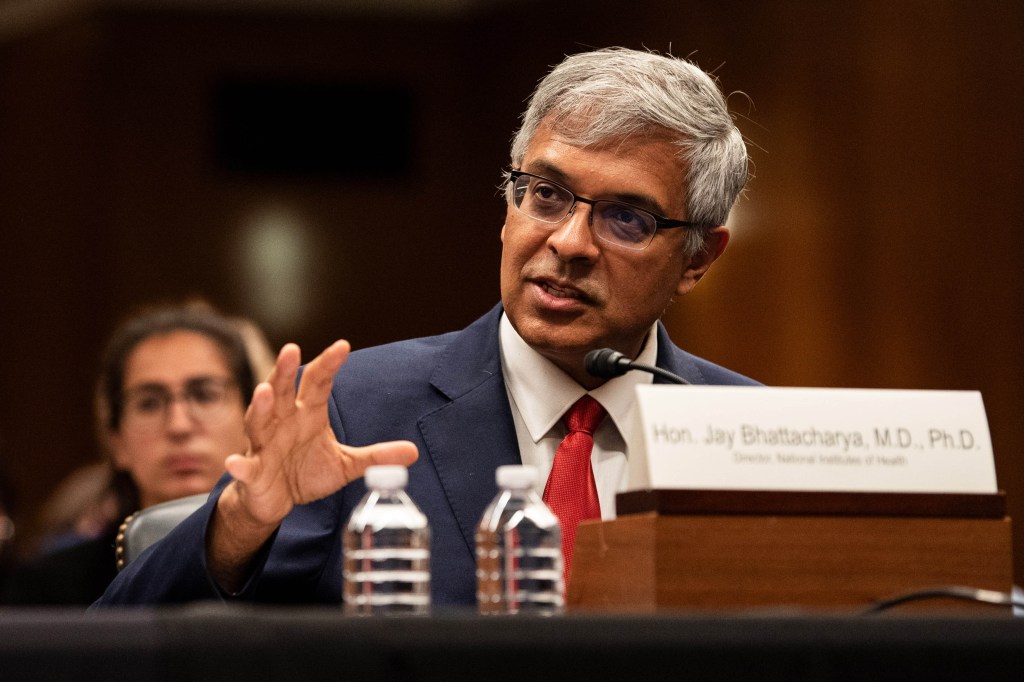
- California peer-run behavioral health center to close amid funding shift
- White House delays CDC director nomination
- Vandalia Health restructures, eliminates regional CEO roles
- ‘Integration only works if data lives in the same system’: How 5 systems are operationalizing behavioral health
- Medicaid work requirements could cut enrollment by up to 10 million per month
- Medicaid work requirements could cut enrollment by up to 10 million per month
- Inside UHS’ playbook for responsible behavioral health growth
- Adventist Health hospital names president
- Epic4 Specialty Partners adds Illinois practice
- Residents, fellows tap Mayo Clinic Platform data for insights
- NYC Health + Hospitals to end $4M Palantir contract
- Ascension drives quality, access wins with ‘digital nudges’
- Adventist Health cuts operating loss in 2025
- Adventist Health cuts operating loss in 2025
- 10 surgeons making headlines in 1 month
- Infosys to acquire Optimum Healthcare IT for $465M
- ‘Burning the candle from both ends’: New York hospital CFO on rising costs, revenue cuts
- ASCs are not hospitals — and 1 administrator says the industry is forgetting that
- The unsolved problems still plaguing dentistry
- American Dental Association adds mental health, GLP-1 prompts to patient forms
- 21 revenue cycle executive moves in 2026
- ASCA backs outpatient surgery access bill
- The outpatient explosion is here—can real estate keep up?
- North Carolina orthodontic practice opens 7th location
- The health systems with the top supply chain operations and 4 more updates
- Intuitive Surgical eyes ASCs as robotics’ next frontier
- Feds give first-ever green light to ASC estate planning ownership model
- Virginia hospital boosts workplace safety reporting 245% with 3 strategic shifts
- What’s next for Optum?
- The 47 rural emergency hospitals, by state
- Massachusetts payers, hospitals partner on care affordability, access
- Pennsylvania hospital to end inpatient, ED services in May
- ADA urges CMS to proceed with adult dental coverage expansion
- Where anesthesiology residents are headed: 2026 Match data by state
- California outpatient medical office building sold for $340M
- RWJF: Between 5M and 10M people could lose Medicaid coverage in 2028 under work requirements
- Imagen Dental Partners adds Washington practice
- Imagen Dental Partners appoints senior VP of M&A
- Arkansas man charged with making terroristic threats to dental office staff
- Smile Partners appoints DSO veteran as COO
- Financial challenges slam dental offices: 4 updates
- Dental innovation continues: 10 big updates to know
- How pharma marketers can capitalize on HCPs’ AI, social media and streaming habits
- Federal Officials Investigate States That Require Abortion Coverage
- Tennessee hospital files notice tied to vendor transition affecting 85 workers
- Corcept's lead drug bounces back from FDA snub with different approval as Lifyorli in ovarian cancer
- AI-driven RCM firm Adonis raises $40M
- Ionis slashes Tryngolza's price tag by 93% ahead of anticipated label expansion
- FDA approves Denali's Hunter syndrome drug, handing rare disease community a win
- Rush Health anticipates $5.9M in revenue from automated coding
- Baby Walkers Sold on Amazon Recalled Over Fall Risk
- Scaling patient access the right way: The Stella-Nanonets blueprint
- Want To Protect Your Brain? Science Says Exercise
- HelloFresh Pizza Recall Issued in 10 States Over Metal Risk
- Clinical Trials Have Too Much Data…That’s the Problem.

- Clinical Trials Have Too Much Data…That’s the Problem.
- CMS reveals new Medicaid model that supports coordination for children with complex needs
- Novartis sued by breast cancer patient over branded drug websites’ data-sharing practices
- Takeda targets $1.3B in cost savings in further restructuring
- Biogen pays $20M upfront to tap into Alteogen's subQ delivery tech
- 'Universal Donor' Blood Supplies Dangerously Low, Study Warns
- Why Stepping Outside May Help You Eat Better
- U.S. Medicine, Science Facing An Online Misinformation Siege, Poll Concludes
- Childhood Obesity Undercuts The American Dream For Some, Study Says
- Inclusive High Schools Benefit All Students, Not Just LGBTQ Teens
- Parental Loss Due to Drugs, Violence Raises Child Death Risk by 2,000%
- As Boehringer touts US launches, board chairman worries EU is 'falling further behind'
- The evolving state of exome and genome sequencing
- An Arm and a Leg: Steep Health Care Costs Steer Americans to Tough Decisions

- Demoralized CDC Workforce Reels From Year of Firings, Funding Cuts, and a Shooting
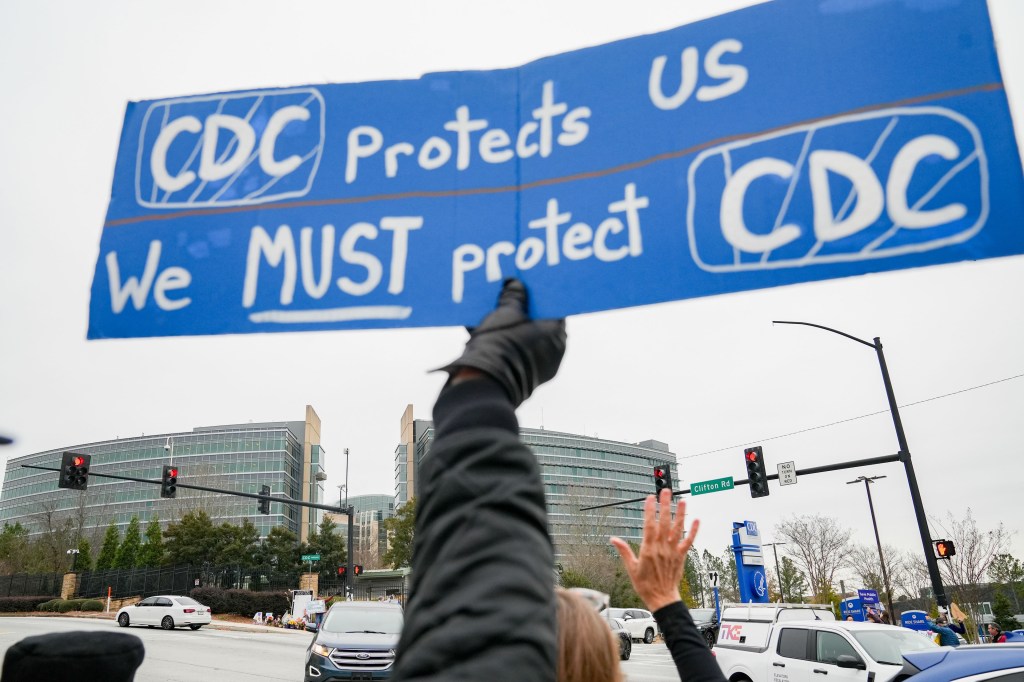
- CMS unveils new pediatric care model
- Qualified Health locks in $125M in fresh funding to scale enterprise AI at health systems
- Two-thirds of pediatric mental health triage scores inaccurate: Study
- Misery Loves [Investment] Company?: Remarks at the 2026 Investment Company Institute Investment Management Conference
- Idaho lawmakers push to restore mental health programs
- Study: Nearly 1 in 5 pediatric hospital deaths involve sepsis
- New York launches mental health training for first responder clinicians
- Opening Remarks at the Digital Asset Summit 2026
- CVS Caremark, FTC reach settlement in insulin pricing case
- UCB unveils plan to build $2B biologics plant near its US headquarters in Atlanta
- PeaceHealth sued over plans to tap out-of-state staffer ApolloMD for Oregon EDs
- New Lyme Disease Vaccine Shows Strong Results in Trial
- TrumpRx Adds Diabetes, COPD Drugs at Steep Discounts
- Highmark reports $175M net loss for 2025 as financial headwinds batter health plan
- Listen to the Latest ‘KFF Health News Minute’
- Abivax hires commercial chief from Takeda to infuse Entyvio expertise into IBD launch prep
- ImmunityBio hit with FDA warning letter over Anktiva promotions in TV ad, podcast episode
- Alcohol Prep Pads Recalled Over Bacteria Risk, Cardinal Health Says
- Fewer patients traveled for abortions in 2025 as telehealth care increased, report finds
- Cologuard campaign reunites ‘Full House’ stars to give ‘The Talk’ about colon cancer screening
- Lilly to remove certain insulin products from European markets by 2027
- Karyopharm, looking to jump-start Xpovio, reports mixed results in myelofibrosis
- Study Warns Fluoride Bans May Raise Tooth Decay in Children
- WuXi Bio's record number of new projects in 2025 leaned heavily on US clients
- “Me engañaron”: agentes encadenan a un padre que había ido al ICE a reunirse con sus hijos

- Gilead inks Manta pact to dive deeper into cancer patient support
- Cheap Children's Clothing Tainted With Lead, Study Says
- Insulin Prices Fell For Medicare Patients Under Biden-Era Caps, Study Finds
- New Fathers Face Mental Health Challenges, Study Finds
- Your Choice Of Booze Influences Your Risk Of Death, Study Says
- AI Gets a 'D' When Judging Scientific, Medical Claims
- New Online Tool Helps Parkinson's Patients Weigh Brain Implant Decision
- AI chatbot use for health information up 16% from 2024: Rock Health survey
- ‘They Tricked Me’: A Father Was Chained After He Went to ICE To Reunite With His Kids
- Wilmington PharmaTech commits $50M to US API expansion
- Strides recalls nearly 90K bottles of children's ibuprofen after contamination complaints
- Trump administration unveils national policy framework for AI as it moves to override state laws
- Breast Cancer Locator System Submitted for De Novo 510(k) by Cairn Surgical
- Breast Cancer Locator System Submitted for De Novo 510(k) by Cairn Surgical
- 17 spine surgery firsts in Q1

- 17 spine surgery firsts in Q1
- Cencora acquiring EyeSouth Partners' retina business for $1.1B
- Aunque tengas seguro dental, la factura puede ser muy alta

- Massive class action seeking RICO penalties against Takeda, Lilly presses forward with SCOTUS order
- A look at how Optum Rx is using AI to address pharmacy fraud, waste and abuse
- AbbVie steps up to the plate as official pharma sponsor of MLB
- Gilead CEO Daniel O'Day nets $28.4M pay package as security and travel costs top $2M
- Nursing Homes Accused of False Diagnoses To Hide Drug Use
- FDA Approves Higher-Dose Wegovy To Help People Lose More Weight
- Teens Often Pressured To Send Sexual Photos by Someone They Know, Study Finds
- CommonSpirit, Humana reach 3-year national network agreement
- Match Day 2026: Growth in emergency medicine, psychiatry
- Nearly 90,000 Bottles of Children’s Ibuprofen Recalled Nationwide
- FTC launches multi-bureau Healthcare Task Force to spot 'new priority areas for enforcement'
- Algunos adultos de mediana edad deciden posponer la atención médica hasta tener Medicare

- ¿Qué tan bajo se puede llegar? Las cambiantes guías para el control de la presión arterial

- EyePoint lawsuit accuses Ocular of 'malicious' defamation campaign in retina drug race
- Rural hospitals could apply for temporary interest-free construction, renovation loans under new bipartisan bill
- Cost Center to Command Center: How Health Systems Are Systematizing Innovation in Support Services
- Rural Residents Have Highest Cancer Death Rates, Researchers Say
- Your Bank Account Might Show How Well Your Brain Will Age, Researchers Say
- Insurance Lapses Play Havoc With Diabetes Management, Study Shows
- Psychedelics Aren't Better Than Antidepressants In Treating Depression, Review Concludes
- A Nasal Swab for Alzheimer's? Duke Team Has One in Testing
- Heat Advisories Might Not Trigger Soon Enough For Some Seniors, Study Finds
- Health Tech Weekly Rundown: Perplexity rolls out AI-powered medical records search; Doximity survey examines how docs use AI
- Don't Forget This: Study Shows Cannabis Exacts a Toll on Your Memory
- Want To Stress Less? Start With These Everyday Habits
- Large pharma companies reduced headcounts by more than 22K in 2025 as $300B patent cliff looms
- Remarks at The SEC Speaks in 2026: From Kitchen Table to Cap Table—Making Capital Formation Work for Small Businesses
- Health system AI adoption surges in 2026 with execs reporting increased ROI: survey
- Heart Benefits From GLP-1 Drugs Fade After Stopping, Study Finds
- Survey Shows More People Struggling To Afford ACA Insurance
- Up to 155,000 COVID Deaths May Not Have Been Counted, Study Finds
- FDA Drops Plan To Ban Tanning Beds for Minors Nationwide
- Mindray North America Enters Ventilator Market
- Mindray North America Enters Ventilator Market


Pre-ACA, Michigan had about 35 insurance mandates. At an additional 4% cost per mandate, mandates were a major reason many were shut out of the private coverage market.
Fast forward to 2023. The mother of all mandates, HB 4707 wedges mental health parity into Michigan's insurance code. Never mind patients in 2023 face record numbers of denials - what are a few more?!
What's the strategy here - break the insurance companies to make Michigan's single-payer bills look like a bargain?
Or perhaps this Legislature wants to be remembered for the attitude, "Forget patient health consequences, let them use pixie dust."
Bill-reading tip: numbered lines start with "1" on each page for easy reference.
Beginning on page 13:
27 Sec. 3425. (1) Except as otherwise provided in this
28 subsection, an insurer that delivers, issues for delivery, or
29 renews in this state a health insurance policy shall provide14
1 coverage for intermediate and outpatient care for substance use
2 disorder. medically necessary treatment of a mental health or
3 substance use disorder. This section does not apply to limited
4 classification policies.
5 (2) An insurer shall cover the full continuum of service
6 intensities and levels of care that are described in the most
7 recent versions of the following:
8 (a) The ASAM Criteria by the American Society of Addiction
9 Medicine.
10 (b) The Level of Care Utilization System by the American
11 Association of Community Psychiatrists.
12 (c) The Child and Adolescent Level of Care/Service Intensity
13 Utilization System by the American Association for Community
14 Psychiatry and the American Academy of Child and Adolescent
15 Psychiatry.
16 (d) Early Child Service Intensity Instrument by the American
17 Academy of Child and Adolescent Psychiatry.
Then on page 15 we go down the deep dark hole of government managing insurance. In turn, insurance since the 1990s has managed care instead of simply covering it.
With all the watchers watching watchers, you'd think healthcare were a crime syndicate instead of people in the business of saving lives. But I digress.
Back to managed care:
It's constant and it interferes with care, sucking up vast amounts of clinician time advocating for patient coverage and filling out forms. Whether or not insurance employees are medically qualified, and regardless of their lack of contact with the patient - they hold the whip hand, because they hold the money.
It's an upside-down world. Is it any wonder clinicians are fleeing hospitals?
This is what managed care looks like when it's framed in law:
1 (5) In conducting utilization review of all covered health
2 care services and benefits for the diagnosis, prevention, and
3 treatment of mental health and substance use disorders in children,
4 adolescents, and adults, an insurer, and any entity acting on the
5 insurer's behalf, shall do all of the following:
6 (a) Make all medical necessity determinations consistent with
7 current generally accepted standards of mental health and substance
8 use disorder care.
9 (b) Apply exclusively the level of care placement criteria and
10 practice guidelines set forth in the most recent versions of
11 utilization review criteria and practice guidelines developed by
12 the nonprofit professional association for the relevant clinical
13 specialty within the scope of the criteria. Criteria and guidelines
14 outside the scope of the nonprofit professional association
15 criteria, including criteria described in section 2212e, may be
16 used if the criteria are fully consistent with current generally
17 accepted standards of mental health and substance use disorder
18 care.
19 (c) Not limit benefits or coverage for chronic or pervasive
20 mental health and substance use disorders to short-term or acute
21 treatment at any level of care placement.
22 (6) Except as otherwise provided in subsection (5), a prior
23 authorization determination for mental health and substance abuse
24 disorder services must be conducted under section 2212e.
25 (7) For all level of care placement decisions, the insurer
26 shall authorize placement at the level of care consistent with the
27 insured's assessment using the relevant nonprofit professional
28 association level of care placement criteria and guidelines under
29 subsection (5)(b). If that level of placement is not available, the16
1 insurer shall authorize the next higher level of care. If there is
2 a disagreement between the insured's provider and the insurer, the
3 insurer shall provide full detail of its scoring using the relevant
4 level of care placement criteria and guidelines to the insured and
5 the insured's provider.
6 (8) If services for the medically necessary treatment of a
7 mental health or substance use disorder are not available in
8 network within the geographic and timeliness access standards under
9 law, the insurer shall arrange coverage to ensure the delivery of
10 medically necessary out-of-network services and any medically
11 necessary follow-up services that, to the maximum extent possible,
12 meet those geographic and timely access standards. The insured
13 shall pay not more in total for benefits rendered than the cost
14 sharing that the insured would pay for the same covered services
15 received from an in-network provider.
16 (9) For an adverse determination regarding a mental health or
17 substance use disorder service, including an adverse determination
18 regarding a prior authorization under section 2212e, the reviewer
19 must have the appropriate training and relevant experience in the
20 clinical specialty involved in the coverage determination. As used
21 in this subsection, "adverse determination" means that term as
22 defined in section 2213.
23 (10) An insurer shall cover mental health and substance use
24 disorder emergency services not more restrictively and using the
25 same coverage standards as for other emergency services, including,
26 but not limited to, utilizing the prudent layperson standard and
27 not applying prior authorization. The insured shall pay not more
28 than the in-network cost sharing amount regardless of provider
29 participation status.17
1 (11) An insurer shall not limit benefits or coverage for
2 medically necessary services on the basis that those services
3 should be or could be covered by a public program, including, but
4 not limited to, special education or an individualized education
5 program, Medicaid, Medicare, Supplemental Security Income, or
6 Social Security Disability Insurance, and shall not include or
7 enforce a contract term that excludes otherwise covered benefits on
8 the basis that those services should be or could be covered by a
9 public program. As used in this subsection:
10 (a) "Medicaid" means a program for medical assistance
11 established under subchapter XIX of the social security act, 42 USC
12 1396 to 1396w-6.
13 (b) "Medicare" means the federal Medicare program established
14 under title XVIII of the social security act, 42 USC 1395 to 1395lll.
15 (c) "Social Security Disability Insurance" means disability
16 insurance under 42 USC 423 to 425.
17 (d) "Supplemental Security Income" means the program
18 authorized under title XVI of the social security act, 42 USC 1381
19 to 1383f.
20 (12) An insurer that authorizes a specific type of treatment
21 by a provider under this section shall not rescind or modify the
22 authorization after the provider renders the health care service in
23 good faith and under this authorization for any reason, including,
24 but not limited to, the insurer's subsequent rescission,
25 cancellation, or modification of the insured's or policyholder's
26 contract, or the insurer's subsequent determination that it did not
27 make an accurate determination of the insured's or policyholder's
28 eligibility.
....
7 (15) By March 1, 2024, and each March 1 after that date, an
8 insurer that delivers, issues for delivery, or renews in this state
9 a health insurance policy ...
....
the director shall
22 assess a civil penalty of $10,000.00 for each violation. The civil
23 penalties available to the director under this section are not
24 exclusive and may be sought and employed in combination with any
25 other remedies available to the director under this act.
And so on.
At this rate, Michigan's obsession with controlling care at the bedside will finish killing off healthcare sooner rather than later.
PS. One curious thing. Why would Section 14 (pg 18) not apply to contractors?
"This section does not apply to any entity or contracting provider that performs utilization review or utilization management functions on an insurer's behalf."
https://www.legislature.mi.gov/documents/2023-2024/billintroduced/House/pdf/2023-HIB-4707.pdf

https://www.msn.com/en-us/health/other/mi-legislators-push-for-mental-health-care-access/ar-BB1j1FAj
MI legislators push for mental-health care access
By Farah Siddiqi • February 28, 2024A House bill aimed at increasing access to mental health care in Michigan could go to a vote on the House floor at any time.
Rep. Felicia Brabec, D-Pittsfield, a clinical psychologist, introduced the bill in 2023 and said it prioritizes treatment recommendations for mental health and substance use patients, instead of allowing only insurance companies to make decisions for an individual's care.
Brabec pointed out the measure would enable insurance companies to find an out-of-network option if an in-network option is unavailable, without extra cost to the patient.
"The insurance companies have their own proprietary criteria when they are making the decisions about should people have access to services or not," Brabec noted. "I think that they should use the same critical criteria that we do. Like if a doctor said, 'This is what's necessary for a client,' then that should be attended to."
Blue Cross Blue Shield of Michigan has spent more than $75 million in lobbying efforts over the last two decades. In an emailed statement, the company said it opposes the legislation but remains "committed to working with policymakers to find innovative solutions to address the hurdles Michiganders face to get the behavioral health care they need and improve overall health outcomes." The company also said it is working to expand crisis services and recruit providers in multiple areas of the state.
Allyson Haupt, who has a son on the autism spectrum, said she struggled to get his care approved by her insurance company for him. She added following a crisis and hospitalization, she got a bill for $147,000.
"They (health care providers) felt he needed to stay in there longer," Haupt recounted. "The hospital received a call from our insurance carrier, saying, 'No, we don't think he needs inpatient care,' when they're not aware of all of his behaviors and that sort of thing. And so, they asked for him to be discharged."
Haupt noted she eventually got insurance to foot the bill. Advocates of the measure said it would reduce costly emergency room and hospital visits, thereby lowering the overall cost of care and helping get people treatment more efficiently. Other states adopting similar legislation have seen no large premium increases, and a decrease in coverage denials for mental health care.
Get MHF Insights
News and tips for your healthcare freedom.
We never spam you. One-step unsubscribe.
Sponsors
Friends of MHF





Kirsten DeVries
Tom & Karen Nunheimer
Steve Ahonen
Ron & Faith Bosserman
Marlin & Kathy Klumpp
Sign Up for MHF Insights to keep up on the latest in Michigan Health Policy