- 12 oral surgery updates in 2026

- 5 ASC, MOB deals in California
- Hidden OR capacity challenges: 8 perioperative leaders on what’s draining surgical time
- The Aspen Group’s 3-year growth recap: 40 moves
- Florida State University set to acquire Tallahassee hospital
- How Confusing Financial Journeys Undermine Revenue and Trust
- How Confusing Financial Journeys Undermine Revenue and Trust
- Misalignment, Not Malice: Rethinking Generational Conflict in Healthcare

- If AI ‘adds friction, it fails’: How Mayo Clinic scales technology
- As maternity units close, AdventHealth restores OB care in rural Kansas
- Oklahoma officials warn of new opioid
- The new metrics of healthcare technology ROI: What matters to healthcare leaders
- Hoag to launch transplant center in 2027
- MercyOne hospital to transition labor and delivery services
- MercyOne hospital to transition labor and delivery services
- Southeast metros lead US population growth as national gains slow
- 8 Medicare Advantage numbers to know in 2026
- 17 Senate Dems push back on 2027 ACA proposal
- Providence hospital closes inpatient pediatric unit
- Michigan finalizes Medicaid mental health assessment policy changes
- 10 financial notes on USPI’s growth over the past 3 years
- 15 new orthopedic practice, center openings in Q1
- The oral surgery technological revolution
- From Anxiety to Action: How Ambulatory Leaders Are Rebuilding Margins in 2026
- Where GI training may fall short
- What it took to become the world’s first ASC to offer Stryker’s robotic knee tech
- Medtronic’s win in spinal cord stimulator lawsuit upheld
- How the Trump Administration Uses Migrant Kids To Find and Detain Family Members
- Heartland Dental’s 3-year growth recap: 30+ moves
- Cencora’s $10B+ physician acquisition spree: A breakdown
- Tennessee physician practice acquired
- The FTC is coming for healthcare consolidation: 10 things physicians need to know
- Adventist Health sees momentum from insourcing revenue cycle operations
- Oral GLP-1s, COVID preventatives: 3 more drugs in the pipeline, Optum says payers should watch
- Unlicensed dentistry cases, DSO deals, legislation & more: 10 dentistry updates in Virginia
- Missouri system debuts mobile behavioral health unit
- Yale researchers study GLP-1’s potential for SUD
- Texas dental school receives $6.5M to expand pediatric dental, medical programs
- North Carolina autism provider to expand therapy access
- $3M Verdict Links Social Media to Anxiety and Depression
- West Virginia hospital to end OB delivery services
- 6 DSOs making headlines
- California hospital’s finances improve, cash position remains ‘dire’
- 1 in 5 metro markets face inpatient monopoly: 7 notes
- Minnesota system faces uncertainty amid Medicare delays
- Ohio county approves behavioral health crisis center plan
- The White House Delays CDC Pick
- New COVID 'Cicada' Variant Is Spreading — What Experts Want You To Know
- Op-ed: Empathy meets efficiency—how the responsible use of AI can transform Medicare
- Family Caregivers Provide $1 Trillion In Annual Labor, AARP Says
- ‘Health Doesn’t Need to Be Ludacris’: Bayer signs rapper-actor to multivitamin campaign
- Rocket plots measured trajectory for new gene therapy Kresladi after clearance to launch from FDA
- Healthy Lab Results May Mask Future Risks for Kids with Obesity
- At-Home Chemotherapy Is Safe, Feasible, Pilot Study Indicates
- What You Do While Sitting Could Predict Dementia Risk
- New Cholesterol Guidelines: What Patients and Caregivers Need to Know
- Want A Bootlicking Yes Man? Ask An AI Chatbot For Advice, Study Warns
- Specially Coated Implants Better For Breast Cancer Patients, Study Finds
- Trump Team Claims Successes Against ACA Fraud While Pushing for More Controls

- Give and Take: Federal Rural Health Funding Could Trigger Service Cuts

- Fierce Pharma Asia—Takeda’s $1.3B reorg; India’s GLP-1 floodgates; Gilead’s $2.2B buy of a China NewCo
- Where are you with EUDAMED?

- Where are you with EUDAMED?
- HL7 Launches Real‑Time Medical Device Interoperability Accelerator
- HL7 Launches Real‑Time Medical Device Interoperability Accelerator
- Two GA Tech ATDC Startups — Nephrodite and OrthoPreserve — Secure FDA Breakthrough Device Designation
- Two GA Tech ATDC Startups — Nephrodite and OrthoPreserve — Secure FDA Breakthrough Device Designation
- Artificial Intelligence: ROI, not Clinical Autonomy, Leads Operational Workflows
- Artificial Intelligence: ROI, not Clinical Autonomy, Leads Operational Workflows
- Medtronic and Merit Medical Systems distribution agreement for new, ViaVerte basivertebral nerve ablation system
- Medtronic and Merit Medical Systems distribution agreement for new, ViaVerte basivertebral nerve ablation system
- Breakthrough Device Designation for Noah Labs Vox Heart Failure Detection Device
- Breakthrough Device Designation for Noah Labs Vox Heart Failure Detection Device
- Why private practice dentistry needs a better model
- CareQuest Innovation Partners, Kno2 collab on medical-dental data integration
- Nonprofit highlights rural opioid care strategies
- Vitana Pediatric & Orthodontic Partners adds Florida practice
- What the Health? From KFF Health News: A Headless CDC
- 20 behavioral health leaders challenge industry assumptions
- Recordati confirms it's weighing CVC Capital buyout offer of $12.6B
- 3 California behavioral health centers to close amid funding shifts
- Indiana bars autism therapy provider from Medicaid billing: Wall Street Journal
- UnitedHealth shareholder sues over proposal to include details on integration in annual proxy
- SCAN taps biopharma, CMS vet Aman Bhandari as its first chief AI officer
- Infosys to acquire Optimum Healthcare IT in $465M deal
- DOJ alleges NewYork-Presbyterian forces payers into anticompetitive 'all-or-nothing' contracts
- FDA Warns Biotech Firm Over Cancer Drug Anktiva Claims
- Bees and Hummingbirds May Be Consuming Small Amounts of Alcohol
- Two States Sue Cord Blood Company Over Misleading Claims
- New WHO Guidance Aims To Speed Tuberculosis Testing
- As questions swirl around ATTR competition, Alnylam plots path to market leadership for Amvuttra
- Trump admin delays nomination for new CDC director past deadline
- Outspoken ACIP member steps down amid vaccine panel uncertainty: reports
- Egg-based drugmaker Neion Bio emerges from stealth to cook up multi-product biosimilar collab
- Genentech walks the walk in lupus as sponsor of annual awareness and fundraising event
- Study Reveals How Many Americans Consider Using a Gun
- Massive Study Finds Stress and Grief Don’t Cause Cancer
- Ultra-Processed Foods Harm Fertility In Both Men And Women, Studies Reveal
- Small Daily Habits Can Add Up To Better Heart Health
- Ritalin Might Protect ADHD Kids' Long-Term Mental Health, Study Finds
- Can You Drink Enough Fluids To Prevent Kidney Stones? Maybe Not, New Study Says
- Clasp, loan-linked hiring tool for employers, clinches $20M to expand amid federal loan caps
- Taking a GLP-1? Doctors Say Not To Forget About Movement and Mental Health
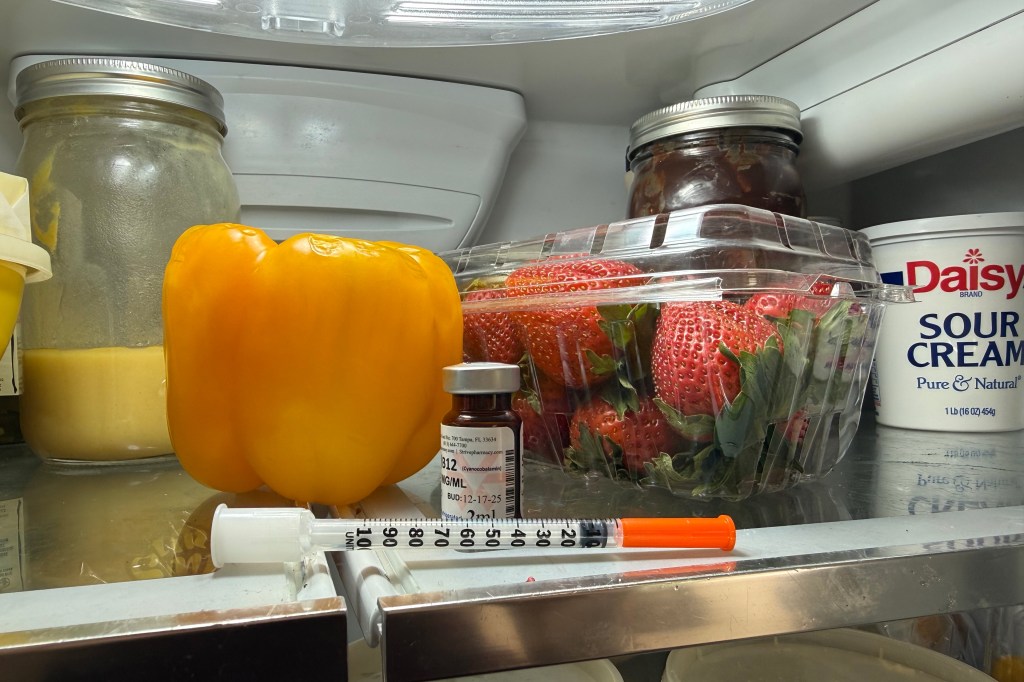
- OpenEvidence rolls out AI medical coding feature
- CDC’s Acting Chief Promises a Return to Stability in a Tumultuous Moment
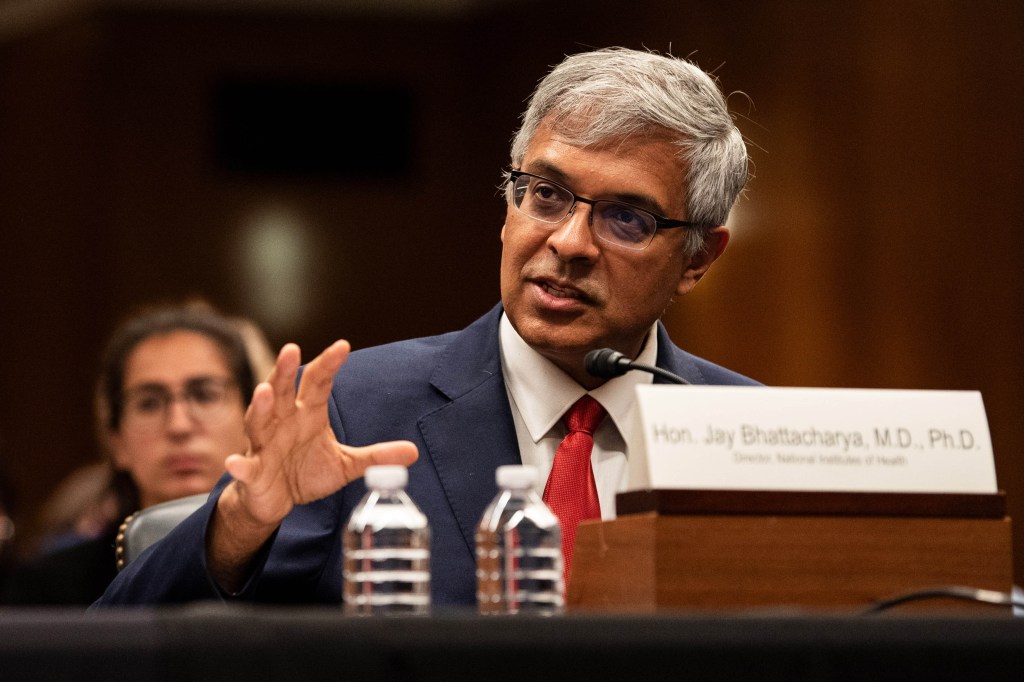
- Remarks at the Financial Stability Oversight Council Meeting
- RWJF: Between 5M and 10M people could lose Medicaid coverage in 2028 under work requirements
- New therapy animal program aims to support 100K patients, providers
- Pulse check on Lilly's GLP-1 fortunes
- Gen Z nurses prioritize schedule flexibility, need more manager interactions to avoid turnover
- How pharma marketers can capitalize on HCPs’ AI, social media and streaming habits
- Federal Officials Investigate States That Require Abortion Coverage
- Corcept's lead drug bounces back from FDA snub with different approval as Lifyorli in ovarian cancer
- Ionis slashes Tryngolza's price tag by 93% ahead of anticipated label expansion
- FDA approves Denali's Hunter syndrome drug, handing rare disease community a win
- Baby Walkers Sold on Amazon Recalled Over Fall Risk
- Want To Protect Your Brain? Science Says Exercise
- HelloFresh Pizza Recall Issued in 10 States Over Metal Risk
- Clinical Trials Have Too Much Data…That’s the Problem.

- Clinical Trials Have Too Much Data…That’s the Problem.
- CMS reveals new Medicaid model that supports coordination for children with complex needs
- Novartis sued by breast cancer patient over branded drug websites’ data-sharing practices
- Takeda targets $1.3B in cost savings in further restructuring
- Biogen pays $20M upfront to tap into Alteogen's subQ delivery tech
- 'Universal Donor' Blood Supplies Dangerously Low, Study Warns
- Why Stepping Outside May Help You Eat Better
- U.S. Medicine, Science Facing An Online Misinformation Siege, Poll Concludes
- Childhood Obesity Undercuts The American Dream For Some, Study Says
- Inclusive High Schools Benefit All Students, Not Just LGBTQ Teens
- Parental Loss Due to Drugs, Violence Raises Child Death Risk by 2,000%
- As Boehringer touts US launches, board chairman worries EU is 'falling further behind'
- The evolving state of exome and genome sequencing
- Demoralized CDC Workforce Reels From Year of Firings, Funding Cuts, and a Shooting

- An Arm and a Leg: Steep Health Care Costs Steer Americans to Tough Decisions
- Qualified Health locks in $125M in fresh funding to scale enterprise AI at health systems
- Misery Loves [Investment] Company?: Remarks at the 2026 Investment Company Institute Investment Management Conference
- Study: Nearly 1 in 5 pediatric hospital deaths involve sepsis
- As expansions come online, CDMO Hovione aims to meet industry's 'dual supply and sourcing' zeal: exec
- Opening Remarks at the Digital Asset Summit 2026
- CVS Caremark, FTC reach settlement in insulin pricing case
- UCB unveils plan to build $2B biologics plant near its US headquarters in Atlanta
- PeaceHealth sued over plans to tap out-of-state staffer ApolloMD for Oregon EDs
- New Lyme Disease Vaccine Shows Strong Results in Trial
- TrumpRx Adds Diabetes, COPD Drugs at Steep Discounts
- Highmark reports $175M net loss for 2025 as financial headwinds batter health plan
- Listen to the Latest ‘KFF Health News Minute’

- Abivax hires commercial chief from Takeda to infuse Entyvio expertise into IBD launch prep
- ImmunityBio hit with FDA warning letter over Anktiva promotions in TV ad, podcast episode
- Alcohol Prep Pads Recalled Over Bacteria Risk, Cardinal Health Says
- Fewer patients traveled for abortions in 2025 as telehealth care increased, report finds


This is the first Kratom hearing posted in the MHF Forum. Worldwide its legal status varies so much, the World Population Review has mapped it.
You probably haven't heard of it if you're not a chronic pain patient or working in ER or law enforcement, so I'll add more background below.
I've emphasized the Kratom bill in bold. Italicized bills have more information in a previous thread.
Thursday, October 30, 2025 9:00 AM
AGENDA
HB 4745 (Rep. Woolford)
Businesses: charitable organizations; exemptions from registration and reporting requirements; modify.HB 4692 (Rep. Rigas)
Occupations: cosmetologists; branch facilities for a school of cosmetology; provide for.HB 4693 (Rep. Liberati)
Occupations: cosmetologists; cosmetology licensing fees; modify.HB 4254 (Rep. Aragona)
Animals: care and treatment; conducting of research or training activities on dogs in a manner that causes pain or distress; prohibit.HB 4969 (Rep. Cavitt)
Food: other; regulation of distribution, sale, and manufacturing of kratom products; provide for.HB 4963 (Rep. Aragona)
Marihuana: other; marihuana licensees; require to pay for marihuana at the time of sale.Presentation from Lume.
OR ANY BUSINESS PROPERLY BEFORE THIS COMMITTEE
Within the chronic pain community, the constant refrain since government's war on opioid prescribers is difficulty finding adequate pain control by legal means. Kratom is one of the very few options available. I've never needed Kratom myself, or heard of widespread abuse of it, so I weigh in on the side of freedom and personal responsibility.
https://www.health.harvard.edu/blog/kratom-fear-worthy-foliage-or-beneficial-botanical-2019080717466
Kratom: Fear-worthy foliage or beneficial botanical?
September 9, 2024Depending on what you read, the botanical herb kratom is a dangerous, addictive drug with no medical utility and severe side effects — including overdose and potentially death — or it is an accessible pathway out of chronic pain and opiate withdrawal. How can the US Drug Enforcement Agency (DEA), medical professionals, and millions of regular kratom users have such divergent views of the same plant? How can we get on the same page?
What is kratom?
Kratom (Mitragyna speciosa) is a tropical tree from the coffee family native to Southeast Asia, with properties that range from stimulant-like, energizing and uplifting, to opioid-like, causing drowsiness and euphoria. Kratom has dozens of active components, which makes it difficult to characterize as one particular type of drug, such as stimulant or opioid. The two main chemicals, mitragynine and 7-hydroxymitragynine, have activity at the main opioid receptor, the "mu" receptor, which is the same one stimulated by heroin and oxycodone.Kratom is thought to be used by as many as two million to 15 million Americans, many of them using it successfully to help alleviate undertreated chronic pain, or to help as a harm reduction method with symptoms of opioid withdrawal. Kratom is commonly consumed orally (with added sweetener to overcome its harsh bitterness), made into tea, or swallowed as a pill.
There are much more concentrated and potent kratom products on the market than there used to be, which increases the potential harms. Side effects can include agitation, tachycardia, drowsiness, vomiting, and confusion. There can also be grave side effects such as seizures, as well as respiratory suppression and cardiac arrhythmia.
Kratom can be found in gas stations and paraphernalia shops in most parts of the US, except in the handful of states and cities that have banned it. Many people purchase kratom over the Internet, where it is sold "for soap-making and aromatherapy" to avoid the fact that in 2014 the FDA made it illegal to import or manufacture kratom as a dietary supplement. None of these avenues of procurement — or these products — are regulated at all.
What are some of the problems with kratom?
There is little to no control or reliable information on the growth, processing, packaging, or labeling of the kratom sold in the US, which adds to the already considerable uncertainty of its health risks. In 2018 the FDA instituted a mandatory recall over concerns about Salmonella contamination of kratom-containing products. The DEA has recently placed kratom on its Drugs and Chemicals of Concern list, but has not yet labeled it as a controlled substance, and currently does not seem as if they are planning to restrict it on a federal level.Kratom can be addictive due to its opioid-like qualities. According to one study, 12.3% of kratom users qualified as addicted. A small minority of people addicted to kratom require treatments for opioid use disorder, such as with suboxone (buprenorphine). Others have characterized kratom addiction as comparable to caffeine addiction (and, yes, there are bad outcomes to caffeine addiction as well, such as insomnia, gastritis, and arrhythmia.)
The CDC claims that between 2016 and 2017, there were 91 deaths due to kratom, but this claim should be greeted with skepticism, as all but seven of these casualties had other drugs in their system at the time of death, making it impossible to uniquely implicate kratom.
Why do people use kratom?
The DEA maintains that kratom has no medical uses or benefits, but in Asia kratom has been used for hundreds of years to treat cough, diarrhea, opioid withdrawal, and chronic pain, and to boost energy and sexual desire. More recently, in the US there has been an uptick in the use of kratom by people who are self-treating chronic pain and acute withdrawal from opiates. They are seeking a safer and more accessible alternative to prescription medications.One could argue that this is quite important given how inadequate our current medical system is for treating both of these conditions. Despite a vocal community of supporters, and numerous anecdotal testimonials of effectiveness, these treatment practices using kratom have not been rigorously studied as either safe or effective.
A patient wishing to use kratom for pain or to mitigate withdrawal symptoms would encounter several problems, not all of which have to do with the intrinsic properties of kratom itself.
While kratom is not currently scheduled under the Controlled Substance Act, the DEA periodically threatens to make it a Schedule 1 controlled substance, in the same category as heroin or methamphetamine. This would make it difficult to access, and would likely make the supply as a whole even more dangerous. Given how many kratom users there are, and given the potential benefit it offers, it seems unlikely that the federal government will aggressively move against kratom, but several jurisdictions have banned it.
The complete lack of oversight or quality control — the wholesale lack of regulation — in the production and sale of kratom makes its use more dangerous, especially as increasingly concentrated products appear on the market.
Kratom has not been well studied for any of the uses its proponents claim, though as the saying goes, "absence of evidence of benefit isn't evidence of absence of benefit."
A final problem is that kratom doesn't show up on drug screens, and one can argue that the wider adaptation of another potentially addictive opioid-like substance, in the midst of an opioid epidemic with tens of thousands dying each year, is the last thing we need.Is there a sensible path forward with kratom?
I'm not sure that anyone has the answer to this question, as there are so many different perspectives, concerns, and interests surrounding kratom. At bare minimum, safety could be improved with:Regulation: It would be safer if people knew the exact dosages they were consuming and that it was free of contamination. Ideally, the super-concentrated products could be reined in.
Education: Educated consumers, who know the dangers and potential benefits, are far less vulnerable to misleading claims.
Research: If kratom does have benefits for either addiction or chronic pain, we should be able to demonstrate this. It is critical that we better define the risks of using kratom, so that people can make informed choices.
If all of the above could somehow be accomplished by scientists and public health specialists, without overdue distortion from corporate interests, antidrug ideology, and romanticism by kratom enthusiasts, we could then have enough clarity to answer the questions: is kratom helpful, and how can we best use it to improve health?Dr. Peter Grinspoon is a primary care physician, educator, and cannabis specialist at Massachusetts General Hospital; an instructor at Harvard Medical School; and a certified health and wellness coach. He is the author of Seeing Through the Smoke: A Cannabis Specialist Untangles the Truth About Marijuana, as well as the groundbreaking memoir Free Refills: A Doctor Confronts His Addiction. He is a board member of the advocacy group Doctors for Cannabis Regulation. He is also a TedX speaker and commonly lectures on the topics of cannabis, psychedelics, addiction, opioids, and physician health.
Today's original agenda was revised to add mobile barber licensing, first heard last week.
Thursday, November 13, 2025 9:00 AM
AGENDA
HB 4969 (Rep. Cavitt)
Food: other; regulation of distribution, sale, and manufacturing of kratom products; provide for.HB 4501 (Rep. Mueller)
Marihuana: other; cannabis regulatory agency; allow to operate a marihuana reference laboratory and to collect, transport, possess, test, and perform research with marihuana.HB 4678 (Rep. Aragona)
Agriculture: weights and measures; certain definitions; provide for.HB 4679 (Rep. Liberati)
Agriculture: weights and measures; certain definitions; provide for.HB 5060 (Rep. Pavlov)
Occupations: individual licensing and registration; licensing of bouncers; provide for.HB 5061 (Rep. Pavlov)
Liquor: licenses; positional asphyxiation prevention training for bouncers; require.HB 4388 (Rep. Tisdel)
Trade: business practices; regulation of social media use by minors; provide for.HB 4911 (Rep. Schmaltz)
Occupations: barbers; mobile barber shops; allow.OR ANY BUSINESS PROPERLY BEFORE THIS COMMITTEE

House Regulatory Reform has received HB 5537, a new bill to ban kratom:
https://www.wlns.com/capital-rundown/new-bill-would-ban-growing-selling-kratom-in-michigan/
https://www.dea.gov/sites/default/files/2020-06/Kratom-2020_0.pdf
https://www.legislature.mi.gov/Bills/Bill?ObjectName=2026-HB-5537
New bill would ban growing, selling kratom in Michigan
By Sean Graney - March 17, 2026LANSING, Mich. (WLNS) — Health care workers and lawmakers raised red flags at the State Capitol Tuesday about a drug they say is too easy to get and too dangerous to ignore.
A new bill would make kratom, a plant-based drug, illegal to sell and grow in the state of Michigan.
The U.S., Department of Justice classifies kratom as a tropical tree that could cause psychotic symptoms and result in psychological dependence. House Bill 5537 would ban a potent derivative of kratom, 7-OH, a chemical that stimulates the brain’s opioid receptors.
The drug can be used to manage pain, but doctors say it can cause opioid-like symptoms and death.
Roger Maufort owns the Seed Cellar dispensary in Jackson and says while he understands the health concerns, he believes this bill challenges the freedoms of Michiganders.
“So, I don’t feel that kratom should be taken out of the realm of food grade and manufacturing process and let people use it as they wish,” Maufort said.
State Rep. Cameron Cavitt (R-Cheboygan), who introduced the bill last September, says without a ban, Michigan could become a pipeline for kratom into neighboring states.
“We’re the only Great Lakes state right now that doesn’t have a ban. And especially in the state of Wisconsin, we’re seeing a lot of folks come in and buy bulk kratom and bring it back into Wisconsin,” Cavitt said. “So, we don’t want to be a supplier for the rest of the Great Lakes.”
The consequences are severe. If signed into law, penalties include jail time and fines.
Cavitt says kratom is showing up largely among younger Michiganders and the criminal justice system.
“You’re seeing children get into the criminal justice system because they’re shoplifting this product. And they’re entering our rehabs and it’s just, we got 12 year olds who are hooked on heroin. It’s gas station heroin,” Cavitt said.
Maufort argues this moment isn’t just about safety — it’s about control and revenue.
“It’s not about patient safety, people safety. It is about revenue for the state, and that’s a concern of mine,” Maufort said.
As of now, a date for the House Committee on Regulatory Reform to hear the bill has not been set.
This month's MDHHS Public Health Bulletin for Health Care Providers is all about kratom:
7-Hydroxymitragynine (7-OH)-Enhanced kratom products: What providers need to know
Public Health Bulletin for Health Care Providers - March 2026
Dear colleagues,
We want to bring to your attention the rise of "synthetic kratom" and concentrated 7-hydroxymitragynine (7-OH) products (or 7-OH-enhanced kratom products) in Michigan’s unregulated market, and the ongoing public health impacts.
While kratom (mitragyna speciosa) is a Southeast Asian tree known for mild stimulant effects from mitragynine and trace amounts of 7-OH, modern products carrying the "kratom" label are often unregulated, significantly more potent – containing added concentrations of 7-OH – and dangerous. These high-potency products, or 7-OH-enhanced products, are rapidly displacing traditional kratom leaf-products on retail shelves, creating a false sense of safety for consumers and increasing public health risks.
We continue to see calls to the Michigan Poison and Drug Information Center (MiPDC) related to exposures from kratom-labeled products, including cases involving adverse interactions, polysubstance use and concerns about severe symptoms. These calls often involve concentrated products containing 7-OH or situations where labeled kratom products were used alongside other substances. According to the MiPDC, in 2025, 7-OH-enhanced kratom product exposures demonstrated higher risk of overdose, higher withdrawal burden, more frequent buprenorphine recommendation/administration and higher ICU utilization. This suggests that rapid market penetration of the highly potent 7-OH-enhanced kratom products is associated with greater health care utilization and withdrawal severity.
While the annual number of reported exposures has fluctuated over time, cases increased in 2025. Adults ages 20-39 accounted for the highest number of reported kratom-related exposures to the MiPDC, however, exposures were reported across all age groups, including 69 cases involving children.
Kratom’s primary psychoactive alkaloids, mitragynine and 7-OH, bind to opioid receptors. At lower doses, these products may produce stimulant-like effects. At higher doses, concentrated 7-OH products have more potent opioid-like effects. While kratom products are not approved by the Food and Drug Administration for medical use, people report using kratom to self-manage pain, anxiety, fatigue or symptoms related to opioid withdrawal. However, regular use of 7-OH-enhanced kratom products can lead to dependence and withdrawal, overdoses resulting in seizure, other serious health events and even death. Severe events are often in relation to polysubstance use, used in combination with opioids, benzodiazepines, alcohol or other depressants.
Kratom and 7-OH products are widely available in gas stations, smoke shops, convenience stores and online marketplaces, often marketed as natural, herbal and/or legal. A commercial product’s potency and composition can vary significantly. Some products, particularly extracts or “enhanced” formulations, may contain higher concentrations of 7-OH, which binds more strongly to opioid receptors and is substantially more potent than traditional leaf kratom products that people may be more familiar with.
The continued reports underscore the importance of provider awareness and clinical recognition. We hope this bulletin serves as a reference for understanding health risks, drug interactions and clinical considerations to support screening, counseling and care for patients who may be using 7-OH-enhanced kratom products. Thank you for your continued commitment to protecting the health and safety of Michigan residents.
Sincerely,
Natasha Bagdasarian, MD, MPH, FIDSA, FACP
Chief Medical Executive, State of MichiganSarah Lyon Callo, MS, PhD
Senior Deputy Director and State Epidemiologist, MDHHS Public Health Administration
Recognizing 7-OH-enhanced kratom products
7-OH-enhanced kratom products are often not immediately recognized by patients or clinicians as substances of concern, particularly because they are marketed as supplements, wellness products or energy boosters.
They are sold in a wide range of product types that may resemble common supplements or beverages, including powders and capsules.
- Teas and energy or "wellness" drinks.
- Gummies and candies.
- Concentrated liquid shots or extracts.
Some of these products are packaged similarly to energy shots, herbal supplements or flavored beverages, which can make them easy to overlook during screening or medication reconciliation. Patients may use the term “kratom” or may refer to these 7-OH-enhanced kratom products by strain names: Maeng Da, Bali, Borneo, Indo, Red, White or Green Kratom. Increasing provider familiarity with how these products appear and are labeled may support earlier identification and more accurate clinical assessment
Health risks and clinical considerations
Regular use of 7-OH-enhanced kratom products has been shown to lead to physical dependence and reported withdrawal symptoms, such as:
- Anxiety, irritability and restlessness.
- Insomnia and fatigue.
- Gastrointestinal distress.
- Muscle aches, chills and runny nose.
Patients may increase dose or frequency to avoid withdrawal symptoms.
7-OH-enhanced kratom products can interfere with how the body processes many prescription medications. Because of this, people who use these products may experience stronger-than-expected side effects from their medications. This is particularly important for:
- Certain antidepressants and antipsychotics.
- Medications for anxiety or sleep, especially benzodiazepines.
- Some heart medications.
- Medications for pain.
- Any drug where small changes in dose can have a big effect.
Sedation and overdose risk may increase if 7-OH-enhanced kratom products are used with opioids, especially when combined with alcohol or benzodiazepines. Serious adverse events can occur, including:
- Seizures.
- Agitation, hallucinations and mood changes.
- Increased heart rate, hypertension or other cardiac symptoms.
What this means for clinicians
Because 7-OH-enhanced kratom products are unregulated in Michigan, product labels may not accurately reflect contents or potency. Some products have been found to contain varied or unexpectedly high alkaloid concentrations, heavy metals and stimulants or opioid-like substances. Effects can be unpredictable, particularly with concentrated products or when combined with alcohol, opioids, benzodiazepines or other sedating medications.
MDHHS encourages health care providers to incorporate 7-OH-enhanced kratom products into routine substance use assessment and clinical care:
- Screen routinely: Ask patients about use of 7-OH-enhanced kratom products, including teas, powders, capsules, liquid shots or gummies.
- Assess risk: Document frequency, product type, dose (if known) and co-use with other substances.
- Monitor for adverse effects: Be alert for sedations, agitation, seizures, gastrointestinal symptoms or withdrawal.
- Prevent overdose: Counsel patients on the heightened risk of combining 7-OH-enhanced kratom products with opioids, alcohol and sedatives. Ensure naloxone access when possible. Naloxone can be effective with 7-OH-enhanced kratom products, but because of the unregulated nature of these products and the exact 7-OH concentrations are unknown, there is no guarantee the naloxone will be effective.
- Educate patients: Explain that 7-OH-enhanced kratom products are unregulated in Michigan, meaning potency and contents may not match labeling.
- Support reduction or discontinuation: Use nonjudgmental, patient-centered approaches. Provide symptomatic support and referrals to behavioral health or addiction medicine services when appropriate.
Providers should remain alert to clusters of adverse events potentially linked to 7-OH-enhanved kratom products or specific products. Unusual patterns may be reported through appropriate clinical and public health channels, including MiPDC and local health departments.
Additional Resources
Kratom Education
Data and Surveillance
- DOSE Dashboard: Nonfatal Overdose Emergency Department and Inpatient Hospitalization Discharge Data.
Provider and Partner Tools
Get MHF Insights
News and tips for your healthcare freedom.
We never spam you. One-step unsubscribe.
Sponsors
Friends of MHF



Kirsten DeVries
Tom & Karen Nunheimer
Steve Ahonen
Ron & Faith Bosserman
Marlin & Kathy Klumpp
Sign Up for MHF Insights to keep up on the latest in Michigan Health Policy