










- New Clues Explain Why Immunotherapy Fails in Pancreatic Cancer
- Does My Child Have a Language Disorder?
- Journalists Talk Hot Health Topics: Urgent Care Clinics Performing Abortions and Doulas’ Pay
- ASCs’ vendor problem
- Providence’s physician chief on its ‘holistic’ approach to value-based care
- What the Health? From KFF Health News: A New CDC Nominee, Again
- States Update Guardianship Laws To Keep Children of Immigrants Out of Foster Care
- Anesthesia job market faces ‘major disruption’
- Florida system raises $100M for new ED
- North Carolina system names COO
- Mark Cuban wants to bring drug manufacturing to hospitals’ doorsteps — literally
- UCI Health names chief AI officer
- Nevada hospital names CEO
- Saint Luke’s taps president for 2 hospitals
- Dental community mourns dentist killed in murder-suicide
- Mass General Brigham, CVS deal could raise healthcare spending $40M annually: Report
- Ideal Dental opens 1st Oklahoma practice, expands in 2 more states
- PDS Health eyes the next era of medical-dental integration
- Mark Cuban dives into direct contracting
- HCA executive pay by the numbers
- Iris Telehealth offers behavioral health analytics platform
- HHS names chief economist, regulatory leader to address healthcare affordability
- Loma Linda University Health names new president
- The best ASCs for colonoscopy, endoscopy in the South: US News
- Tennessee moves forward with CON repeal
- Dental schools take action to alleviate workforce shortages: 6 updates
- American Medical Group Association partners with Talkiatry to expand psych access
- Trump nominates CDC director
- ChristianaCare, Cardiovascular Physicians of Delaware to open joint venture ASC
- 5 states regulating AI in mental health
- Centerstone debuts $13M youth behavioral health campus in Missouri
- 3 DSOs making headlines
- Maine restricts noncompetes for rural healthcare workers
- Heartland Dental opens Florida office
- The 10 biggest ASC deals of the last 5 years
- Affordability, transparency: A look at large employers' top healthcare concerns
- 10 dental Medicaid updates to know from Q1
- White House eyes ibogaine research expansion
- New Weight Loss Research Questions Need for GLP-1 Drugs
- Trump Names CDC Director Pick
- SocialRx teams up with FQHC in NYC to prescribe arts and culture for chronically ill patients
- FDA To Review Whether To Allow More Access To Certain Peptides
- Rising Colon Cancer Deaths Hit Younger Adults Without Degrees Hardest
- The Healthccare Burnout Backlask (pt 4): Why Contract Negotiation Has Become a Core Strategic Skill for Healthcare Administrators
- Over 80% of PCPs concerned about financial stability over next several years
- Industry Voices—DOJ jumps into 340B cases over state law, raising questions about federal plans for the program
- FDA's accelerated approval pathway needs stronger transparency, evidence standards: ICER
- Most People Would Take A Blood Test For Alzheimer's, Study Says
- This Sexually Transmitted Infection Linked To Heart Attack, Stroke
- How Playtime at Age 2, Especially with Parents, Shapes Teen Fitness Habits
- New Depression Treatment Matches ECT with Less Memory Loss, Study Says
- Memory Problems? Your Salt Intake Could Make Matters Worse, Study Says
- Ultra-Processed Foods Linked To Fatty Muscles, Potential Knee Arthritis
- Your New Therapist: Chatty, Leaky, and Hardly Human
- Teva scores in appeal as court revives $177M verdict against Lilly in migraine patent spat
- Gen AI chatbots continually struggle with differential diagnoses, Mass General Brigham study finds
- Listen: With Little Federal Regulation, States Are Left To Shape the Rules on AI in Health Care
- Fierce Pharma Asia—Astellas’ stem cell therapy rethink; GSK’s bullish ADC plan; Daiichi’s OTC sale
- BIO comes out swinging with 'Fight of Our Lives' campaign for the industry’s 50th birthday
- The future of medical-dental integration is here
- Texas dentist has license suspended
- Efforts grow to limit corporate dental ownership, protect dentist autonomy: 6 updates
- What’s the deal with insurer mental health parity violations?
- Remarks at the Options Market Structure Roundtable
- Wider care gaps predicted as mental health parity rule faces rollback
- Sheppard Pratt gets $16.5M for behavioral health expansion
- Former Deputy Surgeon General Erica Schwartz, M.D., nominated as CDC director
- Verily Health simplifies medical jargon alphabet soup with AI-powered app in new campaign
- 10 trends in behavioral health usage: Report
- Cattywampus: Statement on the CAT Concept Release
- Providers' advantage on out-of-network billing disputes likely to continue: Capstone
- Butterflies and Condors: Remarks at the Options Market Roundtable
- Viatris, Teva kick off separate recalls over dissolution, raw material issues
- Mental health ED visits at Children’s Hospital Colorado jump 20% in April
- Rising ACA Costs Leave Many Unable To Pay for Coverage
- One Lot of Xanax Recalled Nationwide Over Quality Issue, FDA Says
- Cough Drops From Several Brands Being Recalled, FDA Says
- CDC May Get New Leader as Officials Consider Erica Schwartz
- Statement at the Roundtable on Options
- Opening Remarks at the Options Market Structure Roundtable
- APA launches resource library for trusted digital mental health tools
- E-Bikes And E-Scooters A Growing Menace On City Streets, Study Says
- 'Absent or trivial' effects: Anti-amyloid Alzheimer's drugs called into question once again
- RFK Jr. kicks off string of congressional hearings to talk White House budget plan
- This Simple Step Could Improve The Benefits From Your Regular Workouts
- New Alzheimer's Drugs Provide No Meaningful Benefit, Major Evidence Review Concludes
- Air Pollution and Weather Tied to Migraines
- Study Says Stress, Weight And Hormones Alter Timing of Puberty in Girls
- Why Walking Remains Unsteady After Partial Spinal Cord Injury
- Roche to launch another Elevidys study after EU rejection of Duchenne gene therapy
- Lilly answers FDA's call for more Foundayo safety info, plotting diabetes filing in parallel
- New Federal Medicaid Rules Require One Month of Work. Some States Demand More.
- As US Birth Rate Falls, Feds’ Response May Make Pregnancy More Dangerous
- Omnicom brews Olixir from FCB Health, rebranding storied agency after Interpublic takeover
- DiMe-led initiative brings together pharma, virtual providers, digital pharmacies to develop blueprint for DTC pharma models
- UPDATED: Heeding RFK Jr.'s call, FDA reclassifies 12 unapproved peptides ahead of advisory committee meeting
- Carrot launches proprietary AI platform for personalized fertility, family care
- UC Health workers plan open-ended, system-wide strike for May 14
- Baylor Scott & White Health Plan to depart individual market, Medicaid this year
- In industry's latest OTC pivot, Daiichi Sankyo lines up $1.5B consumer health unit sale to beverage giant Suntory
- Wildlife Trade Tied To Higher Risk of Diseases Spreading to Humans
- EPA Delays Decisions on 'Forever Chemicals'
- Yes, This is the Worst Pollen Season Ever — Until Next Year
- GoodRx launches 7.2-mg Wegovy dose for self-pay patients at $399 per month
- Providers back bipartisan bill eliminating Medicare chronic care management cost sharing
- Progyny unveils new fertility benefit option for small, mid-size employers
- New Weight Loss Pill, Foundayo, Gets Approval But FDA Seeks More Safety Data
- Seqster launches new data tool to turn clinical sites into 'research-ready data collection points'
- Gilead widens global Yeztugo access agreement, but MSF says supply is 'not nearly enough'
- Novartis CEO Vas Narasimhan joins Anthropic’s board as biopharma’s ties to AI deepen
- Behavioral health utilization is up with anxiety disorders leading demand, report finds
- Does Your Child Have A Concussion? These Are The Signs, Review Says
- AI Reveals Negative Labels in Medical Records for Sickle Cell Patients
- 'Food-as-Medicine' Improves Life for Heart Failure Patients
- Silent Heart Rhythm Problem Might Triple Risk Of Heart Failure In Seniors
- Blood Test Predicts Alzheimer's Years Before Symptoms, Brain Changes
- An Infectious Combo Triples Risk Of MS, Study Says
- Astellas manufacturing chief views reliable supply, bridging research as his production 'north star'
- Physician compensation up 3% in 2025, but not all specialties saw raises: Medscape
- Pfizer recruits former Angel Lucy Liu for latest mission against cancer
- Teva launches new online schizophrenia community project
- One man’s journey from gambling addiction to recovery and advocacy
- Rural Nebraska Dialysis Unit Closes Despite the State’s $219M in Rural Health Funding
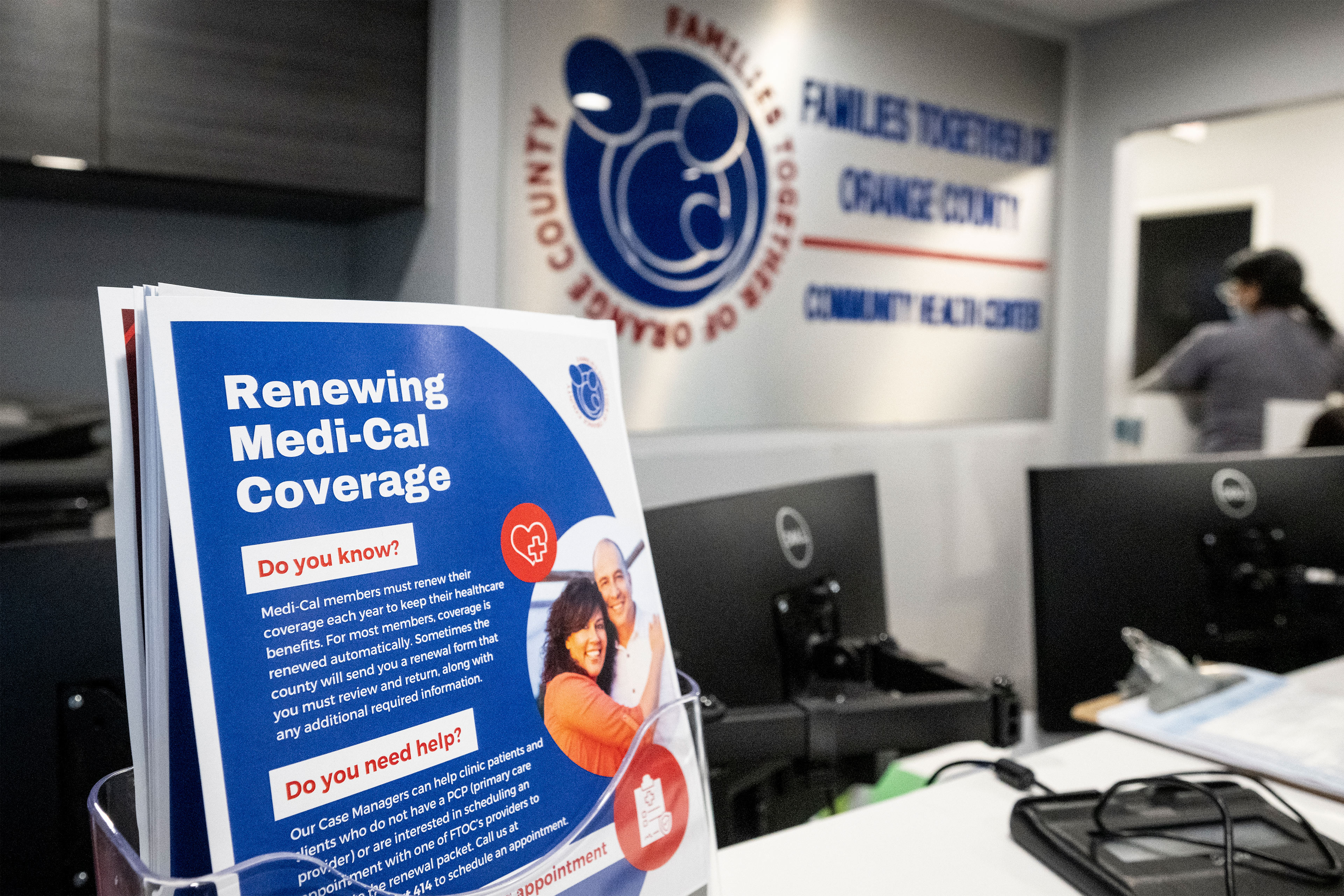
- Medi-Cal Immigrant Enrollment Is Dropping. Researchers Point to Trump’s Policies.
- Ionis exec shares method to the Madness after 2026 Drug Name Tournament win
- Abridge expands clinical decision support solution with UpToDate partnership, new NEJM, JAMA content tie-ups
- Travere maps course for Filspari's $3B US opportunity after landmark rare disease nod
- Hospitals with more disadvantaged patients fall short on price transparency, study finds
- FDA tells Eli Lilly to round up more safety info on key obesity launch Foundayo
- Meat Consumption Rises as Protein Trend Grows, Experts Warn
- Bill would force payers to apply DTC drug purchases to patient deductibles
- Nuts.com Recalls 10,000+ Pounds of Candy Over Allergy Risk
- Listen to the Latest ‘KFF Health News Minute’
- Keebler Health secures $16M in series A funding for AI-powered risk adjustment platform
- Sam’s Club Recalls Children’s Pajamas Due to Fire Hazard
- Small Talk? It May Be Better Than You Think
- J&J, chasing $100B year, sports immunology ‘dual powerhouse’ of Tremfya and new launch Icotyde
- Long-Term Opioid Prescriptions Fall By About A Quarter
- Gut Bacteria Might Drive Rare Food Allergy in Children, Study Finds
- Stents Can Ease Long-Term Symptoms Of Deep Vein Thrombosis, Trial Shows
- Young Cancer Survivors Face Doubled Risk Of Subsequent New Cancer
- Novo taps OpenAI to deploy AI across R&D, manufacturing and corporate functions
- Pfizer rebuked by FDA for misleading Adcetris ads on Facebook
- FDA Reminds More Than 2,200 Sponsors and Researchers to Disclose Trial Results
- Freedom of Associations
- Interfacing with our Inner Demons: Comments on the Division of Trading and Markets' Statement on Certain User Interfaces
- Staff Statement Regarding Broker-Dealer Registration of Certain User Interfaces Utilized to Prepare Transactions in Crypto Asset Securities
- Statement Regarding Staff No-Action Letter to Bank of England
Jay Bhattacharya proposes limiting the future authorities of the public health establishment to prevent the absurdities and deaths of the last three years:
https://brownstone.org/articles/power-of-public-health-agencies-must-be-curbed/
The Power of Public Health Agencies Must Be Curbed
BY Jayanta Bhattacharya - May 19, 2023Over the past three years, the public has seen first-hand the tremendous power the public health establishment wields. Using emergency power that most people never realized an American government possessed, public health violated Americans’ most fundamental civil rights in the name of infection control.
We endured three years of useless and divisive policies, including lockdowns, church and business closures, Zoom schools, mask mandates, and vaccine mandates and discrimination. Now that the WHO has declared the end of the covid pandemic and CDC Director Rochelle Walensky has announced her resignation, it is time for states to take action to limit the power of public health so that a repeat never happens again.
Contrary to what you hear these days from those making poor decisions throughout the pandemic, many of the errors were not honest mistakes. Public health embraced positions at odds with the scientific evidence throughout the pandemic, for instance, by pretending that immunity after COVID recovery does not exist, and by overstating the ability of the vaccine to stop COVID infection and transmission. Despite many getting vaccinated, COVID spread and people died anyway, with tremendous collateral harm—both economic and in terms of public health—deriving from the favored policies of our public health institutions.
It is time to adopt laws to limit the powers of public health.
Because public health used two tactics to enact its will on the public, the restrictions on public health power must address both. First, it promulgated direct mandates and binding “guidances” that were enforced by the police power of the government. For example, in the spring of 2020, the police arrested a paddle boarder for the crime of enjoying an empty Southern California beach on a sunny day.
Second, public health authorities induced fear by exaggerating the mortality risk of covid infection. This tactic also worked: Surveys show that people vastly overestimate the risk of dying if infected. It’s no coincidence that large corporations, small businesses, and regular people “voluntarily” enforced public health guidance even beyond the letter of the recommendations. The “guidance” issued by the CDC and the WHO, which was not subject to prior public comment or cost-benefit analysis, took on the force of law.
Legislation is crucial to combatting this grave abuse of the public, especially given how public health’s tyrannical playbook is now the accepted norm among public health leaders at the national and international levels. The WHO’s revision of its International Health Regulations and new pandemic treaty push member states to increase the power of centralized public health authorities during health emergencies. The recently released “Lessons from the Covid War” by the Covid Crisis Group excuses the sins of public health by blaming its failures on insufficient funding for public health priorities and inadequate power. As things stand, in the next pandemic, the lockdowns will recur.
The good news is that some states are adopting laws to limit public health authorities’ ability to impose draconian emergency interventions without proper justification. One example is SB 252, just passed by the Florida legislature. The bill prohibits both government and private businesses from discriminating against people based on COVID vaccination, prohibits involuntary COVID testing, and limits the deployment of mask requirements (except for healthcare providers). Most importantly, the bill prohibits government entities and educational institutions from treating WHO and CDC guidance as if their pronouncements were law—unless the state explicitly adopts it.
While some of these protections, like the ban on COVID vaccine mandates, were already in place in Florida, these restrictions were due to expire soon. SB 252 will permanently restore the proper place of public health as an institution that issues recommendations rooted in science rather than quasi-legal “guidance”—a wise policy given that businesses and educational institutions cannot reliably evaluate the science underlying public health diktats.
But the bill doesn’t just protect our rights as citizens; it’s good for public health, too.
Before the pandemic, I naively thought that a commitment to basic ethical principles constrained public health actions, and would therefore have opposed the Florida bill banning discrimination based on vaccination status. Now, I see the bill’s wisdom. I have learned not to trust public health authorities with expansive power anymore.
And I am of course not alone. Public trust in public health has cratered due to overzealous enforcement of its guidance far past diminishing returns. It can only recover once public health authorities face the same checks and balances as other parts of government.
In theory, there is a risk to restricting public health action: It will make coordinated nationwide action more difficult in the next pandemic. What if next time, we have a disease outbreak that requires every part of the country to shut down everywhere, all at once, for a long time?
It’s exceedingly unlikely that such a situation would occur, though it’s easy to articulate in science fiction novels. It’s certainly never happened in the country’s history.
It’s not that there won’t be another pandemic: There will be. But a uniform national response will never be the right response, for the simple reason that the US is such a large, geographically and culturally diverse country. Early spread will happen in hotspots, while others will not be affected until later.
Responses that account for local situations will be needed, and bills like SB 252 make that more likely.
Now that states are moving to restrict public health powers, public health authorities face a choice that will decide whether the public will ever trust public health again. They can fight a partisan political battle against these laws, and the collapse of public trust in public health will continue apace. Or they can gracefully accept limits to their power in light of their pandemic failures.
If public health opts for the latter, rejects authoritarian power, and restores its commitment to basic ethical principles, it may regain the public’s trust so that it can creatively address the challenges to health that the American people now face.
Jay Bhattacharya is a physician, epidemiologist and health economist. He is Professor at Stanford Medical School, a Research Associate at the National Bureau of Economics Research, a Senior Fellow at the Stanford Institute for Economic Policy Research, a Faculty Member at the Stanford Freeman Spogli Institute, and a Fellow at the Academy of Science and Freedom. His research focuses on the economics of health care around the world with a particular emphasis on the health and well-being of vulnerable populations. Co-Author of the Great Barrington Declaration.
Get MHF Insights
News and tips for your healthcare freedom.
We never spam you. One-step unsubscribe.