











- Providence’s physician chief on its ‘holistic’ approach to value-based care
- Anesthesia job market faces ‘major disruption’
- Florida system raises $100M for new ED
- North Carolina system names COO
- Mark Cuban wants to bring drug manufacturing to hospitals’ doorsteps — literally
- UCI Health names chief AI officer
- Nevada hospital names CEO
- Saint Luke’s taps president for 2 hospitals
- Dental community mourns dentist killed in murder-suicide
- Mass General Brigham, CVS deal could raise healthcare spending $40M annually: Report
- Ideal Dental opens 1st Oklahoma practice, expands in 2 more states
- PDS Health eyes the next era of medical-dental integration
- Mark Cuban dives into direct contracting
- HCA executive pay by the numbers
- Iris Telehealth offers behavioral health analytics platform
- HHS names chief economist, regulatory leader to address healthcare affordability
- Loma Linda University Health names new president
- The best ASCs for colonoscopy, endoscopy in the South: US News
- Tennessee moves forward with CON repeal
- Dental schools take action to alleviate workforce shortages: 6 updates
- American Medical Group Association partners with Talkiatry to expand psych access
- Trump nominates CDC director
- ChristianaCare, Cardiovascular Physicians of Delaware to open joint venture ASC
- 5 states regulating AI in mental health
- Centerstone debuts $13M youth behavioral health campus in Missouri
- 3 DSOs making headlines
- Maine restricts noncompetes for rural healthcare workers
- Heartland Dental opens Florida office
- The 10 biggest ASC deals of the last 5 years
- 10 dental Medicaid updates to know from Q1
- The region with the highest average physician pay
- White House eyes ibogaine research expansion
- New Weight Loss Research Questions Need for GLP-1 Drugs
- Trump Names CDC Director Pick
- Rising Colon Cancer Deaths Hit Younger Adults Without Degrees Hardest
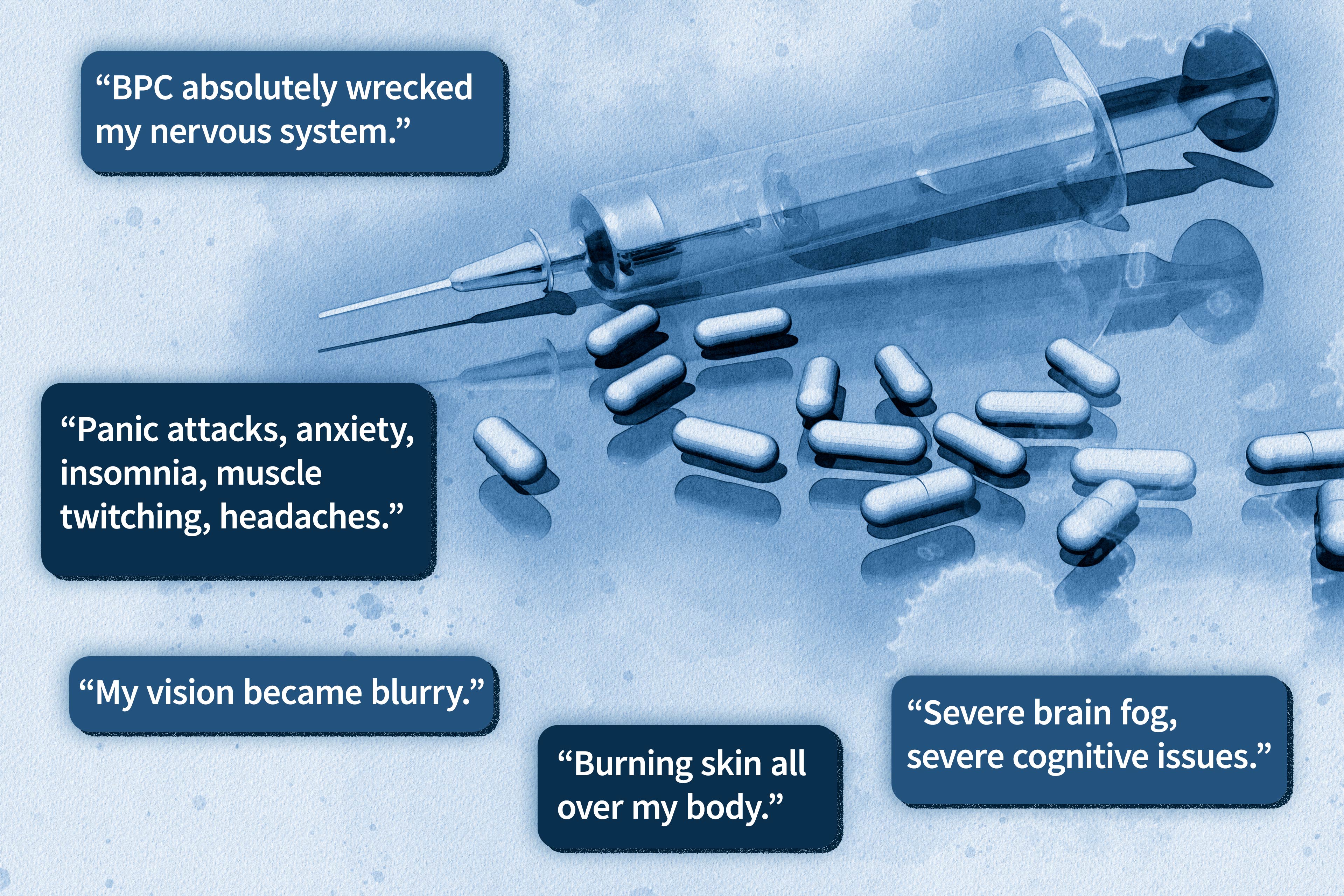
- FDA To Review Whether To Allow More Access To Certain Peptides
- The Healthccare Burnout Backlask (pt 4): Why Contract Negotiation Has Become a Core Strategic Skill for Healthcare Administrators
- Most People Would Take A Blood Test For Alzheimer's, Study Says
- FDA's accelerated approval pathway needs stronger transparency, evidence standards: ICER
- Memory Problems? Your Salt Intake Could Make Matters Worse, Study Says
- Ultra-Processed Foods Linked To Fatty Muscles, Potential Knee Arthritis
- This Sexually Transmitted Infection Linked To Heart Attack, Stroke
- New Depression Treatment Matches ECT with Less Memory Loss, Study Says
- How Playtime at Age 2, Especially with Parents, Shapes Teen Fitness Habits
- Your New Therapist: Chatty, Leaky, and Hardly Human
- Teva scores in appeal as court revives $177M verdict against Lilly in migraine patent spat
- Listen: With Little Federal Regulation, States Are Left To Shape the Rules on AI in Health Care
- Fierce Pharma Asia—Astellas’ stem cell therapy rethink; GSK’s bullish ADC plan; Daiichi’s OTC sale
- BIO comes out swinging with 'Fight of Our Lives' campaign for the industry’s 50th birthday
- The future of medical-dental integration is here
- Texas dentist has license suspended
- Efforts grow to limit corporate dental ownership, protect dentist autonomy: 6 updates
- What’s the deal with insurer mental health parity violations?
- Remarks at the Options Market Structure Roundtable
- Wider care gaps predicted as mental health parity rule faces rollback
- Sheppard Pratt gets $16.5M for behavioral health expansion
- Former Deputy Surgeon General Erica Schwartz, M.D., nominated as CDC director
- Verily Health simplifies medical jargon alphabet soup with AI-powered app in new campaign
- 10 trends in behavioral health usage: Report
- Cattywampus: Statement on the CAT Concept Release
- Providers' advantage on out-of-network billing disputes likely to continue: Capstone
- Butterflies and Condors: Remarks at the Options Market Roundtable
- Viatris, Teva kick off separate recalls over dissolution, raw material issues
- Mental health ED visits at Children’s Hospital Colorado jump 20% in April
- Rising ACA Costs Leave Many Unable To Pay for Coverage
- One Lot of Xanax Recalled Nationwide Over Quality Issue, FDA Says
- Cough Drops From Several Brands Being Recalled, FDA Says
- CDC May Get New Leader as Officials Consider Erica Schwartz
- Statement at the Roundtable on Options
- Opening Remarks at the Options Market Structure Roundtable
- APA launches resource library for trusted digital mental health tools
- E-Bikes And E-Scooters A Growing Menace On City Streets, Study Says
- 'Absent or trivial' effects: Anti-amyloid Alzheimer's drugs called into question once again
- RFK Jr. kicks off string of congressional hearings to talk White House budget plan
- This Simple Step Could Improve The Benefits From Your Regular Workouts
- New Alzheimer's Drugs Provide No Meaningful Benefit, Major Evidence Review Concludes
- Air Pollution and Weather Tied to Migraines
- Study Says Stress, Weight And Hormones Alter Timing of Puberty in Girls
- Why Walking Remains Unsteady After Partial Spinal Cord Injury
- Roche to launch another Elevidys study after EU rejection of Duchenne gene therapy
- Lilly answers FDA's call for more Foundayo safety info, plotting diabetes filing in parallel
- New Federal Medicaid Rules Require One Month of Work. Some States Demand More.
- As US Birth Rate Falls, Feds’ Response May Make Pregnancy More Dangerous
- Omnicom brews Olixir from FCB Health, rebranding storied agency after Interpublic takeover
- DiMe-led initiative brings together pharma, virtual providers, digital pharmacies to develop blueprint for DTC pharma models
- UPDATED: Heeding RFK Jr.'s call, FDA reclassifies 12 unapproved peptides ahead of advisory committee meeting
- Carrot launches proprietary AI platform for personalized fertility, family care
- UC Health workers plan open-ended, system-wide strike for May 14
- Baylor Scott & White Health Plan to depart individual market, Medicaid this year
- In industry's latest OTC pivot, Daiichi Sankyo lines up $1.5B consumer health unit sale to beverage giant Suntory
- Wildlife Trade Tied To Higher Risk of Diseases Spreading to Humans
- EPA Delays Decisions on 'Forever Chemicals'
- Yes, This is the Worst Pollen Season Ever — Until Next Year
- GoodRx launches 7.2-mg Wegovy dose for self-pay patients at $399 per month
- Progyny unveils new fertility benefit option for small, mid-size employers
- Providers back bipartisan bill eliminating Medicare chronic care management cost sharing
- New Weight Loss Pill, Foundayo, Gets Approval But FDA Seeks More Safety Data
- Seqster launches new data tool to turn clinical sites into 'research-ready data collection points'
- Gilead widens global Yeztugo access agreement, but MSF says supply is 'not nearly enough'
- Novartis CEO Vas Narasimhan joins Anthropic’s board as biopharma’s ties to AI deepen
- Behavioral health utilization is up with anxiety disorders leading demand, report finds
- Does Your Child Have A Concussion? These Are The Signs, Review Says
- AI Reveals Negative Labels in Medical Records for Sickle Cell Patients
- 'Food-as-Medicine' Improves Life for Heart Failure Patients
- Silent Heart Rhythm Problem Might Triple Risk Of Heart Failure In Seniors
- Blood Test Predicts Alzheimer's Years Before Symptoms, Brain Changes
- An Infectious Combo Triples Risk Of MS, Study Says
- Astellas manufacturing chief views reliable supply, bridging research as his production 'north star'
- Physician compensation up 3% in 2025, but not all specialties saw raises: Medscape
- Pfizer recruits former Angel Lucy Liu for latest mission against cancer
- Teva launches new online schizophrenia community project
- One man’s journey from gambling addiction to recovery and advocacy
- Medi-Cal Immigrant Enrollment Is Dropping. Researchers Point to Trump’s Policies.
- Rural Nebraska Dialysis Unit Closes Despite the State’s $219M in Rural Health Funding
- Ionis exec shares method to the Madness after 2026 Drug Name Tournament win
- Abridge expands clinical decision support solution with UpToDate partnership, new NEJM, JAMA content tie-ups
- Travere maps course for Filspari's $3B US opportunity after landmark rare disease nod
- Hospitals with more disadvantaged patients fall short on price transparency, study finds
- FDA tells Eli Lilly to round up more safety info on key obesity launch Foundayo
- Meat Consumption Rises as Protein Trend Grows, Experts Warn
- Bill would force payers to apply DTC drug purchases to patient deductibles
- Nuts.com Recalls 10,000+ Pounds of Candy Over Allergy Risk
- Listen to the Latest ‘KFF Health News Minute’
- Estados cambian leyes para evitar que hijos de inmigrantes detenidos entren al sistema de cuidado temporal
- Keebler Health secures $16M in series A funding for AI-powered risk adjustment platform
- Sam’s Club Recalls Children’s Pajamas Due to Fire Hazard
- Small Talk? It May Be Better Than You Think
- Cómo hacer que un plan de salud con deducible alto funcione para tí
- Anthem, Mount Sinai reach contract agreement, restore in-network coverage
- J&J, chasing $100B year, sports immunology ‘dual powerhouse’ of Tremfya and new launch Icotyde
- Stanford Health Care, Alameda Health System partner to support St. Rose Hospital
- Para muchos pacientes que salen de terapia intensiva, la lucha apenas comienza
- Long-Term Opioid Prescriptions Fall By About A Quarter
- Gut Bacteria Might Drive Rare Food Allergy in Children, Study Finds
- Stents Can Ease Long-Term Symptoms Of Deep Vein Thrombosis, Trial Shows
- Young Cancer Survivors Face Doubled Risk Of Subsequent New Cancer
- Does Your Child Have Nightmares? Here's One Solution
- Marriage's Hidden Benefit? A Lower Risk Of Cancer
- Novo taps OpenAI to deploy AI across R&D, manufacturing and corporate functions
- WebMD Ignite rolls out program to help providers get Rural Health Transformation efforts off the ground
- Pfizer rebuked by FDA for misleading Adcetris ads on Facebook
- FDA Reminds More Than 2,200 Sponsors and Researchers to Disclose Trial Results
- Freedom of Associations
- Interfacing with our Inner Demons: Comments on the Division of Trading and Markets' Statement on Certain User Interfaces
- Staff Statement Regarding Broker-Dealer Registration of Certain User Interfaces Utilized to Prepare Transactions in Crypto Asset Securities
- ‘The next opioid epidemic’: Gambling legalization outpaces public health response to addiction
- Statement Regarding Staff No-Action Letter to Bank of England
KFF Health News has posted a story on NPR's All Things Considered which posits that seniors find themselves trapped in their specific Medicare Advantage plans as they develop additional conditions which require additional health care which may not be covered in their Medicare Advantage plan directory:
Older Americans say they feel trapped in Medicare Advantage plans
By Sarah Jane Tribble - January 3, 2024In 2016, Richard Timmins went to a free informational seminar to learn more about Medicare coverage.
"I listened to the insurance agent, and basically, he really promoted Medicare Advantage," Timmins says. The agent described less expensive and broader coverage offered by the plans, which are funded largely by the government but administered by private insurance companies.
For Timmins, who is now 76, it made economic sense then to sign up. And his decision was great, for a while.
Then, three years ago, he noticed a lesion on his right earlobe.
"I have a family history of melanoma. And so, I was kind of tuned in to that and thinking about that," Timmins says of the growth, which doctors later diagnosed as malignant melanoma. "It started to grow and started to become rather painful."
Timmins, though, discovered that his enrollment in a Premera Blue Cross Medicare Advantage plan would mean a limited network of doctors and the potential need for preapproval, or prior authorization, from the insurer before getting care. The experience, he says, made getting care more difficult, and now he wants to switch back to traditional, government-administered Medicare.
But he can't. And he's not alone.
"I have very little control over my actual medical care," he says, adding that he now advises friends not to sign up for the private plans. "I think that people are not understanding what Medicare Advantage is all about."
Enrollment in Medicare Advantage plans has grown substantially in the past few decades, enticing more than half of eligible people, primarily those 65 or older, with low premium costs and perks like dental and vision insurance. And as the private plans' share of the Medicare patient pie has ballooned to 30.8 million people, so too have concerns about the insurers' aggressive sales tactics and misleading coverage claims.
Enrollees, like Timmins, who sign on when they are healthy can find themselves trapped as they grow older and sicker.
"It's one of those things that people might like them on the front end because of their low to zero premiums and if they are getting a couple of these extra benefits — the vision, dental, that kind of thing," says Christine Huberty, a lead benefit specialist supervising attorney for the Greater Wisconsin Agency on Aging Resources.
"But it's when they actually need to use it for these bigger issues," Huberty says, "that's when people realize, 'Oh no, this isn't going to help me at all.'"
Medicare pays private insurers a fixed amount per Medicare Advantage enrollee and in many cases also pays out bonuses, which the insurers can use to provide supplemental benefits. Huberty says those extra benefits work as an incentive to "get people to join the plan" but that the plans then "restrict the access to so many services and coverage for the bigger stuff."
David Meyers, assistant professor of health services, policy and practice at the Brown University School of Public Health, analyzed a decade of Medicare Advantage enrollment and found that about 50% of beneficiaries — rural and urban — left their contract by the end of five years. Most of those enrollees switched to another Medicare Advantage plan rather than traditional Medicare.
In the study, Meyers and his co-authors muse that switching plans could be a positive sign of a free marketplace but that it could also signal "unmeasured discontent" with Medicare Advantage.
"The problem is that once you get into Medicare Advantage, if you have a couple of chronic conditions and you want to leave Medicare Advantage, even if Medicare Advantage isn't meeting your needs, you might not have any ability to switch back to traditional Medicare," Meyers says.
Traditional Medicare can be too expensive for beneficiaries switching back from Medicare Advantage, he says. In traditional Medicare, enrollees pay a monthly premium and, after reaching a deductible, in most cases are expected to pay 20% of the cost of each nonhospital service or item they use. And there is no limit on how much an enrollee may have to pay as part of that 20% coinsurance if they end up using a lot of care, Meyers says.
To limit what they spend out-of-pocket, traditional Medicare enrollees typically sign up for supplemental insurance, such as employer coverage, or a private Medigap policy. If they are low income, Medicaid may provide that supplemental coverage.
But, Meyers says, there's a catch: While beneficiaries who enrolled first in traditional Medicare are guaranteed to qualify for a Medigap policy without pricing based on their medical history, Medigap insurers can deny coverage to beneficiaries transferring from Medicare Advantage plans or base their prices on medical underwriting.
Only four states — Connecticut, Maine, Massachusetts and New York — prohibit insurers from denying a Medigap policy if the enrollee has preexisting conditions such as diabetes or heart disease.
Paul Ginsburg is a former commissioner on the Medicare Payment Advisory Commission, also known as MedPAC. It's a legislative branch agency that advises Congress on the Medicare program. He says the inability of enrollees to easily switch between Medicare Advantage and traditional Medicare during open enrollment periods is "a real concern in our system; it shouldn't be that way."
The federal government offers specific enrollment periods every year for switching plans. During Medicare's open enrollment period, from Oct. 15 to Dec. 7, enrollees can switch out of their private plans to traditional, government-administered Medicare.
Medicare Advantage enrollees can also switch plans or transfer to traditional Medicare during another open enrollment period, from Jan. 1 to March 31.
"There are a lot of people that say, 'Hey, I'd love to come back, but I can't get Medigap anymore, or I'll have to just pay a lot more,'" says Ginsburg, who is now a professor of health policy at the University of Southern California.
Timmins is one of those people. The retired veterinarian lives in a rural community on Whidbey Island just north of Seattle. It's a rugged, idyllic landscape and a popular place for second homes, hiking, and the arts. But it's also a bit remote.
While it's typically harder to find doctors in rural areas, Timmins says he believes his Premera Blue Cross plan made it more challenging to get care for a variety of reasons, including the difficulty of finding and getting in to see specialists.
Nearly half of Medicare Advantage plan directories contained inaccurate information on what providers were available, according to the most recent federal review. Beginning in 2024, new or expanding Medicare Advantage plans must demonstrate compliance with federal network expectations or their applications could be denied.
Amanda Lansford, a Premera Blue Cross spokesperson, declined to comment on Timmins' case. She says the plan meets federal network adequacy requirements as well as travel time and distance standards "to ensure members are not experiencing undue burdens when seeking care."
Traditional Medicare allows beneficiaries to go to nearly any doctor or hospital in the U.S., and in most cases enrollees do not need approval to get services.
Timmins, who recently finished immunotherapy, says he doesn't think he would be approved for a Medigap policy, "because of my health issue." And if he were to get into one, Timmins says, it would likely be too expensive.
For now, Timmins said, he is staying with his Medicare Advantage plan.
"I'm getting older. More stuff is going to happen."
There is also a chance, Timmins says, that his cancer could resurface: "I'm very aware of my mortality."
A relative recently did a rehab stint for a foot injury and the rehab where she went said they recently hired some special type of therapist to help make therapy more efficient because the Medicare Advantage plans are reducing the amount of time they get with patients. They have to accomplish as much as they have in the past with less time to do it.
@pattie maybe one of the new doctor-level PTs?
That's the latest practice entry standard for PTs.
Because more education means more efficient, right?
It is so sad to hear that clinician-patient time is to be reduced even more. Crazy times.
@mhf I don't remember the title for the new specialist. It could be the dr level PT.
I was talking with some coworkers about doctor's appointments, and we agreed that the commute to get to the doctor often lasts longer than the appointment with the doctor these days.
Get MHF Insights
News and tips for your healthcare freedom.
We never spam you. One-step unsubscribe.