





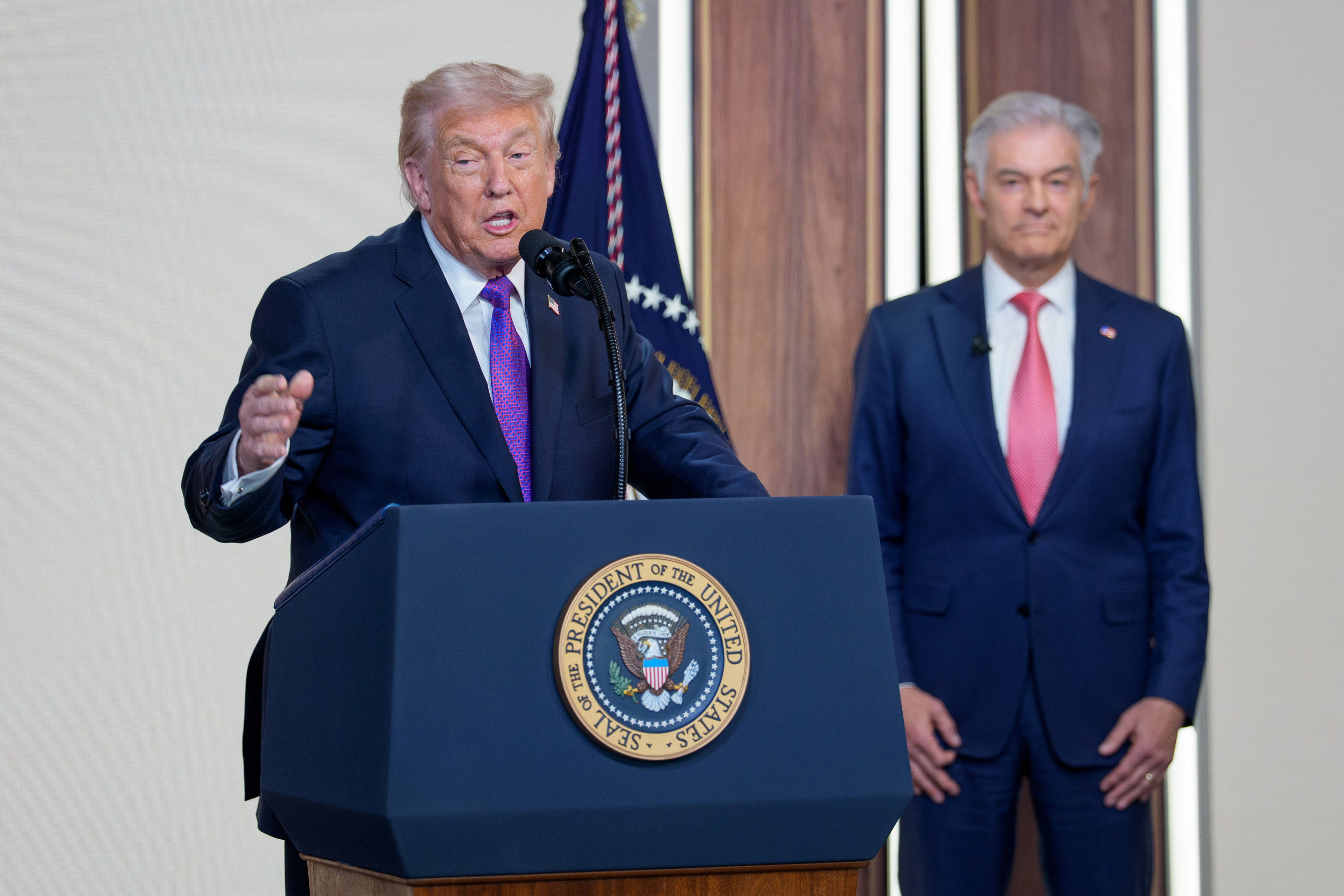

- Kentucky approves changes to Dental Practice Act
- FDA seeks additional safety data for Lilly GLP-1 pill
- Ardent’s CEO-to-worker pay ratio in 2025
- Signature Healthcare begins receiving ambulances after cybersecurity incident
- Nursing home operators ask Supreme Court to keep Haitians in the US
- WVU Medicine plans $350M in capital projects
- Physicians’ greatest ASC pain point
- The highest-paid gastroenterologist in the 10 largest Western cities
- WVU Medicine to build $25M MOB
- Union sets strike date for 42,000 U of California workers
- Are health systems’ enterprise IT platforms stifling innovation?
- Indiana hospital signs LOI to join Parkview Health
- MetroHealth primary care providers explore unionization with AFSCME
- 33 physician practice deals in Q1
- What Surgery Partners’ vascular acquisition means for the industry
- Florida surgeon charged with manslaughter after removing wrong organ
- How the wealth of the 3 richest physician billionaire has evolved
- Cardiology medtech company launches IPO with 12.5 million shares
- Former Utah dentist accused of practicing dentistry without a license
- The payer opportunities ASCs are ignoring
- 7 dental companies gaining new funding
- Heartland Dental adds Michigan practice
- FDA advisory committee set to weigh taking action on certain unapproved peptides
- The CRC screening gap: 10 stats
- UC Health workers plan open-ended, system-wide strike for May 14
- Baylor Scott & White Health Plan to depart individual market, Medicaid this year
- ‘It’s antitrust. We all know it’: The case for killing certificate-of-need
- Where dental therapy stands in the U.S.
- In industry's latest OTC pivot, Daiichi Sankyo lines up $1.5B consumer health unit sale to beverage giant Suntory
- Meet the leaders of the fastest-growing dental companies
- 8 federal government, policy updates for dentists to know
- EPA Delays Decisions on 'Forever Chemicals'
- Wildlife Trade Tied To Higher Risk of Diseases Spreading to Humans
- Yes, This is the Worst Pollen Season Ever — Until Next Year
- ‘Mini specialists’: 5 models reshaping behavioral health in primary care
- GoodRx launches 7.2-mg Wegovy dose for self-pay patients at $399 per month
- Providers back bipartisan bill eliminating Medicare chronic care management cost sharing
- New Weight Loss Pill, Foundayo, Gets Approval But FDA Seeks More Safety Data
- Gilead widens global Yeztugo access agreement, but MSF says supply is 'not nearly enough'
- Novartis CEO Vas Narasimhan joins Anthropic’s board as biopharma’s ties to AI deepen
- Behavioral health utilization is up with anxiety disorders leading demand, report finds
- Does Your Child Have A Concussion? These Are The Signs, Review Says
- AI Reveals Negative Labels in Medical Records for Sickle Cell Patients
- 'Food-as-Medicine' Improves Life for Heart Failure Patients
- Silent Heart Rhythm Problem Might Triple Risk Of Heart Failure In Seniors
- Blood Test Predicts Alzheimer's Years Before Symptoms, Brain Changes
- An Infectious Combo Triples Risk Of MS, Study Says
- Astellas manufacturing chief views reliable supply, bridging research as his production 'north star'
- Physician compensation up 3% in 2025, but not all specialties saw raises: Medscape
- Pfizer recruits former Angel Lucy Liu for latest mission against cancer
- Teva launches new online schizophrenia community project
- One man’s journey from gambling addiction to recovery and advocacy
- Medi-Cal Immigrant Enrollment Is Dropping. Researchers Point to Trump’s Policies.
- Rural Nebraska Dialysis Unit Closes Despite the State’s $219M in Rural Health Funding
- Ionis exec shares method to the Madness after 2026 Drug Name Tournament win
- American Board of Dental Examiners agrees to integrate ADA licensure exam
- Chicago hospital expands outpatient, walk-in mental health services
- Absolute Dental gets court approval for $3.3M data breach settlement
- Abridge expands clinical decision support solution with UpToDate partnership, new NEJM, JAMA content tie-ups
- 5 factors fueling recruitment challenges for dental assistants
- Travere maps course for Filspari's $3B US opportunity after landmark rare disease nod
- Hospitals with more disadvantaged patients fall short on price transparency, study finds
- FDA tells Eli Lilly to round up more safety info on key obesity launch Foundayo
- Meat Consumption Rises as Protein Trend Grows, Experts Warn
- Bill would force payers to apply DTC drug purchases to patient deductibles
- 43 states have mental health insurance disparities: 4 trends
- Nuts.com Recalls 10,000+ Pounds of Candy Over Allergy Risk
- Listen to the Latest ‘KFF Health News Minute’
- The new playbook for clinician well-being
- Estados cambian leyes para evitar que hijos de inmigrantes detenidos entren al sistema de cuidado temporal
- Keebler Health secures $16M in series A funding for AI-powered risk adjustment platform
- Sam’s Club Recalls Children’s Pajamas Due to Fire Hazard
- Small Talk? It May Be Better Than You Think
- Cómo hacer que un plan de salud con deducible alto funcione para tí
- Anthem, Mount Sinai reach contract agreement, restore in-network coverage
- J&J, chasing $100B year, sports immunology ‘dual powerhouse’ of Tremfya and new launch Icotyde
- Stanford Health Care, Alameda Health System partner to support St. Rose Hospital
- Para muchos pacientes que salen de terapia intensiva, la lucha apenas comienza
- Long-Term Opioid Prescriptions Fall By About A Quarter
- Gut Bacteria Might Drive Rare Food Allergy in Children, Study Finds
- Stents Can Ease Long-Term Symptoms Of Deep Vein Thrombosis, Trial Shows
- Young Cancer Survivors Face Doubled Risk Of Subsequent New Cancer
- Does Your Child Have Nightmares? Here's One Solution
- Marriage's Hidden Benefit? A Lower Risk Of Cancer
- Novo taps OpenAI to deploy AI across R&D, manufacturing and corporate functions
- Los estados se enfrentan a otro reto con las nuevas reglas laborales de Medicaid: la falta de personal
- New Orleans Takes Steps To Assess and Clean Lead in Playgrounds After Investigation
- States Change Custody Laws To Keep Children of Detained Immigrants Out of Foster Care
- WebMD Ignite rolls out program to help providers get Rural Health Transformation efforts off the ground
- Pfizer rebuked by FDA for misleading Adcetris ads on Facebook
- NewYork-Presbyterian to enact behavioral health reforms, pay $500K in wake of investigation
- FDA Reminds More Than 2,200 Sponsors and Researchers to Disclose Trial Results
- California behavioral health hospital to add inpatient beds
- Freedom of Associations
- Pioneering exposure therapy psychologist dies
- Interfacing with our Inner Demons: Comments on the Division of Trading and Markets' Statement on Certain User Interfaces
- New Mental Health Parity Index highlights where disparities persist
- CMS taps 150 digital health companies, providers for ACCESS Model
- Optum allows mental health NPs to offer transcranial magnetic stimulation
- National behavioral health association taps president, CEO
- Healthcare spending varies widely between metropolitan areas: HCCI
- Wavelet Medical, Aegis Ventures partner on first AI non-invasive fetal EEG monitoring platform
- Staff Statement Regarding Broker-Dealer Registration of Certain User Interfaces Utilized to Prepare Transactions in Crypto Asset Securities
- New Rules May Allow Broader Picks for CDC Vaccine Panel
- Second Meningitis Vaccine Doses Offered After U.K. Outbreak
- Crackdown on Vapes Falling Short, Report Finds
- Jasmine Rice Recalled Nationwide Over Possible Contamination
- AI speeds up prior auth, coding while driving higher costs for health systems: PHTI report
- ‘The next opioid epidemic’: Gambling legalization outpaces public health response to addiction
- Thinking About A GLP-1 Drug? Your Genetics Might Determine How Well You'll Fare
- Fighting High Blood Pressure? Having A Team On Your Side Can Help
- Radon Gas Increases Risk Of Ovarian Cancer, Study Says
- Your Doctor Might Be Using The Wrong Test To Track Your Cholesterol, Study Says
- Losing Teeth May Lead to Weight Gain, Researchers Report
- Heart Risk Worse With Sleep Apnea That Varies Night-By-Night
- Lilly’s Jaypirca shows fixed-duration power in ‘ambitious’ phase 3 CLL trial win
- How To Make a High-Deductible Health Plan Work for You
- CMS showcases first wave of digital health tools as questions about 'last mile' of adoption remain
- ViiV launches ‘Still Here’ campaign aimed at reminding young people about HIV
- Regeneron rides into radiopharma via $2.1B biobucks pact with Australia’s Telix
- How to Limit The Health Risks Posed by Polluted Air
- U.S. States Warm, But Not As Expected
- UHS’ CEO-to-worker pay ratio over the past 5 years
- HHS, after legal setback, updates ACIP charter to put more emphasis on vaccine safety
- Costco Recalls Cookies Over Missing Nut Allergy Warning
- CDC Pauses Release of COVID Vaccine Effectiveness Study
- Demand Surge Leads to Shortages of Estrogen Patches
- Statement Regarding Staff No-Action Letter to Bank of England
- UPDATED: Replimune to reduce workforce following 'disappointing' second rejection for melanoma prospect
- Title X Funding Restored, but New Rules Raise Concerns
- The Healthcare Burnout Backlash (pt 3): How Workflow Redesign Is Helping Healthcare Organizations Offset Staffing Shortages
- BD Announced Application of CE Mark for the Liverty TIPS Stent Graft
- Blackstone and TPG Complete Acquisition of Hologic; Names New CEO
- Endospan Receives FDA Approval for the NEXUS Aortic Arch Stent Graft System
- InVera Medical Receives FDA Clearance for Non-Thermal Chronic Venous Disease Device
- How CVS Caremark is using innovative technology to simplify the prior authorization process
- Starting material sourcing bottlenecks increase US drug shortage risks: report
- Novartis cuts 114 more jobs at New Jersey HQ as restructuring rolls on
- Charles River flows into Boston to help AHA bridge cardiovascular health divide
- Your Brain Cares If Your Plant-Based Diet Is Unhealthy, Researchers Report
- Your Neighborhood Might Help Make You Old Before Your Time
- Heavy 'Forever Chemical' Exposure Before Birth Increases Childhood Asthma Risk, Study Finds
- High-Tech Magnets Offer New Hope for Veterans Battling Combat PTSD
$400 Bn left unspeant, and the special interest headlines are screaming about cuts. This tells exactly how much (or little) each is losing.
May 31, 20238:52 AM ET By Ximena Bustillo, Tamara Keith![]()
President Biden speaks during a meeting about the American Rescue Plan on March 5, 2021, in Washington, D.C. Some of the pandemic funding allocated in legislation like the American Rescue Plan is being clawed back as part of a budget deal.
Samuel Corum/Getty Images
Republican and White House negotiators agreed to claw back approximately $27 billion in funding to federal agencies intended to combat the coronavirus pandemic. The federal COVID emergency officially ended earlier this month, and the unspent funds were an early area of agreement for negotiators trying to avoid a debt default after President Biden said publicly he would be open to looking at what could be given back.
Pulling back funds that have already been appropriated is what's known in budget-speak as "rescission." Based on a document being circulated by the White House to congressional Democrats and obtained by NPR, these rescissions focus on funds that had not been spent by agencies on their respective pandemic-era programs.
Unspent COVID dollars have long been a target of Republicans who questioned administration's requests for more funds, arguing the nearly $5 trillion spent on pandemic relief was excessive and helped drive inflation.
Some of these programs were "largely concluded," others will only see partial rescissions, while others were taken because there are "no immediate demands," according to the White House spreadsheet.
"The appropriators will use some of that money to spread around, how they see fit," said White House Budget Director Shalanda Young, who was a key negotiator on the deal. "We didn't get into the individual line items in this bill."
In other words, these unused COVID funds will be redistributed by Congress during this year's budget process to other parts of the federal budget, reducing overall government spending.
House members are expected to vote as soon as Wednesday on the full package.
At least 8 federal agencies would see money pulled back
As recently as late last year, the White House was asking Congress for an additional $10 billion in COVID funds. That money never came through. Now the administration has agreed to give $27 billion back, including a significant portion of what remained in the Public Health and Social Services Emergency Fund for emergency preparedness and response.
Notably, though, the document the White House is circulating says the administration was able to preserve funds for developing a next generation of vaccines that could rapidly adapt to new or changing viruses, as well as for research into long COVID.
The money clawed back is only a tiny fraction of the total $4.6 trillion spent on pandemic response and recovery. As of Jan. 31, $4.2 trillion had already been spent, according to the Government Accountability Office.
Here's a breakdown, as described in the White House document, of the funds being clawed back:
- Agriculture Department: Over $3 billion in part aimed at strengthening the food system and funding marketing services;
- Corporation for National Community Service: $286 million for operating expenses;
- Education Department: $391 million from the Education Stabilization Fund to support states and schools through the pandemic;
- Health and Human Services: Over $13 billion across the Centers for Disease Control and Prevention, the Food and Drug Administration and other response agencies for vaccine distribution, research and pharmaceutical supply chain recovery;
- Labor Department: $1 billion from state grants aimed at addressing fraud and identity theft;
- Small Business Administration: $2 billion in disaster relief and for COVID-19 response;
- Transportation Department: $3.9 billion highway infrastructure programs and the Aviation Manufacturing Jobs Protection Program, which gave money to businesses to prevent furloughs and layoffs;
- Treasury Department: Over $1 billion across several programs, including for air carrier support and grants for small businesses.
The document notes that rescissions of "extremely small amounts" — those under $150 million — total $1.6 billion. These are spread across different agencies and include $1.2 million for Housing and Urban Development's Housing for Persons with Disabilities program, $610,000 for USDA's rural broadband program and $40 for the DOT's Essential Air Service related to air travel access in small communities.
Some unspent COVID money was left alone
Negotiators did not rescind all unspent COVID funding.
Money allocated by Congress for Indian Health Services, Indian Education programs, DOT transit grants, the Veterans Medical Care and Health Fund, and Housing and Urban Development's tenant base rental assistance will stay put, according to the document.
WWMT News 3 reports Michigan evidence that not all COVID funds to education were subject to clawback.
Video report available at the link.
Michigan schools face deadline to spend $1 billion pandemic relief funds by September
FLINT, Mich. - Michigan schools have more than $1 billion in funding from the federal government that needs to be spent by September.The Elementary and Secondary School Emergency Relief Fund also known as ESSER was allocated in three rounds meant for recovery from the pandemic.
Schools now are getting down to the wire to spend money and if they don’t it goes back to the federal government.
The money can be used for a wide range of issues plaguing school districts, like learning loss, mental health staff, safety and security, and tutoring.
“Time is running out. There's less than one and a half billion dollars left. And schools need to spend this money by September 30, or they lose it," says Thomas Morgan, the spokesperson for the Michigan Education Association, the state's teacher's union.
Three rounds of money from the federal government were sent to schools across the country.
This money was meant for COVID-recovery.
The total left to spend across the United States is $57.7 billion that’s according to the latest numbers from Future ED.
"I think everyone wants what's best for our kids, and it's important that school districts across the state put their the pedal to the metal and get working on finding ways to use this once-in-a-lifetime funding to help our kids before it's too late," says Morgan.
The MEA says some districts used the money for teacher salaries.
“Our kids deserve to have the best and brightest teachers in our classrooms. School districts are recognizing that and making sure that they can offer a competitive wage," Morgan says.
In Michigan, the school district that received the second most amount of money was Flint Schools.
In total, they got a little more than $155 million.
At last week’s finance board meeting, the chief financial officer for the district said they have $37 million left that has to be spent by September.
“This year we had 76 million budgeted, that remainder of that 99-million dollar grant. The vast majority of it is for salaries and benefits that are being supplemented from the general fund and construction projects is the majority that is allocated from the ESSER budget," says Chandra Cleaves, who serves as Flint Community Schools Chief Financial Officer.
One thing Morgan says the teachers want is programs to help kids who have experienced a great deal of learning loss.
"Teachers and parents want to make sure that this federal funding is spent on helping our kids learn, helping kids get caught up and helping to create better opportunities for the future. And so that means doing things like academic interventions to help those who may have fallen behind, catch back up," says Morgan.
Across Michigan schools, nearly $5.7 billion was provided to schools across the state.
To see the current ESSER dollars remaining throughout the state CLICK HERE.
Get MHF Insights
News and tips for your healthcare freedom.
We never spam you. One-step unsubscribe.