









Michigan healthcare freedom community forum

A little noticed April report from the United States Government Accountability Office (GAO) found 15 federal agencies reported a total $ 186 billion in improper payments during FY25 across 64 welfare and Medicare programs, a startling increase of $24 billion from FY24. Reported Medicare overpayments exceeded Medicaid overpayments and SNAP overpayments. It should be noted that these are just the reported, known numbers. Actual numbers are probably far worse due to concealed frauds and gaps in reporting.
The Government Accountability Office is a nonpartisan agency of the U.S. Congress - not the Executive Branch - which audits, evaluates, and investigates Executive Branch activities.
https://www.gao.gov/products/gao-26-108694
US government overpaid welfare and Medicare recipients by $186 billion last year — after a shocking surge
By Chris Nesi - May 25, 2026The federal government overpaid welfare and social services recipients by a stunning $186 billion in fiscal year 2025, a startling surge of $24 billion from the previous year’s total.
According to the Government Accountability Office (GAO), 15 federal agencies made up the massive improper payments overage spanning 64 programs, with approximately 82% of the overages the result of overpayments.
And these are just the mistakes that the government caught — usually not outright fraud, like the billions alleged in Minnesota.
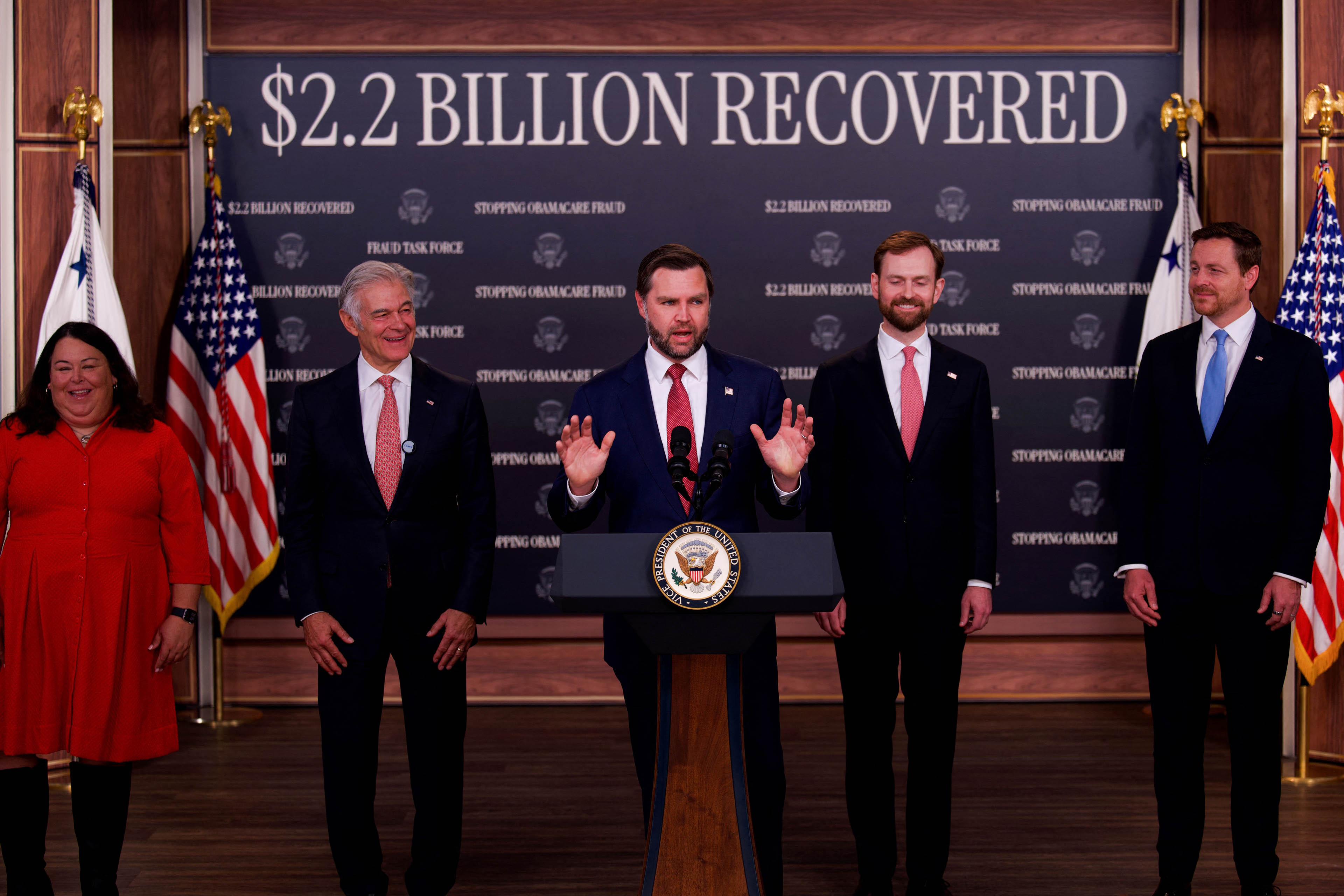
The GAO’s analysis comes as a fraudtask force helmed by Vice President JD Vance seeks to apply pressure to states, including New York, to root out the sources of fraud or risk losing federal funding.
Medicare was responsible for the largest share of overpayments, according to GAO’s analysis, coming in at $57 billion.
Medicare — the second largest government program after Social Security — has a budget of nearly $1.1 trillion.
Medicaid mistakes cost $37 billion, while the government doled out $21 billion for the Earned Income Tax Credit to people who didn’t deserve it.
Recipients of Supplemental Nutrition Assistance Program (SNAP) — food stamps — received $10 billion more than they should have.
The Shuttered Venue Operators Grant Program, a pandemic-era program that provided billions in emergency COVID-19 relief for certain live venues, museums and movie theaters also got $10 billion too much.
The remaining 59 programs combined made up $51 billion in improper payments.
The issue has long dogged the federal government, with GAO putting the total overpaid since 2003 at a staggering $3 trillion — though the agency says the actual total could be much higher.
The figure includes a dramatic uptick during the pandemic years of 2020-2023, when new programs were quickly developed and existing programs were rapidly expanded, leading to a significantly greater risk of fraud and improper payments, Kristen Kociolek, managing director of GAO’s Financial Management and Assurance team told the Washington Times.
The $186 billion figure omits certain programs that agencies have determined are susceptible to “significant improper payments,” GAO writes, including the Department of Health and Human Services’ Temporary Assistance for Needy Families (TANF), which spent roughly $16.5 billion in FY2025.
The agency notes it has made numerous recommendations to Congress and federal agencies in an attempt to close the gap, including in March 2022 during the Biden administration when GAO submitted 10 matters that would enhance accountability of federal spending.
The GAO press release for GAO-26-108694:
https://www.gao.gov/products/gao-26-108694
https://www.gao.gov/assets/gao-26-108694.pdf
Payment Integrity: Agencies' Estimated Improper Payments Increased to $186 Billion in Fiscal Year 2025
GAO-26-108694
Published: April 27, 2026Fast Facts
In this Q&A, we report on improper payments—those that shouldn't have been made or were made in the incorrect amount.
In FY 2025, 15 federal agencies reported a total estimate of about $186 billion in improper payments across 64 programs, an increase of $24 billion from the prior fiscal year. Most of these improper payments were a result of overpayments.
Improper payments have been a government-wide issue for more than 20 years, with estimates since FY 2003 at about $3 trillion.
Highlights
What GAO Found
For fiscal year 2025, 15 agencies’ estimated improper payments totaled about $186 billion across 64 programs. This represented about $24 billion more in improper payment estimates in fiscal year 2025 than in the prior fiscal year. Agencies reported that about $153 billion (approximately 82 percent) of this total was the result of overpayments. However, these estimates do not represent the full extent of government-wide improper payments. For instance, the $186 billion does not include certain programs that agencies have determined are susceptible to significant improper payments, such as the Department of Health and Human Services’ Temporary Assistance for Needy Families. Of the programs reporting improper payment estimates for fiscal year 2025, 19 reported improper payment rate estimates of at least 10 percent, including six programs whose rates exceeded 25 percent.
The Payment Integrity Information Act of 2019 (PIIA) requires the inspector general (IG) at each executive branch agency to annually report on the agency’s compliance with applicable PIIA criteria. According to these IGs, half of the 24 agencies reporting the majority (99 percent) of the federal government’s improper payment estimates in fiscal year 2024 fully complied with PIIA criteria and related Office of Management and Budget requirements. The IGs found that the other 12 agencies did not comply with at least one criterion in fiscal year 2024. IGs made recommendations to address noncompliance related to inadequate risk assessments for five agencies and unreliable estimates for seven agencies.
Why GAO Did This Study
Improper payments—those that should not have been made or were made in incorrect amounts—have consistently been a government-wide issue. Since fiscal year 2003, cumulative improper payment estimates by executive branch agencies have totaled about $3 trillion, though the actual amount may be much higher. Reducing improper payments is critical to safeguarding federal funds. GAO performed this audit in connection with the statutory requirement for GAO to audit the U.S. government’s consolidated financial statements. This report provides an overview of federal agencies’ improper payment estimates for fiscal year 2025. Additionally, it discusses agencies’ compliance with requirements for reporting and managing improper payments in fiscal year 2024 as well as the recommendations that IGs made to the agencies to improve compliance.
Recommendations
GAO has previously made numerous recommendations to Congress and agencies to help reduce improper payments government-wide. For example, in March 2022, GAO recommended 10 matters for congressional consideration to enhance transparency and accountability of federal spending. As of April 2026, nine of these 10 matters remain open.
GAO Contacts
Kristen Kociolek
Managing Director
Financial Management and Assurance
kociolekk@gao.govMedia Inquiries
Sarah Kaczmarek
Managing Director
Office of Public Affairs
media@gao.gov
Get MHF Insights
News and tips for your healthcare freedom.
We never spam you. One-step unsubscribe.
Sponsors
J & DE Family Charitable Fund

Friends
of MHF

Kelly Grotendiek
Philip Harbach
Dale Johnson
Drs. Jeffrey and Joni Jones
Vickie Kahle
Tammy Kipen
Marlin & Kathy Klumpp
Melanie Kurdys
Ruth Nobel
Patrick Peterson
Stephanie Poortenga
Jeanne Smit
Ben and Hope Staal
John Tuinstra
Jacki VanHuis
Sandy Walker
Sign Up for MHF Insights to keep up on the latest in Michigan Health Policy