













Michigan healthcare freedom community forum

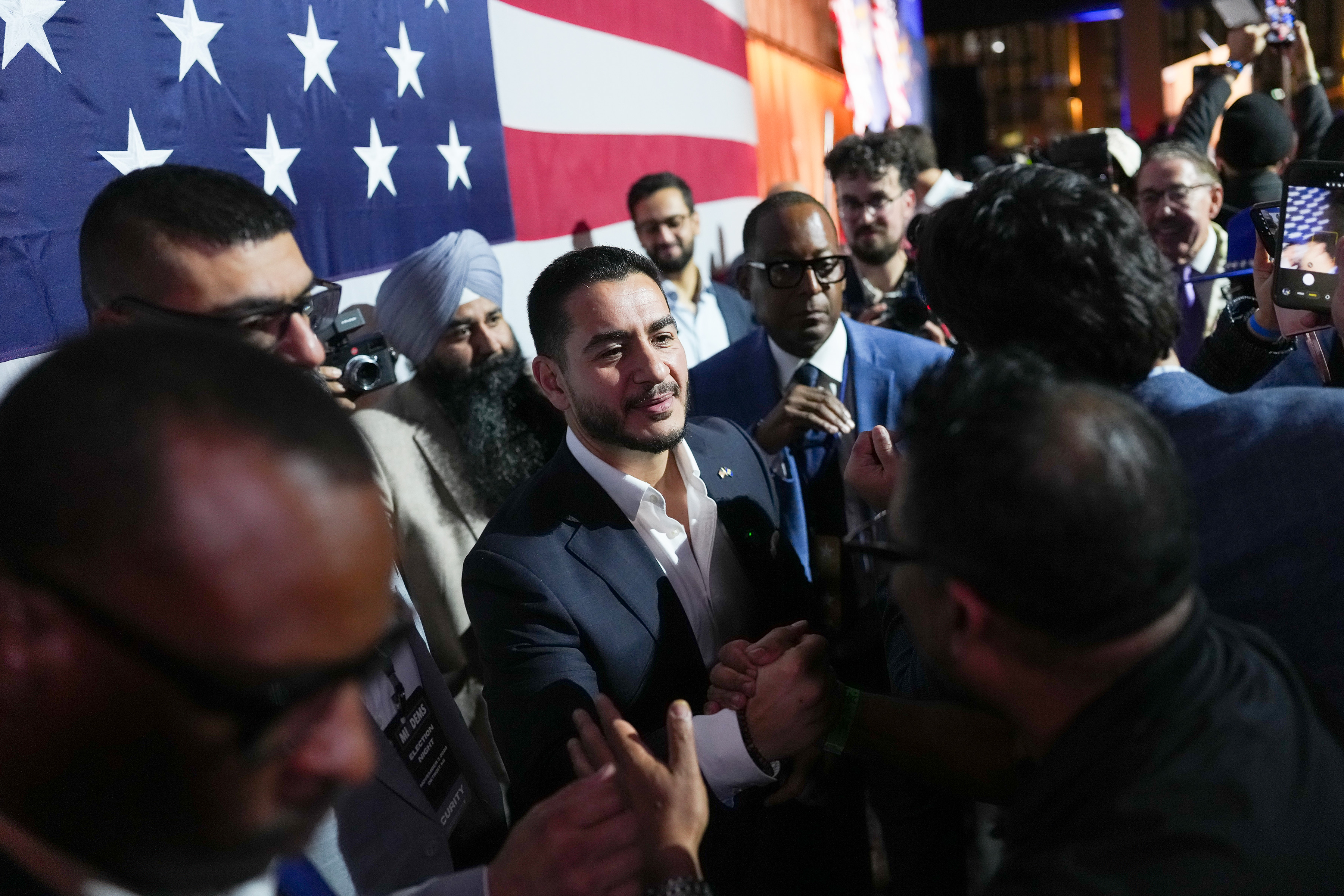
Post-midterms, the forecast is a lively one. How will a D-majority Congress and an imperial presidency interact?
First, the long-form opinion piece courtesy left-of center MedPage Today.
https://www.medpagetoday.com/opinion/second-opinions/123764
Here's How the Blue Tsunami Will Turn the Healthcare Tide
— The Democrats have an opportunity to advance public health, but getting things done won't be easyNovember 6, 2026
Hubris played such a central role in the 2026 midterm election that the ancient Greeks would surely have loved it.
<clip>
Now that the blue tsunami has changed the playing field, Democrats must deliver. They need to achieve something concrete over the next 2 years, and they must prioritize the issues, such as healthcare, that were salient to voters in this election cycle. Otherwise, they risk being punished for their own ineptitude and hubris.
Democrats will quickly learn that getting something done will be harder than they imagine. Here are some of the health policy challenges Democrats, Republicans, and President Trump will face in 2027 and 2028.
Lame Duck Session
Between the election and the swearing-in of a new Congress on January 3, 2027, the old Congress will be in a lame duck session. These periods tend to promise a lot and then deliver extraordinarily little. Beyond appropriations, defense reauthorization, and perhaps some renewed efforts to end the war in Iran, I expect little to nothing else, including on healthcare.
During a lame-duck session, nominations and legislation go nowhere unless they have broad bipartisan support and members of Congress feel some urgency. Even then, agreed-upon compromises may not survive procedural objections, time constraints, or general indifference from departing Congress members who want to go home. Simply put, those who have retired or lost their races are deeply conscious of their lame-duck status.
Does HHS Secretary Kennedy Stay or Go?
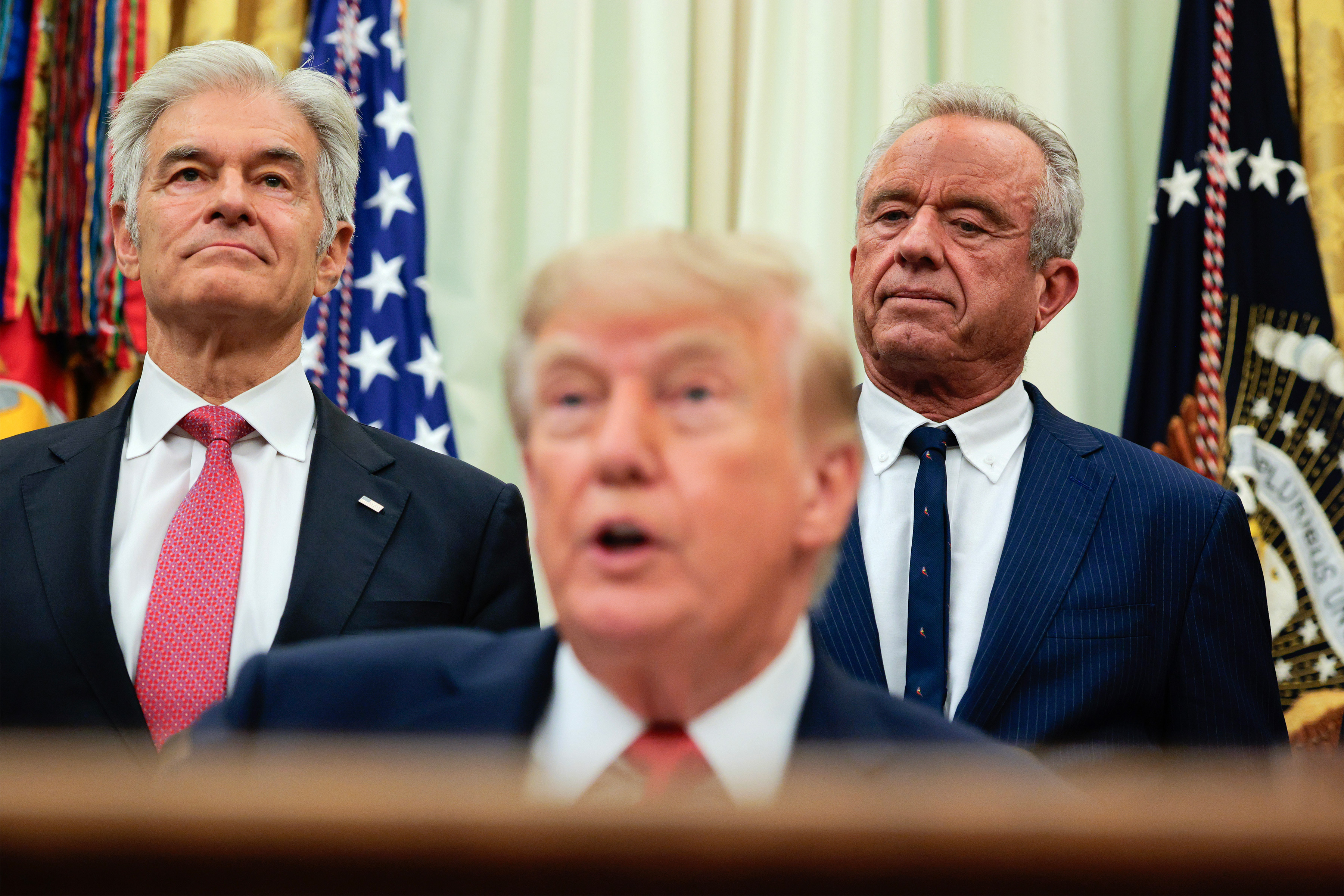
In prior MedPage Today editorials, I pointed out that cabinet secretaries often leave after 2 years, but that Secretary Robert F. Kennedy Jr. would likely stay. After all, Trump has continued to support Kennedy, and Kennedy has continued to have the opportunity of a lifetime to advance his Make America Healthy Again agenda and anti-vaccine stance.
Post-election, the job will quickly become a nightmare for Kennedy, as he will have to respond to hostile investigative hearings led by Democrats on the health committees. And Kennedy is unlikely to get White House help: Trump will have bigger fights to address and less political capital to spend.
Also, if impeachment hearings were to start, Kennedy would be behind only Defense Secretary Pete Hegseth as the object of Congressional attention. This situation will evolve, but I suspect Kennedy will leave (resign) rather than face congressional challenges to his own hubris.
HHS Leadership and Senate Confirmation Hearings
Controversial nominations rarely advance during a lame-duck session. Once the new Congress starts, all past nominations expire, and the White House must start anew. They are not obligated to submit the same names.
Given the White House affiliation with Heidi Overton, MD, PhD, and her weaker credentials compared to her predecessors, I see no way senators would confirm her as FDA commissioner in the lame-duck session. Obviously, her odds would be even worse next year with a Democratic-led Senate. Kennedy, or perhaps his successor, will need to look elsewhere.
Hypothetically, Overton could be renominated solely to trigger provisions in law that would allow Kyle Diamantas, JD, to continue as acting commissioner in 2027. But more likely, another nominee will emerge.
Investigations, Vetoes, Riders, and Compromises
Investigations are the classic response to leading one or both houses of Congress when the President is of the other party. There will be multiple hearings on the administration's opposition to vaccines; the first one will probably focus on measles.
Of course, the new Democratic majority has other options to advance its policy agenda:
Pass the legislation they want and let Trump veto it
Move policy as riders on must-pass legislation
Express openness to compromises and deals with Trump
As an example of advancing policy via riders, let's look at one of those must-pass bills: FDA user fee legislation. The bill renewal comes with a tradition of serving as a vehicle for non-user fee issues. If it isn't enacted sooner, I would expect efforts like the Clinical Trial Modernization Act to be added to the reauthorization bill. The FDA user fee legislation must become law by September 30, but ideally should be completed by June or July. Perfect timing.Of course, it is too soon for anyone to know the Democratic strategy because it hasn't been decided. My guess: it will turn out to be a combination of approaches.
Democratic Ambitions Will Need Funding
Despite the threat of Trump vetoes, Democrats will have the opportunity to advance two of their healthcare priorities in 2027: undoing Medicaid program cuts and restoring Obamacare insurance premium subsidies.
The easy part is creating a reconciliation bill, so that only 51 votes will be needed for Senate passage.
The harder part is finding $1.2 trillion over 10 years to pay for the program restorations. In the One Big Beautiful Bill Act (OBBBA), these cuts already offset the cost of the OBBBA tax cuts.
Democrats will have to find that money through program savings, tax increases, or by admitting they are adding to the deficit. Despite Democratic enthusiasm for action early next year, I don't see how they can do that quickly or easily. They will need to build a consensus on the offsets first.
Medicare for All: Still a Bridge Too Far
Many of the newly elected House Democrats from red, pink, and purple states will not be reelected in 2028 if Democrats focus on a dramatic, expensive new federal program instead of solving the issues at the heart of the midterm elections. Those Democrats outnumber the enlarged and noisy new influx of progressives pushing Medicare for All.
Polls suggest two-thirds of voters support "Medicare for All." However, support is cut in half when the issue of tax increases is raised. In my opinion, advocates would best serve their cause by focusing first on a smaller Medicare expansion, such as a buy-in option for individuals between 55 and 65.
My larger concern is that Sen. Bernie Sanders (I-Vt.), likely the next chairman of the Senate Committee on Health, Education, Labor & Pensions and a passionate supporter of Medicare for All, will put a spotlight on this issue, and give lesser attention and support to other health programs that have a more realistic chance of moving forward over the next 2 years.
The Big Winners
Not long ago, a broad swath of health issues was bipartisan and rarely controversial or challenged: vaccines, an effective CDC, NIH funding, the value of research universities, and a strong FDA. While some resistance may linger, I believe these will be bipartisan again by the next election cycle, if not sooner. That is a huge win for public health and for all Americans.
Steven Grossman, JD, is a policy analyst and regulatory expert, and author of the FDA Matters blog. Earlier in his career, he served as a deputy assistant secretary for health at HHS and previously as health staff director on the Senate HELP Committee. In recognition of his advocacy and policy leadership, he has been honored by the Reagan-Udall Foundation for the FDA with its Innovations in Regulatory Science Award.
The presidency still has a pen and a phone, and this President is (if anything) even less afraid to use them than his predecessors.
Strategies likely to be hitting his desk from free-market health policy wonks.
Lame-duck:
- Issue EOs directing HHS/CMS to freeze all pending ACA/Medicaid expansion rules
- Reinstate short-term limited-duration plans to 12 months renewable
- Expand association health plans and HSAs.
- Rescind Biden-era DACA/CHIP eligibility guidance.
- Nominate recess appointees to key CMS/FDA posts and judgeships before Jan 3.
2027-28:
- Veto any subsidy extension or M4A bill.
- Use regulatory authority for Medicaid work requirements, site-neutral payments, and interstate sales waivers.
- Direct DOJ to challenge state single-payer experiments and defend short-term plan rules in court.
- Appoint judges hostile to Chevron deference.
- Cut discretionary HHS funds for enrollment outreach.
- Promote price transparency and 340B reform via rulemaking to erode progressive baselines.
An imperial presidency might leverage the little-known fact that average employee health insurance premiums for a family vary by state as much as $8,000 - the gap between Mississippi and Alaska.
- 2026 national survey: https://www.kff.org/health-costs/2026-employer-health-benefits-survey/
- State-level family premiums: https://www.kff.org/private-insurance/state-indicator/family-coverage/
- State-level single premiums: https://www.kff.org/private-insurance/state-indicator/single-coverage/
Interstate Sales Waivers
Interstate sales waivers are a targeted deregulatory tool aimed at expanding private-market options and competitive pressure.
https://www.cms.gov/marketplace/states/section-1332-state-innovation-waivers
- Increase choice and price competition without new federal entitlements or subsidies.
- Lower premiums for healthier or younger buyers who prefer less-mandated coverage.
- Serves as a regulatory alternative to single-payer or heavy federal standardization.
Barriers include insurance industry protectionism embedded in state law, as well as practical limits:
- Adverse selection (sicker people stay in richer-benefit states).
- Varying state mandates, consumer protection and network adequacy issues.
- Some see difficulty in true nationwide portability without federal overrides.
Heritage Foundation source
State Innovation: The Key to Affordable Health Care Coverage Choices
https://www.heritage.org/health-care-reform/report/state-innovation-the-key-affordable-health-care-coverage-choices
Forgotten: Section 1333 for interstate sales/choice compacts
American Legislative Exchange Council (ALEC) maintains model legislation for multi-state health care agreements and reciprocity (including the Health Freedom Compact Act and related regional coalition models) that allow residents to buy plans across state lines under agreed standards.
Health Freedom Compact Act: https://alec.org/model-policy/health-freedom-compact-act/
Related Regional Health Care Coalition Act: https://alec.org/model-policy/regional-health-care-coalition-act/
Alternative compact advocate (broader authority transfer):
Health Care Compact Alliance — https://www.healthcarecompact.org/ (promotes an interstate compact returning health-care regulatory authority to participating states).
Implementing regulations for Section 1333 were required by July 1, 2013, but were never issued.
No states have formed such a compact, and no dedicated CMS guidance or application portal exists. CMS has recently (as of 2025) consulted with the National Association of Insurance Commissioners on potential future rulemaking.
Statutory text (42 U.S.C. § 18053): https://uscode.house.gov/us/usc/t42/s18053
Get MHF Insights
News and tips for your healthcare freedom.
We never spam you. One-step unsubscribe.
Sponsors

J & DE Family Charitable Fund

Friends
of MHF

Kelly Grotendiek
Philip Harbach
Dale Johnson
Drs. Jeffrey and Joni Jones
Vickie Kahle
Tammy Kipen
Marlin & Kathy Klumpp
Melanie Kurdys
Ruth Nobel
Patrick Peterson
Stephanie Poortenga
Jeanne Smit
Ben and Hope Staal
John Tuinstra
Jacki VanHuis
Sandy Walker
Sign Up for MHF Insights to keep up on the latest in Michigan Health Policy