








- Stereotaxis to acquire cardiovascular robotics company for $45M
- Physician specialties with highest, lowest burnout rates: AMA
- Trump nominates CDC director
- Meritus Health adds Dr. Christine Lewis
- Parkland Health adds 2 inpatient units, 112 beds
- Atrium Health inks naming rights deal for Panthers training site
- What’s the deal with insurer mental health parity violations?
- Drugmaker recalls Xanax over quality issue
- NYU Langone Health opens 12K-square-foot ambulatory location
- 10 anesthesia leadership appointments from Q1
- What could improve physician market competition
- Remarks at the Options Market Structure Roundtable
- Wider care gaps predicted as mental health parity rule faces rollback
- Beyond March Madness: Athletics boost academic health system marketing
- Sheppard Pratt gets $16.5M for behavioral health expansion
- How ESOPs can help retiring physicians cash out
- Specialty1 Partners’ growth in 2026: 5 updates
- North Carolina system invests $200M in cancer care
- UnityPoint Health to transition dental services to FQHC
- The ownership opportunity ASCs are leaving behind
- New York hospital taps ambulatory operations leader
- 10 trends in behavioral health usage: Report
- How hospitals are winning — and losing — the ASC moment
- 4 DSOs adding new technology
- Hawaii system names interim CEO
- Aspen Dental opens Michigan office
- Turning Fragmented Clinical Data into Actionable Insight
- Ascension taps president for 2 Texas hospitals
- Studies reaffirm fluoride safety, benefits: 10 things to know
- Philips earns FDA clearance for spectral CT with cardiac imaging
- New Oklahoma law closes dental insurer price fixing loophole
- Cattywampus: Statement on the CAT Concept Release
- Butterflies and Condors: Remarks at the Options Market Roundtable
- Viatris, Teva kick off separate recalls over dissolution, raw material issues
- Mental health ED visits at Children’s Hospital Colorado jump 20% in April
- Rising ACA Costs Leave Many Unable To Pay for Coverage
- One Lot of Xanax Recalled Nationwide Over Quality Issue, FDA Says
- Cough Drops From Several Brands Being Recalled, FDA Says
- CDC May Get New Leader as Officials Consider Erica Schwartz
- Statement at the Roundtable on Options
- Opening Remarks at the Options Market Structure Roundtable
- This Simple Step Could Improve The Benefits From Your Regular Workouts
- E-Bikes And E-Scooters A Growing Menace On City Streets, Study Says
- 'Absent or trivial' effects: Anti-amyloid Alzheimer's drugs called into question once again
- Why Walking Remains Unsteady After Partial Spinal Cord Injury
- Study Says Stress, Weight And Hormones Alter Timing of Puberty in Girls
- RFK Jr. kicks off string of congressional hearings to talk White House budget plan
- Air Pollution and Weather Tied to Migraines
- New Alzheimer's Drugs Provide No Meaningful Benefit, Major Evidence Review Concludes
- Roche to launch another Elevidys study after EU rejection of Duchenne gene therapy
- Lilly answers FDA's call for more Foundayo safety info, plotting diabetes filing in parallel
- New Federal Medicaid Rules Require One Month of Work. Some States Demand More.
- As US Birth Rate Falls, Feds’ Response May Make Pregnancy More Dangerous
- Omnicom brews Olixir from FCB Health, rebranding storied agency after Interpublic takeover
- DiMe-led initiative brings together pharma, virtual providers, digital pharmacies to develop blueprint for DTC pharma models
- Kentucky approves changes to Dental Practice Act
- Former Utah dentist accused of practicing dentistry without a license
- 7 dental companies gaining new funding
- Heartland Dental adds Michigan practice
- UPDATED: Heeding RFK Jr.'s call, FDA reclassifies 12 unapproved peptides ahead of advisory committee meeting
- Carrot launches proprietary AI platform for personalized fertility, family care
- UC Health workers plan open-ended, system-wide strike for May 14
- Baylor Scott & White Health Plan to depart individual market, Medicaid this year
- In industry's latest OTC pivot, Daiichi Sankyo lines up $1.5B consumer health unit sale to beverage giant Suntory
- EPA Delays Decisions on 'Forever Chemicals'
- Wildlife Trade Tied To Higher Risk of Diseases Spreading to Humans
- Yes, This is the Worst Pollen Season Ever — Until Next Year
- ‘Mini specialists’: 5 models reshaping behavioral health in primary care
- GoodRx launches 7.2-mg Wegovy dose for self-pay patients at $399 per month
- Progyny unveils new fertility benefit option for small, mid-size employers
- Providers back bipartisan bill eliminating Medicare chronic care management cost sharing
- New Weight Loss Pill, Foundayo, Gets Approval But FDA Seeks More Safety Data
- Seqster launches new data tool to turn clinical sites into 'research-ready data collection points'
- Gilead widens global Yeztugo access agreement, but MSF says supply is 'not nearly enough'
- Novartis CEO Vas Narasimhan joins Anthropic’s board as biopharma’s ties to AI deepen
- Behavioral health utilization is up with anxiety disorders leading demand, report finds
- Does Your Child Have A Concussion? These Are The Signs, Review Says
- AI Reveals Negative Labels in Medical Records for Sickle Cell Patients
- 'Food-as-Medicine' Improves Life for Heart Failure Patients
- Silent Heart Rhythm Problem Might Triple Risk Of Heart Failure In Seniors
- Blood Test Predicts Alzheimer's Years Before Symptoms, Brain Changes
- An Infectious Combo Triples Risk Of MS, Study Says
- Astellas manufacturing chief views reliable supply, bridging research as his production 'north star'
- Physician compensation up 3% in 2025, but not all specialties saw raises: Medscape
- Pfizer recruits former Angel Lucy Liu for latest mission against cancer
- Teva launches new online schizophrenia community project
- One man’s journey from gambling addiction to recovery and advocacy
- Medi-Cal Immigrant Enrollment Is Dropping. Researchers Point to Trump’s Policies.
- Rural Nebraska Dialysis Unit Closes Despite the State’s $219M in Rural Health Funding
- Ionis exec shares method to the Madness after 2026 Drug Name Tournament win
- Chicago hospital expands outpatient, walk-in mental health services
- Abridge expands clinical decision support solution with UpToDate partnership, new NEJM, JAMA content tie-ups
- Travere maps course for Filspari's $3B US opportunity after landmark rare disease nod
- Hospitals with more disadvantaged patients fall short on price transparency, study finds
- FDA tells Eli Lilly to round up more safety info on key obesity launch Foundayo
- Meat Consumption Rises as Protein Trend Grows, Experts Warn
- Bill would force payers to apply DTC drug purchases to patient deductibles
- 43 states have mental health insurance disparities: 4 trends
- Nuts.com Recalls 10,000+ Pounds of Candy Over Allergy Risk
- Listen to the Latest ‘KFF Health News Minute’
- The new playbook for clinician well-being
- Estados cambian leyes para evitar que hijos de inmigrantes detenidos entren al sistema de cuidado temporal
- Keebler Health secures $16M in series A funding for AI-powered risk adjustment platform
- Sam’s Club Recalls Children’s Pajamas Due to Fire Hazard
- Small Talk? It May Be Better Than You Think
- Cómo hacer que un plan de salud con deducible alto funcione para tí
- Anthem, Mount Sinai reach contract agreement, restore in-network coverage
- J&J, chasing $100B year, sports immunology ‘dual powerhouse’ of Tremfya and new launch Icotyde
- Stanford Health Care, Alameda Health System partner to support St. Rose Hospital
- Para muchos pacientes que salen de terapia intensiva, la lucha apenas comienza
- Long-Term Opioid Prescriptions Fall By About A Quarter
- Gut Bacteria Might Drive Rare Food Allergy in Children, Study Finds
- Stents Can Ease Long-Term Symptoms Of Deep Vein Thrombosis, Trial Shows
- Young Cancer Survivors Face Doubled Risk Of Subsequent New Cancer
- Does Your Child Have Nightmares? Here's One Solution
- Marriage's Hidden Benefit? A Lower Risk Of Cancer
- Novo taps OpenAI to deploy AI across R&D, manufacturing and corporate functions
- Los estados se enfrentan a otro reto con las nuevas reglas laborales de Medicaid: la falta de personal
- States Change Custody Laws To Keep Children of Detained Immigrants Out of Foster Care
- WebMD Ignite rolls out program to help providers get Rural Health Transformation efforts off the ground
- Pfizer rebuked by FDA for misleading Adcetris ads on Facebook
- NewYork-Presbyterian to enact behavioral health reforms, pay $500K in wake of investigation
- FDA Reminds More Than 2,200 Sponsors and Researchers to Disclose Trial Results
- Freedom of Associations
- Interfacing with our Inner Demons: Comments on the Division of Trading and Markets' Statement on Certain User Interfaces
- Wavelet Medical, Aegis Ventures partner on first AI non-invasive fetal EEG monitoring platform
- Staff Statement Regarding Broker-Dealer Registration of Certain User Interfaces Utilized to Prepare Transactions in Crypto Asset Securities
- New Rules May Allow Broader Picks for CDC Vaccine Panel
- Second Meningitis Vaccine Doses Offered After U.K. Outbreak
- Crackdown on Vapes Falling Short, Report Finds
- Jasmine Rice Recalled Nationwide Over Possible Contamination
- ‘The next opioid epidemic’: Gambling legalization outpaces public health response to addiction
- Thinking About A GLP-1 Drug? Your Genetics Might Determine How Well You'll Fare
- Fighting High Blood Pressure? Having A Team On Your Side Can Help
- Radon Gas Increases Risk Of Ovarian Cancer, Study Says
- Your Doctor Might Be Using The Wrong Test To Track Your Cholesterol, Study Says
- Losing Teeth May Lead to Weight Gain, Researchers Report
- Heart Risk Worse With Sleep Apnea That Varies Night-By-Night
- Lilly’s Jaypirca shows fixed-duration power in ‘ambitious’ phase 3 CLL trial win
- ViiV launches ‘Still Here’ campaign aimed at reminding young people about HIV
- Regeneron rides into radiopharma via $2.1B biobucks pact with Australia’s Telix
- Statement Regarding Staff No-Action Letter to Bank of England
- The Healthcare Burnout Backlash (pt 3): How Workflow Redesign Is Helping Healthcare Organizations Offset Staffing Shortages
- BD Announced Application of CE Mark for the Liverty TIPS Stent Graft
- Blackstone and TPG Complete Acquisition of Hologic; Names New CEO
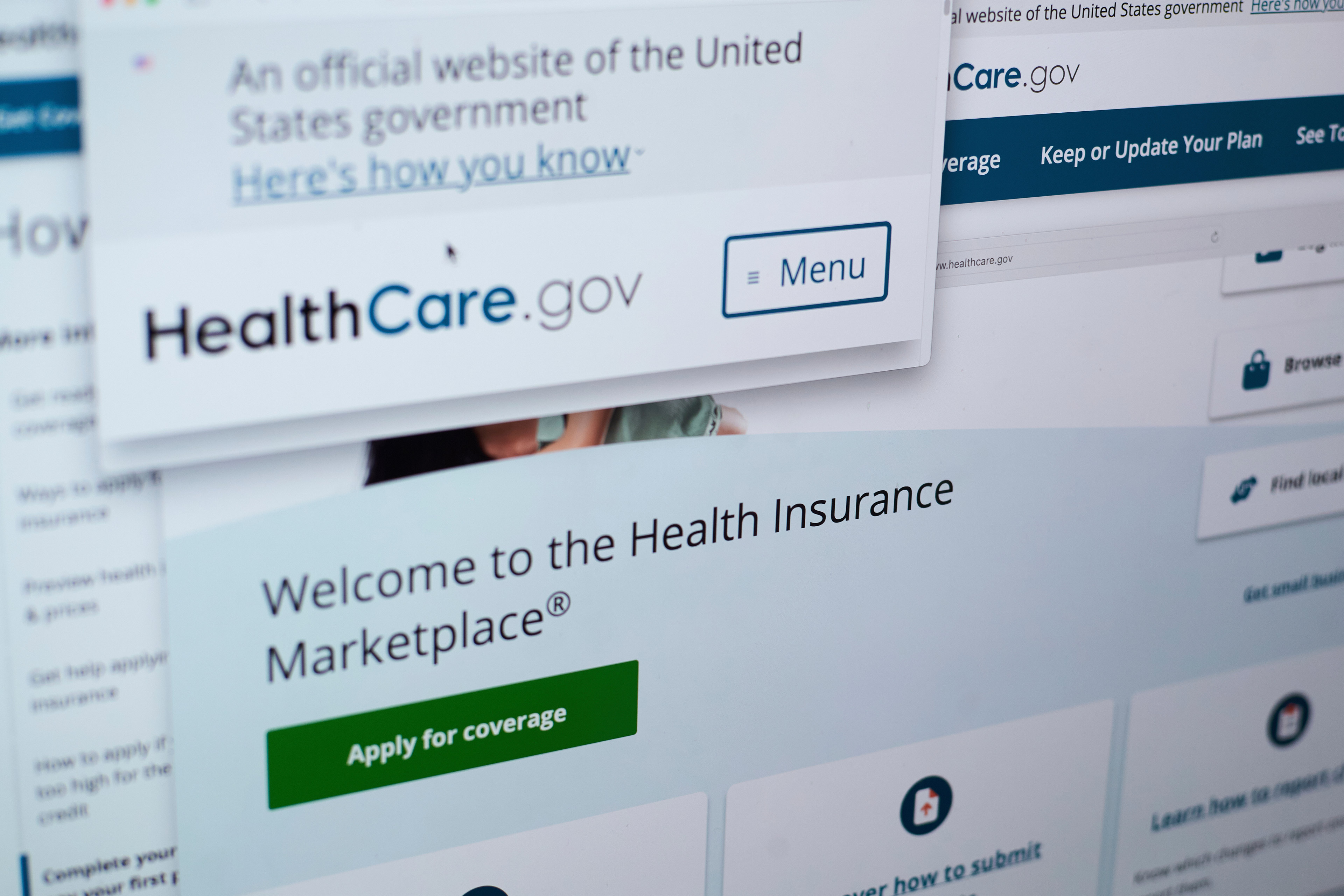
It should come as no surprise that PPACA health plan buyers traded down from the higher tier, more expensive plans to lower tier plans with higher deductibles for the 2026 plan year. This won't change, even if the Congress extends the pandemic super subsidies (and that is looking ever more unlikely). Any subsidy extension would have to allow reopening of PPACA health care plan choices to affect this trend:
More Americans are picking higher-deductible Obamacare plans, possibly risking their health
The loss of enhanced subsidies and premium sticker shock are driving the trend, state officials and policy experts say.
By Robert King - February 4, 2026More Americans are turning to cheaper Obamacare plans to avoid premium sticker shock, according to preliminary data from states.
But the switch comes with a caveat: thousands in extra out-of-pocket costs that policy researchers say may make people hesitate to get medical care when they are sick or injured.
“I think buying down this year is a reflection of affordability,” said Stacey Pogue, senior research fellow with Georgetown University’s McCourt School of Public Policy. “People who are doing it want to cling on to coverage.”
Rising consumer costs have become a pivotal issue in the battle for control of Congress in the midterm elections this fall, beginning when Democrats blamed Republicans for failing to agree on a plan to extend enhanced subsidies. The impasse triggered a record-length shutdown of the federal government last fall, further highlighting the issue.
Now Republicans and the White House are pushing for ways to address affordability across a range of categories, while Democrats are expected to make soaring premiums on the Affordable Care Act insurance exchanges a key plank of their campaign to retake Congress.
The subsidies’ expiration on Jan. 1 caused annual premiums to spike more than $1,000 on average for subsidized enrollees, according to one estimate from the health research organization KFF.
Signups for 2026 declined by 1.2 million — or five percent — to 22.9 million, compared to 24.1 million in 2025, according to a national enrollment snapshot released by the Centers for Medicare and Medicaid Services for 2026 Obamacare coverage.
The drop — which some experts are concerned will increase as the year unfolds — occurred primarily on the 30 state exchanges run by the federal government, totaling 9 percent. Several of the states running their own exchanges have seen increased enrollment, perhaps in part because they used their own money to compensate for the loss of subsidies for lower-income customers.
But even in those states, officials are noting a significant trend: More Americans are downgrading to so-called bronze tier plans that have lower premiums but higher deductibles — 40 percent higher, by about $2000, compared to the next highest silver tier plan, which offers coverage with a lower deductible and higher premiums.
California, for instance, saw its enrollment hold steady for 2026 with around 1.9 million people choosing coverage, just a 2 percent drop from last year.
However, both new and returning customers are overwhelmingly choosing lower-tier plans. In 2026, more than a third of new enrollees chose bronze plans, compared to less than a quarter last year. For people who stayed in the marketplace, but switched tier levels, 73 percent switched to a bronze plan, compared to 28 percent last year.
Maine also saw more consumers selecting bronze plans. Enrollment increased by more than 10 percentage points compared to the year before. Bronze plans now make up nearly 60 percent of all state plan selections, which include silver, gold and catastrophic plans, according to a press release from the state.
Rhode Island’s exchange saw a slight decrease in enrollment and an explosion of signups for bronze compared to 2025, according to state data shared with POLITICO.
The number of people who chose a bronze plan increased 140 percent, from 848 people for 2025 to 2,053 for 2026. Silver tier enrollments held steady, but gold and platinum tier plans — which have the highest premiums and lowest deductibles — saw declines of 16 percent and 18.6 percent, the state data shows.
CMS is likely to release more data on enrollment this summer, which will give more insight into how many Americans shifted into bronze or catastrophic plans.
What’s in the plan
Bronze plans must cover the same benefits as other plan tiers sold on the ACA’s insurance exchanges. The catch is they require patients to shoulder a greater amount of cost-sharing.
This year, the average bronze plan for an individual had a deductible of $7,476, about 40 percent more compared with $5,304 for a silver plan. In most instances, the full deductible must be paid before any co-pays go into effect.
Another option is catastrophic plans, which have even lower premiums but very high deductibles, averaging $10,600 for an individual and $21,200 for a family. However, these plans are not available in every state and can only be bought by people under 30 or those over 30 who have a hardship exemption.
Several experts say that Americans are making the switch to a lower-tier plan because it’s still better than nothing. But the calculation can come with costs for good health.
“If you have an expensive health care encounter or expensive illness, you will be responsible for paying that deductible entirely out of pocket,” said Emma Wager, senior policy analyst for the Affordable Care Act program for KFF.
Several studies have shown high-deductible plans can be a barrier to care. An April 2025 study published in the Journal of the American Medical Association of more than 300,000 adults showed people in high-deductible plans were less likely to use clinic, lab or prescription drug care across several chroniEc illnesses.
A 2023 study published in the journal Translational Behavioral Medicine analyzed the behavior of nearly 26,000 people with different insurance types. The group with high-deductible plans was less likely to visit physicians, get screenings or receive the flu vaccine, even though the latter two are usually free for preventative care.
Silver problems
There is a quandary for some low-income customers who may be stuck with higher premiums.
Low-income ACA customers who earn between 100 to 250 percent of the federal poverty level (or between $15,560 and $39,125 for an individual) can get a cost-sharing reduction that can dramatically lower their annual deductibles to as little as $80.
To receive a CSR, though, an ACA customer must buy a silver tier plan, even though the premiums are higher than they are for bronze plans. The average lowest cost bronze plan has a monthly premium of $456 compared with $611 for the average lowest silver tier plan. That cost can vary from state to state and could come down with the base ACA subsidy that remains intact.
Last year, roughly half — 53 percent — of all enrollees on the ACA marketplace got some form of CSR attached to silver plans, according to a KFF analysis.
Those individuals now have to weigh paying a much higher premium or risk the much higher bronze plan deductible.
HSA hurdles
Bronze and catastrophic plan holders are now eligible for a health savings account, which enables them to put tax-free money into an account that can be used for a variety of health needs. Those needs can include paying down deductibles, but they can not be used to help pay premiums.
However, an HSA is only as good as the amount of money devoted to it. Right now, bronze plan holders would have to contribute to their own HSAs — an unlikely scenario for people who have downgraded plans because of affordability.
Republicans have pushed for government-funded HSA accounts. One proposal from Sen. Bill Cassidy (R-La.) would convert enhanced subsidy funding into government-funded HSAs.
However, Democrats have been cool to such an approach. Congressional Republicans could decide to add the proposal in a party-line reconciliation bill, but have not finalized whether they will put such a megabill together yet this year.
The question of how many Americans move to bronze and catastrophic plans will continue to play out over the next few months, including what it means for the exchanges, which rely on a healthy population to help maintain the stability of the risk pools.
That stability could be upended if people drop out after using their health coverage and deciding a high deductible isn’t worth it.
“People who drop out are going to be the healthier people,”said Jason Levitis, senior fellow with the left-leaning think tank Urban Institute. “People who are sick and have large health expenses are going to have to find a way to pay their premiums. It is going to be bad for the market.”
States are also watching to see how many people pay their premiums this year or decide to drop out.
It could change the conversation about affordability on the exchanges, Pogue said.
“We saw a lot of attention on whether net premiums are going to be affordable, but moving forward there will be a lot of talk about whether people who cling to coverage are getting care available,” she said.
Get MHF Insights
News and tips for your healthcare freedom.
We never spam you. One-step unsubscribe.