






Michigan healthcare freedom community forum

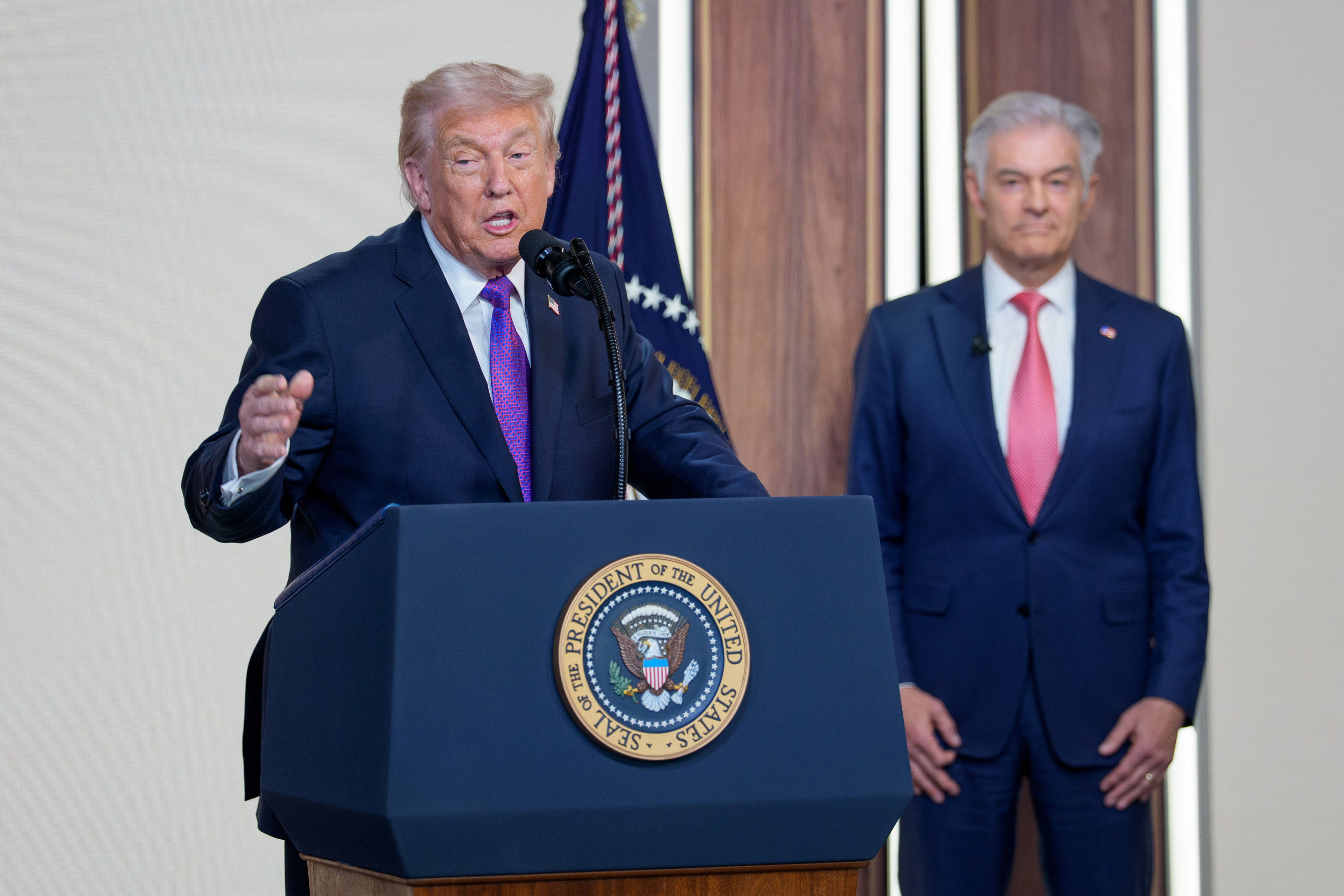
President Trump has imposed tariffs on pharmaceuticals and precursors pursuant to yesterday's finding that pharmaceuticals and associated active pharmaceutical ingredients (APIs), including key starting materials, are being imported into the United States in such quantities and under such circumstances as to threaten to impair the national security of the United States:
Fact Sheet: President Donald J. Trump Bolsters National Security and Strengthens U.S. Supply Chains by Imposing Tariffs on Patented Pharmaceutical Products
The White House
April 2, 2026BOLSTERING NATIONAL SECURITY: Today, President Donald J. Trump imposed tariffs on patented pharmaceuticals and their ingredients under Section 232 of the Trade Expansion Act of 1962 to bolster American national security and public health.
- President Trump imposed a 100% tariff on patented pharmaceutical products and ingredients.
- The tariffs will come into effect in 120 days for certain large companies, and 180 days for smaller companies.
- Trade Deal Countries:
- If a pharmaceutical product is from the European Union, Japan, Korea, or Switzerland and Liechtenstein, a 15% tariff will apply. If a pharmaceutical product is from the United Kingdom, a lower tariff will apply, subject to the recently concluded UK pharmaceutical agreement.Onshoring and pricing agreements:
- For companies that enter into Most Favored Nation (MFN) pricing agreements with the Department of Health and Human Services (HHS) and onshoring agreements with the Department of Commerce, a 0% tariff will apply through January 20, 2029. For companies that only enter into onshoring agreements with the Department of Commerce, a 20% tariff will apply.The Department of Commerce and HHS will provide pathways for companies to enter into onshoring and MFN pricing deals with the U.S. Government.
- Generic pharmaceuticals: Generic pharmaceutical products, biosimilars, and associated ingredients are not subject to tariffs at this time. This will be reassessed in one year.
- Specialty pharmaceutical products: Orphan drugs, drugs for animal health, and certain other specialty pharmaceutical products will be exempt, if they are from trade deal countries or meet an urgent public health need.
- The Proclamation establishes strong monitoring and enforcement mechanisms, including external audits and tariff increases on future and past imports.
STRENGTHENING AMERICAN SUPPLY CHAINS: President Trump recognizes that America must manufacture pharmaceutical products in order to be safe, secure, and healthy.
- President Trump imposed these tariffs following an extensive investigation conducted by the Secretary of Commerce under Section 232 of the Trade Expansion Act of 1962, as amended, to determine the effects on national security of imports of pharmaceuticals, pharmaceutical ingredients, and related products.
- The investigation found that patented pharmaceuticals and associated pharmaceutical ingredients are being imported into the United States in such quantities and under such circumstances as to threaten to impair our national security.
- The impending Section 232 tariffs have already spurred approximately $400 billion in new investment commitments from U.S. and foreign pharmaceutical companies, which will be spent in the United States during President Trump’s current term in office.
- A self-sufficient domestic manufacturing and industrial base for pharmaceutical products is vital for the ability to support national defense requirements and public health.
- Despite being the world leader in research and development for most innovative pharmaceuticals, the U.S. is heavily reliant on imports, threatening to limit U.S. access to life-saving medications in the event of global supply chain disruption.
BUILDING ON PROMISES KEPT TO PUT AMERICA FIRST: This action builds on President Trump’s commitment to put America first, protect our national security, and strengthen American manufacturing across all sectors.
- In May 2025, President Trump signed an Executive Order to remove regulatory barriers and facilitate the restoration of a robust domestic manufacturing base for prescription drugs, including key ingredients and materials necessary to manufacture prescription drugs.
- In August 2025, President Trump signed an Executive Order to ensure American pharmaceutical supply chain resilience by filling the strategic active pharmaceutical ingredients reserve.
- President Trump’s Administration has launched Section 232 investigations in adjacent sectors such as personal protective equipment, medical consumables, and medical equipment and devices, as well as robotics. These investigations will help ensure that harmful imports in any strategic sector do not compromise national security.
The Presidential finding supporting today's tariff decision:
BY THE PRESIDENT OF THE UNITED STATES OF AMERICA
A PROCLAMATION
1. The Secretary of Commerce (Secretary) recently transmitted to me a report on his investigation into the effects of imports of pharmaceuticals and pharmaceutical ingredients on the national security of the United States under section 232 of the Trade Expansion Act of 1962, as amended, 19 U.S.C. 1862 (section 232). Based on the facts considered in that investigation, and taking into account the close relation of the economic welfare of the Nation to our national security and other relevant factors, see 19 U.S.C. 1862(d), the Secretary found and advised me of his opinion that pharmaceuticals and associated active pharmaceutical ingredients (APIs), including key starting materials, are being imported into the United States in such quantities and under such circumstances as to threaten to impair the national security of the United States.
2. The Secretary found that the present quantities and circumstances of imports of pharmaceuticals and pharmaceutical ingredients threaten to impair the national security and economy. Despite being the world leader in research and development (R&D) for most innovative pharmaceuticals (those that are typically patented and branded, as compared to generic pharmaceuticals or pharmaceuticals approved pursuant to section 505(j) of the Federal Food, Drug, and Cosmetic Act, 21 U.S.C. 355(j)), the United States is heavily reliant on imports, threatening to limit United States access to life-saving medications in the event of global supply chain disruption due to geopolitical or economic disruption. According to the Food and Drug Administration, as of 2025, approximately 53 percent of patented pharmaceutical products distributed domestically are produced outside the country. The degree of import reliance is significant at the API level with only 15 percent of patented APIs by volume domestically produced for the United States market.
3. The Secretary found that patented pharmaceuticals and associated pharmaceutical ingredients are essential to the United States’ military and civilian healthcare. A self-sufficient domestic manufacturing and industrial base for pharmaceutical products is vital for the ability to support national defense requirements and maintain public health security during a national emergency or wartime. Patented pharmaceuticals are pivotal for treating cancer, rare diseases, autoimmune disorders, infectious diseases, and other critical health challenges. The Secretary further found that foreign government intervention has undermined the competitiveness of the United States patented pharmaceutical industry. This intervention has led to further dependence on foreign production of patented pharmaceuticals that have fragile supply chains.
4. In light of these findings, the Secretary recommended actions to adjust imports of patented pharmaceuticals and associated pharmaceutical ingredients, including continuing to negotiate onshoring agreements related to Most-Favored-Nation (MFN) pharmaceutical pricing agreements; imposing significant tariffs on pharmaceuticals and pharmaceutical ingredients, so that such imports will not threaten to impair the national security of the United States; and granting preferential treatment to those companies that commit to onshore production of pharmaceuticals and pharmaceutical ingredients.
5. After considering the Secretary’s report, the factors in section 232(d) (19 U.S.C. 1862(d)), and other relevant factors and information, among other things, I concur with the Secretary’s finding that pharmaceuticals and associated pharmaceutical ingredients are being imported into the United States in such quantities and under such circumstances as to threaten to impair the national security of the United States. In my judgment, and in light of the Secretary’s report, the factors in section 232(d) (19 U.S.C. 1862(d)), and other relevant factors and information, I have also determined that it is necessary and appropriate to adopt a plan of action, as described below, to adjust such imports of pharmaceuticals and associated pharmaceutical ingredients so that such imports will not threaten to impair the national security of the United States.
6. I have decided to direct the Secretary and the Secretary of Health and Human Services to pursue negotiations of agreements or continue any current negotiations of agreements, such as agreements contemplated in section 232(c)(3)(A)(i) (19 U.S.C. 1862(c)(3)(A)(i)), to address the threatened impairment of the national security with respect to imported patented pharmaceuticals and associated pharmaceutical ingredients, with any party the Secretary and the Secretary of Health and Human Services deem appropriate, and to update me on the progress of such negotiations within 90 days of the date of this proclamation. Under current circumstances and in light of future requirements of the United States, this action is necessary and appropriate to address the threatened impairment of the national security.
7. I have determined that it is necessary and appropriate to impose a 100 percent ad valorem duty rate on the import of patented pharmaceuticals and associated pharmaceutical ingredients, as identified in Annex I to this proclamation, and except as otherwise provided in this proclamation. Pharmaceutical products and ingredients that are subject to the section 232 zero tariff at this time are listed in Annex IV to this proclamation.
8. I have determined that it is necessary and appropriate that the ad valorem duty rate be 20 percent on imports of patented pharmaceuticals and associated pharmaceutical ingredients produced by companies that have plans, approved by the Secretary, to onshore production of such pharmaceuticals and pharmaceutical ingredients. The aforementioned 20 percent rate shall increase to 100 percent 4 years after the date of this proclamation.
9. I have further determined that it is necessary to implement pharmaceutical-related commitments in existing trade deals with the European Union, Japan, the Republic of Korea, and Switzerland and Liechtenstein jointly, as well as a future pharmaceutical-related deal with the United Kingdom (on which the United States and the United Kingdom have reached an agreement in principle as of December 1, 2025). These deals further United States economic and national security interests.
10. I further find that it is necessary and appropriate to impose no tariffs on imports of patented pharmaceuticals and associated pharmaceutical ingredients produced by companies that have fully executed agreements or are negotiating agreements with the Secretary and the Secretary of Health and Human Services regarding MFN pricing and onshoring of production and R&D of patented pharmaceuticals and pharmaceutical ingredients. Such agreements further United States economic and national security interests by making pharmaceuticals more accessible and affordable in the United States and by strengthening the domestic manufacturing base.
11. I have further determined not to adjust imports of generic pharmaceuticals and their associated ingredients, including biosimilar products, at this time. This determination includes purchases of generic pharmaceuticals and ingredients for the Strategic API Reserve. I find that such products should not be subject to section 232 tariffs at this time.
12. In my judgment, based on current circumstances as well as the future needs of the United States, the actions in this proclamation are necessary and appropriate to address the threatened impairment of the national security posed by imports of pharmaceuticals and pharmaceutical ingredients.
13. Section 232 authorizes the President to take action to adjust the imports of an article and its derivatives that are being imported into the United States in such quantities or under such circumstances as to threaten to impair the national security. Section 232 includes the authority to adopt and carry out a plan of action, with adjustments over time, to address the national security threat. This plan of action may include negotiations of agreements along with other actions to adjust imports to address the national security threat, including tariffs. If action under section 232 includes the negotiation of an agreement, such as one contemplated in section 232(c)(3)(A)(i) (19 U.S.C. 1862(c)(3)(A)(i)), the President may also take other actions he deems necessary to adjust imports to eliminate the threat that the imported article poses to the national security, including if such an agreement is not entered into within 180 days of the date of this proclamation, is not being carried out, or is ineffective. See 19 U.S.C. 1862(c)(3)(A).
14. Section 604 of the Trade Act of 1974, as amended (19 U.S.C. 2483) (section 604), authorizes the President to embody in the Harmonized Tariff Schedule of the United States (HTSUS) the substance of statutes affecting import treatment, and actions thereunder, including the removal, modification, continuance, or imposition of any rate of duty or other import restriction.
NOW, THEREFORE, I, DONALD J. TRUMP, President of the United States of America, by the authority vested in me by the Constitution and the laws of the United States, including section 232, 19 U.S.C. 1862; section 604, 19 U.S.C. 2483; and section 301 of title 3, United States Code, do hereby proclaim as follows:
(1) The Secretary and the Secretary of Health and Human Services, and any senior official they deem appropriate, shall pursue or continue pursuing negotiations of agreements, as contemplated in section 232(c)(3)(A)(i) (19 U.S.C. 1862(c)(3)(A)(i)), to address the threatened impairment of the national security with respect to imported pharmaceuticals and pharmaceutical ingredients.
(2) I hereby ratify, and delegate to the Secretary the authority necessary to enter into, the company-specific tariff agreements listed in Annex II to this proclamation that the Secretary entered into prior to this proclamation. I also hereby delegate to the Secretary the authority to enter into and implement similar agreements in the future, as referenced in clause (1) of this proclamation. The Secretary is authorized to monitor and enforce these agreements as he deems appropriate, consistent with clause (6) of this proclamation and applicable law.
(3)(a) Imports of patented pharmaceuticals and associated pharmaceutical ingredients, as listed in Annex I to this proclamation, will be subject to a 100 percent ad valorem duty rate.
(b) The ad valorem duty rate for patented pharmaceuticals and associated pharmaceutical ingredients, as listed in Annex I to this proclamation, shall be 20 percent for products of companies that have, or that the Secretary assesses are likely soon to have (e.g., based on agreements in principle), onshoring plans approved by the Secretary. The aforementioned 20 percent rate shall increase to 100 percent on April 2, 2030.
(c) The ad valorem duty rate for patented pharmaceuticals and associated pharmaceutical ingredients, as listed in Annex I to this proclamation, shall be 15 percent for products of Japan, the European Union, the Republic of Korea, and Switzerland and Liechtenstein jointly, unless a lower rate applies under clause (3) of this proclamation. The tariff rate on patented pharmaceuticals and associated pharmaceutical ingredients for products of the United Kingdom shall be 10 percent and then reduce to zero to the extent required by any future agreement between the United States and the United Kingdom on pharmaceutical pricing. The Secretary shall publish a Federal Register notice should the rate for the United Kingdom be reduced to zero.
(d) The ad valorem tariff rate shall be zero for drugs and associated ingredients, where all approved indications are designated as orphan pursuant to the Orphan Drug Act, 21 U.S.C. 360aa et seq., and its implementing regulations; nuclear medicines; plasma derived therapies; fertility treatments; cell and gene therapies; antibody drug conjugates; medical countermeasures related to chemical, biological, radiological, and nuclear threats; or other specialty pharmaceutical products to be identified by the Secretary, as well as pharmaceutical products for animal health, provided that the Secretary, in consultation with the United States Trade Representative (Trade Representative) and the Secretary of Health and Human Services, determines that: (1) they are products of a jurisdiction that has a current or forthcoming trade and security framework agreement as referenced in Executive Order 14346 of September 5, 2025 (Modifying the Scope of Reciprocal Tariffs and Establishing Procedures for Implementing Trade and Security Agreements), or (2) they meet an urgent United States health need. The Secretary shall publish a Federal Register notice whenever he makes such a determination.
(e) For companies that are eligible for the tariff treatment outlined in clause (3)(b) of this proclamation, and that have entered into MFN pharmaceutical pricing agreements with the Secretary of Health and Human Services, the applicable ad valorem tariff rate for pharmaceuticals and associated pharmaceutical ingredients shall be zero until January 20, 2029. The Secretary shall apply this zero tariff rate to companies that he determines are likely to be eligible soon (e.g., because they have agreements in principle with the Secretary and the Secretary of Health and Human Services). For avoidance of doubt, this zero tariff rate shall also apply per the terms of the agreements listed in Annex II to this proclamation.
(f) The Secretary may increase the tariff rates referenced in clause (2) of this proclamation, and in clauses (3)(b) and (3)(e) of this proclamation, to address companies’ failure to fulfill commitments under the relevant plans and agreements. The Secretary, in consultation with the Trade Representative, may increase the tariff rates referenced in clause (3)(c) of this proclamation to address foreign jurisdictions’ failure to fulfill commitments under agreements with the United States. The Secretary shall publish a Federal Register notice when tariff rates are increased.
(4) The tariffs and tariff treatment imposed by this proclamation shall be effective with respect to goods entered for consumption, or withdrawn from warehouse for consumption, on or after 12:01 a.m. eastern daylight time on July 31, 2026, for the companies listed in Annex III to this proclamation and September 29, 2026, for other companies and shall continue in effect, unless such actions are expressly reduced, modified, or terminated.
(5) Generic pharmaceuticals and their associated ingredients shall not be subject to tariffs pursuant to section 232 at this time. Within 1 year of the date of this proclamation, the Secretary shall, in consultation with any senior executive branch officials the Secretary deems appropriate, inform the President of any circumstances that, in the Secretary’s opinion, might indicate the need to take action to adjust the imports of generic pharmaceuticals and their associated ingredients.
(6) The Secretary, in consultation with the Secretary of Health and Human Services, shall establish criteria for onshoring plans referenced in clause (3)(b) of this proclamation, to be published in the Federal Register. All onshoring plans shall be subject to approval, monitoring, and enforcement by the Secretary. The Secretary shall require companies with qualifying onshoring plans to submit periodic reports to the Secretary regarding progress towards fulfilling onshoring milestones. The Secretary may require that such reports be audited by an external auditing firm. In cases where the executive branch assesses that a company engaged in fraud or deliberately misled the United States Government with respect to onshoring commitments, the Secretary may reimpose tariffs discussed in this proclamation both prospectively and retroactively on imports from relevant companies, and he may impose other tariffs and penalties to the extent consistent with applicable law.
(7) If a product is subject to tariffs under this proclamation and Column 1 of the HTSUS (Column 1 Duty Rate), then the sum of the additional section 232 tariff imposed pursuant to this proclamation and the applicable Column 1 Duty Rate shall be equal to the applicable rate listed in clause (3) of this proclamation, unless the Column 1 Duty Rate is greater than the applicable rate listed in clause (3) of this proclamation, in which case only the Column 1 Duty Rate shall apply. This clause does not apply to the tariff treatment for products of the United Kingdom described in clause (3)(c) of this proclamation.
(8) If a product is subject to more than one rate of duty under this proclamation, then the lowest applicable rate shall apply.
(9) The Secretary, in consultation with the Chair of the United States International Trade Commission and the Commissioner of U.S. Customs and Border Protection (CBP), shall determine whether any modifications to the HTSUS or other administrative measures are necessary to effectuate or implement this proclamation or any actions taken pursuant to this proclamation. Any changes shall be published in a notice in the Federal Register.
(10) Drawback shall be available with respect to the duties imposed pursuant to this proclamation.
(11) Imports of United States-origin pharmaceutical products shall not be subject to the tariffs imposed by this proclamation at this time.
(12) To the extent permitted by applicable law, CBP may take any necessary or appropriate measure to administer the tariffs imposed or altered by this proclamation. Importers shall provide to CBP information necessary to carry out this proclamation.
(13) Any product described in clause (4) of this proclamation, except those eligible for admission as “domestic status” as described in 19 CFR 146.43, that is subject to a duty imposed by this proclamation and that is admitted into a United States foreign trade zone on or after the effective date of this proclamation, must be admitted as “privileged foreign status” as described in 19 CFR 146.41 and will be subject upon entry for consumption to any ad valorem rates of duty related to the classification under the applicable HTSUS subheading.
(14) The Secretary shall continue to monitor imports of patented and generic pharmaceuticals and pharmaceutical ingredients. The Secretary also shall, from time to time, in consultation with any senior executive branch officials the Secretary deems appropriate, review the status of such imports with respect to the national security. The Secretary shall inform me of any circumstances that, in the Secretary’s opinion, might indicate the need for further action by the President under section 232. The Secretary shall also inform me of any circumstance that, in the Secretary’s opinion, might indicate that the tariff imposed in this proclamation is no longer necessary.
(15) To the extent consistent with applicable law and the purpose of this proclamation, the Secretary, the Secretary of Health and Human Services, and the Secretary of Homeland Security are directed and authorized to take all actions that are appropriate to implement and effectuate this proclamation and any actions contemplated by this proclamation, including, consistent with applicable law, the issuance of regulations, rules, guidance, and procedures and the temporary suspension or amendment of regulations, within their respective jurisdictions, and to employ all powers granted to me under section 232.
(16) The Secretary, the Trade Representative, and the Secretary of Homeland Security may, consistent with applicable law, including section 301 of title 3, United States Code, redelegate any of these functions within their respective executive departments or agencies.
(17) Any provision of previous proclamations and Executive Orders that is inconsistent with this proclamation is superseded to the extent of such inconsistency. If any provision of this proclamation or the application of any provision of this proclamation to any individual or circumstance is held to be invalid, the remainder of this proclamation and the application of its provisions to any other individual or circumstance shall not be affected.
IN WITNESS WHEREOF, I have hereunto set my hand this second day of April, in the year of our Lord two thousand twenty-six, and of the Independence of the United States of America the two hundred and fiftieth.
DONALD J. TRUMP
interpharma (iPh), the Swiss pharmaceutical corporate commercial association, has asked the Swiss federal government to secure terms from the Trump Administration comparable to those obtained by the UK. Swiss companies are leading exporters of patented pharmaceuticals to the United States, but about 40% of those exports to the U.S. are actually produced in third countries. Hence some panic over President Trump's 100% tariff on patented drugs:
Swiss industry body says US tariffs on pharmaceuticals will harm patients
By Marleen Kaesebier - April 3, 2026ZURICH, April 3 (Reuters) - U.S. President Donald Trump's 100% tariffs on the pharmaceutical industry threaten global production, supply chains and ultimately will harm patients, Switzerland's pharmaceutical association interpharma said on Friday.
It urged the Swiss government to negotiate a similar deal to that finalised by Britain, which the UK government said on Thursday made Britain the only country to have tariff-free access to the U.S. pharmaceutical market following Trump's executive order.
"The tariffs imposed by the U.S. threaten global production and supply chains for pharmaceuticals, hinder research and development, and ultimately harm patients worldwide," interpharma said in a statement posted to LinkedIn.
Under Trump's order signed on Thursday, branded pharmaceuticals imported into the U.S. will be subject to the tariffs unless manufacturers agree to government drug pricing deals or commit to making their products domestically.
The British government's deal on tariff-free access for UK-made medicines agrees to higher prices for new drugs, including those purchased by Britain's National Health Service.
"We call on Switzerland to advocate for a solution on par with that of the United Kingdom in its tariff negotiations with the U.S.. The goal must be to free the pharmaceutical industry from tariffs as much as possible," interpharma said.
Chemical and pharmaceutical products made up more than half of Switzerland's total exports in 2025, which hit a record 287 billion Swiss francs ($359.02 billion). Excluding gold, other precious metals, gems, artworks and antiques, Swiss exports to the U.S. specifically were worth 54.7 billion Swiss francs.
Get MHF Insights
News and tips for your healthcare freedom.
We never spam you. One-step unsubscribe.
Sponsors
J & DE Family Charitable Fund

Friends
of MHF

Kelly Grotendiek
Philip Harbach
Dale Johnson
Drs. Jeffrey and Joni Jones
Vickie Kahle
Tammy Kipen
Marlin & Kathy Klumpp
Melanie Kurdys
Ruth Nobel
Patrick Peterson
Stephanie Poortenga
Jeanne Smit
Ben and Hope Staal
John Tuinstra
Jacki VanHuis
Sandy Walker
Sign Up for MHF Insights to keep up on the latest in Michigan Health Policy