











Michigan healthcare freedom community forum

The Trump Administration released an outline of their Great Healthcare Plan this afternoon:
Trump announces outlines of health care plan he wants Congress to consider
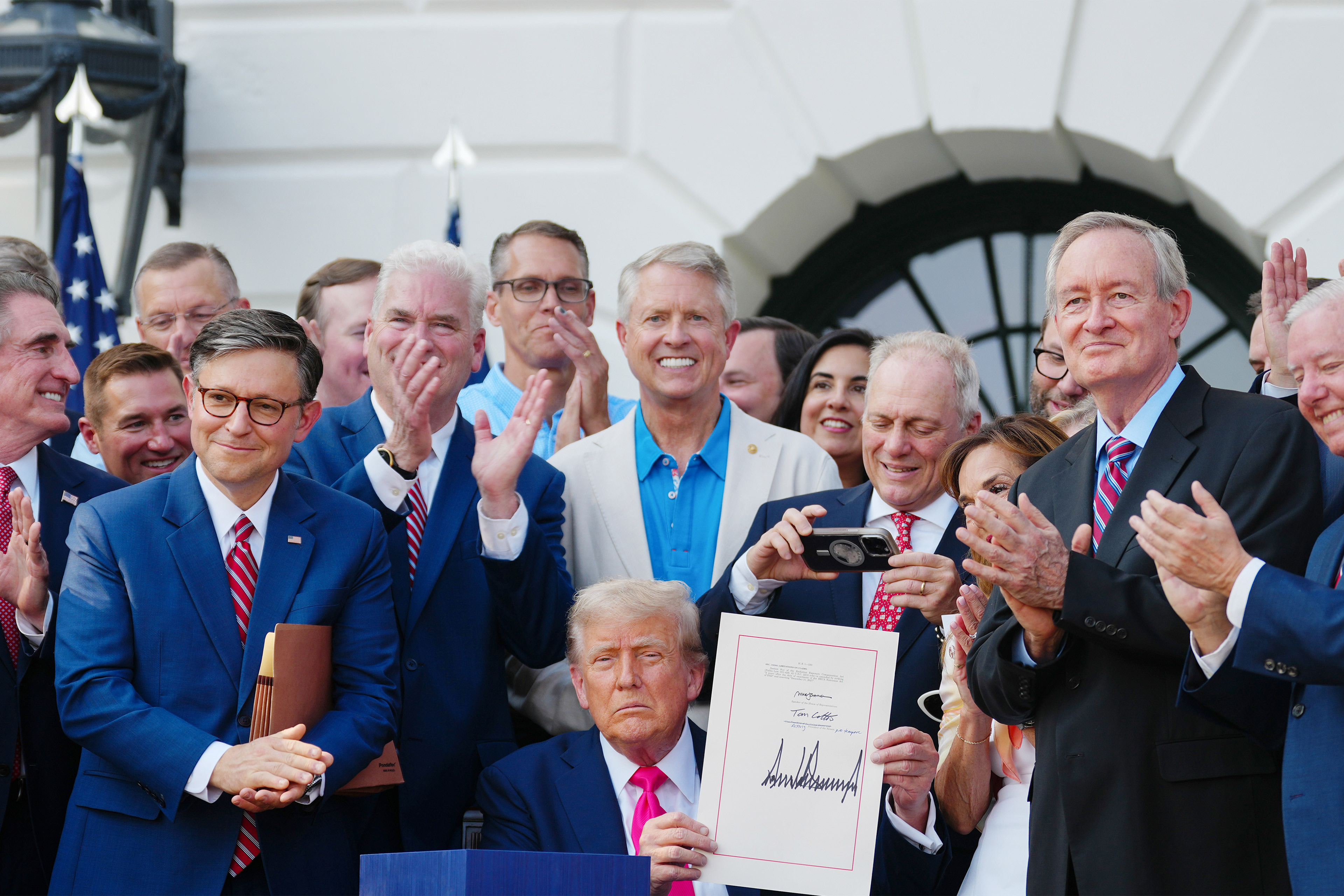
By Michelle L. Price and Ali Swenson - January 15, 2026WASHINGTON (AP) — President Donald Trump on Thursday announced the outlines of a health care plan he wants Congress to take up as Republicans have faced increasing pressure to address rising health costs after lawmakers let subsidies expire.
The cornerstone is his proposal to send money directly to Americans for health savings accounts so they can handle insurance and health costs as they see fit. Democrats have rejected the idea as a paltry substitute for the tax credits that had helped lower monthly premiums for many people.
“The government is going to pay the money directly to you,” Trump said in a taped video the White House released to announce the plan. “It goes to you and then you take the money and buy your own health care.”
Trump’s plan also focuses on lowering drug prices and requiring insurers to be more upfront with the public about costs, revenues, rejected claims and wait times for care.
Trump has long been dogged by his lack of a comprehensive health care plan as he and Republicans have sought to unwind former President Barack Obama’s signature legislation, the Affordable Care Act. Trump was thwarted during his first term in trying to repeal and replace the law.
When he ran for president in 2024, Trump said he had only “concepts of a plan” to address health care. His new proposal, short on many specifics, appeared to be the concepts of a plan.
Dr. Mehmet Oz, administrator of the Centers for Medicare and Medicaid Services, described it to reporters on a telephone briefing as a “framework that we believe will help Congress create legislation.”
It was not immediately clear if any lawmakers in Congress were working to introduce the Republican president’s plan. A White House official who was not authorized to speak publicly and described some details on condition of anonymity said the administration had been discussing the proposal with allies in Congress, but was unable to name any lawmakers who were working to address the plan.
Few specifics on health savings accounts
The White House did not offer any details about how much money it envisioned being sent to consumers to shop for insurance, or whether the money would be available to all “Obamacare” enrollees or just those with lower-tier bronze and catastrophic plans.
The idea mirrors one floated among Republican senators last year. Democrats largely rejected it, saying the accounts would not be enough to cover costs for most consumers. Currently, such accounts are used disproportionately by the wealthiest Americans, who have more income to fund them and a bigger incentive to lower their tax rate.
White House press secretary Karoline Leavitt was asked at her briefing Thursday whether the president could guarantee that under his plan, people would be able to cover their health costs. She did not directly answer, but said, “If this plan is put in place, every single American who has health care in the United States will see lower costs as a result.”
Enhanced tax credits that helped reduce the cost of insurance for the vast majority of Affordable Care Act enrollees expired at the end of 2025 even though Democrats had forced a 43-day government shutdown over the issue.
Sen. Bernie Moreno, R-Ohio, has been leading a bipartisan group of 12 senators trying to devise a compromise that would extend those subsidies for two years while adding new limits on who can receive them. That proposal would create the option, in the second year, of a health savings account that Trump and Republicans prefer.
The White House official denied that Trump was closing the door completely on those bipartisan negotiations, and said the White House preferred to send money directly to consumers.
Plan follows massive cuts to health programs
Trump’s plan comes months after the Republicans’ big tax and spending bill last year cut more than $1 trillion over a decade in federal health care and food assistance, largely by imposing work requirements on those receiving aid and shifting certain federal costs to the states.
Democrats have blasted those cuts as devastating for vulnerable people who rely on programs such as Medicaid for their health care. The GOP bill included an infusion of $50 billion over five years for rural health programs, an amount experts have said is inadequate to fill the gap in funding.
The White House said Trump’s new proposal will seek to bring down premiums by fully funding cost-sharing reductions, or CSRs, a type of financial help that insurers give to low-income ACA enrollees on silver-level, or mid-tier plans.
From 2014 until 2017, the federal government reimbursed insurance companies for CSRs. In 2017, the first Trump administration stopped making those payments. To make up for the lost money, insurance companies raised premiums for silver-level plans. That ended up increasing the financial assistance many enrollees got to help them pay for premiums.
As a result, health analysts say that while restoring money for CSRs would likely bring down silver-level premiums, as Trump says, it could have the unwelcome ripple effect of increasing many people’s net premiums on bronze and gold plans.
Lowering drug prices is a priority
Oz said Trump’s plans also seeks to have certain medications made available over the counter instead of by prescription if they are deemed safe enough. He mentioned higher-dose nonsteroidal anti-inflammatory drugs and peptic ulcer drugs as two examples.
It was unclear whether the White House is asking Congress to take steps to make more prescription drugs available over the counter. For decades, the Food and Drug Administration has had the ability to do that.
The heartburn drug Prilosec, as well as numerous allergy medications, are among those the FDA has approved for over-the-counter sales. The FDA only approves such changes if studies show patients can safely take the drug after reading the package labeling. Companies must apply for the switch.
The White House said Trump’s plan would also codify his efforts to lower drug prices by tying prices to the lowest price paid by other countries.
Trump has already struck deals with a number of drugmakers to get them to lower the prices. As part of that, the drugmakers have agreed to sell pharmacy-ready medicines directly to consumers who can shop online at the White House’s website for selling drugs directly to consumers, TrumpRx.gov.
TrumpRx did not yet have any drugs listed on Thursday. Oz said drugs will be available on the website at the end of the month.
Fact Sheet: President Donald J. Trump Calls on Congress to Enact The Great Healthcare Plan
Fact Sheet: President Donald J. Trump Calls on Congress to Enact The Great Healthcare Plan
Press Release From The White House - January 15, 2026
CALLING ON CONGRESS TO LOWER HEALTHCARE COSTS: Today, President Donald J. Trump called on Congress to enact the Great Healthcare Plan, a comprehensive plan to lower drug prices, lower insurance premiums, hold big insurance companies accountable, and maximize price transparency.
LOWERING DRUG PRICES: The Great Healthcare Plan lowers prescription drug prices for all Americans by building on President Trump’s historic actions to reduce costs for American patients.
- The Great Healthcare Plan calls for codifying the Trump Administration’s Most-Favored-Nation deals to get Americans the same low prices for prescription drugs that people in other countries pay. This would build off President Trump’s landmark actions that made insulin more affordable in his first term and the successful voluntary negotiations following his recent Executive Order to lower drug prices. Voluntarily negotiated deals with HHS/CMS will be grandfathered in.
- The Great Healthcare Plan makes more verified safe pharmaceutical drugs available for over-the-counter purchase. This will lower healthcare costs and increase consumer choice by strengthening price transparency, increasing competition, and reducing the need for costly and time-consuming doctor’s visits.
LOWERING INSURANCE PREMIUMS: The Great Healthcare Plan would execute the President’s vision to send money directly to the American people, lower health insurance premiums, and cut kickbacks that raise insurance premiums.
- The Great Healthcare Plan stops sending big insurance companies billions in extra taxpayer-funded subsidy payments and instead send that money directly to eligible Americans to allow them to buy the health insurance of their choice.
- The Great Healthcare Plan funds a cost-sharing reduction program for healthcare plans which would save taxpayers at least $36 billion and reduce the most common Obamacare plan premiums by over 10% according to the Congressional Budget Office.
- The Great Healthcare Plan will end the kickbacks paid by pharmacy benefit managers (PBMs) to the large brokerage middlemen that deceptively raise the cost of health insurance.
HOLDING BIG INSURANCE COMPANIES ACCOUNTABLE: The Great Healthcare Plan ends the days of insurance companies using complexity to make it difficult for Americans to hold them to account by creating the “Plain English” insurance standard and requiring insurance companies to prominently post the profits they take out of premiums as well as information on the frequency with which they deny care.
- The Great Healthcare Plan creates the “Plain English” insurance standard by requiring health insurance companies to publish rate and coverage comparisons upfront on their websites in plain English—not industry jargon—so consumers can make better insurance purchasing decisions.
- The Great Healthcare Plan will require health insurance companies to publish the percentage of their revenues that are paid out to claims versus overhead costs and profits on their websites.
- The Great Healthcare Plan will require health insurance companies to publish the percentage of insurance claims they reject and average wait times for routine care on their websites.
MAXIMIZING PRICE TRANSPARENCY: The Great Healthcare Plan requires any healthcare provider or insurer who accepts Medicare or Medicaid to prominently post their pricing and fees in their place of business and ensure insurance companies are complying with price transparency requirements.
- In President Trump’s first term, he issued historic regulations requiring hospitals and insurance companies to post prices in various forms.
- The Biden Administration failed to enforce these requirements and took no actions to help patients access actual prices.
- The Great Healthcare Plan requires all healthcare providers and insurers to answer to their patients up front on the prices they will be charged—restoring accountability, transparency, and rightly giving power back to patients.
DELIVERING ON PROMISES TO LOWER THE COST OF HEALTHCARE: President Trump promised to lower healthcare costs for ALL Americans and The Great Healthcare Plan will build off of critical actions already taken in his second term to help Americans afford high-quality healthcare.
- On May 12, 2025, President Trump signed an Executive Order titled “Delivering Most-Favored-Nation Prescription Drug Pricing to American Patients” directing the Administration to take numerous actions to bring American drug prices in line with those paid by similar nations. Since that time, the Administration has secured 16 deals with major pharmaceutical manufacturers to bring prices in line with those paid in other developed nations, providing substantial price relief on numerous products taken by millions of Americans.
- Shortly after returning to office, President Trump signed an Executive Order titled “Making America Healthy Again by Empowering Patients with Clear, Accurate, and Actionable Healthcare Pricing Information,” directing the Administration to, after years of neglect by the Biden Administration, promote universal access to clear and accurate healthcare prices. Since that time, the Centers for Medicare and Medicaid Services has ramped up enforcement against hospitals out of compliance with price transparency rules, finalized improvements to hospital price transparency rules, and proposed significant improvements to price transparency rules for insurance companies.
- In his historic Working Families Tax Cuts law, President Trump expanded access to health savings accounts for up to ten million people on Obamacare, took the most significant actions to reduce healthcare fraud and abuse in history, and made the largest investment in rural healthcare ever.

Currently, such accounts are used disproportionately by the wealthiest Americans, who have more income to fund them and a bigger incentive to lower their tax rate.
Don't let the AP's snark or Republican foot-dragging fool you.
I, as a part-time, anything but wealthy nurse, had access to an HSA and loved it.
The debate here is about who controls healthcare. The President's proposal gives control to individuals; status quo grants it to corporate insurance and government rule-makers.
Consumer shopping forces insurance plans to back off control and serve demand. They really, really don't like that. And neither do their congressional patsies.
Get MHF Insights
News and tips for your healthcare freedom.
We never spam you. One-step unsubscribe.
Sponsors

J & DE Family Charitable Fund

Friends
of MHF

Kelly Grotendiek
Philip Harbach
Dale Johnson
Drs. Jeffrey and Joni Jones
Vickie Kahle
Tammy Kipen
Marlin & Kathy Klumpp
Melanie Kurdys
Ruth Nobel
Patrick Peterson
Stephanie Poortenga
Jeanne Smit
Ben and Hope Staal
John Tuinstra
Jacki VanHuis
Sandy Walker
Sign Up for MHF Insights to keep up on the latest in Michigan Health Policy






