













Michigan healthcare freedom community forum

Several stories in the media indicate that Republicans and Democrats in the U.S. Senate are far apart in their perceptions of health care, and that there are major disagreements even within the parties. This was reflected in the most recent hearings of the Senate Finance Committee.
Two stories on this situation. First, from Michigan Advance:
Spiraling health insurance costs stymie members of US Senate panel
By Jennifer Shutt - November 19, 2025WASHINGTON — U.S. senators began debating how to reduce health care costs for Americans during a hearing Wednesday, where experts’ varied recommendations and comments from lawmakers previewed the rocky and potentially long path ahead.
Republicans on the Finance Committee argued the Affordable Care Act, or Obamacare, has led to a spike in health insurance costs for individuals that shouldn’t be offset by tax credits any longer.
Democrats urged their colleagues to extend the enhanced subsidies for at least another year to give Congress more time to address larger, more complex issues within the country’s health insurance and health care systems.
Committee Chairman Mike Crapo, R-Idaho, said the hearing marked “the first step in building the foundation for” health care reform.
“We need both short-term and long-term solutions,” Crapo said. “In the short term, we cannot simply throw good money after bad policy. If we keep advancing a system that drives up premiums, we will make this problem even harder to solve.”
“Instead, we should set the groundwork for giving Americans more control over their health care choices,” Crapo added. “Rather than accepting the current system of giving billions of taxpayer dollars to insurers, we should consider providing financial assistance directly to consumers through health savings accounts, which are now available on the Obamacare exchanges through a provision in the One Big Beautiful Bill.”
Such tax-advantaged accounts are used to save money to pay for medical expenses and generally are used in conjunction with a high-deductible insurance plan, but an HSA “is a trust/custodial account and is not health insurance,” according to the Congressional Research Service.
The ACA, signed into law by President Barack Obama in 2010, overhauled the U.S. health care system with the intent of reducing high rates of uninsured people and ending insurance industry practices such as exclusions based on pre-existing conditions and the sale of policies with high costs and skimpy coverage. The law also expanded Medicaid and, for individual coverage, introduced the health insurance exchanges, or marketplaces, that now are at issue.
According to the health organization KFF, the number of uninsured Americans fell from about 14% to 16% in the years preceding passage of the law to a record low of 7.7% in 2023.
Pessimism about health care action
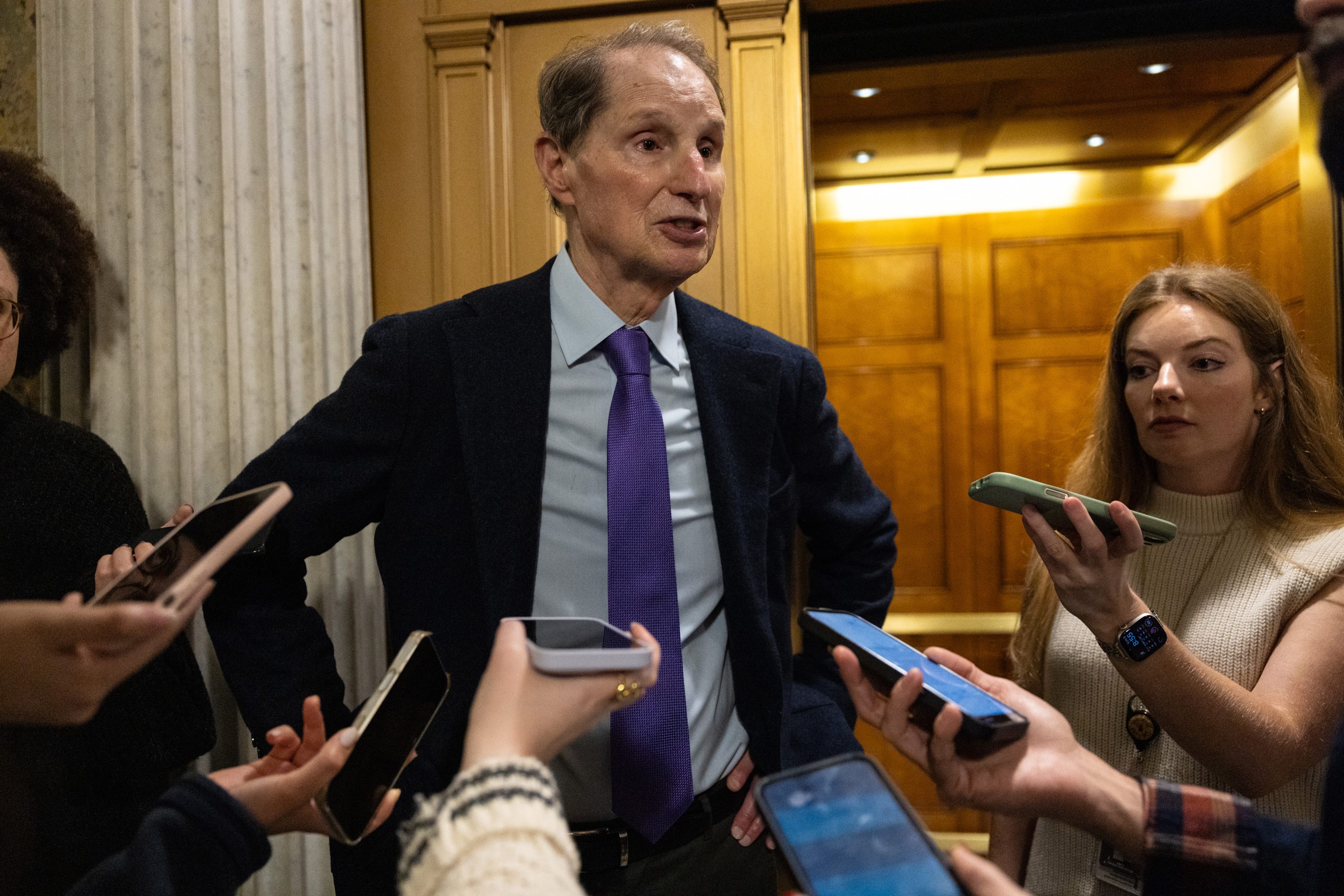
Oregon Sen. Ron Wyden, the top Democrat on the panel, rebuked Republicans for focusing on other policy areas throughout the year instead of making improvements to health care.
“Sitting on your hands has consequences,” he said.
Wyden doesn’t see a way for Congress to extend the enhanced tax credits set to expire at the end of the year for people who get their health insurance from the ACA marketplace, despite Democrats pressing for that during the 43-day government shutdown that ended in mid-November.
Wyden expressed support for working with Republican senators to address health insurance companies’ structure, though he said he is “skeptical” his GOP colleagues will actually approve legislation on that particular issue in the months ahead.
“Now if they are serious about taking on the crooks that dominate big insurance, like UnitedHealthcare, I’m all in,” Wyden said. “In my view that starts with a laser focus on lower costs for consumers, going after fraud where it truly exists, and cracking down on middlemen.”
‘Very little that this Congress can do’
Douglas Holtz-Eakin, president at the center-right American Action Forum and former chief economist at the Council for Economic Advisers during the President George W. Bush administration, told the committee the structure of the Affordable Care Act poses problems.
“As a piece of health policy, economic policy and budget policy, the ACA has always been a troubling construct,” Holtz-Eakin said, later adding there is “very little that this Congress can do to change the outlook” for 2026.
Holtz-Eakin testified that Congress is long “overdue for a real rethinking of health care policy at the federal level” that he believes should focus on two primary areas.
The first is to “rationalize the insurance subsidies” and the second is to address what he referred to as “high-value care,” which he said should include Medicare, the health program that covers 69 million Americans over 65 and some people with disabilities.
“Medicare is a great budgetary threat, and so I encourage the committee and the Congress as a whole to take a hard look at that and make some progress toward better health care outcomes and better budgetary outcomes,” Holtz-Eakin said.
Jason Levitis, senior fellow of the Health Policy Division at the left-leaning Urban Institute and a Treasury employee who led the ACA implementation at the department during the Obama administration, urged lawmakers to address the “too complicated and segmented” health insurance marketplace.
Levitis said the best short-term option for Congress would be to extend the enhanced tax credits for ACA enrollees during 2026, despite the time crunch.
“At this point the only feasible option is a clean extension of the existing enhancements,” Levitis said. “The marketplaces have already built that option and have been preparing for months for the possibility of an extension.”
Former Trump adviser says ACA ‘failed’
Brian Blase, president of the Paragon Health Institute and a former special assistant to President Donald Trump at the White House National Economic Council, said bluntly that the Affordable Care Act has “failed.”
“The law entrenched an inefficient insurance-dominated health sector with massive subsidies flowing straight from the Treasury to health companies,” Blase said.
The subsidies for ACA marketplace plans, he said, were “ill-designed and inflationary,” urging lawmakers not to extend them for another year.
“The enrollee share of the premium is capped regardless of the total premium. When enrollees pay only a small slice of the premium or no premium at all, insurers face almost no price discipline,” Blase said. “Insurers can raise premiums knowing the taxpayers will absorb almost all of the increase.”
Blase said he believes the ACA’s regulations on health insurance companies are one of the reasons costs have spiked.
“For example, under the medical loss ratio, insurers must spend a minimum share of premium revenue on medical claims. In other words, to increase profits, insurers must increase premiums,” Blase said. “The ACA’s essential health benefits require plans to cover the same set of services regardless of what people want or need. These rules increase premiums and wasteful spending.”
The medical loss ratio was included in the ACA in response to insurers who spent “a substantial portion” of premiums on administrative costs and profits, including executive salaries, overhead and marketing, according to the Centers for Medicare and Medicaid Services.
‘We all believe we need to reform’
Senate Majority Leader John Thune, R-S.D., told reporters separately from the hearing the debate over how to restructure health insurance to bring down costs has highlighted the “differences of opinion” among GOP lawmakers.
“We’ve got a lot of people who have strong views, but the one thing that unites us is we all believe we need to reform, and we’ve got to do something to drive health care costs down,” Thune said.
GOP leaders, he added, are “looking for solutions that will lower health care premiums, not increase them. And what we see today is just constant inflationary impacts from some of these policies of the past.”
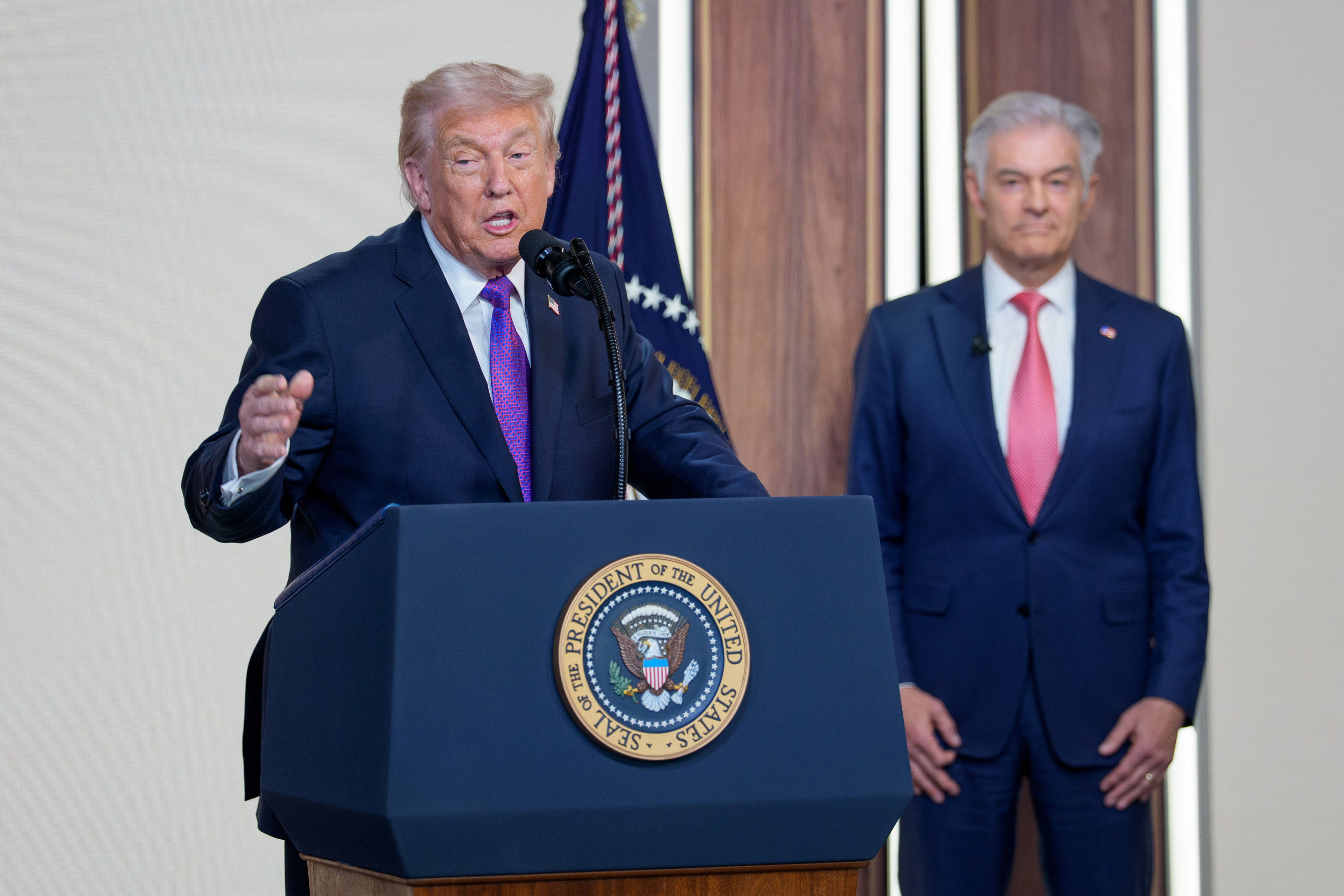
Trump, who would need to support any health care overhaul bill for it to move through Congress, wrote in a social media post Tuesday that he wants lawmakers to send money straight to Americans, without detail on how that would work.
“THE ONLY HEALTHCARE I WILL SUPPORT OR APPROVE IS SENDING THE MONEY DIRECTLY BACK TO THE PEOPLE, WITH NOTHING GOING TO THE BIG, FAT, RICH INSURANCE COMPANIES, WHO HAVE MADE $TRILLIONS, AND RIPPED OFF AMERICA LONG ENOUGH,” Trump wrote. “THE PEOPLE WILL BE ALLOWED TO NEGOTIATE AND BUY THEIR OWN, MUCH BETTER, INSURANCE. POWER TO THE PEOPLE! Congress, do not waste your time and energy on anything else. This is the only way to have great Healthcare in America!!! GET IT DONE, NOW. President DJT”
From Roll Call:
https://rollcall.com/2025/11/19/senate-appears-polarized-as-health-care-subsidy-cliff-nears/
Senate appears polarized as health care subsidy cliff nears
Members found no middle ground on how to lower costs for those relying on expiring tax credits
Tillis says there's too much “cross talk” in the health insurance debate.
By Sandhya Raman - November 19, 2025GOP health panel leaders in the Senate on Wednesday seemed intent on quickly implementing a health savings account proposal to replace expanded health care tax credits that subsidize insurance plans used by millions of Americans, despite increased skepticism from Democrats and even some House Republicans.
During a Senate Finance Committee hearing on health care affordability, lawmakers largely stuck to party-line questioning over skyrocketing costs for Affordable Care Act health plans, suggesting no easy compromise is imminent.
The ACA’s enhanced subsidies, relied on by roughly one-third of enrollees to lower premiums, expire Dec. 31. Before that deadline, by mid-December, the Senate is expected to vote on a bill of Democrats’ choosing under a promise by Senate Majority Leader John Thune, R-S.D., to party moderates in exchange for their votes to reopen the government earlier this month.
As it stands, there likely will be votes on competing health care affordability bills, each of which is seen by the opposite side as highly partisan.
Finance Chairman Michael D. Crapo, R-Idaho, said a bipartisan solution was still possible. He referenced the need to work on telehealth flexibility, clinical payment reform and oversight of pharmacy benefit managers.
But his remarks and questioning focused on transitioning away from the enhanced health subsidies toward providing individuals with funds in health savings accounts that could be used to pay for some medical expenses. Health, Education, Labor and Pensions Chair Bill Cassidy, R-La., who also serves on Finance, has led efforts on shaping that proposal.
Bronze plans
Cassidy deflected Democrats’ concerns that shifting eligible ACA enrollees to HSA-style accounts would be unwieldy given changes to how bronze-level plans — the lowest-cost option on the exchanges — are classified under the 2025 GOP reconciliation law. That law designated bronze plans as high-deductible health plans that are eligible for use with HSAs starting next year.
Rather than adding a layer of complexity, Cassidy argued that reconciliation law change would make his plan easier to implement, as ACA enrollees could simply select bronze plans and top them off with the new, beefed-up HSAs.
Several House Republicans have said the idea has merit but isn’t ready to be implemented.
Ron Wyden, the Finance panel’s ranking member, maintained that the only solution for Democrats was a clean extension of the COVID-19-era subsidies — the “bare minimum” before delving into longer-term problem-solving.
“There is a health cost freight train, I would say to my colleagues, that is hurtling into view as we speak,” said Wyden, D-Ore. “There is no way for Congress to put together a proposal in the next couple of weeks that’s going to help people in January. It just can’t be done.”
The idea of health savings accounts hasn’t been embraced by some members who are looking to work across the aisle.
Sen. Jeanne Shaheen, D-N.H., who’s among the Democrats working on a bipartisan path to extend the enhanced credits, said she’s not sold on Cassidy’s proposal.
“It doesn’t address the immediate need that people have because health savings accounts expressly prohibit using the funding to pay for premiums, and it’s the premium increase that people are concerned about,” Shaheen said in a brief interview Tuesday.
Abortion
Members also butted heads on whether any extension of the credits or other changes should include abortion-related language.
“It is imperative that any reforms explicitly restore the long-standing consensus that taxpayer dollars should not subsidize and facilitate health plans that cover elective abortions,” Sen. Steve Daines, R-Mont., said.
Sen. Tina Smith, D-Minn., blamed the focus on the abortion language on advocacy by the anti-abortion group SBA Pro-Life America.
“They are working to use this health care crisis as another way of getting basically a national ban on insurance paying for abortion care … even if people are paying for it with their own money,” Smith said.
Wyden said that adding Hyde amendment language, which bans federal funding of abortion, into the tax code was a nonstarter.
“I want to make the point now very clearly that on our watch, on this side of the dais, that’s not going to happen,” he said.
At least one senator was frustrated by the lack of progress.
“We’ve got to stop having this cross talk and talking past each other,” said Sen. Thom Tillis, R-N.C. “We are not going to get anything out of this hearing.”
“You can argue whether or not the subsidies should have been passed but they are what they are and people are reliant on them,” Tillis said. “It makes more sense to extend it and bend the curve in the out years.”
Timing
Witnesses at the Finance hearing emphasized the time-sensitive nature of the issue.
Douglas Holtz-Eakin, president of the American Action Forum, was skeptical that much could be done for plan year 2026.
“The plans have been designed, the premiums have been set,” said Holtz-Eakin, a Republican former Congressional Budget Office director and economic adviser to former President George W. Bush. “There’s very little that this Congress can do to change the outlook.”
Brian Blase, president of the Paragon Health Institute, suggested that lawmakers take three actions in the short term.
“Congress should expand more affordable and flexible coverage options for families and small employers without new federal spending,” said Blase, who served in the first Trump administration.
He also called for appropriating funds for cost-sharing reductions for some silver-level plans, while letting lower-income individuals use Cassidy’s health savings model.
“At this point, the only feasible option is a clean extension of the existing enhancements,” said Jason Levitis, a senior fellow in the health policy division at the Urban Institute who served in the Obama administration. “Putting in place a new policy would require months or years of implementation, setting aside the need to negotiate and pass a bill.”
Levitis said that while it was important to consider longer-term options, new policies could also require building and deploying new information technology systems or establishing new rulemaking or state insurance regulations.
Get MHF Insights
News and tips for your healthcare freedom.
We never spam you. One-step unsubscribe.
Sponsors

J & DE Family Charitable Fund

Friends
of MHF

Kelly Grotendiek
Philip Harbach
Dale Johnson
Drs. Jeffrey and Joni Jones
Vickie Kahle
Tammy Kipen
Marlin & Kathy Klumpp
Melanie Kurdys
Ruth Nobel
Patrick Peterson
Stephanie Poortenga
Jeanne Smit
Ben and Hope Staal
John Tuinstra
Jacki VanHuis
Sandy Walker
Sign Up for MHF Insights to keep up on the latest in Michigan Health Policy