










Michigan healthcare freedom community forum

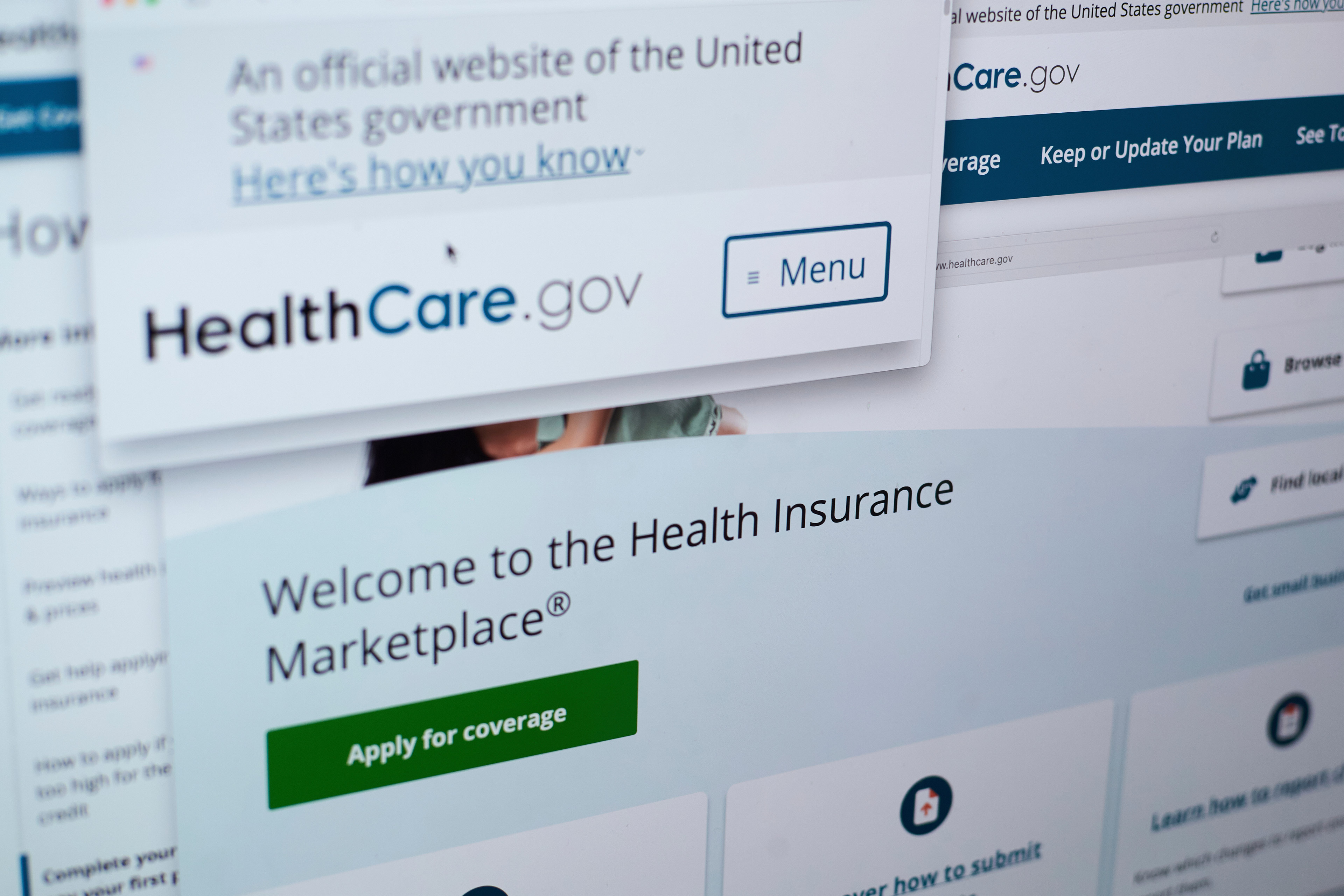
The Biden Administration has gone to great lengths to conceal the costs of health care provided to all the 'newcomers' they are welcoming at America's southern border. Illegal aliens were largely barred from receiving most health care benefits available to American citizens and other legal residents, but last year the Biden administration announced several changes to allow some illegal aliens access to Medicaid and the Obamacare health care exchanges.
Even before this change, illegal aliens received medical care through a variety of taxpayer-funded means, and many jurisdictions have doled out additional 'free' health care benefits. Hospitals participating in Medicare, regardless of the type of hospital, even those without emergency departments, must provide basic emergency care regardless of compensation. This CMS 'Duty to Care' ER mandate conceals most illegal immigrant health care costs in hospital billings charged to paying American citizens, legal residents, and their insurance plans.
None of the mainstream media will investigate this drain on the American health care system, but both The Epoch Times and the U.S. House of Representatives Homeland Security Committee have:
https://homeland.house.gov/wp-content/uploads/2023/11/Phase4Report.pdf
Illegal Immigrants Leave US Hospitals With Billions in Unpaid Bills
Hospital systems struggle as uninsured illegal immigrants use them as their free health care destinationBy Autumn Spredemann - March 17, 2024
Tens of thousands of illegal immigrants are flooding into U.S. hospitals for treatment and leaving billions in uncompensated health care costs in their wake.
The House Committee on Homeland Security recently released a report illustrating that from the estimated $451 billion in annual costs stemming from the U.S. border crisis, a significant portion is going to health care for illegal immigrants.
With the majority of the illegal immigrant population lacking any kind of medical insurance, hospitals and government welfare programs such as Medicaid are feeling the weight of these unanticipated costs.Apprehensions of illegal immigrants at the U.S. border have jumped 48 percent since the record in fiscal year 2021 and nearly tripled since fiscal year 2019, according to Customs and Border Protection data.
Last year broke a new record high for illegal border crossings, surpassing more than 3.2 million apprehensions.And with that sea of humanity comes the need for health care and, in most cases, the inability to pay for it.
In January, CEO of Denver Health Donna Lynne told reporters that 8,000 illegal immigrants made roughly 20,000 visits to the city’s health system in 2023.
The total bill for uncompensated care costs last year to the system totaled $140 million, said Dane Roper, public information officer for Denver Health. More than $10 million of it was attributed to “care for new immigrants,” he told The Epoch Times.
Though the amount of debt assigned to illegal immigrants is a fraction of the total, uncompensated care costs in the Denver Health system have risen dramatically over the past few years.
The total uncompensated costs in 2020 came to $60 million, Mr. Roper said. In 2022, the number doubled, hitting $120 million.
He also said their city hospitals are treating issues such as “respiratory illnesses, GI [gastro-intestinal] illnesses, dental disease, and some common chronic illnesses such as asthma and diabetes.”
“The perspective we’ve been trying to emphasize all along is that providing healthcare services for an influx of new immigrants who are unable to pay for their care is adding additional strain to an already significant uncompensated care burden,” Mr. Roper said.
He added this is why a local, state, and federal response to the needs of the new illegal immigrant population is “so important.”
Colorado is far from the only state struggling with a trail of unpaid hospital bills.
Dr. Robert Trenschel, CEO of the Yuma Regional Medical Center situated on the Arizona–Mexico border, said on average, illegal immigrants cost up to three times more in human resources to resolve their cases and provide a safe discharge.
“Some [illegal] migrants come with minor ailments, but many of them come in with significant disease,” Dr. Trenschel said during a congressional hearing last year.
“We’ve had migrant patients on dialysis, cardiac catheterization, and in need of heart surgery. Many are very sick.”
He said many illegal immigrants who enter the country and need medical assistance end up staying in the ICU ward for 60 days or more.
A large portion of the patients are pregnant women who’ve had little to no prenatal treatment. This has resulted in an increase in babies being born that require neonatal care for 30 days or longer.
Dr. Trenschel told The Epoch Times last year that illegal immigrants were overrunning healthcare services in his town, leaving the hospital with $26 million in unpaid medical bills in just 12 months.
ER Duty to Care
The Emergency Medical Treatment and Labor Act of 1986 requires that public hospitals participating in Medicare “must medically screen all persons seeking emergency care … regardless of payment method or insurance status.”
The numbers are difficult to gauge as the policy position of the Centers for Medicare & Medicaid Services (CMS) is that it “will not require hospital staff to ask patients directly about their citizenship or immigration status.”
In southern California, again close to the border with Mexico, some hospitals are struggling with an influx of illegal immigrants.
American patients are enduring longer wait times for doctor appointments due to a nursing shortage in the state, two health care professionals told The Epoch Times in January.
A health care worker at a hospital in Southern California, who asked not to be named for fear of losing her job, told The Epoch Times that “the entire health care system is just being bombarded” by a steady stream of illegal immigrants.
“Our healthcare system is so overwhelmed, and then add on top of that tuberculosis, COVID-19, and other diseases from all over the world,” she said.
A newly-enacted law in California provides free healthcare for all illegal immigrants residing in the state. The law could cost taxpayers between $3 billion and $6 billion per year, according to recent estimates by state and federal lawmakers.
In New York, where the illegal immigration crisis has manifested most notably beyond the southern border, city and state officials have long been accommodating of illegal immigrants’ healthcare costs.Since June 2014, when then-mayor Bill de Blasio set up The Task Force on Immigrant Health Care Access, New York City has worked to expand avenues for illegal immigrants to get free health care.
“New York City has a moral duty to ensure that all its residents have meaningful access to needed health care, regardless of their immigration status or ability to pay,” Mr. de Blasio stated in a 2015 report.
The report notes that in 2013, nearly 64 percent of illegal immigrants were uninsured. Since then, tens of thousands of illegal immigrants have settled in the city.
“The uninsured rate for undocumented immigrants is more than three times that of other noncitizens in New York City (20 percent) and more than six times greater than the uninsured rate for the rest of the city (10 percent),” the report states.
The report states that because healthcare providers don’t ask patients about documentation status, the task force lacks “data specific to undocumented patients.”
Some health care providers say a big part of the issue is that without a clear path to insurance or payment for non-emergency services, illegal immigrants are going to the hospital due to a lack of options.
“It’s insane, and it has been for years at this point,” Dana, a Texas emergency room nurse who asked to have her full name omitted, told The Epoch Times.
Working for a major hospital system in the greater Houston area, Dana has seen “a zillion” migrants pass through under her watch with “no end in sight.” She said many who are illegal immigrants arrive with treatable illnesses that require simple antibiotics. “Not a lot of GPs [general practitioners] will see you if you can’t pay and don’t have insurance.”
She said the “undocumented crowd” tends to arrive with a lot of the same conditions. Many find their way to Houston not long after crossing the southern border. Some of the common health issues Dana encounters include dehydration, unhealed fractures, respiratory illnesses, stomach ailments, and pregnancy-related concerns.
“This isn’t a new problem, it’s just worse now,” Dana said.
Medicaid Factor
One of the main government healthcare resources illegal immigrants use is Medicaid.
All those who don’t qualify for regular Medicaid are eligible for Emergency Medicaid, regardless of immigration status. By doing this, the program helps pay for the cost of uncompensated care bills at qualifying hospitals.
However, some loopholes allow access to the regular Medicaid benefits. “Qualified noncitizens” who haven’t been granted legal status within five years still qualify if they’re listed as a refugee, an asylum seeker, or a Cuban or Haitian national.
Yet the lion’s share of Medicaid usage by illegal immigrants still comes through state-level benefits and emergency medical treatment.
A Congressional report highlighted data from the CMS, which showed total Medicaid costs for “emergency services for undocumented aliens” in fiscal year 2021 surpassed $7 billion, and totaled more than $5 billion in fiscal 2022.
Both years represent a significant spike from the $3 billion in fiscal 2020.An employee working with Medicaid who asked to be referred to only as Jennifer out of concern for her job, told The Epoch Times that at a state level, it’s easy for an illegal immigrant to access the program benefits.
Jennifer said that when exceptions are sent from states to CMS for approval, “denial is actually super rare. It’s usually always approved.”
She also said it comes as no surprise that many of the states with the highest amount of Medicaid spending are sanctuary states, which tend to have policies and laws that shield illegal immigrants from federal immigration authorities.
Moreover, Jennifer said there are ways for states to get around CMS guidelines. “It’s not easy, but it can and has been done.”
The first generation of illegal immigrants who arrive to the United States tend to be healthy enough to pass any pre-screenings, but Jennifer has observed that the subsequent generations tend to be sicker and require more access to care. If a family is illegally present, they tend to use Emergency Medicaid or nothing at all.
The Epoch Times asked Medicaid Services to provide the most recent data for the total uncompensated care that hospitals have reported. The agency didn’t respond.
Related Legislation
In Florida, a new 2023 law requires hospitals that accept Medicaid to collect and submit to the state information on patients’ immigration status (although the person can decline to answer). Gov. Ron DeSantis said the legislation is “fighting back against reckless federal government policies and ensuring the Florida taxpayers are not footing the bill for illegal immigration.”
The Epoch Times requested the most recent report detailing the total uncompensated care costs attributed to illegal immigrants from the Florida Agency for Health Care Administration, but didn’t receive a response.
The Jackson Health System in Florida offers a discount on services to those without insurance, but they don’t make payment arrangements. A representative named Elsie told The Epoch Times, “We do offer a 70 percent discount to a patient that does not have insurance; however, they must have no insurance at all. The 70 percent discount is offered off the total charge of the bill.”
When asked what happens if a patient refuses to give an ID or provide any personal information at the hospital, Elsie said another department gets involved. “If they are refusing to give information and want to be seen [by a doctor], the escalation team goes ahead to review all that information to see the reason behind why they don’t want to provide information at the time of service.”
Other state legislators have also decried the amount of taxpayer money going to illegal immigrant healthcare.
In Illinois, the state’s “program of health benefits for undocumented immigrants is estimated to cost $990 million” for fiscal year 2024, said state Rep. Norine Hammond, a Republican, during a 2023 press conference.
She said it’s a $768 million, or 346 percent, increase over fiscal year 2023.
“Illinois taxpayers are already on the hook for more than $2 billion in costs to provide free healthcare benefits to illegal immigrants. When is enough enough?” state Rep. C.D. Davidsmeyer said in a November 2023 statement. Mr. Davidsmeyer filed legislation in October 2023 to repeal the TRUST Act, ending Illinois’ status as a sanctuary state for illegal immigrants.
In Maryland, lawmakers are seeking to create private insurance options. On March 8, the Maryland Senate passed the Access to Care Act, which would allow illegal immigrants to buy health insurance in the state.
Some members of Congress have also been spurred into action.
On Jan. 17, Rep. Richard Hudson (R-N.C.) and Rep. Brett Guthrie (R-Ky.) introduced the Protect Medicaid Act, which aims to “prevent federal taxpayer dollars from being used to administer or provide Medicaid benefits to illegal immigrants.”
“Liberal states, like California, have abused loopholes to provide Medicaid to illegal immigrants at the expense of hardworking taxpayers,” Mr. Hudson said. “Not only is this against the law, but it further incentivizes more illegal crossings at our border.”
Without officially abandoning their woke rhetoric, Illinois' very blue government has quietly abandoned their healthcare for all due to "budget concerns":
Illinois Moves to Cut Thousands of Non-Citizens From Taxpayer-Subsidized Health Care
Illinois is struggling to contain soaring costs for its program, which covers illegal immigrants.By Zachary Stieber - March 20, 2024
Illinois officials are moving to stop providing taxpayer-subsidized health care to thousands of non-citizens, including many illegal immigrants, in a bid to rein in soaring costs.
The Illinois Department of Healthcare and Family Services said in a recent statement it will start annually verifying the eligibility for two programs—Health Benefits for Immigrant Adults (HBIA) and Health Benefits for Immigrant Seniors (HBIS)—after enrollment was paused due to budget concerns.
“This process will mirror the redetermination process used in the traditional Medicaid program to ensure those enrolled remain eligible,” the agency said.
The plans include closing cases for people who are enrolled who make over a certain amount or who otherwise are no longer eligible for the program in which they’re enrolled. Officials also plan on removing legal permanent residents who qualify for Medicaid, which is a federal program.
“The redetermination process ensures that those who are enrolled remain eligible for coverage,” Illinois Department of Healthcare and Family Services spokesperson Jamie Munks told WBEZ. “If an individual loses coverage through the redetermination process, it is because they no longer meet eligibility requirements, or they are required to respond or submit additional information to prove their continued eligibility, but they do not do so.”
The processes are estimated to reduce the number of enrollees in the state programs by about 6,000 people, state Sen. Don DeWitte, a Republican, told the Center Square after hearing from state health officials. Those removals would result in savings of $14 million.
HBIS, launched in 2020, provides taxpayer-funded health care for seniors who would receive Medicaid coverage but can’t get it due to their immigration status. HBIA, introduced in 2022, provides the same state benefits for people aged 42 to 64. Illegal immigrants are among the approximately 63,000 covered.
“Everyone, regardless of documentation status, deserves access to holistic healthcare coverage,” Illinois Gov. J.B. Pritzker, a Democrat, said in one of his statements in support of the programs.
Many Republicans have opposed the programs, noting that some citizens still lack health care.
The costs of the programs have increasingly sparked concern among lawmakers of both parties.
Each person aged 55 or older costs about $1,168 a month, while the rest cost about $750 a month, according to the Illinois Department of Healthcare and Family Services. Total monthly costs soared to $71 million in August 2023. Illinois paused enrollment in 2023 after projecting it would cost $831 million for fiscal year 2024 and spike to $1.1 billion if no restrictions were implemented. Lawmakers had only approved $550 million for the programs for the fiscal year.
Health officials said the growing costs stemmed in part from covered populations suffering from “untreated chronic conditions.”
Mr. Pritzker, in his recently submitted fiscal 2025 budget, asked for $629 million in funding for the program.
Fees Introduced
The Illinois Department of Healthcare and Family Services said in 2023, as it paused enrollment, that it would also be imposing co-pays for certain hospital services that were not eligible for federal money.
The new fees included $250 for an inpatient hospitalization, $100 for a visit to an emergency room, and 10 percent of what the department would pay providers for non-emergency outpatient services.
The agency said at the time that the changes would help bring down costs while describing the programs as “a vital resource for individuals who would otherwise be eligible for Medicaid but for their immigration status.”
The agency later rolled back the emergency room visit co-pay, under pressure from activists.
The rollback came after officials said they checked with the U.S. Centers for Medicare & Medicaid Services, which conveyed that states can ask for reimbursement for all emergency room visits, regardless of the patient’s immigration status.
“This decision will keep Illinoisans safer and allow them to seek the healthcare they need in emergencies,” Tovia Siegel, director of the Healthy Illinois Campaign, an activist group, said in a statement.
The other co-pays were kept in place. The agency said they would help ensure costs came down. Ms. Siegel said they would be “a significant burden on both providers and patients, limiting access to healthcare for Illinois’ immigrant community.”
"Socialist governments traditionally do make a financial mess. They always run out of other people's money."
Margaret Thatcher interview on This Week, Thames TV, 5 February 1976
Our Governor has figured out how to stem Michigan's population decline and increase the drain on our healthcare system:
https://www.michigan.gov/ogm/services/newcomer-rental-subsidy
Michigan Office of Global MichiganNewcomer Rental Subsidy
The Newcomer Rental Subsidy program provides Refugees and other Newcomer population-eligible households with rental assistance up to $500 per month for up to 12 months, with eligibility based on immigration status and household income.
Many refugees and other newcomers face critical housing challenges, and this program will increase access to better and more affordable housing opportunities while supporting a more rapid social integration to refugees and other newcomer populations to Michigan.
Eligibility and Immigration Status
A beneficiary must have an eligible immigration status as defined by the Office of Refugee Resettlement which includes:
Refugees
Asylees
Special Immigration Visa (SIV)
Victims of Human Trafficking
Cuban and Haitian entrants
Afghan Nationals, and
Ukrainian Humanitarian Parolees.Other immigration statuses include individuals who arrived under the Cuban, Haitian, Nicaraguan and Venezuelan (CHNV) program; individuals who arrived under the Family Reunification Parole Process for El Salvador, Guatemala, Honduras, and Colombia, individuals with a pending asylum application, and other immigrant individuals on a case-by-case scenario.
Eligibility and Household Income
Applicants must be renting individuals or households who are experiencing housing instability; and:
Under 85% of the Federal Poverty Limit, or
Live in Qualified Census Tract area, or
Have an income at or below 60% of Area Median Income (AMI) and receive any of the following federal assistance:Temporary Assistance for Needy Families (TANF), Supplemental Nutrition Assistance Program (SNAP), Free and Reduced-Price Lunch (NSLP) and/or School Breakfast (SBP) programs, Medicare Part D Low-income Subsidies, Supplemental Security Income (SSI), Head Start and/or Early Head Start, Special Supplemental Nutrition Program for Women Infants, and Children (WIC), Low-Income Home Energy Assistance Program (LIHEAP), or Pell Grants.
Program Background
Office of Global Michigan, whose mission is to make Michigan welcoming and inclusive, in partnership with Michigan State Housing Development Authority launched the Newcomer Rental Subsidy program. The program is also supported in part, by federal award number SLFRP0127 awarded to the state of Michigan by the U.S. Department of the Treasury and in part by the Office of Global Michigan through allocation of federal Office of Refugee Resettlement awards.

Speaking of "illegal aliens received medical care through a variety of taxpayer-funded means"
- sometimes it takes a California blogger who really knowns his government grants to expose the hidden ways our money pours out of DC.
I give you Isaac Seliger's Grant-Writing blog post of May 15.
The new Nonprofit Migrant Industrial Complex takes advantage of the US border crisis
If I hopped into the Time Tunnel to go back 15 years or more, I’d find that Seliger + Associates was writing a fair number of proposals for nonprofits providing services to refugees and immigrants—the term migrants was not yet in vogue and, depending on the client, we’d still sometimes use “illegal alien” rather than the softer “undocumented person” now de rigueur in polite society (to quote an old English writer of some note from Romeo & Juliet, “A rose by any other name would smell as sweet”). Still, not only have we not written any grants for this target population* in at least 10 years, we don’t even get any calls for this project concept. Seems odd, since Customs and Border Patrol (CBP) says there were at least 3,200,000 migrant encounters nationwide in 2023, not counting the millions of gotta-ways, compared to just 314,000 in 2013.
With a 10-fold increase in only a decade, one would think S + A would be doing lots of proposals for migrant services, but this is not the case. We know why this conundrum exists, but what passes for the US media these days is incurious because the answer doesn’t match the preferred narrative of the moment. Then along comes a real investigative reporter, Madeleine Rowley, writing in Substack, Nonprofits Are Making Billions off the Border Crisis: Federal funding has turned the business of resettling migrant children into a goldmine for a handful of NGOs—and their top executives. So, now the rest of you know.
Rowley writes:
Although the federally funded Unaccompanied Children Program is responsible for resettling unaccompanied migrant minors who enter the U.S., it delegates much of the task to nongovernmental organizations (NGOs) that run shelters in the border states of Texas, Arizona, and California. . . The Free Press examined three of the most prominent NGOs that have benefited: Global Refuge, Southwest Key Programs, and Endeavors, Inc. These organizations have seen their combined revenue grow from $597 million in 2019 to an astonishing $2 billion by 2022, the last year for which federal disclosure documents are available. And the CEOs of all three nonprofits reap more than $500,000 each in annual compensation, with one of them—the chief executive of Southwest Key—making more than $1 million. While some NGOs have long had operations at the border, “what is new under Biden is the amount of taxpayer money being awarded, the lack of accountability for performance, and the lack of interest in solving the problem,” said Jessica Vaughan, director of policy studies at the Center for Immigration Studies, a think tank that researches the effect of government immigration policies and describes its bias as “low-immigration, pro-immigrant.”
Rowley focuses on one aspect of migrant funding, the Unaccompanied Children Program, but the same crazy funding for various other migrant services exists across the migrant grant spectrum; this has been the case at various funding levels since the Obama administration. Going back into the Time Tunnel to, say, 2010, most funding for migrant services originated in DHHS Office of Refugee Resettlement (ORR). While ORR still has some small competitive, discretionary grant programs, the big grant money, and the grants that Rowley writes about, does not seem to originate in ORR discretionary grant programs—I’ve never seen any of these RFPs at grants.gov. I’m pretty sure these are essentially no-bid contracts, and if RFPs are issued they must be being published in an alternate fed portal than grants.gov and be wired for particular nonprofits.
A truism of the US grant making process, which I learned decades ago, is that most grant programs are simply the federal government offloading something congress and/or the administration wants done but doesn’t want the government to do directly. In other words, the feds are “hiring” nonprofits via discretionary grant programs. While nonprofits traditionally were funded by donations and memberships, not government grants, this began to change in the 1930s during the New Deal and took off in 1965 with the blizzard of President Johnson’s War on Poverty programs. It didn’t take very long for nimble nonprofits to realize that money could be made by tailoring the agency’s programming to incorporate whatever the government wants to fund. This is in line with the following analogy we often use when a nonprofit CEO calls about grant seeking in general. We’ve all seen the pictures of bears in Alaska fishing for salmon. A bear that only bites coho salmon is going to be a lot skinnier when hybernation time comes than a bear that bites pink, king, coho, etc., salmon. The same is true for nonprofits seeking grants: it pays to bite any more or less appropriate grant-salmon than to wait for the perfect grant-salmon to swim by.
At the same time that nonprofits discovered the emerging grant gravy train, politicians and bureaucrats realized that grants could be used as a form of patronage like the old days of Tammany Hall in NYC and Boss Pendergast in Kansas City. Instead of rigged construction contracts with “no show” jobs, as depicted in The Sopranos, the same result could be achieved via grants, particularly at the city/county level. Even better, cloaking the potential corruption with the saintly aura of nonprofit charities as the “cutout” provides a lot of political cover. Clearly, a match made in heaven, or as The Band put it in Up On Cripple Creek: “A drunkard’s dream if I ever did see one.”
The combo of the COVID-19 epidemic, border/migrant crisis, and climate change Green New Deal has created an unprecedented tsunami of federal funding starting in 2020. Since these were pitched as EXISTENTIAL CRISES (all CAPS intentional) with the media fanning the flames of hysteria, congress passed huge multi-trillion-dollar funding bills and the bureaucrats started shoveling grants out the door with little, if any, oversight. Hence, the boondoggle that Rowley writes about. But the corruption and rot is likely much deeper than the three bloated nonprofits she cites.
*For years, the phrase “target population” was standard in RFPs and grant writing. Somehow, the word “target” has become pejorative, and we now often see this phrase in RFPs instead: “population of focus.”

Get MHF Insights
News and tips for your healthcare freedom.
We never spam you. One-step unsubscribe.
Sponsors

J & DE Family Charitable Fund

Friends
of MHF

Kelly Grotendiek
Philip Harbach
Dale Johnson
Drs. Jeffrey and Joni Jones
Vickie Kahle
Tammy Kipen
Marlin & Kathy Klumpp
Melanie Kurdys
Ruth Nobel
Patrick Peterson
Stephanie Poortenga
Jeanne Smit
Ben and Hope Staal
John Tuinstra
Jacki VanHuis
Sandy Walker
Sign Up for MHF Insights to keep up on the latest in Michigan Health Policy