









Michigan healthcare freedom community forum

The NP scope of practice bill is back in this committee for its 2nd hearing. See last week's post for analysis.
Watch this hearing for lobbyists, amendments, and potentially a vote out to the House floor.
Check out the other two bills, linked below. Do they increase individual health-related rights to life, liberty, and property - or decrease them?
Wednesday, May 7, 2025 9:00 AM
AGENDA
HB 4306 (Rep. VanderWall)
Traffic control: driver license; exceptions to driver license suspension for certain individuals who suffered an epileptic seizure; provide for.HB 4307 (Rep. DeBoer)
Health occupations: physicians; voluntary reporting to secretary of state patients with certain conditions that affect ability to operate a motor vehicle; modify.HB 4399 (Rep. Prestin)
Health occupations: advanced practice registered nurses; scope of practice of registered professional nurses who hold specialty certifications as nurse practitioners; modify.OR ANY BUSINESS PROPERLY BEFORE THIS COMMITTEE
Another hearing on the Nurse License Compact and NP Scope of practice.
Wednesday, May 14, 2025 9:00 AM
AGENDA
HB 4246 (Rep. Phil Green)
Health occupations: nurses; nurse licensure compact; enact.HB 4399 (Rep. Prestin)
Health occupations: advanced practice registered nurses; scope of practice of registered professional nurses who hold specialty certifications as nurse practitioners; modify.

An article in Bridge Magazine advocates for SB 244, the Michigan Senate's version of the bill to require doctors report epileptic seizures to the Secretary of State's office for the purposes of driver's license suspensions:
https://www.legislature.mi.gov/Bills/Bill?ObjectName=2025-SB-0244
Michigan may force doctors to report drivers with seizures. A slippery slope?
By Eli Newman - July 8, 2025* A bill in the Michigan Senate would require physicians to report their patients to the Secretary of State when they have a ‘seizure experience’
* The legislation follows the death of a Michigan State Police officer who was killed on a roadway by a motorist reported to have had a history of seizures
* Medical associations are against reporting mandates they say would undermine the patient-practitioner relationship
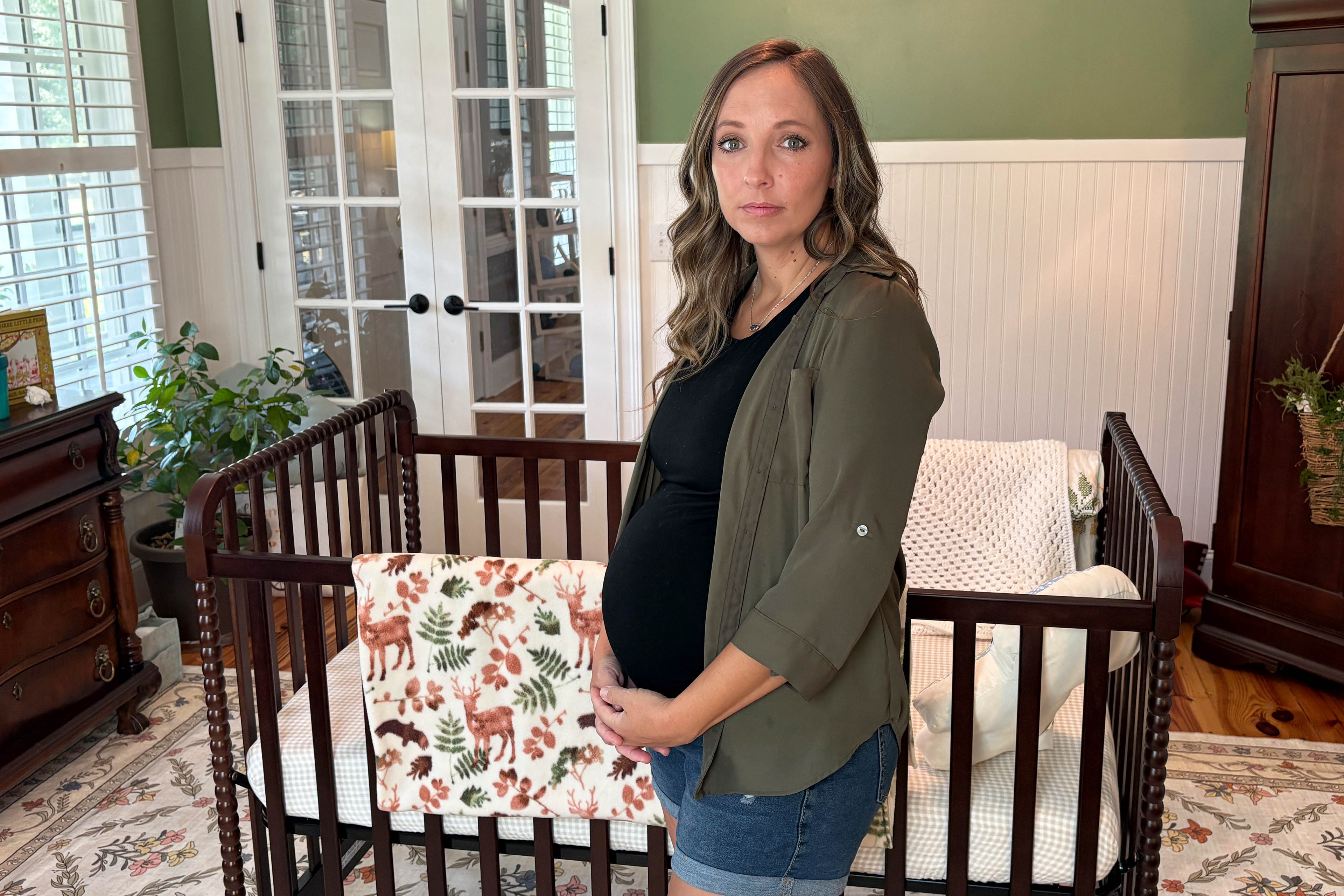
* Michigan doctors would be required to report to the state patients experiencing seizures under a proposed law meant to improve roadway safety.The bill was prompted by the death of Michigan State Police Motor Carrier Officer Daniel Kerstetter, who was struck and killed last year in Lincoln Park, just outside Detroit, by a driver believed to have had a history of seizures, according to Kerstetter’s widow, Katie. Both Kerstetter and the driver of the vehicle were killed.
“He was that person that would give you the shirt off his back,” Katie Kerstetter told Bridge Michigan. “I don’t want him to have died for no reason.”
Kerstetter’s death along I-75 at the age of 45 pushed his wife to advocate for improved pension benefits for law enforcement and other public workers, a decision she explains as “carrying on what he would have been doing if he were alive.”
While those bills have been held up in the state Legislature, Katie — who continues to care for her three children in Grosse Pointe — hopes she can effect stronger enforcement of a medical condition believed to be tied to her husband’s death.
“I just think it's such an easy, easy, common-sense thing,” she said. “If I could do something to help his coworkers, if I can make the road safer, if I can help them get what they deserve… then I’m going to do it.”
The bill’s sponsor, state Sen. Kevin Hertel, D-St. Clair Shores, who is also chair of the Michigan Senate Health Policy Committee, says the law would strengthen existing requirements that ask motor vehicle drivers with epilepsy to report their medical history to the Secretary of State’s office.
“There's no enforcement mechanism,” Hertel said. “Even if somebody is pulled over, that officer has no way of knowing if that individual should be driving or shouldn't be driving.”
Current law permits, but does not require, physicians and optometrists to report patients who have mental or physical conditions that could threaten the safety of others. Those that do report are shielded from civil or criminal liability.
The legislation, Hertel said, would make sure drivers that shouldn’t be driving are held accountable.
“You can't ensure that they're not going to drive and that can happen for many different reasons, but making sure that the police have a way to enforce it, I think, is a step in the right direction,” he said.
Michigan State Police spokesperson Lt. Michael Shaw said the agency does not have a position on the bill.
What do doctors think?
Driver’s license regulations for motorists with certain medical conditions differ from state to state. In Michigan, the Secretary of State suspends licenses for people who report epilepsy to the office.
That decision can be overturned after motorists submit a personal health history to the state showing they have either been seizure-free for six months or have the condition managed by medication. That time period is extended to 12 months for commercial vehicle operators.
Six states, including Oregon, Pennsylvania and New Jersey, have physician-reporting requirements similar to what is being proposed in Michigan, according to the Epilepsy Foundation.
Last year, California Gov. Gavin Newsom vetoed legislation that would have overturned the state’s decades-old physician reporting mandate over concerns about the bill’s liability provisions and public safety.
A member of the Epilepsy Foundation Los Angeles lambasted the decision, calling the policy “discriminatory” and lacking in scientific evidence.
States where doctors are required to report epilepsy to driver licensing agency:
California
Delaware
Nevada
New Jersey
Oregon
PennsylvaniaSource: Epilepsy Foundation
Dr. Gregory Barkley, a neurologist for Henry Ford Health System’s epilepsy program, says reporting requirements have had “unintended consequences” for his peers in other states.
“My colleagues report that their patients lie to them about their seizures in order to avoid being recorded,” Barkley said during a June 25 Senate Health Policy Committee hearing. “The result of patients not being truthful with their doctors about their seizures is that patient care is compromised and patients end up having more seizures rather than fewer seizures.”
Barkley’s position is supported by the leading physician groups in the country specializing in seizure disorders.
The American Academy of Neurology, American Epilepsy Society and the Epilepsy Foundation released a joint position statement in March affirming their support for reporting regulations that permit rather than mandate health care practitioner reporting for seizures, while promoting patient self-reporting.
“Legal mandates requiring practitioners to report patients with seizures to licensing authorities have been controversial,” the joint statement reads. “Concerns about public safety are offset by concerns about breaching medical confidentiality, thereby undermining the patient-practitioner relationship, and discouraging full disclosure of medical information by patients to their clinicians.”
The groups cite studies that found an increased likelihood of unlicensed driving in areas with mandatory reporting and a lack of evidence showing stricter regulations yielded fewer motor vehicle accidents.
Johns Hopkins University neurologists reviewed more than 44,000 US traffic-related fatalities that occurred between 1995 and 1997 and found that seizure-related crashes were “uncommon,” accounting for 0.2% of deaths. A 2012 study similarly concluded that “epilepsy and short seizure-free intervals are not predictive of crashes.”
“We recommend that practitioners exercising their clinical judgement in good faith should be shielded from legal liability for either reporting or not reporting seizures or unsafe driving practices,” the joint statement continues. “In accordance with [American Academy of Neurology] quality measures, we recommend that practitioners counsel patients about state regulations regarding driving with seizures and document these conversations in the medical record.”
Other physicians, like Dr. Aisha Harris, who runs a family medicine practice in Flint, believe there should be a “line and boundary” between health and government. She points out that other medical conditions, like substance and alcohol use disorders, do not trigger reporting to the state.
“The hospital, the clinics, have to be safe spaces where people feel like they can express their concerns and get their medical care and not feel like the government's going to come at them and jeopardize their way of living,” Harris said, adding that reporting requirements would cause “barriers to the day-to-day of medical providers.”
Harris also thinks the legislation will need more definition in what medical conditions are covered by the statute.
“If someone loses consciousness, it could be because they got into a car accident, had a concussion and had some head trauma, versus having a full on seizure,” she explained. “Technically, that would be required to mandate, based on how this bill is written.”
Hertel says he’s working to improve the legislation’s scope to address physician concerns.
At the same time state senators consider the new regulation, the Michigan House is working on a similar set of bills that would determine the length of a driver’s license suspension following an epileptic seizure and allowing for more waivers on suspended licenses.
“We don't want physicians of the state to feel like there's ambiguity there and that they have to report everything out of extreme caution,” Hertel said. “This keeps both the individual and the general public at large safe when we're able to enforce the policy in the right way.”
Katie Kerstetter worries that leaving the law as is continues a reality where there are “no consequences" for drivers who fail to report their seizure disorders. She’s asking doctors to consider the ramifications of their actions if they fail to report their patient’s conditions to the state.
“You take an oath to save lives, so why wouldn’t you do this?”
Unfortunately, the trooper's wife is wrong about there not being any consequences under current rules.
For as long as I've been in healthcare, West Michigan physicians have been treating the "No driving until 6 months seizure-free" as a firm requirement. Patients are used to that, it's not news to anyone. We still have a culture of rule-following, and the voluntary compliance method gives people flexibility to arrange for rides to work, etc.
But if you elevate it to a state reporting mandate with teeth, you shift power and responsibility from the individual. That's just not good. The physicians interviewed make good points about unintended consequences (like patient silence and lies) from this proposal.
Get MHF Insights
News and tips for your healthcare freedom.
We never spam you. One-step unsubscribe.
Sponsors

J & DE Family Charitable Fund

Friends
of MHF

Kelly Grotendiek
Philip Harbach
Dale Johnson
Drs. Jeffrey and Joni Jones
Vickie Kahle
Tammy Kipen
Marlin & Kathy Klumpp
Melanie Kurdys
Ruth Nobel
Patrick Peterson
Stephanie Poortenga
Jeanne Smit
Ben and Hope Staal
John Tuinstra
Jacki VanHuis
Sandy Walker
Sign Up for MHF Insights to keep up on the latest in Michigan Health Policy