- How to Limit The Health Risks Posed by Polluted Air

- U.S. States Warm, But Not As Expected
- Rovner Recaps Medicaid Cuts’ Impact on Hospitals and Fields Caller Questions on Affordability

- CMS proposes mandatory hospital-bundled model for joint replacements
- CMS proposes mandatory hospital-bundled model for joint replacements
- CMS pitches 2.4% hospital pay bump, mandatory joint replacement model: 7 things to know
- Mayo Clinic enhances imaging test with AI
- Christus Health to open Texas multi-specialty clinic
- CMS proposes extension of prior authorization rule to cover drugs: 6 notes
- Penn Medicine, Epic lean into EHR ‘nudges’
- AdventHealth breaks ground on $27M freestanding ER
- Henry Ford hospital strike enters 7th month: 6 notes
- Texas launches rural hospital leadership academy
- Children’s Minnesota staff email account compromised
- UHS’ CEO-to-worker pay ratio over the past 5 years
- Medicaid’s consistency problem in dentistry
- Dental groups seek $600M+ in FY 2027 federal budget: 5 notes
- Missouri dental school grows student body by 33% to combat dentist shortages
- Prior authorization by the numbers: 10 stats that show the strain
- The Trump Administration Is Seeking Federal Workers’ Sensitive Medical Data. That’s Raising Alarms.

- 5 new university programs tackling behavioral health workforce gaps
- Texas Children’s gets $5M gift for behavioral health services
- Cardiology malpractice cases by the numbers
- Texas Children’s receives $5M estate gift for behavioral health
- CMS proposes 2.4% hospital pay increase, nationwide mandatory model rollout
- Which physician specialty is most likely to have a salaried paycheck?
- 20+ dental education updates to know from Q1
- Proposed CMS rule would set prior auth deadlines for drugs
- The best orthopedic ASCs in the West: US News
- 4 clinics closing after physician owner sentenced for selling recalled medical devices as new
- VA program deploys 700+ VR ‘mental wellness’ kits
- The cost of private equity firms owning residential SUD facilities: 4 things to know
- 10 highest, lowest-paying physician specialties
- Independent GI practices shrinks as reimbursements fall 38% over a decade
- HHS, after legal setback, updates ACIP charter to put more emphasis on vaccine safety
- HHS, after legal setback, updates ACIP charter to put more emphasis on vaccine safety
- New York system to open $12M outpatient imaging center
- Costco Recalls Cookies Over Missing Nut Allergy Warning
- CDC Pauses Release of COVID Vaccine Effectiveness Study
- Pharma company withdraws FDA application amid White House autism treatment push
- Endoscopy at scale: The reprocessing best practices separating high-performing teams

- Demand Surge Leads to Shortages of Estrogen Patches
- What to know about the fastest-growing DSO
- 4 DSOs making headlines
- Statement Regarding Staff No-Action Letter to Bank of England
- Op-ed: Administrative fragility is costing healthcare more than we think
- Alaska city opens addiction treatment microunit program
- Title X Funding Restored, but New Rules Raise Concerns
- Function Health acquires mobile healthcare platform Getlabs to provide members with at-home lab tests
- The Healthcare Burnout Backlash (pt 3): How Workflow Redesign Is Helping Healthcare Organizations Offset Staffing Shortages
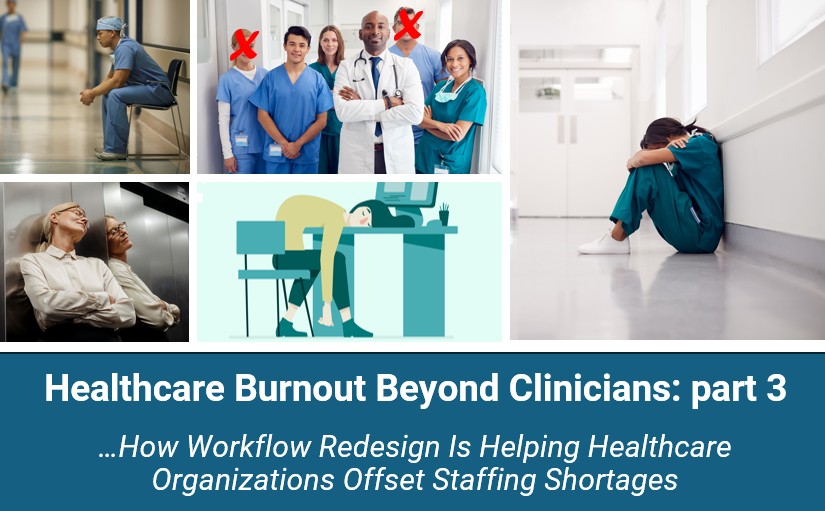
- The Healthcare Burnout Backlash (pt 3): How Workflow Redesign Is Helping Healthcare Organizations Offset Staffing Shortages
- BD Announced Application of CE Mark for the Liverty TIPS Stent Graft

- BD Announced Application of CE Mark for the Liverty TIPS Stent Graft
- Blackstone and TPG Complete Acquisition of Hologic; Names New CEO
- Blackstone and TPG Complete Acquisition of Hologic; Names New CEO
- Endospan Receives FDA Approval for the NEXUS Aortic Arch Stent Graft System
- Endospan Receives FDA Approval for the NEXUS Aortic Arch Stent Graft System
- InVera Medical Receives FDA Clearance for Non-Thermal Chronic Venous Disease Device

- InVera Medical Receives FDA Clearance for Non-Thermal Chronic Venous Disease Device
- Starting material sourcing bottlenecks increase US drug shortage risks: report
- Novartis cuts 114 more jobs at New Jersey HQ as restructuring rolls on
- Charles River flows into Boston to help AHA bridge cardiovascular health divide
- Your Brain Cares If Your Plant-Based Diet Is Unhealthy, Researchers Report
- Your Neighborhood Might Help Make You Old Before Your Time
- Heavy 'Forever Chemical' Exposure Before Birth Increases Childhood Asthma Risk, Study Finds
- High-Tech Magnets Offer New Hope for Veterans Battling Combat PTSD
- Early Diagnosis Key To ADHD Child's Academic Success, Study Finds
- Study Reveals Who Americans Think Should Pay for Elder Care
- Envision hires ConcertAI, IQVIA alum Nick Jones as its med comms president
- The top 10 pharma R&D budgets of 2025
- For Many Patients Leaving the ICU, the Struggle Has Only Just Begun

- Watch: As AI Makes More Health Coverage Decisions, the Risks to Patients Grow

- Bial launches ‘Dialogues with Parkinson’s’ campaign aimed at identifying early symptoms
- Novartis pumps up community health footprint to tackle heart disease and cancer
- Abbott survey finds ‘information overload, confusion and cost’ affecting health choices in US
- FDA accuses Amneal, BioCorRx of producing ‘false and misleading’ drug promos
- North Carolina provider launches mobile opioid treatment unit
- U of Pittsburgh debuts online infant mental health certificate
- Emerging DSO lands Ohio partnership
- Heartland Dental added 5 de novos in March
- The states with the highest, lowest migration rate of dentists since 2019
- What the Health? From KFF Health News: Abortion Pills, the Budget, and RFK Jr.
- Specialty DSO eyes new growth levers after entering several states
- Hospital M&A roars back to life in Q1 2026; Operating performances fray in February
- Epic rolls out health alerts to flag rising rates of illness at the county level
- Fierce Pharma Asia—Takeda-Denali split-up; Merck, Zhifei's revised deal; Shionogi's made-in-US plan
- Brain Scans Reveal How Psychedelics Change Perception
- Benefits leaders report increased operational, financial costs amid 'digital health vendor sprawl': Solera survey
- Vanda initiates study of motion sickness drug Nereus in GLP-1 users
- Judge Allows Abortion Pill, Mifepristone, To Continue Being Mailed for Now
- Bangladesh Measles Outbreak Kills 100+ Kids, Emergency Shots Begin
- Regulatory burdens continue to mount for physician practices
- Medicare navigation company Chapter banks $100M series E funding round
- Hair Growth Product, Tuymec Minoxidil Hair Growth Kits, Recalled Over Child Poisoning Risk
- Garda snaps up Assertio and chemo infection treatment Rolvedon in $125M deal
- AbbVie challenges 'outdated' 340B drug discount program guidance in new lawsuit
- AbbVie challenges 'outdated' 340B drug discount program guidance in new lawsuit
- Eli Lilly launches oral GLP-1 drug across US through Lilly Direct, telehealth providers
- Humana, Noom and Welldoc team up with b.well to expand health data access as part of CMS push
- America's Sexual Health Report Card Contains Some Surprises
- Years of Excess Weight, Not One Bad Checkup, Drive Heart Disease Risk
- There Are No Good Ways To Avoid Childhood Eczema But Many Treatment Options
- More Children, Teens At Risk From E-Scooter Crashes, Study Finds
- This Treatment Can Improve Your Odds Of Surviving C. Diff Infection
- Alzheimer’s Tests May Mask Risks for Women
- RFK Jr. launching health podcast to expose ‘hypocrisy’ and ‘corruption’
- RFK Jr. launching health podcast to expose ‘hypocrisy’ and ‘corruption’
- Advocate Health improves to 4% operating margin, $4.6B bottom line across 2025
- Farm Bureau Health Plans Beat the ACA on Prices With an Age-Old Tactic: Rejecting Sick People

- States Face Another Challenge With Medicaid Work Rules: Staffing Shortages

- Avalyn plans IPO to fund phase 3 trials of inhaled versions of approved respiratory drugs
- Judge rules that HHS must face states' lawsuit over RFK Jr.'s agency overhaul, massive layoffs
- Judge rules that HHS must face states' lawsuit over RFK Jr.'s agency overhaul, massive layoffs
- Consumers' satisfaction with health plan apps improves with familiarity: JD Power
- Nurses' job satisfaction stumbles after post-pandemic gains: survey
- Amazon launches 2 new digital health partnerships for nutrition therapy, sleep care in health conditions program
- Former NFL Star Steve McMichael Diagnosed With CTE After His Death
- Steven Ubl set to depart after more than a decade as CEO of PhRMA
- Nixing prior auth, outlier hospital bills could lower health costs, Center for American Progress' policy plan says
- Shionogi nabs initial $119M award from BARDA to establish US antibiotic plant
- More Drugmakers Join TrumpRx
- Graco Recalls Infant Car Seats Over Structural Issue
- Orlando Health fleshes out Alabama footprint with another acquisition
- US adults still turn to providers for accurate health information even as AI chatbot use grows: Pew survey
- Pfizer walks away from 'underutilized' office space in South San Francisco, transitions employees to remote roles
- Biogen settles investor lawsuit over its messaging on failed Alzheimer's drug Aduhelm
- Digital health startups raked in $4B during Q1 with 12 megadeals driving investment: Rock Health
- New Cervix-On-A-Chip May Revolutionize STI Treatment
- The Flu Vaccine Can Lower Your Risk Of Heart Attack And Stroke — Even If You Wind Up Infected
- Long COVID Linked to Heart Health Risks
- Herbal Drug Kava Poses Increasing Health Threat In U.S., CDC Warns
- Preschoolers' Solitary Screen Time Could Mean Behavior Problems, Language Difficulties Later On
- Combo Heat Waves/Droughts Will Affect Billions A Year By 2100, Researchers Project
- Amgen CEO netted $24.7M pay package in ‘25 as company’s upward trajectory continued
- J&J's Tremfya retakes TV drug ad spending crown from AbbVie
- Urgent Care Clinics Move To Fill Abortion Care Gaps in Rural Areas
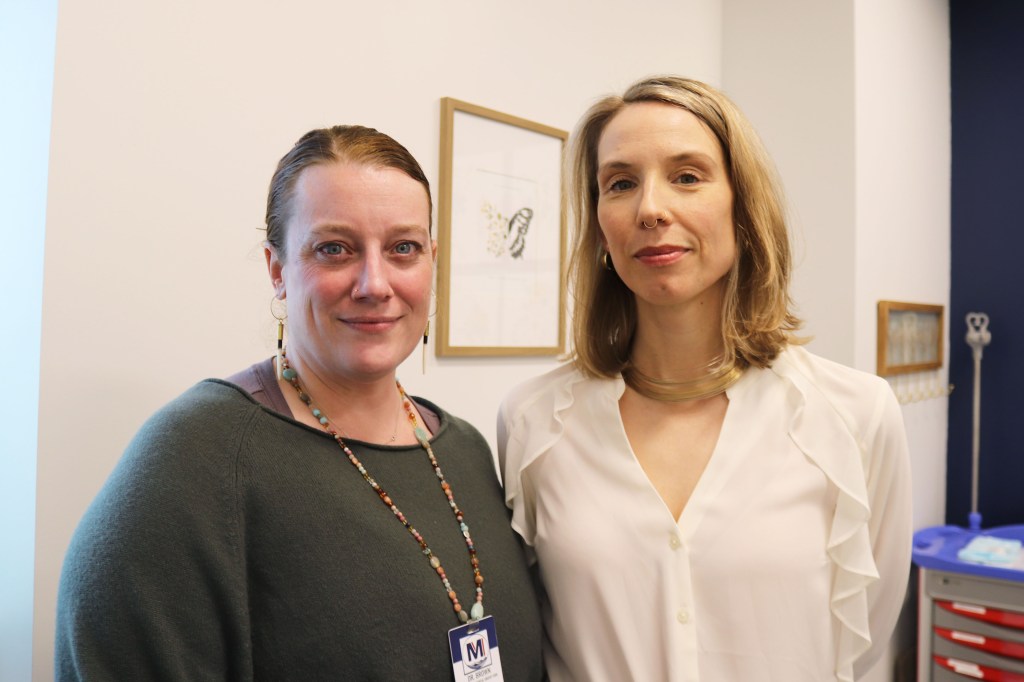
- Trump’s Personnel Agency Is Asking for Federal Workers’ Medical Records
- FDA Approves First Generic Farxiga (dapagliflozin) Tablets
- Reliance on EHR vendors' tech roadmap slows down AI progress, senior IT leaders say
- ¿Puedo decirle a mi médico que no quiero que use la inteligencia artificial para tomar notas?

- Remarks at the Texas Stock Exchange Event: Welcome to the Boom Belt: A Return to First Principles in Public Markets
- Wawa Recalls Drinks Over Undeclared Milk Allergen
- Scientists Test New Ways To Regrow Joints Damaged by Arthritis
- This New Method May Make French Fries Lower in Fat
- U.S. Plans Tariffs up to 100% on Some Brand-Name Drugs
- Americans May Be Losing Trust for AI in Health Care: Survey
- Cheap Blood Test Might Spot Cancers, Other Diseases
- Danger at Home: Cleaning Products Are Harming Kids
- Could a High-Dose Flu Shot Lower Your Alzheimer's Risk?
- Allevion Medical Receives 510K Clearance for Vantage Spinal Decompression System


Should Americans live in fear? Should patients be denied pain control?
Everyone agrees the answers should be NO.
Yet, here we are.
Another excellent view inside the clinical world from the KevinMD blog.
https://www.kevinmd.com/2023/07/the-persecution-of-pain-management-doctors.html
The persecution of pain management doctors
She and I had discussed the dangers of continuing to treat pain, knowing that the DEA wanted to make some examples, and several doctors in our state had suffered criminal charges. The complaints published about their practices left us bewildered. They had charged cash, treated patients under the age of fifty, and had patients that traveled long distances. Another was charged with complaints of his having treated people he knew (or should have known) suffered from addiction. They were also criticized that a percentage of their patients had criminal records, quoting a percentage. I wondered where the doctor could go to get accurate criminal record information. More importantly, when I checked the quoted percentage, it was lower than our state average. But more importantly, since when can a doctor not treat someone who has a criminal conviction? Finally, I noticed that the DEA was quoting morphine dose/milligram equivalents, leaving the press and the public with the impression that these were individual pills. I wrote a letter to the reporter trying to correct these misstatements but never saw a correction.
Then a third doctor was hit. She had prescribed Xanax to a patient in crisis at a McDonald’s parking lot. Not a crime, but then she panicked and lied about it when questioned by federal agents, allowing herself to fall victim to 18USC1001: lying to a federal agent. The first physician was 71 years old, pleaded guilty to one count of prescribing a Schedule IV medication, which was supposed to have a maximum term of five years in prison. But the government argued what it calls “relevant conduct,” at which they attribute any patient deaths as “related to” the prescriptions. The doctor was sentenced to 120 months in federal prison. The second doctor pleaded guilty to wrongfully prescribing alprazolam and was sentenced to four years in prison. Finally, the third doctor was sentenced, also for alprazolam. In this case, the government agreed that no prison time was necessary, but the judge felt that a message should be sent to physicians treating pain and sentenced her to three years.
These events were worrisome as none of the complaints listed are actually crimes. I had, in fact, taken hundreds of hours of CME in pain management and addiction, and no one had listed age, criminal history, or payment method as problems. My practice had set up very strict procedures and protocols to avoid diversion and monitor for signs of addiction. I had joined both the American Academy of Pain Medicine and the American Society of Addiction Medicine and was taking board review courses, as I find these to be excellent ways to stay up to date. I had even traveled to take in-person classes held by Harvard Medical School. Everyone in our practice who received controlled medications had counseling made available to them, and we would not accept a patient for opiate therapy unless they came to us already on opiates with a chronic pain diagnosis made and confirmed byother medical professionals and specialists. We did make an exception for patients with cancer, as oncologists were referring patients to us for maintenance treatment.
I searched my calendar to see how I could reschedule patients to help my friend keep her practice alive until she could retain counsel and defend herself to the board. While I was doing this, my receptionist told me that a sheriff’s deputy wanted to see me. A cold feeling came over me, and I woodenly shook his hand and accepted the envelope he handed me. Inside was my emergency order of suspension from the medical board. It turned out that a disgruntled former employee had called an insurance company pretending to be a patient and had complained that I was “treating addicts.” The insurance investigated and found that some patients had died within thirty days of being treated by us. Since we saw all of our patients every thirty days, this would be the case no matter why they had died. It turns out that today, any patient that dies while taking opiates is listed as an “opiate-associated” death, even if they die in hospice or by suicide. I even had a patient who died in police custody, twenty hours after last taking his medications and after being denied proper medical care. The jail told his family he had died of an overdose, despite the coroner’s finding on autopsy that he died from a cardiac condition.
The insurance company investigation found that our treatment had been reasonable but felt they had to notify the medical board. The medical board felt they had to issue an emergency order of suspension without giving me a chance to defend my practice. When I finally went in front of them, the suspension of my license was lifted, and I thought the ordeal was over. Instead, law enforcement officers went on the news to say that the board had been too easy on me, and I was indicted that same day. I did not plead guilty but took it to trial. The government wanted to give me twenty to life for the patient who died in police custody. I took the stand in my defense and tried to help the jury understand the complications of medical practice and the risks and benefits of opiate therapy. I explained that I was certified to treat addiction, and that while my patients on opiate therapy did not have addiction, even if they did, the benefits of treatment could outweigh the risks. The government’s expert testified that MRIs were not objective, that a veteran treated with methadone for pain meant he had addiction, that a man with a hand crushed so badly that a finger was pulled off did not have “real” pain and should not have been treated. The fact that I had cut him back from three opiates to two and from two benzodiazepines to one on that first visit went right over the jury’s heads, as well as the fact that I had reduced his opiates sixty days and his benzodiazepines thirty days before his death.
The government’s expert testified that when my chart notes referenced my concern about the potential for addiction, that this was absolute proof that the patient had addiction. The prosecutor told the jury in closing that we only accepted patients already on opiates because it was easier to get them addicted. None of these statements are true, but I was shocked to find that you can’t use the textbook in your defense. You also cannot use the content of your CME in your defense. You have to rely on experts, most of whom are now too terrified to testify for the defense, and the government can have their witness make statements completely contrary to the scientific practice of medicine. I was found not responsible for the death but convicted for treating the patient at all, as I had placed him “at risk” of addiction. I was also convicted for treating the veteran who had been prescribed methadone, despite him testifying that I was a compassionate doctor who had always tried to help him reduce the opiate medications he came to me on. I am waiting for sentencing and looking at up to twenty years in prison. If I could offer any word of advice, it would be for all primary care physicians to stop treating pain until this insanity is rectified, as it is impossible to educate a jury in a week. And there is no limit to what the government can say to get a conviction. They are not bound by truth or science. Also, if you come under prosecution, hire only a health care prosecution specialized attorney. Do not trust that any other attorney will understand things well enough to adequately defend you.
Dr. L. Joseph Parker is a research physician in Texarkana, Arkansas. He received his medical degree from Mayo Clinic College of Medicine and Science and has been in practice for more than 20 years.
The Wall Street Journal reports on another effect of the war on pain drugs.
Rite Aid Prepares Bankruptcy That Would Halt Opioid Lawsuits
The drugstore chain is preparing a chapter 11 filing within weeks and doesn’t have an agreement with opioid plaintiffs, people familiar with its plans said
Rite Aid faces lawsuits alleging it contributed to the opioid epidemic.
Listen to article Length(2 minutes)Rite Aid is preparing to file for bankruptcy in coming weeks to address mass federal and state lawsuits the drugstore chain is facing over its alleged role in the sale of opioids, according to people familiar with the company’s plans.
https://www.wsj.com/articles/rite-aid-prepares-bankruptcy-that-would-halt-opioid-lawsuits-69f94242
Although the rest of the article is paywall-protected, the audio version adds to the story.

Next Up: Dentists!!!
https://www.upi.com/Health_News/2024/02/06/dentists-pain-control-guidelines/3551707239073/
New dental guidelines limit use of opioids for teens, adults
By Dennis Thompson, February 6, 2024New guidelines from the American Dental Association (ADA) are cracking down on the use of opioids for tooth pain.
The guidelines say that non-steroidal anti-inflammatory drugs (NSAIDs) taken alone or alongside acetaminophen should be the first-line treatment for managing short-term dental pain in teenagers and adults.
The available medical evidence indicates that those medications can effectively manage pain from a toothache or after a tooth removal, an ADA guideline panel concluded.
The guidelines also say that opioid painkillers should be prescribed under limited circumstances, after considering any risk factors for opioid misuse.
Dentists should avoid providing "just in case" opioid prescriptions for patients, and use extreme caution in prescribing opioids to teens and young adults, the guidelines say.
Patients also should be educated on proper storage and disposal of opioid drugs, according to the guidelines.
The guidelines were developed under a $1.5 million grant handed down by the U.S. Food and Drug Administration in 2020 to develop guidelines for handling dental pain in patients.
"We hope this clinical practice guideline will reduce the risk of opioid addiction, overdose and diversion," Marta Sokolowska, deputy center director for substance use and behavioral health at the FDA's Center for Drug Evaluation and Research, said in an ADA news release.
A previous set of recommendations for pediatric patients was published in 2023.
Over-the-counter NSAIDs include aspirin, ibuprofen and naproxen sodium. There also are prescription-strength NSAIDs available for more severe pain.
"It's important to take special consideration when prescribing any type of pain reliever, and now dentists have a set of evidence-based recommendations to determine the best care for their patients," said senior author and panel chair Dr. Paul Moore, a professor emeritus at the University of Pittsburgh's School of Dental Medicine.
"Patients are encouraged to discuss pain management expectations and strategies with their dentist so they can feel confident that they are receiving the safest, most effective treatment for their symptoms," Moore said.
The new guidelines appear Monday in the Journal of the American Dental Association.
"Evidence-based" and "paid for by the government" for some reason fail to stoke my confidence that guidelines are based solely on patient well-being.
Some anecdotes:
The Door Was Locked: When Pain Clinics Disappear and Lawmakers Dismiss the FalloutBy David Manney | June 24, 2025
Three more Americans share how bureaucracy, policy failure, and indifference deepen the pain.
It’s a strange thing, that moment when you realize the world doesn’t see you anymore. You’re standing in front of a door that used to open. A place that once gave you some sliver of relief. But now it’s locked. No note on your phone. No warning. No follow-up. No care. Just a door that doesn’t open. Pain, as always, stays.Behind that locked door isn’t just a shuttered clinic. It’s the final echo of trust in a system that no longer pretends to function. The war on opioids didn’t kill addiction. It just redirected the cruelty.
Steve in Tennessee: The Locked Door and the Flood
Steve’s story begins more than half a century ago. Chronic pain has been his companion since his twenties. Over the years, he found some stability through managed care: a daily regimen of 215mg of morphine sulfate extended-release and low-dose oxycodone for breakthrough pain. It wasn’t comfortable. It was a function.
Then came the bureaucracy. In Tennessee, patients with pain management needs are often limited to one clinic, one pharmacy, and one provider. Change any of those, and you risk losing everything. The process is rigid, overcrowded, and indifferent.
Steve describes it plainly. “You can’t move your prescription. You can’t change pain clinics. Appointments last 15 minutes or can be scheduled for the entire day. I’ve waited four hours. Once, I had to leave for five hours, then return before closing, just to be seen.”
But the worst blow came without warning.
“I arrived at my pain clinic and found a note on the door,” Steve wrote. “The clinic had permanently closed. Two weeks before. No calls. No newspaper notice. Just… gone.”
Gone, along with his supply of morphine.
He’d been saving leftovers, one or two pills at a time, preparing for a “rainy day.” That day had turned biblical.
Outraged, Steve contacted his state representative. The reply? Cold and condescending. The state, the rep said, had “worked very hard to make things easier for pain patients.” Steve was told he didn’t understand the system.
But he did. He understood it too well. And he knew how to survive without it.
“My anger was greater than my dependence,” Steve wrote. He weaned himself off morphine entirely. He still manages with lower doses. “It’s a struggle, but I’m managing. I was lucky.”
He ends with a wish that’s less a curse and more a reckoning: “I wish those who make it hard for us had to live with my pain for just one day. Then they would know.”
Jean: Allergic, Responsible, and Still Humiliated
Jean’s story is quieter on the surface but just as cruel. For over eight years, she’s lived with migraines. Not headaches, migraines. The kind that dismantles your life in slow, pounding waves.
Her treatment involved a medication containing codeine, one of the few opioids she can tolerate. Morphine? Off the table. All the codones? Same problem. Her body metabolizes them like poison.
Then came the state requirement: quarterly drug testing just to access the one medication that worked.
Jean refused. The intrusion was humiliating, the assumption clear: if you need relief, you’re probably lying.
So she turned to ibuprofen. Aspirin. Whatever would blunt the edge.
The result? A gastrointestinal bleed was so severe that she ended up in the ER.
Her doctor, sympathetic but powerless, urged her to write a letter to the state. “He asked why they were trying to kill me,” she recalls.
And still, the suspicion followed her. When Jean returned to the ER with shingles, she informed them about her allergies.
“They thought I was just there for the ‘good stuff,’” she said. They failed to diagnose shingles even after the rash broke out. And then came the kicker: “They asked if I wanted some ‘fentanyl to go.’”
Jean is a sixty-something professional woman. She’s used her voice. She’s warned others. The rules play her. And still, she’s been treated like a junkie at every turn.
“I resent being treated like an addict,” she said. “I have a legitimate need, and I use medication responsibly. But I worry about the future. My doctor is nearing retirement. When he’s gone, I don’t know what happens next.”
She asked for anonymity, not out of shame, but out of fear. Real, understandable fear. Because every time the rules change, she’s the one left exposed.
Beckie: The Bomb in Her Leg and the Wall of Indifference
Beckie lives in the heartland. She shattered her femur in February. The surgeon described it like a bomb had gone off inside her leg: bone fragments shredded muscle, tendons, ligaments. Repair required a full-length rod, screws, and plates from hip to knee.
She was sent home nine days later. No infection, no MRSA, but only because she escaped the hospital quickly enough.
Her discharge instructions? Ten days of oxycodone. After that, Tylenol. That’s it.
Beckie explained her medical history: 30 years of undetected Hepatitis C, cirrhosis, and a warning from a liver specialist to avoid NSAIDs or risk further liver damage.
She pleaded. She asked for Tramadol, a mild opioid. She was denied. The surgeon told her it was out of his hands. She’d need to go to pain management.
However, pain management requires monthly visits. Urine samples. Pill counts. And a primary physician that she didn’t have. No insurance for eight years. No way to pay out-of-pocket.
She’s now 66 years old, surviving on $2,200 a month from Social Security and a pension. Her life has shrunk. She lives alone. Basic care is now painful, and the fear of making the pain worse means she does even less. The dark thoughts have come. So has the spiritual fatigue.
“When it gets really tough, I recite Philippians 4:13,” she said. “It helps me through the pain, but it never resolves the pain.”
Her grandson, just 30 years old, already has three compressed discs. He has a partner. Three kids. No relief. No options. Just pain and swallowed frustration.
“I worry more for him than me,” she wrote. “I’ve had my life. But the way this system treats pain? It’s not built to help. It’s built to deny.”
She ended with a brutal truth: “Someone else’s tragedy shouldn’t mean I have to suffer. I didn’t cause the addiction crisis. Why should I be punished for it?”
Where Policy Becomes Punishment
In each of these stories, the same pattern reappears: guidelines become a punishment, and pain becomes suspicion, while those in power hide behind the phrase out of my hands.
Tennessee’s guidelines aren’t unique. Most states begin with federal recommendations and then add additional restrictions. Why do they do this? To avoid liability and appear tough on paper, the human cost is often buried in paperwork.
Steve’s locked door.
Jean’s fentanyl insult.
Beckie’s rod and no relief.
These aren’t edge cases. They are the new normal.
The CDC quietly walked back its 2016 guidelines because it knew it caused suffering. But the damage was done.
Final Thoughts
These stories aren't outliers. Their signal flares were fired up by people who were ignored and insulted but still kept fighting.
They don't want pity. They want dignity.
And they’re not alone.
To those reading this column, if you're in pain or know someone who is, tell your story. Loudly. Publicly. We need more noise because silence helps the system, not the sufferer.
Let the lawmakers see who they’re really writing off.
Let the media understand that the “opioid crisis” is more than a headline. It’s a policy of sanctioned neglect.
As Beckie reminded us, quoting Mark Twain: “Nothing so needs mending as other people's bad habits.” That includes the habits of lawmakers who punish the innocent to look like they’re helping the guilty.
We’ll keep telling these stories.
And we’ll keep writing.
Until someone listens.
Got a Story? I Want to Hear It.
If you live with chronic pain and have been pushed aside, doubted, or punished by the very system meant to help you, I’m listening.
You don’t need to write a novel. Just say what you need to say. You can share as much or as little as you like.
And if you’d prefer to stay anonymous, that’s absolutely fine. I’m not a government agency or research lab. I’m not running numbers.
I’m just trying to tell the truth, your truth.
Not to sensationalize suffering. But to hold the system accountable for what it’s done to real people: mothers, workers, veterans, neighbors.
People who didn’t ask for pain but live with it every day.
You can send your story by clicking the “TIPS” button and including your email address so I can follow up if needed. Please include my name at the beginning of your message so I can ensure I receive it.
Please let me know if you would like to remain anonymous again. If not, I’ll simply use your first name and where you’re from if you include it.
Normally, we [PJ Media] keep these columns behind our paywall, but this is a special glimpse into this important series.
Get MHF Insights
News and tips for your healthcare freedom.
We never spam you. One-step unsubscribe.
Sponsors
Friends of MHF





Kirsten DeVries
Tom & Karen Nunheimer
Steve Ahonen
Ron & Faith Bosserman
Marlin & Kathy Klumpp
Sign Up for MHF Insights to keep up on the latest in Michigan Health Policy