- FDA vaccine chief to step down in April

- FDA, states collaborate to lower drug prices
- 84% of primary care providers say they have key role in mental healthcare: Survey
- 84% of primary care providers say they have key role in mental healthcare: Survey
- SAMHSA offers $69.1M in behavioral health grants
- California to invest $65M in new mental health, housing community
- Florida hospital selects new EHR
- New Mexico governor signs sweeping healthcare reforms: 5 things to know
- Kettering Health faces 44 lawsuits over cyberattack
- 10 hospitals, health systems looking for CFOs
- 10 hospitals, health systems looking for CFOs
- Highmark Health generates $28M in value with Google AI
- Hiring red flags for dental employers to watch out for
- 4 health systems with boosted outlooks
- 4 health systems with boosted outlooks
- Alabama dentist sentenced to 15 years in prison for arson, insurance fraud
- We turned off the phones and our practice got busier
- Allina physicians, NPs, PAs back open-ended strike
- ‘This is how we know if we’re winning or losing’: Inside Grand Mental Health’s KPI strategy
- The cardiology physician shortage by state by 2036
- How dentists can keep up with rising patient expectations
- New leadership appointments across 5 specialties
- Among pregnant ED patients, Tylenol use fell 10% after Trump linked drug to autism risk
- Henry Schein opens integrated dental-medical training facility
- Henry Schein opens medical-dental integrated ASC
- Why Behavioral Health Needs an Operating System, Not Another Point Solution
- What’s the status of the federal noncompete ban? 5 notes
- North Carolina appeals court rejects AdventHealth CON complaint
- Telehealth growth hasn’t increased rural behavioral healthcare access: Study
- The NIH Workforce Is Its Smallest in Decades. Here’s the Work Left Behind.

- 16 hospitals closing departments or ending services
- Texas dental school to launch oral surgery residency program
- Trump administration weighs looser policies on nursing home antipsychotic use
- 62 ophthalmology departments ranked by NIH funding
- California oral surgery practice suffers data breach
- Private equity’s big-money deals are back: 5 trends for ASCs and physicians
- Virginia board denies dentist’s license reinstatement request
- Bill to reauthorize funding for CDC’s oral health program introduced: 5 things to know
- Trial compares genetic risk-sharing methods for colorectal cancer
- UPMC acquires Pennsylvania GI practice
- North Carolina launches mobile crisis dispatch pilot
- HCA New Hampshire hospital to end outpatient mental health services
- HCA New Hampshire hospital to end outpatient mental health services
- Ohio dental board revokes dentist’s anesthesia permit, suspends license
- Virginia dental practice reopens after fire
- BCBS Michigan updates, clarifies policy set to cut 50% from some E/M payments with ‘modifier 25’
- KFF: A look at Part D enrollment trends for 2026
- Lonza hands off capsule business to investment firm Lone Star in $3B deal
- Fitch downgrades Michigan hospital’s credit rating
- Some Patients Keep Weight off With Fewer GLP-1 Injections, Study Finds
- Christus Health doubles operating income in H1
- Democrats press 11 pharmas for 'any evidence' their Trump pricing deals deliver savings for Medicaid
- Democrats press 11 pharmas for 'any evidence' their Trump pricing deals deliver savings for Medicaid
- RFK Jr. Urges Medical Schools To Add More Nutrition Training
- Sixth Measles Case Confirmed in New Mexico Jail
- Sanofi strikes deal with Brazil's EMS to sell generics manufacturer Medley
- Philips unveils Rembra CT for acute and high-demand imaging environments
- Philips unveils Rembra CT for acute and high-demand imaging environments
- 45,000 Halo Magic Sleepsuits For Babies Recalled Over Choking Risk
- Super Bowl, Winter Olympics defined TV drug ad spending in February, led by AbbVie’s Rinvoq
- Op-Ed—American healthcare has a pricing problem
- Taiwan earmarks $755M for multi-year drug supply resilience program
- GLP-1 Weight-Loss Drugs Prove Effective Across Diverse Patient Groups
- Angry Teens May Age Faster, Study Finds
- Chronic Pain Can Make Noise Unbearable By Rewiring The Brain, Study Says
- Telemedicine Not Closing the Mental Health Gap in Rural Areas
- Racial Disparities Persist In Lung Cancer Treatment, Study Finds
- Peanut Allergy Risk Higher If Older Sibs Eat Peanuts, Study Finds
- FDA to end 9-month advisory committee drought with April review of AstraZeneca’s oral SERD, Truqap
- Pfizer breaks into obesity market in China with approval for Sciwind-partnered GLP-1
- This Doctor-Senator Who Backed RFK Jr. Now Faces a Fight for His Job — And His Legacy

- The People — And Research — Lost in the NIH Exodus

- Six Federal Scientists Run Out by Trump Talk About the Work Left Undone

- Servier to widen rare cancer offerings with $2.5B buyout of Day One and glioma drug Ojemda
- Fierce Pharma Asia—Kyowa ends OX40 program; Sanofi licenses first-in-class drug; BioNTech advances Duality ADC
- 47,000 comments on MA payment rule for 2027 breaks CMS record
- ‘Calm urgency’: How 1 Louisiana CFO tackles transportation, payer pressure and margins
- Moody’s downgrades Children’s Hospital of Los Angeles’ credit rating
- What the Health? From KFF Health News: 40 Years of Health Policy
- Salesforce partners with HealthEx, Verily and Viz.ai to build out healthcare AI agents
- J&J's Tecvayli-Darzalex multiple myeloma combo takes home FDA's 3rd national priority nod
- Rising Tree Pollen Counts Signal Start of Allergy Season
- Experts call for more data, collaboration to address gun violence at annual Northwell forum
- Finding the Right Supportive Footwear for Pain Relief is Key, Say Podiatrists
- FTC seeing 'progress' in discussions with Optum, Caremark in insulin case
- Fewer Mothers Died During Pregnancy or After Birth in 2024
- Trader Joe's Pulls Frozen Meals Tied to 37 Million-Pound Nationwide Recall
- Optum teams with Microsoft to expand AI-powered claims platform
- RadNet Acquires Gleamer to Support Position as a Radiology Clinical AI Solutions Leader
- RadNet Acquires Gleamer to Support Position as a Radiology Clinical AI Solutions Leader
- Study: PE's primary care purchases add clinicians, but also increase turnover
- Ultrasound AI Receives FDA De Novo Clearance for Delivery Date AI Technology
- Ultrasound AI Receives FDA De Novo Clearance for Delivery Date AI Technology
- Abbott CardioMEMS™ remote heart failure monitoring reader receives FDA approval
- Abbott CardioMEMS™ remote heart failure monitoring reader receives FDA approval
- As AI evolves, the modern R&D lab is changing
- Dozens of medical schools meet RFK Jr.'s call for greater nutrition education
- BD Gets CE Mark for Revello Vascular Covered Stent

- BD Gets CE Mark for Revello Vascular Covered Stent
- FDA gives Glenmark thumbs up for first 'true' generic version of GSK's asthma inhaler Flovent
- After generic defense fails, Merck KGaA assumes no US Mavenclad sales after March
- Fitness Trackers Might Help Predict Multiple Sclerosis Progression
- Dentists Can Help Detect Undiagnosed Diabetes, Study Argues
- Half of Americans Unaware of At-Home Colon Cancer Screening Options
- Ultra-Processed Foods Linked To Emotional, Behavioral Problems In Preschoolers
- Study Links Rising Cannabis Use to Poor Mental Health
- Testosterone Therapy Could Mean Trouble For Knee Replacement Patients, Study Warns
- Galderma doubles Nemluvio peak sales projection to $4B-plus after strong atopic dermatitis launch year
- Leo roars onto Netflix with DTC campaign for new hand eczema cream Anzupgo
- Con la presencia del ICE, habitantes de Minnesota crearon un sistema médico en las sombras. Un aprendizaje para otras ciudades

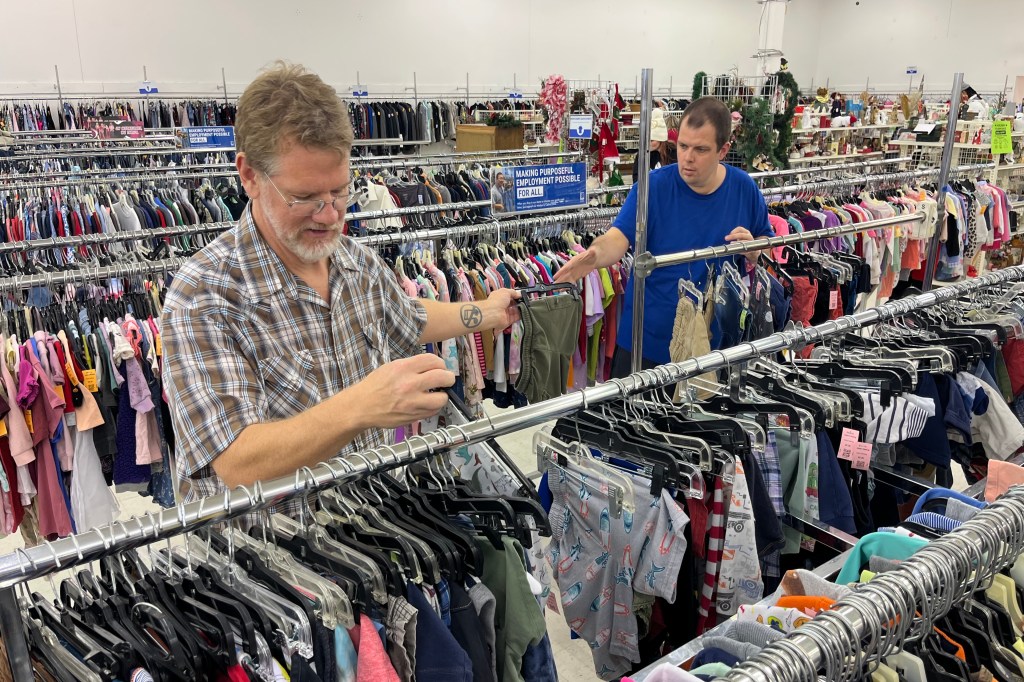
- Trump’s Cuts to Medicaid Threaten Services That Help Disabled People Live at Home
- Listen: What To Do When Health Insurance Slips Out of Reach

- As ICE Moved In, Minnesotans Set Up a Shadow Medical System. It’s a Lesson for Other Cities.
- Forma Life Sciences launches with oral solid dose focus, joining class of new CDMOs
- AWS offers agentic AI solution to tackle scheduling, ambient note-taking and medical coding
- Opening Remarks at Private Markets Roundtable
- Eli Lilly launches its direct-to-employer platform for obesity drugs
- Eli Lilly launches its direct-to-employer platform for obesity drugs
- Hospitals decry drugmakers' expanded claims reporting policies for 340B
- CVS unveils Health 100, its new Google-powered consumer engagement platform
- Remarks at Financial Stability Oversight Council Artificial Intelligence Innovation Series Roundtable on Strategy and Governance Principles
- Collegium enrolls Paris Hilton in Jornay PM push encouraging ADHD community to 'Embrace Your Sparkle'
- Review of U.S. Measles Elimination Status Delayed Until November
- Your Furry Roommate May Be Affecting The Air You Breathe
- BioDuro enters Taiwan joint venture, adding commercial API plant to production network
- FDA answers Vanda's yearslong call for public hearing on unsuccessful jet lag approval bid
- MUSC Health acquires South Carolina's largest multispecialty practice for $111M
- About 81,000 Baby Monitors Recalled Over Possible Fire Risk
- Armed with funding and an acquisition, Procode AI launches AI-powered RCM for surgical billing
- Charities merge to form nation's 'most comprehensive' patient assistance nonprofit
- Two Days of Oatmeal May Lower Cholesterol, Study Finds
- Bayer looking at another year of 'resilience' before growth kicks in behind Nubeqa, Kerendia
- Colorectal Cancer Rates Shifting to Younger Groups as Rectal Cancer Rates Spike
- Brain Chemical Provides A 'Pep In Your Step,' Experiment Shows
- Lithium Might Slow Brain Decline Among Seniors, Pilot Study Shows
- Exercise Boosts Quality of Life During Breast Cancer Chemotherapy
- Early Sports Specialization Linked To Increased Injury Risk
- More Kids, Teens Injured In E-Bike Wrecks, Study Finds
- Novo lands another FDA untitled letter, this time for Apple-inspired Ozempic ad
- Moderna fronts $950M to settle yearslong COVID patent litigation with Genevant, Arbutus
- Despite Their Successes, Some Mobile Crisis Response Teams Are in Crisis
- Healthcare’s mixed Q4, plus insights from the Lake Nona Impact Forum
- FDA ramps up crackdown on GLP-1 drug compounding with fresh batch of 30 warning letters
- HCA Healthcare says all-time high inpatient occupancy, ACA exchange attrition won't spoil 2026 volume growth
- Papa rolls out new program for insurers called Papa Plus
- AI Therapist? It Falls Short, a New Study Warns
- Grow Therapy scores $150M to build out enterprise partnerships with docs, employers
- Nearly 20 States Scale Back HIV Medication Programs
- BBQ Sauce Recall Issued Nationwide Due To Incorrect Label
- FDA Recalls More Than 651,000 Jugs of Water Over Sanitation Concerns


Minnesota clearly suffers from outrageous Medicaid and Medicare fraud, but they are the bush leagues when compared to California. Wonder no more why the federal government is going bankrupt and your future benefits are at risk:
Los Angeles County Hospice Industry Under Scrutiny for Suspected Medicare Fraud
With 2,000 Hospice Agencies, Los Angeles County has more than 36 states combined and 30X More Than Florida and New York
By Chet McSnark - February 1, 2026- 18% of THE WHOLE COUNTRY'S home health care billing is coming out of Los Angeles County
- One doctor billed the government $120 million in a single year claiming to oversee 1,900 patients
Los Angeles County has drawn significant attention from federal officials due to concerns over potential fraud in the Medicare hospice and home health care sectors. Recent reports indicate that the county accounts for approximately 18% of the nation's total Medicare billing for these services, despite representing only about 2.5% of the U.S. population.
According to statements from CMS Administrator Dr. Mehmet Oz, the region has experienced a seven-fold increase in hospice billing activity over the past five years. Oz has estimated that fraudulent activity in Los Angeles County hospice and home health care could amount to roughly $3.5 billion annually. Federal data shows the county hosts nearly 1,923 hospice providers, a number that exceeds the total in many other states combined.
Investigations have highlighted patterns such as excessive geographic clustering of providers, with multiple agencies sometimes operating from the same address. Examples include reports of dozens or even over 100 hospices listed at single locations, often in commercial areas like strip malls or office buildings. Federal and state authorities have identified cases involving sham operations that bill Medicare for services not provided, enrollment of ineligible patients, and other irregularities.
In response, California implemented a moratorium on new hospice licenses starting in 2022, which has been extended through January 1, 2027. Since the moratorium began, the state has revoked more than 280 hospice licenses. California Attorney General Rob Bonta has described hospice fraud as an epidemic in the greater Los Angeles area, with ongoing prosecutions resulting in criminal charges, civil cases, and prison sentences for individuals involved in multimillion-dollar schemes.
Federal efforts have also intensified. CMS has referred cases to law enforcement, and congressional leaders from key committees have requested briefings from the HHS Office of Inspector General on the scope of the issue and actions being taken. Recent enforcement actions have included convictions and guilty pleas in schemes defrauding Medicare of tens of millions through fraudulent hospice billing.
These developments raise concerns about the integrity of Medicare funding and the potential impact on vulnerable patients, who may receive unnecessary or substandard care while legitimate providers face challenges. Federal and state officials continue to prioritize oversight and enforcement to address suspected fraud in the hospice industry.
Chet McSnark is the Santa Monica Observer's reporter covering health care policy and government accountability.
More from Fox News:
Los Angeles hospice fraud reaches billions as Medicare providers scam federal system with fake companies
Medicare chief says fraudulent providers scam taxpayers with ghost patients and sham companies in scheme involving corrupt doctors
By William La Jeunesse - January 30, 2026Ghost patients, sham companies, offshore owners and corrupt doctors. Auditors and prosecutors say hospice fraud in Los Angeles is off the charts, with providers scamming billions from taxpayers for patients that don't exist, poor care and no care.
"Hospice is crazy here," says Dr. Mehmet Oz, head of the Centers for Medicare and Medicaid Services.
"You've got hospice that's grown seven-fold in the last five years. They represent about three and a half billion dollars of fraud, we believe, just in LA County."
Backing him up was California Attorney General Rob Bonta, who said last year, "Hospice fraud has become an epidemic in California, specifically in the greater Los Angeles area."
Bonta says fraudulent providers submit false claims for unnecessary services, and recruiters get kickbacks for signing up seniors, whether they're sick or not. Hospices also enroll patients who don't even know they've been scammed until they seek out medical care.
"As a hospice owner, I could sign up everybody in this room for hospice," an LA hospice owner told us.
A whistleblower told us there's no limit on the number of hospices an individual can own, and applicants can live abroad.
"It's all just paperwork. I could fill [an application] out in Kazakhstan if I want, and get a hospice license."
He explained how the scam works:
- Recruiters go to shopping centers and senior centers to sign up patients, promising them walkers, a month's supply of nutritional drinks, cash and weekly visits in exchange for a Medicare number.
- Recruiters then sell that "benny" or beneficiary's Medicare number to a provider for a $1,000 to $3,000 and receive a cut for every month the senior stays on their rolls.
- Hospice enrollees are supposed to have a terminal illness or life expectancy of six months or less. But frequently hospice owners treat patients like trading cards, moving them from one provider to another if they stay too long, which raises a red flag with auditors.
- In the U.S., more than 50% of hospice patients die within 18 days or less. In LA, the average length of stay is more than three months, and, in many hospices, patients never die, with court records showing hospices billing the federal government for 18 months and more.
- In LA, a hospice is paid by the federal government $260 a day for each day a senior is under its care.
- Hospices can fraudulently obtain more money by "upcoding" and "unbundling" procedures to inflate invoices.
"A Medicare MIB number is more lucrative than a credit card," says Sheila Clark, president of the California Hospice and Palliative Care Association, referring to the 11 character code each Medicare recipient has that allows federal reimbursement. "They're human traffickers. They're trafficking beneficiaries in and out of hospices, home health."
LA County alone has 1,923 hospice providers. That's more than 36 states combined and 33 times more than either Florida's 58 cents or New York's 40, even though LA has hundreds of thousands of fewer seniors.
Rob Bonta speaking in front of American flag
California Attorney General Rob Bonta announces the state is suing the White House to restore SNAP funding before the cutoff during a news conference in Sacramento, Calif., Oct. 28, 2025. (Reuters/Fred Greaves/File Photo)"Eighteen percent of the whole country's home health care billing is coming out of Los Angeles County," says Oz. "How is that possible?"
The epicenter of LA's fraud happens in the San Fernando Valley, specifically the Van Nuys neighborhood where state auditors found 210 hospice agencies within a square mile. One commercial building — without any signage indicating hospice services were located inside — received state licenses for 112 hospices. Fox News went to those addresses and did not see a single person.
At other locations in the valley, hospices operated inside strip malls alongside burrito stands, nail salons, dance studios, tax preparers and even an auto parts store and wrecking yard.
"These are Russian, Armenian gangs, mafia that are leading a lot of these efforts, we believe, have been able to corrupt, and work with doctors who are willing to lie," says Oz.
Oz was referring to the dozens of defendants of Armenian American descent prosecuted for Medicare fraud at both the federal and state level.
Investigators first uncovered the international organized crime connection about 10 years ago when federal prosecutors charged 73 members and associates throughout the U.S. and Armenia of stealing $100 million from Medicare by using a series of phantom clinics to bill for thousands of unnecessary medical treatments.
Known as the Mirzoyan-Terdjanian crime ring, defendants received one- to three-year sentences for racketeering, health care fraud and money laundering. Since then, many other Armenian American hospice owners have been prosecuted in California.
California imposed a moratorium on new hospice licenses until it can clean up the industry. Problem is, hundreds of fraudulent providers remain in business, says Clark. And when seniors actually need care, they can't get it because the hospice "owns" their Medicare numbers, prohibiting legitimate doctors and hospitals from providing care.
"They call the hospice, there's no working phone number. There's nobody there. I've had Benny's bang on the door. There is nobody there. What do they do? They say, 'I didn't enroll in this hospice.' They need the care but can't get it," says Clark.
"We need to listen to these people when they say, 'I've been scammed.'"
California Governor Gavin Newsom does not want Americans to believe their lying eyes:
Newsom files a civil rights complaint against Dr. Oz in latest feud with the Trump administration
By Jaimie Ding and Ali Swenson - January 30, 2026AP, Los Angeles – California Gov. Gavin Newsom’s office is demanding a civil rights investigation of Dr. Mehmet Oz, saying he discriminated against Armenians in a video claiming hospice fraud in Los Angeles, the latest front in the state’s ongoing battle with the Trump administration.
The Democratic governor's complaint, filed Thursday, came after Oz posted a video on social media in front of an Armenian bakery in Los Angeles, alleging that roughly $3.5 billion in hospice and home care fraud has taken place in the city and “quite a bit of it” was run by “the Russian Armenian mafia.” Oz is the administrator for the Centers for Medicare and Medicaid Services, which certifies hospice providers to accept patients on government-subsidized health insurance.
Newsom's office argued in the complaint that Oz “spewed baseless and racially charged allegations" that risked chilling participation in hospice and home care programs among the community targeted. His office said the claims had “already caused real-world harm” by dampening business at an Armenian bakery that is shown in the video.
“Mafia? There is no Armenian mafia going on here. We’re just hardworking business owners. I don’t understand why he’s mentioning just Armenians,” Movses Bislamyan, whose family-owned bakery appears in Oz’s video, told KABC-TV.
Oz and CMS didn't immediately respond to a request for comment on the complaint or the content of the video, and they haven't publicly shared details about the fraud being alleged.
Oz’s video also points to a larger Trump administration effort to spotlight fraud around the country. That effort comes after allegations of fraud involving day care centers run by Somali residents in Minneapolis prompted a massive immigration crackdown in the Midwestern city, resulting in widespread protests.
Earlier in the week, Newsom acknowledged fraud in hospice care in California but said the state has been working for years to crack down on it. He noted he signed a law in 2021 to stop providing new hospice licenses over fraud concerns and said the state has revoked more than 280 hospice licenses in recent years. Another 300 hospices are being examined for possible fraud, Newsom’s office said. The state did not immediately provide a list of all businesses that have had their licenses revoked.
“We’ve identified and cracked down on hospice fraud for years, taking real action to protect patients and taxpayers,” Newsom said in a statement.
Oz's video shows him visiting the Van Nuys neighborhood of Los Angeles and pointing to a four-block radius that he says is home to 42 hospices, suggesting potential fraud. He references a business that he says was part of a $16 million fraud scheme. Oz describes the Armenian script on the businesses' signs while the camera pans to the bakery.
"You notice the lettering and language behind me is of that dialect,” says Oz, whose parents emigrated to the U.S. from Turkey. He also claims there “has not been a lot of attention on these problems” in California.
Aram Hamparian, executive director of the Armenian National Committee of America, said Oz’s comments invoke “easy stereotypes” about the Armenian community, which has deep roots in California.
More than 200,000 people of Armenian descent are estimated to live in Los Angeles County, where April is celebrated as Armenian History Month. A small section of Los Angeles is known as Little Armenia, and the suburban city of Glendale, about 15 miles (24 kilometers) from where Oz recorded the video, is a center of the community.
Hamparian said Oz’s connections to Turkey are concerning. That nation's government does not acknowledge the killing and deportation of Armenians by Ottoman Empire forces in the early 1900s, known as the Armenian genocide.
“Things have been dealt with at the state level, prosecutions have been made,” Hamparian said. “But Dr. Oz is taking this in an entirely destructive direction by scapegoating, by fear-mongering, by staging the theatric collective indictment of all Armenians.”
Turkey and Armenia have long been strained by historic grievances and Turkey’s alliance with Azerbaijan. The neighboring countries have no formal diplomatic ties, and their joint border has remained closed since the 1990s, though late last year they agreed to simplify visa procedures in an effort to normalize ties.
The feud is among many that have sprung up between Newsom, seen as a potential Democratic presidential candidate for 2028, and the Republican administration of President Donald Trump. Newsom and Trump have clashed over issues ranging from the federal administration’s National Guard deployment in Los Angeles to the president’s efforts to block California’s 2035 ban on new gas-powered cars, a nationwide first.
41% of California's job growth since 2019 comes from a single Medi-Cal program: In-Home Supportive Services. IHSS is available to citizens, legal residents, and illegal residents. IHSS “provider" is now the most common job in California, with 800,000 practitioners
During FY 2026, California's In-Home Supportive Services cost the state $ 10.6 billion and the Federal Government $ 18 billion. None of these funds pay for traditional health care in medical settings:
https://www.thecentersquare.com/california/article_875f12ea-0e73-4b96-9b3b-da4f14f4ec20.html
Medi-Cal spends $608M monthly on cooking, cleaning home services, even for illegal immigrants
By Kenneth Schrupp | February 2, 2026(The Center Square) – Medi-Cal is paying an estimated $608 million per month for cooking, shopping, cleaning, and laundry services for elderly and disabled low-income California residents – including illegal immigrants – at their homes and mostly paid to their relatives, state records show.
These services are part of a federally-and-state-funded program called In-Home Supportive Services, which was designed to get people assistance at home without having to move to an expensive facility. But the program has grown so rapidly that it is responsible for 41% of job gains in California since January 2019, when Gov. Gavin Newsom took office.
By the end of 2025, the program had grown to 799,379 taxpayer-funded “providers,” making IHSS “provider," according to federal occupational data, the most common job in the state.
Gov. Gavin Newsom’s office responded by accusing The Center Square of having “California Derangement Syndrome" after the news organization asked about the dominance of IHSS in California employment, citing federal statistics.
Newsom spokesperson Tara Gallegos also questioned the cited numbers.
“We don’t respond to fairy tale statistics,” she wrote in an email to The Center Square. “We’re sorry that your California Derangement Syndrome has led you down this sad path.”
Four minutes before Gallegos’ response, California’s Employment Development Department released its own report on the state’s net loss of 11,200 nonfarm payroll jobs in 2025, which would have been over seven times worse if not for IHSS growth.
The governor’s office did not respond to a follow-up with the state’s own figures.
The majority of IHSS providers are relatives of and live with recipients, and are paid an average of $18.33 per hour. The average recipient is authorized for 118.4 hours per month, thus earning the average provider an estimated $2,170.27 per month.
“We see a growth in government jobs, and dramatic decrease in private sector jobs in California, and that is very alarming and unsustainable,” said Assemblyman Carl DeMaio, R-San Diego, in an interview with The Center Square. “Not only are these not good jobs, they are literally a conduit of funding for political campaigns for the politicians that have established them.”
Since January 2019, government jobs, and taxpayer-funded jobs in healthcare and education grew by 852,400 jobs, while all other industries combined lost a net 139,300 payroll jobs. During this time, the U.S. Census estimates state’s population also declined by 156,914 residents.
As DeMaio noted, IHSS members are unionized, under SEIU Local 2015. Another SEIU healthcare union, SEIU-UHW, recently introduced a ballot measure to institute a wealth tax on California billionaires.
For the ongoing fiscal year, the state budget allocated $3.3 million for California to “support IHSS collective bargaining and its potential transition to state level collective bargaining,” suggesting changes in compensation for IHSS providers may be coming soon. This means provider wages could rise to match the state’s $25 per hour healthcare minimum wage, which would increase base labor costs for the program by 36%.
To receive paid in-home care through IHSS, a recipient is supposed visited by a social worker to establish the maximum number of allowable billable hours. There are also supposed to be scheduled visits to review the need for services.
IHSS breaks these services into two categories: domestic and related services, and personal care services.
Combined monthly billing for both domestic and personal services provided through the program is an estimated $1.6 billion per month for 85 million hours of work. IHSS is projected to cost $29.9 billion in the ongoing fiscal year, an 11.9% increase over the prior year — reflecting the program’s compounding costs.
In December, the average IHSS provider was authorized to provide 45.9 hours of care across the domestic and related services category, though not all services are utilized by each recipient (use rates range from 80.5% through 83.5%). These include domestic services — such as cleaning — buying food, preparing and cleaning after meals, laundry, and other shopping and errands.
Food-related domestic services represent a combined 35.7 hours of authorized work per recipient each month, reflected in 25.7 million hours of billable work across the IHSS workforce. At the typical IHSS wage, that’s $472 million per month on just those food-related services — domestic services, laundry, and other shopping and errands cost another $136 million per month.
Personal care includes a much wider array of services, and wider variance in usage, ranging from menstrual care (4.4% of recipients) to dressing (88.8% of recipients). Billing hours for personal care added up to 51.9 million hours per month at a taxpayer-funded cost of $951 million per month.
During last year's budget cycle for the ongoing fiscal year, a proposal to eliminate IHSS coverage for illegal immigrants was ultimately not adopted. The state did adopt a freeze on new illegal immigrant enrollment in Medi-Cal for adults over 19 years old starting in January 2026.
While there is a long-standing rule technically barring illegal immigrants from serving as IHSS providers, illegal immigrants already enrolled in Medi-Cal are still able to secure IHSS-funded care.

OBBBA cuts, then LA raises taxes.
If someone wanted to localize healthcare costs, they're doing a pretty good job.
LA County supervisors place sales-tax for health care on June election ballot
The county sales tax currently stands at 9.75%. The latest proposed hike would increase it to 10.25%.
City News Service | February 10, 2026
Los Angeles County voters will decide in June whether to approve a temporary half-cent sales tax in an effort to support healthcare services at a time of reductions in state and federal funding.
The county's board of supervisors on Tuesday approved placing the measure on the June election ballot.
The proposal, introduced by Supervisors Holly Mitchell and Hilda Solis in January, is called the Essential Services Restoration Act. It asks voters to enact the half-cent general sales tax increase for five years, through Oct. 1, 2031.
An estimated $1 billion would be generated from the measure, according to the county.
The county sales tax currently stands at 9.75%. The latest proposed hike would increase it to 10.25%.
After hours of debate and public discussion Tuesday, the Board of Supervisors agreed on a 4-1 vote, with Supervisor Kathryn Barger dissenting, to place the proposal on the June ballot.
"Backfilling federal funding cuts on the backs of county taxpayers is not acceptable," Barger said in a statement after the vote. "Los Angeles County residents are already stretched thin. Last year, Bloomberg News reported that Los Angeles now has the highest sales tax rates of any major metropolitan region in the nation. This proposed half-cent increase would push us even
higher, making our county less affordable for families and less appealing for consumers to shop and businesses to operate. We are risking imposing higher everyday costs and small businesses and employers choosing to leave Los Angeles County altogether."Mitchell argued during the meeting, however, that healthcare services in the county will face dire losses if the board takes no action to restore funding that she said was slashed under the federal budget bill passed earlier this year.
The county sales tax already increased in April 2025 after voters approved Measure A, a half-cent sales hike that replaced Measure H, a quarter-cent sales tax. The funding from the tax supports homeless prevention initiatives.
Mitchell, who represents the Second District, encompassing south LA County cities and unincorporated areas, worked with a coalition of healthcare organizations and workers, called Restore Healthcare for Angelenos, on the proposal. Coalition members have said that if the supervisors had not approved the proposal, they would have launched a signature-gathering campaign to place the measure on the November ballot anyway.
Last year's federal budget bill, known as the "One Big Beautiful Bill Act," which was approved and signed by Congress and President Donald Trump, detailed billions of dollars of reductions in healthcare funding. Those reductions to Medi-Cal, coupled with eligibility changes, will impact county residents, who could face loss of coverage and reduced access to care.
"The county's most impacted departments face projected losses totaling $2.4 billion over the next three years,'' the supervisors' motion reads. "Due to funding losses, county officials have already initiated hiring freezes and are contemplating service consolidations, potential layoffs of 5,000 staff, and facility closures in the coming years."
State funding reductions in healthcare are exacerbating the issue. Due to budget constraints, California rolled back health care coverage for undocumented immigrants and reduced funding for other initiatives.
In January, the California Department of Health Care Services stopped enrolling new adult patients without legal status in its state-funded health care program, Medi-Cal. The state is expected to cut non-emergency dental care for immigrants here illegally who are already enrolled in the program.
State officials agreed to enact a $30 monthly premium starting in July 2027 for immigrants who remain on the program, including those with legal status.
Federal dollars do not support these initiatives, as using federal funding for those here illegally is against the law.
A similar sales tax hike was approved in November by voters in Santa Clara County to address reductions in federal funding on health care, and some labor unions are pushing for a proposed statewide billionaires tax to support the health care system.
If approved by county voters, the proposed measure would further establish a nine-member citizens' oversight committee to ensure fiscal accountability for any revenue raised, which involves annual independent audits and making recommendations on how to allocate the funding.
Committee members would serve three-year terms and they would be eligible for reappointment by the Board of Supervisors.
Money raised by the tax measure would be expended as follows:
up to 47% would support the county Department of Health Services;
about 5% would benefit school-based health needs and programs as determined by the governing board of L.A. Care Health Plan;
another 10% would support the county Department of Public Health and its core public health functions;
about 5% would be allocated to the county Department of Public Social Services to support Medicaid outreach and enrollment activities, and volunteer programs;
another 2.5% would go toward the Correctional Health Services;
some 22% would fund DHS to safeguard public hospitals and clinic services;
about 5% would be allocated to support nonprofit hospitals in the county, and provided funding to entities that meet certain criteria;
another 2.5% would support in-home supportive services for seniors and people with disabilities;
about 1% would support the cities of Pasadena and Long Beach, which have separate Public Health Departments from the county; and
any remaining funds would be disbursed in a need-based manner focused on emergency department volume.
The Howard Jarvis Taxpayers Association has criticized the proposed sales-tax measure."The sales tax is already too high in Los Angeles County, so high that the most recent half-percent increase for homelessness services required special legislation from the state to allow it to exceed the cap on local sales taxes that is in state law. Raising the sales tax again is unreasonable and unfairly harsh on those who are least able to afford it,'' the association said in a statement.
The organization is working to qualify an initiative constitutional amendment to rescind recently approved special taxes and ensure a two-third vote requirement for all local special taxes.
Get MHF Insights
News and tips for your healthcare freedom.
We never spam you. One-step unsubscribe.
Sponsors
Friends of MHF





Kirsten DeVries
Tom & Karen Nunheimer
Steve Ahonen
Ron & Faith Bosserman
Marlin & Kathy Klumpp
Sign Up for MHF Insights to keep up on the latest in Michigan Health Policy