- PDS Health opens practices in California, Virginia

- OHSU opens $650M cancer pavilion
- Lakeland Regional Health plans 2 freestanding EDs
- Supreme Court backs challenge to Colorado conversion therapy ban
- Virginia behavioral health hospital names president
- After Man’s Death Following Insurance Denials, West Virginia Tackles Prior Authorization
- FTC: Evidence too strong to toss USAP antitrust case
- Average tuition for 12 best dental schools in the US
- Lifepoint Health to acquire 8 ScionHealth hospitals
- The Hospitals Winning on LOS Have Better Technology – and They Know How to Use It.
- New York medical society demands physician privileges be protected in Maimonides merger
- 4 hospital, health system layoffs in March
- Texas to lead ibogaine research after pharma proposals fall short
- Advocate plans largest drone delivery network and 2 more supply chain updates
- AI scribes linked to time savings at 5 health systems
- New Hampshire ASC 1st in US to earn new accreditation
- Amgen drug under FDA review in wake of 8 deaths
- Hennepin Healthcare warns of closure without legislative funding
- Hennepin Healthcare warns of closure without legislative funding
- Visa renewal delays sideline physicians at US hospitals
- BayCare residency program size doubles on Match Day gains
- Ohio GI practice acquired
- Health systems rethink innovation
- 8 revenue cycle headlines to know from March
- Prisma Health plans ASC in Tennessee
- Bill takes aim at ASC, HOPD payment gap
- Ensemble, Cohere building first RCM-native LLM
- Honey Almond Cream Cheese, Sold at Einstein Bros. Bagels, Recalled Due To Undeclared Nuts
- Trump Supports Surgeon General Pick Despite Senate Concerns
- Tennessee orthopedic practice closes abruptly
- 4 health systems back in the black in 2025
- ‘Our stockholders are the members of our community’: Inside Carilion Clinic’s mission-driven margin strategy
- Lilly answers Novo's GLP-1 pill with highly anticipated FDA nod for Foundayo
- Supreme Court Blocks Colorado Limits on Therapy for LGBTQ Minors
- Antidepressant Might Help Long COVID Fatigue, Study Says
- Home-Delivered Groceries Boost Heart Health In Food Deserts, Study Says
- Nicotine E-Cigarettes Help Smokers Quit, Review Concludes
- Kinesio Taping’s Benefits in Doubt, Major Evidence Review Finds
- High Sodium Intake May Trigger New Heart Failure
- Study Shows BMI Often Gets Your Weight Category Wrong
- Clinicians are burnt out. Peer support can help
- Novo's Wegovy nets cardio nod from UK cost gatekeeper, adding 1M+ eligible patients
- Trump’s One Big Beautiful Bill Act Darkens Outlook for Government-Backed Clinics
- Readers Sound Off on Wage Garnishment, Work Requirements, and More

- CVS Health opens pharmacy-only locations as it rightsizes store footprint
- How Rural Health Systems Are Advancing Cardiac Imaging
- How Rural Health Systems Are Advancing Cardiac Imaging
- Beyond Reimbursement: Why Market Access is MedTech’s Strategic North Star

- Beyond Reimbursement: Why Market Access is MedTech’s Strategic North Star
- Evotec hires exec with AI experience to lead rebooted commercial team
- The Human Side of AI Medical Devices: Why Safety Depends on Design, Not Just Algorithms

- The Human Side of AI Medical Devices: Why Safety Depends on Design, Not Just Algorithms
- Whoop raises $575M series G, Abbott comes on board amid hiring spree
- True ROI of health tech, according to finance leaders
- ‘There isn't as much meat left to cut’: Biopharma layoffs maintain slowdown in Q1
- Where 6 specialty DSOs stand in 2026
- 16 new ASCs in March
- Intermountain joins national trauma, grief network
- Practice closures, new dental schools, DLRs & more: 6 dental updates in New York
- Workforce, patient care, private equity & more: 5 statistics scaring dentists
- American Society of Addiction Medicine updates youth treatment standards
- The shifting oral surgery landscape
- Moody’s upgrades UK King’s Daughters’ credit rating
- Private equity in dentistry has gotten smarter
- 7 DSO leadership changes to know
- University Hospitals swings from loss to 2.6% margin in 2025
- Mark Cuban backs bill to break up vertically integrated insurers
- Lawmakers introduce child suicide prevention bill
- Bipartisan bill introduced to stabilize physicians' year-to-year pay changes
- Dental lab group receives private equity investment
- Dental Care Alliance appoints chief revenue officer
- UnitedHealthcare launches Avery, a generative AI companion for members
- 14 behavioral health executive moves to know
- Missouri agencies warn of rising nitazene threat
- Only 44% of SUD treatment facilities accept older patients on Medicare: HHS report
- 7 state behavioral health policy updates
- Republicans eye further healthcare cuts: Report
- Uninsured patients drive nearly 40% of healthcare collections: Cedar survey
- FDA flags serious liver injury cases, 8 deaths with ‘reasonable’ link to Amgen's Tavneos
- Novo Nordisk cuts 400 roles at troubled Bloomington site
- Former U.S. Surgeon General Challenges Trump Nominee
- Iterum initiates wind-down after failure to offload antibiotic with sluggish sales
- Listen to the Latest ‘KFF Health News Minute’
- Over 10.2 Million Grill Brushes Recalled Over Metal Bristle Risk
- Sex Enhancement Chocolates Recalled Over Hidden Drug Ingredients
- Short Bursts of Exercise Linked To Lower Risk of Major Diseases
- HHS urges hospitals to align patient menus with updated dietary guidance
- Hartford HealthCare, K Health launch PatientGPT, new AI tool to help patients find health information
- Ensemble partners with Cohere to build first RCM-native large language model
- API supplier BASF raises prices up to 20% in response to rising energy, raw material costs
- Biogen, eyeing swift commercial tailwind, ponies up $5.6B for Apellis and its 2 approved meds
- Cold Weather More Deadly For The Heart Than Heat, Study Finds
- Teens' Sleep Patterns Affect Their Diet, Exercise, Study Says
- 'Watch and Wait' Approach Safe For Women With Precancerous Breast Condition, Trial Finds
- Dental Care Can Help Cirrhosis Patients Avoid Liver Cancer, Hospitalization
- Folks With Clogged Arteries Benefit From Aggressively Lower Cholesterol Goal
- Intermittent Fasting Might Help Manage Female Hormone Imbalance, Trial Shows
- States Pay Deloitte, Others Millions To Comply With Trump Law To Cut Medicaid Rolls
- Trump’s Hunt for Undocumented Medicaid Enrollees Yields Few Violators
- States pay Deloitte, others millions to comply with Trump law to cut Medicaid rolls
- Employer telehealth company eMed raises $200M at $2B valuation
- Insulet hires Stryker vet, reinstating commercial chief role as C-suite overhaul continues
- FDA extends review of Orca Bio’s novel cell therapy for blood cancers
- Nonprofit Electronic Frontier Foundation sues CMS over AI prior authorization demonstration
- CDRH Guidance: Patient Preference Information (PPI) in Medical Device Decision Making
- CDRH Guidance: Patient Preference Information (PPI) in Medical Device Decision Making
- BSCI’s LAAC CHAMPION-AF study for WATCHMAN FLX meets primary and secondary safety and efficacy endpoints
- BSCI’s LAAC CHAMPION-AF study for WATCHMAN FLX meets primary and secondary safety and efficacy endpoints
- Apple Store to ID Regulated Medical Device Apps
- Apple Store to ID Regulated Medical Device Apps
- CMS: This year's open enrollment brought fewer signups, higher premiums
- Medical Schools No Longer Required To Teach Health Inequities
- Lilly presses for UK deal that would see higher drug prices in exchange for resumed investments: FT
- United plots Tyvaso FDA filing after ph. 3 win elicits talk of 'new IPF standard' and blockbuster sales
- Fluoride Quietly Removed From Birmingham Water Years Ago, Officials Face Backlash
- FDA Weighs Expanding What Can Go Into Supplements
- 9 Now Sickened in Outbreak Tied To Raw Milk and Cheese
- BMS, Novartis, Gilead, Iovance dinged over biologics promos in rare spate of CBER untitled letters
- Nearly half of US hospital markets entirely controlled by 1 or 2 health systems: KFF
- Mental health provider platform Headway acquires team behind AI company Tezi
- Idorsia eyes pediatric insomnia use with midstage trial win for sleep med Quviviq
- Electronic Paperwork Increasing Burnout Risk Among Young Doctors
- Kratom Cases Surging In U.S.
- What Makes Play Fun For Children? Seven Factors Stand Out, Study Says
- Night Shifts Are Tough On People With Type 2 Diabetes, Study Says
- Women's Bone Loss Tied To Heart Health, Study Finds
- Want To Lose Weight? Eat A Boring, Repetitive Diet, Researchers Suggest
- Samsung Biologics union gathers votes to strike as tension over wage, governance mounts
- Takeda begins US layoffs as part of massive $1.3B restructuring
- Biogen looks to shake up SMA status quo with FDA nod for high-dose version of Spinraza
- She Owed Her Insurer a Nickel, So It Canceled Her Coverage
- Inside the High-Stakes Corporate Fight Over Feeding Preterm Babies

- Study Links High Antioxidant Intake To Changes in Offspring Development
- The Healthcare Burnout Backlash (pt 1): Burnout Reaches Well Beyond Clinicians
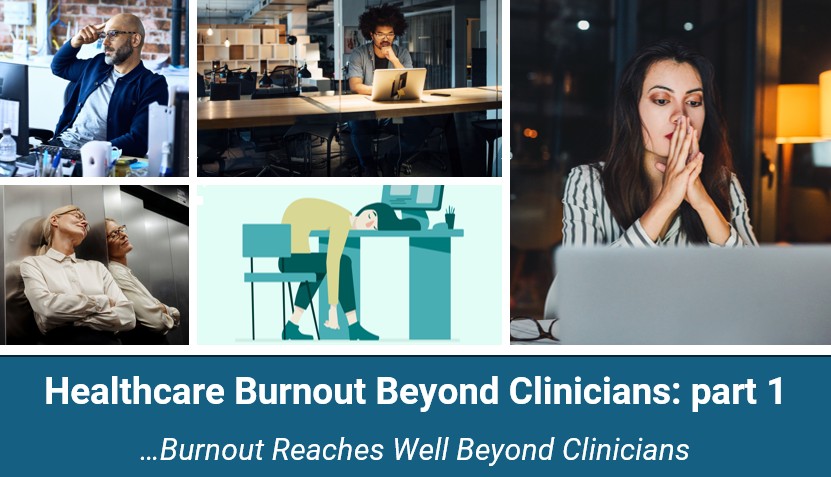
- The Healthcare Burnout Backlash (pt 1): Burnout Reaches Well Beyond Clinicians
- Even Mild Oxygen Loss in Preemies' First Hours Poses Lifelong Brain Risks: Study
- How the Trump Administration Uses Migrant Kids To Find and Detain Family Members
- Oral GLP-1s, COVID preventatives: 3 more drugs in the pipeline, Optum says payers should watch
- Providence trims 2025 operating loss to $132M, notches second consecutive quarter of gains
- $3M Verdict Links Social Media to Anxiety and Depression
- The White House Delays CDC Pick
- New COVID 'Cicada' Variant Is Spreading — What Experts Want You To Know
- Advocate Health to launch ‘nation’s largest’ hospital drone delivery program in Zipline partnership
- Op-ed: Empathy meets efficiency—how the responsible use of AI can transform Medicare
- Family Caregivers Provide $1 Trillion In Annual Labor, AARP Says
- ‘Health Doesn’t Need to Be Ludacris’: Bayer signs rapper-actor to multivitamin campaign
- Rocket plots measured trajectory for new gene therapy Kresladi after clearance to launch from FDA
- Healthy Lab Results May Mask Future Risks for Kids with Obesity
- At-Home Chemotherapy Is Safe, Feasible, Pilot Study Indicates
- What You Do While Sitting Could Predict Dementia Risk


Let's start this thread with a quick history of Medicaid prepared by the Center for Health Care Strategies (CHCS):
https://www.chcs.org/media/Medicaid-Timeline-Fact-Sheet_01.14.20v2.pdf
Medicaid: A Brief History of Publicly Financed Health Care in the United StatesFor more than 50 years, Medicaid has played an essential role in the U.S. health care system — now providing health coverage for more than 72 million Americans, including one in three children, more than half of all births in some states, and nearly two-thirds of nursing home residents. Following are key milestones, preceding the Social Security Act Amendments and beyond.
⚫ 1935
Social Security Act
Federal money is made available to states to provide financial assistance to
seniors, which initiates creation of the private nursing home industry.
Enables states to extend and improve services that promote the health of
mothers and children, particularly in rural and economically distressed
areas.
Assists states, counties, health districts, and other political subdivisions of
states in establishing and maintaining adequate public health services,
including the training of personnel for state and local health work.⚫ 1939
Federal Security Agency
Brings all federal programs around health, education, and social security together
under one agency.⚫ 1965
Social Security Amendments: The Birth of Medicaid and Medicare
Medicaid is created, expanding on existing federal support for health care
services for recipients of Aid to Families with Dependent Children.
Medicare is established with two components: Part A (hospital services)
and Part B (physician services) for people age 65 and older.
From the start, separate funding streams for each program, varying
payment rates, and different coverage rules create conflicting financial
incentives for federal and state governments and providers.⚫ 1967
Social Security Amendments: Covering Individuals with Disabilities and Children
Health insurance for individuals with disabilities increases; previously, one could only
be eligible if disabled at the time of filing the application.
Congress introduces Early and Periodic Screening, Diagnostic and Treatment (EPSDT),
which ensures that children under age 21 enrolled in Medicaid receive age appropriate screening, preventive care, and treatment services.⚫ 1972
Medicaid Eligibility for Elderly, Blind, and Disabled Individuals Linked to Supplemental Security Income (SSI) Eligibility
Provides a uniform baseline income for eligibility to Medicaid, in
conjunction with eligibility for SSI.⚫ 1981
Freedom of Choice and Community-Based Care Waivers
States are able to use Medicaid funds to provide an array of non-medical
services (excluding room and board) not otherwise covered by Medicaid if those
services allow recipients to receive care in community and residential settings as an
alternative to institutionalization.
States are required to provide additional payments to hospitals treating a
disproportionate share of low-income patients.⚫ 1982
Arizona: The Last State to Opt into Medicaid and the First with Statewide Managed Care
Arizona Health Care Cost Containment System is established, providing
medical services to eligible persons through a managed care system — the
first statewide Medicaid managed care system in the U.S.⚫ 1985
Consolidated Omnibus Budget Reconciliation Act (COBRA)
Provides temporary continuation of group health plan coverage for certain
employees, retirees, and family members at group rates when coverage is lost
under qualifying events.⚫ 1986
Emergency Medical Treatment and Labor Act
Requires hospital emergency departments to medically screen every patient who
seeks emergency care and to stabilize or transfer those with medical emergencies,
regardless of health insurance status or ability to pay.⚫ 1987
Omnibus Budget Reconciliation Act of 1987: Protections for Nursing Home Residents
Includes new requirements on quality of care, resident assessment, care
planning, and the use of neuroleptic drugs and physical restraints.
Implements mandatory use of a standardized, comprehensive tool, known
as the Resident Assessment Instrument, to assist in assessment and care
planning.⚫ 1989
Omnibus Budget Reconciliation Act of 1989: EPSDT Expansion
Expands EPSDT to ensure that all required screenings, preventive care, and
treatments are covered in every state in response to evidence of limited coverage for
children with mental and developmental disabilities.
The 1905(r)(5) requirement is implemented, including all medically necessary
services for children.⚫ 1989
Medicaid Coverage Expands for Pregnant Women and Young Children
Expands to include pregnant women and children aged under six in families
with an income up to 133 percent of the federal poverty level (FPL).
Expands early and periodic screening for anemia, urinary tract, and other
infections in pregnant women.⚫ 1990
Medicaid Further Expands Coverage and Lowers Drug Prices
Medicaid coverage expands to include children ages 6-18 under 100 percent of FPL.
The Medicaid Drug Rebate Program is created, which ensures Medicaid receives the
lowest price available for all prescription drugs.⚫ 1991
Medicaid Disproportionate Share Hospital Spending Controls
Provider-specific taxes and donations to states are capped.⚫ 1996
Mental Health Parity Act
Large group health plans can no longer impose annual or lifetime dollar
limits on mental health benefits that are less favorable than any such limits
imposed on medical/surgical benefits.
Welfare Link to Medicaid Severed
Aid to Families with Dependent Children is replaced by Temporary
Assistance for Needy Families (TANF).
Beneficiaries can receive health coverage through Medicaid without
receiving cash assistance.
Personal Responsibility and Work Opportunity Reconciliation Act
Women receiving cash assistance through TANF are guaranteed health coverage for
their families, including at least one year of transitional Medicaid when transitioning
from cash assistance to work.⚫ 1997
Balanced Budget Act
Spurs limited growth rates in payments to hospitals and physicians under
fee-for-service arrangements.
Restructures payment methods for rehabilitation hospitals, home health
agencies, skilled nursing facilities, and outpatient service agencies to incent
delivery of more efficient services.
Children’s Health Insurance Program (CHIP)
Public coverage rates for children in families with income between 100 and
200 percent of FPL increases by 26 percent, and rates for children with income in the
Medicaid range of under 100 percent of FPL increases by 15 percent.
Provides states with enhanced federal financing and greater flexibility in program
design compared to Medicaid.
By fiscal year 2000, every state, territory, and the District of Columbia has children
enrolled in CHIP-financed coverage.⚫ 1999
The Olmstead Decision
The U.S. Supreme Court holds in Olmstead v. Lois Curtis that unjustified
segregation of persons with disabilities constitutes discrimination, and
requires public agencies to provide services in the most appropriate and
least restrictive integrated setting that serves the needs of individuals with
disabilities.
Ticket to Work and Work Incentives Improvement Act
Amends the Social Security Act to expand health care coverage availability
for working individuals with disabilities.
Allows states to offer buy-in to Medicaid for beneficiaries with disabilities; states are
free to establish their own income and resource standards, including having the
option of no income or asset limits.⚫ 2009
American Recovery and Reinvestment Act
Subsidizes $87 billion in matching funds for two years to help states pay for the
additional Medicaid needs that usually occur in a recession.
Allocates $24 billion to cover 65 percent of COBRA premiums for up to nine months
for laid-off workers.⚫ 2010
Patient Protection and Affordable Care Act (ACA)
Adds consumer protections in health coverage, such as guaranteed issue of
health insurance, acknowledgement of pre-existing conditions, no lifetime
limits, and the allowance of young adults to remain on their parents’
insurance until age 26.
Expands access to affordable health coverage via insurance marketplaces,
Advance Premium Tax Credits, Cost Sharing Reduction, and Medicaid
expansion.
States are required to expand Medicaid to childless, able-bodied adults up to 138
percent FPL.
Includes programs related to advancing payment and delivery system reform, such
as the Medicare Shared Savings Program (upon which most Medicaid ACOs are
based) and a Medicaid Health Homes program.⚫ 2011
Community First Choice Option Established Under the ACA
Allows states to provide home- and community-based attendant services
and supports to eligible Medicaid enrollees under their state plan.⚫ 2012
National Federation of Independent Business v. Sebelius: Supreme Court Decision
The U.S. Supreme Court upholds Congress’ power to enact the ACA,
including a requirement for most Americans to have health insurance by 2014.
The court declares mandatory Medicaid expansion unconstitutional. States are given
the option to expand Medicaid eligibility to childless, able-bodied adults up to 138
percent FPL.⚫ 2014
CMS Defines “Home- and Community-Based” for Provision of Medicaid Services
Setting must ensure an individual’s rights of privacy, dignity, and respect,
and freedom from coercion and restraint, and optimize, but not regiment
individual initiative, autonomy, and independence.
ACA Medicaid Expansion and Insurance Marketplaces
Increased eligibility for US residents with household incomes up to 138
percent of FPL who live in an expansion state.
Initial Medicaid expansion states, as of October 2019, include Alaska, Arizona,
Arkansas, California, Colorado, Connecticut, Delaware, Hawaii, Idaho, Illinois,
Indiana, Iowa, Kentucky, Louisiana, Maine, Maryland, Massachusetts, Michigan,
Minnesota, Montana, Nevada, New Hampshire, New Jersey, New Mexico, New York,
North Dakota, Ohio, Oregon, Pennsylvania, Rhode Island, Utah, Vermont, Virginia,
Washington, Washington D.C., and West Virginia.⚫ 2018
CMS Approves 1115 Waiver that Includes Work Requirements
CMS approves provisions for the first time that allow linking eligibility to
meeting work requirements for ACA expansion and non-expansion
populations. The provisions also allows states to charge premiums up to
five percent of family income.⚫ The Future…
The Center for Health Care Strategies (CHCS) is a nonprofit policy center dedicated to improving the health of
low-income Americans. It works with state and federal agencies, health plans, providers, and community-based
organizations to develop innovative programs that better serve people with complex and high-cost health care
needs. For more information, visit www.chcs.org

What a mouthful! It's easy to see why Medicaid pervades care and policy.
Their "Future" segment surely includes OBBBA work requirements, plus vociferous industry and bureaucratic objections to all change to the status quo.
MedPage's report on state and industry impact from a recent SCOTUS decision is a case in point. Note the politically-coded use of "disparities," and don't take the title's reference to patients as exclusive concern for the same.
https://www.medpagetoday.com/opinion/second-opinions/116376
Supreme Court's Medina Ruling Is a Blow to Medicaid Patients
— The decision limits patients' rights and access to reproductive care
by Suhasini Ravi, JD, MPH, and Sarah Wetter, JD, MPHJuly 3, 2025Just days after the 3-year anniversary of the Supreme Court's ruling in Dobbs v. Jackson Women's Health Organization, the court has issued another decision that will exacerbate disparities in access to critical healthcare, including reproductive healthcare, contraception, preventive care, mental health care, and cancer screening.
On June 26, the Court ruled (6-3) in Medina v. Planned Parenthood South Atlantic that Medicaid beneficiaries have no right to enforce Medicaid's "free choice of provider" provision, and therefore, no right to challenge South Carolina's decision to disqualify Planned Parenthood from the state's Medicaid program. This decision is not the only threat to patients and Planned Parenthood -- Congress also is poised to prohibit federal Medicaid funds from flowing towards Planned Parenthood for 1 year under the One Big Beautiful Bill Act.
The Medina Ruling
The Medina case stemmed from a 2018 executive order by South Carolina's Governor, Henry McMaster (R), that categorically barred all health facilities and providers that perform abortions from Medicaid reimbursement. Governor McMaster took this step even though a long-standing federal requirement known as the Hyde Amendment prohibits the use of federal Medicaid funds for abortion services except in narrow circumstances.
Two Planned Parenthood clinics and one patient brought a lawsuit arguing that the order violated the Medicaid Act's "free choice of provider" provision, which allows Medicaid beneficiaries to receive care from any qualified and willing provider of their choice. The Supreme Court did not address whether South Carolina violated this provision by disqualifying Planned Parenthood. Rather, the court focused on whether Medicaid beneficiaries have the right to sue government officials who violate this provision under a prominent civil rights law known as Section 1983.
The majority ruled that the "free choice of provider" provision does not confer a federal right to Medicaid beneficiaries to sue over South Carolina's exclusion of Planned Parenthood from the Medicaid program. The court determined that Congress did not use sufficiently "clear and unambiguous rights-creating language" in the "free choice of provider" provision, emphasizing that the word "right" does not appear at all. As a result, patients do not have the right to sue the state under Section 1983. Finding no individual right, the majority noted that Medicaid functions as a contract between the federal and state governments, and the proper remedy for a state's violation of the "free choice of provider" provision is thus for the federal government to withhold the state's Medicaid funding.
Justice Ketanji Brown Jackson, joined by justices Sonia Sotomayor and Elena Kagan, dissented and argued that the "free choice of provider" provision did, in fact, include sufficiently clear rights-creating language to allow patients to sue. The dissent would have affirmed that low-income individuals could sue under Section 1983. The dissent thus describes the majority's decision as part of "the project of stymieing one of the country's great civil rights laws."
What Happens Next?
While dismantling a patient's right to sue a state under the "free choice of provider" provision, the majority pointed to other remedies. The court asserted that the federal government, via the Health and Human Services secretary, has the discretion to enforce the "free choice of provider" provision by withholding Medicaid funding from states in violation of the provision. This enforcement mechanism seems unlikely, especially from the Trump administration.
Planned Parenthood is also able to challenge South Carolina's decision to exclude it from the Medicaid program under state administrative processes as well as in the courts. However, this can be a long, arduous process. And in the meantime, affected Medicaid beneficiaries would lack access to the provider of their choice and the care they need.
How Will Medina Impact Care Nationwide?
The Medina decision will prevent Medicaid beneficiaries in South Carolina -- and other states that are likely to do the same -- from accessing Planned Parenthood as their provider of choice. As was made clear in many amicus briefs, Planned Parenthood provides a range of critical healthcare services. This includes services to improve maternal and child health through contraception and family planning, sexually transmitted infection testing and treatment, cancer screening, and screening for conditions that could ultimately cause infertility and cancer. Under Medina, Medicaid beneficiaries in South Carolina will no longer be able to seek this care at Planned Parenthood -- or, if they do, they will have to pay out of pocket, which many cannot afford.
Finding another trusted provider will not be easy for low-income patients in South Carolina and beyond. As we've noted previously, South Carolina Medicaid beneficiaries already face limited choices of providers, with 41 of the state's 46 counties federally designated as Health Professional Shortage Areas. Under Medina, Planned Parenthood's primary care providers may no longer be able to help fill these access gaps for Medicaid beneficiaries -- not because they are unqualified or unwilling, but because South Carolina can exclude them from Medicaid on ideological grounds.
As noted, Medina will pave the way for similar action in other states, likely impacting access to healthcare for millions of Medicaid beneficiaries. Over the past decade, at least 14 states have attempted to disqualify Planned Parenthood from their state Medicaid program.
What will the future hold for Planned Parenthood? Nationwide, nearly half of Planned Parenthood's 2 million patients are covered through publicly funded programs like Medicaid, making Medicaid a major revenue source for the organization. Without additional funding to support Planned Parenthood's services, the court's decision will likely result in significant revenue losses, potentially leading Planned Parenthood to reduce its service areas or close clinics. These risks are even greater if Republicans in Congress succeed in blocking federal Medicaid funding to Planned Parenthood for 1 year.
Ultimately, the court's ruling in Medina puts at risk access to a wide range of care, including reproductive healthcare for low-income women and their families -- especially in states where access to this care is already limited because of abortion bans. As Justice Jackson noted in her dissent, this ruling will "strip those South Carolinians -- and countless other Medicaid recipients around the country -- of a deeply personal freedom: the 'ability to decide who treats us at our most vulnerable.'"
Suhasini Ravi, JD, MPH, is a senior associate at the Center for Health Policy and the Law at the O'Neill Institute in Washington, D.C. Sarah Wetter, JD, MPH, is a senior associate with the O'Neill Institute.
An opinion piece by a federally-funded clinic director, also published by MedPage.
https://www.medpagetoday.com/opinion/second-opinions/116410
The Worst of Trump's 'Big Beautiful Bill' Will Be Felt in Rural America
— The law contains far-reaching changes to health policy
July 8, 2025On July 4, President Trump signed into law the One Big Beautiful Bill Act (H.R. 1). While marketed as a sweeping piece of tax and spending reform, the legislation arguably contains some of the most consequential changes to federal healthcare policy in a generation. It restructures Medicaid. It redefines the role of government in the provision of care. And it may prove to be the most significant shift in U.S. healthcare since the Affordable Care Act.
This time, the headlines looked different. Yes, there was debate -- plenty of it -- but much of it focused on tax cuts and government spending. Many outside the policy world were unaware that the bill encompassed sweeping changes that would affect how care is delivered, accessed, and funded. And now, it's the law.
I'm the Chief Medical Officer of a Federally Qualified Health Center (FQHC) that serves five rural counties in Missouri. We offer primary care, ob/gyn, dental, behavioral health, and addiction services to patients who often have nowhere else to go. I spent the weekend reading the bill. I joined a policy call with our state association. I talked to nonprofit partners, pharmacists, and other FQHC leaders.
Here's what I learned.
While some of the most extreme Medicaid restructuring proposals -- like a per-capita cap -- were dropped during negotiations, the final law still delivers significant changes. New provisions either require states to set or give them more flexibility in setting stringent eligibility requirements, tighter enrollment verification, and work requirements. On paper, these are framed as "efficiency measures." But in practice, they will likely result in fewer people maintaining continuous coverage -- especially in rural and underserved communities where paperwork barriers and access gaps are already steep. The impact may not be immediate, but over time, the shift could mean fewer patients covered and more strain on frontline clinics.
The bill doesn't repeal Medicaid expansion outright. But it weakens it substantially. States like Missouri, which expanded coverage only fairly recently (2021) and after a prolonged court battle, may now struggle to sustain it. When the federal match drops or plateaus and enrollment swells, states will face difficult choices: cut benefits, reduce payments, or tighten eligibility.
It also opens the door to future changes in the 340B Drug Pricing Program and Disproportionate Share Hospital payments via increased pressure to control Medicaid spending. These are the programs that help clinics like mine survive. We use 340B savings to offer affordable medications to the uninsured, and to reinvest in behavioral health, obstetrics services, and wraparound care. If that funding disappears, our clinic -- and thousands like it -- will be forced to reduce services, lay off staff, or shut down entirely.
The legislation also adjusts certain federal match rates for Medicaid and limits supplemental payments. The result is that more costs are shifted to states. And many states, already operating under tight budgets, may not be able to absorb that hit. Governors may soon have to review benefit structures, provider payment models, and eligibility criteria.
What the bill doesn't include is just as revealing. There is no meaningful investment in primary care, behavioral health, or maternal health. There's nothing to address the worsening rural health workforce shortage. No mention of value-based care. No plan for tackling the social determinants of health. No recognition of the fact that addiction, suicide, and chronic illness are rising fastest in the very communities this legislation undercuts.
All of this happened despite divisions and pushback from policymakers and health leaders on both sides of the aisle.
What does this mean in the real world? Let me tell you about a patient I saw last week. She's in her 60s. She's working two part-time jobs. She doesn't qualify for Medicaid, doesn't have employer insurance, and doesn't make enough to afford coverage through the exchange. She's uninsured and hasn't been to a doctor in years.
She came into our clinic because she couldn't breathe. It started a month ago, then got worse. She thought it was a cold. Then she thought maybe it was her heart. By the time she got to us, she was using borrowed albuterol, sleeping upright in a recliner, and barely able to walk across the room.
She had new-onset heart failure, with an ejection fraction under 25%. She was in atrial fibrillation with rapid ventricular response. She needed oxygen, a diuretic, rhythm control, follow-up, education, and a cardiologist. She also needed a way to afford her medications and avoid another hospitalization.
We stabilized her. We got her oxygen. We got her medications through our 340B pharmacy. Our nurse followed up. Our care manager found her transportation. Our front desk enrolled her in a sliding-scale discount program. We did everything we could to keep her out of the hospital and in her home.
That's what FQHCs do. Quietly, every day, across the entire country.
But under this new law, we may not be able to do that much longer as our operating margins get even thinner. Uninsured rates will rise. Clinics will close. Access to care will shrink. And when that happens, the public will ask: how did this happen?
If you're in healthcare -- especially community-based care -- read the bill. Talk to your administrators. Talk to your legislators. The federal role in healthcare is receding. And if we don't act soon, the damage will be real, permanent, and often invisible -- until it's too late.
The "Big Beautiful Bill" may be remembered for its fiscal policy. But its deepest consequences will be felt in the quiet spaces of rural America: in exam rooms, emergency departments, and pharmacy counters where coverage used to exist.
And when those rooms are empty, we'll all be asking the same question: How did this happen?
Holland Haynie, MD, is a rural family physician and Chief Medical Officer at Central Ozarks Medical Center, where he leads efforts to expand access and improve care across underserved communities in central Missouri.
Follow the money! For your Toolbox:
The Michigan Legislature's House Fiscal Agency (HFA) home page stores current reports, plus a link to appropriation bill summaries.
Get MHF Insights
News and tips for your healthcare freedom.
We never spam you. One-step unsubscribe.
Sponsors
Friends of MHF




Kirsten DeVries
Tom & Karen Nunheimer
Steve Ahonen
Ron & Faith Bosserman
Marlin & Kathy Klumpp
Sign Up for MHF Insights to keep up on the latest in Michigan Health Policy