










Michigan healthcare freedom community forum

Nebraska will implement Medicaid work requirements starting May 1, 2026, requiring able-bodied adults aged 19-64 to complete 80 hours of work, community service, or educational activities each month to maintain their benefits:
Nebraska will become first state to implement Medicaid work requirements
By Macy Byars, Reporter Nebraska Public Media News
December 17, 2025Gov. Jim Pillen and Centers for Medicare & Medicaid Services (CMS) Administrator Dr. Mehmet Oz announced Wednesday morning that Nebraska will be the first state to implement Medicaid work requirements passed in July’s “One Big Beautiful Bill," or H.R. 1.
The new work requirements require able-bodied adults aged 19-64 to log 80 hours a month of employment, education, work programming or community service to continue receiving Medicaid benefits.
Pillen said the work requirements will encourage able-bodied low-income Nebraskans to work and engage with their communities.
“This is a hand up, not a handout,” Pillen said. “It's a key piece of giving the discipline for our families to be successful. It's a key piece of self-worth. It's a key piece of mental health and stability.”
Oz – joining the conference via video call – applauded Pillen and Nebraska leadership for working quickly on the Medicaid work requirement provisions.
“What you're doing so boldly -- with this actually being the first state in the country to use this legislation as an opportunity to create community engagement -- is going to prevent generational poverty in Nebraska,” Oz said. “It's going to allow people to find pathways because we're going to make it easier for them to do the right thing when it comes to trying to find work.”
According to the 2024 Annual Medicaid Report from the Nebraska Department of Health and Human Services, about 360,000 Nebraskans were enrolled in Medicaid. Half were children, and 16% were blind, disabled or elderly.
Pillen said those groups will not be left behind. Some exemptions to work requirements are also provided for situations like pregnancy, severe illness and caregivers of disabled individuals.
“We're going to err on the side of people's welfare,” Pillen said. “It's our responsibility to take care of those less fortunate -- we’ll err on that. We're not out here to take everybody to the curb.”
Oz echoed Pillen’s remarks.
“We have to protect those populations,” Oz said. “When you bring able-bodied individuals into the system, you begin to change the dynamic -- the arrangement that we have amongst ourselves as a people.”
Pillen estimated that 30,000 Nebraskans will be put to work once work requirements are implemented.
Critics of work requirements worry they will add red tape for Medicaid recipients that depend on the program -- particularly individuals with disabilities.
Edison McDonald is the executive director of National Disability Action, an advocacy and policy group based in Hickman. In a statement given to Nebraska Public Media, McDonald said Nebraska’s eligibility system is already overwhelmed.
“I have worked closely with hundreds of families who rely on Medicaid and who want to work,” McDonald said. “I have also worked directly with Nebraska DHHS leadership to improve eligibility, access and opportunities for employment. The reality is simple. Nebraska’s Medicaid system is not prepared to implement this policy.”
Nebraska Appleseed Health Care Access Program Director Sarah Maresh call the quick rollout a “mistake,” and she said Nebraska should take time implementing new Medicaid provisions.
“We have seen in other states that when Medicaid work requirements are implemented too quickly, like what Nebraska is proposing here, thousands of people who are eligible for the program unnecessarily lose coverage and millions of state dollars are wasted on ineffective administrative costs,” Maresh said in a statement released Wednesday morning. “We know a vast majority of Nebraskans subject to these requirements work or meet an exemption to work requirements, but rushing to implement work requirements will cause them to lose coverage anyway.”
A Congressional Budget Office report from June estimated that Medicaid provisions in H.R. 1 will cause 4.8 million able-bodied adults subject to Medicaid work requirements would be without health care in 2034. Those losing health care due to citizenship and immigration status requirements are not included in that figure.
Maresh said Nebraska should take its time rolling out the implementation of H.R. 1 provisions to ensure eligible Nebraskans don’t lose health coverage.
Steve Corsi, CEO of Nebraska DHHS, said the agency is still working out the details of how work status will be tracked.
“We are currently looking at technology and existing resources and building a blueprint for that,” Corsi said. “CMS continues to make adjustments as we go along and remember that we have until May to tighten everything up. We're working with CMS closely, and we'll continue to do that as they figure out ways to manage the reporting.”
H.R. 1 allocates $200 million in implementation funding to the Centers for Medicare & Medicaid Services, which will distribute $2 million to each state in 2026. The other half of the funds will be distributed to states based on their Medicaid population sizes.
Pillen said no extra staff will be hired to track work requirements. Nebraska DHHS offices and the Department of Labor will work with CMS to implement requirements, recertify benefits and verify work status.
On top of current delays at DHHS, National Disability Action’s McDonald said having no new staffing will cause administrative failures that result in people unnecessarily losing health coverage.
“When people lose Medicaid, they do not become more employable,” McDonald said. “They become sicker, less stable and more likely to fall out of the workforce entirely. Nebraska should fix access and capacity problems before layering on policies that will push vulnerable people off care.”
According to Pillen, there are 100,000 jobs in Nebraska that need to be filled.
“There's incredible opportunities for every person who is wanting Medicaid that is able-bodied to work and will work really, really hard,” Pillen said.
Oz shared a national perspective.
“We believe there's twice as many jobs available in the country as people who apply to do them,” Oz said. “So, there actually is work to do. We just got to get it to people who are struggling to find their way with the job opportunities that can allow them to get back on their feet and get back into full employment.”
The Bureau of Labor Statistics October job report shows there are about 1.5 jobs per person in America.
Oz and Pillen said raising people above the poverty level so they no longer need to rely on Medicaid for health insurance coverage is a key goal of the work requirements. Both emphasized that more people entering the workforce will benefit the economy.
“What we're wanting to make sure we do is -- who's on Medicaid and not working and they're able-bodied -- we want to lift them up and help them understand and be a part of our economy,” Pillen said.
Pillen said there will be collaboration between agencies like the Department of Economic Development and Department of Labor to help Nebraskans search for employment and gain job skills.
Corsi said there are benefits to employment that can improve physical health, but also mental and emotional benefits that can increase overall well-being.
“In short, work requirements foster purpose, stability, resilience and long-term security for individuals, families and communities,” Corsi said.
Around 70,000 Nebraskans will be notified of the May 1 start date for work requirements via phone, text or email by Jan. 1.
Nebraskans seeking help with employment opportunities can visit the Department of Labor's NEworks website. Frequently asked questions about Medicaid work requirements and eligibility are available on the Nebraska DHHS website.
An early policy assessment of Medicaid work requirements from the Kaiser Family Foundation (KFF):
An Early Look at Policy Decisions as States Get Ready to Implement Work Requirements
Results from the 2026 Medicaid Eligibility, Enrollment, and Renewal Policies Annual Survey
Authors: Jennifer Tolbert, Amaya Diana, Anna Mudumala, Tricia Brooks, Yuliya Yafimenka, and Antony LinNews Release: Survey Offers Early Look at States’ Differing Approaches to Implementing Medicaid Work Requirements Amid Cost and Time Constraints and Uncertainty from Delayed Federal Guidance
Executive Summary
The 2025 reconciliation law, also known as the One Big Beautiful Bill, requires states to condition Medicaid eligibility for adults in the Affordable Care Act (ACA) Medicaid expansion group and in partial Medicaid expansion waiver programs at application and at least semi-annually at renewal on meeting work requirements. States must implement work requirements starting January 1, 2027 but have the option to begin enforcing the requirements earlier. A total of 43 states will be required to implement work requirements, including the 41 states and DC that have adopted the Medicaid expansion and Georgia and Wisconsin that have implemented partial expansion waivers. As of June 2025, about 20 million people were enrolled in the Medicaid expansion, representing 30% of total enrollment in expansion states. The Medicaid expansion population includes parents and adults without dependent children, many of whom have chronic conditions or disabilities but do not qualify for Medicaid on the basis of their disability or through a disability pathway.
This issue brief presents findings about policy decisions related to the implementation of work requirements. The findings draw on information from the annual survey of state Medicaid and CHIP program officials conducted by KFF and the Georgetown University Center for Children and Families for the 43 states that will be required to implement work requirements and from focus groups with state officials in eight states– Arizona, Indiana, Montana, Nebraska, Ohio, Pennsylvania, Virginia, and Washington. In addition to information on work requirements, the survey collected information on a wide range of eligibility, enrollment, and renewal policies, some of which may affect how states implement work requirements. Those findings are included in a separate brief, Medicaid and CHIP Eligibility, Enrollment, and Renewal Policies as States Prepare for Major Medicaid Policy Changes. KFF is tracking state implementation of work requirements, including state policy decisions as well as state-level data on Medicaid enrollment and renewal outcomes.
Key Findings
At the time the survey was fielded (January 2026-March 2026), not all states had made specific policy decisions; however, responses provide an early look at the work requirement landscape a year before the January 1, 2027 deadline. Key findings include:
While most states are adopting less restrictive policies, seven states reported plans to implement work requirements before January 2027 or to adopt more restrictive compliance verification policies than required by law. Three states (Iowa, Montana, and Nebraska) indicated they will implement earlier than January 1, 2027. Arkansas is also planning a soft launch implementation in July but will not disenroll anyone not meeting the requirements until January 2027. Most states plan to verify compliance with work requirements every six months at renewal and look back one month to verify compliance at application and one month at renewal; however, recently enacted legislation in Idaho, Indiana, and New Hampshire requires more than one-month look back at application and/or renewal and quarterly compliance checks in Indiana and New Hampshire. Arkansas will also look back more than one month at renewal. The law permits states to adopt short-term hardship exceptions from work requirements individuals who live in counties with high unemployment rates or experiencing natural disasters, individuals admitted to a hospital or nursing facility, or those who must travel outside their communities to obtain medical care. Nearly all states are planning to adopt all hardship exceptions allowed in the law; however, two states are not planning to adopt any hardship exceptions while three do not plan to adopt all four exceptions.
States are using many data sources to verify compliance with work requirements, and nearly all states said they will use or are exploring using new data sources to further automate the verification process. States cited adding data sources to verify school attendance, community service, and exemptions for veterans and individuals recently released from incarceration. Some of these new data sources include the National Student Clearinghouse, the VA Benefit Summary Letter, and data from the state’s Corrections Agency. While states are looking to increase data matching capacity, they face multiple challenges in establishing linkages with new data sources, including a lack of time and ongoing costs. Even with more data sources, focus group participants expressed concern that some data, particularly claims data, will be unavailable for new applicants and likely unavailable for new enrollees at their first six-month renewal.
States are exploring ways to verify medical frailty, including using data to automate the process. As they await guidance on how to define medical frailty, most states reported plans to use Medicaid claims data to verify people who are medically frail and therefore exempt from the work requirement. However, states were in different phases of exploring how they will use the data, with ten states indicating they have identified both specific ICD-10 diagnostic codes and CPT service codes to confirm medical frailty. Many states indicated they would like to allow self-attestation, especially at application when states would not yet have claims data that could be used to verify exemption status, but they were uncertain whether self-attestation will be allowed under federal rules.
Most states plan to use existing vendors – with Deloitte being the most common — to make needed systems changes given the short implementation timeline, and a small number of states plan to use artificial intelligence (AI) to assist with implementing work requirements. While many vendors have presented new solutions to facilitate implementation of work requirements, lengthy procurement processes limit the ability of states to contract with new vendors. Focus group participants also discussed concerns that many new products are untested and may not function as described. To fill the need for tools to reduce administrative burden, six states intend to use AI to assist with processing documents, enhancing data matching capabilities, and providing support for eligibility staff while many other states are still exploring options.
States said they need guidance from CMS about how to define certain exemptions as well as community engagement activities and what verification methods will be accepted, and they expressed concern over having to make decisions and changes without formal guidance. In addition to how to define medical frailty, states wanted additional direction in many areas including what qualifies as community service, how to calculate half-time school attendance, and what is considered a “significant relationship” to qualify for the caregiver exemption. They also indicated they need guidance about what sources can be used for verification, whether self-attestation will be allowed if other sources are not available, and how long verification of exemptions remain valid. States noted the risks, including increased costs, of making systems changes and other decisions based on working assumptions of policy before guidance has been finalized.
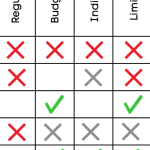
Figure 1 at the hyperlink, above, provides the basic KFF survey data.
The Centers for Medicare & Medicaid Services (CMS) issued the interim final rule on Medicaid work requirements required by Public Law 119-21, the “Working Families Tax Cut” (WFTC):
https://www.congress.gov/119/plaws/publ21/PLAW-119publ21.pdf
https://public-inspection.federalregister.gov/2026-11094.pdf
CMS Launches Nationwide Framework to Implement Medicaid Work Requirements
June 1, 2026CMS Launches Nationwide Framework to Implement Medicaid Work Requirements
The Centers for Medicare & Medicaid Services (CMS) released an Interim Final Rule with Comment (IFC) requiring that certain adult Medicaid applicants and enrollees must, as a condition of Medicaid eligibility, meet an 80 hours per month work requirement, through employment, education, work programs, or community service. The rule establishes a nationwide operational framework designed to promote economic stability, self-sufficiency, and independence.
“The Working Families Tax Cut legislation made historic changes to the Medicaid program, and CMS is working closely with states to put those changes into action,” said CMS Administrator Dr. Mehmet Oz. “This rule helps Americans build skills and independence through work, education, job training, or community service, creating new opportunities for themselves and their families.”
Issued under Public Law 119-21, which CMS refers to as the Working Families Tax Cut (WFTC) legislation, the rule establishes the standards states must use to implement the statutory work requirement, including clear expectations for eligibility determinations, exemptions, verification, and state reporting requirements. It reflects extensive coordination with states and builds on CMS’ ongoing work to modernize eligibility systems and improve beneficiary interactions with states, while improving accountability.
A new study from the Department of Health and Human Services’ Office of the Assistant Secretary for Planning and Evaluation finds the new requirements could reduce poverty by as much as 2.9 million people depending on a variety of conditions such as employment availability.
This rule defines which adults ages 19 through 64 will be required to demonstrate work requirement activities. The rule also defines which individuals are not subject to the requirement because of health-related needs and other qualifying circumstances. These exemptions include, but are not limited to, individuals who are pregnant, postpartum, disabled, medically frail, American Indian or Alaska Native, parents or caregivers of young children and people with disabilities, and those who are already complying with similar requirements through the Supplemental Nutrition Assistance Program (SNAP) or the Temporary Assistance for Needy Families (TANF) program.
The rule also includes state data reporting requirements and establishes requirements for how states must assess and verify compliance and communicate the new requirement to Medicaid applicants and beneficiaries. These provisions are expected to promote transparency, reduce administrative burden, and ensure states provide clear, actionable guidance to new applicants and Medicaid beneficiaries on how to meet the new eligibility requirement.
CMS is supporting states as they implement the requirement through a combination of federal resources, technical assistance, and private-sector collaboration. This includes $200 million in Government Efficiency Grants authorized under the WFTC legislation to support state system modernization and administrative capacity, as well as more than $600 million in committed support from private-sector technology vendors to help states update eligibility and enrollment systems, and support for outreach to Medicaid beneficiaries. These investments build on CMS’ broader modernization efforts, including expanding the use of automation, data integration, and real-time verification to improve efficiency, strengthen oversight, and enhance the beneficiary experience.
The work requirement must be implemented no later than January 1, 2027, in applicable states, although some states—such as Nebraska —has already implemented, and other states are considering early implementation.
This rule is being issued with comment period to remain consistent with the legislative directive and implementation timeline established by the WFTC legislation. This approach helps to ensure timely implementation while allowing CMS to continue to collect and consider public feedback.
For a fact sheet on the Medicaid Community Engagement Requirement Interim Final Rule (CMS-2454-IFC), visit: https://www.cms.gov/newsroom/fact-sheets/medicaid-community-engagement-requirement-certain-individuals-interim-final-rule-comment-period-cms.
To view the IFC on the Federal Register, visit: https://www.federalregister.gov.
Get MHF Insights
News and tips for your healthcare freedom.
We never spam you. One-step unsubscribe.
Sponsors

J & DE Family Charitable Fund

Friends
of MHF

Kelly Grotendiek
Philip Harbach
Dale Johnson
Drs. Jeffrey and Joni Jones
Vickie Kahle
Tammy Kipen
Marlin & Kathy Klumpp
Melanie Kurdys
Ruth Nobel
Patrick Peterson
Stephanie Poortenga
Jeanne Smit
Ben and Hope Staal
John Tuinstra
Jacki VanHuis
Sandy Walker
Sign Up for MHF Insights to keep up on the latest in Michigan Health Policy