



Michigan healthcare freedom community forum

It was pretty clear when the Senate Committee on Housing and Human Services held a hearing during August on Senate Bill 309, to discuss state control of of Rx Kids, that it would soon be state funded as well as state controlled. It is now going to receive $ 270 million - $ 20 million from Temporary Assistance for Needy Families (TANF) and $250 million from the Healthy Michigan fund - over the next three years. It should be noted that this funding will not be under state control - yet - because SB 309 has not passed. So the possibility of more taxpayer funded $11,000 flights to Budapest and $ 4,500 coffee makers exists:
Michigan cash aid program for moms and babies gets $270 million in new budget
By Nushrat Rahman - October 6, 2025* Rx Kids, a cash aid program for moms and babies, received a $270 million allocation in the recently passed state budget, said Rx Kids director Dr. Mona Hanna.
* The additional funding will allow Rx Kids to expand to more low-income communities and reach about 100,000 babies over the next three years.
* Rx Kids, the Michigan cash aid initiative for moms and babies, received its largest funding boost yet in the newly approved state budget, setting the program up to potentially help tens of thousands more infants in the next few years.The budget, which Michigan lawmakers sent to Gov. Gretchen Whitmer Friday, Oct. 3, includes $270 million for the fast-growing program — $20 million in Temporary Assistance for Needy Families (TANF) funding and $250 million from the Healthy Michigan fund as a one time allocation for three years.
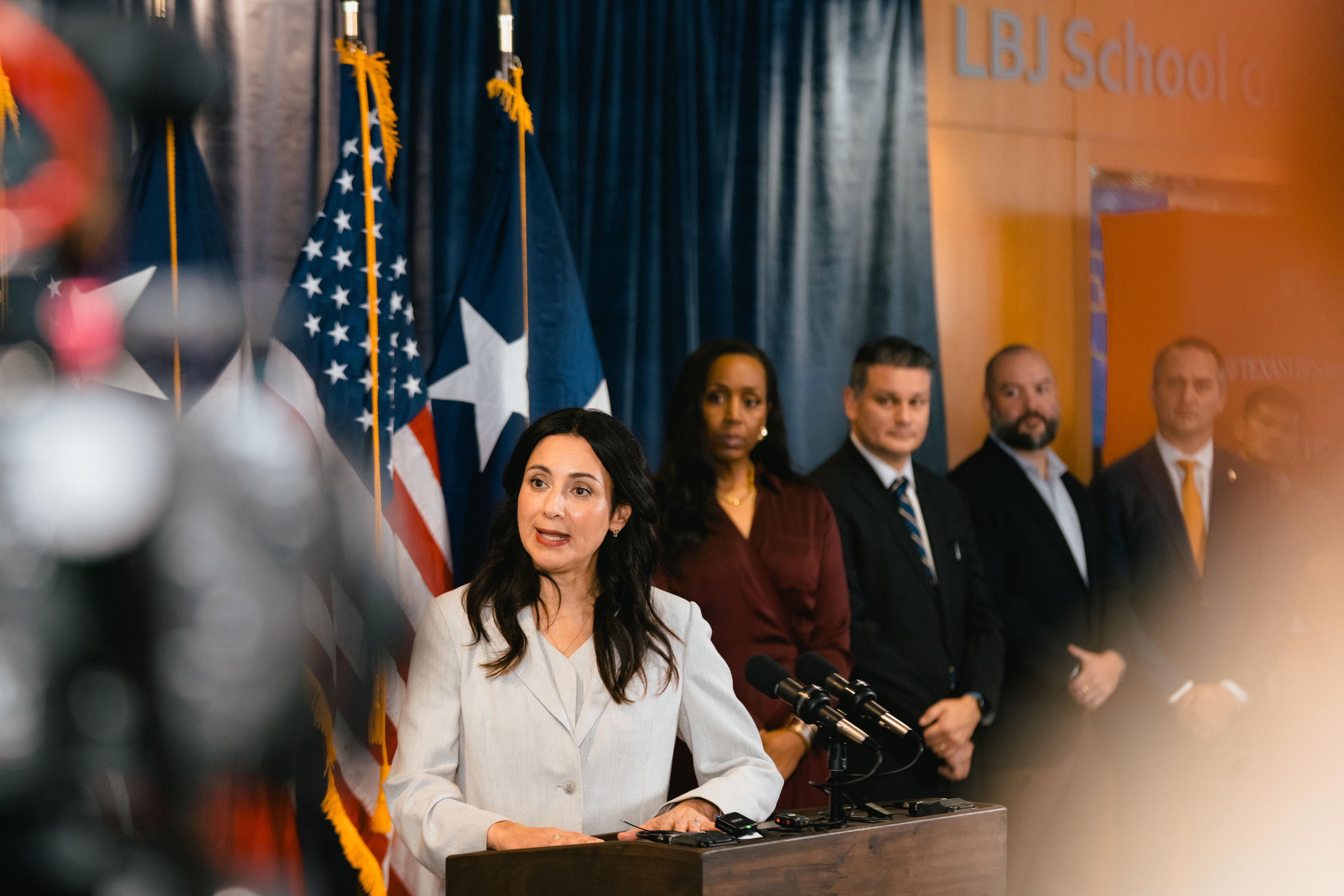
It’s a “massive investment in our kids,” said Dr. Mona Hanna, director of Rx Kids and associate dean of public health at the Michigan State University College of Human Medicine.
The program, which offers $1,500 mid-pregnancy cash assistance and then $500 a month up to a year of the baby’s life, already operates in 11 communities around Michigan. The additional funding will allow Rx Kids, a public and private partnership, to expand to more low-income communities and “lessens the load” on philanthropy and municipalities, Hanna told the Free Press.
“We anticipate being able to launch in dozens of new communities in Michigan. This amount of funding will help us reach about 100,000 babies over the next three years,” she said.
Rx Kids could start in communities that have already raised money, such as Ypsilanti and Saginaw. Still, the program needs additional funding to make it whole and take it statewide, Hanna said. Roughly 100,000 babies are born in Michigan each year.
Monique Stanton, president and CEO of the Michigan League for Public Policy, said in statement that the “significant downpayment in the expansion of the Rx Kids program will help babies and parents get a strong start toward health and economic security.”
Last month, leaders of Rx Kids released research papers evaluating how the program affects economic stability, maternal mental health and birth outcomes in Flint, the city where the program first began and where roughly a third of the population lives below poverty. Researchers found a drastic drop in evictions and fewer preterm births and neonatal intensive care unit admissions.
Among the findings in one report: evictions fell by about 91% among Rx Kids-eligible Flint moms in 2024 after childbirth, compared to Flint women who had babies the year before, and postpartum depression declined, too, from 46% to 33%. Rx Kids was also associated with a reduction in neonatal intensive care admissions, down 29% or 68 fewer admissions during the study period, another report found.
Rx Kids has so far distributed nearly $15 million to about 3,600 families, as of Sept. 30. The program is open to eligible participants from counties in the eastern Upper Peninsula and the west side of the state to parts of metro Detroit, and has garnered tens of millions in public and private dollars as well as bipartisan interest from lawmakers. Proposed legislation seeks to take the program statewide.
There’s broad appeal for a program like Rx Kids, Hanna said.
“What legislators understood is that this program was addressing the polycrisis that the state is facing,” she said. “It’s addressing housing affordability and childcare, and it’s providing immediate relief so families can buy things that they need. It’s adressing inflation. It’s addressing maternal infant health disparities.”

Meanwhile, millions of unspent funds sat in department bank accounts. (Or wherever they keep their money these days.)
So - House leadership pulled one from the rulebooks, and great was the wailing and gnashing of teeth at the next hearing of the Senate Appropriations Committee.
https://cloud.castus.tv/vod/misenate/video/6941a0c3152c7c000271ce61?page=HOME
Again, Bridge Michigan. (Clipped for length.)
RxKids ‘in limbo,’ Flint reeling over surprise cuts by House Republicans
Jordyn Hermani and Simon D. Schuster | December 11, 2025
- Plans to expand a cash assistance program for moms ‘in limbo’ after Michigan House cuts, pediatrician says
- House Republicans unilaterally voted Wednesday to cancel nearly $650 million in previously approved spending
- Other cuts include more than $6.6 million for Flint’s recovery from the city’s 2014 water contamination crisis
LANSING — On Wednesday morning, Dr. Mona Hanna contacted Michigan House Speaker Matt Hall’s office with an invitation, she said: Join her at a January event to announce the expansion of a first-in-the-nation program that gives cash to new and expecting mothers, known as RxKids.
She also wondered if Hall, a Richland Township Republican, had any interest in being part of the press release, too.
But that afternoon, Hanna received an unexpected response, albeit indirectly: House Republicans had abruptly canceled previously approved funding for the bipartisan program. Just like that, nearly $18.5 million meant for pregnant moms and babies in more than a dozen communities was gone.
“The money they have cut is the money we are using, right now, for vital support for Michigan families,” Hanna told Bridge Michigan, saying the program that started in Flint is now “in limbo” as staff works to understand whether the funding cut will impact expansion plans.
Related:
Michigan House cancels $645M in state spending without Senate OK
Michigan cash aid program for moms and babies gets $270 million in new budget
Michigan gets a new state budget: Winners, losers in the $81B dealWhile RxKids is slated to receive another $270 million in state funding over the coming year, program organizers are grappling with the loss of more immediate money that they had been expecting. “I don’t know what this means right now,” Hanna told Bridge, “but it’s not good news.”
The $18.5 million cut to RxKids was a small part of about $645 million in previously approved spending canceled by Republicans during a Wednesday House Appropriations Committee meeting that lasted less than five minutes, blindsiding intended recipients and enraging Democrats.
Dr. Mona Hanna said plans to expand a first-in-the-nation program for expecting and new mothers are ‘in limbo’ after House Republicans on Wednesday voted to cut $18.5 million in funding as part of a larger slashing of state work projects. (Ron French/Bridge Michigan)
Other canceled spending included $159 million for an economic development program championed by Gov. Gretchen Whitmer to secure federal funding, along with $6.7 million for Flint water crisis recovery, $56,600 to provide wigs to Michiganders undergoing cancer treatment and $2.5 million for a pilot study on traffic cameras in school zones.Hall defended the House action as a means to “force a discussion about what is the best way to get value for your tax dollars” rather than simply allow the Whitmer administration to carry the funds over to the new fiscal year as work projects, which had been routine practice in past years.
He and House Appropriations Committee Chair Ann Bollin, R-Brighton, argued state departments have been “squirreling away” funding into what they referred to as “slush funds.” Their goal, Hall said, was to identify and eliminate “waste, fraud and abuse” in state government.
A day later, state department heads were still trying to figure out the impact of the unexpected spending cuts, many deferring comment to the State Budget Office, which has said the move will have “negative consequences for Michigan families, businesses and our state’s economy.”
Whitmer’s office argued the GOP moves will “kill jobs and raise costs for Michigan families—just days before the Christmas holiday.”
“Even Ebenezer Scrooge wouldn’t dream of such cruel cuts, like eliminating support for students in Flint impacted by the water crisis and survivors of child sexual assault,” spokesperson Stacey LaRouche said in a statement.
“Our administration will continue to review the full impact of these cuts, but Michiganders deserve to know who is responsible: Matt Hall and his caucus.”
Nearly $650 million in cuts
Michigan House Republicans late Wednesday made the unique and unilateral move to deny nearly $645 million in funding to varying work projects across numerous state departments.The budget committee leveraged a rarely-used provision in the management and budget act that allowed them to deny requests from the State Budget Office — which is controlled by Whitmer — to extend unspent money appropriated in the prior fiscal year into the future by converting the items into a “work project.”
The requests are automatically approved if the Legislature takes no action, but either chamber can block them without the other’s approval, sending the unsent cash back to the funding pots it came from.
Republicans celebrated the cancellation of more than $102 million for 163 separate “community enhancement” earmarks that had been approved in 2023 when Democrats controlled both chambers of the Legislature.
Matt Hall
House Speaker Matt Hall, R-Richland Township, defended cutting nearly $650 million of state work projects on Wednesday, telling reporters that if the money wasn’t spent this year it was time to ‘force a discussion about what is the best way to get value for your tax dollars.’ (Jordyn Hermani/Bridge Michigan)
Similar grants have drawn criticism, controversy and even criminal charges in recent years, but cutting money for the ones Republicans saw as problematic meant killing the projects they favored, too.“Not everything that the Appropriations Committee cut was waste, fraud and abuse,” Hall conceded Wednesday. Bollin, too, acknowledged that the cuts could hit some “very good projects.”
House Republicans could agree to resume some of the funding, Hall said, but they want a chance to review past allocations and force Democrats back to the negotiating table.
Republican legislative leaders emphasized they’d prefer all earmarks to be subject to a new, more transparent process they had pushed to implement earlier this year, though they still tacitly approved the bulk of the several billion dollars in work project requests regardless.
Still, none of that is expected to happen before 2026 and the next spending bill, which is likely to be weeks or even months away.
Rep. Jim DeSana, a Carleton Republican on the committee, said he saw Wednesday’s vote as about “reclaiming the process.”
“We’re in the majority now. They negotiated this with (former Democratic House Speaker) Joe Tate. They didn’t negotiate it with the House Republicans,” he said.
If Democrats had been in the same position House Republicans are now, “I would fully expect that they would have” employed a similar tactic, DeSana added.
DeSana told Bridge the cuts were intended to send an anti-pork message — that state budgets shouldn’t be used to fund individual projects — though he himself had requested funding for a baseball facility in his district earlier this year.
“Why should my taxpayers in Taylor pay for a mental health clinic in Muskegon,” DeSana said. “If it’s something that’s worth funding, it either should be funded to every county and it shouldn’t be done in special projects.”
<clip>
Back at the 2026 budget, a few tweaks occured. A few months later, it was all over but the semantics... proving once again the importance of following the money.
Final signed budget:
Bridge Michigan wrapped it this way.
Did Rx Kids lose $20M in Michigan budget deal? Depends who you ask
Robin Erb and Jordyn Herman | July 7, 2026
- Lawmakers scrambling to finalize the state budget last week deleted a $20 million line item to Rx Kids, a program providing cash, no-strings-attached, for pregnant and new moms
- Republican House Leader Matt Hall says under the new state budget, that money is now off the table for the program
- But Rx Kids leaders say they can still tap into those funds
Lawmakers may have finalized the state budget Friday, but confusion lingers over a controversial line item that’s missing: $20 million intended for Rx Kids, the no-strings-attached cash program for pregnant and new moms.
The line item was struck last week in final negotiations between Michigan’s Republican-led House and its Democratic-led Senate. The $20 million in federal funding was reallocated to five other programs that, like Rx Kids, are supported by the Temporary Assistance for Needy Families (TANF) program, according to an analysis by the nonpartisan House Fiscal Agency.
Rx Kids can still tap into the money — at least for program participants who are on Medicaid and therefore, are defined as low-income, Dr. Mona Hanna, the Flint pediatrician who has spearheaded the Rx Kids effort, told Bridge.
In an email to Bridge Michigan Monday, Hanna said she was “happy to share with confidence that Rx Kids will continue to be funded and operational.”
The $20 million TANF authorization “is still in the omnibus budget,” she wrote. “The fact that our program survived this difficult budget process is indicative of its success and the faith Michigan communities have in our work.”
TANF funds have been a significant contributor to Rx Kids, which launched in Flint and offers $1,500 mid-pregnancy cash assistance and then $500 a month up to a year of the baby’s life.
Related:
Rx Kids fact check: No tax money for undocumented moms, no spending limits
Michigan lawmakers pass $84B budget, 67 bills in marathon session
Michigan cash aid program for moms and babies gets $270 million in new budget
Has cash in hand helped moms and babies in Flint? What new research saysSince its launch in January, 2024, the program has “prescribed” $48.8 million to 13,685 families, according to Rx Kids. The state last year also approved $250 million from the Healthy Michigan Fund — public health dollars — to expand the program with oversight by Michigan State University.
Early studies suggest babies with Rx Kids backing have better health outcomes, even as the program’s economic benefits exceed the dollars it spends. And on Tuesday, Rx Kids announced it was expanding to Cleveland, its first expansion outside of Michigan.
But the program has been a hard sell to some Republicans.
The money is no-strings-attached, meaning families of any income bracket are eligible, and there is no accounting for how the money is spent.
When pressed about cuts specifically to Rx Kids, House Speaker Matt Hall on Tuesday said that not only did the budget remove $20 million in funding from the program — but that the money was subsequently disbursed into funding pots Rx Kids “wouldn’t be able to get to.”
The Richland Township Republican didn’t say why, other than to note that in “my view is that they will not be eligible” for the $20 million now going toward the five other TANF funds that include funding for coordinated children’s health care policy and supports, as well as prenatal care, outreach and delivery service support.
He also criticized Rx Kids for providing cash assistance to undocumented mothers — something the program acknowledged but said those dollars were private funds and not public tax dollars.
Instead, Hall said the funding will be used to “shore up long established programs” like WIC (federal benefits for low-income infants and children) and child protective services, which do have more strict requirements on who’s eligible for these funds and what those dollars can be spent on.
“Instead, we need programs that are really looking at people with legitimate financial need,” Hall said. “People that are American citizens, over here legally and ensuring that they’re getting the things they need to live healthy and to get back on their feet so that they can eventually get an education or get a job.”
A spokesperson for Hall later clarified that was because these pots had reporting requirements for things like income eligibility, which Rx Kids does not require participants to report when applying for the program.
Should Rx Kids try to collect these funds, “then I’ve got a lot bigger problems than that, because basically that would mean that all trust is broken with the Whitmer administration,” Hall said, arguing it would amount to Rx Kids taking money they “should not be eligible for.”
But Hanna said Rx Kids can, in fact, tap into the TANF funds that have been redistributed. In fact, the program has received TANF funds in three previous budget cycles — for a total of $56.5 million, although some of those funds were clawed back in December.Rx Kids staff do not ask participants about their income when they apply, but back end “data matching” confirms some mothers’ Medicaid benefits. In those cases, Rx Kids benefits are reimbursed with TANF funds.
Those who aren’t on Medicaid are covered by other funds, including those from donors and the $250 million in public health dollars.
The process “has been approved by the state and the federal governments for three years,” Hanna said.
For now, it’s unclear what will happen — something that state Sen. Jim Runestad, R-White Lake, acknowledged.
The five TANF funds that replaced the Rx Kids line item cover costs for maternal and child health services similar to those offered by Rx Kids, said Runestad, who also chairs the Michigan Republican Party.
“It is unclear if the money will end up going to the specific program called `Rx Kids,’ but it definitely looks like the money will be spent for similar purposes,” he said.
Get MHF Insights
News and tips for your healthcare freedom.
We never spam you. One-step unsubscribe.
Sponsors

J & DE Family Charitable Fund

Friends
of MHF

Kelly Grotendiek
Philip Harbach
Dale Johnson
Drs. Jeffrey and Joni Jones
Vickie Kahle
Tammy Kipen
Marlin & Kathy Klumpp
Melanie Kurdys
Ruth Nobel
Patrick Peterson
Stephanie Poortenga
Jeanne Smit
Ben and Hope Staal
John Tuinstra
Jacki VanHuis
Sandy Walker
Sign Up for MHF Insights to keep up on the latest in Michigan Health Policy