





Michigan healthcare freedom community forum

Michigan Advance reports the House Fiscal Agency analysis of the RxKids funding outcome in the FY 26-27 Michigan budget. The HFA RxKids analysis can be seen as line item 33 at the bottom of page 76 in the July 15th HFA analysis. The ambiguity of RxKids' status in the budget appears to be a political performance of the 'Dance of the Seven Veils':
https://www.house.mi.gov/hfa/PDF/Summaries/26s878s1cr1_General_Omnibus_Conference_Report_Summary.pdf
Michigan budget moves Rx Kids funding, but $18M remains in play
The Legislature shifted the money out of a dedicated appropriation, but the budget leaves room for competing interpretationsBy Katherine Dailey - July 20, 2026
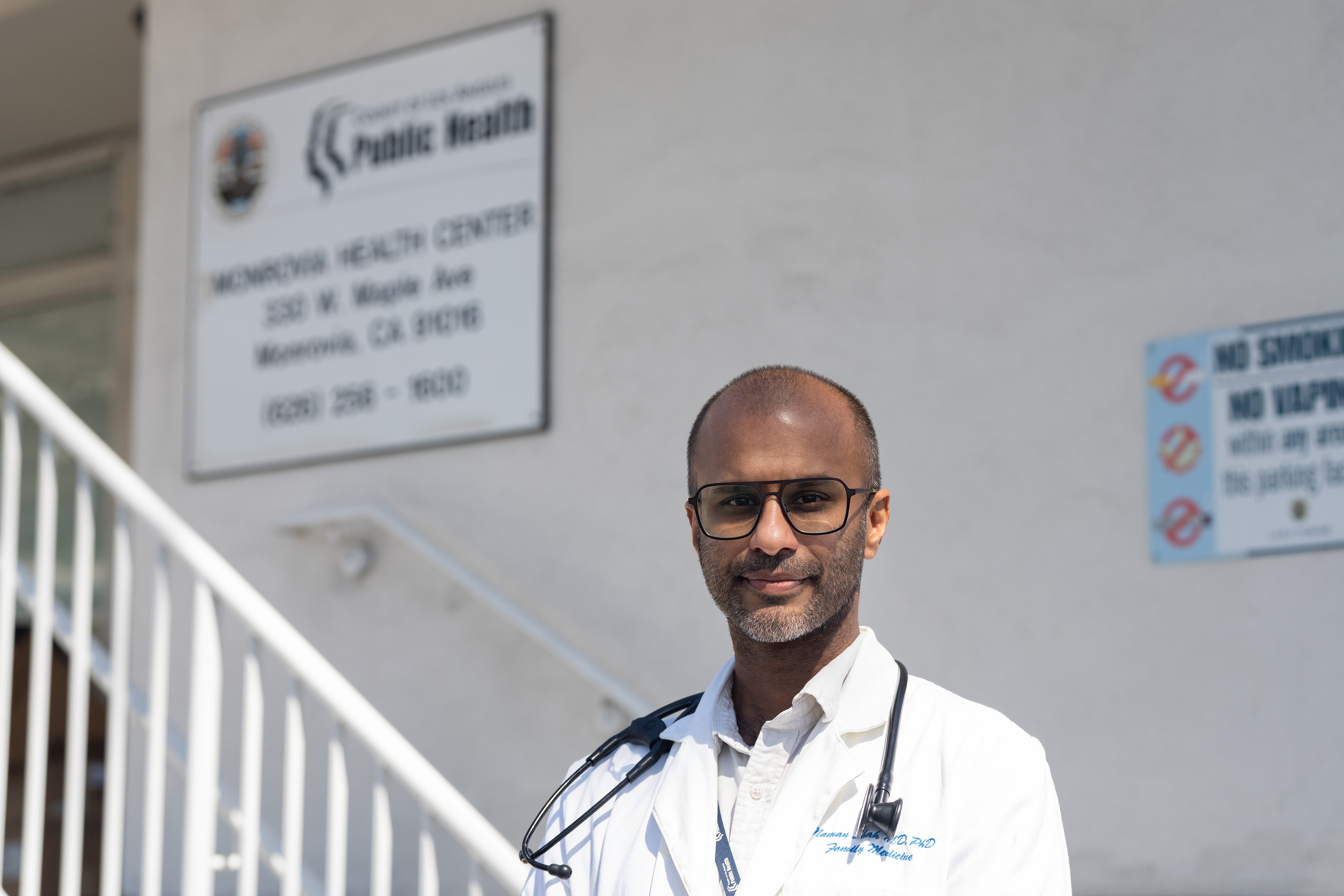
Dr. Mona Hanna, the head of Rx Kids, spoke with mothers advocating for the program prior to the House Oversight Committee’s hearing on the program. June 2, 2026. | Photo by Katherine Dailey/Michigan Advance.
The Fiscal Year 2027 budget, approved by the Legislature on July 3, redistributed $20 million within the Michigan Department of Health and Human Services budget for Temporary Aid for Needy Families, or TANF. Exactly how that money can and will be used remains an open question.
The money had previously been appropriated to the Rx Kids program, a prenatal and infant cash support program that has come under fire from Republican leadership, including House Speaker Matt Hall (R-Richland) in the last year.
A budget analysis from the nonpartisan House Fiscal Agency shows the split between chambers, and the negotiated agreement — the Republican-led House sought to strike that $20 million from the budget entirely, while the Democrat-led Senate would have left the money alone to be allocated to Rx Kids. The final version of the budget keeps the money in the budget, but reallocates it to five different line items under the TANF, or Temporary Aid for Needy Families, budget.
That is $4.5 million apiece for “Coordinated children’s healthcare policy and supports,” “Family, maternal, and child health administration,” “Prenatal care outreach and services delivery supports,” and “Special projects,” as well as $2 million for child supplemental payments under the state’s Family Independence Program, or FIP.
The FIP payments are more strictly conditional on what they will go towards. But for the remaining $18 million, Rx Kids could still be eligible to receive some or all of that money. It will be up to the Department of Health and Human Services to determine how exactly the funds are spent.
Spokespeople for the department did not respond to multiple requests for comment.
Program leaders believe that the money initially appropriated to them will continue to fund Rx Kids. Dr. Mona Hanna told Bridge Michigan in the days following the budget’s passage that she was “happy to share with confidence that Rx Kids will continue to be funded and operational.”
The $20 million TANF authorization “is still in the omnibus budget,” she said. “The fact that our program survived this difficult budget process is indicative of its success and the faith Michigan communities have in our work.”
Hall, however, believes that Rx Kids would not be eligible to receive any funding under the specific line items under TANF that the money was reallocated to, adding that he “hand selected” those funds.
“My view is that they will not be eligible for those pots, and that’s why I picked them,” he said in a July 7 press conference. “I picked specific pots that they wouldn’t be able to get, because the other pots were the ones that I would describe as much easier for them to get. So I specifically put them into the pots that should be going to these other programs.”
Those “other programs” that Hall describes include funding for programs like the Women, Infants and Children, or WIC, program, as well as certain Child Protective Services programs.
Hall and his fellow Republicans have long argued that Rx Kids, which does not have any income-based eligibility requirements and does not limit what the money can be spent on, differs from other welfare programs that only cover very specific expenses.
Data collected from program participants show that the vast majority of money received by families is spent on baby supplies, food, rent or housing expenses, and utilities. The freedom to choose how to spend the money is key to the nature of the program, according to program leaders, which is based on trusting mothers and families to know the needs of their children.
As of July 16, information published by Rx Kids showed that 14,240 families had been enrolled in the program, and nearly $50 million had been disbursed. The program, a public-private partnership, is funded through a mix of government dollars and private philanthropy. The source of the money each family receives depends on the applicant’s Medicaid eligibility and ability to verify citizenship or legal status.
Any applicant who is not able to submit that kind of identification does not receive any state funding, just funds from private donors. And only applicants who can demonstrate their eligibility for Medicaid receive TANF-funded benefits.
As for the future of Rx Kids, program leaders have indicated that future expansions may be dependent on continued state funding.
“We already have raised so much money from other sources, we’ve raised $86 million from other sources, we’ve kind of tapped out philanthropy and other sources, so we’ll see how take-up goes in the communities that we’re in,” Hanna told the Michigan Advance following a House Oversight Committee hearing on the program in June. “We’ll see how this next budget goes, and if take-up is a little less expected, because all of our numbers are projected on 100% take up, so if it’s a little less than that, maybe we’ll have some leftover funds, and we’ll be able to expand to places that really want this, that are just waiting for that opportunity.”
An April press release announcing the expansion of Rx Kids into 20 additional Michigan communities similarly stated, “Future application cycles and expansions will depend on sustained state investment, including restoration of previously cancelled funds, continued annual TANF support, and strong enrollment across communities.”
The program announced on July 7 that in the fall it will expand to its first community outside of Michigan, into certain ZIP codes in Cleveland, Ohio in partnership with First Year Cleveland. In that announcement, program leaders urged that “Additional public and philanthropic investment will help accelerate the program’s expansion to more Cleveland families.”

The Midwesterrner doesn't just quote the opposition. It bluntly calls out the politics, with vigor and evidence.
Jocelyn Benson vows to expand Michigan’s Rx Kids cash for votes program statewide as Republicans expose flaws
Speaker Hall: 'Michigan State University is administering a program that is handing out welfare to illegal aliens, and that’s unacceptable'
Victor Skinner | July 1, 2026
Secretary of State Jocelyn Benson wants to take Michigan’s cash for votes program for expectant mothers statewide, despite serious concerns about money flowing to illegal immigrants and progressive activists steering the program.
“Michigan’s next governor has a moral responsibility to fight for every kid in this state – and getting it right starts the day a child is born,” Benson wrote in a statement to WLNS this spring. “We know the data and we know what works: kids learn better then they are healthy and well-fed. That’s why my plan includes expanding Rx Kids to every community in this state – putting cash directly in the hands of parents so they can keep their kids healthy, fed and ready to learn from day one.”
Benson this week again identified Rx Kids as a top priority in a profile published by the Detroit Free Press.
Benson and other proponents of the program point to data that suggests healthier births in Flint since the program launched in 2024 as a motivation for expanding statewide, while ignoring other research that offers critical context on why Democrats strongly support direct cash payments of $1,500 and $500 per month to new moms.
“In the November 2024 election, research finds that Flint young women aged 18-34 years had a higher increase in voter turnout rates than other demographics (older women and men) and a higher increase in voter turnout rates than similar communities and the entire state,” according to the main takeaways from Rx Kids: A New Prescription for Civic Engagement, authored by Michigan State University political science professor Corwin Smidt. “Comparing the 2020 to 2024 election, voter turnout rates among women in Flint went up five percentage points, and this increase was even larger among young women in Flint (8.7 points).”
“Analysis of state voter files indicates that the surge in 2024 turnout was highest among Rx Kids enrollees,” Smidt wrote. “Across the board, Rx Kids enrollees were nearly 5 percentage points more likely than their non-Rx Kids counterparts to vote in 2024.”
Former Vice President Kamala Harris won Genesee County, home to Flint, with more than 67% of the vote in 2024, and the program has since spread to some of the most Democratic areas of the state, including Kalamazoo, Pontiac, Hazel Park, Dearborn, Hamtramck, Highland Park, Inkster, River Rouge, Ypsilanti, Saginaw, Benton Harbor, Detroit, Grand Rapids, and dozens of others.
Benson, who is overseeing her own election for governor as the Democratic frontrunner, could directly benefit from the program as it scrambles to expand further to reliably Democratic areas of the state in the lead-up to the 2026 midterms.
Benson’s husband, Ryan Friedrichs, is among 29 members serving on the Rx Kids Advisory Circle that’s helping to helm the nonprofit’s “leadership on fund development, program design, state and national policy, communications, and dissemination,” according to a page on the program’s website that has since been removed.
Friedrichs co-authored a study while attending Harvard University on “mobilizing the party faithful” that focused on “results from a statewide turnout experiment in Michigan” during the 2002 Michigan gubernatorial election. Friedrichs now works as VP of billionaire Stephen Ross’ Related Companies, and has served as head cheerleader for a massive data center subsidiary Related Digital forced into Saline Township against widespread local opposition.
Others in the circle of trust have strong ties to and close relationships with liberal activist groups promoting universal basic income, Democratic get-out-the-vote efforts, benefits for illegal immigrants, labor unions, pro-Palestinian protests, and other left-wing causes.
While Rx Kids’ annual report suggests 74% of the $29 million in “cash prescriptions” doled out through the program went to baby supplies, according to the women collecting the payments, it does not detail taxpayer dollars flowing to folks who administer the program, including Michigan State University and GiveDirectly, a New York-based nonprofit. There’s also no context on how much of the $29.10 million dispersed came from taxpayers, and how much was funded by private donations.
Rx Kids founder and Flint pediatrician Mona Hanna confirmed in February Rx Kids supports both legal residents and illegal immigrants, though she claimed only private dollars flow to families in the country illegally.
“We love every single baby … this is a public-private partnership, so we have non-state dollars (t)hat supports babies who may not be here with legal status,” Hanna told MIRS reporter Samantha Shriber. “But once again, we love all babies.”
That confirmation followed reports MSU and GiveDirectly each charged 10% administrative fees to handle about $16.5 million for Rx Kids in 2023 and $20 million in 2024, before lawmakers capped administrative fees at 15% total when they drastically increased spending by $250 million in 2025, The Detroit News reports.
Senate Majority Leader Winnie Brinks, D-Grand Rapids, pushed to expand spending last year, and has endorsed Benson’s bid for governor.
While the program was initially funded with federal tax dollars from the Temporary Assistance for Needy Families program to provide the direct cash payments to mothers in Flint, lawmakers expanded the program in 2025 with state General Fund dollars. The taxpayer funding is supposedly matched with charitable donations to the 501(c) 3, which are tax deductible.
The Michigan House Oversight Committee in June grilled Hanna on whether sufficient safeguards exist to ensure taxpayer dollars are being spent appropriately and whether the program’s long-term goals extend beyond helping mothers and infants.
“When you look at that advisory board that they speak of, and you look at the individuals that are on that advisory board, what their political affiliations are, and I don’t mean affiliations like Republican and Democrat, I mean affiliations with long-term policy agenda items that they’re trying to accomplish, they do not line up with the beliefs that I have, and I would argue that they do not line up with the beliefs of the Republican House,” Chair Jay DeBoyer, R-Clay Twp., said.
“When you see these affiliations, when you see their long-term motivations, when you see their worldview, when you see comments like ‘take back patriotism,’ you start to go, ‘wait a minute, why are we talking about politics when we’re trying to save babies?’” he said.
Shortly after the hearing Rx Kids removed its Advisory Circle from the program’s website.
“Rx Kids has received over $300 million in public dollars. It’s a program that has come with a big price tag to taxpayers, and that should come with a large amount of responsibility,” DeBoyer said. “Given all this, it’s telling that Dr. Mona (Hanna) would attempt to conceal these relationships following the hearing with the removal of information on the group’s advisory circle.”
In the weeks since, Hanna has teamed with the free-market Mackinac Center to bolster public support for the program and work to dispel concerns about fraud, without directly addressing issues regarding support for illegal immigrants or the program’s radical left Advisory Circle.
Efforts to expand Rx Kids statewide will likely require cooperation from Republican lawmakers in Lansing, including House Speaker Matt Hall, R-Richland Twp., who has repeatedly voiced opposition to the program.
“We’re not going to support more funding for Rx Kids in the budget,” Hall said at a press conference in February. “Rx Kids is continuing to be a scam.”
“I really think we should look at Michigan State University carefully at this, they’re administering the program,” he said.
House Republicans approved a budget in April that cut funds for both the program and Michigan State University, with Hall pointing to support for illegal immigrants as a primary motivation.
“Michigan State University is administering a program that is handing out welfare to illegal aliens, and that’s unacceptable, and that’s one of the reasons why we cut Michigan State in our budget by 62% of state funding,” Hall said.
Legislative leaders have since worked to craft a compromise budget that could receive a vote this week.
Methinks the ambiguity serves both parties... though of course one would never impute motives. 😇
Michigan CapCon brings updated receipts.
Michigan budget removes dedicated $20M Rx Kids appropriation
House speaker, program founder split on how, and whether, motherhood program will be funded
Natalie Hansen | August 5, 2026
Michigan’s enacted 2027 budget eliminates a dedicated $20 million appropriation for Rx Kids, raising questions about how the program will be funded. Rx Kids has received state appropriations for three consecutive years.
The final budget removes a dedicated appropriation that Rx Kids has received from Temporary Assistance for Needy Families, or TANF funds. According to an analysis by the House Fiscal Agency, lawmakers redistributed the $20 million to five other programs:
Coordinated children’s health care policy and support ($4.5 million)
Family Independence Program, child supplemental payments ($2 million)
Family, maternal and child health administration ($4.5 million)
Prenatal care outreach and service delivery supports ($4.5 million)
Special projects ($4.5 million).
Rx Kids, launched in Flint in 2024, provides eligible mothers a $1,500 pregnancy payment followed by $500 monthly payments after birth, for up to 12 months. The program has expanded to more than 60 Michigan communities through state appropriations and private donations.
House Speaker Matt Hall, R-Richland Township, said the budget change will preserve funding for existing TANF programs serving low-income families.
“What we saw last year was that some of these other programs were running a deficit because TANF money was being diverted to this new program, Rx Kids,” Hall said during a July 7 press conference. “It’s less about the future of Rx Kids and more about the future of these other programs. We want to make sure they’re funded too.”
Hall said he personally selected the five appropriations that received the redirected TANF funding. Rx Kids, he added, is not eligible to receive money from those line items.
In an email to CapCon, Rx Kids founder Dr. Mona Hanna said the program expects to remain operational, and she believes funding is still available.
“Our understanding is that the funding is there, and the program will continue to be operational,” Hanna said. “I think we need more time to figure this out.”
Lawmakers have approved more than $291 million in state funding for Rx Kids since its launch.
Hanna told the House Government Oversight Committee on June 2 that the program received $16.5 million in one-time TANF funding for its Flint pilot in fiscal year 2024, followed by $20 million annually in fiscal years 2025 and 2026. It also received a one-time $250 million appropriation from the Healthy Michigan Fund to help fund benefits for families with babies born over a three-year period.
As of June 2, the program had spent about $10.8 million, including about $5.2 million from the original Flint TANF appropriation, $5.4 million from the 2025 TANF expansion and about $236,000 from the Healthy Michigan Fund appropriation.
Hanna said federal TANF dollars reimburse Rx Kids benefits for participants who meet Medicaid eligibility requirements, while private donations and other funds cover those who do not qualify for public funding. Hanna told Bridge Michigan in early July that the program can continue receiving TANF reimbursements under the new budget.
State Rep. Denise Mener, D-Mount Clemens, told the Mount Clemens City Commission that Rx Kids ”hasn't gone away” and that lawmakers ”just moved it to another line item in the budget.”
Hall did not respond to a request for comment, nor did the Michigan Department of Health and Human Services.
Get MHF Insights
News and tips for your healthcare freedom.
We never spam you. One-step unsubscribe.
Sponsors

J & DE Family Charitable Fund
Friends
of MHF

Kelly Grotendiek
Philip Harbach
Dale Johnson
Drs. Jeffrey and Joni Jones
Vickie Kahle
Tammy Kipen
Marlin & Kathy Klumpp
Melanie Kurdys
Ruth Nobel
Patrick Peterson
Stephanie Poortenga
Jeanne Smit
Ben and Hope Staal
John Tuinstra
Jacki VanHuis
Sandy Walker
Sign Up for MHF Insights to keep up on the latest in Michigan Health Policy