












Michigan healthcare freedom community forum

Would you consider a kids' internet/social media restriction to be health policy? I'm debating whether to include them in the MHF Report Card.
Either way, we should expect interesting discussion in the Senate Committee on Finance, Insurance, and Consumer Protection this week.
Wednesday, March 4, 2026 12:30 p.m.
AGENDA
SB 701
Sen. Lindsey
Consumer credit: interest rates; maximum interest rate allowed for medical debt; modify.SB 702
Sen. Anthony
Civil procedure: foreclosure; foreclosure or garnishment of wages for medical debt; prohibit.SB 757
Sen. Camilleri
Communications: social media; addictive feeds for minors by social media platforms; prohibit.SB 758
Sen. Hertel
Communications: internet; Michigan kids code act; create.SB 759
Sen. Chang
Consumer protection: privacy; Michigan consumer protection act; amend to include violation of kids code act as violation.SB 760
Sen. Polehanki
Trade: business regulation; availability of companion chatbots to minors; prohibit.And any other business properly before the committee.
A member of Mackinac Center's Board of Scholars weighs in on the kids internet bills with this op-ed.
https://www.mackinac.org/blog/2026/safe-bills-are-not-safe
‘SAFE’ bills are not safe
Michigan tech package would violate U.S. Constitution and do little to protect children
March 3, 2026
Supporters of a new package of tech bills in the Michigan Senate claim the legislation will protect children from online predation.
“We introduced Senate Bills 757–760 to better protect Michigan kids from the well-documented dangers of unfettered social media and AI usage,” Michigan Senate Democrats say on their Kids Over Clicks website. “Crafted in tandem with industry experts, advocates, and parents, this bill package holds Big Tech accountable for unethical practices, empowers Michigan parents with more control and transparency, and addresses emerging risks associated with AI and social media use.”
Unfortunately, these bills raise serious constitutional concerns, are unlikely to be effective, and threaten to create new problems on top of the problems the bills fail to address.
The Stop Addictive Feeds Exploitation for Kids Act, Senate Bill 757 would prohibit social media platforms from recommending content to anyone via an algorithm unless they verify that the internet user is over 18 years of age or obtain verifiable parental consent. Social media addiction is a real problem, for adults and for children. But the SAFE for Kids bill would do little to address it.
The proposed law and other bills in the package raise significant constitutional problems. The U.S. Supreme Court has struck down such laws in the cases Reno vs. ACLU and Ashcroft vs. ACLU ruling that these laws place too great a burden on First Amendment speech rights. The U.S. Court of Appeals for the Ninth District recently upheld part of California’s Protecting Our Kids from Social Media Addiction Act, but the constitutional history of this type of law is not strong.
Even if the SAFE law could pass legal scrutiny, it likely would do more to endanger children online than protect them. The SAFE Act would put children’s sensitive data at greater privacy and security risks, because a social media company would be forced to verify that each user is not a minor. This means the platform would have to require that users turn over birthdays and other sensitive personally identifiable information, likely by demanding government-issued documents.
Large-scale mandatory collection of highly sensitive government identification data increases the risks that it will be captured and misused. Forcing people to provide personal information in order to get access to a website often makes them more unsafe in a world where data breaches hit an all-time record in 2025.
A particular risk with any age verification provision is that many children will still access social media, whether through workarounds, shared devices, or turning to less regulated platforms. If so, having these bills enacted could ultimately make it harder to protect them.
Similarly, Senate Bills 758 and 759 would mandate automatic data privacy and safety settings for minors on digital platforms. Kids Over Clicks claims that these requirements are “giving parents more control over their children’s online accounts.” Even if these bills are found constitutional, such mandates actually give parents much less control. Instead, they give the government, and specifically the Michigan Attorney General, the power to make these decisions through how the law is enforced. Every child has different needs and different levels of preparation for viewing such materials online. Parents and guardians are in the best position to make these decisions, not government lawyers.
Finally, the proposed Leading Ethical AI Development for Kids Act, Senate Bill 760, would regulate operators of companion chatbots and how they are made available to children. While this bill attempts to address a legitimate concern, what the bill would ban is extremely overbroad. The proposed law defines a chatbot as a “generative artificial intelligence system with natural language interface that simulates a sustained humanlike relationship with a user.” That appears to include natural language processing applications like voice assistants, customer service chatbots and educational tutors, which can be beneficial to minors.
Moreover, the LEAD bill would give courts unprecedented power to order how companies develop and train AI applications. Judges without technical expertise will dictate private research and development processes. This is government overreach into private innovation and risk which will undermine development of artificial intelligence.
While the sponsors of these bills may have good intentions, pursuing these policies would distract from solutions that are constitutional and will actually make a difference. Much better options are available. They could include government initiatives to educate parents on parental controls already in place.
Rather than empower prosecutors to make website design decisions they are not qualified to make, lawmakers should give them the resources to lock up more predators and cybercriminals who target children. New laws could be helpful, but they must be narrowly tailored to punish bad actors while respecting the protected rights of Americans and empowering parents to make better decisions.
A native of Michigan, Ted Bolema received his Ph.D. in economics from Michigan State University and his J.D. from the University of Michigan Law School. He graduated from Hope College in Holland, Mich., with a B.A. in math and economics.
He has been cited on regulatory law and economics topics in numerous publications including The Washington Post, Chicago Tribune, The Detroit News, Politico and the Los Angeles Business Journal.

The Senate Finance, Insurance, and Consumer Protection Committee held a hearing on March 4, 2026 covering Senate Bills 757 – 760, the Senate Democrats’ "Kids Over Clicks" package. NetChoice, the social media industry association representing Amazon, Google, Meta, OpenAI, and others threatened committee members with a lawsuit if the package becomes law:
https://legislature.mi.gov/Bills/Bill?ObjectName=2025-SB-0757
https://legislature.mi.gov/Bills/Bill?ObjectName=2025-SB-0758
https://legislature.mi.gov/Bills/Bill?ObjectName=2025-SB-0759
https://legislature.mi.gov/Bills/Bill?ObjectName=2025-SB-0760
Tech group: Michigan will be sued over efforts to restrain social media
by Simon D. Schuster - March 6, 2026
- An influential tech trade group suggested Michigan could be sued if it enacts social media regulations
- One First Amendment expert who supports the legislation argues the law is on regulators’ side
- It could draw Michigan into a nationwide legal battle between states and the tech sector
LANSING — Michigan lawmakers, seeking to rein in the influence of social media and artificial intelligence among children, may also draw the state into a nationwide legal battle with major technology companies.
Michigan bill sponsors and advocates for regulating social media companies cast the measures as a necessary public health intervention to protect children, while trade groups representing the tech sector and civil liberties organizations suggest the legislation could infringe on free speech and invade privacy.
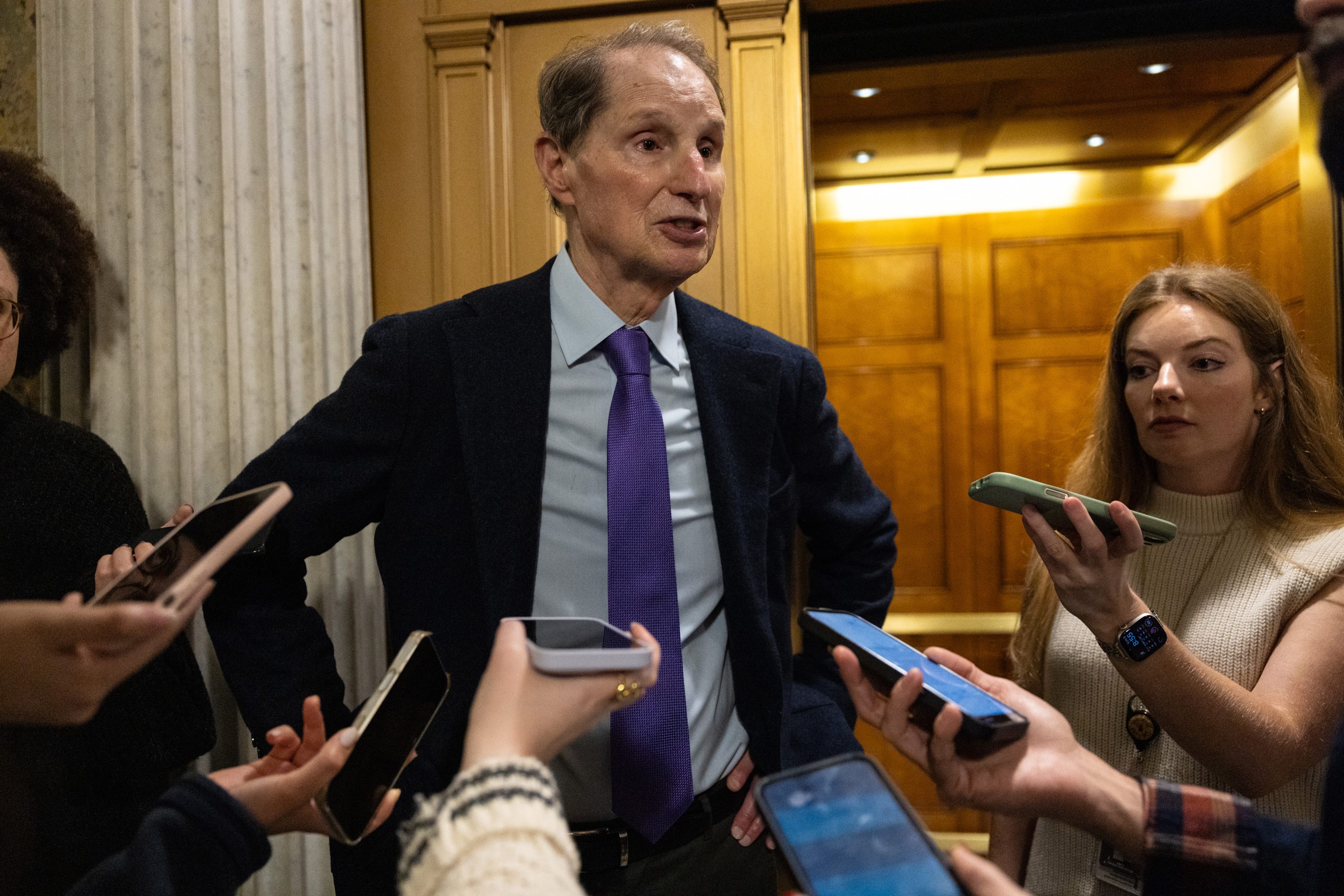
At a state Senate committee hearing March 4, bereaved parents, advocates and teens pushed lawmakers to act on a package of bills, citing the alleged harm unfettered access to social media had wrought on youth mental health.
But NetChoice, an influential industry association that counts Amazon, Google, Meta and OpenAI among its members, also appeared at the hearing with a warning for lawmakers.
A bill aimed at blocking certain algorithms, late-night notifications, autoplaying videos and engagement-related features for children is “unconstitutional and will expose Michigan taxpayers to costly litigation,”
Bartlett Cleland, NetChoice’s general counsel, said in committee testimony.Nancy Costello, a First Amendment expert and professor at the Michigan State University College of Law, challenged Cleland’s assertions.
“They are product designs aimed at maximizing business revenue for social media companies,” Costello said in her testimony. “This is not about speech. … This is about product liability law.”
Cleland, for his part, found Costello’s argument “shocking” and argued “it doesn’t hold water under the First Amendment.”
Costello said she “wouldn’t be surprised” if NetChoice sues in response because “they sue everybody else.”
For minors, the package aims to:
- Ban the use of “addictive algorithms” and design elements like infinite scroll, which sponsors say are tailored to keep users on the site.
- Require sites to place minors in the most stringent privacy settings by default.
- Ban large language model-driven chatbots, often called AI, from being accessible to minors if they encourage any one of a litany of damaging behaviors such as self-harm or suicide in conversations.
- Require age verification or estimation for users to access AI chatbots that could produce adult content.
Some of those features could be accessed by children, provided they get parental permission.
While it’s still early days for the legislative package — it would have to pass out of the Democrat-controlled state Senate and win approval in the GOP-majority House before it could be signed by Gov. Gretchen Whitmer — many facets of the package have been the subject of lawsuits after passing in other states. Thatindicates Michigan could be the latest front in a multi-state battle over lawmakers’ ability to control the aspects of the internet and social media it deems harmful to children.
Matt Hall, the Republican House Speaker, hasn’t signaled he’d support the package, but Rep. Mark Tisdale, a Rochester Republican who introduced his own social media age verification bill last year, said he would likely support the legislation and believes his colleagues would, too.
Lawsuits from NetChoice in multiple states have had mixed results in court. Cleland noted laws with what he called “identical constitutional defects” in California, Ohio and Arkansas have seen aspects at least temporarily blocked by federal courts and promised to lawmakers “Michigan’s bill will face the same fate.”
Lawmakers behind the bills, however, remain undeterred by the threat of litigation.
“It’s a common tactic used by organizations, especially those that have a lot of money and resources, anytime there’s regulation that they don’t want to have to deal with,” said Sen. Kevin Hertel, a St. Clair Shores Democrat who’s a sponsor of the package.
Hertel likened NetChoice’s aggressive approach to cigarette companies who resisted policies that sought to discourage their use decades ago.
“I think it’s just another example of big tech companies willing to take any avenue so they don’t have to have any regulations or guardrails,” he added.
Costello noted “the courts are just catching up to this” and “there’s not a plethora of caselaw,” but cited two examples in which social media algorithms aimed at maximizing engagement have seen legal scrutiny.
A provision in the California law restricting minors’ ability to access personalized feeds has survived a lawsuit from NetChoice, Costello said, because a federal appeals court chose to draw a distinction between different sorts of algorithms.
“An algorithm that responds solely to how users act online, merely giving them the content they appear to want, probably is not” speech protected by the First Amendment, Costello said.
Provisions in California’s law blocking adults from interacting with minors on some social media sites have thus far survived a lawsuit from NetChoice. The Ninth Circuit federal appellate court ruled shielding children from viewing “likes” or comment totals was “likely unconstitutional,” however, blocking that provision.
Social media companies are also largely protected from liability for the content users post on their platforms, thanks to a provision known as Section 230 in the 1996 federal Communications Decency Act. But Costello argued that doesn’t always shield companies from regulations over third-party content they feed to users.
In 2024, after a 10-year-old girl died from asphyxiation after coming across a “blackout challenge” through TikTok’s recommendation algorithm, a federal appellate panel ruled section 230 couldn’t shield them from litigation.
TikTok “didn’t just host it. They chose to use the algorithm to feed it, and that was a first-party choice,” Costello said.
Age-verification requirements in particular have appeared vulnerable to legal challenges. A Louisiana law requiring platforms to verify the age of users was blocked by a federal judge on constitutional grounds in December 2025, granting a permanent injunction against it.
“It’s a very, very difficult needle to thread to protect our First Amendment rights with regards to trying to protect kids to access things,” Kyle Zawacki, the legislative director for Michigan’s American Civil Liberties Union chapter previously told Bridge Michigan.
The US Supreme Court hasn’t directly taken up the issues yet, but Costello suggested that, with enough states enacting reforms, justices could be persuaded to review the issues.
“I think it’s a good idea to (pass the legislation), because that’s what creates law,” Costello added. “That’s what creates regulation.”
The Michigan Senate passed the SB 701, 702, 449, 450, and 451 medical debt package yesterday:
Michigan Senate OKs medical debt plan to cap interest, limit collections
By Jordyn Hermani - March 11, 2026
- Michigan Senators approved two bill packages Wednesday limiting how and when hospitals and debt collectors can go after unpaid bills
- Gov. Gretchen Whitmer called for passing the policies as part of her final State of the State address in February
- All five bills now move over to the state House, where they await further consideration
LANSING — A bipartisan push to help Michiganders facing medical debt by reforming how and when hospitals or collectors can go after unpaid bills is one step closer to reality.
The state Senate on Wednesday approved legislation that would cap medical debt interest, bar wage garnishments, foreclosures or arrests over unpaid debts and require hospitals to develop payment assistance plans.
“The bills before us represent a good, bipartisan effort at tackling a real, serious problem the people of Michigan face,” Sen. Jonathan Lindsey, a Coldwater Republican who sponsored two bills in the package, said before the votes.
The legislation now heads to the Michigan House, where Speaker Matt Hall has not committed to a vote. “I like the issue, but it’s incomplete,” Hall, R-Richland Township, said later Wednesday.
Nationally, medical debt affects more than 100 million Americans who owe a combined $220 billion, according to a 2024 memorandum from the US Consumer Financial Protection Bureau. State officials estimated around 700,000 Michiganders struggle with medical debt as of last year.
Under Senate Bills 701 and 702, both approved unanimously, large health care facilities or medical debt collectors would be prevented from arresting, garnishing wages or foreclosing upon someone’s property to recoup debt.
The legislation also would:
- Bar health care facilities or medical debt providers from charging interest or assessing late fees on a medical debt within 90 days after the final invoice.
- Prohibit a large health care facility or medical debt buyer from charging a late fee or interest that exceeds 3% of the amount of that medical debt per year.
- Ban deferring, denying or requiring a patient to fully pay their medical debt before providing urgent services.
- Require a health care facility to, within 60 days, refund a patient who had paid more money than was owed on medical debt after financial assistance was applied.
Gov. Gretchen Whitmer called for medical debt reforms last month during her final State of the State address, urging the Legislature to work with her on similar reforms before she leaves office at the end of the year.
“Being sick or getting hurt shouldn’t also mean going broke,” Whitmer said in her Feb. 25 address.
Other bills approved by the Senate on Wednesday would create a new Hospital Financial Assistance Act and a new Medical Debt Act.
Under Senate Bill 449, hospitals would be required to develop, implement and clearly publish information about a financial assistance program for patients of their facility based on their incomes starting in 2027.
The bill, approved in a 33-2 vote, would also require hospitals to submit an annual report on the financial assistance program to the state Department of Health and Human Services by October 2027, with fines and fees possible for hospitals that fail to follow the act.
SB 450, also passed 33-2, would specify the power a hospital’s board of trustees has in determining a patient’s need for financial assistance under the Hospital Financial Assistance Act.
“For far too many, medical debt isn’t just a one-time bill,” said sponsoring Sen. Sarah Anthony, D-Lansing. “It can damage credit, threaten housing and wages, and turn a health crisis into a long-term financial stress.”
SB 451, which passed in a 27-8 vote, would subsequently prohibit a consumer reporting agency from making a report that contains a person’s medical debt information.
Medical creditors or debt collectors would also be barred from communicating with or reporting any information to a consumer reporting agency regarding a person’s medical debt.
Hall, the GOP House Speaker, said House Republicans are also “very concerned” about medical debt but did not commit to the Senate legislation.
He urged action on hospital price transparency, saying he felt the issues “fit together well,” and said he wants to see movement on bills to renew Michigan’s participation in the Interstate Medical Licensure Compact which would otherwise jeopardize the licensure of 8,000 practicing doctors across the state.
Get MHF Insights
News and tips for your healthcare freedom.
We never spam you. One-step unsubscribe.
Sponsors

J & DE Family Charitable Fund

Friends
of MHF

Kelly Grotendiek
Philip Harbach
Dale Johnson
Drs. Jeffrey and Joni Jones
Vickie Kahle
Tammy Kipen
Marlin & Kathy Klumpp
Melanie Kurdys
Ruth Nobel
Patrick Peterson
Stephanie Poortenga
Jeanne Smit
Ben and Hope Staal
John Tuinstra
Jacki VanHuis
Sandy Walker
Sign Up for MHF Insights to keep up on the latest in Michigan Health Policy