












Michigan healthcare freedom community forum

State exchange bills are back! The dream contract of every insurance company, and the State of Michigan's DTMB.
Scheduled the 18th, cancelled the 20th.
You know they'll be back, because the fiscally-illiterate and freedom-deaf longing of leftists for state Obamacare never dies.
This bill package is a reintroduction of bills we posted in 2024.
https://mihealthfreedom.org/community/difs-leo/michigan-senate-passes-sb-633-package-creates-a-michigan-health-care-insurance-marketplace-managed-by-difs/
The only surprise is the final bill repealing emergency refills. What's up with that - moved to the exchange act instead?
Wednesday, May 20, 2026 12:30 p.m.
AGENDA
SB 973
Sen. Hertel
Insurance: health insurers; state-based insurance exchange; provide for.SB 974
Sen. Santana
Insurance: health insurers; updated references to reflect the enactment of the Michigan health insurance exchange act; provide for.SB 975
Sen. Geiss
Insurance: health benefits; certification for qualified health plan and qualified dental plan; provide for.SB 976
Sen. Camilleri
Insurance: health insurers; health insurance policy; include provision related to Michigan health insurance exchange act.SB 977
Sen. Camilleri
Insurance: reinsurance; innovative waiver for a reinsurance program; provide for.SB 978
Sen. Klinefelt
Insurance: health insurers; coverage for emergency refill of prescription medication for up to a 30-day supply; repeal.And any other business properly before the committee.

Robin Erb of Bridge Magazine covers the Senate action and the Senate Democrats' real goal, a basic Michigan health insurance plan:
As health care costs rise, could Michigan offer its own insurance?
By Robin Erb - June 26, 2026
- As health care costs climb, Senate Democrats want Michigan to replace the federally operated health insurance marketplace here with one run by the state
- They say it could shave insurance costs and set the stage for a state-based health plan
- Republican critics argue the numbers are fuzzy and the risk is too big
Thousands of Michiganders could save big if the state were to create its own online health-insurance marketplace, rather than having residents enroll in the federally run healthcare.gov, according to several Senate Democrats.
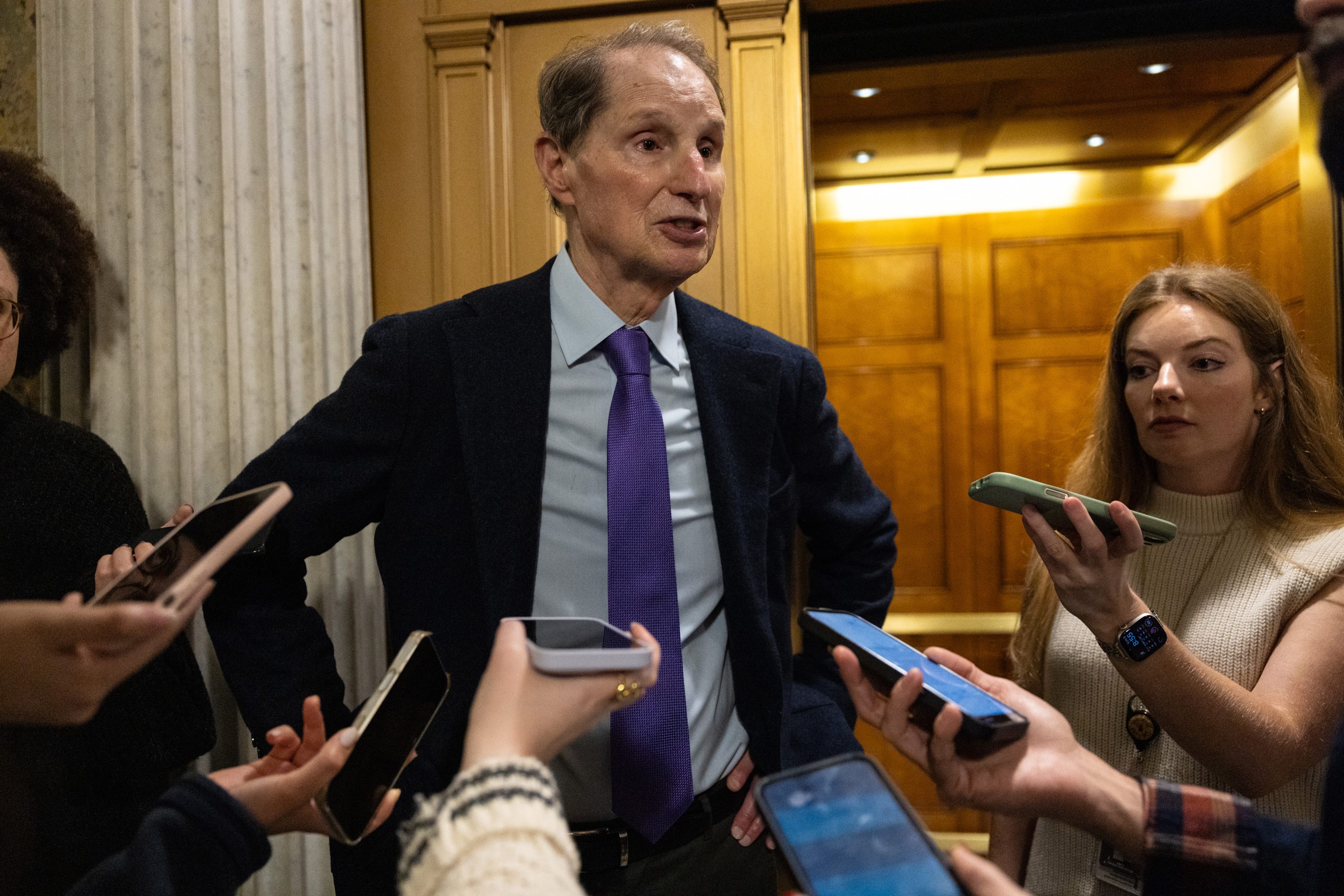
And there’s more savings down the road, said Sen. Kevin Hertel, D-St. Clair Shores, sponsor of a package of bills that would establish a state-based health insurance exchange.
Once a state-based exchange replaces healthcare.gov in Michigan, the state could offer its own “basic health plan,” said Hertel, who chairs the Senate Health Policy Committee.
“People are losing their coverage simply because it’s unaffordable,” Hertel told Bridge this week. “I’m not saying we can fix all of that, but I think it makes a better case that we, as a state, should have more control over the individual market here in Michigan.”
The Democratic-led Senate passed the bills last week. If the legislation is signed into law this year — and Hertel acknowledges the bills face “an uphill battle” in the Republican-dominated House — the exchange could be up and running for 2029 plans, Joe Sullivan, who oversees innovation and research at the Michigan Department of Insurance and Financial Services, told lawmakers.
A new report paints a stark picture of the skyrocketing cost of health care: By 2034, an aging population and expensive drugs will help drive national health spending to nearly $9 trillion, or about 20.6% of the economy, compared with $5.3 trillion and 18% in 2024, according to an analysis by the US Centers for Medicare and Medicaid Services, released Wednesday.
Already, insurance costs jumped more than 20% this year for Michiganders who purchase their coverage at the federally operated www.healthcare.gov, as enhanced tax credits that reduced premium costs expired.
Replacing the federally based marketplace would be complicated and costly. A report by the Senate Fiscal Agency called the financial impact on the state “indeterminate but significant.” Quoting from another report, it placed the annual cost of operating an exchange at $50 million to $60 million initially.
Sullivan puts the costs lower — $8 million to $10 million for start-up costs, and $30 million to $40 million a year after that, he told lawmakers at a June 3 hearing.
While user fees from insurers would cover much of the costs, the state might have to also use general funds.
“There are a lot of other logistics to figure out,” Sullivan said, referring to the long process of setting up an exchange — one that requires federal approval. “We would need to create a state fund, seat the board, create the website, set up overall functionality, all with coordination of stakeholders and vendors.”
But some Republicans worry those cost estimates are too fuzzy and there is no guarantee for savings. Similar bills, known collectively as the Michigan Health Insurance Exchange Act, failed two years ago.
In a hearing this month on the new package, Sen. Mark Huizenga, R-Walker, recalled the state’s beleaguered unemployment computer system, MiDAS, that was linked to years of scandal, as well as MiSACWIS, the Michigan Statewide Automated Child Welfare Information System, which led, in part, to continued federal oversight of the state’s child welfare system.
“Our track record of software platforms in the state is not good,” Huizenga said.
“Everyone here knows software is always more expensive than you think. Implementation is more expensive than you think,” he said. “In my mind, the risk is far greater than the benefits.”
Amid the unknowns, here’s what we do know.
The basics now
The federal marketplace or “exchange” — accessed at www.healthcare.gov — launched in 2013, with plans beginning in 2014. It was the result of the Affordable Care Act, or Obamacare, which also expanded eligibility for Medicaid to adults with incomes up to 138% of the federal poverty rate.
Insurers pay fees to the federal government to sell plans on the marketplace. Fees fluctuate, but are 2.5% this year — $2.50 for every $100 in premium dollars the insurer takes in.
It adds up fast.
The Michigan Association of Health Plans, which represents most of Michigan’s insurers, estimated that a 2.75% fee on health plans would generate $70 million annually.
By running their own exchanges, the states are able to keep those fees, covering the costs of operating the exchange and establishing a reinsurance pool to cover extraordinarily high-cost beneficiaries.
That pool offers a “stopgap” for insurers, protecting insurers from the costs of those outlier patients and allowing them to keep premiums more steady, said Brian Mills, deputy director of commercial markets at the Michigan Association of Health Plans.
The association, which wants better assurances that the fees that insurers pay on the exchange would be used for the reinsurance pool, remains“neutral” on Hertel’s legislation as it stands now.
(Editor’s note: The Michigan Association of Health Plans is a sponsor of Bridge Michigan’s Health Watch newsletter. It had no role in the reporting, writing or editing of this article.)
Nearly two dozen states now operate their own exchanges. Two others — blue-state Oregon and red-state Oklahoma — are working toward operating their own exchanges as well, according to CMS.
Ten of the states also operate reinsurance pools with federal approval, using the money to lower premium costs, according to State Based Network, which represents the 21 state-based exchanges.
State plans can also build in flexibility for longer enrollment periods and greater outreach. They also can set aside funds for “navigators” to help beneficiaries obtain and retain coverage. (The Trump administration last year slashed nearly all funding for navigators.)
And a state-run marketplace can also provide a single entry point for consumers who don’t otherwise get coverage through an employer or Medicare. From a single website, they’d find out whether they are eligible for Medicaid or need to purchase a plan on the marketplace.
Could it cover more people? Maybe.
Enrollment in federal and state marketplaces fell this year as insurance costs increased.
That’s because COVID-era enhanced premium tax credits were allowed to expire at the end of 2025, driving up the costs of monthly premiums. Additionally, thousands of Michigan Medicaid enrollees have lost coverage over the past 16 months or so with no clear reason — a loss that will likely get worse as enrollees face more paperwork requirements beginning in 2027.
But state-based marketplaces might mitigate against such losses. As marketplace prices shot up at the beginning of this year, state-based operations lost fewer consumers than the federally operated healthcare.gov, according to an April analysis by Wakely Consulting Group, a national firm focused on health care management. By April, 92% of consumers in state-based exchanges remained, compared to just under 82% in the federal marketplace.
Moreover, a state-based exchange ultimately will enable the state to offer its own Basic Health Plan, for Michiganders whose incomes are too high for Medicaid, but too low to cover the costs of premiums on marketplace plans — in other words, those likely to go uninsured.
Michigan wouldn’t be the first with such a plan. Minnesota, New York and the District of Columbia now offer these plans.
But how the state would fund that extra program is unclear.
New York announced in March that, while the state will continue to operate the insurance exchange, it will stop offering the basic insurance plan because of federal cuts under President Donald Trump’s “One Big, Beautiful Bill.”
It's an excellent report, even though the old "insuring more people" slipped through. Care is the real goal, and the more affordable to the individual patient, the better. The card is no guarantee any care at all.
On the fiscal side, the real question is whether states can operate health insurance cheaper/ more efficiently than the federal government.
Of the top 15 states for debt, 11 run their own state exchange. Michigan is #16 in line for total debt.
Minnesota is better off at #24 - but we all know who's paying their healthcare budget.
To flip the comparison, of the 20 states that run their own exchanges, most are in more debt than half of their peer states.
Outliers tend to be small or low-population density states: Rhode Island, Maine, Idaho, New Mexico, Vermont, Nevada.
Significant? Maybe not. But enough to raise questions about states' responsible use of healthcare dollars.
Reason Foundation's Financial Transparency Project published "Report ranks every state’s debt, from California’s $497 billion to South Dakota’s $2 billion" last Fall.
https://reason.org/transparency-project/gov-finance-2025/state/
CMS maintains a list of state exchanges, states running exchanges on the federal platform, and states in the request process.
State-Based Exchange process clipped for brevity.
https://www.cms.gov/CCIIO/Resources/Fact-Sheets-and-FAQs/state-marketplaces
States who wish to establish a SBE are required to convey their intent in doing so by submitting a declaration letter to the Department of Health and Human Services (HHS), Center for Medicare and Medicaid Services (CMS). States were also eligible, through November 2014, to apply for Federal grants to support the establishment of their SBE. Since 2014, CMS’s Center for Consumer Information and Insurance Oversight (CCIIO) has been providing conditional approval for states requesting to establish a SBE.
Get MHF Insights
News and tips for your healthcare freedom.
We never spam you. One-step unsubscribe.
Sponsors

J & DE Family Charitable Fund

Friends
of MHF

Kelly Grotendiek
Philip Harbach
Dale Johnson
Drs. Jeffrey and Joni Jones
Vickie Kahle
Tammy Kipen
Marlin & Kathy Klumpp
Melanie Kurdys
Ruth Nobel
Patrick Peterson
Stephanie Poortenga
Jeanne Smit
Ben and Hope Staal
John Tuinstra
Jacki VanHuis
Sandy Walker
Sign Up for MHF Insights to keep up on the latest in Michigan Health Policy